
Home Blog Page 813

Tales of INSPIRATION

With an aim to provide education to the doorsteps of deprived, National Institute of Open Schooling (NIOS) has made it flexible for students to complete their education in the comfort of their home
NIOSThe National Institute of Open Schooling (NIOS) was started as a project on ‘Open Schooling’ under the Central Board of Secondary Education (CBSE) in 1978. It had two objectives and one of them was that the school education in India was too straight jacketing. So, there has to be flexibilities for those who didn’t want to study mathematics or science because they found it going tough as they did not have the aptitude for it. However, they were forced to study and had no option. So, the first objective of NIOS was to give them options. As it would be chaotic if it is done in regular board, so project was set up for NIOS.

The second concern of the Ministry of Human and Resource Development at that time was that there’s a huge resource in our population which has never completed its education due to various reasons. The crux of it all was that people had to engage in economic activities and they had no time to go to school. Girls were kept away from school because of family responsibilities. Since there were so many children to look after, parents were engaged into a manual labour and there had to be someone at home and it ware only the girls who had to forego their education.This was actually affecting the country’s economy.

So, these people had to be educated and there was no other way for them to attend the school and schools were just not able to take them in. The Boards had their own limitations. They had the bylaws which did not permit children beyond 14 years to enter the education system. So, NIOS was the alternative created for the other side of the population to complete their education.

For 10 years it went on as a project, and was very successful. Going for the numbers which enrolled, NIOS was converted into an autonomous body by an active Parliament and became autonomous in 1989. That time it was the National Open School and it took immense hard work to consolidate the presence all over the country.

NIOS has entered into an MoU with 6000 schools, all over the country calling these as their study centres. NIOS also has its presence in the Middle East where a number of NRIs are going for Indian education

Working Model

The basic model on which NIOS worked on is the resource sharing model. What NIOS believe is that there are many schools on the ground which are being set up with the physical infrastructure, which is further determined by some by laws of State Board education or the Central Board of education. All schools are affiliated to Board of education. They laid out the norms for school infrastructure, appointment of staff, qualification of the staff for secondary and senior secondary level, and only then the school is affiliated to the Board

Since these Boards are doing so much of work and have their criteria in place, after 4 o’Clock this infrastructure is used by NIOS to fulfill the educational needs of other people who cannot attend regular schools. NIOS is motivating the teachers to do some voluntary works with very little remuneration to help out that class of learners who cannot go to regular schools but are willing to learn.

NIOS has entered into an MoU with certain schools and call these as their study centres. These are about 6,000 in number all over the country. NIOS also has its presence in the Middle East where lot of NRIs are going for Indian education.

NIOS operates through these study centres. The entire admission process is online. Anyone sitting anywhere can take admission. If someone doesn’t have access to internet, there are study centres with easy access and one can take an offline form and the study centre will put in the information of the candidate online. Admission is given for five years to the students. The students who enrolled with us can give the examination in every six months in any subject the student is learning. At the end of the five years the students have to clear five subjects and the certificate is issued thereafter.

Languages and Mediums

NIOS offers 17 Indian languages at the secondary level, eight languages at the senior secondary level and they have eight mediums at secondary level and six at senior secondary level. Currently, NIOS is focusing on Gujarati medium as there is a huge demand for it at the senior secondary level. There are a lot of students who want to study in vernacular languages and NIOS is facilitating education projects in whatever way they can, to make these youth industry ready.

Open Basic Education
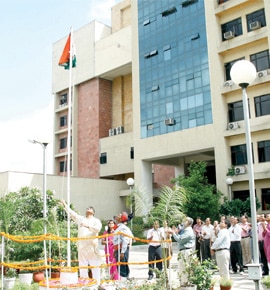
NIOS-celebrates-Independence-Day
NIOS celebrates Independence Day

The students can write the exam in any language. NIOS is working significantly in the area of Open Basic Education (OBE). It has tied up with NGOs of enrolling the children, educating them and NIOS will also give the course outline to these NGOs. It further gives the guidelines for preparing the question paper to evaluate the competencies of the children. The NGOs evaluate the answer sheets and send the marks to NIOS, on the basis of which it then gives certificates to these children. The certification is done at three levels namely A, B and C level, which is actually equivalent to class III, V and VIII level. Open Basic Education is for 6-14 age group of children. MHRD is going cautious about it because the government has already made a provision through Right to Education Act by which they say that every child of school going age must be in school, irrespective of the class for which the age is suited.

The OBE programme envisages schooling by providing a learning consortium based on graded curriculum ensuring quality of education for children, neoiterates, school drop-outs, left-outs and NFE completers. For implementation of the OBE programme, NIOS has forged a partnership with about 690 agencies providing facilities to them as study centres. The NIOS provides resource support (such as adaptation of NIOS model, curricula, study materials, joint certification, orientation of resource persons and popularisation of OBE to the voluntary agencies and Zila Saksharta Samities for implementation of its OBE programme.

Enrichment is also provided to the learners through the half yearly magazine ‘Open Learning’. The On-Demand Examination System (ODES) is in operation at Secondary and Senior Secondary stage. There is also a provision where learners can take 1 out of 10 vocational subjects at Secondary stage and 1 out of 20 vocational courses at Sr. Secondary stage in combination with academic subjects. Vocational Educational Courses are imparted through a network of Accredited Vocational Institutes for imparting skill – based training to its learners. The existing institutions like, Jan Shikshan Sansthans, Krishi Vigyan Kendras, Schools, Colleges, District Institutes of Education and Training (DIETs), Universities, Paramedical Training Centres, NGOs and several other Voluntary agencies are partnering with NIOS in imparting Vocational education.

Adolescence Education Programme (AEP)

AEP is a collaborative programme of NIOS under the MHRDUNFPA supported initiative. National Curriculum Framework (NCF)- 2005, outlines that education should instill ‘independence of thought and action, sensitivity to others’ well-being and feelings, learning to respond to new situations in a flexible and creative manner, predisposition towards participation in democratic processes, and the ability to work towards and contribute to economic processes and social change.’ AEP works in the following areas:

Curricular Intervention
Capacity Building Workshops
Mitra: The Adolescent Friendly Centre
Seminar
Summer Internship Programme

Curricular Interventions: One of the major challenges for open and distance education system is to bring the benefit of hidden curricula and the nurturing environment of a school to the learners. The innovative pilot to integrate life skills in selected lessons from Home Science, Social Science, Science and Technology and Languages (Hindi and English) at Secondary level logically concluded in the year 2009. After the overwhelming results of the pilot, the task of integration was extended to the entire curriculum of these subjects. The endeavours of last three years culminated in the publishing of life skills enriched study materials which were made available to the 7,88,347 learners of academic year 2012-13 who will be benefitted through this material. Consistence efforts were made to address the apprehension of the various stakeholders and to enhance capacities of subject coordinators and lesson writers. These initiatives have resulted in a rich resource pool of professionals trained in curricular intervention to further extend this kind of initiatives to other levels. AEP unit also ensured that the Question Banks and Tutor Marked Assignments developed in these five subjects include items that are of higher order thinking skills and test life skills.

Capacity Building Workshops: It is a conceptual approach to development that focuses simultaneously on under- standing the obstacles that inhibit people and organisations from realising their development goals while enhancing the abilities that will allow them to achieve measurable and sustainable results. Three workshops were organised during year 2012-13, one each in Bhubaneswar, Jaipur and Korapur. 125 tutors/coordinators were oriented in these workshops.

Mitra – The Adolescent Friendly Centre: Set up as a pilot intervention in the year 2010 to provide adolescent – friendly space within the NIOS regional centre in Bhubaneswar, Odisha, Mitra addresses the issues and concerns of adolescents with an objective of developing learners’ potential through various strategies of Life Skills Education. Twelve programmes were organised during the year for engaging learners and 744 learners participated in all.

One of the major challenges for open and distance education system is to bring the benefit of hidden curricula and the nurturing environment of a school to the learners

Seminar on Life Skills Integration in Open Schooling: Towards Holistic Education

A two-day seminar Life Skills Integration in open Schooling: Towards Holistic Education, was organised on December 26 and 27, 2012, at the India Habitat Centre. The seminar Chair person was Dr S.S. Jena (Chairman, NIOS) and the seminar Director was Dr. Kuldeep Agarwal (Director, Academic, NIOS).

Summer Internship Programme

Adolescence Education Programme (AEP) at NIOS has been organising the one month Certificate Internship Programme once in a year for last two years. Interns are selected from the people who are nominated by their institutions and colleges and they are also provided with the stipend.

NIOS on Web
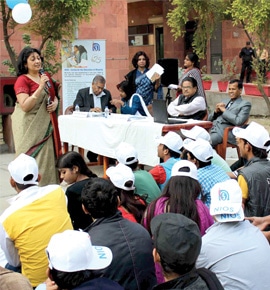
learning-friendly
Making learning friendly, simple and accessible

Internet and Web Technology have proved effective in the teaching and learning process, especially in the field of Open and Distance Education. Information about NIOS is available on its website www.nios.ac.in

The learning process in NIOS is based on the needs of individual learner and the characteristics of a learning community. Open learning gives the learner control over what, where, when and how they learn. The focus of attention is the learner and the learning process. Elimination of fixed time (daily classes) and a fixed space go in favour of disabled learners and has been proved to be most suitable learning strategies for them.

Being an institution in Open and Distance Learning, ICT is being used as a major strategy towards reaching the unreached and providing the quality support to NIOS learners, especially to persons with disability. The NIOS has its own web portal www.nios.ac.in for dissemination of information and for providing online citizen – centric services as a major initiative of e-Governance. The NIOS online project has brought convenience to its learners, client group, and transparency in the basic operations of NIOS in the area of admission, examination and accreditation and enhanced the quality of the support services to its learners.

The admission process in NIOS is 100 per cent online due to which the content of the NIOS website has to be learner friendly, simple and accessible to learners. The website provides complete information about NIOS with rich content and designed by following the GIGW including guidelines of WCAG.

National Consortium for Open Schooling (NCOS)

The National Institute of Open Schooling (NIOS), which has emerged as the largest Open Schooling system in the world, has a pivotal role to play in the promotion and development of Open Schooling in the country. However, it is not possible for NIOS alone to cater to the needs of all regions of our multilingual and multicultural country (India). The Open Schooling system is required to be promoted and strengthened in all the States of the country to “reach the unreached”. NIOS has, therefore, been pursuing the State Education Departments to set up State Open Schools (SOSs).The NIOS has been providing professional and technical support services to States to set up State Open Schools to cater to the educational requirements of the clientele/students.

With a view to systematise interaction and mutual consultation among the Open Schools at national level (NIOS) and at State level (SOSs), it was considered appropriate to establish a Consortium of Open Schools.

The National Consortium for Open Schooling (NCOS) was launched in September 1997, with a view to facilitate better cooperation, coordination, collaboration and determining standards in Open and Distance Learning (ODL) system at school education level in the country. The Secretariat of NCOS is located in NIOS. In order to meet the educational challenges, the Framework of NCOS has been modified.

COMOSA

The COMOSA is a non-profit, democratic, collaborative and futuristic organisation based on mutual respect and committed to support the efforts of open schooling institutions. The basic objective of the association is to cooperate and collaborate in development, promotion and introduction of innovative, high quality, relevant, equitable, gender-sensitive and cost- effective programmes of school education for sustainable development in commonwealth countries through Open and Distance Learning Mode, and thereby targeting to achieve the Millennium Development Goals (MDG) of the United Nations.

The Chairman, National Institute of Open Schooling (NIOS), India (Dr. S. S. Jena) has been elected as the first Chair- person of the COMOSA in its general Body Meeting held on November 25, 2009. It was also resolved by the members of COMOSA to have its first Secretariat located at NIOS Campus.

Prof. D. B. Gupta from the State Open School, Jammu and Kashmir (India) has been elected as the Treasurer of COMOSA. As resolved by the COMOSA members, a joint account for COMOSA is to be opened in Jammu and Kashmir to be operated by the Chairperson and the Treasurer of the Association. The COMOSA Secretariat is taking necessary action for registration of COMOSA in India as per the law of the country.


Automotive Learning for Gen Y

AR/VR enabled next generation automotive learning

Concerned over bridging the gap of skilled labour in the automotive industry, Varun Suri, Expert-ICT enabled Automotive learning concepts, Robert Bosch Engineering and Business Solutions Pvt Ltd laid stress on imparting training to the masses and feels that there is an urgent need to bring in innovative systems into the educational gamut that accelerate learning

AR/VR enabled next generation automotive learning

The automotive industry is one of the key drivers of India’s economy, accounting for around seven per cent of India’s GDP and employing over 19 million people, both directly and indirectly.

Demographically and economically, India’s automotive industry is well-positioned for growth, servicing both domestic demand, and the export market. Also, the auto components engineering and manufacturing industry compliments the entire ecosystem to further accelerate growth.

Due to the above business situation, it is expected that there will be a need of 48 million auto professionals by 2022 to meet the growing demands of the auto industry.

Despite the emphatic stress laid on education and training in India, a shortage of auto industry-ready students still exists. This gap has grown manifold due to the technological ad- vancements in the industry, and persistence of conventional learning tools and methods, therefore failing to bridge this gap.

Although there is a great focus on professional higher education across basic subjects that are needed for conceptual understanding, the application of learning in the real world scenario is still weak. Moreover, the learning content for topics linked to subjects such as automotive electronics is not always updated due to the fast changing technology landscape.

There is an urgent need to bring in innovative systems into the educational gamut that accelerate learning, and enable the automotive learner to be more industry ready. This can only be enabled through a strong industry connect.

As a large automotive industry powerhouse, Bosch in India has already been working with engineering institutions to enable them to accelerate learning. This is done through setting up state of the art automotive labs, offering internships within Bosch, and other such effective mechanisms.

Within Bosch also, traditional learning mechanisms are giving way to a more immersive and collaborative learning environment using Information and Communication Technologies (ICT).

Particularly through AR/VR powered learning, the focus is on providing tools which decreases the cognitive load of the students while learning complex systems. This is done by providing modern methods like gamification, interactive virtual 3D models and animations.

To democratise and enable mass consumption –Bosch provides developed solutions on mobile platforms (smartphones).

The automotive domain competence combined with the power of immersive learning technologies (AR/VR) has given birth to the next generation learning programme at Bosch, named as Autocurious. This could be the perfect ingredient to solve the current learning gap in educational institutes.

We believe that this programme has the right content and mechanisms to enable accelerated learning because of the following features:

  • Latest automotive content from Bosch
  • Simplified learning of highly complex topics
  • Tailored to bridge gap between curriculum and industry requirements
  • Powered via immersive learning technologies such as AR/ VR
  • Cross-platform compatibility (can be used on a PC, tablet, smartphone)

Connect with us to know more about the Autocurious programme and how it can be enabled in your educational institute.

Progressing Towards Girl Education

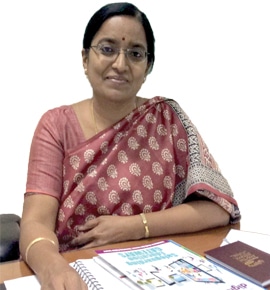
Sandhya Rani, State Project Director, Andhra Pradesh

To reduce the drop-out ratio at the primary and secondary level, Andhra Pradesh State Government has been making all efforts to improve basic amenities in public schools. Sandhya Rani, State Project Director, Andhra Pradesh, talks to Sudheer Goutham of Elets News Network (ENN) about the online monitoring system to be put up by the AP Government for the Education Mangers across the State to monitor all key education indicators

Sandhya Rani, State Project Director, Andhra Pradesh

How is the compliance of private schools to RTE Act in Andhra Pradesh. What is the progress in the implementation of RTE Act. Can you give numbers?

With regard to the provision of allocating 25 per cent seats in private schools to students from poor and economically weaker sections, Govt.Order.Ms.No.42, School Education, dated 30.07.2010 indicates the fee reimbursable and other conditions. This G.O is challenged in legal courts and further implementation is constrained by the same. Meanwhile, Government of Andhra Pradesh constituted a Committee for recommending fee reimbursable to private schools with regard to 25 per cent seats. The recommendations of the Committee are under examination by the Government.

What are the trends of school drop-outs ever since the RTE Act was introduced in 2009?

Drop-out rates at elementary and secondary stages of education have been declining. However, there is a need for greater progress. The low Net Enrolment Ratio (NER) at the upper primary level and the increasing enrolment gap from elementary to secondary level suggests that although a larger number of children are entering the educational system, a significant proportion of them are not progressing through the system to complete elementary/secondary cycle of education. Drop-out rates among disadvantaged groups, especially for girls from these groups, remain higher than the national average.

AP State Government is in the process of putting in place an online monitoring system for the Education Mangers across the State and monitor all key education indicators – enrolment, drop-out, transition, etc. As part of the focused measures to improve retention in schools of girl children from socially and economically disadvantaged communities, 352 Kasturba Gandhi Balika Vidyalayas (KGBVs) are set up in the Educationally Backward Mandals/ Blocks (low female literacy Mandals) to provide residential schools for drop out girls from VI to X Class. About 68,000 girl students are currently pursuing their education in the KGBVs. During the current year, the Government has introduced the English medium education for the KGBV Girl students for their continuity/ retention in the schools.

Keeping in line with the objective of RTE Act, 2009, AP Sarva Shiksha Abhiyan (SSA) ensures access to all the out of school children, i.e., children never enrolled, children dropped out and for urban deprived children like street children, orphans, rag pickers, children of broken family and children of Sex workers, etc. Quality education is provided through special training centers run under the supervision of regular schools and to track the children enrolled in special training till mainstreaming and thereafter in the school.

Drop-out Rates From 2009-10 To 2014-15- ALL (Recognised Schools)

Sr. No. Year Primary Level(I-V) Elementary Level (I-VII/VIII) Secondary Level (1-X)
Boys Girls Total Boys Girls Total Boys Girls Total
1 2009-10 9.27 8.58 8.93 20.69 21.38 21.03 49.31 51.08 50.18
2 2010-11 10.56 9.33 9.95 15.35 15.99 15.66 42.95 45.44 44.19
3 2011-12 7.51 7.40 7.45 14.94 14.96 14.95 41.23 42.75 41.98
4 2012-13 5.83 6.34 6.08 20.33 20.42 20.38 32.84 34.00 33.41
5 2013-14 3.16 3.25 3.20 19.37 18.95 19.16 26.20 27.48 26.83
6 2014-15 4.88 4.30 4.60 14.91 16.59 15.74 24.54 25.93 25.23

Note: Dropout Rate at Elementary level for the years 2012-13 and 2013-14 is calculated for classes I- VIII

Lack of basic amenities in public schools including toilets, running water and other infrastructure, many girl students avoid coming to schools or miss classes. The situation continuous to be poor.

The Government of Andhra Pradesh has been making all out effort to improve basic amenities in public schools including toilets, running water and furniture, etc. Under the Swatcch Vidyalaya programme in all schools, one girls toilet and one boys toilet are provided. During the current year, in partnership with Government of India, Public Sector undertaking and Corporates, over 18,000 toilets were constructed/repaired in the State. Of the 47,000 schools, in 3000 (15.67 per cent) schools there is no running water. Alternative arrangements by way of supply through tankers are made by the District Collectors, through local Panchayat & Rural Water & Sanitation Department.

literacy in the StateWhat initiatives are being taken by the State Government to improve literacy in the State?

Various initiatives are taken up for improving literacy in the State, especially of the school age going children –“Badi Piluthondi”(School is calling) campaigns to ensure 100 per cent enrolment of school age going children, provision of infrastructure, school uniforms, text books, Mid-Day meals, etc. Prathibha Awards (Merit Awards) awarded to the meritorious students who excel in the SSC Public Examination with a merit certificate, Memento and a scholarship amount of `20,000 for pursuing Higher Education.

The School Management Committees (SMCs) are in place in all the schools. SMCs provide a platform for parental motivation, participation in the school developmental activities, and directly or indirectly help in sustaining the enrolment and improvement of literacy.

Andhra Pradesh State has achieved significant progress in the last decade with regard to improving the levels of adult literacy among its population. Literacy levels have gone up from 60.47 per cent to 67.41 per cent during this period. However, this is still lower than the National average of 72.98 per cent. Under the Sakshara Bharat programme, Adult Education Centers (AECs) are set up at the Gram Panchayat level to provide institutional, managerial and resource support to literacy and lifelong education at grass root level. The AECs hold literacy classes for non-literates and semi-literate persons, conduct Skill Development Programmes, run libraries and reading rooms, etc.

Filling the Gap

Dr Daljeet Singh, Cheema shows concern on the poor state of education in schools

Primary education in Punjab is at a critical but poised stage to meet the challenges of the new millennium. The education department of the Punjab Government is busy equipping the students and the teachers with the skills required to meet the set goals. Dr Daljeet Singh Cheema, Education Minister, Punjab, lays out the road map to Priya Yadav of Elets News Network (ENN)

What are the challenges that primary education is facing in Punjab?

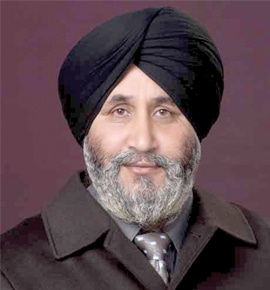
Dr Daljeet Singh, Cheema shows concern on the poor state of education in schools
Dr Daljeet Singh Cheema
shows concern on the poor state of education in schools

Primary education plays a major role in future development of a state. We have a huge task with us as even though private schools have come up all over the place, yet government schools are at the preferred places of study, especially in the rural areas. In Punjab, there are 19,500 government schools, catering to 26.7 lakh school students. The number of teachers working in these schools is over 1.09 lakh. Streamlining this huge infrastructure and human resources is a challenging task and one that we are working on diligently. For this, we are first trying to ascertain which are the problem areas and then work out solutions for the same.

Though there are so many teachers with the government, yet teacher student ratio remains a challenge. What is the government doing about it?

I have worked out a strategy to solve this problem. I sought approval of the Chief Minister Parkash Singh Badal to create a separate directorate dedicated solely to the recruitment of teachers in government schools. There are as many as 5000 posts of teachers in primary schools that need to be filled on priority basis. Once a directorate is created, this will be taken up and the teachers would be selected on merit. The system is set to be overhauled.

There were concerns about the quality of teachers in government schools. How are you dealing with- this?

After the poor performance of students in school examinations, especially in matric, we assessed the quality of teachers in schools and found, to our dismay, that the teachers too lacked basic skills. We have initiated training workshops to equip the teachers with necessary skills. Some of our trainers, nearly 50, have been trained in Canada and they will impart skills to master trainers, who in turn, will train the teachers. 10 schools have been identified in each district with the lowest pass percentage in English. Teachers will be given a reorientation course. The SCERT has been given a special fund of `1 crore to organise training sessions for these teachers.

What new courses are being planned for the children to make them more skilled?

An MoU has been signed with the National Skill Development Corporation to launch new courses. As its part, new courses like beauty and wellness, healthcare, automobile repair, retail would be launched in 100 schools for 5,000 students. Such courses would run simultaneously with classes starting from 9th to 12th standard. These courses will empower students and enable them to get a job as some of these would be at par with industrial training courses. We have made special provisions for science students and free coaching classes are being given to them.

Embarking on Road to ICT

For availing the benefits of modern technology, Coucil for the Indian School Certificate Examinations (CISCE) has embarked on the usage of ICT for smooth flow of administration working and overall efficacy. Gerry Arathoon, CEO, CISCE talks to Elets News Network (ENN) on how the adoption of technology has helped emphasise the overall development of the student

What are the new pedagogical changes adopted by CISCE in education?

students’-careers-through-ICT
Enhancing students’ careers through ICT

The curriculum prescribed by the Council emphasises all round development of students. In order to provide them with an opportunity to not only acquire knowledge but also learn other essential life skills, such as thinking and analytical skills, team work, communication, public speaking, time management and critical thinking, project work has been made an essential part of all subjects at the ICSE (Classes IX and X) level. Certain skill-based subjects have also been introduced at the ICSE level which have a 50 per cent component of project work. Project work also forms an essential component of a number of subjects at the ISC (Classes XI and XII) level.

In order to integrate learning with abilities and skills, the curriculum provides for flexibility in the choice of subjects. At the ISC level, students do not have to take predetermined subject streams. The Council makes available a basket of subjects from which the students can select subjects of their choice, across the boundaries of Humanities, Commerce and Science, in keeping with their aptitude and ability. At the ICSE level, students who are extremely weak in Mathematics and Science are given the choice of opting for other subjects so as to reduce stress of failure at the examination.

What is the extent of use of ICT in CISCE?

With passage of time, it was felt that, many of the procedures that were being followed by the Council for the conduct of examinations and other related activities were time consuming and cumbersome and not availing the benefits of what modern technology could offer. A re-look at them was hence required. In the year 2013, the Council for Indian School Certificate Examinations embarked upon a process of comprehensive and systematic modernisation of its processes and procedures. In order to translate its vision into reality, the Council decided to collaborate with an IT service provider. As a part of the modernisation exercise, the existing processes of the Council were reviewed so as to identify how best ICT could be used to achieve overall efficacy.

A comprehensive modernisation plan christened, and CAREERS was developed. CAREERS, i.e. Council’s Affiliation, Registration, Examination and ERP System is an integrated suite of software applications aimed at bringing about a significant enhancement of operational efficiency. The CAREERS portal provides an online gateway which facilitates a two way exchange of data and information between the office of the Council and the schools affiliated to it.

All the major examination related processes of the Council, such as, Registration of candidates for the ICSE and ISC examinations, arrangements related to examination centres and appointment of conveners, supervising examiners, visiting examiners and inspectors, requests for recheck of results are now being carried out through specially designed modules on the CAREERS portal. The CAREERS portal has also simplified the process of affiliation by providing a facility for online submission and processing of affiliation related requests.

The process of receipt of answer scripts from schools, their onward dispatch to examiners for marking as well as receipt of marked answer scripts has all been automated through use of specially designed barcoded answer script envelopes and a state-of-the-art Bundle Management System (BMS). The BMS machine reads the barcode on the answer script envelope and automatically pastes a label on it, which indicates the details of the examiner who will be marking that packet, the City where it will be marked, as well as the location in which it will be stored in the office of the Council.

Besides extensive use of ICT in its transactions with its stakeholders, the Council is also using ICT to modernise its internal processes. An ERP software has been developed which has helped automate many back office functions of the Council such as Accounts, HR, Administration and Stores.

ICT has also been used in digitising important documents of the Council. The Council had in store, records of result tabulations of ICSE and ISC Examinations of more than 50 years. Storage and retrieval of these documents was a cumbersome process. However, this problem has been taken care of by digitising all important documents.

CAREERS, i.e. Council’s Affiliation, Registration, Examination and ERP System is an integrated suite of software applications aimed at bringing about a significant enhancement of operational efficiency.

Extensive use of ICT in the various processes of the Council has resulted in significant reduction in manual labour and enhanced operational efficiency. It has helped reduce the to and fro hardcopy communication with schools, thus reducing the number of man hours spent on various tasks. It has provided for fast retrieval of documents which are now available in electronic form, while also ensuring data security.

What is the future vision of CISCE for the next two years?

As part of its modernisation endeavours, the Council had embarked upon a new initiative to capture marks from the answer booklets directly at the evaluation centres, with effect from the ICSE/ ISC Year 2016 examinations.

This initiative introduces a new technology called ‘Orion LICR Solution”. The acronym LICR stands for Live Ink Character Recognition. This technology incorporates a specially designed digital pen and a tablet device to be used by examiners while evaluating answer booklets. Use of the LICR technology will reduce the time taken for marks to reach the Council after examiners have completed their evaluation to zero seconds. This technology is easy to use and will help in reducing the errors.

How is technology playing a vital role in the deliverance of education in CISCE?

In order to facilitate the teaching-learning process, the Council has consistently been bringing out a set of documents called the Analysis of Pupil Performance, since 1994. These ICSE and ISC documents provide a detailed qualitative and quantitative analysis of the performance of candidates for various papers, including the kind of mistakes made by candidates, topics found difficult or confusing, marking scheme for each answer and suggestions for teachers and students. This enables the teachers to understand the assessment process better and helps them in guiding their students more effectively.

In order to ensure that the information contained in the documents is available to all concerned, from the year 2013 onwards, these documents have been uploaded on the Council website from where they can be easily accessed. In addition to the above, all other documents such as, year-wise ICSE and ISC specimen question papers, syllabuses, and other resource material are made available on the Council website.

Besides the public website, the Council also uses the CAREERS Helpdesk to convey specific information to its affiliated schools. CAREERS Helpdesk is a platform through which important documents and resource materials are made available to Heads of schools, along with various examination-related tutorials.

The Council record which is a quarterly document providing details of the forthcoming activities of the Council, is put up on the CAREERS Helpdesk so that Heads of schools may be apprised of the examination related and other activities in the coming quarter.

What are the teacher training programmes undertaken by CISCE?

The Council conducts subject-specific teacher training programmes both at the ICSE as well as the ISC level, at its offices. The content of the training programmes is designed according to the requirements of the participants. Participants are asked to suggest areas or topics that they would like to be discussed during the programme and the content of the programme is designed accordingly.

Training programmes for teachers are also organised on demand, for Council affiliated schools in specific cities.


Making Educational Infrastructure Smart

Securing children from any mishap is the top most concern of every parent. Keeping in mind the challenges of parents, Tech Smart has developed innovative solutions that help them track the real time activities of their children and to time updates from school

Tech-SmartWith an aim to make complete educational infrastructure smart, Tech Smart, a solution division of Secureye, has developed innovative modules that make schools, colleges, institutes technologically smart, secure and fully automated.

Pioneer in providing hardware, software and automated solutions for institutions, Tech Smart has created a niche in the market by just providing simple and innovative solutions to cut the operational hazards of the business. The integrated solutions developed by the team of experts by all means makes infrastructure smart.

The experts at Tech Smart have developed comprehensive solutions for Student’s Safety, Digital ID Cards for students, Indoor Tracking of Students & Teachers, Access Control in restricted areas, RFID Cards & Lockers, Smart Bus tracking, Cashless Canteen, Geo Fencing, Energy Management, CCTV’s & Wi-Fi in Premises, Interactive Smart White Boards, Projectors & Visualisers, Wi-Fi PA system integrated with detailed ERP solution having all the required Modules like Admission, Timetable, Library, Transport, Examination, Inventory, Hostel, HR, Inquiry, Visitor Management etc for any institution having presence in multiple locations.

All these modules are controlled by a single control panel.

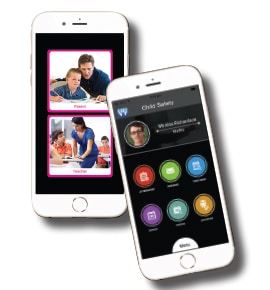
Teacher-Student – Parents: Smart Mobile App

The status of user’s child location to their performance at their finger tips: The application is installed on each stake- holder’s Mobile device. From this device, a teacher can check the student’s absence. This device shows real-time attendance of students. The application sends a text to the parents after the teacher approves absence of the students.

Parents can track the location of their children, which boosts their confidence. In case of miss behaviour by the driver or conductor or by the other students, the parents can help their child deal with it. The similar problems can be avoided in the school premises. Notifications on class cancellation, changes in timings, and class attendance can be shared with the teachers, students and parents in a very dynamic manner through this application.

School Bus Tracking

The status of user’s child location at their finger tips: As the challenges of children going missing/abduction/road accidents and the other mishaps are increasing day by day, the solution which can keep an eye on the students going to school from starting point to the doorstep are in high demand. More- over, it is not only the security that is important for the parents and the school management; it is a sense of discipline in the students that matters as well. The solution, like school bus tracking, makes sure that every student and one’s guardian are well informed ahead of time about the schedule of the bus.

Biometric Attendance

Solution for attendance management: Employee attendance management and students attendance management is directly linked with their commitment to the work in any workplace. The solution focuses on the students and the teacher attendance as a strategic part of school management with the accuracy rate of more than 99 per cent. It completely eliminates the data entry errors and calculation by replacing manual preparation of attendance sheets and mechanical time cards.

RFID Access Control

The anti-barcode system: RFID Lockers requires double authentication. No locker opens until one more person concerned punches in additionally. The RFID reader communicates with tags and transacts the information stored in the tag-now-activated. This technology is based on transmission of radio frequency waves. It is a contactless identification technology as opposed to barcode system. Standalone access control works through a keypad or an RFID card.

Digital ID Card

Introducing Digital ID Card which takes complete care of the child safety: Unique features like SOS-button that can be pressed by the student in case of bullying or any other emergency and the help is extended to him immediately. A student can talk to his near and dear ones on three pre-defined numbers. Through the Digital Smart I-card-facility, his indoor tracking can be done and additionally, he can view his attendance, time- table, grades, library-records, canteen-records, notifications, assignments, chatting with teachers and parents, etc.

Hostel Management System

Introducing efficient, low cost, hostel management software to best run a hostel: The hostel management software is designed to keep all the records of the students, and the building owners etc. The solution caters to the various departments of the hostel and provides with an opportunity to interact in a better way.

Smart Fitness Band

The status of health, fitness and communication of your child at your finger tips: Smart fitness band suits the children for its multipurpose usability. These bands are waterproof. The device lives on wrist without getting affected by water, sweat and dirt. The band comes with an always-on, watch-looking display which is easy to view in low-light conditions as well. The device is a wrist-mounted band which is very battery-efficient.

CCTV in School

Sense of security in the air: Anywhere anytime CCTV viewing gives worried parents peace of mind and infallible safety of their children. Nowadays, CCTV surveillance in schools has become a mandate in safety and security of children. Everybody is under a constant surveillance in the schools. The confidence of the students improved as no bullying is possible. A sense of security is in the air. From staff to teachers to students, every- body feels safer than ever. Over the time, public morals and order have improved as a result of video policing.

WiFi in School

Gaurav-Singh
Gaurav Singh,
Country Head, Solution Division, Fortune Marketing

Benefit your tech-savvy students with computer-based learning as digital learning is gathering momentum across the globe: Nowadays, students expect Wi-Fi access in a college as a basic facility. Having a Wi-Fi-enabled school helps your students in many ways. No matter what subject it is, everything will be available on the internet. From the first grade to the highest grade possible, the students benefit from this amenity. From checking e-mails to studying a case study online, Wi-Fi deployment makes it all possible.

Indoor Tracking Of Student/Teacher

Keep the learning process going: Locating teachers and students in campus has not been easier ever before. It is important to track students and teachers in real time. The students keep studying various subjects all the time; what if they need a maths teacher to consult with all of a sudden. To keep the learning process going without any blockage, the students and the teachers should be able to find them as quickly as possible. The feature includes real time tracking of entry and exit of the students from the school and SMS alert of the same would go to the parents, class teachers. Indoor Tracking of the students in real time whether in the classroom, library, canteen, sport ground, corridor, etc. is done.

Cashless Canteen

Smart canteens all around: Tech Smart canteen management application assists administrators from placing an order to selecting food to making a payment. The automated process eliminates human error completely, and this improvement reduces wastage of food and at the same time covers a larger section of members.

Enquiry Management

Enquiry management becomes more efficient than ever: The students can register online or offline for various courses in the school making enquiry process, segregation and sorting of thousands of application forms smoother. It is a tedious task for any admission department. The benefits include 24*7 availability of the services, one can apply from anywhere any- time and parents need not visit school every time. This feature makes the solution completely user friendly.

Energy Management

Reduce energy consumption, operational cost and carbon emissions of your estate by introducing Security’s energy manager: Energy management is very important for every home, school, hotel and office. Secure eye provides you with contactless light switches and sockets. An app designed by the software professionals of Secureye enables you to control your lighting system at home, at office or at hotels. Through the app, one can vary the brightness of the bulbs, tube lights, and can switch those on and off. Time can be set on the app to on/off the lights. The other type of energy management system is based on RFID card tags and readers. The energy saving switch is mounted in the building rooms, where an RFID card is inserted to gain the power. This is an advanced way to reduce energy consumption or to reduce the operating cost.

Know your SKILLS

i-KVK scheme was launched in 2014-15 with a mission statement of skilling the industry, by the industry, for the industry and beyond on specific courses with certification from the Government. The certificate courses will indeed aid the workers to upgrade their skills and be competent

i-KVK-schemeAt the time of Panel Discussion on Young Talent – Industry responsive Skill Development (Vibrant Gujarat 2013), addressing the panelists and audience, the then Chief Minister of Gujarat, Narendra Modi, said that “dignity”, which needs to be given to any worker, along with equality and respect must be given to all the people of working class. Also, the panelists expressed that hand on touch training in the industry is the best practice, besides classroom approach and customise the training curriculum to suit the technological changes.

Based on the above, the Directorate of Employment & Training (DET), Government of Gujarat, has planned to launch schemes to address the need of the following target group with a minimum age limit of 18 years:

?  Workforce seeking certification of their skills acquired informally
?  Workforce seeking skill upgradation
?  Fresh workforce for any industry, industries association, SEZ or Industrial Park Developer
?  The Schemes that were launched were Skill Certification – On-Site Assessment Scheme and Industrial-Kaushalya Vardhan Kendra (i-KVK) Scheme.
?  Understanding Prime Minister’s Award winning Project i-KVK

The State of Gujarat is considered the growth engine of India due to the presence of fast-paced industrial development. This has given way to large scale capital investment in the industrial sectors of the State. The State already houses 262 GIDC estates, 57 approved SEZs, 21 registered Industrial Parks and 83 Industrial Clusters, along with various other new businesses, which are exploring their options for the availability of technical manpower. At present, mismatch prevails between industry demands and training provided by existing skill building institutions. Therefore, empowering people with industry relevant skill becomes an important area.

Also, the pace of technology is very rapid and requirement of individual industries changes with time. It is very difficult for any institute to create infrastructure according to technology used by the individual industry. Moreover, many a times it is not feasible to provide hi-end capital equipment because of time, cost and space constrains. After deliberate discussion with various stakeholders, the most feasible solution was brought in by the Government of Gujarat, after active involvement of the industries in imparting training and providing enabling platform both to the industry and to the candidate.

Deputy Director (Training) P A Mistry says, “This scheme is the most cost-effective skilling scheme as no separate infrastructure is created specifically for this training. The existing facilities at the industry are optimally utilised. On the job training facilitates training on the latest equipment which is already available in the industry is provided. Trainers are mostly from the industry. Moreover, the government only pays at the rate of `25 per trainee per hour for engineering courses & `20 per trainee per hour for non-engineering courses to the industry partner. Some of the industry partners don’t even take this amount from government. They just require recognition and affiliation of the courses from the government.”

The Curriculum of the specific course developed by the concerned industry is approved by the GCVT (Gujarat Council of Vocational Training). The admission of candidate is done by the industry with the help of the principal of the associated ITI. Assessment norms are designed for the particular course by the relevant industry expert. The GCVT conducts assessment of skills and provides certificate jointly with the industry partner for which Internet based portal –www.gcvt.org is developed.

According to Dr. Sandhya Bhullar, Director, Employment & Training, “As on 20th July 2015, 80 i-KVKs are functioning in the State which are covering 13 sectors of the economy. It is envisaged to cover high growth sectors, like hospitality, nursing, para-medical and personal care, fisheries, logistics, etc. in the near future. We also plan to engage state and central PSUs as well as major industrial houses having their own training centres or capabilities. This year, our target is to start 70-100 new i-KVKs.”

Creativity in Education

With a vision to evolve creative education system in India, ARK Infosolutions in 2012 launched an initiative called MindBox that aims to empower students with the 21st century skills for improving creativity and imagination

EDUCATION
Game Jam Titans provides opportunity to school students to be creative

What comes to your mind when you hear or read the word ‘Creativity’? What do you associate Creativity with? If you are like the most people, your mind immediately leaps to artistic fields of drawing, painting, sculpture, drama, dance, or music etc. We usually associate the word creativity only with art. Creativity is much broader and universal than what we all consider it to be. It is actually about using imagination to create something original and new in the space you are working in. It comes into the play wherever you have the opportunity to generate new ideas, solve problems, or find approaches to make things better than before.

If someone asks you ‘are you a cre- ative person?’ If your answer to this question is negative, or if you are con- fused, then it is most probably because you think you are not an Artist! Art can- not be a litmus test to determine creativ- ity of a person. Drawing or painting are not arts. These are actually languages used for expressing an idea, making an invisible thought become visible in front of the world. Art is a specialised form of a language, just like how English is a language, but poetry is an art. And we don’t stop learning English because we do not want to be a poet. So, why do we stop teaching drawing or paint- ing or such ‘visual languages’ after a certain age? Most of us would have felt very creative in our childhood, but as we grew up into adulthood we feel we have left the creativity behind. As quoted by Sir Ken Robinson in his book Creative Schools, “Creativity is now as important in Education as literacy, and we should treat it with the same status.” In these dynamic times, creativity and imagina- tion is more important than knowledge. Education reformers around the world have time and again expressed the need to transform the rote methods of edu- cation into ways that can nurture cre- ativity & imagination. As we realise the importance of the 21st century skills, more and more digital tools of creativ- ity are being adapted inside the range of experiences that schools provide to their students.

Sighting this change, and with a vi- sion to evolve creative education system in India, ARK Infosolutions in 2012 launched an initiative called MindBox. MindBox aims to empower students with 21st century skills for improv- ing creativity and imagination. With a strong presence as a technology solutions provider in the animation, gaming, product design, manufacturing, robot- ics, architectural, and engineering and construction industries, ARK Infosolu- tions is all geared up to provide quality learning experience to students on these areas to make them future ready.

Speaking on the initiative, ARK Info- solutions CEO & Director Rishi Khemka says, “MindBox believes in developing creativity and life skills of students by an output method of expression using visual communication as language, creative design thinking and STEAM as a subject. The delivery happens using technology as a tool inside the school’s campus through design and project- based learning methodology for class 1st to 12th students. We also provide kits, industry expert sessions, work- sheet, and software along with qualified faculty to conduct these sessions and a four way assessment system for school and students.”

MindBox also provides national and international level competition plat- forms for students to demonstrate and showcase their skills. With their partner- ship with industry leaders like Autodesk, Corel, Unity, Foundry, and VEX Robotics, they bring in the reliable expertise on latest technology in education.

Nurturing Young Minds

Having created a niche for herself in education sector, Kavita Rathor started her journey 15 years back with her first preschool, launched her school brand SANFORT in December 2009 and has expended its presence to 87 locations in such a short span. The founder director talks to Elets News Network (ENN) about her journey

Kavita Rathor
Kavita Rathor & SK Rathor

The activities and curriculum of SANFORT is based on the U. K. concept of preschool education that bids unique and quality preschool education and help the children grow in harmonious environment. We started our first preschool almost 15 years back with no great idea, experience or understanding, but lots of passion & fascination towards early childhood education. Even the parents that time were not very much aware about the importance of preschool education. As a result even after putting our best effort, we had only 18 admissions in the first year, but we never lost courage and patience. We kept on working hard, hired more experienced staff, adopted innovative marketing strategy and gave our best services to those 18 students. Each one of those 18 students became our brand ambassador and gradually we started getting good admissions. After running our first Pre-school successfully for almost seven years, we started our 2nd school and then 3rd.

Awards and Accolades

Sanfort’s contribution in the preschool industry is well acknowledged by leading print and electronic media. Kavita Rathor’s contribution in the education sector is recognised several times. She was recently awarded as ‘The Women Entrepreneur of the Year’ for her commendable contribution in the field of education. The success story of Sanfort is covered by plethora of leading newspapers of the country. After winning several awards, Sanfort is now listed among the top 100 franchise opportunities.

We stand apart

S. K. Rathor, Co-founder & Managing Director – SANFORT group said, we have never thought of franchise business but some of the parents and friends approached us and forced to think about it. That is how after more than 10 years of rich experience, we launched our preschool brand SANFORT based on the U. K. Concept of preschool education in December 2009. Our curriculum and activities are designed by a team of highly experienced educationists from India & U. K. with collective experience of more than 200 years under the expert guidance of our chairman Dr. Anil Kumar & his wife Mrs. Sandhya Kumar who worked on British Education for more than 35 years.

The innovative curriculum and successfully running branches made SANFORT so popular that in a short span of five and a half years we reached out to 41 branches in Delhi- NCR and 87 branches in the country. Recently we entered to Primary & K-12 school business too.

We kept working on support mechanism to help our business partners to increase their profitability. I strongly believe that only best support mechanism can run and make the business sustainable. We never run behind the numbers and always believe in creating a network of successfully running branches.

Making education more interesting and effectiveA true World School

Sanfort instilled a niche and global concept in their curriculum, which is accredited to the “British Association of Early Childhood Education-U. K.” Sanfort has also earned the membership of Preschool Learning Alliance-U.K. The faculties are well trained and are getting regular updates and training from both of these organisations. The group is equipped with proper technical expertise and this is the only brand in the country, which is laden with modern technical prowess, which includes True Smart Learning System with ‘Touch N Learn’ technology, which makes learning more effective and interesting for the children.

Paving The Way

The company though never believed in taking part in the rat race but definitely believes in spreading its network across the country and is targeting to reach about 125 preschools and 5 K-12 schools by the end of FY 2015-16. The company’s business model is very clear & transparent and they give lifetime business opportunity to their franchisees, where unlike other brands franchisee don’t need to pay the franchise renewal fees after every certain interval.

The franchisees are backed by 360 degree support system which includes, selection of site, planning of interiors and exteriors of the branch, planning of the pre-launch, and post launch marketing activities, recruitment and training of the staff, etc. The company closely monitors the functioning of the branches and ensures the success of the branches with high returns. Apart from this, they also provide a fully detailed & structured curriculum, specially designed books, activity sheets and other teaching material. To maintain the brand value, system and standard of the group, they conduct regular quality assessments of the branches. Skill up-gradation programs & teacher’s trainings are done regularly and the teachers are provided with various teaching tools like flash cards, smart-Kit and monthly planner, etc.

The group pioneered the concept of play school in NCR and started their journey with 18 odd students. With sheer hard work and focused viewpoint they soon started front-runner of this business

Be our partner

According to S. K. Rathor Preschool is the best business today because it needs low investment, gives high returns and one can generate extra revenue by adding after school activities like day care, hobby classes and tuition classes. It’s recession free and is not impacted by business cycle. On the side K-12 school business needs heavy investments, running expenses are high, one need to wait for break-even and profits to come but its K-12 is a big business with big investment, which gives big returns for generations. Although the words franchisee and franchisors are very popular these days but we never believe in this concept and looked for business partners who can join and help us to expand our network, says Rathore.

‘Catch them Young’

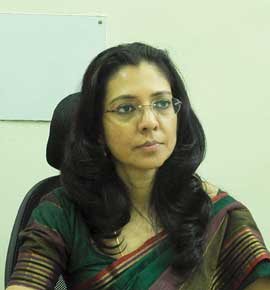
The need for skill development is the national clarion call, which is being earnestly taken up by various states too. Roshni Sen, IAS, Department of Women and Child Development and Social Welfare, Government of West Bengal, shares about the skill development initiative of her department with Elets News Network (ENN)

Roshni SenHow is the Government of West Bengal trying to develop the status of the women and children of the State via skill development?

Since the new government came to power, the overall status of the women of the State has improved considerably. The State Government rolled out a plethora of projects targeting the all round development of the women of the State. The State Child and Women Welfare department targets the women as well as the children. We equip them with proper technical as well as vocational training, which later helps them in gaining ground in the job market. We believe in the philosophy of ‘catch them young’ as young adults are an excellent learners and that is the best time to enhance their skills through systematic learning.

We focus on women and children who are in conflict with law, who are destitute and in difficult situations. We offer well-designed skill development courses for the girls and boys who are living in the juvenile homes

How does the department focus different segments and create specific courses by keeping the targeted need in mind?

We focus on women and children who are in conflict with the law, are destitute and in difficult situations. We offer well-designed skill development courses for the girls and boys who are living in the juvenile homes. As these women and children cannot be placed into mainstream education, we prefer technical education for them, which gives them financial independence, after being free from legal complications. We train women in making different jute products and also help them market those products. We are also zeroing in on short-term computer training courses and also on different financially viable courses such as retail, which has huge potential in the state. We are also training them in ‘Zari’ art work which is also in high demand in the market. These courses will not only empower the women in the State, but also create a ground for them, who are left in the lurch by society. We are empowering these girls who are living in destitute homes, with these courses. Different corporate and NGOs are joining hands with us in building the future of these girls.

What special steps is the State Government undertaking to rehabilitate girls rescued from the clutches of trafficking?

YOUNG
Skill development helps girls being independent and self-reliant

Everyday several girls are rescued by the anti-trafficking authorities and rehabilitation becomes a major jolt for them. By keeping this as a priority, Chief Minister Mamata Banerjee conceived a project “Muktir Alo”. The project is at the nascent stage and will be announced by the end of this month. Under this project, the rescued girls will be trained in different skill sets such as masala grinding and block printing. Both the existing sex workers and girls who have been rescued from different states of India will be enrolled under this training camp. We are doing this in association with the Nijoloy Home, as they already have an existing set up that runs under the Price Andrew Charitable Trust. These girls will be getting training in making kimonos and jute bags and specific handicrafts, and these products will be sold in boutique shops in London and their money will be credited directly into their accounts. Initially, the project has handpicked 50 girls from different parts of Bengal and later, we had plans of expansion by gauging the viability and utility of the project. We have also trained several girls under the Shukanya project.

How does financial empowerment of women benefit the overall growth of the State?

Today, every girl needs to be self-reliant and financially independent because through micro-level research, it has proved that if a state is investing on the growth of a girl child, then that financially empowered girl adds up to the GDP of the country further adding to its 360 degree development.

What is the outcome of the coveted State project, ‘Kanyashree’?

Kanyashree, till date has benefited several girls of the State and it has also created a buzz among the girls against early marriage. This project has also increased the literacy level of the girls in the State and included lesser privileged girls into the education process though financial inclusion. It has also helped in mending the health parameters of the girls of the State, which is again linked to the child mortality rates. I believe Kanyashree project is a true symbol of women empowerment. In Nadia district, several girls under this project got training in voice modulation and are currently working in BPOs. In Bankura, many girls are trained in organic farming under the umbrella of Kanyashree. In Coochbehar also, we got splendid results under the Kanyashree project. The project has developed confidence within the girls and also made them aware about education and other social nuances.

What were the roadblocks the project faced in its nascent days and how were these overcomed?

There were several hurdles but we managed to overcome all of them. We convinced the banks and also motivated the teachers and did a smart publicity campaign which motivated many girls to join back schools. We handled trafficked girls in a separate way and motivated them to join Kanyashree. We made schools the epicenter of all activities related to project, which ushered more students in the schools.

How are the Self Help Groups (SHGs) working with the government?

The SHGs are playing quite a crucial role in different state projects. They are preparing and supplying food to different state-governed projects, also helping us in convincing girls in joining the Kanyashree project. We are also using different folk artistes such as Chhau and Baul in publicising the Kanyashree project in different parts of Bengal. This is helping in reviving the dying folk arts and also giving Kanyashree a unique platform.

LATEST NEWS