Home Blog Page 829

Maths no constraint for polytechnic course admissions in Maharashtra

maths Maharashtra’s directorate of technical education (DTE) has decided to give class XII students from the science stream, who did not opt for mathematics at the 10+2 level, direct admission to engineering and technology courses in polytechnic institutes in the state. The move is expected to benefit a large number of HSC students who earlier had to give up their plans of pursuing diploma courses only because they had not taken maths at the junior college level.

The sale of the application kit for the direct second-year admissions for around 390 diploma courses in the state begins today.

Maharashtra has around 390 polytechnic institutes with an intake capacity of nearly 1.8 lakh students. Twenty per cent of these seats, which makes for nearly 36,000 seats, are open for direct second-year admissions. The DTE has kept a 25% quota for lateral entry from each of the four designated categories – HSC (science), HSC (bifocal), HSC (MCVC) and ITI.

Several SSC pass-outs have been making a beeline for polytechnic courses in Mumbai colleges to avoid the intensely competitive national-level entrance exams such as JEE (Main). The ever-increasing popularity of these courses saw cut-offs in sought-after colleges soar above 90 per cent last year. The three-year, post-SSC diploma courses allow a lateral entry into second-year engineering programmes—even in top-rung institutes.


Willswell Drives innovation

Trushal_Alshi_Willswell_Technologies Most of the video electronics hardware is being imported to India, says Trushal Alshi, Founder and Managing Director, Willswell Technologies Pvt. Ltd. In this backdrop, the company intends to design and develop innovative products in video electronics that are tailor-made for the requirements of the India market

What were the various reasons behind starting the Willswell Technologies?

Our team has strong technical background in video electronics.There is much space out there for consumer and commercial video electronics in India. We observed that most of the video electronics hardware is being imported to India, and in most of the cases, the importers (mostly traders) do not have control on quality and technical support for the products. The established brands for products like projectors also import the finished products. So overall there is limited scope for innovations as the products are not developed, designed in India. They are not tailor-made for the requirements of the India market. Our company intends to design and develop innovative products in video electronics like DLP led projectors with interactive function and multi-OS projectors. We also intend to carry out research and development in embedded systems for real-time scientific learning.

Tell us about the various difficulties and hurdles that are encountered in doing business at the ground level?

We being an Indian start-up company in hardware, our brand value was not considered up to the mark. Also, hardware products’ company is very capital intensive, unlike software products and services companies. Initially, for quite a long time had to carry out market research extensively. Products had to be evaluated and tested rigorously before promoting and selling them full fledge.

The existing international brands projectors (certain models) fall in 25,000-30,000 thousand price range. These projectors have many drawback compared to our WXGA resolution DLP LED projectors.

Despite the fact that our projectors have lot many advantages like long lamp life, portability, low power consumption and very little or no maintenance, the high prices of our projectors in comparison to established international models make us difficult to pitch in our projectors.

Our portable interactive kits (PIWB) are a low cost alternative to traditional bulky ‘with frame’ smart boards. However, there is very low level of awareness about the overall concept.

What is the market size of the products offered by you in India at present?

The present products like projectors have a market value as high as Rs.600 crore. Our other product, the portable interactive whiteboard kit, is a first of its kind in India. The market size we expect for such a product is around Rs.10 crore in the first year. It all depends on the increase in awareness about the product.

What are the major benefits for organisations and individuals adopting your solutions?

Our strong technical background in audio video electronics enables us to understand the technical requirements of our clients at a deeper level.This enables us to suggest and provide end to end solutions to them. Our clients can trust us for quality and post-sales support.

One example is our portable interactive kit. Using this product, existing projector installations can be converted to interactive smart touch board using stylus like e-pen.  Any chalk board, whiteboard or plain wall can be converted into interactive board. This option not only saves space in classrooms, meetings rooms, but also provides portability feature. The product has all the features that a conventional smart board provides but at the same time is offered at less than half of the cost of the framed smart boards.The products can also be afforded by students who have projectors available with them.

What is the vision of your company for the next two years?

We intend to become a reputed brand in education and consumer video electronics and will be known for our excellent quality and best technical support.We will be having more variety of innovative products in interactive and video projection domain.

What are the various methods you are using to increase the visibility of your organisation?

Digital marketing, dominant online presence and professional networking are few of the important measures that we are engaging in to increase the visibility.Roadshows, exhibitions are also important for us.

How you can differentiate your services from competitors?

Very strong technical expertise is our major asset.  Openness to new ideas of learning and constant drive for innovation is what will enable us to provide a better experience to our clients as compared to our competitors.

What are the measures adopted by you to engage customers. Please share a special case study?

Initial engagements with clients have been a wonderful experience.Our products are very innovative and not many target clients knew about the concept of converting whiteboards into interactive touch screen. We had to carry out several rounds of meetings and demonstrations for the initial clients.These happy clients are now recommending our products to potential clients.

What are the major stakeholders and sectors you are focussing on?

Our focus is on education, corporate and consumer electronics domains. We are also promoting good quality DLP LED projectors as replacement to TV.So market is not limited to Education and Corporate.

What are the various initiatives taken by your organisation to emerge as a market leader?

We are paying a lot of attention to the quality of our products. Post sales technical support and periodicup-gradation of products to next better level experience is definitelygoing to help us in the long run. Fruitful long term association with existing client base will also help us emerge as market leader.

EduLanche offer academic networking platform

Intro: The vision of EduLanche is to provide an academic networking platform. To enrich the user experience, EduLanche is scaling up to become the world’s largest academic network serving students, teachers, publishers, institutions and recruiters from around the globe

What prompted you to start EduLanche?

I completed medical school training successfully in 2012 at Govt. Medical College, Thrissur followed by a year of rural healthcare in India during 2013-14. Curiosity in e-learning led to development of free knowledge sharing website, www.lifehugger.com during medical school days. The intuitive idea of developing a network for academics, led to the launch of EduLanche Academic Network in 2014. Personally, I funded the initial phase of the project with funds received from publications.

What are the various difficulties encountered in doing business on ground level?

We believe it is important to anticipate and avoid hurdles as much as possible and have the conviction to face difficulties that may emerge in the course of the business.
What is the market size of the services offered by you in India at present?

EduLanche Academic Network has a global potential proven by the user base expanding in India and abroad. The market opportunity is substantial at $300 billion. India’s online education alone is predicted to reach $110 billion by 2015
What are the major benefits for organisations adopting your solutions?EduLanche offers an exclusive platform for academic networking. E-learning, e-commerce, recruitment solutions and advertising have been enabled to enrich the user experience. On EduLanche, students can seamlessly connect with teachers, academic institutions, recruiters and vice versa.

EduLanche offers an exclusive platform for academic networking. E-learning, e-commerce, recruitment solutions and advertising have been enabled to enrich the user experience. On EduLanche, students can seamlessly connect with teachers, academic institutions, recruiters and vice versa.

What is the vision of your company for next two years?

EduLanche is scaling up to become the world’s largest academic network serving students, teachers, publishers, institutions and recruiters from around the globe in five years from now.

What are the various methods you are using to increase the visibility of your organisation?

EduLanche mostly depends on word of mouth publicity among students. To inform teachers and institutions about the benefits of EduLanche Academic Network online and direct marketing is being utilised.

How you can differentiate your services from competitors?

EduLanche is most awarded educational startup and has won five major awards within six months of launch for being the first to have integrated learning, networking and careers on a single platform.

DU meet over CBCS today

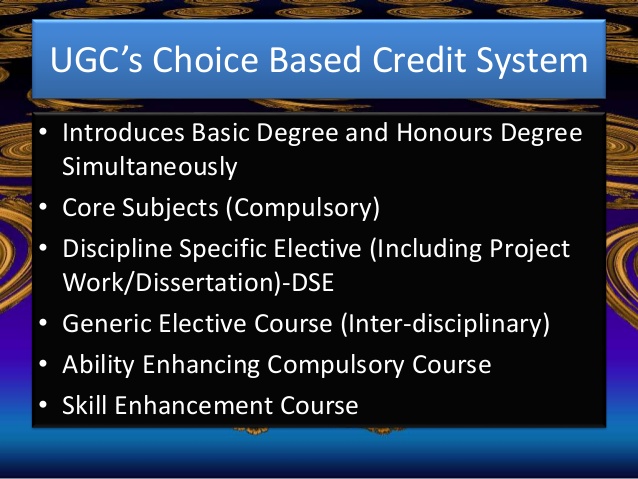
choice based credit system Delhi University’s course committee is meeting today to discuss the formulation of syllabus for the introduction of the choice based credit system (CBCS). Despite the ongoing criticism crowding the HRD Ministry’s decision to introduce the CBCS, the Delhi University’s executive committee had decided to do ahead with it in the coming academic session.

This will be the first meeting post a University Grants Commission notice saying that instead of 20 per cent, a varsity can now modify the model syllabi up to 30 per cent. During an earlier meeting of the course committee, teachers had alleged that courses were prepared without consultations and approved by the departments.

The Delhi University Teachers’ Association (DUTA) hopes that the new system will not be implemented in a hasty manner. Nandita Narain, President, DUTA, has said that she is hoping that the HRD minister (Smriti Irani) will not do anything arbitrarily , but only in necessary consultation with the educationists and the students, whose lives will be majorly affected by the decision to introduce this new system.

It is not just the DUTA or left-wing students’ and teachers’ groups that are protesting against CBCS, right-wing organizations such as the National Democratic Teachers’ Front (NDTF), and even the NSUI have taken a critical view of the matter.

It may be mentioned that the University Grants Commission (UGC) has announced that universities can customise the model syllabi by 30 percentage depending upon their areas of specialisation. This move has given more space to the universities in introducing the system. UGC previously uploaded the model syllabi stating that 20 percentage leverage for modification is allowed

Mumbai University gets new VC

Mumbai University VCStudents and faculty have a long wish list for the new Vice-Chancellor (VC) of Mumbai University, professor Sanjay Deshmukh (50), who is set to charge as vice-chancellor in a fortnight. These include speedy and accountable exam process to the early declaration of results. Academicians say that division of work to handle such a huge number of affiliated colleges is a must for efficient delivery. After Deshmukh’s selection in the topmost office of the University, many believe that the trend of candidates from the science background making it to the top post of universities in the state is common.

It may be mentioned that Devanand Shinde was selected as vice-chancellor of Kolhapur’s Shivaji University by the governor. Shinde was serving as the professor of chemical technology at a university in Aurangabad. The incumbent Rajan Welukar was also from mathematics and statistics background. Vijay Khole, former vice-chancellor of Mumbai University, was the director of the Institute of Science and had done his post doctoral in biophysics. Of the five candidates shortlisted for Mumbai University vice- chancellor’s post, four were from science background, except Vibha Surana, head of the German department.

Media reports state that although this time there is no opposition to the selected candidate, different groups of stakeholders have raised doubts about the appointment process followed for the V-Cs for Mumbai and Kolhapur universities. Furthermore, as VC, Deshmukh will get to recommend three names to the governor for the post of pro vice-chancellor.

Meanwhile, giving a major respite to students whose name appeared in the second merit list on Thursday, the University of Mumbai has extended the deadlines for submission of fees till today. This would bring relief to all those who could not complete the process on Friday as they failed to reach the colleges due to heavy rainfall, which disrupted the Mumbai local trains and road transport. Though they had time on Saturday, colleges told the University that they might not be able to finish the process by 1:30 pm on that day, considering the weather conditions.

IIMs divided over draft bill that gives new powers to HRD Ministry

IIM-logo At a time when the HRD ministry has been accused of interfering in the functioning of institutes of higher learning including the IITs, another controversy has cropped up. The Indian Institutes of Management (IIMs) are sharply divided over IIM draft bill that grants, which seeks to give seeping powers to HRD ministry in the functioning of the B-schools, including policy matters like deciding fees, emoluments and service conditions of the faculty. The bill also provides for constitution of a coordination forum chaired by the HRD minister.

While the six older IIMs are of the view that this is an attempt to ‘micro-managing’ them, something that would infringe upon their autonomy, those in the eight new premier institutes feel the apprehension is misplaced. On the other hand, the eight new premier institutes feel that there is no base to these apprehensions.

A media report states that an IIM professor, who was involved in drafting the bill, voiced surprise at the final draft as the earlier document did not contain any clause that gave ‘overwhelming authority’ to the government in running the institutes.

Most IIMs would be sending their response to the draft, uploaded on the HRD ministry’s website, over the next few days. The bill seeks to declare the IIMs ‘Institutes of National Importance’.

Meanwhile, the Indian Institute of Management, Ahmedabad (IIM-A) still has a student ratio heavily skewed in favour of engineers and male students. Of the 400-odd students admitted to IIM-A in the 2015-17 batch, women make up only 14 per cent — the lowest in the last three years despite concerted efforts by the institute to better the ratio on the campus.

85 colleges of Central Gujarat University de-affiliated by GU

Gujarat_University Around 85 colleges that were affiliated to Gujarat University (GU), but were in the jurisdiction of the newly formed Central Gujarat University (CGU), will be de-affiliated by GU and transferred to CGU. While the first year students will be enrolled with the CGU, the already studying second and third year students will remain as GU students. Headquartered in Godhra, CGU will cover Panchmahals, Mahisagar, Dahod and Vadodara rural.

With the de-affiliation of 85 colleges and formation of Gujarat Law Society University, the number of colleges has been reduced by 100. GU earlier had 350-odd colleges affiliated with it.

Earlier, the VC had proposed that all the colleges which were affiliated from other areas should be transferred to the respective university of their areas. Colleges of Ahmedabad and Gandhinagar should be affiliated with GU. Officials from GU said that in the past one year de-affiliation of 100-odd colleges has been after a very long period. In the past, only 10-15 colleges were de-affiliated.

Meanwhile, the world’s first kidney transplant university in Ahmedabad, built by Institute of Kidney Diseases and Research Centre (IKDRC) at the cost of Rs 50 crore, was inaugurated by chief minister Anandiben Patel.  The university, expected to come up on more than 25-acre land near IKDRC, will offer courses in dialysis technology, anesthesia, clinical nursing, nurse technicians, immunology, biochemistry and other vital organs that are affected due to chronic kidney disease. The varsity will prepare documentary-based science evidence on transplants and new-age techniques.

CBCS will not hamper education environment says UGC

UGCThe UGC has clarified that the introduction of Choice Based Credit System will not in any way hamper the academic liberal environment of the universities. The University Grants Commission (UGC) has been endeavouring to facilitate the introduction of Choice Based Credit System (CBCS) for quite some time. It has made the guidelines for its effective implementation, which were uploaded in the month of November, 2014. The guidelines per se provide a template to the universities to design the CBCS according to their strength while keeping the overall uniformity amongst the universities.

The UGC in order to ensure fairness in assessment and evaluation has also given template of procedures to be followed so that the standards of education are equally maintained. Numerous communications have been sent to the Vice-Chancellors (VCs) of all Universities for effective implementation of the system. Eight Workshops have been held all over India in which VCs of all Central, State and Private Universities participated. The Vice-Chancellors of Central Universities, in the Conference held in February 2015, have given their commitment to the Visitor to implement the same from the academic year 2015-16. This system is already in vogue in numerous private universities and this is an endeavour of the Government of India to bring State Universities and Central Universities at par with international standards so that the pass outs of these universities are not at any disadvantage in comparison to the private universities.

To handhold the Universities, UGC embarked on an extensive exercise of designing curricula for undergraduate course which would assimilate with the provisions of CBCS. The syllabi by the experts have been put in the public domain for feedback and for subsequent modification before they are finalised. The syllabi so finalised will give leverage to the universities to modify the same to the extent of 30 per cent (likely to be enhanced from 20 per cent after feedback) depending upon their areas of specialisation. This is not deviation from the earlier practice where inter-university migration requires a minimum 70 per cent equivalency as such implying that the syllabi all over India in undergraduate level are similar to the extent of 70 per cent. Under the CBCS system the elective subjects so offered will only be from the subjects which are available in the Universities or Institutes. As such the teaching load of the teachers is not likely to increase beyond the norms stipulated by UGC. Also there will be no inter-institute, inter-college migration transfer of teachers. It also will not suppress the academic liberal environment of the university as nothing contrary has been suggested in the template of the syllabi so designed by the experts.

Village Education Committee formed under SSA

VECThe State of Jammu and Kashmir will now have a Village Education Committee to achieve the objective of Universalisation of elementary education. The committee for schools will be formed under Sarva Shiksha Abhiyan and the aim of the formation of the committee is to encourage government-community partnership.

The constitution of VECs will give community ownership to educational institutions as it functions as a part of the social system. The committee will play a significant role in micro-planning, preparing school development plan including requirement of buildings, toilet and drinking water facilities.

The step will bring a change in attitudes of people towards education and will also help in motivating the parents or guardians to send their children to schools, especially girls and children from disadvantaged groups.

The VECs will also look forward the work of school construction and maintenance, school mapping and micro-planning exercise, preparation of village education plan and monitoring the school management as well as teacher performance. The committee will also work towards the assurance of cent per cent completion of elementary education of all children, monitor academic performance of children, attendance and quality of education, alternative and innovative education centers as per guidelines and directions of District Education Committee.

Indian teachers gaining prominence worldwide

Varkey Foundation Global Teacher Prize 2016 In a development which points towards their growing prominence, Indian teachers are being urged to apply for the Varkey Foundation Global Teacher Prize 2016 at globalteacherprize.org. The largest prize of its kind, the award values USD 1 million. Now in its second year, the award was set up to recognise a teacher who has made exceptional contribution to the profession as well as shine a spotlight on the important role teachers play in society.

The Varkey Foundation and Club de Madrid published an open letter signed by over 25 former world leaders calling on ‘Governments around the world to protect and value teachers, and play their part in restoring the respect that they so richly deserve’. “Frequently the ills of society are laid at the door of teachers. They are blamed for everything from a decline in manners among young people to a lack of basic skills in the workplace. They have even, on occasion, been blamed for a country’s poor economic performance. Too often politicians see teachers as an easy target for short-term political gain”, the letter states.

In 2014, a total of 193 teachers from India applied for the prize, which was higher than any other country including the US (174) and Nigeria (98).  India had three teachers in the final 50 shortlisted candidates and one teacher in the final ten.

The applicants for the Global Teacher Prize 2016 will be shortlisted down to a top fifty and then a final ten, which will be announced in February 2016. The winner will be chosen from the ten finalists by the global teacher prize academy made up of prominent individuals including academy award winning actor Kevin Spacey; Wendy Kopp, CEO Teach For All; and Brett Wigdortz, Founder of Teach First. All ten finalists will be flown to Dubai for an award ceremony taking place at the Global Education and Skills Forum in March 2016 where the winner will be announced live. The closing date for applications is October 10, 2015.

It may be mentioned that the teaching is gaining prominence as a profession in nation building. Even in India, selected teachers across the nation will soon be conferred with a ‘National Award for the use of information and communication technology in education’. CBSE recently released the details of ICT awards for teachers.

Schools following the CBSE curriculum, both government and private, have recognised how training in computers helps in the overall development of students, and this is possible only with the help of those teachers who have worked on the establishment and integrating of classroom teaching with ICT.

The government has launched various steps to introduce ICT in schools one such major step was ICT @Schools which provided a new platform of learning. In December 2004, ICT was launched in schools to provide opportunities to secondary stage students to develop ICT skills and promote ICT aided learning process. Under this scheme, teachers are conferred with a ‘National Award for the use of ICT in education’.

LATEST NEWS