

Home Blog Page 839

NIELIT to make 55 lakh students ready for ICT jobs

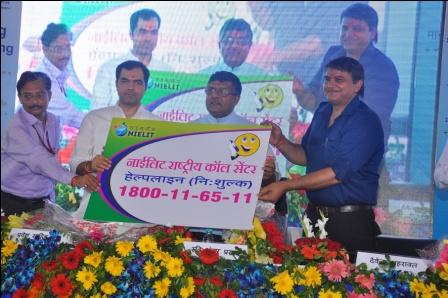
NIELITTo make success of the National Digital Literacy Mission and Digital India Campaign of the Government of India, the National Institute of Electronics and Information Technology (NIELIT), a body with the Department of Electronics and Information Technology (DeitY), Ministry of Communication and IT, Government of India laid the foundation stone of its headquarters in Dwarka, New Delhi.

On the occasion, a national toll-free helpline number 1800-11-65-11 for NIELIT students, Electronic System Design and Manufacturing (ESDM) portal and Digital Marketing Information Booklet were also unveiled.

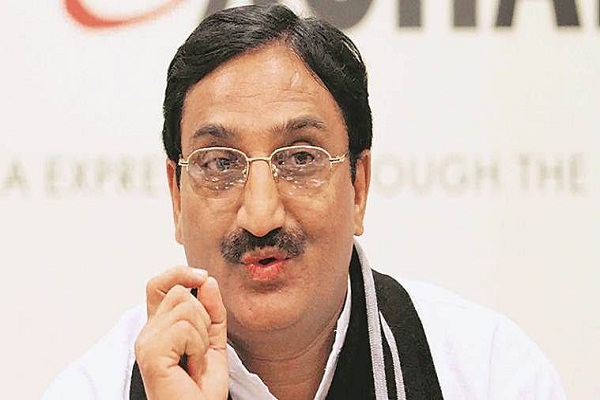
In line with the Government of India’s Digital India Campaign, NIELIT has set a target of training 55 lakh students in ICT for jobs, ESDM and Digital Marketing courses  in the coming 4-5 years. Ravi Shankar Prasad, Union Minister for Communication and Technology, Government of India, also participated in a tree plantation initiative along with Pravesh Sahib Singh, MP, West Delhi, Col. (retd.) Devinder Sehrawat MLA, Bijwasan, R.S. Sharma, Secretary, DeitY, Dr. Ajya Kumar, Joint Secretary, DietY, and Dr. Ashwini Kumar Sharma, Managing Director, NIELIT.

Ravi Shankar Prasad said, “A digital revolution has begun in the country.  NIELIT will be the centre of digital empowerment in India by minimising the digital divide through skill development and by providing basic digital literacy at a click of a button. NIELIT’s efforts to start digital marketing courses are commendable as artisans, traders etc from all corners of the country should be digitally trained to take full benefits of the ecommerce revolution taking place in the country.”

Parvesh Sahib Singh, MP, West Delhi said, “India has the best brains globally and we need to nurture them. Dwarka is emerging as a centre of excellence and we’re pleased that NIELIT which is an integral part of the Digital Literacy Mission is establishing its headquarters in Dwarka.”

Dr. Ajay Kumar, Joint Secretary, DeitY said, “It is commendable that NIELIT is raising funds by itself for the construction of its Headquarters and this speaks highly of its growth trajectory over the years.”

Dr. Ashwini Kumar Sharma, Managing Director, NIELIT said, “We are very happy to lay the edifice of NIELIT’s headquarters which will help us achieve corporate professionalism, diversify and become more self-sustainable, thus helping us reach closer to our targets in-line with the National Digital Literacy Mission.  At our headquarters in New Delhi, we plan to dedicate resources towards developing more industry courses, in areas like Digital Marketing, aimed towards employability of youth especially in rural areas.”

NIELIT has imparted skill education to more than 9 lakh candidates in 2013-14 as against 4 lakh in 2012-13.

Punjab Government emphasise on quality education

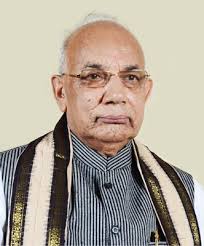
Gov _ Solanki -1To impart quality education to the children to meet the challenges of globalisation, Punjab governor Kaptan Singh Solanki talks about quality education by developing a roadmap of academic curriculum. Solanki stresses on to utilise all the available resources to explore and develop the potential of students with the help of new innovative programmes.

At a time when the government is focusing on skilling the youth through their various skill development programmes and introducing it in the curriculum, it is a time to leverage from the benefits being provided by the government institution to make these students skilled and ready for the future challenges.

Recently Rajiv Pratap Rudy, Minister of State for Skill Development and Entrepreneurship has recently emphasised to standardise vocational training in India and develop a roadmap to standardise education. For this the states has to become partners in skill development and have to educate themselves on National Occupational Standards and Qualification.

Government emphasise to give facilities to differently abled students

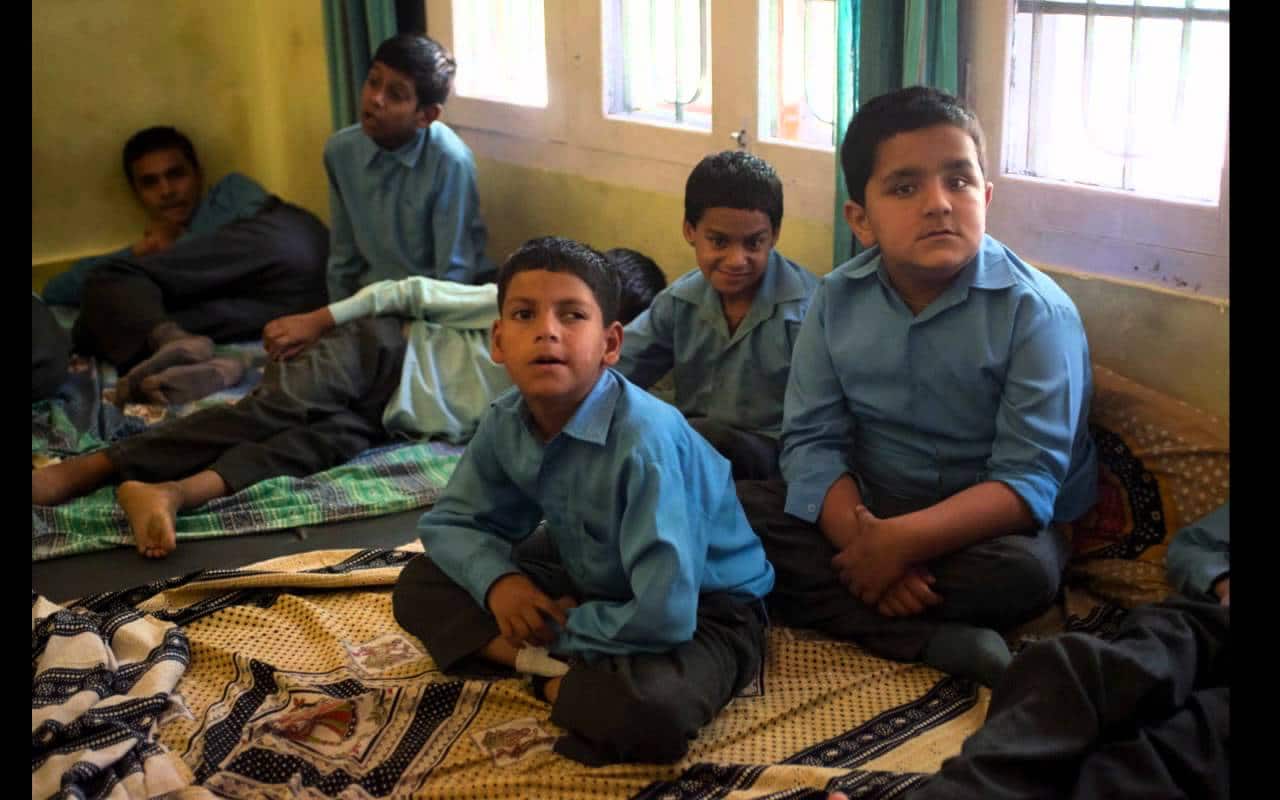
special children in schoolTo universalise elementary education for all children in the age group of 6-14 years, the Government of India is assisting States and Union Territories to implement Sarva Shiksha Abhiyan (SSA). SSA provides Rs.3000 per child per annum for the interventions related to education of children with special needs (CWSNs).

The major interventions under SSA for the education of CWSNs are identification, functional and formal assessment, appropriate educational placement, preparation of individualised educational plan, provision of free aids and appliances, transport and escort support, teacher training, appointment of resource teachers, therapeutical support and barrier free access.

According to Unified District Information System for Education (UDISE) data 2013-14, 25.03 lakh CWSNs were reported to be enrolled in schools. Through home based education, SSA has been able to cover 1.28 lakh CWSNs.

36 States/UTs have appointed 21,056 resource persons. 764 NGOs in 31 States are currently involved in the Inclusive Education (IE) programme under SSA. 2.60 lakh CWSNs were provided assistive devices through various modes in 2014-15. 82.33% schools have been made barrier-free. Besides, 14.82% schools have also been provided disabled friendly toilets.

53.60% teachers were imparted a specific 3-6 day orientation to Inclusive Education (IE). 1.26 lakh teachers were trained on how to undertake curricular adaptations in an inclusive classroom in 2014 -15. 42,594 Braille books and 39,283 large print books were given to the visually impaired children. Apart from this 1,43,211 CWSNs were provided transport support and 1,32,400 CWSNs were provided escort support. Therapeutical support was provided to 1,61,144 CWSNs, while surgical support was provided to 13,535 CWSNs under the SSA.

Pranab Mukherjee to give Presidential Awards for Classical Tamil

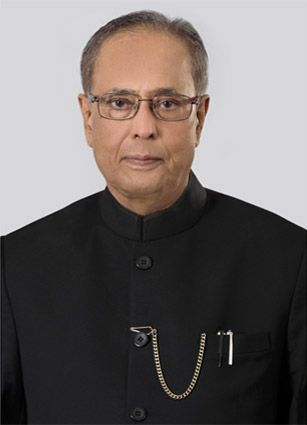
president-profile2At a function in Rashtrapati Bhavan, President Pranab Mukherjee will present the ‘Presidential Awards for Classical Tamil’ for the years 2011-12 and 202-13 respectively. The Presidential awards for Classical Tamil will give due recognition and honour to the distinguished scholars who have made contribution to classical Tamil language and literature.

Under this scheme, a total number of eight awards are given for each year. The awards are:

Tholkappiyar Award: This is a life time achievement award for Indian scholar which is given to distinguished scholars with an outstanding contribution in the field of Tamil studies each year. The award carries a certificate of honour, a memento and a one-time cash award of rupees five lakh.

Kural Peedam Award: Two international awards, one each for persons of Indian origin and another for a person of non-Indian origin are given to the eminent scholars of Classical Tamil for each year. It includes a certificate of honour, a memento and a one-time cash award of rupees five lakh.

Young Scholar Award: Five awards are given to young scholars in the age group of 30-40 years for each year. Those scholars who have publications to their credit and have shown interest in Tamil studies and have excelled in it are given these awards. It includes a certificate of honour, a memento and a one-time cash award of rupees one lakh.

For 2011-2012 following are the scholars selected for the Presidential Award:

Tholkappiyar Award is given to Dr. Thiru S.V. Shanmugam

Kural Peedam Award is given to a foreigner Dr. Tirumathi Eva Maria Wilden

Young Scholar award is given to Dr. K. Ayyapan, Dr. Ehil Vasanthan, Dr. K. Jawahar

For the year 2012-13, the awards are given to:

Tholkappiyar Award is given to Dr. Thiru R. Krishnamurthi

Young Scholar award has been given to five scholars, Dr. A. Satish, Dr. R. Venkatesan, Dr. P. Jay Ganesh, Dr. M.R. Devaki, and Dr. U. Ali Bava.

South Kashmir to get new University

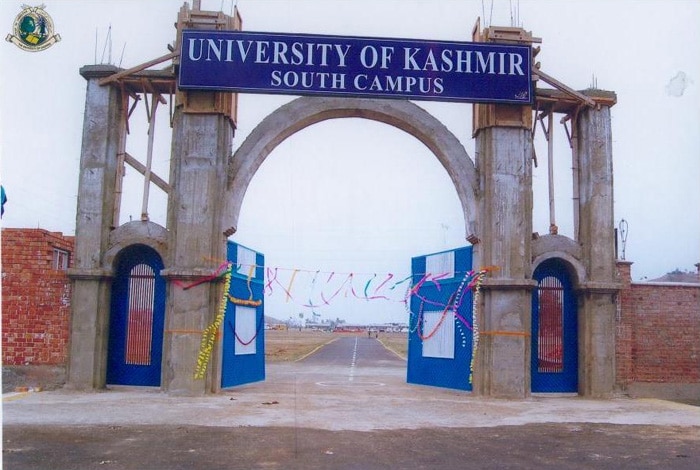
South KashmirAs per the provisions of the Constitution, Education as a subject is on the Concurrent List (List III) of the Seventh Schedule. Hence setting up new universities and other institutions is the responsibility of both the state as well as Central Government. The Central government has already opened two Central Universities in Jammu & Kashmir; one in Jammu and the second in Kashmir. As of now there is no plan to further open any new Central University in South Kashmir or in Jammu & Kashmir.

However, recognising the needs of higher education, the Central Government has launched the Centrally Sponsored Scheme (CSS) of Rashtriya Uchchatar Shiksha Abhiyan (RUSA), which seeks to expand the institutional base by creating additional capacity in existing institutions and establish new institutions in order to correct regional imbalances and provide access to quality education in unserved and underserved areas.

Based on the State Higher Education Plan (SHEP) submitted by the state of Jammu & Kashmir under RUSA, the Central Government has approved setting up of two universities by clustering of colleges at Srinagar and Jammu. In addition, two new professional colleges at Kathua and Ganderbal; upgradation of existing colleges to model degree colleges at Shopian, Samba and Ganderbal; infrastructure grants to the University of Jammu and University of Kashmir; infrastructure grants to 22 colleges; and support for vocationalisation of higher education in 20 colleges have also been approved under RUSA.

NSDC signs MoU with SICB

NSDC-logoNational Skill Development Corporation (NSDC) has signed a Memorandum of Understanding (MoU) with Sikkim’s State Institute of Capacity Building (SICB) to standardise the skill efforts in the state. The youth will be empowered to take jobs across the country as the courses will be aligned to particular standards set by the industry in accordance to Sector Skill Councils (SSCs).

Students will be given skilled based training aligned to Qualification Packs (QP) and National Occupational Standards (NOS) developed by NSDC approved SSCs and pegged on National Skills Qualification Framework (NSQF). Training partners of SCIB will also align to QP-NOS of sector skill councils. SCIB will engage with NSDC funded training partners for skilling in the state.

A student will be given a joint certificate on successfully attaining pass marks in the assessment as per the guidelines, jointly issued by SICB, NSDC and SSC. The SCIB has been set up under the chairmanship of Chief Minister with the aim to skill the youth of Sikkim.

The SICB will execute skill based trainings by convergence of all ongoing skill development schemes of the state and centre respectively. Key schemes includes Skill Development Initiative Scheme, Aajeevika Skills, Employment Skills Training and Placement under National Urban Livelihood Mission (NULM), Skill based courses in Higher education / University, Skill training for inmates of State Prison, Recognition of Prior Learning (RPL), Operationalising of upcoming Multi Skill Development centres and tie up for training on transnational standards.

Dilip Chenoy, Managing Director and CEO, National Skill Development Corporation (NSDC) said, “This move is in line with the present Government’s special focus on skill development. Sikkim has a very vibrant and hardworking youth and I urge them to avail this opportunity to get a skill certificate, thereby making a mark for themselves in the state and in the job market. Every state has huge role to play to achieve standardization in education and this is another step towards it.”

Shanker Deo Dhakkal, Chief Administrator, State Institute of Capacity Building said, “We are delighted to partner with NSDC and expect this partnership to give a boost to skill development initiatives in the state.  We would like that every youth of this state progresses from the skill courses being offered and expect that the alignment of the courses to industry standards in making the youth more employable”.

Empowering talent in Tier II and III cities

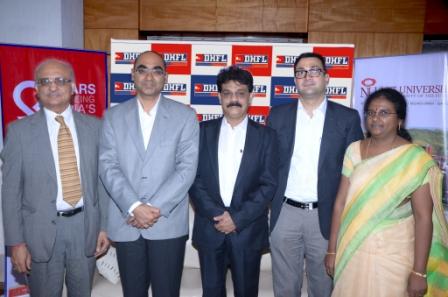
NIITDHFL, a housing finance company with NIIT institute of Finance, Banking and Insurance Training Ltd (IFBI), and NIIT University has entered into a tripartite Memorandum of Understanding (MoU). Under the MoU, a one year post graduate programme in Financial services was launched.

The programme will offer graduates career opportunities in housing finance sector in tier II and tier III cities. The programme is a contribution to help achieve success for the Union Government’s flagship programmes of creating 100 smart cities and accomplish housing for all, has initiated a concerned strategy to build quality human resource for the financial services sector in the Tier II and Tier III cities.

Minimum 50 qualified housing finance professionals trained in the sales and credit functions would be absorbed by DHFL branches in the identified Tier II and Tier III locations post completion of the one year programme. The one year post graduate financial services by NIIT University in collaboration with NIIT IFBI will comprise 9 months residential programme at the NIIT University campus, followed by 3 months of internship at a DHFL branch or office.

On completion of the programme, the students will be awarded with a certificate by NIIT University and will be absorbed by DHFL as an employee of the company designated as a management trainee. The students will be jointly shortlisted and admitted by DHFL, NIIT, IFBI, and NIIT University through a selection process.

The programme also aims to impart knowledge and develop skills in housing finance service quality, credit management, operations, sales, general management, and relationship management. The internship will be based in Tier II and Tier III cities which will enable students to get comprehensive experience about the sector and the business, which will ensure that the housing finance industry attracts the perfect mix of students with astonishing talents.

Harshil Mehta, CEO, DHFL, said, “DHFL’s tie-up with NIIT IFBI and NIIT University reinforces the Group’s three decades old philosophy and vision to strengthen India’s economy at grass-root level. DHFL is committed to building quality, tech smart and a financially aware talent pool for the emerging markets to help provide best-in-class financial services for enabling home ownership in tier 2 and 3 towns for every Indian, especially in the LMI segment.”

Bimal Jain, President, NIIT IFBI said, “NIIT IFBI has a proven track record of providing trained manpower to the BFSI industry in India for the last eight years. We are now very excited to partner with DHFL as it provides us an opportunity to extend our expertise to the housing finance sector by designing programs that will help identify and professionally train manpower for the organization, while empowering aspiring youth to access challenging careers in the sector.”

The programme aims to facilitate industry-academia partnership for providing excellence in education and building competent professionals in housing finance.

Vocational education to be introduced in 350 Maharashtra schools

Maha Schools Maharashtra is all set to introduce the National Skill Qualification Framework (NSQF) in schools. The state government’s Rashtriya Madhyamik Shiksha Abhiyan (RMSA) has signed a memorandum of understanding with the National Skill Development Corporation (NSDC) for full-fledged implementation of vocational education in schools in Maharashtra as per NSQF.

NSQF-compatible vocational courses for class IX to XII will be introduced and integrated from the academic year 2015-16. To begin with, the project will start at level I (class IX) in about 350 government schools in the state with an aim to make the students employable when they complete secondary education. Senior officials of RMSA said equal weightage will be given to urban and rural areas while identifying schools with 10 institutions per district to get covered.

The MoU states that “These courses will be industry-driven with the curriculum developed and approved by Pandit Sundarlal Sharma Central Institute of Vocational Education (Bhopal). The courses will be based on the national occupational standards set by the sector skill councils approved by the NSDC in the fields of automobile, healthcare, retail, multi-skills, beauty and wellness and sports. In future, more streams can be added under this scheme on mutual consent”.

It may be mentioned that the requirements for a government job will see a significant change by 2020. The NSQF, a competency-based framework that organizes all qualifications according to a series of level of knowledge, skills and aptitude, is going to play a major role as it will become mandatory for a government job by 2020. NSQF is expected to integrate vocational education, skill training, general education, technical education and the job market.
Speaking in this context, Minister of State for Skill Development and Entrepreneurship, Rajiv Pratap Rudy had recently said that by 2020, an educational qualification will not be enough, and one would need a NSQF to apply for any vacancy in the government.

Special Education course by NGO

vidyasagar-logo-high-res

Vidya Sagar, an NGO that works with children and adults with neurological impairments, is offering a one-year, full-time PG Diploma course in Special Education-Multiple Disabilities (Physical and Neurological). The course includes a three-month internship to generate trained resource persons in special education.

The course is recognised by the Rehabilitation Council of India and affiliated to Madras University. Applicants should be a graduate or above in any discipline from a university/ college recognised by University of Madras.

A study informs that in India, the prevalence rates of the spectrum of neurological disorders from different regions of the country ranged from 967-4,070 with a mean of 2394 per 100,000 population, providing a rough estimate of over 30 million people with neurological disorders.

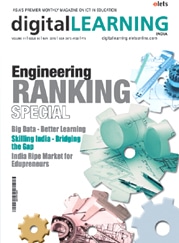
Engineering RANKING SPECIAL :: May 2015

EDITORIAL

Harbingers of change

INDUSTRY SPEAK

Recording Lectures for Better Results

BIG DATA 

Big DATA Better LEARNING

INTERVIEW

MAP & Grow Faster

Turning the Tide

Nurturing Creative Minds

“Incubation Centre could be a Milestone”

Making Technocrats Industry Ready

Mission Entrepreneurship

Special Feature

MILES TO GO

SKILL DEVELOPMENT

“India is going to be the Skills Capital of the World”

Skilling India – Bridging the Gap

Engineering Skills

SKILL DEVELOPMENT Engineering a new India

Engineering

Top Engineering Colleges of India

Engineering Ranking 2015

How We Ranked Them

Government Engineering Colleges A Perception-based Survey

Engineering Colleges in Central India

Engineering Colleges in East and the Northeast India

Engineering Colleges in North India

Engineering Colleges in South India

Engineering Colleges in West India

Private Engineering Colleges

Industry Focus

Ideal Destination for young learners

START-UPS

India Ripe Market for Edupreneurs

Technology aiding fee mobilisation

“Making learning fun and impactful”

LATEST NEWS