Girls bagged the top three positions in the merit list of Punjab School Education Board (PSEB) Class XII annual exam, the result of which was declared on Monday. The top positions went to Darshveer Kaur of RS Model School, Ludhiana and Saema Rashid of Khalsa Senior Secondary School, Ropar. Both secured 100 per cent marks. PSEB chairperson Tejinder Kaur Dhaliwal said while declaring the result. The girls left the boys behind by grabbing the top seven positions besides dominating 75 per cent merit list.
While Sarika of Humanities stream from BCM Senior Secondary School at Jamalpur in Ludhiana stood second by securing 99.78 per cent marks, Kajol Tandon of Science stream from RS Model School, Ludhiana bagged the third position by securing 99.56 per cent marks. Ludhiana district once again topped the list of meritorious students, with 199 students from here making it to the merit list. PSEB had conducted the senior secondary annual exams in March this year, in which 3.40 lakh students had appeared. Of them, 3.05 lakh students were regular while the remaining had appeared as private candidates under Open School programme.
With overall pass percentage of 76.24 per cent, 2,40,199 of the total 3,04,644 regular students and 18,881 of the total 35,174 private students cleared the Class XII exams.
Education Minister Dr Daljit Singh Cheema excited over the unique +2 result said that it was gratifying that the education department’s focus on improving education level of girl students was paying rich dividends as girls by their commitment and sheer hard work have begun their unique march towards gender equality in the state.
Novabeans, a pioneer in 3D Printing technologies in education in India has announced the first 3d printing contest in India for students. 3d printing design contest dates are from April 1– July 31, 2015. Qualified participants are students between the ages of 14- 30 years old with a valid student ID card.
There are great prizes to be won ranging from Ultimaker 3d printers to 3D Model Printouts. Participate and their school and college can win 3d model, printed at our studio and 3d model shall be sent to your school or college as display. More information is available on contest page.
3D Printing technology is used for both prototyping and personalised manufacturing, with applications in: Architecture, Engineering and Construction (AEC), Industrial Design, Automotive, Aerospace, Military, Civil Engineering, Dental and Medical industries, Jewellery, Biotech, Fashion, Home Decor and more.
Novabean’s aims to help Indian schools and colleges adopt 3D printing in a cost effective manner, so that the schools and colleges are able to provide a platform to enhance learning and shape students’ futures.
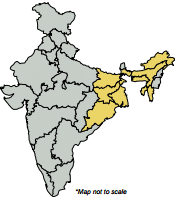
The region comprises of states rich in ethnic cultural heritage with linguistic diversity, which is also rich in education sector. The region has some of the best educational institutions which include IIT Kharagpur, IIM Calcutta, IIT Patna and NITs in Rourkela, Durgapur, Jamshedpur and Patna.
Assam, Bihar, Chattisgarh and Jharkhand
Government Institutes
Name of Institute
City
Rank Based on
Public Choice
Indian Institute of Technology
Guwahati
08
ISMU
Dhanbad
11
Birsa Institute of Technology
Sindri
35
National Institute of Technology
Patna
40
National Institute of Technology
Jamshedpur
42
National Institute of
Foundry & Forge Technology
Ranchi
50
Promising Institutes
Name of Institute
City
National Institute of Technology
Shillong
National Institute of Technology
Aizawl
Tezpur University
Tezpur
Private Institutes
Name of Institute
City
Digital LEARNING
Ranking
Birla Institute of Technology
Deogarh
A+
Birla Institute of Technology
Patna
AA+
Birsa Institute of Technology
Mesra
AA+
Odisha, West Bengal & Arunachal Pradesh Government Institutes
Established in 1960, Maulana Azad
National Institute of Technology
(MANIT) is one of the leading
institutions of national importance in
the area of technical education.
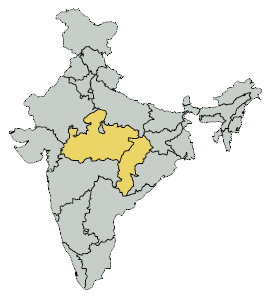
Education is rich in Central India with states like Madhya Pradesh and Chattisgarh being home to several education institutions of national importance like IIT, IIM, IIIT, etc.
Map Note to Scale
Madhya Pradesh and Chattisgarh
Government Institutes
Name of Institute
City
Rank Based on
Public Choice
Atal Bihari Vajpayee Indian Institute of Technology & Management
Gwalior
26
Name of Institute
Bhopal
30
Name of Institute
Raipur
47
Private Institutes
Name of Institute
City
digitalLEARNING Ranking
Acropolis Institute of Technology and Research
Indore
A+
AISECT University
Bhopal
AAA
Barkatullah University-University Institute of Technology
Bhopal
AA+
Institute of Engineering andTechnology (DAVV)
Indore
AA
Institute of Technology and Management
Gwalior
A+
IIIT Jabalpur (PDPM Indian Institute of Information Technology Design &Manufacture)
Jabalpur
AA
Laxmi Narayan College of Technology
Bhopal
AA
Rungta College of Engineering & Technology
Bhilai
AA+
Sanghvi Institute of Management and Science
Indore
A+
Shri G S Institute of Technology and Science
Indore
AA+
Promising Institutes
Established in 1960, Maulana Azad National Institute of Technology (MANIT) is one of the leading institutions of national importance in the area of technical education.
Name of Institute
City
Institute of Engineering and Science, IPSAcademy
Indore
Jabalpur Engineering College
Jabalpur
Madhav Institute of Technology and Science
Gwalior
Mahakal Institute of Technology
Ujjain
Medi-Caps Institute of Technology and Management
Bhopal
IIIT Jabalpur (PDPM Indian Institute of Information Technology Design & Manufacture)
We have ranked 250+ engineering institutes in the country based on: Faculty Details, Fee Structure, Research Activities and Placements on a scale of AAA+ to A, with AAA+ being the highest rank on the scale. The government institutes have been ranked based on perception voting and the private institutes have been ranked based on analysis of available data. We have also listed promising institutes in some zones, which have the potential to be in the top league in the coming years.
Ranking Methodology
Public Institutes:We chose the best public institutes and Institutes of National Importance in a transparent and democratic manner through public voting.
We followed a two-step process:
Step 1: A list of Top 70 government-aided institutes(including IITs, NITs, IIITs and others) was prepared.
Step 2: We eliminated 20 institutes that received lowest number of votes, from the list of 70 shortlisted institutes.Based on the number of votes received by these institutes, we have declared the Top 50 Public Engineering Institutes.
The voting conducted on a popular social networking sites got an overwhelming response of17,584 unique votes. Among the voters, there were13,068 students and alumni; 1,845 teachers and academics; 1,369 people representing coaching centers and 1,302 undergraduates.
Private Institutes: To gather maximum available information about any institute and ensure its credibility, we followed a three-step approach:
Step 1: We analyzed the past three years’ rankings conducted by various organizations in the country. We filtered the list to eliminate colleges not ranked by any organization in their previous rankings. Further, those institutes which featured only once in any of these rankings were also eliminated.
Step 2: We visited the official websites of 3,000+ institutes and private universities to get information such as Infrastructure, Placement, Teaching Pedagogy, Faculty,Foreign Collaborations and Research Activities. For AICTE affiliated institutes, we got most of the information from the mandatory disclosures in their official website. However, the challenge was that most institutes did not have the updated disclosure on their website.
We also studied the student reviews in some of the education portals to get a better understanding about the institutions we have ranked.
Step 3: We also asked engineering institutions across the country to send us filled questionnaire in a given format.
Only 215 institutes reverted with Fi lled questionnaire in the given deadline.Simultaneously, we were able to gather complete information of 1,860 colleges, out of the list of3,000+ colleges that we had targeted.
The ranking team was led by Amit Kumar Pundhir and data support was provided by digitalLEARNING Information Management Team.
National attention is today focused on the education of scientists and engineers,thanks to the increasing importance of technology in our modern economic system and the increased globalisation of scientific and technological ideas, development, and production. Elets News Network (ENN) spoke to experts who believe that skill development has to be at the core of engineering.
While focusing on the skill development across the country, Prime Minister Narendra Modi government is laying special emphasison skilling the youths to make them job ready. Taking it forward in a positive way, Chattisgarh will have a skill development university very soon.
Vivek Dhand, Chief Secretary, Government of Chattisgarh informs, “We are planning to open a livelihood University soon in the state as we are also focusing on skill development.”
Educating and skilling the youths of the country to enable them to get employment is the altar of the government.It is expected that overall Indian education sector’s market size will increase to Rs 602,410 crores (US$ 100.23 billion) by FY 15 from Rs 341,180 crores(US$ 56.77 billion) in FY 12. On one hand while statistics present a burgeoning opportunity, certain numbers also point out at the difficult task ahead as they suggest less than 25 percent of the graduates are actually employable. “The development of skills for 500 million Indians in less than 10 years is not only a matter of national urgency; it is astounding in its scale”, says Dr. A. DidarSingh, Secretary General, FICCI.
Sunil Arora, Secretary, Ministry of Skill Development and Entrepreneur-ship (MSDE) at the launch of the Hu-man Resource and Skill Requirement report, commissioned by National Skill Development Corporation (NSDC) and authored KPMG shares, “There is achanging paradigm in skill training to-wards demand-driven training to en-sure employability and placement of the youth. While the reports give an insight on the quantitative side of human re-source requirement in each of the sec-tors, the research has also led to useful qualitative findings in terms of highlighting key job roles in the sector, existing skill gaps in the sectors, key interventions required to map supply and demand, etc.These will help us create a strategy tobind together the islands of excellencethat we already have in the country.”
Agreeing to the fact that there is a need to provide skill training even to the Engineering students, Dr. G. R. C Reddy, Director, National Institute of Technology, Goa says, “India today produces 1.5 million engineering graduates a year, most of them in what we call ‘circuit branches’- computer Science, IT, Electronics’ and Electrical Engineering. It is however, agreed by all that 75 per cent of these graduates are unemployed. The reasons are that both government and private colleges lack teachers of appropriate scholastic standard. Again, this is so because bright students are not joining postgraduate programmes nor are taking up research and teaching as a profession.”
Due to the fact that organisations operate in an increasingly competitive environment, it results in a need for continuous employee skill development.The rapid pace of technological change requires everyone to continue learning throughout life. Although there are a number of broad skills that employers look for in candidates, such as strong communication and organisational skills or technical knowledge, each individual field of engineering and job role will have their own specific skills set.
Emphasising on skills
Realising the importance of skill education to be imparted at the higher education level, the government has planned skill development initiatives across the country. With India metamorphosing into one of the fastest growing economies, job creation and skilling seem to be natural tools to ensure sustainable growth. As per India Skills Report 2014,of all the students entering the job market across the country, hardly 1/3rd meet the criteria of the employment set by the employers.
The severity of the situation is accentuated by many levels when the economy is looking up, new jobs are get-ting generated; but there are not enough“skilled” people available. It is this gravity of the situation that has started various initiatives to combat this problem.
In fact, the Government of India has adopted skill development as a national priority over the next 10 years. The Eleventh Five-Year Plan has a detailed road map for skill development in India and favours the formation of Skill Development Missions, both at the State and National levels, to create such an institutional base for skill development in India at the national level, a “Coordinated Action on Skill Development” with three-tier institutional structure consisting of the PM’s National Council on Skill Development, the National Skill Development Coordination Board (NSDCB)and the National Skill Development Corporation (NSDC) has been created.
Further aiding the skilling mission, in the most recent development, National Skill Development Corporation (NSDC) signed 13 Memorandums of Understanding (MoUs) with twelve (12) Canadian educational institutions, including nine (9) colleges. The objectives of these MoUs are for starting Academies of Excellence for training trainers and assessors, and to create Transnational Standards with Canadian Sector Skill Councils.
Current concerns over reforming engineering education have focused attention on helping students develop skills and an adaptive expertise. In this backdrop, Ashiv Shah, Head of TIFAC Centre of Relevance and Excellence at Ajay Kumar Garg Engineering College(AKGEC) feels, “It goes without saying that the fundamentals in Engineering are core to creating a good engi 32 May 2015 / digital LEARNING neer. However, in the present backdrop,we are looking at the global picture, skill development is indispensable.”
He further adds, “Engineering colleges need to upgrade labs and tools, in addition to their curriculum in respect to the material available worldwide. Unfortunately engineering curriculums have not been revamped for the last many years. Today, skill development needs to majorly and urgently focus on manufacturing practices. Till now, skill development was concentrated on the servicing sector and this has to change.”
Suiting industry needs
The industry today wants readymade solutions. It comprises 30 per cent of major corporate giants, while the 70 percent belongs to small and mid-size industries. While the major companies do involve in training their resources,the remaining do not feel that they can afford to invest the time and resources.Also, in a fast changing job market,there is the fear that employees may change jobs soon, or even go to competitors, and the investment in the training becomes a waste.
Akshay Munjal, Director, BML Mun-jal University shares, “Our aim is to nurture ethical leaders with practically-oriented knowledge benchmarked with the best global standards to enable them to lead organisations to success. To make students more industry ready, we impart great importance to internships,industry visits, and labs and workshops.We also have strategic associations with world renowned organisations such as IBM, KPMG, and Siemens to ensure that our faculty and students are up to date with the latest industry practices.”
Focusing on the University’s curriculum co-designed by Imperial College London their curriculum imparts life skills such as communication, negotiation, and presentation, along with perspective courses on arts, literature,and world civilisations. This combined with technical knowledge allows BMLMunjal University students to be more well rounded, and makes them both job ready and gives them a platform to launch their careers as entrepreneurs.
S.No
Sector
Employment Base in 2013(million)
Projected Employment by 2022(million)
Increase Human Resource Requirement(2013-2022)
1
Auto & Auto Components
10.98
14.88
3.9
2
Beauty and Wellness
4.21
14.27
10.06
3
Food Processing
6.98
11.38
4.4
4
Retail
38.06
55.73
17.13
5
Media & Entertainment
0.4
1.3
0.9
6
Handlooms & Handicrafts
11.65
17.79
6.14
7
Leather and Leather Goods
3.09
6.81
3.72
8
Domestic Help
6.0
10.88
4.88
9
Gems & Jewellery
4.64
8.23
3.59
10
Telecommunication
2.08
4.16
2.08
11
Tourism, Hospitality & Travel
6.96
13.44
6.48
12
Furniture & Furnishing
4.11
11.29
7.18
13
Building, Construction & Real Estate
45.42
76.55
31.13
14
IT & ITES
2.77
5.12
2.35
15
Construction Material & Building Hardware
8.3
11
2.7
16
Textile & Clothing
15.23
21.54
6.31
17
Healthcare
3.59
7.39
3.8
18
Security
7.00
11.83
04.83
19
Agriculture
240.4
215.6
-24.8
20
Education/ skill development
13.02
17.31
4.29
21
Transportation & Logistics
16.74
28.04
11.66
22
Electronic & IT Hardware
4.33
8.94
4.61
23
Chemical & Pharmaceuticals
1.86
3.58
1.72
24
BFSI
2.55
4.25
1.7
Grand Total
459.46
578.62
119.16
The near future is going to be full of new jobs. Even today, in most streams,not just engineering, that market is full of jobs which were unheard of sometime back. Researches by top organisations like Harvard and LinkedIn support this. A recent survey suggests that an average American in their professional life will now be changing 15 jobs as compared to the present five jobs.This shows how fast-changing the market is.
Giving a picture of what the industry feels, Paresh Joshi, Academic Director, Statione Info Services Pvt. Ltd.,explains how their station language labis fostering excellence in higher education. “Need for Skills Development has been recognised across the spectrum of employers, policymakers, educators and youths, and for raising the employability of the youths from 15 per cent to further respectable level, Skills Development is a must. Station-e Skills Development Centre (SDC) has emerged as One-Stop solution across India and it can be established at college and university cam-pus to cater to the need of employability skills,” explains Joshi.
A holistic view of the engineering eco-system shows that there has to be reconsideration of the environments in which today’s engineering students will work, leading to new goals for their education. Only then can the country move to the next level.
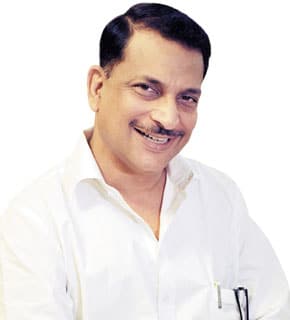
Rajiv Pratap Rudy Minister of State for Skill Development and Entrepreneurship (I/C) and
Parliamentary Affairs
Rajiv Pratap Rudy Minister of State for Skill Development and Entrepreneurship (I/C) and Parliamentary Affairs
With an ambitious target of a ‘skilled India’ where over a 100 million people will be trained,Rajiv Pratap Rudy Minister of State for Skill Development and Entrepreneurship (I/C) and Parliamentary Affairs has initiated a slew of measures under his ministry. With the establishment of National Skills University in Raipur underway, the minister shares his vision for the skill development sector with Elets News Network (ENN)
What will be the mandate for the country’s first National Skill Development University slated to come up in Raipur, Chhattisgarh?What will be the structure and the modality of this university?
The Ministry has initiated the process of establishment of a National Skills University. The University is envisioned to provide nationally recognised University degrees and certification for vocational skills, design and conduct assessment procedures, design vocational curriculum(with SSCs) customised to providing horizontal academic mobility, of-fer faculty training courses and conduct research in the skills landscape.A Working Group has been created for developing an appropriate University model, providing broad recommendations and drafting the legislation for the National Skills University.
What will be the key focus areas of the revised Skill Development Policy that will also outline the contours of the National Skills Mission?
The revised National Skill Development Policy will provide a robust framework of skill development and focus on outcome based approach in terms of providing meaningful employment in the form of both wage and self-employment.The policy will look at streamlining the institutional structure- Complex structures in the existing policy,spread across multiple sectors and schemes, need to be realigned in order to ensure smooth implementation and effective monitoring of the NSDP 2015.
Lack of trained personnel – The National Skill Development Policy 2009, with the bandwidth to facilitate nearly 3.1 million personnel (compared to over 12 million new entrants), leaves open a huge gap in the skill development requirements of the nation. The chamber recommends immediate measures to strengthen the skill development and training infrastructure with support from the private sector.
Mismatch in providing vocational training – The existing skill development policy does not focus on providing vocational training to casual workers, leading to a shortage of skilled labourers.With close to 90% of the labour for cecomprising of the casual workforce, it is imperative for the Government to provide vocational training in a more regularised manner so as to ensure better ratio of skilled to unskilled labour.
The policy will not only augment skill workforce in India, but will also enhance productivity and overall employability.
How can technology be integrated to ascertain the loopholes in the existing skills data and also ensuring quality of delivery at scale?
Technology certainly plays a vital role in the skills landscape. Following are the major areas which make it a critical aspect of skill development –
Correct assessment through Computer based testing/technology
Skill development is a complete cycle that begins with assessments, leading to training, and then on to certification, placement, and monitoring and tracking. Assessments refer to the process whereby the current skill sets of a student are captured and a counselling process brings out the skill development needs and an up-skilling plan for skill enhancement.
Customisation of content
A technology backbone that tracks all of the assessors – their skills sets in terms of trades, local language, proximity to assessment centres, and qualification to assess – could help map the appropriate assessment opportunity to an ideal assessor. A student from the assessments and counselling process understands the sequential skill development pro-grammes, and also where all of that can take him or her.
Reduction in Total Cost of Ownership (TCO)
Interestingly, these can today be easily tracked on an online solution, and there are off-the-shelf products. Those that are built on a SaaS (Software as a Service) model could help even save costs on hosting, maintenance of data centres etc., as they are typically pay as you use facilities with complete data protection.Database Management
It would be a wonderful world if technology were to work like a robot on the net and take over some of the monitoring and tracking components such as students’ attendance, training hours,and progress, and capture these in the system. Today, biometrics devices with GPRS that can authenticate a student, RFID cards that track students, and logical actions built into an application plat-form can make such a dream a reality.Ease of Communication
A fully-networked platform and a standardised framework could help all skills centres spread across country to effectively communicate with one an other and help dynamically aggregate and help with cross-dimensional views of information in real-time. With the workforce of today spread out across the country, and migration being all time high in recent years, what is needed is a system that can help service students in any of the centres and a service that is available to several industries. (Also,in terms of technology, given the sub-scriber and user base, the mobiles have a far-reaching impact. A simple wrapper to connect all of web to a mobile technology can help reach to a larger community today.)
One of the focus areas is LMIS (Labour Management Information System), which is like the pulse of the skilld evelopment industry; for, it helps in a real time understanding of several components such as skills in demand, challenges, issues, training quality etc
LMIS (Labour Market Information System)
Some of the technology initiatives are underway, as the government has allocated sizeable budgets and has engaged the services of some of the large IT and skill development companies to help inputting all of this backbone and frame-work in place. Eventually, this technology envisages MIS being dynamically available with controls much stringently partnership (PPP) projects which are now on the rise. What efforts need to be made to link skilling with jobs to make the skill development more effective?
The objective of skill training a person is to get them employed or self-employed,else the purpose is defeated. It is imperative to link skill development with jobs to achieve the objectives of the Skill India Mission. The following are the broad efforts that need to be made so as to bridge the gap .
Recognition and Acceptance of a Skill Certificate by Industry
There are 33 Sector Skill Councils (SSCs) which are industry bodies under the purview of National Skill Development Corporation (NSDC), dedicated to their respective sectors for formulating National Occupation Standards and Qualification Packs. The certificates provided by them to trained candidates are a recognition of the trainees’ skills which are at par with the industry’s requirements. It is imperative for employers to recognise and accept this certification and hire certified people. This not only increases their productivity but also provides premium wages to the ‘skilled’ and‘certified’ workforce.
Alignment of Standards and QPs
There are almost 1000 Qualification Packs (QPs) that have been formulated by SSCs. The training curriculum ad-opted by training providers across the country should be aligned to them.
Making skill development aspiration
alIndependent India has primarily focussed on education and very little on skill development. Hence, at this juncture, it’s crucial for us to make skill development ‘aspirational’ to the youth,for them to earn better respect in the society. NSDC has already taken the initial steps in this regard by coming out with Television Commercials and a holistic communication campaign with the tagline ‘Hunar Hai Toh Kadar Hai’.
Job portal
The Government must come up with a common portal where the industry can post their requirements in terms of specific job roles and manpower requirements. This can provide employment-market linkages for skilled workforce using innovative technologies like portals that will act as a ‘skills depository’ and provide data market linkages.
What are the key initiatives in the pipeline to allow the country to take full advantage of its demo-graphic dividend?
The following are the major initiatives in the pipeline that will help the country harness its vast demographic dividend when it comes to skill development –
Launch of National Skills Mission
The mission was announced by the Finance Minister in his budget speech and has been widely hailed by IndiaInc. The mission is currently work-in-progress and the Ministry of Skill Development and Entrepreneurship (MSDE)will lead it. We look forward to the formal launch of this mission by our PrimeMinister, as this will certainly transform the skills and employment landscape of the country.
Alignment of National Skills Mission with other key missions
MSDE is currently in talks with heads of other missions such as ‘Digital India’,‘Make in India’, ‘Swachh Bharat’, etc. to align them to the upcoming ‘National Skills Mission’.
Utilising existing infrastructure and resources:
Railway Network
6000 railway stations having 43,000km of Optical Fiber Network across the country will be used for training the youth for better skills. These stations have the necessary facilities like, water, electricity and connectivity and are spread across the length and breadth of the country. These will be places for skill development as they have the necessary infrastructure needed for the training and will take care of the training needs of the local populace. We are in talks with the Ministry of Railways for the same.
The policy will not only augment skill workforce in India, but will also enhance productivity and over all employability
skill development as they have the necessary infrastructure needed for the training and will take care of the training needs of the local populace. We are in talks with the Ministry of Railways for the same.
Retired Defence Personnel
The Indian Army is the third largest in the world. About 50,000 personnel retire from the armed forces every year. Defence personnel in the last year of their service can impart skills training to people in logistics, artillery and medical. They can be equipped in such a manner that once they retire, they can either engage in productive work or use their services and expertise to act as trainers to those seeking skills. The Ministry is working with the Ministry of Defence to develop a national action plan for the same. The Ministry is also in discussions with the Ministries of Overseas Indian Affairs, Road Transport and Highways, Shipping, Power, Coal and Renewable Energy to scale the skilling efforts in the country.
Coordination with Ministries and State Governments
There over 20 Central Ministries/ Departments involved in implement a-dations on norms across the various skill development programmes while allowing flexibility to meet the requirements of different parts of the country/ different socio economic groups.
Multi Skill Institutes
Initiated steps towards setting up new Industrial Training Institutes (ITIs) in PPP mode, which will be known as ‘Multi Skill institutes’ (MSIs). The first draft of the approach paper has undergone extensive consultation with stakeholders. This proposal is expected to be finalized soon.Recently, the two verticals of training and apprenticeship in Directorate General of Employment & Training (DGET)under the Ministry of Labour & Employment (MoLE) have been transferred to the MSDE. With this notification, the ITIs have now come under the MSDE.
Proposed ‘Resource Optimisation for Skilling at Scale’ platform for creating new training capacity that leverage existing infrastructure, facilities and human resources. It will include a competitive grant process for funding of innovative projects in the skilling space:States, districts, training providers will be eligible to apply for grant.
Dilip Chenoy
CEO & MD National Skill Development Corporation
Technology can scale up the skills initiative in the country and technology companies and start-ups have a greater opportunity to succeed in the skills space, shares Dilip Chenoy, CEO & MD National Skill Development Corporation with Elets News Network (ENN)
THERE IS AN COORDINATED EFFORT GOING ON FOR SKILL DEVELOPMENT IN THE COUNTRY OPENING UP A GAMUT OF OPPORTUNITIES.
How do you see vocational education training shaping up and the outlook towards the concept which is helping skill development?
Last six-seven months in particular has seen significant changes in the way that vocational education and training is being perceived and being implemented in the country. Skills has become top of the agenda and also very recently become,with the formation of the Skills Ministry as the top of the government agenda under the Prime Minister. We are seeing a coordinated effort going on acros sschools, colleges, in the ITI and apprentice space with the apprenticeship act has been amended, and in colleges and universities.
For the first time we are seeing from school to work and back to school opportunity for skill development and vocational training. Secondly, skills have now been focused to meet industry standards. A significant amount of money is being spent on skilling through the Prime Minister Kaushal Vikas Yojana. Through independent studies we have found that industry is also recognising the value of hiring certified persons. Certified people are earning more in the workplace within six months of their joining, and in some industries, we are seeing hiring happening only from SSCs. Aspirations for skills also is also growing. So we are seeing speed, scale, standards and addressing aspirations.
Very recently the National First Class Guarantee Scheme was also announced, presenting a different model going forward where the loans will be available for students on the lines of the loans in the education sector. The company has already been set up and it got Rs 500 Cr in the previous budget and going forward the execution of the scheme will start. So we are seeing significant change being led by the PM and the Minister through the Skills Ministry to engage with the governments on one side, whether the state governments and the private sector on the other side through NSDC to achieve the objective of speed, skills and standards.
How can the challenge of low employability of these vocational training graduates be addressed?
If one looks at the ecosystem NSDC is creating, low employability is being determined by the perception that the training is not aligned to the industry and the people are not assessed according to industry standards. So the creation and execution of 33 SSCs, now 37 have been approved by the NSDC Board and we have close to 28 operational, which have created those standards. And what we are finding is that the employability of people who come out of the system that is aligned to this is significantly better. However, attrition is still a big problem. Addressing the issue of employability of people coming from the NSDC ecosystem, we are striving to ensure that the industry certifies that. And going forward in all projections, India is goingto be the skills capital of the world. So we need to train people to maintain international standards and that’s why we are partnering with Australia, USA, Canada,Germany to have transnational standards going forward.
How can technology be leveraged to help this initiative?
IL&FS Institute of Skills, Okhla
Technology is an integral part of skill training ecosystem going forward in multiple ways. The first is in mobilisation and we have to use radio, TV, mobile phones, websites to be able to help mobilisation. Second is in ensuring and enabling good content to be delivered in distributed networks. Then we have agencies and organisations involved in delivery of this content through remote classrooms, online certification and various other technologies involved. So it is not brick and mortar, but click and mortar because without that you cannot scale. And we are using technology in multiple ways like the innovation platform where eight people have been funded. More and more technology companies and start-ups have a greater opportunity to succeed in the skills space if entrepreneurs take this up.
Is there a need to redesign and rescale the curriculum in schools and colleges from the skilling perspective?
Dilip Chenoy CEO & MD National Skill Development Corporation
Firstly we are introducing skill development programme in class IX, X, XI and XII. Second thing being done is programmes in community colleges aligned to job roles, so we require new curriculum for that. Thirdly, we are also doing add-on courses in the graduate and post-graduate level under the UGC, which will require new curriculum. However,there is a need to take the English language being taught in schools and attune it differently to addresses the communication skills. How does one introduce different elements in Mathematics to create numerical ability? That’s what we are trying to do in the next stage by defining what does it mean to be 5th pass, 8th pass etc. So emphasis will be more on basic numeric skills and basic English skills. It’s a bit difficult to do because there is no uniformity across the boards in the country. But the understanding has come on board. And because of that at least for the skills programmes in schools, colleges, engineering colleges, management colleges, they will actually change the way that students look at management education and therefore aligning the management schools in India with the needs of the industry. We are also seeing the development of the National Skills University coming up. But the challenge there is to ensure that we don’t repeat the mistakes of engineering where we have more engineers than ITI graduates because that’s not the way the workforce is. Already here significant change in curriculum is visible. What will also drive it is the credit transfer framework that was announced in November last year by MHRD giving a great mobility to students.
Armed with a mandate to provide education for all, a slew of measures are being taken by the government to increase competitiveness and aid the growth of the education sector. But a lot remains to be desired at the point of origin that will create a road map for the sector at large. Elets News Network (ENN) looks at some of the key issues plaguing the education sector and how the present policies are looking to change the course of the system
Indian education sector is touted as a sunrise sector for investment sowing to the immense potential it offers to investors. A sound education system in a growing economy can further strengthen the intellectual capital of the country. However, at a time when Prime Minister Narendra Modi talks about imparting skill education, bringing digital knowledge to the doorsteps of education through institutes, there exist a number of roadblocks that are making the mission of education for all a pipe dream.
One of the stumbling blocks has been Right to Education (RTE) Act that is forcing a whopping number of schools to close down pan India.RTE has made it more difficult for children to access education while it was supposed to create more education opportunities for them. The reason for the closure of schools is their non-compliance with RTE Infrastructure norms mentioned in section 18-19.
Prashant Narang, Advocate, iJustice – a public interest initiative of Centre for Civil Society, informs, “As per the RTE section 18-19, if the private schools are not complying with infrastructure norms then there would be penalty of Rs 25,000 per day up to Rs 1 lakh. The section doesn’t say that schools will be shut down but the penalty is so high that the schools will shut down and the new schools cannot come unless the section complies with the RTE norms.”
Also the schools have to comply not only with the RTE norms but with the State Act, which are unreasonable, shares Narang. As per the data of closure of schools in Punjab and Haryana available at NISA (National Independent School Alliance) out of the total 9,301 private schools 10 percent are unauthorised private schools in Punjab and out of them more than 1100 schools have been closed, with threat of closure looming large on others. With an average of 200 students per school, the number of students impacted across the 1,170 schools can be estimated at 2.3L.Thus, at an average of 200 students per school, the total no. of students who’ve been displaced can be estimated at 4.8 lakhs in the 9 states.
The RTE act 2,009, one of the noble first steps to universalize education in India for the betterment of the society and the upliftment of the EWS is itself violating right to education to children while putting forth the miniscule infrastructure norms mentioned in section 18-19. With an approach where government is talking about giving quality education to children, the RTE norms described in section 18-19 is violating the right to education for children who are going to neighborhood school for education.
Infrastructure apathy
Apart from the RTE roadblock, another key focus area has been the creation and up gradation of school infrastructure. Up gradation of over80,000 secondary schools, and 75,000 junior, middle and senior secondary level is the need of the hour.
It is worth mentioning that FM this year marginally reduced the overall allocation towards education but increased the higher education budget by 22 per cent. The government indicated a shift of focus from school to higher education, Modi government proposed to set up IT based student financial aid authority to administer and monitor scholarships well as educational loan schemes through the Pradhan Mantri VidyaLakshmi Karyakram.
Comparative analysis of Budget
BUDGET 2014-15
BUDGET 2015-16
Total budget allocated – Rs. 70,500 crore
School education – Rs. 51,828 crore
Higher education – Rs.16,900 crore
Pandit Madan Mohan Malviya New Teachers Training Programme – Rs.500 crore
5 IIMs in HP, Punjab, Bihar, Odisha and Rajasthan
5 more IITs in Jammu, Chhattisgarh, Goa, Andhra Pradesh and Kerala
4 AIIMS like institutions in AP, West Bengal, Vidarbha and Poorvanchal
Sarva Shiksha Abhiyan (SSA) – Rs. 28,635 crore
Total budget allocated – Rs.69,074.76 crore
School education – Rs. 42,219.5 crore
Higher education – Rs.26,855.26 crore
Upgradation of 80,000 schools and senior secondary schools
IIMs in Jammu and Kashmir, and Andhra Pradesh, Indian Institute of Mines (IMS) situated in Dhanbad will be upgraded to IIT.
New IIT in Karnataka
AIIMS like institutions in Jammu and Kashmir, Punjab, Tamil Nadu, Himachal Pradesh, Bihar and Assam
Skilling India
Since the time when Modi government came in power, they laid emphasis on educating the youths and skilling them to make them job ready. To further facilitate the skill road map, Rajiv Pratap Rudy, Minister of State for Skill Development and Entrepreneurship, recently launched Human Resource and Skill Requirement reports, across 24 sectors in India which will serve as the baseline for all Skill Development initiatives being planned across the country.
According to the findings of the report, the human resource requirement across these 24 sectors is nearly 109.73 million. Rudy says, “The idea behind the Skill Gap Studies is to understand the sectors in which we are likely to face the biggest gaps. It is imperative for us to plan the skilling of future workforce of India on the basis of these reports. Ultimately what we all are striving to achieve is to make India the Skill Capital of the world, as envisioned by Prime Minister Narendra Modi.”
Sunil Arora, Secretary, Ministry of Skill Development and Entrepreneurship(MSDE) says, “There is a changing paradigm in skill training towards demand-driven training to ensure employ ability and placement of the youth.While the reports give an insight on the quantitative side of human resource requirement in each of the sectors, the research has also led to useful qualitative findings in terms of highlighting key job roles in the sector, existing skill gaps in the sectors, key interventions required to map supply and demand, etc. These will help us create a strategy to bind together the islands of excellence that weal ready have in the country.”
Roadmap ahead
Where the government is shifting its focus on higher education, skill India,‘Make in India’, it is also important to throw light on the K-12 education system and put it in the better framework.
School education to everyone should be the top focus for any government’s priority list and the government’s move to break barriers between formal education and skill development is the first step towards growth.
On seeing the government’s effort in skilling the youths and introducing New Education Policy, Anupam Jagga,Principal, DPS, Moradabad shares, “The constant hit and trial experimentation which was hampering the entire education system has come to a halt partially.This has provided the breathing space to the educationists to concentrate on the core studies rather than utilizing their time and effort in finding the viability of the changes or trying to implement them in the right spirit.”
As per the media records and the findings of the members of NISA the number of schools closed pan India are:
SCHOOLS CLOSED PAN INDIA
State
Total number
Andhra Pradesh
400
Delhi
300
Tamil Nadu
400
Karnataka
200
UP
350
Bihar
500
Odisha
150
J&K
100
Uttrakhand
50
Source: NISA and Media Reports
NUMBER OF SCHOOLS TO GET
THREAT OF CLOSURE
State
Total number
Andhra Pradesh
800
Delhi
750
Jharkhand
278
Karnataka
8
Maharashtra
1404
Tamil Nadu
1000
UP
288
Odisha
400
Uttrakhand
2000
Himachal
500
Bihar
100
Assam
70
J&K
40
Source: NISA and Media Reports
Not only this, the government through its concerted efforts in improving quality of education has proposed to set up a fully IT based Student Financial Aid Authority to administer and monitor scholarship as well Education Loan schemes through Pradhan Mantri VidyaLakshmi Karyakram.
“Ensuring quality and dedicated faculties and result oriented management are keys to improve quality in teaching education. We are working to accomplish the same,” says Dr. C. S. Kumar , Secretary cum Commissioner, Department of Technical Education, Government of Odisha.
KEY GAPS
FACTORS
Low Employability of Graduates
Outdated curricula, shortage ofquality faculty, high student-teacherratio, lack of institutional and industrial linkages, lack of autonomy tointroduce new and innovativecourses
Low Impact research output
Low government and corporatespending, insufficient doctoralstudents, missing research focus andculture in most institutions, lack ofinternational research collaborations
Limited Focus on Entrepreneurship
Few institutes offer programmes inentrepreneurship and have activeincubation/entrepreneurship cells
Complex Regulatory Requirements
Poor institutional governance standards, lack of professional management
Source: FICCI report on Higher Education
Scope of improvement
However, there still has the scope of improvement in education as there seems to be no major breakthrough in the education sector in terms of upliftment in the condition of the students, teachers and working community connected to the education sector. The sector should be made service oriented.





 Girls bagged the top three positions in the merit list of Punjab School Education Board (PSEB) Class XII annual exam, the result of which was declared on Monday. The top positions went to Darshveer Kaur of RS Model School, Ludhiana and Saema Rashid of Khalsa Senior Secondary School, Ropar. Both secured 100 per cent marks. PSEB chairperson Tejinder Kaur Dhaliwal said while declaring the result. The girls left the boys behind by grabbing the top seven positions besides dominating 75 per cent merit list.