Home Blog Page 843

Rs 2.35 crore grant for Punjab colleges

Punjab In an effort toprovide special facilities to girl students, disabled and poor students, the Punjab government has announced a financial grant of Rs 2.35 crore for forty-seven government colleges in the state. An official spokesperson informed that the Higher Education Department has worked out a special component grant of Rs 5 lakh for each college that would be utilised for uplifting the higher education standard of girl students, poor and disabled students. Instructions were issued to all colleges to utilise this grant to make colleges disabled-friendly to ensure access of every disabled student to all facilities being offered by 47 colleges.

These grants are to be utilised for evolving disabled-friendly computer programs, providing internet facilities to such students besides ensuring gender equality in the 47 colleges. Furthermore, co-educational institutions have been issued instructions to ensure separate toilets for girl students as per the standard lay out plan provided to them.

The Punjab government released Rs 59 lakh to the colleges and the remaining grants would be released shortly.

It may be mentioned that the Punjab government has been making efforts in the direction of exploiting mobile network to propagate its activities. Earlier this year, Punjab education department decided to use text messages services to guide students and their parents about subject combinations, examination schedule and prospect of particular professional courses. The process aims to give career guidance to 20,000 students of government schools in the first phase. An exercise has already been launched to generate mobile numbers of parents of the students.

CBSE to announce Board results this month

CBSE Central Board of Secondary Education Class X and XII board results will be declared on the third and fourth week of May respectively. According to a media reports, Class X results are likely to be declared on either May 19 or May 20, 2015, while class XII results are likely to be ready by May 25 and the board will declare it by May 27 or May 28. Furthermore, the class XII results could be declared in two or three phase – Chennai region could be the first region to get the results and then the Patna and Bhubaneshwar region in the third phase.

This year, a total of 13,73,853 students registered for the class X exam this year, which is around a 3.3 per cent increase from that of 2014. For class XII, a total of 10,40,368 students registered for the exams this year, of which 6,07,383 are boys and 4,32,985 are girls.

It may be mentioned that this year’s Class XII board exams have been termed as one of the toughest in the record of board examinations in the country. Students said though the questions were not out of syllabus, the questions were framed in a different way. The Maths paper, which usually had 10 questions carrying one mark each, was changed to six single-mark questions, followed by 13 questions carrying four marks and seven questions carrying 6 marks each. In fact, students and even a section of schools sent their representation to the board regarding the difficulty level of exams like mathematics and physics.

On the other hand, a section of Class 10 and Class 12 students and teachers said the board exams, besides the maths and physics paper, were easier than the pre-board mock exams conducted by their schools.

India, Russia signs MoI to accelerate education

delhi-universityTo strengthen Higher education in the state, India’s education institutes like IIT Bombay, Delhi, Madras, Kanpur, Kharagpur, Roorkee, Indian Statistical Institute, Delhi University, Jawaharlal Nehru University, and the National Centre for Biological Sciences and top Russian Institutions has signed Memorandum of Interest (MoI) to facilitate research collaboration, faculty exchange and student exchange among the leading universities in both the countries.

The MOI was signed by Devang V Khakhar, director, IIT Bombay and president of the Russian Rectors’ Union VA Sadovnichiy. IIT Bombay has also signed an MoU with the National Research Tomsk State University, Saint Petersburg State University and Skolkova Institute of Science and Technology Russia to encourage collaboration through faculty and student exchange programmes, joint research work.

Read on: Pranab Mukherjee visits Russia to strengthen education

To strengthen the educational ties with Russia, President Pranab Mukherjee recently went to the country along with the top Higher Education delegates to sign MoUs to exchange knowledge among the two countries.

Maharashtra government tracks dropout rates

special children in schoolIn the wake of improving the quality education in primary sections, Maharashtra government is geared up to track 1.6 crore school students as there are high dropout rates in the state.  To keep a check on the dropouts Devendra Fadnavis government has put in practice the unique child tracking system, using the Aadhaar identification number of all the students in the age group of 6-14 years.

The new tracking system will start from 22 May and will be applicable to both public and private schools. According to the Annual Status of Education report 2015, a survey done by Pratham group found that the learning standards in the schools are poorer than other states. In the report it was found that 70 per cent of students from class VIII could not do basic addition and subtraction sums.

Under the new system developed under National Informatics Centre, the government planned to maintain records of school going children, academic performance, basic profile, and benefits provided to them by the government.

It has also mentioned that for the underperformance of the student, management would be held responsible during the assessment process. Maharashtra government has also decided to club the system with a survey to identify out of school students in the state.

Read More: Dropout rates is 2.97 per cent in Chhattisgarh

The state government has also set a target to bring down the girl dropout ratio in class X to 5 per cent. It is observed that the girl dropout ratio increases specially after the completion of primary education. The state of education in India is not very cordial. The dropout ratio has been increasing in Chhattisgarh as well. Being the tribal area of the country, the education to girls is miniscule. The dropout rates is 2.97 per cent in the state.

BMC to focus on pre-primary education

value-based-educationEducation is necessary for all but it seems that the economically weaker section of society is ignoring it as the fact is that they are not able to pay fees for the pre-primary division as civic-run schools do not provide such an option.

Raising concerns over the issue and seeing the decline in the number of students taking admission in civic schools, the BMC’s education committee member wrote a letter to the Chairman, Ritu Tawde citing the plight of poor parents and how BMC is not considering admissions to pre-primary sections and the attention towards the children between four and six is missing.

It is also seen that 1100 primary schools run by BMC do not have class 8 currently. Under the Right to Information Act it is observed that there are around 1,270 primary schools of the civic body but class 8 have been started only in 100 schools. Hence, it is the violation of the Right to Education act which says that every child in the age group of 6-14 years have the right to free and compulsory elementary education.

Recording Lectures forBetter Results

The technology has brought many changes to education. One of those changes is the ability to record lectures and class activities, digitally “capturing” them. Doing so allows the lectures and activities to be archived and reviewed later on by students and staff.

Why Capture?

Lecture (and activity) capture serves a number of purposes for educators:

  • Allows students to replay complex material, viewing as often as needed and on a variety of devices.
  • Allows students to take courses held in overlapping time slots.
  • Increases student engagement by placing more power in the student’s hands and freeing them to listen more carefully instead of frantically taking notes.
  • Allows instructors save their lectures for unlimited archiving, use,and reuse.
  • Extends instructors’ reach to new markets, letting them generate additional revenue without hiring or retaining adjuncts or additional staff to create and manage new courses.

While lecture capture is considered new and high tech, it’s not brand new.A study conducted at the University of Wisconsin-Madison in 2008 examined student preferences regarding captured lectures. Close to 30,000 students were surveyed, and 82% of them preferred a course with recorded content.

Why? Because a course with captured lectures allows them to:

  • Easily catch up on classes
  • Watch lectures whenever they feel the need
  • Score higher on tests The Stanford School of Medicine found in a similar survey that student retention improved up to 78% in cases where lectures were captured, and made available online for review. Almost 76%of the students in this survey cited improvement in their exam scores when lectures were captured, and 60% expressed a willingness to pay extra fees in order to access captured lectures.

Yet another study, this time from Coppin State University in Baltimore,revealed an improvement in retention rates from 71% to 86% when lectures were captured. The authors of this study explained:

“Coppin students tapped into the network of archived lectures 2.5 million times. They’re using the lectures as a pre-exam refresher and a fallback for less-than-perfect notes. After all, memory has its limits.”

Of course, not everyone is convinced.Some worry that making recordings available will cause students to abandon lectures all together. Others are concerned that sensitive course material will get into “the wrong hands.”

The paper “Capturing lectures: No Brainer or Sticky Wicket?” addresses the issue pretty thoroughly, raising important points and asking solid questions.It’s worth a read for anyone grappling with these issues when it comes to their organization, institution, or courses.

WizIQ Lecture Capture

Lecture capture software is expensive,far out of reach of independent teachers and trainers. That is, unless you use WizIQ’s virtual classroom. This built-in feature allows any instructor to capture their lectures as they happen and then reuse, archive, and share the recording with anyone through just a link.

Anyone from an independent tutor to an entire university, can enhance their students’ learning with WizIQ:

  • Capture your audio and video of presentations and other class activities and let the students review whenever they want.
  • Pause or resume recording at will.Once the session is complete, the recording automatically gets included in your course or class page.
  • Provide public access to some recordings as a promotional tool, in order to attract new students.
  • Integrate the WizIQ Virtual Class room and recording access with your existing Moodle, Sakai, Joomla, eFront, Drupal, or WordPress or Blackboard LearnTm Building Block installation to provide single-click access to recordings.
  • Automatically post recordings to internal class websites so they can be accessed at anytime, from anywhere.
  • Avoid lots of training, downloads,and extra costs with our affordable,user-friendly tools.
  • Teach classes in a live stream, with your recordings automatically archived and quickly available for viewing afterward.

So what are you waiting for? Widen your reach and create your very own knowledge database. Capture, stream,archive and share!

This article post first published on WizIQ.com: http://go.wiziq.com/2w4a

To know more on how to capture lecture in easy online/offline approach,mail: academics@wiziq.com, or speak to Kalyan @ +91-9915-701-494

Rudy emphasise to standardise vocational training in India

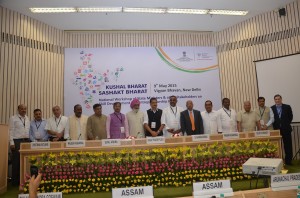
DSC_0258The Union Minister of State for Skill Development and Entrepreneurship (Independent Charge) and Parliamentary Affairs, Rajiv Pratap Rudy chaired a workshop to discuss the policy framework and roadmap for Skill Development in the country.

450 participants from central and state government including the ministers and principal secretaries, industry, sector skill councils, training providers, and other stakeholders in skill ecosystem attended the workshop.

State Ministers from Andhra Pradesh, West Bengal, Bihar, Uttar Pradesh, Telangana, Gujarat, Rajasthan, HP, Punjab, Orissa, Goa and Maharashtra made presentations on key initiatives in the state and also gave inputs on enhancing the centre-state partnership for skill development across the country.

Rudy highlighted on the fact that the combined vision of Ministry of Skill Development and Entrepreneurship and the States is aimed at achieving the overarching objective of “Kushal Bharat, Sashakt Bharat”. He further emphasised on the need of creating a common mission like “Sarva Kaushal Abhiyaan” on the lines of “Sarva Shiksha Abhiyaan”.

He said, said “There is an urgent need to standardise education; and the States have to become partners in Skill Development to ensure this. All the States have to educate themselves on National Occupational Standards and Qualification Packs so that we can collectively skill large number of people with speed and standards.”

“The industry needs to decide the type of trained workforce they require in the country today. The government will facilitate efforts in this direction. Ministry of Skill Development and Entrepreneurship will handhold states in creating models of excellence at every step. Sometimes what fourteen years of education cannot provide, 14 days of vocational education can”, he further added.

Sunil Arora, Secretary, MSDE said, “We will drive the quantity and quality of skills training across existing educational institutions, our ITIs and through a new set of dedicated institutions representing best-in-class vocational education. Where we are leveraging infrastructure under the purview of other Ministries such as MHRD & MoLE, we will play a supporting role. We will help ensure they are better aligned with the standards and requirements of industry and business. We will also aim to address the issue of low appeal amongst youth for skills training through these institutions.”

Bringing in the perspective of a successful public private partnership, Ramadorai, Chairman, NSDA & NSDC said, “The private sector can help improve the infrastructure of the existing vocational training institutes, bring contemporary course curricula to these centres and in train the trainers programme. It is important that each corporate or agency is aligned to a common Ministry to reap the benefits of the multiplier and learn from each other’s success across different states.”

The Minister also announced he formation of a Working Group comprising of principal stakeholders chaired by Secretary, Ministry of Skill Development and Entrepreneurship. The group has been constituted with the objective of establishing a transparent policy and scaling up capacity of ITIs. Members will include Principal Secretaries of 4-5 States, MD & CEO, National Skill Development Corporation and Joint Secretary, Ministry of Skill Development and Entrepreneurship.


J&K focuses on education, revives VEC

Education Logo kashmirTo make education more participatory and charge accountability in schooling, the Jammu and Kashmir government has decided to revive ‘Village Education Committees’ (VEC) in the state. The VEC  will play a major role in developing the proper education system in the state and localise education, improve school plans, monitor enrolment, retention of students, compulsory education to girl child and other minority groups.

Hundreds of school buildings in the region are lying incomplete and the government is looking to complete these building in a time bound manner with adequate infrastructure to provide better facilities to the students.

In a bid to improve the state of education in the region, the government is taking corrective measures. Jammu and Kashmir Chief Minister Mufti Mohammad Sayeed has also praised Prime Minister Narendra Modi for his efforts he is making to improve the quality of education in India. With focus on Skill India and Digital India, the government is now trying to bring a wave of change in the education system.

XLRI signs MoU with ICFL

XLRI campusXavier School of Management has signed a MoU with ICICIdirect Centre for Financial learning (ICFL) to offer educational programmes in finance domain. The two institutes intends to create a Knowledge Partnership that is focused towards helping working professionals upgrade their skills to meet the opportunities offered in a dynamic environment.

Dr. Ashis K. Pani, Associate Dean, VIL Programmes at XLRI said “XLRI continuously strives to provide contemporary and relevant inputs across its Programs. We are extremely excited about this collaboration with ICFL. By leveraging the complimentary capabilities of each other, we look forward to successfully delivering high quality Programs to working professionals. In the collaboration, XLRI will bring its expertise through curriculum design, quality of faculty, content development and delivery while ICFL will bring a practitioner’s perspective by introducing programs based on the industry requirements, participation in content design and delivery by practicing professionals and reaching out to learners with the proposition.”

XLRI and ICFL have identified different programmes under Management Development Programmes (MDP) or Long Duration Programmes. These programmes could be in General Finance, Financial Modelling, Corporate Finance, Investment Banking, Mergers and other advanced topics in the broader realm of the Finance. Initially the collaboration will start with MDPs of duration 3 to 4 days followed by longer duration programmes with duration up to six months.

Dropout rates is 2.97 per cent in Chhattisgarh

AadhaarOn one hand where government is laying emphasis to make education necessary for children everywhere, there’s a state Chhattisgarh where the dropout rates in schools is increasing day by day. The main reason for dropouts is the absence of education friendly environment and basic facilities to attract children to educational institutes in the tribal dominated state.

According to the national survey conducted by Social and Rural Research Institute the estimated out of school children in the age group of 6-13 years in 2014 was 1,67,072 children out of 44,59,796 were out of schools in Chhattisgarh.

The total percentage of children out of schools in the state is 3.75 per cent which is higher than the average of 2.97 per cent. The survey has also found that 94,317 children have never been enrolled in any school. According to the survey, the maximum dropouts from the school in the age group of 6-13 were after class II. Lack of interest in education, household work, lack of access, failure and non-flexibility in school timings are some of the major reasons brought up by the survey.

As per the survey, in the rural areas 1,16,011 children belonging to Schedule Tribe category (ST), 2,410 of schedule cast, and 40,370 of other backward classes were out of school. In urban areas, 3,415 students were reported to be out of school in the state but no child from OBS and SC were found to be out of school.

The other reasons for dropouts of children in schools are the lack of trained teachers who can make education interested for these children. A proper training of teachers is necessary so that they can make learning more interactive and use of technology could be other measures to attract students to schools and ultimately reduce dropout rates.

The Sarva Shiksha Abhiyan (SSA) in Chhattisgarh has identified almost 40,000 children out of school this year. A sharp decline was witnessed in dropout students in plain areas of the state but the challenge are in the tribal dominated areas which are naxal prone.

It is worth mentioning here that the government is taking every step to reduce the dropout rates while running various schemes like mid-day meal, free school uniform, books, making teacher skilled, introducing skill training in education and much more.

LATEST NEWS