Home Blog Page 846

15,000 students get personalised letters from Smriti Irani

Smriti Irani It was a pleasant surprise for the students of Anand-based Dadabhai Naoroji High School, when they received 15,000 letters from Union Human Resource Development (HRD) Minister Smriti Irani, each addressed individually. The minister had been invited by the students for the centenary celebrations of Charotar Education Society at DN High School. The minister not only accepted the invitation but also replied to all of 15,000 students.

CES chairman Nirav Patel had explained that the students had been asked to write to the minister, inviting her in their own way, in their own words. While the students were busy with the invitations, they were photographed and a video was shot, later digitized and enclosed with the invitation which representatives took to Delhi to personally invite her.

The minister sure became emotional on this personal invitation from the students, and when the parcel weighing over 100kg, with reply letters to each and every student who had invited her reached the school, the students could not believe it.

Irani had recently made a second visit to Maghrol village in Anand district, which she adopted under the Sansad Adarsh Gram Yojana, and gave green signal to projects worth Rs 7.14 crore for the development of the village, which includes tablet PC to each student of the government primary school and Wi-Fi access to the entire village.

Irani has earmarked Rs 42 lakh towards what she has called “smart school project,” which involves tablet PC to each student of the school up to class VIII at the primary school, Wi-Fi, and basic infrastructure upgradation such as dining hall for mid-day meal, among others.

Academia-Industry Linkage- a Burgeoning Necessity

DSC_0123

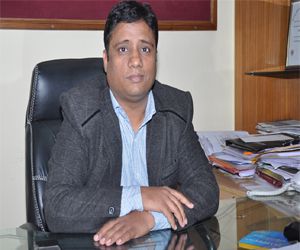
Dr. Avinash Sharma, Principal, Rajasthan College of Engineering for Women believes in imparting quality education to students. In an exclusive interview with Elets News Network (ENN), he talks about improving the pedagogy and how the institute associates workshops for those subjects whose practical implementation is not covered in university curriculum.

Institutes across the world are coming up with new ways of imparting education. How are you bringing innovation in pedagogy at Rajasthan College of Engineering for Women?

As we are govern by university syllabus so to improve pedagogy we associate workshops with those subjects whose practical implementation is not covered in university curriculum thus improving and enhancing problem solving attitude along all verticals among students.  Each individual faculty is innovative in their own aspects and has to be updated for the latest technology and techniques to upgrade themselves. The faculty is given training in different fields of imparting education by renowned institutes like National Institute of Technical Teachers Training and Research (NITTTR), Chandigarh. Our institute train students with new technology, with field exposure to cope up with industrial needs.

How important is to have a strong academia-industry linkage for an engineering institute and how it is beneficial to the students?

For engineering institute, it is of utmost requirement that a cordial linkage should exist between industry and academia in terms of information exchange, such that student’s knowledge should constantly keep up with current industry trends also enabling institutes to embed more information into its curriculum.

The strong academia –industry linkage for an engineering institute is crucial so that our students while doing their graduation can have different upgraded courses and trainings imparted by companies. Companies have tie-ups with college under knowledge sharing sessions. These make students better for industry.

Please share some of the unique initiatives taken by your institute? How can the gap between industry and academia be bridged?

Our students carry out the industrial and field training for 45 days and they learn their requirement, need of industry along with the latest trend in technology. Our institute, Rajasthan College of Engineering for Women, Jaipur organised various International and National conferences, workshops and training programmes from time to time. We have tie ups for knowledge sharing sessions and placements from Ericsson, BSNL, RIEL, IGATE, Naggarro Software, Pratham Software Solutions, Thermax, APPRIO, SAP Labs, Aricent, IBM, Cognizant, Wipro, HCL, Syntel, Car Dekho etc.  Various companies give their presentation about their products which make them aware about industry scenario. Additionally, our institute has introduced E-learning by using LMS (MOODLE) into our regular curriculum. Further we keep a regular interaction between our alumni and industry members to regularly upgrade on student knowledge requirement

Students complain that most engineering institutes pay more attention towards imparting theoretical knowledge rather than giving practical assignments. Has this trend changed in the last few years?

The engineering institute is abiding with university academic curriculum which they have to complete in the semester/year. However, our institute also covers beyond syllabus activity and the work which is in favour of students as per the market requirements. Students are supported and encouraged to publish research papers as compulsory part of their curriculum presentation.

India may get the full-fledged membership status of the Washington Accord by June, enabling global recognition of Indian degrees and improving mobility of students and engineers. In your opinion, how it is going to help Indian students and engineering education system?

As per requirement of Washington accord, our institute has National Board of Accreditation (NBA) for two departments and we are also pursuing NBA accreditation for other departments besides working on renewal of already NBA accreditation departments. All this process will raise the academic standard of the institute which in turn benefits the students. This will definitely improve the status of Indian degrees which will allow foreign students to take education from India and the standard has to be enhanced according to world level.

What is the importance of an incubation centre and tells us about your plans to install one?

With increasing competitive world, an incubation center plays role of enhancing overall problem solving skill set of student and makes a student industry ready. Also it enables team building and team leadership skill into a student. Business incubators are more dedicated to startup early-stage companies.

How has your college placement been in recent years? Do you think there is sufficient demand in the industry for the engineering graduates?

Industry is continuously striving for engineering graduates with either a particular skill set or an attitude towards solving complex real world problem. The normal placement is in both the areas in government sector as well as private sector as per the vacancy availability. However, the college placement is quite remarkable.

What are the new engineering courses which are becoming popular?

All the core courses such as electrical, civil, mechanical and sub core courses are important and have demand all the time. Minor differences are observed on annual basis depending upon the government planning and policy.

In India, there are multiple agencies which look into the accreditation, but majority of them have failed to bring quality. In your opinion, does accreditation per-se helps in enhancing the quality of education?

Yes, accreditation helps to increase the quality of education up to certain extent. Accreditation is the need of the hour for colleges as people look for good colleges. Due to this colleges have to maintain a standard infrastructure, laboratories, and qualified faculty which results in good graduates. Hence, imparts good quality education

Please share your institute’s expansion plans in the coming years? What are the challenges which you face nowadays?

As IT, MCA & MBA are facing some problem nowadays due to global reasons. We are planning to strengthen more in the core branches by providing superior quality in existing courses.

What is your policy expectation from the government?

Government should provide some funding to the private institutes also to strengthen their lab and Research & Development facilities. Government can hire the human resource generated from the engineering colleges as the students are multitalented but government should have policies to provide work opportunity.

Energy education Park comes in Puducherry

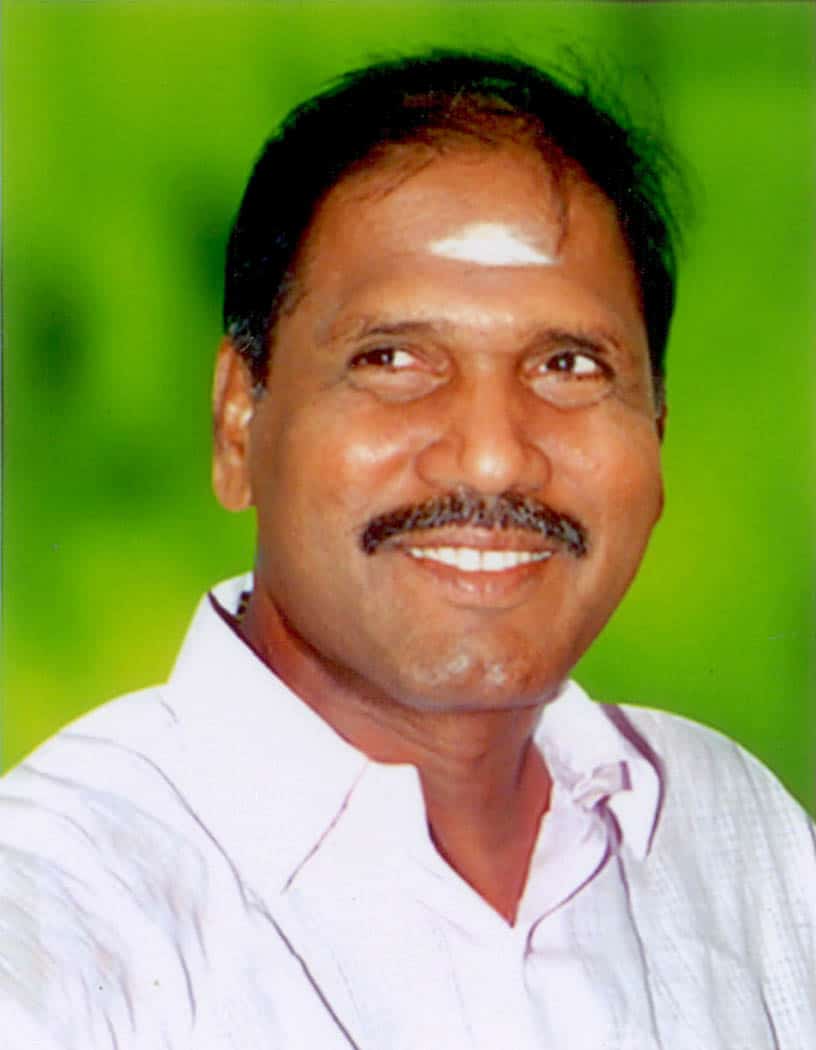
N. RangasamyChief Minister N. Rangasamy and Education Minister T. Thiagarajan recently inaugurated Energy Education Park in Puducherry. The aim of the park is to offer education on the importance of energy, different types of energy, renewable energy sources and new generation technologies through working and demo models.

A project of renewable energy agency, Puducherry, the park has an exhibition hall for indoor exhibits, lush green landscaping for outdoor exhibits and a canteen. The Ministry of New and Renewable Energy has come out with an initiative to set up Energy Education Park in each State and Union Territory in the country.

The park is open for public from 10 a.m. to 5:30 p.m. Access to the park is free for government schools and colleges and a nominal fee will be charged to other visitors.

With the MHRD focusing on developing the skills among the students to make them future ready, this is the first step in innovation that the Ministry of New and Renewable Energy from Puducherry has taken.

Shiv Nadar adds innovative choices to curricula

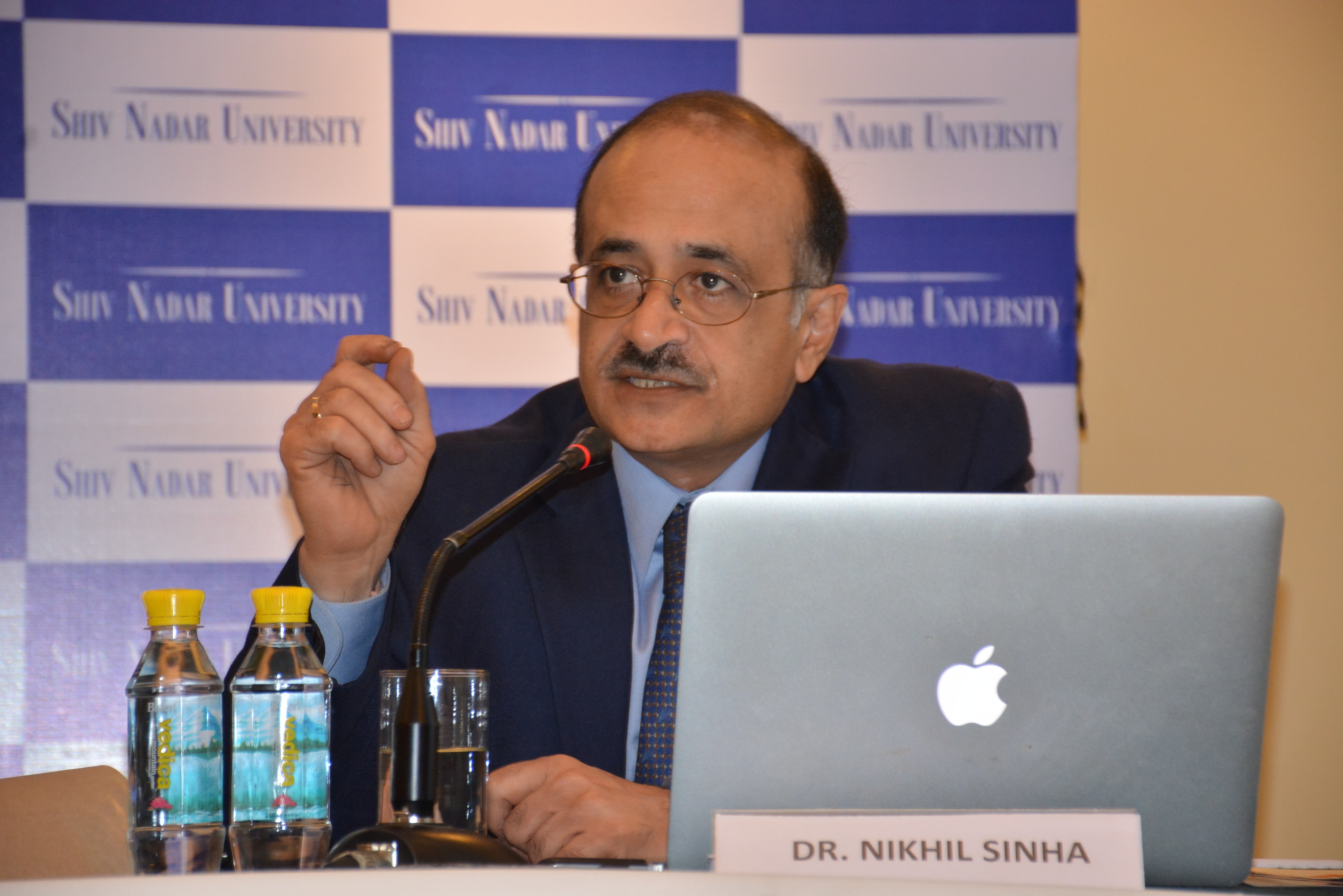
Nikhil Sinha, Founding Vice Chancellor, Shiv Nadar UniversityShiv Nadar University is inviting applications for Academic Year 2015-16 for undergraduate, post graduate and doctoral programmes across the School of Engineering (Computer Science, Electrical, Electronics and Communications, Mechanical, Civil and Chemical Engineering), Humanities and Social Sciences (Economics, English, History, Sociology, Communication and Design and Performing Arts), Natural Sciences (Physics, Chemistry, Life Sciences, Mathematics and Big Data Analytics) and Management and Entrepreneurship (Business Administration).

The last date for receiving the application forms for undergraduate courses in June 2, 2015 and for post graduate doctoral programmes in May 30, 2015. Besides, the university has also launched two new post graduate programmes namely Master of Fine Arts in Film and Television Production and a PG Diploma in Theatre for Education and Social Transformation (TEST).

The university is also offering 14 undergraduate degree programmes, 12 post graduate programmes, and 13 doctoral programmes. With a vision to make the students job ready, the SNU has made an impressive start in terms of student placements. 96 per cent of the students who applied for campus placement have secured position in top companies including top ranked Indian and global names in e-commerce, engineering, construction, IT services and products and consulting.

Nikhil Sinha, Founding Vice Chancellor, Shiv Nadar University said, “Shiv Nadar University has been committed to its mission of multi-disciplinary learning, a student-centric approach and a strong focus on research. This is an exciting time for us. We are seeing the results of this unique approach with SNU students securing job offers from top organisations and admissions to some of the most respected international institutions. We will continue to look at adding innovative choices to our multidisciplinary curriculum to allow our students to take advantage of emerging opportunities.”

The details of admission to various programmes are available on University website.

Building career with MeraCareerGuide

IMG-20150319-WA0002 (1)MeraCareerGuide.Com was started with the sole focus to help youth who do not have ready access to good mentors and end up making uninformed career. Surabhi Dewra, founder, MeraCareerGuide.com, feels that the idea of building MeraCareerGuide is to have a system which can help every student, irrespective of location, access to guidance.

Give us a brief of the various reasons behind starting MeraCareerGuide.Com?

I started the venture MeraCareerGuide.Com with the sole focus to help youth who do not have ready access to good mentors in their homes, and therefore end up making uninformed career choices.


Although I was blessed with good education, I still found myself at cross road, seeking for guidance. Friends, family, relatives, seniors come with limited perspective. That is where the idea of building MeraCareerGuide came in – to have a system which can help every student, irrespective of location, get access to guidance.

What are the various difficulties and hurdles encountered in doing business on ground level?

Every business has its own challenges.  These challenges mount if the category itself is new. The same goes with career counselling. While middle class as well as lower middle class in India have become consciously aware about the need of getting education, they still lack understanding and clarity on the need and importance of choosing the right education, career counselling.

We have found that even decision makers like school principals are not clear about why they should be making career guidance and counselling a mandatory activity in schools.

What is the market size of the services offered by you in India at present?

India has unique opportunity called “demographic dividend” with humans as most important capita.  We all know for a fact that India has the world’s youngest work force with a median age way below that of China and OECD countries. Half the population of India was younger than 25 in 2010, making India a very young country for the next 20 years. This is our market.   Counselling, mentoring and guidance are best way to channelise India’s human capital to put their best foot forward. MeraCareerGuide is for students in the age group between 13– 22 years. Career Counselling is priced at Rs.1,000 for students which makes it a market worthRs.5,000 crores.

What are the major benefits for organisations and individuals adopting your solutions?

Students can research around more than 500 various career options across 34 different sectors, know their right fit career through career tests and most important, speak from any location to a career counsellor as and when they want.

This is a one of its kind service which can connect a student to a career counsellor and resolve queries regarding their career.

What are the various methods that you are using to increase the visibility of your organisation?

We have a very strong word of mouth and referral. We are aggressive in our online marketing –including both organic and inorganic. We see technology as a major winning tool to handle scale in order to reach and serve masses. Content marketing, webinars, offline seminars and parent meet ups are some ways we reach out to our audience and talk about MeraCareerGuide and need for career planning.

What is the vision of your company for the next two years?

Our vision is to help every student make an informed career decision and we will constantly keep working towards it till we have not touched the life of every student by helping answer their questions regarding their career.

What are the various initiatives taken by your organisation to emerge as a market leader?

We have built MeraCareerGuide for simplicity. We don’t just want the top 10 per cent highly motivated students and parents to deep dive in career exploration –our intent goes all the way to the bottom 10 per cent. We make sure we cater to every student; not just the academic over achievers. We use technology big time and we will continue to innovate, disrupt and differentiate ourselves with technology.

What are the ways of engaging the customers with you? Any special Case study?

We do many success stories and case studies and publish it online on various platforms.  These talk about positive benefits and impact created by MeraCareerGuide on students’ lives. We have hundreds of such interesting stories which we use to engage our audience.

It is overwhelming for us when we hear these success stories and impact from students and parents.  That becomes our moment of joy.

Our aim is to close student-teacher gap: UrbanPro

Rakesh3 E-learning marketplace ThinkVidya.com, which has been recently rebranded to UrbanPro.com, offers the services of tutors and training institutes for students across middle school, high school, graduation and post graduation, as well as tutors for competitive exam preparations and IT classes, and much more. Rakesh Kalra, Founder and CEO, ThinkVidya.com, says that they aim to close the gap between teachers and students.

What are the reasons behind starting UrbanPro?

India currently has the youngest population in the world, with a large percentage of the population under the age of 25. We at UrbanPro aim to close the gap between teachers and students, enabling qualitative and holistic learning across demographics in a cost effective and efficient manner.

Our vision is to create a professional platform, where people can find help to gain knowledge and skills in order to generate income for teachers and skill providers, improve employability and create an active learning eco-system in India. We believe that education may stop at some point in your life, but learning shouldn’t.

What are the various difficulties and hurdles encountered in doing business on ground level?

The service and education space is at a very dynamic space in terms of offline entities. However, its online counterpart can still be termed as a virgin territory. This has resulted in both pros and cons for us. The biggest benefit has been gaining first mover advantage, but we have constantly faced hurdles as well.  Since the category is in its nascent stage, bringing affiliates on board in the beginning did prove troublesome. I am happy to say that we have overcome that with more 298,000+ service providers on board. The second challenge we faced initially was that of making students and parents aware of our services.

One of the challenges that we always face from the student or the parent is that they always expect experienced tutors to be present in their locality. Therefore providing them with the relevant matching tutors becomes a hurdle if the supply of teachers is restricted in that locality.

Another concern that we often hear from parents is that they expect a tuition teacher to handle multiple subjects for the intermediate and high school levels. Providing them with an option can be challenging at times.

What is the market size of the services offered by you in India at present?

The market is extremely dynamic at the moment with aggressive focus on learning and skill development. The market size is huge in India for the services that we offer. Private coaching industry alone is a $40 billion market. As a matter of fact, 87 per cent of the primary school children and up to 95 per cent of the high school students receive private tutoring in metros according to an exclusive survey by ASSOCHAM.

We are the market leader in the tuition space in India for school and college tuitions. We help the students to find the right tutor or the training institute in their locality depending on their level, board and subject. What excites us is the school tutoring market, which is poised to grow at 10 per cent CAGR from 2013 to 2018. I foresee an escalated growth momentum in the next couple of years along with expansion of the market.

What are the major benefits for organisations and individuals adopting your solutions?

I believe that we are bringing a very well rounded product to both students and teachers. Since the crux of our vision is to enable holistic learning, hence our product adds value to both teachers and students. We at UrbanPro are helping organise the unstructured market of tuitions and professional training providers – both institutes and individuals, by providing an online platform to connect students with teachers. We serve a wide range of categories including school or college tuitions, exam entrance, sports, computer training, dance, music, photography, painting, cooking, yoga, and many others.

UrbanPro has enabled a Linkedin-like platform for the teaching community where individual trainers or institutes can create profiles, add skills or experience details get recommendations from past students, showcase their class videos, add photo galleries of classes or workshops, upload online courses or conduct trainings and workshops.

Tell us about the vision of your company for next two years?

ThinkVidya is currently at a very exciting stage, we have a robust network of teachers and students, with more than 298,000+ teachers and 5,40,000+ students. We are looking to take our vision further by expanding our network and adding to the sets of verticals in place.  We are currently pursuing a re-branding exercise that will enable this and will add some exciting verticals such as health, wellness, and photography and event management amongst others.

What are the various methods you are using to increase the visibility of your organisation?

We are currently in the process of a re-branding and expansion exercise. We spend our marketing money towards acquiring students and teachers. So the student or the teacher use our system when they have a need. We also have a team which focusses on collecting training institutes’ data across India and help enrich their profile on our system.

Apart from that, feet on the ground helps in increasing the visibility of our brand across the top cities in India where we have sales presence to reach out to the training institutes.

How you can differentiate your services from your competitors?

UrbanPro has a unique product offering. The platform is an enabler for both the service provider and the consumer unlike our competition.  Apart from that, we have in place a very robust network of service providers and consumers that is going through a very rapid and aggressive growth phase.

How do you engage customers with you? Any special Case study?

Private tutoring in India is unorganised and is highly unstructured. Being the market leader in the education marketplace, we provide a lot of opportunities for the users that want to teach part time, especially in metros. All they need to do is to complete their profile on our system. Since we are a marketplace we help engage both the students and tutors when there is a match. Tutors can thus increase their earnings using our system, this in turn helps in the repeat usage on our system.

Students on the other hand will be able to go through the profiles, reviews, skill sets, and other important information of the tutors and training institutes for making decisions.

What are the various initiatives taken by your organisation to emerge as a market leader?

We are already a market leader in the education space in India. However, to sustain the leadership position that we have, we are also continuously working on enhancements in the product, improved UI and UX, mobile app for users and professionals, getting into other verticals and verified service providers.


Delhi University to go ‘choice-based credit system’ way

delhi univThe Delhi University has decided to go ahead with the introduction of Choice-Based Credit System (CBCS) from the upcoming academic session, apparently without the “mandate” of the varsity’s Executive Council. In an official communication to deans of all faculties on April 29, DU’s joint registrar (academics) has directed them to start preparations for the implementation of CBCS.

The registrar’s communication came after a meeting between the vice-chancellor, Dinesh Singh, and the deans to discuss its implementation on April 23.

“I advise you to start the process of preparation of the syllabi for all undergraduate courses within the structure laid down by the University Grants Commission (UGC). The detailed guidelines, course structure, draft model syllabi for the 19 undergraduate courses which are available on UGC’s website may be carefully pursued by you before starting the process,” the letter said. Members of the executive council, which is the supreme decision making body of the varsity, said the matter has not been reported before it.

Recently, as many as 18 UGC-funded central universities have introduced Choice Based Credit System (CBCS) at both undergraduate and postgraduate levels to bring about qualitative improvement in higher education. Minister of State for HRD Ram Shankar Katheria said in Lok Sabha during Question Hour session that UGC has been constantly persuading the universities to introduce academic reforms like introduction of semester system, CBCS and grading, to bring about qualitative improvement in higher education in the country.

India to soon design own system of ranking of higher education

Higher Education India is set to design its own system of ranking of higher educational institutions. The new system, to be designed keeping in mind the Indian situation, will stress on outcomes and that ranking of institutions should not be confused with accreditation that is already being done by National Assessment and Accreditation Council. Late last month, senior HRD officials, directors of IITs, IIMs, NITs and representatives of CII and FICCI met to work out the ranking system.

There are six groupings of outcomes on which similar institutions will be ranked. These will be academic performance, teaching-learning, learning resources, graduation outcome, global MoUs and impact/innovation done by institutions.

Ranking for science, engineering, liberal arts, social sciences, medicine, law and business administration will be done differently. IITs, IIMs, School of Planning & Architecture, Delhi University and Jawaharlal Nehru University have been asked to look into outcomes again.

It may be mentioned here that in a global village, methodisation of higher education systems the world over is indispensable. Therefore, the Indian Government has recently revamped the country as “knowledge economy”, supposedly by making higher education a top national agenda and creating world-class universities. Recently, not a single Indian university has featured in the Times Higher Education (THE)’s ranking of the top 100 universities in the world that are less than 50 years old.

Delhi government to form its own education board

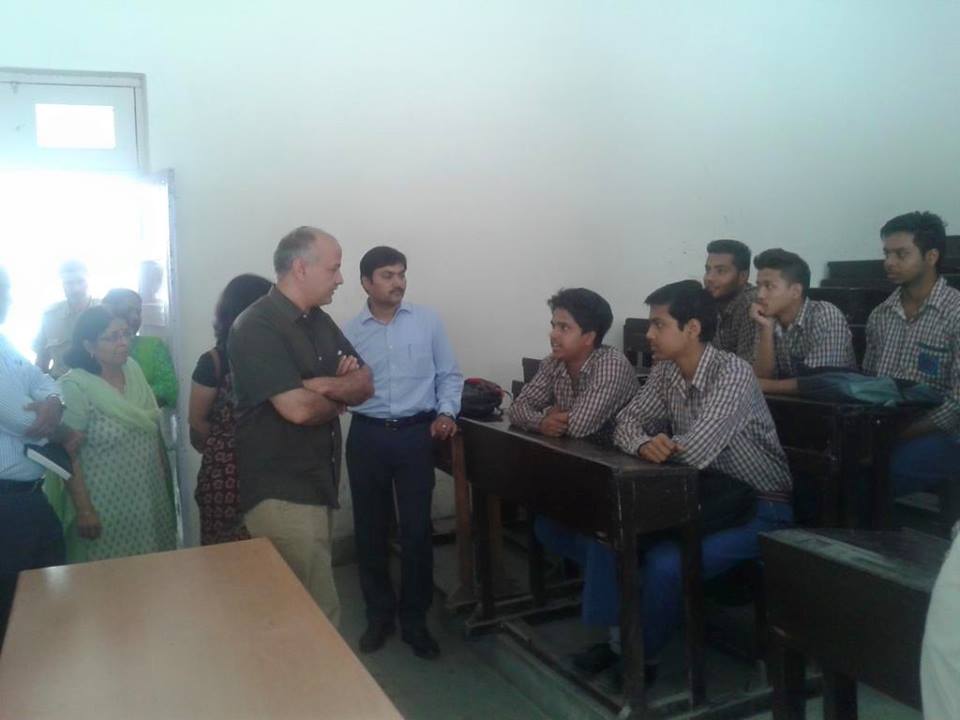
Manish Sisodia In a bid to reinvent school education in the state, Delhi’s deputy CM Manish Sisodia has informed that Delhi will form its own education board on the lines of CBSE and NCERT, come out with new syllabus and also amend existing education laws. The deputy CM also informed that plans are also afoot to frame syllabi and pedagogy for the Delhi government schools.

He was interacting with government school principals at Thyagaraj stadium in the presence of CM Arvind Kejriwal who said the government was planning to create 45 model schools in Delhi in next the one year.

Presently, all government schools are affiliated to Central Board of Secondary Education (CBSE) and follow NCERT syllabi, which has been the longest standing board in Delhi.

Explaining that the education system in Delhi is working on an Act made in 1973, which has become old, Sisodia said that the world has moved on, Delhi was still following the old law. He stressed that there is need to rewrite it according to modern vision and modern education system.

It may be mentioned that some time back, nearly 200 Delhi schools have appealed to the Central Board of Secondary Education (CBSE) for relief while awarding marks to class XII board examinees, especially in the mathematics paper. There were complaints at schools across the country that this year’s question papers were unusually difficult and lengthy. For their part, CBSE officials had said that the issues raised by schools would be taken up by a team of subject experts, which will then decide on the marking scheme.

Sisodia said education was a priority sector for the government and that the same would be reflected in the future budgetary allocations. The deputy CM further stressed that simply making provisions in the budget won’t work if there is no vision, and the government had two “important missions—to skill students and impart value education.” This, he said, would help create responsible citizens after 12 years of education.

“We uplift classroom experience with technology”

Curiositi - manojthandassery With the realisation that schooling in India had not changed much in the preceding decades, Manoj Thandassery, Co-Founder, Curiositi, says that their venture is increasing the use of technology and innovation to make learning fun and impactful

What were the various reasons behind starting Curiositi?

Curiositi was founded by professionals who had worked overseas for several years. On their return, they discovered that schooling in India had not changed much in the preceding decades. While the infrastructure of schools had improved significantly, the classroom experience was no different. The founders then brainstormed on how the classroom experience could be uplifted, to create a much more interesting and impactful environment.

What are the various difficulties and hurdles encountered in doing business on ground level?

Selling to schools is difficult due to the multiple stakeholders that one needs to meet and convince. There is the school principal, the concerned subject teachers and the management. In some cases, one has to present and take approval from the PTA committee as well. However, we received a boost in late 2014, when Unitus Seed Fund (USF-an Impact Venture Capital Fund) invested in us along with high profile angel investors. USF investors include Bill Gates and the Michael and Susan Dell Foundation. In addition to the funding, we have benefited tremendously from the guidance provided by these experienced investors.

What is the market size of the services offered by you in India at present?

There are approximately 1.5 million schools in India, of which 400,000 are approximately private schools. We offer solutions to these private schools.

What are the major benefits for the organisations or individuals adopting your solutions?

We offer education solutions for Science and for Maths. For Science, we have created a portfolio of 100 science activity kits that are mapped to the various science concepts taught in school. We offer these as part of a customised programme to schools, to help transform their learning of science. Rather than just learning from text books, students now have the excitement of using these activity kits to actually explore concepts, perform experiments and build working models. Science therefore comes alive in these schools, and the response of students and teachers to the programme is overwhelming. The programme is also highly affordable.

Our Math product is the world’s first tablet based, text book mapped, personalised Math practice solution for schools. Students now get to practice Maths using the tablet, and it is like having a 1:1 student teacher ratio during the class. The tablet asks questions based on the student’s ability, immediately corrects the problem if the student makes a mistake and helps him or her do better by practice. The solution also provides teachers with a dashboard of student performance, so that they can observe if certain topics were not well understood, and make corrections.

What is the vision of your company for the next two years?

We will continue to deliver compelling educational solutions, by increasing the use of technology and innovation. Our goal is to make learning fun and impactful.

In order to enhance your company’s visibility, what are the various methods that you are using?

We conduct events and marketing campaigns. We also do demos of the product at schools.

How you can differentiate you services from your competitors?Our products are clearly designed to be engaging and easy to administer. These aspects separate our product from the competition.

LATEST NEWS