


Home Blog Page 850

Feepal envisages to add immense value in fee mobilization

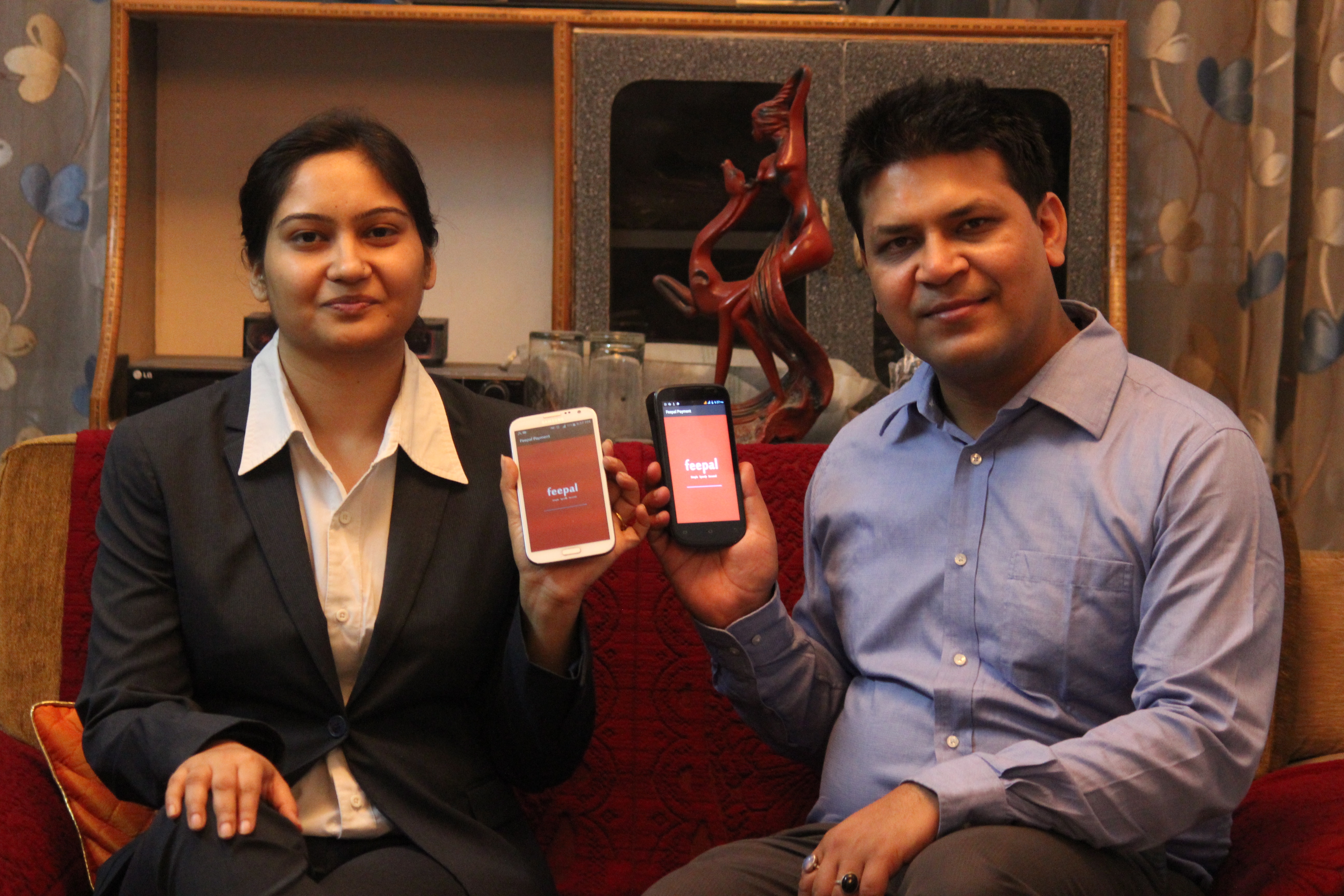
Ankur Sharma, owner of White Sepal Services opines that despite being one of the largest education markets worldwide,the level of automation and e-commerce penetration is abysmally low in the education sector. Feepal firmly believes that with the effective use of technology, the present inefficient mechanism of fee mobilization could be replaced by automated, simple yet powerful and cost effective system. 

Give us the brief of various reasons behind starting the venture.

India is one of the world’s largest education markets. In monetary terms, around Rs 3 lakh crore annual transaction happens in the education sector.  Ironically, unlike sectors like retail, travel, entertainment and food, the level of automation and e-commerce penetration is abysmally low in this sector. It’s astonishing that even the most renowned universities, colleges and schools in India are still collecting their fee in physical mode wherein the payers have to face issues like geographical constraints to travel to institutes, have to stand in long queues and encounter slow and manual accounting. Thousands of schools, colleges, universities and coaching classes across the country have similar arrangements for fee mobilization. Millions of payers have to face hassle in the current scenario.

Through Feepal (web portal or Android App) the payers can pay fee to our partner educational institutes in just 30 seconds from anywhere and anytime. Interestingly, for the partner educational institutes, this technological upgradation for fee mobilization is free of cost.

What are the various difficulties/ hurdles encountered in doing business on ground level?

Feepal is driven by first generation entrepreneurs and e-commerce businesses like this require a threshold scale to achieve break even. Therefore, the first hurdle is to generate working capital from the revenues.

The other hurdles is trust deficit, inertia and status quo in the educational institutes. Many educational institutes appreciate the value addition and technological improvement that Feepal brings, but are reluctant to adopt it because of trust deficit and the conventional approach of the decision makers; but now with about 100 educational institutes in our kitty the trust deficit factor is gradually getting diluted.

What is the market size of the services offered by you in India at present?

21st century India is bestowed with favorable demographic dividend. As per census 2011 the population below 25 years of age in India is about 55 crore. With literacy rate of 74%, there are around 35 to 40 crore students in various educational institutes across the country. About 13 crore of these are in urban areas where internet penetration is high. This is our target market, which includes students in preschools, schools, colleges and coaching classes.

In India, there are about 1.4 million schools, and 50 thousand institutes of these offer higher education. In terms of volume the size of Indian education market is about 3 lakh crore per year. We want to tap this market.

What are the major benefits for organisations / Individuals adopting your solutions?

As far as organizations are concerned, we work as the extended technical department for our partner institutes. Our partner institutes get additional e-commerce (web portal) and m-commerce (Android App) channels to mobilize their revenues. We are trying to provide an umbrella solution in terms of online payments for educational institutes. Thus, besides the online fee management system, we also facilitate them to sell their admissions form online and take their book store online. Feepal is a smart portal in which late fee and fines can be customized as per the need of the respective institutes. For account departments of institutes, we have a dashboard that helps them to reconcile the online payments. All these offerings are at absolutely free of cost for the institutes. We also provide customer support to the payers on behalf of the educational institute.

For individual payers,our main offerings are convenience and world class experience for paying fee. We empower the payers to pay the fee in just 30 seconds from anywhere and anytime, even on holidays. We have mitigated space and time constraints for paying fee.

What is the vision of your company for next two years?

Our operations started in July 2014, and in just three quarters we are now online payment partners for more than 100 institutes located in 11 cities across the country. In this short span of time we have successfully done the gross transactions worth Rs 3 crore on Feepal. At the current pace we believe in next two quarters we will successfully complete aggregated gross transactions worth 10 crore on Feepal. Once we reach this benchmark we will be actively looking for funding partners to scale up the business in different geographies. We would also like to have our footprint in the international markets. There are various international markets which are relatively less mature vis-à-vis India in terms of automation in education. They will be our potential targets apart from the domestic market.

In terms of technology and product, we would like to move beyond the core fee aggregation and would also like to sell other education related products and services on our portal such as summer camps for students, school uniforms, online courses, online test series etc.

What are the various methods you are using to increase the visibility of your organisation?

Presently, we have channelized all our limited resources for institute acquisition. We are using multiple sales channels for the same. For B2C visibility, we leverage upon the networks of educational institutes. We ensure our visibility in educational institutes on occasions like Parent Teacher Meet, Annual Days, College Fests etc.

How you can differentiate your services from competitors?

Our competitors are banks and payment gateways. In the context of education sector, we have a clear edge over both these competitors. Bank and gateways have online payment products but they are generic in nature. Feepal as a product is designed keeping in mind the need of the educational institutes.

Feepal is a plug and play kind of solution for the educational institutes. However, in order to integrate payment gateways, institutes have to incur a cost in upgrading their websites and technical upgradation. We also have provisions for admission form selling and automating the book shops of the educational institutes. Feepal Android App is the first payment App of its kind in India for the education sector. These are clear differentiators.

What are the major stakeholders and sectors you are focusing on?

We have our focus on the education sector. Our target markets are pre schools, schools, colleges, universities and coaching classes.

Apart from education, we are also trying to come up with similar online payment products for the Healthcare industry. We have already started a pilot project for revenue automation with three Bangaluru-based hospitals.

What are the various initiatives taken by your organisation to emerge as a market leader?

We want to be a one stop online payment solution for educational institutes (both e-commerce and m-commerce). Our customer centric approach and ability to design customized solutions makes us different from the competitors. Our approach is to add value in the ecosystem at zero cost for educational institutes.

We are well ahead of the market curve in terms of technological products. For instance we have recently developed India’s first Android app for the education industry where all our partner institutes shall be aggregated on a single platform.

India-Canada bilateral engagement: Education ‘key area’

Brisbane: Prime Minister Narendra Modi meets the Prime Minister of Canada Stephen Harper at the G-20 summit, in Brisbane, Australia on Nov. 15, 2014. (Photo: IANS/PIB)Education has been identified as a ‘key area’ for bilateral engagement by Prime Minister Narendra Modi and his Canadian counterpart Stephen Harper. In fact, both leaders have recognized that India is a `priority country` under the North American nation`s International Education Strategy.

In the joint statement released by the two leaders, Prime Minister Modi and Prime Minister Harper agreed to focus on greater student, faculty and people-to-people exchanges, affirming that cooperation in education should focus on building the quality of human resources in both countries.

Canada’s partnership in the Global Initiative of Academic Networks (GIAN) of India to enable Canadian researchers to cooperate in learning, research and teaching in select Indian educational institutions has been welcomed. Similar is the case with the first co-funded student exchange programme through the Ministry of Human Resource Development`s Technical Education Quality Improvement Programme and Canada`s Mitacs Global ink Program.

Prime Minister Modi and Prime Minister Harper also noted the socio-economic opportunities inherent in India`s ambitious goals of skills development and welcomed the MoUs between the Indian National Skill Development Council and 13 Canadian colleges, institutes, and Sector Skills Councils in the fields of agriculture, apparel and textiles, automotive, aviation, construction, green economy, healthcare, hydrocarbons, IT, telecom and electronics, sports sector, and water.

The two leaders also agreed to renew the Canada-India MoU on Higher Education on a rolling basis.

Studying medical, dental to get expensive

Medical StudentsCome the new academic year, and medical and dental courses are set to become more expensive. According to media reports, the fee for undergraduate and postgraduate medical and dental courses has been increased by 10%. The government, however, is still not vocal about this hike in fees. Presently, Private medical and dental colleges have only given verbal consensus to the agreement. As per the new fee structure, the fee for an MBBS seat allotted through CET will be Rs 55,000; for a BDS seat, it will be Rs 35,000. At present, the corresponding fees are Rs 38,000 and Rs 27,000 respectively. The fee for these two professional courses has also been increased for seats allotted after the ComedK entrance test. Candidates now have to pay Rs 4,25,000 for MBBS, and Rs 2,75,000 for BDS. Earlier, the corresponding fees were Rs 3,57,500 and Rs 2,53,000 respectively. However, seat-sharing has not been decided yet. At present, the seat-sharing ratio for medical seats is 60:40 — 40% in private medical colleges will be allotted under the government quota, and 60% the under private quota. For dental courses, the seat-sharing ratio is 35:65.

Andhra wants to make Kuchipudi compulsory

KuchipudiIn a first of its kind initiative, Andhra Pradesh government wants to make learning of Kuchipudi classical dance compulsory in all the state syllabus schools, including the private ones, from Class V to VIII, from the coming academic year.

While the theory classes will be compulsory, the practical ones will be optional. For those opting for the practical, a four-year diploma certificate will be awarded to the successful student.

K Sasibabu, Deputy Secretary of AP youth, tourism and culture department said, “Chief  Minister Chandrababu Naidu is keen that we introduce a comprehensive plan to promote Kuchipudi both in the country and abroad. As part of this initiative, lessons on Kuchipudi will be introduced to high school students.”

The theory lessons for Kuchipudi have been prepared by Dr Vedantam Ramalinga Sastri, principal of Siddendra Yogi Kuchipudi Kala kshetram in Kuchipudi of Krishna district which is affiliated to Potti Sriramulu University. The lessons have been sent to the State Council of Education Research and Training (SCERT) for approval and the state authorities see no issues in it being granted.

SCERT revised guidelines for Non Detention Policy

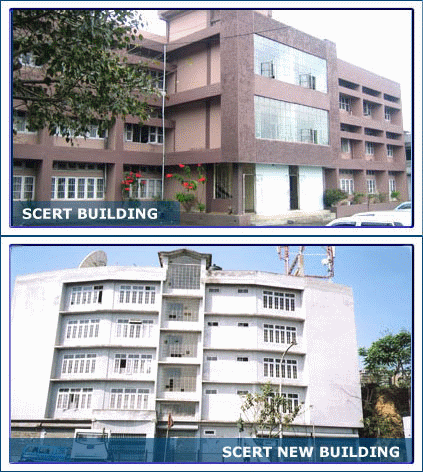
scert_new_buldingThe Nagaland State Council of Educational Research and Training (SCERT) has revised the guidelines of the Non Detention Policy (NDP) with immediate effect. Under the revised guidelines the students will be declared either Qualified or Needs Improvement (Pass or Detained) which means that a student can be detained if the school feels he is not qualified to be promoted to next class.

Director of SCERT Nagaland, Vipralhou Kesiezie informed that the department made the changes for the betterment of the education structure. Under the RTE act 2009 for elementary education, SCERT has reviewed the non detention policy and made the changes.

For all round development of the child, emphasis will be given on three areas cognitive, affective and psychomotor domains. The child will be evaluated three times in a year with the existing pattern of 40 percent internal and 60 percent external.

Education department includes Gender equality in Class V syllabus

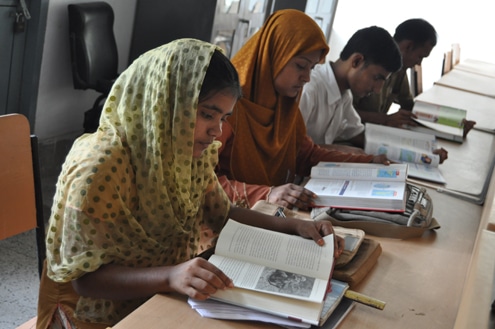
Azizul Haque College Bogra (BFA)To impart value education to students and that teach them the gender equality at the very early stage of life to become a better citizen of the country, the Education department has updated class V syllabus. The new syllabus will focus on subjects like gender equality and will also impart education on e-learning, which is the need of the hour in today’s time.

The training of the teachers has started from April 15. According to the State Textbook Bureau Officials, the new syllabus has been designed keeping in mind the changing scenario and generation. The officials informed that sensatising students on gender equality, women empowerment are some of the most important issues that has been kept in mind while designing the new curriculum.

While speaking to media, C Borkar, Director of the State Textbook Bureau, Balbharati said, “The new syllabus will give importance to gender education. There are many issues in the country due to less awareness about gender equality. Hence, the department has decided to introduce such topics in the revised syllabus of all subjects in all classes. Last year we revised the syllabus of class III and IV.”

The teachers at the district level will be trained by experts across the state and these trained teachers will train the teachers in the city and taluka level to teach the new syllabus. Maharashtra State Bureau of Textbook Production and Curriculum Research, Balbharati, that makes textbooks for classes I to VIII has informed that science and maths book have enough content about value education.

The department has also emphasised on e-learning which is the need of the hour.

Education Department takes unaided schools to task

Educate girls for free, unaided schools toldTaking unaided schools to task, the education department has sent them circulars, asking them to apply for the approval of their newly appointed school staff; following which the schools will have to face de-recognition. Furthermore, the unaided schools have also been asked to provide free education to girl students till they complete standard 12. Faced with this situation, the unaided school forum have recently sent a legal notice to principal secretary of school education. S.C. Kedia, secretary of unaided school forum said, “The department asked the unaided schools to apply for approval of staff and to provide free education to girl students. We have slapped them with a legal notices on 19 January and 2 March this year respectively. How can they force the unaided schools to follow their instructions when these schools are not asking for any grant from them. Most of the schools were upset over this.” B.D Phadtare, deputy director, school education, said, “The reason behind asking approval of staff from unaided schools is to decide their school fees. This approval will not only help the non-teaching staff but also to teachers from unaided schools. If tomorrow any injustice happens with any teacher or non-teaching staff in these schools, they will at least have some proof to show that they are approved from education department. On top of that the unaided schools will not show fake staff and ask more fees from parents.”

78% Indian teachers support mobile devices in class

SAMSUNGNearly 78% of Indian teachers support the idea of incorporating mobile technology in the edu78% Indian teachers support mobile devices in classcation system as it will have a positive effect on students, found a recent study by Adobe. “The challenge is to provide support to enable greater mobile adoption,” said Kulmeet Bawa, Director Enterprise (South Asia), Adobe. The survey, titled Transforming Education with Mobile and Digital Technology, was conducted among school teachers in 13 countries in the Asia-Pacific Region. India constituted 22% of the study sample. While 83% teachers said accessibility to digital facilities while making lesson plans will help students comprehend concepts better, 86% felt institutes need better infrastructure to use the digital facilities.

Australia looks forward to enhance education ties with India

Australian Foreign Minister Julie BishopAustralian Foreign Minister Julie Bishop has said that they are looking forward to enhance the cooperation between the two countries in the field of education. During her four-day visit to India, Bishop made the remarks while addressing a gathering of students at St. Stephen’s College in Delhi. Asserting that India is the second largest source country of students who wish to study overseas, the minister said, “India is second largest source country of students who wish to study overseas. We look forward to extending the cooperation in the field of education to facilitate more student-exchange programmes between the two countries”. She also briefed students about the ‘New Colombo Plan’ which supports Australian undergraduates to study and undertake internships in the Indo-Pacific region. “The number of Indian students studying in Australia is more than the number of Australian students studying in India. We have to catch up there. The plan will provide grants to students to pursue their higher studies in India,” she said. It may be mentioned that the New Colombo Plan was launched by Australian Premier Tony Abbott during his visit to India in September last year. The Colombo Plan was initiated in 1950 and students had visited universities in Australia to live and earn and then return to the home country, taking back a rich experience. The new plan involves a scholarship programme for study of up to one year and internships or mentorships, and a flexible mobility grants programme for short- and long-term courses, internships, mentorships, practicums (practical section of a course of study) and research. It intends to encourage two-way flow of students in the region. A letter of intent was also signed between University of Melbourne and St. Stephen’s College to extend mutual support to each other in the academic field. St. Stephen’s College Principal ValsonThampu, however, said details of the cooperation have not been worked out yet.

‘Delhi’s education system needs to be overhauled’

Manish SisodiaThe education system in the national capital is all set to be overhauled, Delhi deputy chief minister Manish Sisodia recently said at the inauguration of a conference on ‘Innovation to make cities financially sustainable’, organised by the Associated Chambers of Commerce and Industry of India (Assocham). Sisodia, who is also Delhi’s education minister, said the ‘entire concept’ of education system in Delhi needs to be changed as it gives least importance to teachers. “Teachers play a primary role in the field of education, yet in our present system, they are least significant. In our system, education is imparted in a very unscientific manner and we are working towards changing it.” He further added: “We are working towards promoting the role of a teacher as the pilot of the education system and everybody else, including the education minister, will act as a support staff,” Sisodia added. “We need well-trained teachers in our schools.” Furthermore, the deputy chief minister criticised private schools for being ‘profit-making institutions’, and expressed his dissatisfaction with government schools due to their poor standards.

LATEST NEWS