
Home Blog Page 859

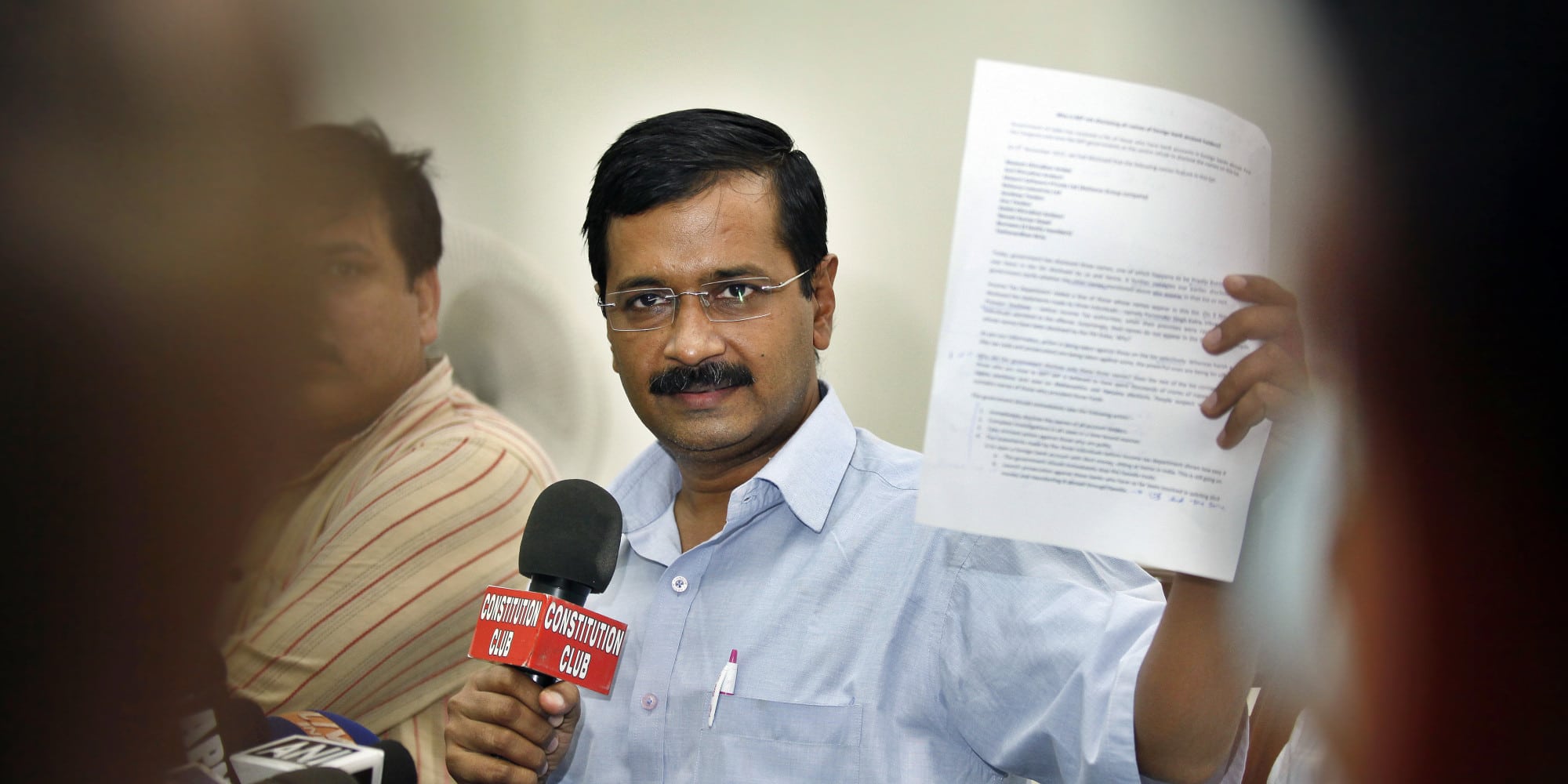
Politics decaying education system: Delhi CM

Arvind Kejriwal Press Conference On Black MoneyBlaming political interference for the ‘decay’ in education system, Delhi Chief Minister Arvind Kejriwal said that his government would not meddle with it, keeping a safe and long distance.“ Political interference has been gobbling up the education system,” Kejriwal added further addressing the 10th convocation of Guru Gobind Singh Indraprastha University (GGSIPU).

Kejriwal affirmed that education is the ‘topmost priority’ of the Aam Aadmi Party (AAP)-led government. It would only focus on providing resources to the educational institutions and assist all educational institutions in their pursuit of excellence, he added in the same refrain.

The Delhi Chief Minister claimed to have offered the GGSIPU Vice Chancellor a ‘blank cheque’, asking him to prepare a blueprint to make the institution one of the top 100 universities in the world.

Vice President Hamid Ansari didn’t hide his concern over lack of research in the country, saying that only one per cent of the students enrolled in higher education are pursuing research in various areas.

“This reflects a lack of focus on research. India’s output in PhDs is relatively small and its share in world output of science papers in 2012 stood at around 3.6 per cent compared to more than 14 per cent of China. We have to aim at quadrupling our research and development base, stimulate research where R&D productivity is lower and build large publicly funded a privately managed facility to help the researchers,” he said.

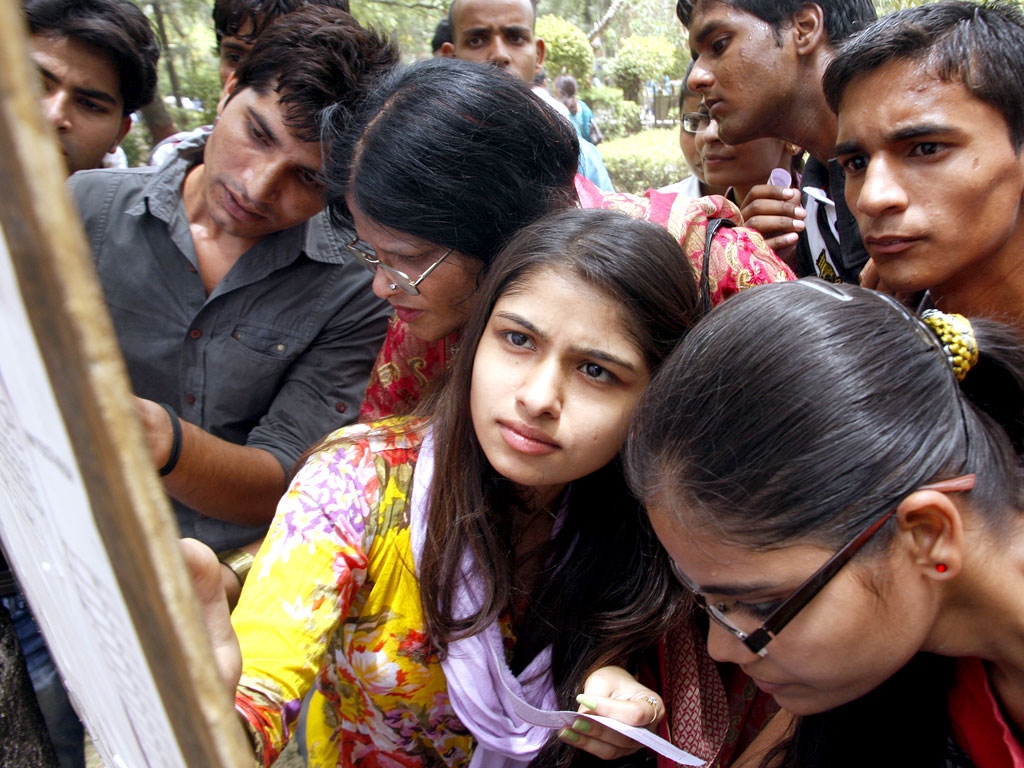
DU admissions for PG courses

DUThe centralized registration for Delhi University’s postgraduate courses will start from April 1 and continue till April 30. An entrance test will follow soon after. Except the departments offering inter-disciplinary or professional courses, all other departments will reserve 50 % of the total intake to be filled with students from the DU and the rest through an entrance test besides an interview.

The registration and entrance tests for PG courses of School of Open Learning and Non Collegiate Women Education Board will be conducted by the respective departments. Other procedures for admission will be conducted at their own level, though.

It is the respective departments that will conduct registration and entrance tests for PG courses of School of Open Learning and the non collegiate Women Education Board. But the other procedures for admission will be conducted at their own level. The departments and the faculties are being asked to upload the answer keys of the MCQ entrance within 24 hours of conclusion of the examinations.

The Delhi University duly notified the procedure for registration/admission to the postgraduate courses on March 19, 2015. All candidates shall apply online for admission to different postgraduate/master’s courses through the common web portal. Every department has been asked to indicate the total number of seats and also the supernumerary seats available for every category of candidates like persons with disability, foreign students, sports, etc.

A common information bulletin for online registration will be brought out by Delhi University and no department/faculty will bring out the printed bulletin. While there will be an entrance test for the indirect admissions, if the departments/faculties decide to hold the group discussions (GD).

Amity launches varsity activity for KidZania

kidzania-mumbaiAmity Education Group has launched university activity for kids at KidZania Mumbai- the global indoor theme park. Replicating an institution of higher learning, KidZania grants academic degrees in four subjects of study physical sciences, biological sciences, applied sciences and the arts. The students can pay KidZos (KidZania currency) as tuition fees and identify the subject they wish to pursue. The university offers graduate, undergraduate and PHD degrees which help in enhancing the students’ value on the job market.

For admission to the university, the students have to pass the test and then receive their university ID card. The students are awarded with a Bachelor’s degree allowing them to earn more at other activities related to their field of graduation.

Atul Chauhan, President and Chancellor, Amity University, said, “KidZania is a concept to engage children with productive activities which focus on careers and the real world. We are proud to have established the Amity University within KidZania Mumbai as it will promote right from a young age the value of education- that the more educated you are, the better jobs and salaries you can get.

Gender Atlas launched to promote girls’ education

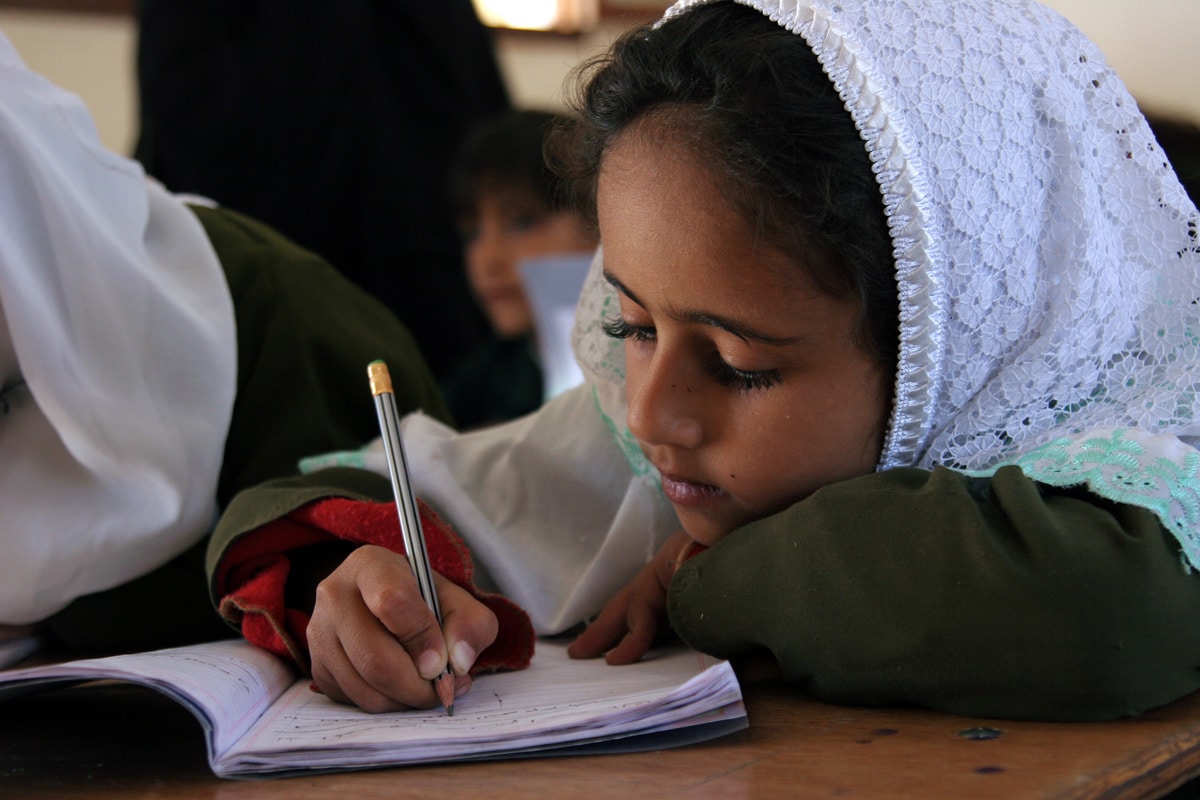
Attabari Elementary SchoolTo promote girls education even in the remotest area of the country, Ministry of Human Resource Development, Department of School Education and Literacy has recently launched digital gender Atlas, a tool developed by UNICEF.

The Atlas tool will identify the low geographic areas where there is limited or no access to education especially in the schedule castes, schedule tribes and Muslim minorities on specific gender related education indicators.

The Atlas is available on MHRD website and is ready to use by the states, districts, education institutions. The focus of the tool is to identify vulnerable girls and challenged girls and impart equitable education to them.

‘IIT heads’ selection process too casual’

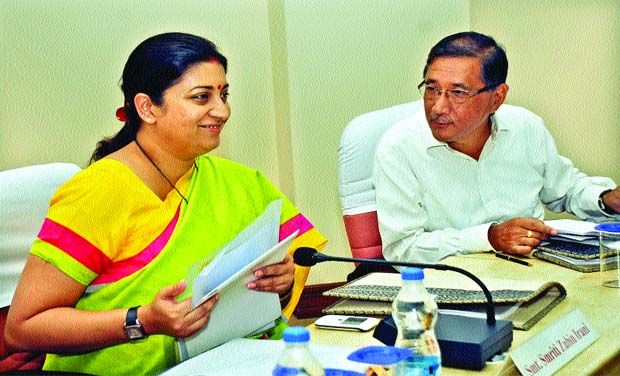
smriti_0Responding sharply to HRD Minister Smriti Irani’s call for a fresh process to interview 36 candidates in a single day for appointment of directors of the IITs at Patna, Ropar and Bhubaneshwar, nuclear scientist Anil Kakodkar said that “It is too casual a process for the appointment of directors of IITs”. “What was done before was okay. Looking at all 36 candidates in one day is not right. There is a fundamental difficulty with the process. How do you ensure that you make the correct selection?” he said.”IITs are far too important to the country to have such a casual process for the appointment of its directors. It has to be dealt with seriously. How can one be party to such a process?” It may be mentioned that Kakodkar had resigned as chairman of both the IIT-Bombay Board of Governors (BoG) and the standing committee of the IIT Council on March 12. Although, he later decided to continue.

Teacher shortage: Bengal asks centre to ease rules

13-teachervacancyWest Bengal Chief Minister Mamata Banerjee has written to Union HRD minister Smriti Irani about the shortage of teachers in the state, and requesting her to consider appointment of untrained teachers for limited period. Banerjee also questioned why the Centre exempted other states regarding the same, but not made similar reliefs for Bengal.

The appointment of untrained teachers has been stopped from last month by the Union Ministry. As per the Centre’s rule teachers without training beyond 31 March, 2014 will not be considered for appointments and teachers teaching from Class 8 are required to be trained.

Delhi max successful in Right to Education

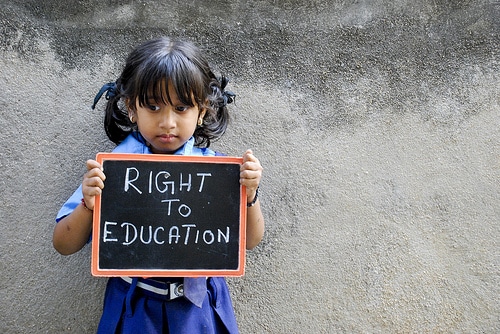
RET-ImageIt is an achievement of sorts for Delhi in the field of education, which has seen maximum success in implementation of the Right to Education Act’s Section 12(1)(c). This act requires private-unaided schools to reserve 25% seats for kids from economically weaker sections (EWS) and disadvantaged groups (DG).
In addition to Delhi having the highest percentage of seats in this quota filled—92.08%— there is also a relatively high degree of clarity on the relevant processes and policies. The national fill rate of EWS seats is 29% and the total number of seats is 21 lakh.

It may be mentioned that The Indian Institute of Management, Ahmedabad, Central Square Foundation, and Accountability Initiative and Vidhi Centre for Legal Policy have studied data from the District Information System for Education for 2013-14 and government notifications to assess the success rate of the 25% EWS-DG quota across states.

Furthermore, Delhi has filled in most of the eligibility criteria. As per media reportsthere was clarity on the type of information to be shared and the channel to be used. Selection process was transparent at least in theory. And it has a State Commission for Protection of Child Rights (SCPCR) too. This is unlike Bihar—with a fill rate of 20.78%—which didn’t seem to have a clear idea of anything beyond the definition of EWS-DG, neighbourhood criteria and appointing various authorities.

Debate over UGC courses

UGCThe University Grants Commission issued a notification to universities and institutions to refrain from offering programmes, including engineering courses through open and distance learning mode.

According to the notification, no university/institution or deemed to be university/institution should offer diploma, bachelor’s or master’s level programme in engineering and technology, other than MBA and MCA, till the finalisation of UGC (Open and Distance Learning) Regulations 2014. Any violation could invite action.

The UGC has included programmes such as BE/B Tech, diploma, undergraduate and postgraduate courses in architecture; town planning; pharmacy; hotel management and catering technology; applied arts and crafts; and PG Diploma in management.

If an institution has the approval of the joint committee of the erstwhile Distance Education Council and the UGC and the recognition status is notified on the All India Council for Technical Education website, it can offer MBA and MCA programmes.

Anna University offers M Sc in Free and Open Source Software and M Sc Information Technology. SN Geetha, Distance Education Director says the institution admits students only in Chennai and not even in its constituent colleges. “We conduct M Sc in Computer Science as we have a full-fledged lab. The answer papers are evaluated by the University’s Controller of Examination,” she says.

State government universities abide by the norms by and large, but some institutions subvert the rules in innovative ways, says C. Pichaandy, vice-president of Association of University Teachers. Pointing out that Bharathiar University offers a course in Catering Science as opposed to Catering Technology, he says that the university has set up centres abroad, which is beyond its jurisdiction, and has also appointed an official agent.

C Subramanian, associate professor in Department of Political Science, Distance Education, Annamalai University, however, argues that universities should be allowed to run such programmes. With around 170 study centres across the country, the university set the trend before even the IGNOU and the Distance Education Council were established.

“If the Commission makes an adverse decision regarding study centres, it will affect the employees of our university. We have given a representation to the UGC vice-chairman H. Devaraj regarding this. We are almost a government university now and follow the norms. The government is inviting foreign universities to run programmes, but does not allow State and Central universities to offer such programmes,” he regrets.

Rural India hopeful about jobs

Skill Up IndiaTwo-thirds of India’s more than 1.2 billion people are younger than 35 year old. Nowhere is the demand for jobs more acute, and the obstacles more formidable, than in rural areas, home to more than 70 per cent of India’s population, including the 450 households in this village.
In many ways, whoever went to college or technical school, are better off than those who live on the poorer side of the village, a 10-minute drive away. Most of their neighbors are farmers, and some own cows and goats.
Others pick up itinerant work as migrants in Udaipur, or even Gujarat, an eight-hour bus ride away. In their neighborhood, there is a portion of a paved road and minimal drainage and electricity, and some houses are made of concrete. A few have toilets.
In the poorer section, where the lower-caste families live, there is no water piped to houses, which are mostly made of mud, less electricity and no paved road. The fondest wish of Sarjan Bai Jogi, mother of six children and grandmother of eight, is a house where “you don’t get wet when it rains,” she said through an interpreter.
We met on the shore of a small lake where her family has lived and worked for 60 years. They survive, barely, on fishing and jobs as laborers, stone crushers and cement mixers. Her youngest son is the most educated; he finished seventh grade.
Among several dozen other women I met in this hamlet, only one went as far as eighth grade; only one young man had a college degree. He was earning money as a part-time wedding photographer because he couldn’t find work in his field. In recent years, the village public school expanded from eight grades to 10. For now, students who want to finish 11th and 12th grades must travel to Udaipur, a hardship for many families who can’t afford the expense and fear for their daughters’ safety.
Expansion of education has made a difference in nationwide literacy rates. While very few villagers older than 60 have any formal education, more than 90 per cent of the younger generation are attending primary school, according to Anirudh Krishna, a Duke University professor, who has been doing research in this region for a decade and traveled with me to this village. But going on to high school and college remains rare. Fewer than 7 per cent of Indians (only 4.4 per cent of young adults in rural areas) have a college education, and, as Nagda discovered, even that is no guarantee of success.

For all of India’s advancement – it has one of the world’s fastest-growing economies – fewer than 10 per cent of workers have regular jobs with legal protections and social security benefits and as much as 5 per cent of the population falls into poverty every year, Krishna said. Modi’s plans for economic growth rest largely on wooing foreign investment, making India a global manufacturing hub and developing a defense industry. And he has set ambitious goals, including building 40 million rural homes with toilets by 2022.
Economic expansion will mean millions of people moving from the countryside to the cities, as it has been in most countries, including China. But India is a nation of villages, with a population that has survived for decades on government handouts, without real opportunities for jobs or a way out of grinding poverty.

‘Bring nursery education under Govt control’

Nursery Govt.pixBringing in nursery education under government purview, provision for encashment of earned leaves and offering due recognition while handing over government awards are some of the major demands an association of primary teachers from private schools in Maharashtra has raised.
Addressing the media persons, association general secretary for Marathwada region, Arjun Rasal, said a demonstration would be staged in front of the office of the regional educational authorities to press for demands.
“The government has been turning a deaf ear to our demands. We had very high hopes from the new government, but the change in guard has not yielded any results. To highlight our demands, we have decided to intensify our agitation at regional level followed by massive agitation at state level,” he said.
Elaborating on demand for bringing nursery education under government control, Rasal said the present system in which such schooling is unregulated was putting a huge burden on primary teachers.
“At several nursery schools, primary teachers are roped in to manage affairs with a handful of untrained staff. Primary teachers have been delivering this as an additional responsibility besides their assigned work. If brought under government control, nursery education would have proper rules and regulations in place for appointment of teachers and other staff,” he said.
Rasal said primary teachers are deprived of encashment of earned leaves though such practice which was a norm in other sectors. The association of primary teachers from private schools has also raised a strong objection to distribution of Ideal Teachers award of the government, alleging that their members have been not been considered positively for the award despite possessing merit.
“Several teachers from private primary schools have been involved in innovative and student-centric teaching practices for years, but their proposals get rejected despite sending repeated entries. This has to be changed as our members too need recognition for their tireless services,” Rasal said, highlighting other demands including free internet facility for schools and appointment of non-teaching staff.
Rajendra Wani, management representative of the teachers’ association, demanded that the government release dues for unaided schools, which are declared eligible for receiving government aid. He also demanded that “stringent” norms laid down for evaluation of schools must be relaxed.

LATEST NEWS