Home Blog Page 955

IT brings a huge enrichment to the learning process

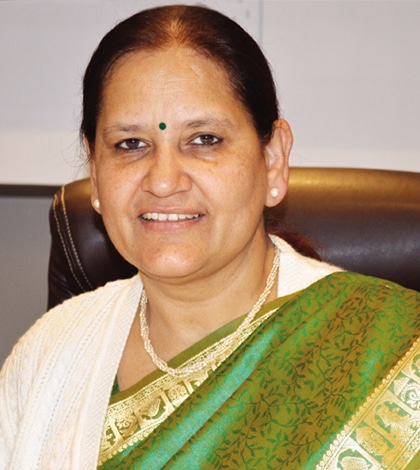
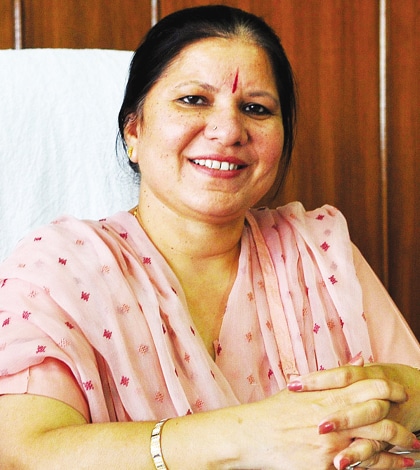
Monica Malhotra Kandhari, Senior Director, MBD Group talks about joining a consortium with technology companies to deliver content

What is MBD Group’s stake in the consortium with Microsoft, Acer and Tata Teleservices in providing educational tablets?
MBD Group has an equal stake in the consortium. In fact as the content provider, we form the backbone of this consortium.

Considering MBD has its own online learning programmes and published books, why did you join this consortium? Will the consortium’s content be any different from the content already available with MBD?
Delivery of quality education has significantly evolved from a couple of years ago. With the adoption of tablets and other smart devices, there is a big opportunity for us to reach the student directly. This consortium extends the competitive edge by providing quality content on a stable hardware platform and significant ease of access everywhere.

 How will students benefit from this arrangement?
This consortium brings a huge enrichment to the learning process to the table such as easy access to quality content, immersive and collaborative learning, and most importantly, a personalized pace of learning and assessment for the student.

What is the current market share of e-learning programmes in Indian schools? How much is the consortium targeting?
E-learning is a growing market. However, there is a significant lack of adoption outside the urban centers. The consortium can reach more than 100 towns and cities in India any day.

 How will the programme roll out and what will be the number of schools and students targeted initially?
This is an innovative product that we are offering to institutions that are willing to invest in their students. In the first year of launch we will limit ourselves to 100 schools where there is a high potential for transformative learning.

 Please define the consortium’s USP.
The consortium has content for comprehensive learning and holistic assessment. It also has connected learning in and outside the classroom, educational tablet with Windows 8.1 and speedy connectivity for anytime, anywhere leaning.

 Please define the USP of the content available from MBD.
MBD is known for providing quality educational content ever since its inception in 1956, we serve more than 40000+ school pan India with our 37 branch offices and are the only publisher to develop content in more than 12 regional languages spoken in India. Our content experts come from various top notch educational institutes. The digital content developed by MBD follows two pronged approach, it empowers the teachers with modern  and effective teaching tools thus ensuring a higher success rate as well as enables students with easily accessible quality content.

 How are you planning to offer the content in the tablet?
The content will be available in both, offline and online forms. In fact, one of the key USP of the offering is our ability to keep the content updated and current.

Which subjects will be covered in the content?
The content will cover all the subjects from class VI to XII.

What content is available withMBD Alchemie?
We have the ability to provide content for K-12, CBSE, ICSE as well as State Boards.

What will be the size of content per tablet?
Each class and course that is covered has a collection of more than 500 concept notes, interactive multiple content and over 1,000 assessment questionnaires.

How will a student use content?
MBD in collaboration with Microsoft is creating a Windows 8 app which will be able to provide a learning platform to the students. This platform will provide a personalized learning path to each student.

Will there be content available online?
To leverage the best of the offering, it would be ideal for the students to be connected on the Web. However the platform will also be sufficiently equipped to work in a stand-alone environment as well.

Technology with a heart Just for Teachers & Students

At the Symbiosis Centre for Distance Learning (SCDL), Pune, the desideratum is crystal clear–offering students the best education. But in a fast-changing world, this means keeping pace with constant technological changes. The aim of the institute is to produce cutting edge professionals using teaching methodologies that could transform a college student into a valuable industry asset, and WizIQ was a natural choice for them.

 The Challenge In their quest to provide the students with best possible education, SCDL found itself on the horns of a dilemma. They wanted their distance learners to be as accomplished as regular students. It was a tall order, till WizIQ entered into the picture.

“Initiative to use WizIQ is an attempt towards bridging the distance between the teachers and the taught.” Swati Mujumdar, Director, SCDL

 WizIQ answered their pressing issues with rich features such as a user friendly interface, easy integration with SCDL’s learning management system, high performance content library and real-time virtual classroom technology. WizIQ’s smart technology bridged the geographical gap between professors and students from remote areas as well as foreign countries. To top it all, the students did not settle for second best. They got the ambience, facilities, access and feel of a real time classroom. With WizIQ integrating its resources with SCDL’s learning management system, classes proceeded like they would in the physical presence of teachers  and students. Even class discussions and clarification of doubts happened in a split second, with ease.

The modus operandi
SCDL’s distance learning students were able to see faculty members and hear the lectures using WizIQ virtual classroom. What’s more, they could get the teacher’s attention whenever they were in doubt by simply ‘raising their hand’ – just as in a regular classroom. For the distance education students, this meant a revolutionary change in their approach to education. It gave them competitive advantage without forcing them to relocate

The achievement
SCDL started using the WizIQ platform on July 24, 2010, much to the delight of students, who took to the classes instantly. They had 250 classes of 75 minutes duration each in the first seven months, with a whooping 4,500 students attending them.-

The USP
WizIQ’s success at SCDL is not a simple case of good sales pitch or advertising. It is the result of WizIQ’s innate understanding of students’ needs. Students used this platform to stay in touch with teachers, get their queries answered like a regular student, attend and follow sessions easily and even create a databank for future use. Features like chat, virtual hand raising and recordings for revision or for those who missed the class ensured that WizIQ created instant rapport with teachers and students alike. Another important factor for the popularity of the educational platform is the minimal investment or set up needed. The students only need an internet-connected computer for the sessions.

The Future
The way the world is evolving, constraints are irrelevant. Learning should be universal and those disseminating education need to be sensitive to the needs of students who will have to deal with cutthroat competition as soon as they foray into professional life. Things are not easy but WizIQ makes them less difficult. No matter where students are, what their background and aspirations may be, WizIQ gives them an opportunity to realize their dreams. Integrating classroom and online teaching is not only advisable but inevitable. It is how students in the future will be taught. At WizIQ, the needs of tomorrow are gauged today to make the tomorrow better. It is all about reaching out and WizIQ knows how to do just that. For queries, suggestions, feedback or ideas to share, feel free to drop a mail to Kalyan Sarkar, Director, Academic Liaisons, WizIQ.com, at kalyan@wiziq.com or call +91-9216405405 or +91- 9897072888.

Innovation in education EZ Vidya cracks measuring quality education sans marks

Chitra Ravi, Founder & CEO, EZ Vidya was conducting a training programme for CBSE School Principals. Unique to her style, she asked the participants to list the safety measures the leaders have taken in their respective schools. Fire extinguishers, SMS to parents, disaster team were few of the responses. Chitra then posed a question, “Have you ever considered the emotional safety of the child in the classroom?” and the principals drew a blank.

At the fundamental level, EZ Vidya believes that quality education is much more than just the academic performance of students. Through our engagements with schools over a decade, it was evident that several critical aspects of true quality education were not in the mind space of many school leaders”, mentions Chitra. ‘Emotional Safety’ was just one example.

To get a deeper understanding of this aspect, in 2012, EZ Vidya conducted a study among school leaders in 2,512 schools. While you might already be aware of some of the key findings of the study through the media, there was one other important takeaway for the organization. The need for ‘measuring’ quality education became evident.

 Key to measuring quality in education – The 5 Transformation Areas
Putting together the insights from over a decade of field research and pedagogic research, EZ Vidya’s research and innovation (R&I) team finally cracked an innovative approach to measure the quality education in schools, the 5 Transformation Areas. The quality in the 5 Transformation Areas would indicate how engaging and effective the learning environment in the school is. Tracking the changes in these 5 Transformation Areas is the key to measuring the quality of education in a school.

 What are the 5 Transformation Areas through which quality education is measured?

STUDENT THINKING
The aspect of a classroom where student thinking is valued, nurtured and challenged. This leads to enhanced thinking displayed by students, leading to better conceptual understanding.

 CLASSROOM DYNAMICS
Focusing on dynamics, this aspect works around establishing cordial and learningoriented relationships between teachers and students, as well as among students themselves. Better relationships ensure emotional safety, leading to better cognitive performance.

TEACHER EMPOWERMENT
The yawning gap between the ‘digital native’ learner and the ‘digital immigrant’ teacher, makes it imperative to empower teachers. Empowered teachers facilitate better learning thereby taking charge of transforming classrooms to ‘thinkrooms’.

 LEARNING AMBIENCE
The ambience in a classroom can simultaneously trigger thinking as well as reinforce learning. Apart from the learning aspect, a vibrant ambience also adds to the verve and enthusiasm among learners.

 TECHNOLOGY INTEGRATION
This area focuses on the judicious and meaningful use of technology to make learning more effective, while also catering to the learner’s needs and engaging him/her more actively. For a teacher, technology provides the much needed tools to enhance his/her productivity. The transformation in these 5 areas in a school is measured through 28 parameters. For instance, ‘Student Participation’ is one of the parameters associated with the ‘Classroom Dynamics’ Transformation Area. An increase in the participation levels in classrooms shows more student involvement in the learning process and the increased confidence levels of students. The Transformation Areas are integrated into EZ Vidya’s award-winning curriculum program, Chrysalis. Chitra remarks, “The real achievement for us is when the organization’s innovations are able to help bring a positive change in schools. Our clients are now able to track the school’s progress every quarter through the Chrysalis Transformation Report. Many Principals have found this to be additionally valuable as they are able to easily show this progress to their school’s stakeholders!” If you are a school leader, we encourage you to write in to vision@ezvidya. com with any questions on the Transformation Areas.

Ensuring Better Education in Rural Areas

“In order to ensure teacher availability in backward district of Mewat, a separate teacher cadre has been created . Teachers recruited for Mewat will not be transferable to other parts of Haryana,” says Surina Rajan.  In conversation with Ankush Kumar of Elets News Network (ENN)

Pleas tell us about the initiatives taken by the Department of School Education to enhance the quality in education.
A major initiative taken in this respect is improving the quality of teachers by improving pre-service teacher training, in-service professional development and raising the eligibility bar for recruitment. Haryana had introduced Teacher Eligibility Test as an eligibility requirement for all categories of teachers long before other states did it or RTE made it mandatory. Other eligibility requirements have also been reviewed and enhanced. A condition of having consistent good academic record in the case of PGTs has been put in all the subjects for direct recruitment. Holding of qualifications of TET has been prescribed in the case of PGT as well, whereas there is no such condition in the rest of the country including Central Schools & Navodaya Vidyalya Schools. Service Rules have been modified and notified. Performance appraisal system of entire teaching and supervisory staff has been revamped linking it to their Job Description and outcomes generated during the academic session. Organizational restructuring is being done to bring required focus on learning outcomes of children. Teachers have been largely relieved of non-teaching duties. A robust MIS is being developed to ensure efficient data collection and management system.

Value based education seems to be buzz of the day. You are taking care of school education in Haryana. How do you make sure that every child gets the value based education at elementary level?
Teaching about positive human values i.e. respect, honest, compassion, care, humility and responsibility, improves the quality and education in schools and as such thrust on these creates value based education. In this regard beginning is made with a properly conducted school assembly in each school, celebration of national days in schools and activity modules specially geared toward value education through experiential learning. The text book design, presentation and content also enhance scope for value based education. It is specific to mention here that in the Morning Prayer regarding positive human values as detailed above, lectures are delivered by head of the institution as well as by teachers and students on regular basis. For improving the standard of education in the State, a School Teachers  Eligibility Test (STET) has been introduced for recruitment of all categories of school teachers and principals in government schools of Haryana.

 How effective has been the role of STET in imparting quality standard education?
It is specific to mention here that STET has been introduced in Haryana State in the year 2008 for all categories of teachers. After the enforcement of RTE the same has been brought in conformity with the guidelines dated 11.02.2011 prescribed by NCTE in the matter in respect of PRTs, TGTs and PGTs. This has ensured a minimum level of standard especially in respect of all categories of teachers.

 It has been said that IT can be leveraged to bring and provide quality education to large number of students in any part of the country. So what is the level of ICT implementation in school education in Haryana?
Presently, we are having ICT labs in nearly all (3,100) secondary and senior secondary schools which have been established with support of several partners like M/s Core Technologies, M/s Everonn, HCL and SANMEDIA. Majority of Lan have been established in Client- Server model with shared computing devices and use Open Source software. We have been able to increase the number of screens for benefit of students and reduce power consumption of labs. Ministry of IT has also awarded the state recognizing this as a Good Practice. I must also mention about few other initiatives here. We have started a programme named G-10 in ten schools of Gurgaon for upper primary classes for teaching of Science and Mathematics through a customized Learning Management Software. It is third year of implementation and it has made sustainable contribution to skill levels and competencies in the subjects of both the teacher and the student .The results will be documented and the programme would be adapted as required before being  taken to scale . Another programme is being implemented in two blocks of Kaithal and Kurukshetra districts where we have created three smart classrooms in primary schools and using multimedia content for teaching. While an end line survey of learning outcomes will give us a firm evidence of its impact, currently the element of joy in teaching – learning and enriched classroom transaction is very much obvious. We have plans to take this to selected schools of Mewat in the coming academic session.

In partnership with IBM and Shri Ram Foundation, a programme called KidSmart is already going on in Mewat for introducing very small kids (classes I-V) to interactive multimedia content with help of a guide. The Kidsmart classrooms are vibrant and filled with activity. Learning Links Foundation is another partner which has helped us introduce solar power based computer lab with Cloud Computing exposure to children. In NVEQF, Haryana is the state which has successfully implemented the scheme. One of the skills covered in this project is IT& ITES where children are being prepared during classes IX-XII for the entry level role in IT industry as they turn 18. We had some early success in the programme indicated through placement offers to children graduating in Level IV of NVEQF course.

 What is the work that you are doing for the admission of children belonging to weaker section and disadvantaged group for the society?
In Rule 134A of the Haryana School Education Rules, 2003, reservation for meritorious students belonging to Economically Weaker Section (EWS) and Below Poverty Line (BPL) categories to the extent of 10 percent have been provided. The said rules have been framed under Section 24 of the Haryana School  Education Act, 1995 (Haryana Act No. 12 of 1999). Further, it has been provided in the said rule that the school shall charge fee from these students at the same rate as charged in Government schools. It is specific to mention here that all recognized schools of Haryana from Classes I to XII are bound to grant admission to the categories enumerated above. A detailed mechanism having participation of parents as well as private schools has been created to ensure accessibility to all willing children and transparency in allocation of children to schools with usage of an IT application.

Government has enacted and implemented the Right to Education Act in the right spirit towards providing quality elementary education to all. In your view what are the opportunities and challenges of RTE for both private and Public/ Government schools?
Haryana has a large and robust private school sector. We would not have been able to achieve the target of universal enrolment and retention without this active participation of private schools. Private schools have been extremely proactive in bringing children to classrooms as it also makes good business sense Government on its side has established schools in all neighborhoods to facilitate all parents with or without any financial means to enroll their children in schools. RTE has further helped us to allocate more budgetary resources as needed for the sector. Haryana was the first state to abolish fee and funds as required under RTE and has also compensated all the school for such loss of fee and funds through state government budget grants. We have consolidated our school system and moved towards better infrastructure, better pupil teacher ration and better classroom practices.

The Roadmap for Developing Technical Education

 “Odisha has a number of ITIs and Polytechnic colleges to help our youth attain the right skills for having gainful employment in the industry of their choice,” says Dr Chandra Shekhar Kumar. In conversation with Nayana Singh and Kartik Sharma of Elets News Network (ENN)

Please tell us about the measures that are being undertaken in the state of Odisha to ensure that the citizens are adequately trained for being employed in the modern industry.
In order to streamline and pay more attention for improving employability of youths through systematic pattern of training, the government of Odisha has created the new department named Employment and Technical Education & Training Department (ETET). The basic purpose of this department is to look after the skill upgradation of the youth and provide quality technical education at various  levels. Odisha has a number of ITIs and Polytechnic colleges to help our youth attain the right skills for having gainful employment in the industry of their choice. In fact, I would like to point out that our educated youth are finding good jobs not only in Odisha but outside the state also. The work for skill development of our youth is being done through the formal sector as well as the informal sector. In the formal sector we are strengthening, upgrading and expanding new ITIs and Polytechnic institutions. In 12th Five Year Plan, we are targeting more than 80 new ITIs, which will add up to 40,000 seats and will also strengthen the existing ITIs. Also in coming five years we are planning to set up 20 new Polytechnics, which will add 10,000 more seats. In the informal sector we basically try to cater to the needs of the students who have dropped out of the education system during their schooling period and have not been able to pursue higher education. To these students we provide short duration courses that can enable them to gain skills for different sectors like manufacturing, construction, retail, banking, computers, etc.

What steps are being taken to ensure that there is adequate level of interface between the academic community, who are involved in providing skills related training, and the industrial sector?
A healthy level of interface between the  academic community and the industry is of great importance. The academic community in the ITIs and Polytechnics of Odisha are interacting with the industry leaders. We do our best to upgrade and reform the courseware and teaching systems in our education institutions by taking into account the changes that are happening in the industrial area. The institutions often approach the important industry bodies for knowing their views on the kind of curriculum that is most suited for skills development. In today’s world the technology being used by the industry is constantly evolving, so it is necessary that the students be imparted training that takes into account the exact requirements of the industry.

Tell us about the steps that you are taking to ensure that the educational institutions follow better curriculum.
Government of Odisha has created State Employment Mission that seeks to create synergy in various development sectors in terms of skill development of youths and linkages of employment opportunities. The mission’s principal task is to formulate sector and trade specific strategies for specialized skill trainings in order to maximize employment opportunities on a sustainable basis in the state-supported and private sectors. To fulfil these objectives the mission seeks to work in close coordination with National Skill Development Mission. Access to education has to be improved, more and more students must be able to take advantage of higher education and technical education. We need to ensure that students from weaker sections of society are also in a position to pursue the education that they desire.

Tell us about the ways by which you are using Information  Technology to bring efficiency into the quality of education that is being imparted.
The Information & Communication Technology (ICT) as a tool in education is available to us at this juncture and we wish to fully utilize it to enhance the current enrolment rate in higher and technical education. We have a number  of programs for delivering education through ICT. We are part of Government of India’s National Mission on Education through ICT. Under this mission, a proper balance between content generation, research in critical areas relating to imparting of education and connectivity for integrating our knowledge with the advancements in other countries is to be attempted. We are also part of a programme under which we will be able to broadcast lectures online in polytechnic colleges. Capacity building through knowledge empowerment of our youth is necessary to sustain a high growth rate of our economy.

What kind of initiatives does your department have on improving the employability of the youth in the state?
There is lot of improvement in employability of the youth in the state and that is also having a positive impact in the overall economy of the state. Availability of skilled manpower is most important for achieving the targets of higher productivity, accuracy, consistency and thus competitiveness for domestic and other sectors micro, small and medium manufacturing enterprises as well as process sector industries. Odisha is host to the biggest new names in the business world in the field of steel, power, aluminium, and cement etc. The presence of such strong industrial players distinctly provides required synergy for human capital investment through establishment of Technological Universities, IIT, IIIT, IIM level institutions to boost Research & Development (R&D) activities and providing managerial, supervisory, skill workforce to the emerging labour market.

Better Infrastructure for Improved Education

  We are trying to improve our infrastructure to meet the education related needs of women students, differently-abled students and students from socially deprived backgrounds,” says S S Prasad. In conversation with Ankush Kumar of Elets News Network (ENN)

Please provide us with an overview of the work that your department is doing in the area of education?
The mandate of the state Government is to provide access to quality higher education to all eligible students. Haryana possesses a well developed higher education system which offers facility of education and training in almost all spheres of learning and knowledge. We have taken a number of steps to bring about an improvement in the scope and  quality in higher education. Haryana has witnessed a phenomenal growth in higher education sector in the last nine years. Number of universities has increased from 7 in 2005 to 36 at present and the number of government colleges has increased from 60 in 2005 to 95 presently. The number of private colleges has gone up from 108 to 610. Nine years ago there were about two lakh students and today we have around 12 lakh students pursuing higher education through regular and distance modes. Similarly, budget provision for higher education has been increased from about 288 crores to about 1,098 crores. Due to the measures taken by the state government, the Gross Enrolment Ratio (GER) in Haryana is about 24.1 percent as compared to the national GER of  19.40 percent. And the number of girl students attending colleges is about 54 percent in comparison to boys. There are no tuition fees for girl students. Scholarships are given quite generously to the under privileged and socio-economic backward students. Main challenges are to provide relevant education, make it more employability centric, to make the institutions financially stable and to introduce accountability among teachers and students with a greater degree of responsibility.

You just mentioned that the gross enrolment ratio in Haryana is about 24.1 percent as compared to the national GER of 19.40 percent. What is the reason behind this achievement?
Opening of government colleges, private colleges, state universities and private universities and systems for distance education along with equity measures, quality infrastructure etc., have resulted in the increase of GER. The higher education system in Haryana has registered a fairly decent growth during last decade. As on date, there are twelve state universities, one central university, seven deemed universities and fourteen state private universities in Haryana. There are 95 government degree and post-graduate colleges (including around 24 women’s colleges) 97 government-aided colleges, 40 self financing colleges and 456 self financing B.Ed colleges.

It has often been found that students coming out of universities are lacking in skills that are required by our industry. What initiatives you are taking to ensure that our education system makes our students job ready?
Our colleges and universities are imparting general education and the courses related to skill development are being run under the ambit of Technical Education Department. However, under the National Skills Development Corporation, Government of India, the department has initiated the process of skill development in retail sector in 32 Government Colleges of Excellence as a pilot project. Besides it, the state government has initiated the prospects of job opportunities for the students. As many as 21 job oriented courses like BCA, MCA, Bio-technology, Microbiology, Mass Communications  etc., are presently being offered in 51 government colleges. The state government has initiated organising placement fairs for the students of government colleges at four divisional-level government colleges since 2011 after a training of 5-7 days for the students. Further, English language labs have been set up in most colleges to improve the language proficiency and soft skills of the students. Computer education has been made compulsory in all government colleges.

There is obviously the need of having more and more engineering and medical colleges, but creating such institutions is not an easy task. What can be done to ensure that the new institutions adhere to certain quality benchmarks?
Concurrent with the national focus towards expansion in higher education, it is also necessary to ensure that quality and excellence are sustained and upgraded in all the institutions of higher education to match up to international levels. In this context, the possibility of mandatory accreditation along with supplementary measures would generate pressure on the higher education system to evolve adequate norms and standards and approaches to assessment. Quality enhancing measures and support along with accreditation need to be intensified during the 12th FYP.

What is your view of the role that private sector can play in higher education? Do you think that PPP projects should be encouraged for driving better education outcomes?
The proposed government intervention would not be adequate to meet the growing demands of higher education. We may need to enlist the participation of private sector in a big way. Haryana Private Universities Act, 2006 has come into existence and private universities established under it are expected to take some of the pressure. In addition, private colleges are promoted by giving them partial aid by the state government. The state has a very conducive atmosphere for the private players.

What kind of initiatives can be taken by the state government to bring improvement to the quality of education being offered in our higher education institutions?
To bring in sustainable and continuous learning, semester system has been implemented, syllabi are updated regularly, computer education has been made compulsory, project based learning and assignment system has been introduced. To provide employment opportunity to all, placement fairs are organized regularly.

What kind of modern day technology you are using to ensure that the students in every part of the state are able to access quality education?
With the changing scenario in higher education worldwide where basic computer education has become a prerequisite for obtaining employment in most sectors, it has been felt that basic computer education programme needs to be initiated in all the government colleges, where all students can have the opportunities to learn the basics of IT education and be enabled with sufficient IT skills to obtain basic level employment in the booming IT sector on completion of their college education. The state government has started compulsory computer education for all non-IT students. Each government college has been equipped with computer labs, 25-50 computer systems, networking, internet facility, printers etc. so as to make the students computer savvy and competent for the job market.
Under the NMEICT project of Government of India, 10 broadband connections are being provided to all colleges of the state. Then EDUSAT project is running for imparting education through satellite. The project has been implemented in 63 government colleges and 39 private aided colleges in the State. Around 63 government colleges and 39 private aided colleges have been provided with satellite interactive terminals and receive-only terminals (Dual mode) and in three government colleges and 39 private aided colleges, only ROT have been installed.
The soft skill improvement programme was started in year 2005-06 in six government colleges and now has been extended to all government colleges where EDUSAT system is working. The scheme is meant for upgrading the knowledge of students and giving them an intensive training in communication skills and interpersonal skills particularly for BPO industry and ITES sector. It has become imperative that proper emphasis be laid on learning English Language and its usage.


Including Modern IT Curriculum in Odisha

My fundamental principle is that one should ‘First Deserve then Desire’. Firstly, my government is building up a base of technically educated youth, proper infrastructure and then we will welcome everybody to invest so that by the time those investments come in we are prepared to receive them,” says Pratap Keshari Deb. In conversation with Kartik Sharma of Elets News Network (ENN).

Today Odisha is regarded as one of India’s fastest growing states. What is your vision for bringing development to Odisha?
Odisha is one of the fastest growing IT destinations in the country. We have divided the IT development in some stages. We are giving first and foremost importance to build a technical knowledge base at the grassroots level immediately after schools, ITI, Diploma engineering, engineering, as well as the management education. Secondly, we are introducing Information Technology (IT) in a major way into governance so that people get accustomed to it. Today almost all the departments are using IT in some or the other way. The whole process of this development started since 2006. We will be drawing curtains in 2014 and by 2015-16 we will take a giant leap in the course of IT development in the state.

Please tell us about the new ICT policy in the state. How will this policy help Government to develop a well planned, robust and futuristic IT architecture in the state?
We had an ICT policy since 2002-03. This policy has given us immense dividends in last 10 years. Through this policy we have created an economy of more than `2,200 crores. In hardware sector about `500 crores were generated in the last decade. Now with the new ICT policy which we have created in 2013, we aim to take a big leap in coming 10 years. The new ICT policy is basically meant for the development of upcoming entrepreneurs. This will help these entrepreneurs to setup IT & electronic hub in Odisha. It will have threefold benefit to the state. Firstly we will get revenue coming in the state. Secondly, there will also be creation of a lot of jobs. Thirdly, it will change the entire working system and the mindset and outlook of the state. This is our basic threefold strategy behind the new ICT policy.

What is the Government’s strategy for the development of IT investment in the state? Please tell us about some steps being taken for facilitating growth in new areas of IT/ITES.
For encouraging IT investment in the state we have tied up with STPI (Software Technology Parks of India). Initially we had one Infocity, which was the IT hub. Now we have expanded to two more such Infocity projects in the vicinity of Bhubaneswar town. These two are going to be the nodal hub. We have selected four regional centers. Shortly, we are inaugurating the STPI and Government of Odisha joint venture in Baleswar district. So now these substations like Baleswar will be joined with the main hub in Bhubaneswar. This is how the growth process will pick up the pace and lead us to take big leap in 2015 as all these things are targeted to be completed by 2014 and 2015 start.

A lot of new institutes are opening up in Odisha. How do you perceive these initiatives and what are measures the government is taking to usher in more universities in the state?
Initially we had Biju Patnaik University of Technology (BPUT) as one major institute. However, now we planning to diversify. From the government side we have taken initiatives to open educational institutes in all blocks, diploma education in every district. We are trying to cover the regional imbalance in the existence of engineering colleges as far  as possible. We have increased seats in government institutes and are planning to increase more seats in engineering as well as in diploma and ITI level. This year we are slated to spend about `500 crores for this cause.

Please share your vision with us regarding the development of education in the coming years. Please share your thoughts on the future of ICT in education in the state of Odisha.
The idea of promoting more IT oriented education is also there on our cards. We are in talks with Microsoft and other key players to include modern IT curriculum in higher, technical and school education. If the whole system is integrated then definitely the end product will be excellent. However, this is still in the discussion stage. Nothing concrete has been moved as yet.

What are the steps being taken by the government for ensuring that there is adequate skill development of the youth of the state?
Initially, we started the process of skill development on our own in 2006, through the State Skill Development Mission. The basic idea then was to have a base of technically educated people in the state because for development you have to have a skilled worked force mainly in the form of technically educated youth base. So the mission was first aimed to create awareness about education, impart technical education and bring out people capable of self employment. From 2010 onwards Government of India also started such mission in form of National Skill Development Mission. After that budgetary provisions started coming from Government of India and Odisha both. From 2011, onwards we have gone on a mission mode and now we are tying up with various companies and service providers and diploma centers imparting training linked with placement opportunities. Around 35 thousand students have been placed directly by us. There are other placements done by private companies as well. By 2016- 17, this mission will have a major role to play in the state.

 Odisha is rich in natural resources, it also has a large pool of trained youth. Do you think the state has the potential to develop into a larger business centre?
I see Odisha as a very bright destination for investment in future, because we have surplus power, water and land. The other states that have taken the initial leap in the IT sector. States like Haryana, Punjab, Bangalore, Chennai and others, are running short of power, water and land. So, I believe that the next hub is Odisha. My entire preparation is for that. My fundamental is to ‘First Deserve then Desire’. Firstly, my government is building up a base of technically educated youth, proper infrastructure and then we will welcome everybody to invest so that by the time those investments come in we are prepared to receive them. Once we strengthen our own base then we will invite more and more companies from private sector to join in the bandwagon of development of Odisha and that is how we will take the leap and there will be no looking back. Our primary responsibility is to have our own work force because there is no point in creating IT hubs and let people coming from outside taking the jobs and youth of Odisha sitting jobless. Now we have reached at the stage where for instance if 500 jobs are created in the state then at least 200 of them will be taken up by Odisha youth.

Education for All

“During the last five years we have been working relentlessly to ensure that there is proper enrolment of out of school children and reduction in dropout rate. To ensure availability of good education for all, as mandated by RTE Act, a proper infrastructure is a must,” says Geeta Bhukkal. In conversation with Ankush Kumar of Elets News Network (ENN).

How has your experience been as an Education Minister in Haryana?
Please shed light on the major initiatives that you have taken for improving the quality of education in the state. It is a really wonderful experience to be the Education Minister of Haryana. I am proud to be the Minister of department whose work can make so much positive difference in the life of common citizens. During the last few years, lot of expansion has taken place in the field of higher education in terms  of quality and quantity. Till 2004-05 there were only three universities in the state, whereas at present there are 22 universities under the administrative ambit of Higher Education Department. The present government has started 35 new Government Colleges. The scope of the work that has been done also becomes apparent from the fact that Haryana Government has exponentially increased the budget allocation from `25,474.50 lakhs in 2004- 05 to `1,07,263.37 lakhs in the year 2013-14.

Tell us about the initiatives that you have taken for improving the state of minority education.
Many initiatives have been taken by the state government to ensure that our minorities have access to best possible education. We have started the system of post-matric scholarship and prematric scholarships. Programmes such as Jajba-e-Taleem and Dastak-e-Taleem have recently been started in the district, under which members of school management committees, NGOs and eminent citizens conducted door-to-door  survey to ensure 100 percent enrolment of students in schools. In some minority districts we have opened model schools for giving more attention to the students from minority communities.

Three decades back even a 12th grade student used to get jobs very easily, but nowadays someone with college education finds it difficult to get employed. Do you think there is something wrong with our education system?
There is no doubt that there is a missmatch between the kind of education that is being provided and the exact needs of the country. For best results, the academic community should have a thorough understanding of the kind of skills that the industry needs. What is the demand of the industry? What is the demand from the MNC’s? In some parts of the country, there is high level of unemployment and at the same time the leading companies are facing shortage of well-trained manpower. We are now organising job-melas and placement cells in universities. We are also making efforts to ensure that the education that is being provided is in line with the needs of the industry.

Gurgaon is now regarded as a hub of some of the best schools and universities in the country. How do you view the educational infrastructure that has come up in the city?
In fact, I would like to begin by saying that Gurgaon is the safest city for children and women and that is one of the reasons why many people prefer to live and work in this city. The city is home to many world class IT companies. An excellent educational infrastructure has also come up in the city. This is a good opportunity for youth of Haryana who want to get quality education and find suitable jobs. In my opinion, the infrastructure for better education and employment opportunities must be expanded to other parts of the state and that is already happening.

Many educationists complain that value is missing from today’s  education system. What is your opinion on that?
Skill, attitude, overall personality traits like confidence and courage, application of knowledge, and ethics are missing in the ongoing education efforts. Perhaps it is true that value education has been lost in the race of commercialization and competition. There is such a pressure on the teachers to impart certain skill-sets in their students that they might not be able to give enough time in imparting value based education. But it is also true that value education cannot be the sole responsibility of the educational institutions only. The entire society has to pitch in. Parents, NGOs, the media, and other social figures have to come forward and work together for developing a better future for our students.

 Today there is a major shift happening in our education system for incorporating better IT systems for improving the quality of our education. In your opinion what are the major challenges in the path of having IT in education?
Based on the experience, a need for strong mechanism for monitoring and management needs to be set in place at all levels for ensuring optimal delivery of set targets. There is a need to develop and use appropriate e-content to enhance the comprehension level of children in the various subjects. There is also a need for pre-service as well as in service training to all the teachers in effective use of ICT in teaching and learning process. We also have to set-up smart schools at the district level to serve as demonstration models for neighbouring districts.

Large numbers of schools are yet to comply with various provisions of the RTE Act. What should be the best way forward for higher compliance?
In Haryana, there are 15,000 govern ment and more than 5000 private schools that have to comply RTE Act, 2009. The State Government and Department of School Education are working in true spirit to implement RTE Act, 2009. Haryana is the first state in the country to withdraw the school fee under RTE Act and reimburse the same. Haryana is one of the top states in the country to constitute School Management Committee, provide training to the members of School Management Committee, implement fund transfer system to strengthen the School Management Committees financially, provide free entitlements under RTE Act, enrolment drive and girls enrolment. We have reduced dropout rate with collective efforts. We also recruited the teachers to maintain teacher pupil ration. In my opinion, Haryana is among the top five states in implementing RTE Act 2009 in India. We are committed to comply with RTE Act in letter and spirit. We used to guide teachers, school management  committees, private schools, villagers time to time. We are preparing a mechanism for the transparency of the compliance of RTE Act, 2009.

Today no one can deny the importance of English for getting better jobs. But at times the students from government run institutions are unable to develop proficiency in English speaking. What can be done about this?
English Labs have been set up in 31 government run colleges. These colleges are being developed as centres of excellence. The requirements of students in Haryana in regards to development of proper English speaking skills are quite unique, so we have to develop our own systems imparting this skill. We are hopeful that these English Labs will serve the propose of enabling our students to develop right kind of linguistic skills.

Digital learning will propel the industry forward

Jasvinder Singh, CEO, Words Worth ELT, part of the ACTUniv Group talks about the growth of digital labs in enhancing English language education in India
What made you venture into digital labs in education sector over other sectors?
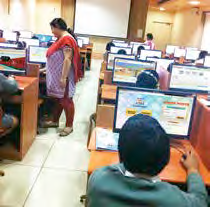
Digital labs just grew out of the need to meet the challenge of English language requirement in the country. We have been into IT education since 1989 and understand technology and teaching very well. Developing training programs, training content, courseware, trainer tools and reports and feedback are our forte. I was also involved as a key partner in developing one of the finest 3D animated educational content in the world.

What has been the rate of growth of the industry? How do you see the market progress in next five years?
The industry is growing by leaps and bounds every year. With technology advancing at a breakneck speed and gadgets becoming commonplace, digital gadgets delivering content on every topic are expected to replace printed books. The power of interactive gadgets is huge as they cater to more than just books. This awareness of digital learning aspects will propel the industry forward. With English being the number one skill for employment today and a mere 15 percent to 20 percent of the population possessing this skill set, language learning needs to be addressed. Digital labs have the potential to bridge this gap between the reality and the need in learning English.

What are the major challenges faced in this sector which is relatively new in India?
India has many languages and even more schools using them as their medium of instruction. To create digital content supporting all languages is a herculean task. Our biggest challenge is the penetration of technology in schools and homes. Computers are associated more with entertainment than education. Cost of Operating System and computer hardware is a challenge too. To overcome these, we have developed our language labs solutions to work on thick as well as thin clients and have developed content to work on open source OS such as Linux.
A negative attitude towards digital learning is a challenge, since traditional classrooms are still the preferred medium for education. This mind set needs supto change and the educators’ comfort with technology needs to be worked on.

How do you compare the IT initiatives by Indian educational institutes vis-à-vis other countries?

India’s use of IT infrastructure is growing and will be at par with the developed nations. Lack of good internet connectivity across the country is also being overcome. Most cities in India are adapting technology in educational institutions too. In due time, IT initiatives in educational institutes will be at par with most developed nations. Given the fact that Indians are quick adapters of technology, we should soon be leading in the use of technology in education.

Please describe your products offered in brief.
Words Worth Language Lab Senior comprises of three study levels to match the years of graduate study and is ideal for colleges and higher learning institutes; Words Worth Language Lab Junior is aimed at schools and comprises eight progressive study levels; Words Worth Language Lab – Enterprise Model takes advantage of the large PC penetration to split the learning into two parts – at school and at home; Words Worth Papyrus addresses the needs of resource or infrastructure-constrained schools by requiring just one computer and a projector for instruction; Words Worth Groots is a grammarbased product that can be mapped to CBSE, ICSE or state boards; Words Worth Virtual is a self learning tool for basic English; Haiku: Loveable Learning is an afterschool English learning program.

Starting Digital Revolution in the Classroom

The 2014-15 interim budget was a boon for people who had availed educational loans. Union Finance Minister P Chidambaram announced a moratorium period for all education loans taken till March 31, 2009, and outstanding as of March 31, 2013. He added that the government will take over the liability for outstanding interest as on December 31, 2013, but the borrower would have to pay interest for the period after April 1, 2014. This would benefit around 900,000 student-borrowers. He added that the interest subsidy scheme was introduced in 2009-10 for education loans disbursed after April 1, 2009, while students who had borrowed prior to that date deserve some relief.


 The relief by educational loans waiver was offset by the board exams just round the corner and students preparing for the mock-tests after completing the course, clearing doubts and doing last-minute revision. As the exam draws near, a large number of students complain of stress-related headache, queasiness, vomiting and insomnia. To ease this exam phobia, schools have started innovative activities like online counseling, surprise home visits, yoga, easy techniques to memorize and last-minute sessions to clear doubts.

 Today, digital resources are available to schools for supporting their teaching, learning and preparing students for exams. Technology can enhance learning using tools like electronic grade books, digital portfolios, learning games, and real-time feedback on teacher and student performance. Technology links teachers to their students and to professional content, resources, and systems to help them improve their teaching and personalize learning.

 Online learning opportunities and the use of open educational resources and other technologies can increase educational productivity by accelerating the rate of learning by reducing costs of instructional materials and program delivery and better utilizing teacher’s time. A variety of ICT solutions are available today to make the teaching-learning process more fun and dynamic. One of the most popular tools is digital labs.

 This issue of digitalLearning Magazine gives an in-depth coverage of digital labs which are revolutionising education. It focuses on the core issues facing industry players involved in the creation of these cutting edge labs. Many schools, higher education institutes and vocational teaching centres in the country are trail-blazing, forward thinking, and are leaders in using Science, Math, English, Robotics, Language, and Virtual labs methodologies for teaching our young students. Trends in education are researched in-depth. This edition reviews PGDM courses, with a feature on how placements are affecting MBA admissions and looks at the relevance of Sports Education in India.

It features an event report on ‘School Leadership Summit-2014’, which saw participation of more than 150 schools and more than 15 corporate participants. The summit featured a workshop on life skills, value education and school wellness as well.

LATEST NEWS