



 Internationalisation is the crucial need of higher education with systematic approach to maximise the relevance of education
Interest in foreign education gained a big boost in March 2010 with the Cabinet approval of a bill to allow entry of foreign education providers in India. Although the bill is still awaiting approval by the Parliament, it has already created a sense of excitement not only among students but also among many institutions in India and abroad. However, there are some who are skeptical about the need and relevance of internationalisation in the Indian context. I argue that a national policy on internationalisation of higher education is needed to maximise the relevance and benefits at three primary levels: infusing excellence, encouraging diversity and capacity building.
Jane Knight defined internationalisation as 'the process of integrating an international, intercultural or global dimension into the purpose, functions or delivery of post-secondary education.' This definition clarifies that internationalisation is much broader, comprehensive and flexible concept. It recognises and encourages diverse approaches and accepts that there is no prescriptive formula of internationalisation for all institutions. Context of India is different and hence the concept of internationalisation should be adapted to the unique challenges and needs of the country and institutions.
Infusing Excellence
There is no denying the fact that Indian higher education is struggling to infuse quality at the systemic level and it has limited itself to a few islands of excellence of IIMs and IITs. Consider the recent case of the 100 percent cut-off requirement by Sri Ram College of Commerce, Delhi for admission to undergraduate program. Instances like this, question the whole rhetoric that Indian higher education is reforming and expanding access. Indian institutions are facing a crisis of confidence where many students are aspiring for the same set of select few quality institutions.
A systematic approach to internationalisation May help in bringing global good practices and more institutions with higher quality. For example, within a decade ISB, Hyderabad has emerged as an inspiration (sometimes envy) for many other Indian institutions. It is a hallmark of adopting global practices ranging from admissions to teaching, research and governance. In a country where absolute scores are still considered the only benchmark for admissions, ISB adopted a holistic admissions process along the lines of best B-schools by integrating personal interviews and essays. This expanded choice for many talented students who would have gone abroad for studying MBA programs and not coming back. The unfortunate part is that existing regulatory structure had tried to restrict the ISB model and growth.
|
He is responsible for strategic development, product innovation, research and thought leadership. Dr Choudaha is a higher education specialist with focus on institution building and strategic development, international collaborations and market development. He earlier worked in international recruitment and marketing at the Indian School of Business, Hyderabad. Dr Choudaha earned Ph.D in Higher Education from the University of Denver, MBA (Marketing) from NITIE, Mumbai and BE (Electronics & Telecom) from Jabalpur Engineering College. |
 Dr Rahul Choudaha is Director of Development and Innovation at World Education Services, New York
A national policy on internationalisation should encourage diversity of location,programmes and institutional types
Encouraging Diversity
Indian post-secondary education is facing acute quantitative and qualitative challenges at two extremes. On the one extreme is skill-based vocational education and on the other is research-based doctoral education. Of course, lack of funding and policy focus remains a concern, but another major reason is the lack of quality in these programs, which restricts labor market rewards. This in turn leads to a socio-cultural environment of only respecting and encouraging professional fields like engineering and management. Thus, internationalisation had been concentrated to a handful of institutions in bigger cities having business or engineering programs.
A national policy on internationalisation should encourage diversity of location, programs and institutional types. Policy directions should create incentives for institutions interested in engaging with fields like agriculture, energy or urban planning or types of institutions like vocational institutions or location of institution in non-metro cities. For example, Montgomery College is leading an initiative of advancing community college model in India with the help of a grant funded by US-India Education Foundation (USIEF). Thus, internationalisation policy should facilitate opportunities beyond traditional models, level of programs, types of institutions and fields of studies.
Capacity Building
There are several approaches to internationalisation depending on mission and resources of an institution and one of the approach internationalisation policy May pursue is capacity building. Here capacity building refers to the creation of an enabling environment of resources (financial, technical and human) and regulatory framework which is line with the national needs.
Consider the case of some of the country-level partnerships have been focusing on enhancing educational and research engagement with India. For example, a delegation of university presidents from Canadian universities committed $4million for India specific engagements and the UK has renewed The UK India Education and Research Initiative (UKIERI). These engagements will bring together critical resources for Indian institutions to learn and develop their practices. Similarly, technology has transformed the communication and content delivery mechanism and it could be a major source of engaging open courseware through www.ocwconsortium.org with limited resources.
The Way Forward
Indian higher education needs a comprehensive internationalisation strategy both at the national level and at institutional level. Like any new initiative, there will be some risks of misuses. For example, there May be institutions, which misrepresent, over-commercialise and perhaps make higher education unaffordable in the name of internationalisation. However, the test of a good policy framework is to have an ability to distinguish wheat from the chaff. In other words, internationalisation of higher education is relevant to the needs of the country and a mature policy environment, which encourages innovation and experimentation but restricts misrepresentation is much needed. It is high time for Indian higher education at policy and institutional level to reflect on how best to leverage the concept of internationalisation and engage it to achieve the goals of excellence, diversity and capacity building.

 Loynpo Thakur S Powdyel
 Education is one of the most powerful celebrated drivers for reducing poverty, economic disparity, inequality and for laying the basis for unrelenting sustained economic growth. It is fundamental towards building vibrant democratic societies and globally competitive economies. For individuals and for nations, education is the key to create, disseminate and share knowledge. Despite grim challenges of means and resources, our nation has created a very large education system and has built up a vast pool of global citizens equipped with a high order of scientific and technological capabilities, robust humanist and philosophical creativity.
 There is an urgent need to focus on shortage of teaching faculty in higher learning, which can be done by attracting top rank holders in universities and institutions of higher education
 Professor Philip Taylor, Academic Director of Programmes, Strathcylde SKIL Business School shared his thoughts and views on the Indian education scenario and their roadmap for the Indian market with Pragya Gupta. Excerpts:
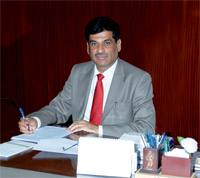 Prof K S Rangappa, the Vice Chancellor of Karnataka State Open University has three decades of research and teaching experience as Junior and Senior Research Fellow, Lecturer, Reader, Professor and Director at Post Graduate Department of Chemistry, University of Mysore. Prof. K S Rangappa highlights evolving higher education in India and role of ICT in an interview with Pragya Gupta, digitalLEARNING bureau
 Shri Amit Khare, Joint Secretary, Bureau of BP & CR Education Policy UNESCO, INC & ICC, Department of Higher Education, Government of India, in conversation with Sheena Joseph provides updates on the latest buzz in the higher education sector
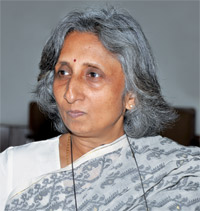 Smt Vibha Puri Das
 “The whole issue of Comprehensive and Continuous Evaluation (CCE), and the core curriculum that is cutting across different school boards, constitute an emphasis on quality as well as renewed emphasis on school education”
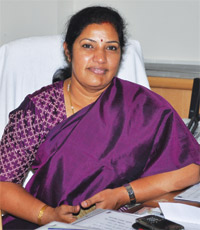 Smt D Purandeswari,
 But today we see that the private sector is willing to come forward and we also want to stretch out our hands to them and sit together to discuss with them so that our children should get meaningful education. It is happening because today both of us look at it as a win-win situation. We considers it as a win-win situation because we are ensuring children employment. If we work with industry then we will ensure providing children with gainful employment. Industry considers it as a win-win situation because unless we give them quality education, there will not be quality manpower out of university. So the situation is such that both of us have to sit together.
 “Prevention of Education Malpractices Act will lend a hand to the children who have been cheated by the institution”