


Home Blog Page 241

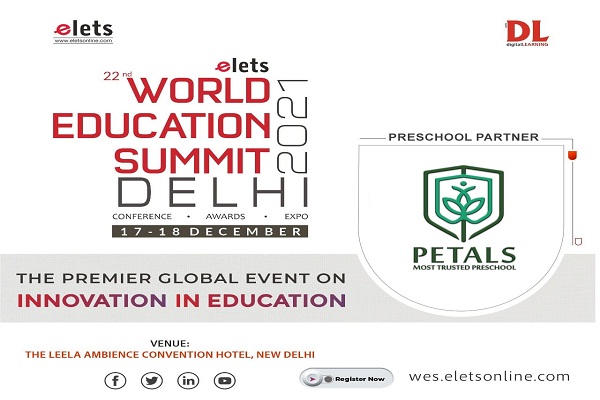
Petals – a chain of preschools partners with Elets 22nd World Education Summit, 2021

petals

Preschool education provides children with an opportunity to build their social, emotional, and general life skills. It supports in improving the basic understanding, focuses on the overall growth and development as well as bolsters the language skills. Education in preschool provides scope to learn in a way that generates the interests of the children, which is requisite at the initial stage of learning and growing.

Petals – a chain of Preschools & K12 schools are catering to the needs of early childhood education. Petals are executing and performing a marvellous job to help children develop a drive to learn new things and support in the foundational learning process. We feel extremely fortunate to partner with Petals at Elets World Education Summit, organised on 17-18 December 2021.

From preschool, children gain a lot because they usually get exposed to numbers, shapes and letters. Children usually have fun-based learning experiences in preschools. Children can spend extended amounts of time learning and growing with other children and teachers. Young children reap plenty of opportunities to socialize, make friends, listen, cooperate and build relationships.

Preschoolers can find many learning opportunities like practising interpersonal skills, building emotional skills, enhancing literacy skills, developing decision-making skills and responsibilities.

The imagination of toddlers is active, their brain functions fast and they put things into action quickly. The grasping speed of young children is also prompt, and this is why it is vital to nurture their imagination to fuel learning and creativity. The preschool environment focuses on improving the knowledge, skills and encourages them to explore new things.

Nevertheless, the impact of the Covid 19 pandemic created disturbances in early childhood education & care in a number of ways. For instance, an unprecedented situation occurred with the pandemic as preschools witnessed closure and face-to-face teachings came to a halt. Parents are concerned about children’s mental health and emotional well-being.

Meanwhile, there is an apprehension among people currently with the new Covid 19 variant, ‘Omicron’, which is spreading in other parts of the world. If such a case happens then it will once again hinder the offline education of preschoolers.

The event will be a platform where such pertinent issues will be deliberated and insights will be shared on how the current situation can be handled to continue learning and teaching among young children.

Watch Education Leaders from across the globe take the 22nd World Education Summit stage! Gain insights, make invaluable connections, deliberate on essential topics at the global event. A few days left for the event to go in-person now!

For more information, kindly visit our website: wes.eletsonline.com

IIT-BHU student bags Rs 2.05 crore package from Uber

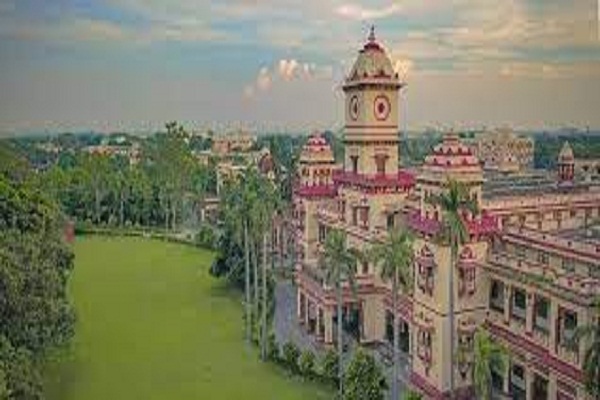
Indian Institute of Technology (BHU) Varanasi

Indian Institute of Technology (BHU) Varanasi has started their placement drive and on its first day, US-based company Uber offered Rs 2.05 crore package to a student in this placement drive. A total of five students received an opportunity and got placed with Uber.

IIT BHU said in its statement, “On the first day of the placement in IIT (BHU) Varanasi, 5 students received an offer from US-based firm Uber. One of the students was offered a whopping package of Rs 2.05 crores.”

Professor Pramod Kumar Jain, Director IIT (BHU) Varanasi, said, “Domestic and Global firms find IIT (BHU) Varanasi students very technically sound, innovative thinkers, team players and well-rounded personalities. For many years, top firms have offered the best pay packages to our graduates and this year is no different with firms like Uber, Google, Microsoft offering packages equivalent to Rs 2.00 CR. It is a sheer privilege to know that companies of such stature are identifying the talent at our campus and trusting them to take the baton forward. IIT (BHU) Varanasi students have always strived hard to drive success wherever they have been placed.”

Other institutes like IIT-Guwahati, IIT Madras, IIT Roorkee, and IIT Mandi have started their placement drive.

Nursery admission to begin in Delhi from December 15: Department of Education

Nursery admission to begin

The nursery admission in Delhi schools will start from December 15 for the academic year 2022-23. The first list will be released on February 4 and the admission would begin for entry-level classes–Nursery, KG and Class 1.

A second list will be released on February 21, if required the final list will be announced on March 15.

However, the admission process will end by March 31, 2022. The Department of Education (DoE) issued a circular recently.

Also read: CM Kejriwal: Nursery admissions in Delhi to begin soon

The DoE circular issued mentioned that the schools can charge only Rs 25 for the application form and made purchasing of school prospectus optional.

The upper age limit for admission in nursery, kindergarten and Class 1 is 4, 5 and 6 as of March 31, 2022. However, the minimum age for admission in entry-level classes is 3,4 and 5 years for the next session.

EdTech Company NxtWave raises $2.8 million pre-series A funding led by Orios Venture Partners and Better Capital

EdTech Company NxtWave

EdTech company NxtWave raised $2.8 million pre-series A funding led by Orios Venture Partners and Better Capital, the company said in a statement. The company will utilize the fund to expand the team, accelerate product development and penetrate in the existing market to increase revenue growth.

Launched amidst the pandemic in September 2020, NxtWave is bootstrapped, cash-flow positive and has profitably grown by 9X in the last 10 months to $7.5 Million ARR, the company said in a statement.

The company has been founded by IIT Bombay, IIT Kharagpur and IIIT Hyderabad alumni – Sashank Reddy Gujjula, Anupam Pedarla and Rahul Attuluri. NxtWave is on a mission to become India’s largest online employability platform and aims to produce 1 million new-age developers every year.

People like Ravi Bhushan (Founder, BrightChamps), Ramakant Sharma(Founder, LivSpace), Vikram Kailas(Cofounder, Mytrah Energy), Umang Kumar(Cofounder & President, CarDekho), Chakradhar Gade(Cofounder, Country Delight), Anupam Mittal(Founder, Shaadi.com), Vikas Malpani(Cofounder, Leher & Commonfloor), Rajesh Shawney(Founder, GSF Accelerator), Nandu Nandkishore(Professor ISB & Former Global CEO Nestlé Nutrition) and Shaji Devakar(Executive Director, IIFL Wealth) and Giridhar Malpani(Founder, Climber Capital) have invested in the company.

Speaking about the development, Rahul Attuluri, CEO, NxtWave, said, “We believe that the Digital Pedagogy must be radically different for small-town India to create transformative learning experiences. To achieve this, we have adopted a multi-pronged approach in designing our continuous career building programmes leveraging technology, pedagogy and vernacular content.”

“We’ve been successful in breaking critical barriers to learning the right skills and achieving a tech job. Along the way, we are also breaking many myths. Our NxtWave learners who are now in successful high-paying tech jobs have started with us from non-engineering degrees, from non-metros and without any programming background. Our hyper-focus on career outcomes fueled with strong customer love helped us unlock a stellar growth in such a short span,” added Attuluri.

Speaking about the development Anup Jain, Managing Partner, Orios Venture Partners said “Every year, India sees 10 million plus engineering students graduate from small-town India’s numerous engineering colleges. Their skills are widening vs the demands of the industry due to outpacing of the curriculum and constraints around pedagogy. These students are more comfortable in a mix of vernacular and English and can scale to achieve similar heights as their large city counterparts with the right platform. This opportunity is valued at $8 billion annually and growing. We are thrilled to join Nxtwave in its journey to address this gap and help them achieve their large vision.”

“NxtWave’s vernacular & semi-synchronous format is a brilliant innovation that plugs a massive gap for Bharat students and early professionals and creates an on-ramp for them into the fast-growing tech ecosystem – and in a way that was never done before”, added Vaibhav Domkundwar of Better Capital, an early backer of breakout edtech companies like Teachmint, Skill Lync, Filo & others.

Schools in Mumbai to reopen from December 15

Schools in Mumbai

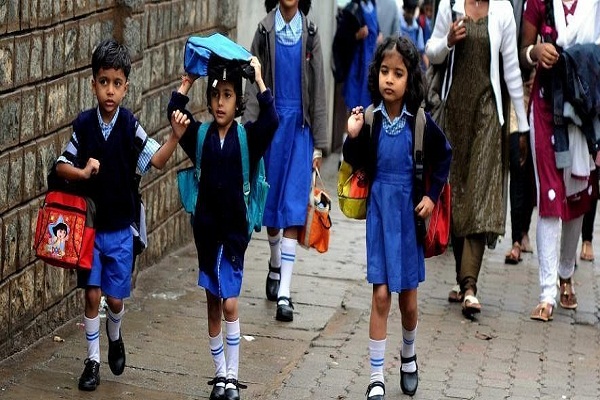
Schools in Mumbai will reopen from December 15 due to the onslaught of new Covid 19 variant ‘Omicron’.

The Brihanmumbai Municipal Corporation (BMC) said the classes for 1 to 7 will remain closed. Earlier, the physical classes slated to reopen from December 1. “Schools for Classes 1-7 will now reopen from December 15, instead of December 1, in view of the emergence of the Omicron variant of COVID in the world,” BMC added.

“Attending offline classes will be optional and parents can opt for online classes”, an official statement said.

Also read: Mumbai University launches MA programme in Hindi and Marathi

The Maharashtra government decided to reopen schools after a survey conducted by the school education department of the state. In this survey, it was found that 70 percent of parents were willing to reopen schools. However, after the warning from the World Health Organisation (WHO), the state government ensured that protocols are followed properly and thereby, deferred reopening of schools.

WHO also said that the new variant poses a “very high” global risk and spreads more easily. The risk to vulnerable populations especially in countries with low vaccination rates–could be substantial.

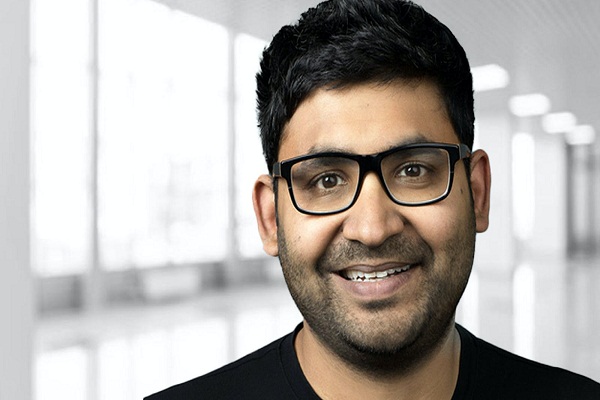
IIT Bombay congratulates alumnus Parag Agrawal on his promotion as Twitter CEO

Parag Agrawal

IIT Bombay congratulated Parag Agrawal on his elevation as the Chief Executive Officer (CEO) of Twitter. Agrawal is an alumnus of IIT Bombay and obtained his B.Tech degree in Computer Science and Engineering from the institute in 2005.

IIT Bombay in a recent tweet mentioned, “IIT Bombay alumnus and Young Alumni Achiever Awardee (2019) Paraga is the newly appointed CEO of Twitter. Before joining Twitter, he worked at Microsoft, Yahoo!, and AT&T Labs. IIT Bombay wishes him the best for his new journey!”

Subhasis Chaudhuri, Director, IIT Bombay also said in a statement: “The significance of a university is often judged by the collective achievements of its alumni and the glory that they bring to their alma mater. Parag Agrawal is one such alumnus that IIT Bombay is proud of.”

He joined Twitter in the year 2011 while pursuing his Phd at Stanford University & became the Chief Technical Officer (CTO) in 2017.

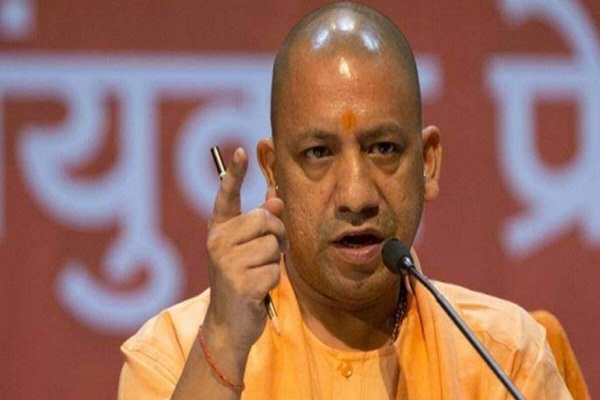
UP Govt. to distribute 2.5 lakh tablets and 5 lakh smartphones to students for free

UP Govt

Uttar Pradesh Chief Minister Yogi Adityanath will soon be launching the DG Shakti portal for management of the free distribution of smartphones and tablets to students in the state. A total of 2.5 lakh tablets and 5 lakh smartphones will be distributed in the first lot. The distribution will start from the second week of December.

As a relief to students, they are not required to register anywhere to get free smartphones and tablets. The data of the students is being given to the university by the colleges and the data feeding of the students is being done at university level itself. The data of about 27 lakh students has been uploaded on the portal currently. The process of data feeding of remaining other students is also being expedited.

Apart from this, information about smartphones and tablets will be given to the students from time to time on their mobile numbers and email IDs.

The biggest ever tender to the tune of Rs 4700 crore has been floated by the government on the GeM portal for the purchase of smartphones and tablets. Many well-known companies have tendered for smartphones and tablets. The companies like wishtel (Iris), Samsung (Vision) and Acer (Celkon) for tablets, Lava, Samsung (Celcon) and Samsung (United) for smartphones have filed tenders. Financial bids of eligible firms will be opened after technical scrutiny. It is expected that the work order will be issued by the first week of December.

Candidates can register for CSAB 2021 Special Round 1 Counselling today

CSAB 2021 Special Round 1 Counselling

Joint Seat Allocation Authority, JoSAA NIT+2 Admissions 2021 for this academic year has begun from November 28, 2021. The Central Seat Allocation Board or CSAB started the registration process for Special Round 1 counselling as well.

The candidates can register for Central Seat Allocation Board (CSAB) counselling as the last day to submit the application is today (November 30). The students can visit the official website of CSAB–csab.nic.in.

JoSAA NIT+ Admissions 2021 will be held after all 6 rounds of JoSAA Counselling process have been completed. After the registration, the seat allotment result for this round would be released on December 2, 2021.

Also read: Schools and College Students will have counselling session: Kerala CM Pinarayi Vijayan

However, only limited seats are available in these Special Rounds of Counselling. People appearing here would get admission into National Institutes of Technology (NITs), Indian Institutes of Information Technology (IIITs) and other Government Funded Technical Institutes (GFTIs).

The applicants will be required to provide details and verify information that are essential for filling up the application form.

How to register for CSAB Special Round 1 Counselling:

  • Go to the website csab.nic.in
  • Click on the CSAB Special Round 2021 registration link
  • Click on the ‘CSAB 2021 document upload’ link
  • Enter JEE Main 2021 password, roll number and security pin
  • Login with the details
  • Upload all necessary documents
  • Submit the same

Maharashtra Govt. issues guidelines for reopening of primary schools

Maharashtra Govt. issues guidelines

Maharashtra government has issued guidelines to reopen primary schools from December 1.

Since the outbreak of the COVID 19 pandemic, the schools were all shut down and in-person classes were put on hold. As the scenario is improving, many schools have started with offline classes. The state government has observed COVID 19 appropriate behaviour and proper vaccination of teachers, staffs in the schools.

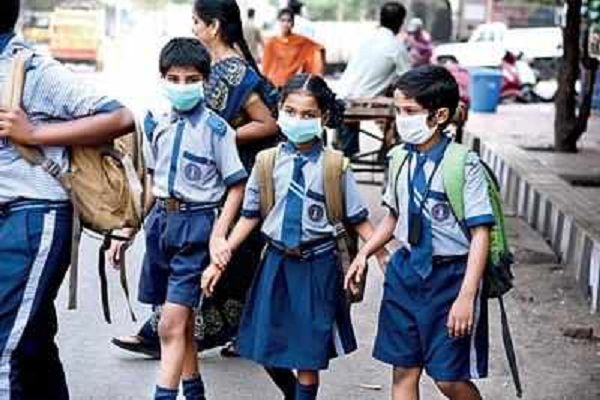
According to the Maharashtra’s health department’s guidelines, the schools will reopen from classes 1 to 4 in rural classes and from classes 1 to 7 in urban areas.

The government is ensuring that all schools should follow Covid appropriate behaviour such as maintaining social distance of six feet, wearing face masks, and washing hands need to be followed on reopening of schools.

Also read: Maharashtra Govt. takes U-turn in reopening schools in the state

Students and teachers residing in containment zones should not be allowed to attend school, the guidelines stated.

The Maharashtra cabinet recently decided to reopen schools for students of Classes 1 to 4 in rural areas and Classes 1 to 7 in urban areas from December 1. “After discussing the issue with Chief Minister Uddhav Thackeray, the cabinet and the paediatric task force, we have decided to reopen schools for Classes 1 to 4 in rural areas and Classes 1 to 7 in urban areas from December 1,” School Education Minister Varsha Gaikwad had said in a statement lately.

NIPUN Bharat Scheme focuses on foundational learning: Education Minister, Dharmendra Pradhan

Education Minister, Dharmendra Pradhan

Union Minister of Education, Dharmendra Pradhan informed Lok Sabha on Monday that the government is implementing the National Mission on Foundational Literacy and Numeracy called National Initiative for Proficiency in Reading with Understanding and Numeracy (NIPUN Bharat) to gauge how well learning is happening in the states, districts and blocks across the country.

In a written reply, the minister said NIPUN Bharat scheme was launched on July 5, 2021 under the aegis of Centrally Sponsored Scheme of Samagra Shiksha. The mission aims to achieve universal foundational literacy and numeracy in primary classes.

The Mission Guidelines lays down priorities and actionable agendas for States and UTs to achieve the goal of proficiency in foundational literacy and numeracy for every child by grade 3. The guidelines for the mission have been developed which includes the codification of development goals and learning outcomes for ages 3 to 9 years and Lakshya or Targets for Foundational Literacy and Numeracy starting from Balvatika to Grade III.

He added that as per the NIPUN Bharat implementation guidelines, assessment during the foundational learning can be broadly categorized into two major areas, namely: School Based Assessment (SBA) through qualitative observation based on performance of the child in a multitude of experiences and activities.

“Various tools and techniques like anecdotal records, checklist, portfolio, and interactions (through a holistic 360-degree assessment with teacher, peers, family and friends) have been recommended to be used for assessment. Thus, the teachers at the foundational stage need to observe children as they play, work on their task, perform or interact among themselves, to assess children’s interests and learning,” he said.

He mentioned large-scale standardised assessment for assessment of the processes and functioning of the educational systems (such as NAS, SAS, and Third-Party Assessments). The assessment tools commonly used in conducting large scale assessment studies are multiple choice questions (MCQ) and constructed responses are usually avoided to bring in objectivity in the process. These assessments are a mechanism to gauge how well learning is happening in their state, districts, and blocks. In this regard, the National Achievement Survey (NAS) 2021 has been carried out for assessing learning outcomes of children in Grade III.

He also informed that a specialized National Initiative for School Heads’ and Teachers’ Holistic Advancement (NISHTHA 3.0) for the foundational literacy and numeracy covering about 25 lakh teachers at the primary level across all states and UTs has been launched in September, 2021.

LATEST NEWS