Home Blog Page 268

Schools make a significant decision by canceling the CBSE Class 12 Board Exams’ 2021

CBSE Class 12 Board Exams’ 2021

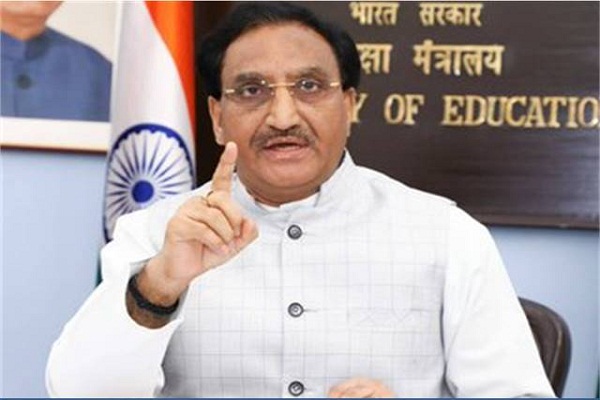
The National Council of CBSE Schools has requested Union Education Minister Ramesh Pokhriyal Nishank to hold the Central Board of Secondary Education (CBSE) Class 12 board test although it is postponed because to the COVID-19 pandemic, despite mounting calls for the tests to be canceled. According to the National Council of CBSE Schools, the Class 12 passing certificate was perhaps the most crucial document taken into account for getting admission in institutions of higher education.The council believes that the CBSE class 12 exam must be held, even if it is delayed, and that alternate test patterns should be used if necessary.

Meanwhile, CBSE-accredited institutions will offer another round of online practice tests for Class 12 pupils.

Summer vacations have begun in schools, however CBSE affiliated schools have created a unique timetable for students who are scheduled to sit in the CBSE Class 12 Board Exam 2021 to clear their doubts.A exam will be held following the start of online sessions follow-ing the summer vacation, according to the schools.

In a pre-Series A round led by PATH India and Gulf investors, edtech startup ClassMonitor raises Rs 3.5 crore

ClassMonitor

ClassMonitor, an Indore-based edtech startup focusing on homeschooling, has raised Rs 3.5 crore in pre-Series A funding led by PATH India and Gulf investors, including the UAE-based Calega family office investor group and Sarvann, an Oman-based investor group. ClassMonitor plans to use the funds to expand its operations and improve its content, technology, and marketing activities.

The desire to keep children involved in educational activities outside of the classroom has been a remarkable component of our cultural adjustment over the last year. ClassMonitor blends useful lessons with fun activities that facilitate contact between children and their parents.

ClassMonitor, which was established in 2016, began as a messaging site for parents and teachers.

The company switched to a hybrid early learning tool in 2018, combining offline learning with interactive cues and incentives. After the product’s launch in October 2018, the startup has made a net profit of Rs 7 crore.

ClassMonitor focuses on a child’s fundamental development, including verbal abilities, logical reasoning, sensory and motor skills, cognitive abilities, and imagination. Their kits are designed for young children (ages 0 to 8) and enable parents to teach, play, and bond with their children in meaningful ways.

The online tutoring market is expected to reach USD 278 billion by 2026, with a CAGR of 10.82 percent

online tutoring market

The widespread use of online tutoring services by students and business professionals is expected to grow significantly over the forecast period. This trend is expected to fuel the expansion of the online tutoring market. According to a report published by Valuates Reports, the global Online Tutoring market is expected to reach USD 278 billion by 2026, up from USD 150 billion in 2020, at a CAGR of 10.82 percent between 2021 and 2027.

COVID-19 has forced the closure of schools all over the world. As a result, education has undergone significant transformations, with an increase in e-learning and online tutoring occurring remotely and via online platforms. As a result, the size of the online tutoring market is steadily increasing.

COVID-19 has caused school closures all over the world. As a result, education has undergone significant transformations, with a significant increase in e-learning and online tutoring taking place remotely and through online platforms. As a result, the size of the online tutoring market is steadily growing.

Also Read:- Online Tutoring Startup Vedantu raises $42 Mn Funding from Tiger Global, WestBridge Capital

Other factors driving online tutoring market acceptance include ongoing technological advancements and improvements in the accessibility of portable communication devices. Furthermore, government funding for digital teaching in developing countries enables colleges and schools to deliver online learning sessions. Such government policies are expected to fuel the online tutoring market.

The online tutoring industry is divided into four categories: STEM Courses, Language Courses, Other Courses, Application Students, and Non-Students.

Shoolini University takes the lead in providing COVID relief in rural areas

Shoolini University

Shoolini University in Solan, a research-driven private university with full UGC recognition that offers Biotechnology and Management Sciences courses, has set a noteworthy goal of providing medical assistance to COVID patients, especially in rural areas of Himachal Pradesh’s Solan district. The relief package includes about 100 beds, as well as necessary medical equipment such as oxygen cylinders and concentrators, ventilators, and other ICU services.

Shoolini University‘s senior management, including Chancellor Prof P K Khosla, President of the Foundation for Life Sciences and Business Management Mrs Saroj Khosla, Pro Chancellor Mr Vishal Anand, and Vice Chancellor Prof Atul Khosla, conceived and implemented the initiative, with personal contributions to the fund.

Professor P K Khosla has urged people to contribute to the fund. He stated that the funds would be used with sacred obligation to assist the vulnerable and marginalized in rural areas.

Vice Chancellor Prof Atul Khosla, said that 18 fully equipped beds for covid patients would be put up in the University Health Centre and the same number of beds would be made available at Shoolini Institute for Liberal Arts and Business Management (SILB).

According to Vice Chancellor Prof Atul Khosla, the University Health Centre will be fitted with 18 fully equipped beds for COVID patients, while the Shoolini Institute for Liberal Arts and Business Management will have the same number of beds (SILB).

IIT-Gandhinagar leads the way, establishing a Covid care center on campus and disseminating a how-to guide

IIT Gandhinagar

In the aftermath of the COVID-19 pandemic, IIT Gandhinagar has been contributing with many teams of faculty and students working on related projects, the institute recently published a white paper to convey its experience with establishing and operating an on-campus Covid-19 care facility — an isolation centre with medical services — in the hopes of inspiring other educational institutions to follow suit.

The IIT Gandhinagar facility was established on campus to deal with the increase in cases on premise as well as in the surrounding community. Since there was no guiding manual or standardized modus operandi, the whole process was a learning opportunity for the institute, it also turned its newly constructed guest house into a COVID treatment center, which helped hundreds of infected members of the community.

The initiative has also helped to “relieve the additional pressures the Covid positive patients would have otherwise put on Ahmedabad’s and Gandhinagar’s health infrastructure,” according to the institute. The institute had a total of 248 active COVID-19 cases at its height in April 2021, with 162 from the campus and the rest from off-campus students, employees, and outsourced workers.

IITGN’s Covid Care Facility offered difficult-to-reach health facilities including oxygen contractors, respirators, and essential health services before the patient needed to be admitted to the hospital. The facility at IITGN was critical in isolating the COVID-positive patient from his relatives, roommates, and neighbors, all of whom could be infected, thereby limiting the virus’s spread.

BITSoM collaborates with London Business School to offer Executive Courses and Immersion Programs

bitsom

The BITS School of Management (BITSoM) in Mumbai will provide London Business School-developed courses. This is just one of the many benefits of the two institutes’ collaboration. BITSoM has partnered with the London Business School (LBS) to provide students from the Indian university the opportunity to participate in an immersion program at the LBS London campus. BITSoM and LBS will also look into co-creating an executive leadership program in India that is entirely for women.

Students will have the opportunity to spend two weeks in London for an immersion program as part of the collaboration. Students will learn from the LBS professors and study cultural intelligence perspectives and values. The Entrepreneurial Project Lab will run throughout the semester, and students will work in small groups with entrepreneurs to gain insights from their experiences while also offering fresh thinking and new opportunities.

The immersion programme is expected to deepen students’ understanding of cross-cultural leadership and expose them to a new wave of entrepreneurial energy, said BITSoM at the virtual launch.

On collaborating with London Business School, Dr Ranjan Banerjee, Dean, BITSoM, said “Our aspiration is to create global leaders of tomorrow. It is not enough to understand global contexts. First-hand experience and reflection matter. Experiencing multi-cultural settings first hand, and solving problems with entrepreneurs in these settings, is the edge that the LBS experience can provide to BITSoM students. “

Also read: Global Pathways offers undergraduate Programs

Speaking on the strategic collaboration, Kumar Mangalam Birla, Chancellor, BITS Pilani and Chairman, Governing Council, BITSoM said “When we set out to build BITSoM, we were clear in our ambition of creating a global business school. With this partnership, we are adding a powerful new dimension-that of global exposure. The immersion program will deepen students’ understanding of cross-cultural leadership and expose them to a new wave of entrepreneurial energy. This unique proposition of an Indian MBA with a truly global and multi-cultural flavour, curated for the new age of business, will undoubtedly raise the bar on what is considered to be a premier management education in India. “

BITSoM, which was launched in January of this year, has received a tremendous amount of support from students. The inaugural cohort consists of a mix of recent graduates and experienced candidates recruited from the country’s premier universities. At BITSOM, some of the brightest worldwide teachers from the world’s top universities educate.

François Ortalo-Magné, Dean, London Business School, said “I am impressed with the mission and vision of BITSoM. We at LBS are keen to help train purpose-driven individuals from diverse backgrounds who are willing to embrace change and embark on a transformative journey with BITSoM. Together, we can have a profound impact on India and the world”.

With a stellar global faculty and a curriculum curated for the digital age, the BITSoM experience is designed to make graduates ready for the emerging workplace.

The future of e-learning in India

Nishant Agarwal

As a country, we’re going through an incredible phase of technological development and it is impacting every sector – not just in business but in education as well. For a long time, we have relied on traditional teaching methods that involved a teacher addressing a group of students in a four-walled classroom. The extent, to which education could be disseminated in this way, depended upon the teacher’s ability to help students visualize difficult concepts without the right tools.

However, with the beginning of the Fourth Industrial Revolution, we’ve begun transitioning towards a world that relies heavily on digital technology to make things easier. Several online learning platforms have mushroomed up in the past few years to make learning easier, simpler, and convenient. As of now, we have more than 560 million internet users in the country, and the number is growing exponentially. It means that the online world has become easily accessible for a major chunk of our population, and we need to make the most of this change.

The e-learning market that stood at $247 million in 2016 is now expected to reach $1.96 billion by the end of 2021 with a CAGR of 52%! Even though the e-learning market was already evolving rapidly, the intervention of the Covid-19 pandemic has added fuel to the fire. With schools, colleges, and other educational institutions shut down to prevent any outbreaks, online learning has emerged as the primary teaching platform.

Also read: E-Learning need of the hour

Several institutes have transitioned to a blended learning model and are planning on continuing with it even after the pandemic subsides. Now that people have realized the benefits of online education, they will most likely continue with it in some way or form in the future as well. Let us take a few benefits of online learning that are making it so popular among the masses.

Advantages of e-learning:

Helps overcome geographical limitations

With e-learning, the dissemination of education is no longer limited to geographical location. All you need is a laptop, a smartphone, or a tablet with an internet connection and you can access the best educational material on any subject. The flexible nature of online education has also opened the doors to learning for working professionals who don’t have the time to enroll in courses where they are required to sit in classrooms. With online learning, however, they can easily learn from their home or office, improve their skill-set and advance their career.

It is affordable:

In a country like ours, financial problems are always an obstacle in the path of education. Many students who want to learn and study cannot do so because they cannot afford the high fees of the top institutions. Luckily, the future seems more promising. E-learning is not only more efficient as compared to classroom learning, but it is highly affordable as well. You can pursue online courses from the most prestigious universities at highly affordable rates.

It’s a boon for teachers too:

E-learning doesn’t just benefit the students; it benefits the teachers as well. If we look at our education system before the advent of online learning, it has pretty much remained unchanged and labor-intensive since ancient times – especially for the teachers. From taking attendance to hauling answer sheets and manually assessing every student’s performance, the teachers have to spend a lot of time doing mundane tasks that would better be handled by AI software. Now that we have the power to do so, we should!

Allows you to learn at your own pace:

No two students learn at the same pace. However, the nature of a classroom environment is such that it requires everyone to learn at the same pace. Even the most diligent teacher cannot teach every student individually. While some students can keep up with the pace, others lag – which results in poor academic performance. With e-learning, however, every student can learn at his/her own pace since all the study material is available permanently in one place.

The challenge :

The biggest challenge for the e-learning industry in India is the lack of technological penetration in rural areas. Given that most of our population (65.53%) resides in rural areas, this is a serious issue that needs to be tackled. Luckily, the government has launched several initiatives to fast track technological development of Indian villages and these initiatives may bridge the gap between urban and rural education.

E-learning has shown tremendous potential towards transforming the education industry in the country. With the emergence of new e-learning platforms and the growing competitiveness among them, we may see better content, better tools, and better teaching strategies shortly.

Ministry of Education, AICTE and CyberPeace Foundation launch project eSaksham to train 5 lakh students

project eSaksham

The Ministry of Education, All India Council for Technical Education (AICTE), along with CyberPeace Foundation have launched a project to train five lakh students, teachers in cyber security awareness.

‘eSaksham’, the digital training programme, will be held at four levels- level 1 will be a two-hour long online workshop on the basic concepts of navigating cyberspace, including cybersecurity, netiquette, and introduction to new technologies. The rest levels will follow as per the success rate of the candidate. The further training includes IoT security, cloud security, blockchain and infrastructure security.

In the final level, 500 shortlisted candidates will go through a month long intensive training session conducted in collaboration with the government, academia and the industry. They will also be connected to mentors and will have access to laboratories and cyber ranges, to further develop their skills, the release mentioned.

Also read: AICTE is offering 2500 virtual internships

The programme was launched by Prof Anil D. Sahasrabudhe, chairperson of AICTE in virtual mode on May 17. “Everyone wants to be happy and safe but Homo sapiens have also got a criminal tendency and it is not new and when there is crime, there has to be cops. As civilization grew and we developed the World Wide Web, there were new challenges thrown to us. The eSaksham project will teach the participants how to identify and mitigate those challenges. Indian students are already very tech and IT savvy, participating in the eSaksham training will be a way to contribute to society,” Sahasrabudhe said. The succesful candidates will get a certificate by AICTE.

CBSE postpones Class 10 Examination Results

CBSE postpones Class 10 exams

The Central Board of Secondary Education (CBSE) has postponed the Class 10 exam result, and has extended the deadline for schools to submit the internal and internal assessment marks. Therefore, the schools can submit these marks by June 30.

However, the class 10 result which was scheduled to release in the third week of June is expected to be declared by July first week.

Also read: CBSE Class 12 Board exam cancellation still on hold

The revised schedule says, the CBSE portal will be opened for uploading of marks till May 20, submission of marks, internal assessment marks till June 30.

“Keeping in view the situation of the pandemic, lockdown in states and safety of teachers and other staff members of the affiliated schools, CBSE has decided to extend dates,” the official notification read.

“SELebrate YOU” : Educating the mind without educating the heart is no education at all

MANJU RANA

MANJU RANA
Principal Cum Director
Seth Anandram Jaipuria School
Vasundhara, Ghaziabad

SEL or ‘Social and Emotional Learning’ is one such process which equips the children to manage their emotions effectively and feel and demonstrate empathy towards others. To live peacefully and constructively in the society requires a wide range of social skills. SEL is a practice which helps young learners acquire healthy identities and shape them into supportive, caring and responsible citizenry.

In today’s time, technology has pervaded every household. A million pros can be nullified easily with a few cons, if obsession takes over good judgement. Addicted to cell phones, many kids nowadays seek safe haven in the virtual worlds they have woven for themselves, thereby distancing themselves with the turmoil and chaos they encounter in the real world. This may lead to poor social and coping skills leaving the kids isolated and lonely and bereft of human interactions.

SEL - 1

School is considered as the second home for the children. Environment of a school plays a vital role in shaping a child’s personality and transforming him/her into a responsible and empathetic global citizen. The best of academics or technology or teachers can fall short unless the young learners master the art of handling stress, adopt problem solving approach and practice conflict resolution. When students feel safe and supported, learning takes place in full swing. Hence, developing socio-emotional skills becomes the need of the hour, so that students, teachers, parents can collaboratively work towards building supportive learning environments.

Well – known for its ground breaking philosophies and unprecedented initiatives, Seth Anandram Jaipuria School Vasundhara, Ghaziabad took the initiative of integrating SEL into the school curriculum in 2018. From Pre Nursery to Grade XII, the focus of SEL has been to enhance five core competencies, namely empathy, self management, social awareness, relationship skills and responsible decision making. To promote ethical learning among students, the school planned an array of activities. To ensure learner engagement, diverse tools such as MS Forms, Padlet, Wakelet, Word Wall, Quizziz, videos, Ed puzzle, documentaries, stories, discussions in classrooms, etc. were put to use. Students worked alone and in assorted groups and participated actively and enthusiastically.

Also read: Impact of Technology in Educating Gen Z: A Global Perspective

The most notable feature of this initiative was the deftness with which these social and emotional skills were integrated with all the subjects, thereby making them an indispensable part of the students’ learning. Besides developing empathy for self, students were able to develop empathy for their family members, peers, society and environment. The issue of bullying of peers on social networking sites, leading to their deteriorated mental health, was addressed very subtly but effectively. Students were able to connect with each other in a better manner which led to enhanced confidence and effective communication. The reflections and activities undertaken by students proved beyond doubt that they were being shaped into conscientious world citizens who understand their role and responsibility in making the world a better and safer place for all.

SEL -2

Real life situations were presented wherein the students were asked to introspect and analyze their fears and anxieties especially when a pandemic had overtaken the entire world by storm. Identifying the issues and brainstorming about the solutions led to students introspecting and devising ways and means to manage their anger, stress effectively.

Many discussions about the need for a strong commitment to the well-being of the community as a whole resulted in developing the feeling of gratitude and compassion for the ‘have-nots’ of the society. A surprising number of students donated sweets, extra food, books, old clothes, toys, etc to the needy. Few students who were part of NGOs such as Robin Hood Academy shared their experiences and motivated their peers.

SEL-3

The overwhelming response of the parents lauding the novel efforts of the school bears testimony to the positive changes in the behavioural pattern of the students in terms of their healthier social relationships, better problem-solving approach and better clarity of their strengths and abilities. As the students continue to develop these skills, the culture of the school will only continue to improve.

LATEST NEWS