



Home Blog Page 314

JEE Main 2021 Exam: NTA issues Fresh COVID-19 guidelines for exam day

JEE Main 2021 exam

The National Testing Agency (NTA) has published the recommendation for JEE applicants regarding COVID-19, as well as the publication of the JEE Main 2021 admission card. The NTA will implement social distancing measures during the JEE Main 2021 exam, according to the Indian government guidelines implemented on the current situation of COVID-19. Exam dates for JEE Main 2021 in February 23-26.

In accordance with the notice issued by the NTA, appropriate steps will be taken to ensure student safety without compromising the high standards, sanctity, and fairness of conduct of JEE Main 2021. Applicants must adhere to all daily guidelines JEE Main 2021 exams to ensure the safety of your own candidates and others.

Standard operating procedures for safety and compliance with the required hygiene standard are implemented prior to the start of the test. Living room is being renovated including keyboard, mouse, webcam, desk and chair. Also, all door handles, handrails, and lift buttons are sanitized.

According to the Indian government guidelines, a space is maintained between two seats.

Also read: JEE Main Admit Card 2021 to be released on Feb 14

Hand sanitizers will be available at the JEE Main 2021 test center. In addition, heat guns are used to monitor body temperature.

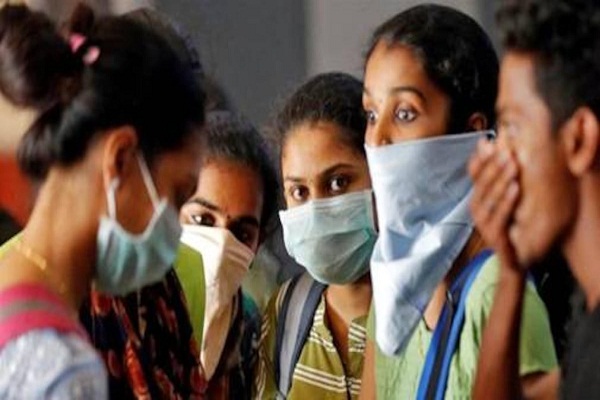
Candidates will be provided with a fresh three-ply mask before entry. Students will have to remove the mask worn by them from home and wear the one provided by the authorities.

For any rough work, A4 size sheets will be kept at each candidate’s desk.

Candidates will be required to sign the attendance sheet only after sanitizing their hands.

After the completion of the JEE Main 2021 exam, candidates will be permitted to leave the centre one by one.

Candidates will have to drop their JEE Main admit card 2021 and rough sheet in the box after displaying it to the invigilator.
CGBSE Class 9, 11 exams 2021 to be conducted offline

CGBSE Class 9, 11 exams 2021

Chhattisgarh private schools have decided to organize the annual exams for students in the ninth and eleventh grade in offline mode this year. According to private schools in the state affiliated with the CBSE or the State Board, students receive a correct grade when exams are taken offline. According to the dates indicated in the official website CGBSE grade 9 and 11 exams will be held in March 2021.

Some schools have reportedly mentioned that the assessment of online exams is not done correctly and that many students also experience technical problems when taking the exams. School authorities believe that online tests cannot contain descriptive questions because downloading too many answer sheets becomes a problem for students taking the tests.

Public schools affiliated with the Chhattisgarh Board of Trustees are also likely to conduct annual exams for students in grades 9 and 11 offline. The exams are conducted by the schools and the questionnaires are provided by the respective schools. Public schools are expected to start teaching 9th and 11th grade students from the first week of April 2021, as the Chhattisgarh Council exams begin on April 15, 2021.

Also read: Chhattisgarh Board declares CG Board 12th result 2020

Many state private school administrations have confirmed that the curriculum for grades 9 and 11 is nearing completion and that the remaining parts of the schools are near completion as they reopened on February 15, 2021.

Schools in Chhattisgarh have reopened to students after being closed for nearly 11 months since March 2020 due to the COVID-19 pandemic and closure. The board also called for schools to reopen to follow state government guidelines and protocols to keep students safe.

Nishank : Pariksha Pe Charcha 2021 with PM Modi to be held in March

Pariksha Pe Charcha 2021

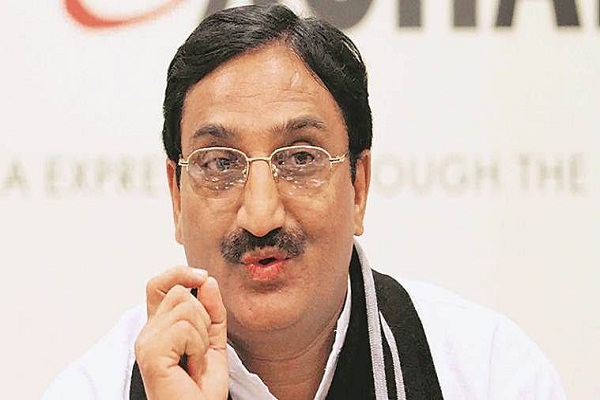
Union Education Minister Ramesh Pokhriyal ‘Nishank’ said Prime Minister Narendra Modi’s annual interaction with students ‘Pariksha Pe Charcha’ will be held online in this year in view of the COVID-19 pandemic.

The interaction with students from classes 9 to 12 ahead of their exams will be held in March, the minister said. “I feel happy to share that the interaction every student was waiting for is back! Get ready to smile your way through exams with PM @narendramodi in #ParikshaPeCharcha2021,” he said in a tweet.

“In view of the COVID-19 pandemic, this year the interaction will be conducted online,” he said in another tweet. The registration for the programme will begin from Thursday and conclude on March 14. Students who will get to ask questions will be selected through a competition.

Also read: Pokhriyal: Mulling to conduct NEET exams more than once

The first edition of the prime minister’s interaction programme with school and college students ‘Pariksha Pe Charcha 1.0’ was held at Talkatora Stadium on February 16, 2018.

Last year, the event was held at Talkatora Stadium in New Delhi and was attended by students, parents, and teachers from respective schools as well. The Ministry of Education had received 2.63 lakh entries from students to participate in ‘Pariksha Pe Charcha’; of which the ministry selected about 1,050 students.

Google brings 50 new distance learning software tools

distance learning software tools

The need to learn and teach everywhere will not stop even after the end of the COVID-19 pandemic, said Google CEO, Sunder Pichai, saying there was an “incredible” opportunity to see him Keep Learning to Reimagine.

Google introduced more than 50 new distance learning software tools on Wednesday as teachers and students continue to meet in virtual classrooms during the COVID-19 pandemic.

“The need to learn and teach from everywhere will not stop even if the pandemic stops. We have an incredible opportunity to redefine learning for the future. That is why we have learned and taught last year. We made education a goal formal” said Pichai, 48. He said the company’s main mission is to organize the world’s information and make it widely accessible and useful. “The two are closely related. Learning makes information useful and enables people to apply the knowledge to make things better for themselves, their families and their communities,” he said.

Also read: Google join hands with CBSE to train 1 million teachers

According to Google, 170 million students and teachers around the world use Google Workspace for Education to create, collaborate and communicate. In June 2020, 140 million people were using G Suite for Education. Today, Google Classroom helps more than 150 million students, teachers, and principals around the world teach and learn, up from 40 million last year. Ben Gomes, Google’s senior vice president of learning and education, said technology is helping provide more tools and resources to support teaching and enable more learning.

Whatever their experience, everyone can and should have access to great learning experiences. The goal is to help people transform and reach their full potential, he said. The COVID-19 pandemic continues to blur the lines between home and classroom and it takes everyone – teachers, parents and extended families – to work together to make it through the school day, Gomes said. This challenge is also compounded by uneven access to devices, poor connectivity, and sometimes the digital skills required to use all the tools, he added.

Govt: UP textbooks to be revised as per ‘culture and environment’

UP textbooks

The Uttar Pradesh state government held a meeting to review the school’s curriculum. The meeting was held to review and revise the state’s state curriculum with officials from the Uttar Pradesh Department of Basic Education and the Council for Basic Education and the State Council for Education, Research and Training.

It was decided to include the Indian environment, local features of Uttar Pradesh and chapters on Indian personalities in the program. Other officials present at the meeting that took place were the State Institute of Languages, the Institute for Advanced Studies, the English Language Institute and the National Institute of Sciences.

Also read: 28 new private universities and 51 state colleges to be open in UP

It is reported that a team of subject matter experts will meet to decide on further changes to the manuals and work accordingly. The state government has recently planned several changes in school education. The state government had previously decided to change the educational system in UP primary schools to adapt them to the state’s monastic schools. The prime minister has given UP Basic Shiksha Parishad until 2022 to change and modify the quality of education in public primary schools.

The state government has also launched the Prerak mission to improve student effectiveness in public elementary schools. Each district will have a motivating school. The Prerak Mission was launched with the goal of increasing student effectiveness and changing the image of schools in the state over the next six months. Prerak’s mission is carried out in every elementary school in the state and in the district with a motivating school.

AICTE join hands with simplilearn to skill students

AICTE join hands with simplilearn

Online qualifications provider Simplilearn announced that it has signed a pact with the Indian Council for Technical Education (AICTE) to work on continuing education for students at India’s engineering and technical institutes.

As part of the Memorandum of Understanding (MoU), Simplilearn will offer six programs in the areas of Data Science, DevOps Engineering, Business Analytics, Big Data Engineering, Big Data Development Hadoop and Spark, as well as AWS Big certification training data on the NEAT 2.0 Platform. In keeping with the government’s mission to enhance technology adoption and virtual learning in higher education, the collaboration aims to create a sustainable workforce harnessing the power of technology.

Also read: AICTE joins hands with Cyberpeace to train 5 Lakh students & faculty

Simplilearn Founder and CEO Krishna Kumar said: “We are very excited to be working with AICTE and are committed to using this partnership to help increase student adoption of virtual learning and bridge the gap between industry and academia to help students overcome skills challenges.”

He added that students will have access to a bootcamp-style learning model where students will have access to video content, live teacher-led classes, practice labs, and hands-on projects.

Ministry of Education: Over 3000 children of migrants to return to JNVs

JNVs

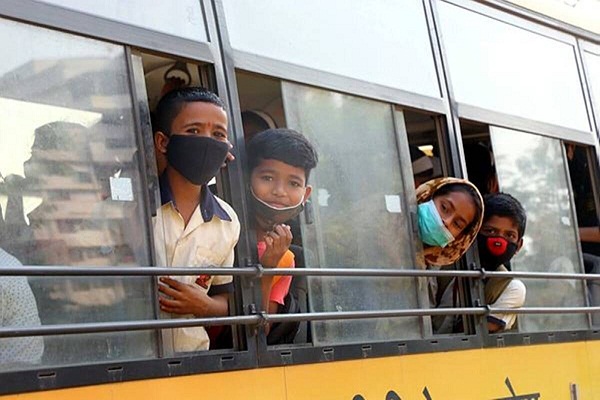
Up to 3,173 students who emigrated due to Covid-19 have been tracked and will soon return to their Jawahar Navodaya Vidyalayas (JNV), the Ministry of Education said in an official statement. “Navodaya Vidyalaya Samiti (NVS), with the support of the Ministry of Education, MHA and the public administration, has ensured the safe return of 3,173 class IX migrant students,” the statement said.

With JNVs allowed to reopen across the country, students are slowly returning to the physical campus. JNVs are Indian residential schools and reopen under strict precautions. The Department of Education has asked all JNVs to reopen in states that have agreed to reopen schools. Initially, only students in grades 10 and 12 can take physical classes. Instructions for the rest of the classes will be released shortly, according to the ministry.

NIDs will organize bridging courses for returning students. “406 JNVs have been reopened in states / UT that have given permission to open residential schools. Transition courses and special classes are organized for students to fill in the learning gaps. National preliminary tests have been carried out for classes X and XII ”, indicates an official statement from the ministry.

Also read: 99 new Navodaya Vidyalayas to be constructed in backward areas

For the rest of the students who have not yet taken physical classes, the classes are taught online. The ministry says that for students without the proper equipment, a proper education is ensured through the provision of study materials, AAC, and printed assignments.

Meanwhile, Vigyan Jyoti phase-II — a project in collaboration with the department of science and technology for the promotion of education for girl students in JNVs is being launched. Vigyan Jyoti Project (Phase I) is being implemented in 58 JNVs since December 2019. The same is extended to 42 more JNVs in the second phase. Additionally, 45 Malayalam, 106 Marathi, 94 Kannada and 69 Telugu language teachers of NVS have been trained as regional language teachers under NEP -2020 which suggests teaching in mother tongue to young kids.

EuroKids International expands its network in Bangalore

EuroKids International

EuroKids International, a leading education company in India backed by global investment firm KKR, has announced that it is expanding its network of schools to include Cambridge Public School (CPS), a K-12 school in the HSR network of Bangalore.

Founded in 1999, CPS provides students with a well-rounded education through a balance between academic, athletic, and extracurricular activities. The school has built a reputation for excellence in education and has consistently achieved excellent results on CFSI board examinations. Throughout the years, the CPS student has also been admitted to renowned universities in applied science.

The EuroKids group operates three K-12 schools in Bangalore and CPS will be the fourth addition to the portfolio of 38 K-12 schools across India in the city. The group manages the international schools EuroKids, Kangaroo Kids, EuroSchool and Billabong High International as part of its educational portfolio.

Also read: EuroKids Creating Waves IN THE WORLD OF PRESCHOOLS

Prajodh Rajan, Co-Founder and CEO of EuroKids International Group, said: “We welcome Cambridge Public School to the EuroKids family and we are delighted that CPS is expanding our ability to provide high-quality education to students of the highest international level. Our mission is to provide preschool-age children and K-12 students with an educational foundation that instills in them a love of learning that will continue throughout their academic careers and the tools necessary for long-term success for all our stakeholders “.

Haneef Ahmed, President of CPS Group, said: “We are delighted to be working with an educational group that has such deep experience and the ability to enhance the teaching and learning experience at our school. This partnership will create synergies and help strengthen our strengths and create opportunities for greater efficiency and better outcomes for students. “

UGC asks universities to encourage students to enroll & appear for exam

UGC asks universities

The University Grants Commission, (UGC) has asked colleges to encourage students to register and take the 2021 Cow Science exam. Also known as the Kamdhenu Gau Vigyan Prachar-Prasar exam, the exam is held on February 25, 2021 for elementary, middle and high school / college / university students and for all citizens.

Students who wish to apply for the exam can do so online through the official website at kamdhenu.gov.in. There is no registration fee for this exam. According to the official communication of the Commission, all participants will receive certificates of recognition.

The exam is organized into four categories: for the primary level (up to grade 8), for the secondary level (grades 9-12), for the college level (after grade 12), and for the core audience. The official website recommends that literature and reference books uploaded / recommended from the RKA website can help candidates prepare for the exam. However, you can use other materials to prepare for the exam.

Also read: UGC invites faculty members to design 194 online UG courses

The exam is conducted in a transparent and impartial manner, as it is an online exam with little freedom of action or assistance. The exam lasts 1 hour and there is no negative evaluation. The result will be communicated to the student on the day of the exam on the spot.

Candidates can also take the exam online using their web browser. The exam link will be available to candidates on this website as of February 20, 2021. Candidates can take the exam in working condition using a mobile phone, laptop or desktop computer with a camera. For more information, visit the official website of Rashtriya Kamdhenu Aayog.

Sisodia urges Universities to work on how to stop Brain Drain

Sisodia-urges-Universities

Delhi Education Minister Manish Sisodia said on Tuesday that expanding universities is vital to improving higher education and urged these institutions to think about how to stop the “brain drain.”

In his acceptance speech at the North Zone Vice Chancellor meeting organized by the Indian University Association, he highlighted the difference between education and human resource development.

“Human resource development is only an instrument of education, it is not the foundation of education. It is the role and responsibility of education to ensure that our children are not seen as mere tools or instruments for the world, but as prosperous people “he said.

Sisodia, who is also the Delhi Minister of Education, spoke about higher education in the post-COVID and post-NEP world, saying that there are certain challenges in the current Indian educational landscape facing universities and teachers.

“The first challenge was the challenge of quantity. We have implemented various missions and laws, such as the right to education. We got all the children to go to school. We have created a large number of high school graduates. But then ask the child: where should I go? ” “What am I supposed to do now? We have no answers, ”he said.

Also read: Sisodia: Brainstorming on how early Delhi schools can be reopened

Sisodia urged universities to think outside the box to find solutions to the large numbers and lack of space for students.

“The bottom line is that we can say that the students who study in our universities and colleges reach a certain level of success. We cannot decide the maximum success that a child can achieve, but we can establish the minimum levels for a child quality education. We must ensure minimum level of education.

“Talk about research. Talk about entrepreneurship at your rally: Our students created jobs for 2,000 people after graduation. We need to celebrate our job providers,” he said.

Sisodia also pleaded with university rectors and professors to be aware of the “brain drain.”

“Universities play a huge role in the development of a country. They identify and nurture talent. As a nation, we have all failed when our students study at universities abroad and then contribute to the economy of others,” he stated.

LATEST NEWS