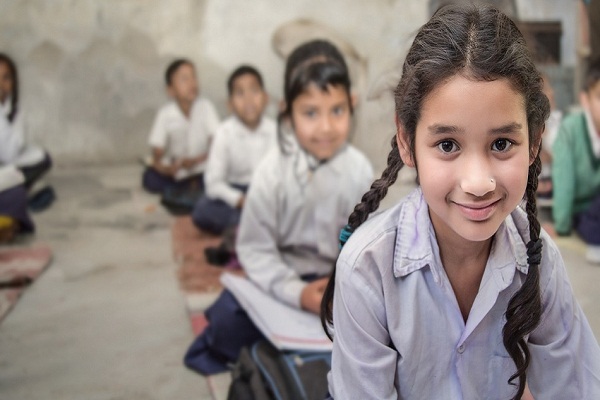
With the outbreak of the Coronavirus, over 260 million students in India have been impacted. Central and state governments are leveraging online platforms to facilitate e-learning, while also coming up with solutions like alternative academic calendars to make up for the loss of school hours. The ed-tech firms have emerged as life savers for many educational institutions.
Government school students face a huge gap in access to high-quality learning content and digital infrastructure. High number of teacher vacancies, poor quality of teacher training, and heterogenous learning levels of students have only exacerbated the problem.
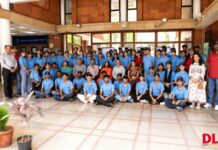
Elets Technomedia has organized a conclave on “TECH Revolution in policy Regulation & Remote Education: Roadmap Ahead”. The conclave was graced by eminent speakers from government and private sector.
The welcome address was given by Dr Ravi Gupta, Editor-in-chief, digitalLEARNING Magazine and CEO, Elets Technomedia. He welcomed all the guests for the conclave.
Dr. Biswajit Saha, Director -Training & Skill Education, Central Board of Secondary Education (CBSE) addressed the keynote for the conclave. Saha said “Education is basically related to assessments and exams. We have to drive the country from assessments to learning. We need a new education policy to drive the competency based exams. The CBSE is catering to 20 million students across the country.”
He emphasized introducing competency based exams in our schools.
Technology will play a key role in this crisis. We need to change the mind-set of parents with the usage of technology in school education. Coverage of syllabus must not be a priority but making them self learn must be focused, he added.
Traditional education needs to be re-designed. We need pedagogy and industrial involvement to evolve students. Education must be re-shaped post COVID, he added.
He also said “Parents involvement is required and profiling of students is also important. There will be new future classrooms with technology in place, he added.
Garima Babbar, Head Program, South Asia (Education & Skill Development), Adobe India said “With the help of technology, we are helping students. Technology is changing a lot in the recent past. Teachers must update themselves to provide proper quotient to students. We are providing teacher training to create quality content. We need to re-skill our teachers. Teachers must be empowered to create future learners. Distance learning and technology are components of each other. “
Also read: Elets Exclusive | Experts call Govt to infuse funds in transportation sector
She also said project based learning is coming up. Critical thinking is must and schools must collaborate with parents in this crisis. We have to nurture and monitor our students.
Rohit Gajbhiye, Founder and CEO, Financepeer said “Technology is the need of the hour. We pay to schools on behalf of parent and will collect it from them after lockdown. We even provide fees to content providers’ behalf of schools and will collect from them post-lockdown. We even explore all the digital solutions. We are operating in over 40 cities across the country.”
He also said it’s time for blended learning and we need to upgrade the staff and students for future prospects.
Ravikant Wairagade, Sales and Marketing Manager, Yarukey-India said “We have specialized platform for Mathematics. It has real time solution platform. We provide workshops and equip teachers with effective teaching strategies. We provide continuous support to students.”
In the first panel it was discussed on “Technology Outlook: Mobile first & Mobile – only education shaping the Future classroom New Rules & Engagement Defines!.”
Dr S K Rathor, Chairman & Managing Director, Sanfort Group of Schools, Ghaziabad said “Everything came to an unprecedented halt due to the COVID crisis. Over 90 pc schools were not prepared to shift to online classes. The teachers are not so tech savvy in pre-schools and it was difficult for us to engage toddlers in virtual classes. All the pre-schools are working hard to deliver quality content.”
Over online classes, he said this is not a permanent solution as it is the demand of hour. Blended learning will be the new normal for schools post COVID.
The bonding between students and teachers are not going to dilute and importance of physical schools will never die. We need to socialize our students as they are missing the schools, she added.
He also said it’s a huge challenge for rural schools to provide education through online. There is an uncertain over opening of schools. Parents will not send their children to pre-schools, he added.
Dr Jawahar Surisetti, International Educationist, Adviser to Government, Smart City said “Virtual is the only option in this crisis. There is no uniform code for govt schools to conduct online classes. With virtual classes parents have became more responsible. We need to have a policy over online education. Teachers are the real Corona warriors and as they can influence generations.”
Over online classes, he said “virtual classrooms cannot replace physical ones. Blended learning will be the new normal for schools. We will miss the peer to peer learning. The digital well being on child will be affected. It is a wake-up call for parents to be a part of education system, he added.
Over content, he said maintaining the quality is very important and making is interesting is more essential. Engagement of students during the lockdown is a huge issue.
He also emphasized on private stakeholders involvement in education sector.
Dr Niyati Chitkara, Principal, Chitkara International School, Chandigarh said “The COVID has created a great opportunity to bring change in education system. This is the best time for action research. The major challenge is to keep all the stakeholders intact. All schools are trying to portrait virtual classes as physical ones. The mental health of student is also important and schools must focus on it.”
She said many schools are running on mobile phones. Keeping employability on mind we have started using technology in school education. We have started using tech edge module for students. We were tracking children and have health cards for students.
To engage students, the school has started many activities including songs, dance, paining and many more. To encourage students, school is providing e-certificates and batches.
She also said boredom is the biggest challenge during online classes. She also said parents are the new quality auditors and content is the king in virtual classes.
Racquel Shroff, CEO, Global Education Solutions said “The COVID has act as an equalizer. It has created an opportunity for every student to gain knowledge. We need to re-design our learning and teaching ways. We have to embrace the new way of learning. Now, students have to take responsibilities to learn new things. The teachers are doing a tremendous job in this crisis.”
She said it’s time to educate and empower parents, teachers and students in this crisis.
She also said blended learning is need of the hour. Technology and automation can have impact on jobs in coming days. Schools are the integral part of the community. Micro-learning will be to stay for longer period.
Andrew Collins, Director & CTO, Vu2Vu India Pvt Ltd (India/Ireland) presented his views on the online education.
In the second panel the discussion was organized on “School TECH Rising: Process of Advancing Education & Rise of Blended Learning.
Mark Parkinson, International Speaker & Education Consultant, Malaysia said “We need to focus on basic necessities. Educators have to focus on students’ personalization. We must not waste this tragedy. We have to use this to evolve the education sector. The evident that a child can be a carrier of a virus. The return to physical schools will be a huge challenge.”
K Prabhakaran Nair, Headmaster, The Lawrence School, Lovedale said “Things have changed a lot. There’s an opportunity in every crisis. All the schools have evolved in this crisis. Important aspects of education are disrupted. In the long term it will impact the education sector. Currently, we are missing students and peer learning is utmost important.”
When she schools will re-open blended learning will the key. The fatality rate in India is just 4 pc, which is far more less than other countries, he added.
The post Covid scenario will be different and the learning process will be different. There is a digital divide within India. Virtual learning will be a boom. There is a change in the assessment system, he added.
He said there will be a positive change in the education sector in coming days.
Dr Jayshree Periwal, Chairperson, Jayshree Periwal Group of Schools, Jaipur said “These are very difficult times. We have to adopt technology to survive and can make the virtual world our world. We have to find solutions in challenges. Schools have to use technology to its best in this crisis. In future, blended learning will be adopted.”
Also read: Elets Exclusive | Higher & technical education virtual conclave: Educators call for new reforms
She also said educators need to provide quality education in the country. There is digital illiteracy across and that needs to be taken care of.
The technology will be handy if any such pandemic comes back. Schools have learnt to adapt new things, she added.
Dr Vidhukesh Vimal, Headmaster, The Assam Valley School, Tezpur said “There are changes in the education system. There is a huge shift in the sector. We have to compliment technology not use it as a supplement. Now, students are not in a controlled environment of teachers. The learning culture has to be changed. Children have to take onus of self learning.”
Now parents are acting as teachers. Parents have to play a direct role in education. This is a huge cultural shift, he added.
Over exams, he said “We have to create a new assessment system. Assessment part remains the most critical. Everything has changed a lot in the crisis.”
Schools and teachers will never become redundant. The pandemic has exposed society and we need to rectify it. Patience is the key in this time and schools will be the safest heaven for students, he added.
Lt Gen Surendra Kulkarni, Director, Mayo College, Ajmer said “Everybody has suddenly fallen in love with technology. Technology has overtaken inertia. How schools leveraging technology is important. The pedagogy of online learning is different from physical ones. There will be a huge change in teaching ways in schools. Digitization became the key factor from the last 10 years.”
He also said “Parents cannot be expected to be teachers. Parents must understand they are our partners not pay masters. There will be a growing divide within the schools and technology is a great leveler.
He emphasized on providing safety to students, when it will re-open.
Harinder Chhabra, Director, The Infinity School, Noida Extension said “Parents were a bit apprehensive in the beginning. This is a blessing in disguise as quality education will only survive. The adaptation of technology has become very fast. We need to enhance the teaching and learning process. Schools have to be very serious about their teachers’ capacity.”
He also said “Now parents are part of the process. Students will be more independent in future. There will be more personalization for students.”
Dr D Usha Reddy, CEO, Meridian Schools, Hyderabad said “Learning never stops as remote learning continues. We are changing the world with remote learning. Overnight, students and teachers have evolved to adapt the new change. The quantum of usage of blended learning has surged a lot. The teacher assesses the student before starting the online classes.”
She also said “The digital divide will increase between urban and rural areas. The world is ready to use technology.”
We have to protect our children from cyber fraud. It’s time to celebrate the innovation and resilience of teachers and students, she added.
Harish Sanduja, Director – Schools, Seth Anandram Jaipuria Group of Educational Institutions, Ghaziabad said “Everything has become transparent and a complete U-turn has been witnessed in the society. Few years back, schools were reluctant to adopt technology. We did a survey to know how impactful is online teaching. There is a gap between teachers and students. Ability of teachers to connect is very important in online classes.”
He said designing thinking must be at the core of teaching and learning.
This is the golden chance for schools to learn new things. Students have to take responsibility for their own learning. Schools are going to collaborate and it can create opportunities to evolve new things, he added.
In the last panel, discussion happened on “Automation of Education: Transition from Traditional Classroom to Virtual Classroom, Preparing the Future students”.
Sapna Sukul, British Council Ambassador, Education Trainer & Advisor, New Delhi said “The major challenge was to battle the pandemic. Teachers have been working hard to ensure learning doesn’t stop. Every crisis has a huge opportunity within it. Technology has acted as a great leveler. We are adapting to the new normal. We can only become better and better with such challenges.”
Admissions are a problem and there is an issue everywhere. Over 70 pc of parents are supporting online classes, she said.
Teachers are going to sustain as no pandemic is going to stop the growth. The new normal will continue. There is a paradigm shift in the education system, she added.
Revathi Srinivasan, Director, Singhania Schools, Mumbai said “It is important to take cognizance of every little doubt. Training teachers for virtual classes was a huge challenge. We spoke to parents over their issues and resolved the digital divide. For online classes, teachers have to put more effort. Teachers are always experimenting and evolving during this crisis. Schools are collaborating with each other to sail through this crisis.”
She said “Online teaching is not the same as physical ones. The whole of May was used for training teachers. We had fashion shows, debates, music competitions, all happening virtually. This platform can bring out the hidden talent from every child.”
Things will become normal very soon, adaptability is a huge thing. We are in a new world and have to prepare students for the future, she added.
Kapil Gupta, Founder, Leaders Group of Schools, New Delhi said “The biggest challenge is to train teachers in tier II and III cities. Engaging toddlers in virtual classes was a huge challenge as they don’t sit in one place. With the help of AI, we started training teachers. We need to bring new innovations for kids and provide guidance to parents.”
He also emphasized on creating quality content which can engage children.
Deepa Bhushan, Director Schools, C P Goenka International Schools, Mumbai said “The change is the only constant. The challenge was to adapt the change in the education sector. Dealing with the change for stakeholders has been the biggest challenge. It was a steep learning curve for schools as there was no time.”
She also said “Many schools converted physical schools to virtual ones. Massive populations have accepted the change and are slowly settling down with a new normal. We have to re-look the way schools have been operating. “
We have to learn from each other and collaboration has been the biggest asset during the epidemic. We must continue the learning curve, she said.
Kavitha Jain, CEO, MDN Edify Education, Hyderabad said “The biggest challenge is uncertainty. Conducting assessments through online is also questioned. Schools all over the world are struggling. There is a big shift with the students and adapting the new change is also difficult for them. There is a socio-economic challenge for students in India.”
She also said “Parents need to support teachers and schools during the online classes. Developing the routine is also important for students. “
Data analysis is also very important and content quality, he added.
Dr Manimekalai Mohan, Managing Trustee & Correspondent, SSVM Institutions, Coimbatore said “There is an uncertainty, when the schools will be re-opening again. The live classes are very effective. Online education will play a vital role in the sector. Running an online class is not easy for any teacher as parents are also part of the classes. These sessions look like one-one classes.”
The students and parents are missing the real classrooms, which virtual ones cannot provide. Parents must teach technical ethos to their children, he added.
Schools are becoming strong with every passing day and have to involve students with more activity classes, he added.
Dr Nripen Dutta, Founder & Principal, Miles Bronson Residential School, Guwahati said “We started a pilot project in the month of April. The connectivity and infrastructure is a huge problem for us. This is the only option and we have to continue with it for next few months. We must find ways to utilize the online classes to take out the best. The virtual classes will never provide that peer learning to students.”
He also said “We can start activity based learning and pick the best things. Remote learning is the new normal.”
Jyoti Arora, Principal, Mount Abu Public School, New Delhi said “The greatest challenge was to continue the learning process. The cyber safety of children was also important. It was like changing parents’ attitude towards online education. The quality of content is also an issue as there is ample free content available. We have set up a helpline for students to calm their anxiety. The mental health and well being was also an important factor for students.”
The automation of education can be visible in the 21st century, she added.
Rashima Vaid Varma, Principal – Secondary School, Prometheus School, Noida said “The challenges are very few, so we moved to online classes in two-three days. The transition for us was much easier. The learning methodology was always there. Earlier, our teachers were used to teach with the help of technology. The children, who were silent in the classroom, started participating more in virtual ones. There is no peer pressure on students in virtual classes.”
She said “This is a whole new world of technology. AI will be an easy substitute for content education. It will challenge the traditional education system. The skill based education will be more prioritized.”
Next couple of months will be very important as schools will learn new things. Skill development, assessments will also be important.