Home Blog Page 473

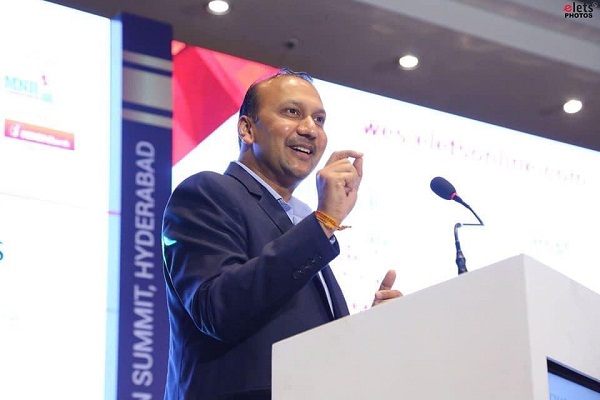
Elets Exclusive | Navin Mittal, Commissioner of Technical Education, Telangana calls for online learning

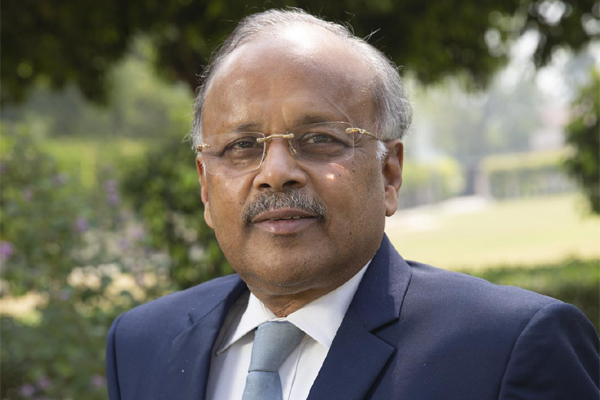
Navin Mittal

The education industry is another sector that has hit adversely in the current global scenario. But the sector has bounced back, thanks to the digital era. The current situation has led to the closing down of schools, universities, coaching institutes and other educational institutes following the spread of the Covid-19. This has further affected the students and aspirants preparing for their future. But as the educationists believe that learning should not stop, hence physical education has moved to the virtual world.

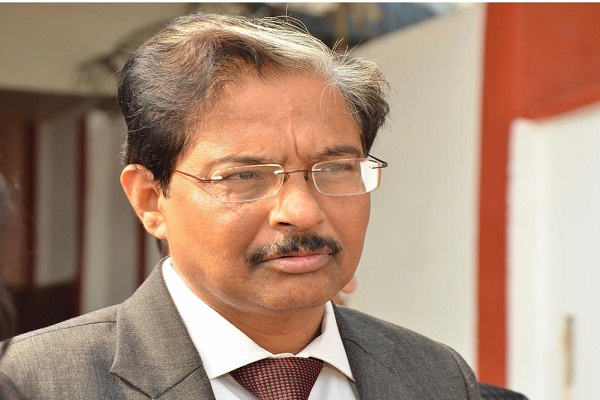
Speaking on the issue during a webinar with Elets Technomedia and Digitallearning magazine, Mr Navin Mittal, Commissioner of Technical Education, Telangana said, “ In the last few years, we are working towards adopting the digital technologies and market reform-oriented process in our education system. We have adopted many technologies in both higher education and administration. All our colleges are on e-offices. All the colleges dealing with higher education and technical education have adopted digitization in November 2018.”

 
Mr Mittal also said, “All the answer sheets are digitized. We are evaluating all the copies online. All the teachers get random papers to evaluate. We don’t have physical evaluating camps. We have huge data of students and which will help us in the future. We are using AI in evaluation. We found that this is a very useful process and it has a very great future. In the coming days, AI will be incorporated into our whole system. We are using online education in various universities.

“We are also developing online teaching for students in the state. We are starting 5 new online courses in the next academic year,” Mr Mittal also said.

“We are trying to develop many e-learning resources for faculty members and students which are available in the market. We have also asked our faculty members to use digital libraries. Many of them are trying new things in online teaching during the lockdown. We have also asked our faculty members to use online teaching platform for students. We are using the technology for employment for our students also” said Mr Mittal.

Dr Indu Rao, Professor and Director-ASC, VIT University, Vellore: Lockdown a blessing in disguise for students

Dr Indu Rao

There are two major categories of students affected by corona lockdown during these days. The ones who are enrolled in study program and the ones who have applied for a new program of study. Given the extensive connectivity through internet, there is no need for a panic. The students enrolled in a program will be taken care of by the schools/colleges through online study, examination and assessment. In a way, given the inflow of assignments and tests and compulsory classroom attendance that students are subjected to today, it has come like a breather and a sigh of relief. For learning purposes, there are plenty of study courses and material provided by the government as well as the institutions in the country. For those who have applied for study in a new program within India or abroad, there has been a delay in the entrance tests as well as in the decisions of applications.

None of this should be a cause of worry for the students as it is a universal phenomenon and universities around the world are well aware and well-concerned for this cohort of students. Many Indian students had a dream of going abroad example to USA, Australia and Europe during next Fall, i.e. September 2020. But their admissions are either deferred to Spring, or converted for online classes. Foreign universities are having a tough time recruiting their own undergraduate and graduate students to fill up seats for Fall 2020 and are considering waiver of tests like SAT. Since student visas will not be issued until corona scare is cleared, international student admissions are not a priority for the foreign universities at this time due to uncertainty that exists for international travel, despite the assurance of heavy fees that comes from international students. The corona threat and precautions have forced universities to go completely online for the ongoing classes in USA and it all “depends” on how things shape up in the coming months. It is noteworthy that USA and Germany have recorded 3,67,758 and 1,03,375 of the total 1,348,628 confirmed cases of corona infected patients in the world.

For Indian students, it is summer break time, and those not yet admitted to foreign study programs, it is a blessing. They can choose from good Indian universities to pursue their studies for next year. For students who think that their dreams are shattered, it is time to re-think if they had misplaced dreams and assumptions that life can be good only when one goes abroad. India with a huge population has only 4,426 corona cases as of today and as compared to other countries, situation is much under control. Additionally, events like the COVID-19 crisis can help the students pause and reflect about what they would like to do with their lives and why ?

In the hectic schedules of current education system, students have found it hard to find time to do this otherwise. Students can also pursue their passion for reading, writing, music and other extra-curricular options. In a world that was increasingly characterized by intense competition, rat-race and materialistic pursuits, students should not think they have been left behind or harmed by this lockdown. Instead, such students have got more time to spend with their parents, to witness and reflect on the true nature, meaning and purpose of life, to develop a higher empathy towards humanity and to set their priorities right. The current lockdown is a blessing in disguise !

Shishir Jaipuria, Chairman, Seth Anandram Jaipuria Group of Educational Institutions: Education is the strongest basis of empowerment

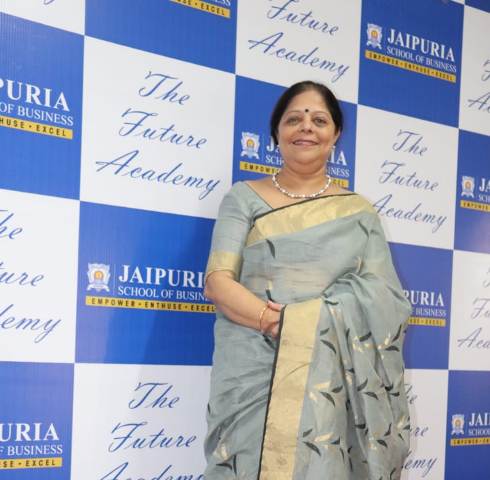
Shishir Jaipuria

The Jaipuria group forayed into education in 1974 and runs some prestigious colleges and schools in Kanpur, Ghaziabad, Lucknow and other cities. How has been the journey in the education spectrum so far?

The journey so far has been progressive and indeed enjoyable. I believe that education is the strongest basis of empowerment which provides an opportunity to give back to society.

We started our journey with Seth Anandram Jaipuria School, Kanpur in 1974 which was followed by schools in Ghaziabad, Lucknow and various other cities in UP &Uttarakhand. The experience has been extremely fulfilling and enriching. I am making all endeavors to realize the vision of my forefathers to create a suitable environment consistent with the ever changing paradigm of education.

With technology making our lives easier and replacing old teaching methods, in what ways has it shaped the teachers at your Institution?

Teachers at our institution are leading the change in using technology in the information delivery process.Seth Anandram Jaipuria School Lucknow hasbecome a Microsoft Showcase School and a Microsoft Aspire School with 39 teachers as Microsoft Innovative Educator Experts. It is the only school in Lucknow and amongst 200 schools in the country with this unique distinction.

The teachers at most of our institutions are enhancing their skill sets and enthusiastic to use technology as a part of everyday lessons. In many of our institutions, the teachers have been using Sway, Kahoot, One Note and Google Sheets to engage students and make learning fun.

We have virtual classrooms, Microsoft Certification, International knowledge exchange programs through Skype sessions, audio-visual teaching methodology and research based learning that allow students to participate in the learning process and explore out of the box solutions to every problem.

We believe that technology can be used as a tool to augment the conventional teaching practices, thereby making the learning process more interesting and engaging for students. Advanced technology is integrated in our classes through teaching aids such as Robotics and Collaboration with Khan Academy. The online resources of the Academy in different subject areas such as Chemistry, Biology and Physics are being used to complement classroom teaching, which in turn can help students to grasp the concepts better.

How far you have been successful in integrating it in the teaching-learning practices being followed at your institution?

I believe we have been quite successful. In many of our schools, technology is a part of everyday lessons. We have virtual classrooms, Microsoft Certification, International knowledge exchange programs through Skype sessions, audio-visual teaching methodology and research based learning that allow students to participate in the learning process and explore out of the box solutions to every problem.

Atal Tinkering Labs is operating in two of our schools where students can learn innovation skills and work on creative ideas for groundbreaking developments in different spheres.

What are the factors to look after while choosing the right partners in case of franchisee’s and getting the right faculty?

We believe in connecting with like-minded individuals having a vision towards nation building through education. Moreover, they need to have the infrastructural capabilities to open a school in specific cities.

The faculty at our schools is chosen based on their positive attitude towards education. Our faculty members also need to be technology friendly and experts in their specific subject areas.

People are moving towards private schools as government run schools are not able to provide quality education. How is Seth Anandram Jaipuria making a mark in this regard?

We are focusing all our efforts in providing high quality education to young learners to empower them so that they can contribute positively to the world around in different fields. This is reflected in our alumni who are placed all around the world in high-profile jobs.

We ensure that the teachers serving at our schools are the best in their fields in terms of experience as well as expertise. These mentors can make the teaching/learning process interactive and fun. We also provide the necessary independence to students from early on so that they are able to develop their personalities and know their inner strengths. In addition, we keep abreast of latest technological innovations and include the same in our teaching/learning format.

What is your take on Draft National Education Policy? In your opinion, what reforms are necessary to transform the school education system in the country?

I believe that the Draft National Education Policy has quite a few salient features to its credit. The focus on online learning as a substitute to regular classroom interaction between learners and teachers can reduce costs as well as make education more accessible.

I welcome the initiatives in the Draft National Education Policy for better engagement of the private sector. The proposed national research fund which aims to ensure provisioning for government funding for R&D work is another great initiative.

Impact of COVID 19 on Education

Expert

The COVID-19 pandemic, a health crisis has had a major impact on education globally. Many countries have taken the injunction of closing schools, colleges and universities. This crisis crystallises the dilemma policymakers are facing between closing schools for children’s safety and keeping them open due to the economic factors. This severe disruption is felt by many families around the world: home schooling is not only a massive shock to parents’ productivity but also to children’s social life and learning. Teaching is moving online on an untested and unprecedented scale.The new solutions for education via the digital mode has led to innovations which can be the harbinger for future.

It was always a lament the way didactic teaching with archaic pedagogy and lecture-centric approach was deployed in the education sector. However, COVID-19 has become a catalyst for educational institutions worldwide to search for innovative solutions in a relatively short period of time. Both the teacher and the taught have embraced technology platforms be it Microsoft Teams,Google classrooms, ZOOM or other platforms for online learning. The chat forums and discussion boards simulate a classroom environment where students can actively participate in learning. This coupled with mails, uploading & downloading videos, tests & assignments will create a new skill set that will be much in demand in the times to come. The technology connect works well for imparting conceptual knowledge; but the practical sessions that require laboratory setting is not easy to replicate. One cannot dissect a frog or measure the frequency of sound in a remote setting. Many disciplines, especially in higher and professional education such as medicine, engineering and management to name a few, necessitatesome physicaland tangiblecomponents to imbibe skills and knowledge. It also requires the presence of a teacher who facilitates new thinking leading to new possibilities.

The pandemic has also spurred new solutions in the form of learning consortiums that include governments, universities, schools, academia and technology solution providers coming together to create solutions for the masses in the education sector. This is a boon for a country like ours where government has played a pivotal role in providing basic education. It can be a tend-setter for future of education.

But the road is long and fraught with challenges as the digital divide can widen the equality gap. Remote learning may seem as a silver lining as it promotes digitalization. But it is still a far-fetched thing for the Tier-2 and the Tier-3 strata of the society due to financial constraints, unreliable power supply and non ubiquitous internet connectivity. Also, one to one interaction cannot exhaustively be replaced via the impersonalized and patchy nature of remote learning.

The adjournment of board examinations of 10th and 12th standard students, the deferment of joining dates of internship programmes and the postponement of the new sessions have indeed reshaped the Indian Education system and has led to an insurmountable stress and anxiety for the students.Unfortunately, policy makers fail to realise that these interruptions are not just short term but can have a long-term consequences for the affected cohorts.

To sum up progressive institutions have been proactive and quick to Design, Deliver, Digitise and Discover. And it is certain to reshape the education.

BCECEB postpones exam over COVID-19 outbreak

BCECEB

Over the COVID-19 pandemic, Bihar Combined Engineering Competitive Examination Board (BCECEB) has postponed the examination. The board has also stated that BCECE 2020 admit card has also been delayed.

Earlier, BCECE 2020 exam was scheduled to be conducted on April 19 and 20 and admit card was supposed to be released on April 6.

A notification stated, “it is to inform to Bihar Combined Entrance Competitive Examination (BCECE)-2020 candidates, parents and all concerned that due to COVID-19 epidemic and lockdown situation, the proposed date of examination of BCECE-2020 i.e. 19.04.2020 and 20.04.2020 is hereby postponed till further notice. Accordingly, the date for issuance of Admit Cards for the examination which was to be issued from 06.04.2020 is here by also postponed.”

The notification also stated, “due to COVID-19 epidemic and lockdown situation, the proposed date of examination of BCECE-2020 i.e. 19.04.2020 and 20.04.2020 is hereby postponed till further notice. Accordingly, the date for issuance of Admit Cards for the examination which were to be issued from 06.04.2020 is here by also postponed.”

BCECEB had earlier extended the last date of registration from March 18 to March 24. The board had also postponed the examination date from April 12, 13 to April 19 and 20.

Crash course for Karnataka class 10 students before exam

Karnataka class 10

According to a report, Karnataka’s Primary and Secondary Education Minister S. Suresh Kumar said that Class 10 students from the state will be given a crash course for a week before the SSLC or Class 10 annual examination.

Last week, minister said, the school education department has decided to promote class 7 and 8 students without any exams in the wake of lockdown aimed at controlling the spread of corvid-19.

The minister also said, Class 9 students will be promoted based on formative and summative assessment during their class tests.

The minister said, “There will be too much of a gap between classes conducted and the exam now. So we have decided to have a review of subjects for a week or so. This will help students revise the subjects and be better prepared for the exam.”

The Karnataka SSLC exam was scheduled to be held between March 27 and April 9, and over eight lakh students had registered for the exam.

Karnataka Secondary Education Examination Board (KSEEB) postponed the SSLC examinations as a preventive measure for coronavirus outbreak.

Karnataka has also postponed the Common Entrance Test for vocations courses, which was scheduled to take place on April22 and April 23 in view of the prevailing COVID-19 and lockdown.

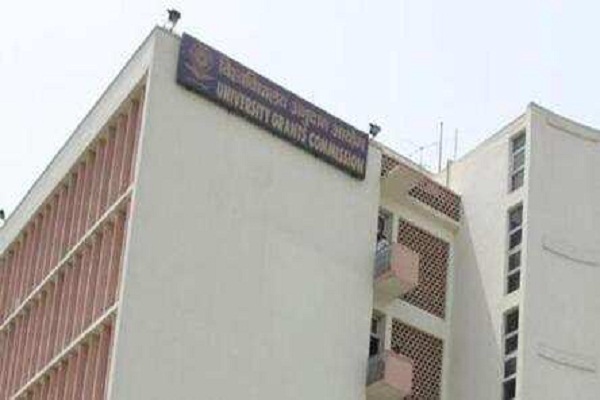
UGC sets up panel to report on exams

UGC

Amid coronavirus outbreak, the University Grants Commission (UGC) will submit its report on the impact of COVID-19 on the academic calendar to MHRD ministry on April 13, 2020.

The HRD minister Ramesh Pokhriyal ‘Nishank’ had suggested setting up an academic calendar panel to contemplate measures to deal with the impact of delay on the academic cycle. The UGC secretary Rajesh Jain informed the authorities concerned that a seven-member expert committee headed by the vice-chancellor of the Central University of Haryana, RC Kuhad, was formed to suggest measures in this regard.

“The expert committee, under the guidance of the chairman, UGC, will discuss and submit the report at the earliest and preferably by 13th April 2020,” Jain said in the letter.

The other members of the committee included the vice-chancellors of Banashtali Vidyapeedh, Panjab University, Shri Vaishnav Vidyapeedh Vishwavidlyala, director of Inter University Accelerator Centre and two joint secretaries of the UGC.

All exams related to higher education institutions have been either cancelled or postponed after the lockdown from March 25. The MHRD and the UGC instructed the institutions to maintain teaching-learning processes through online platforms.

Meghalaya govt to close schools till April 30

Meghalaya govt close schools

In the wake of COVID-19 outbreak, the Meghalaya govt has decided to close all schools, colleges and educational institutes till April 30, 2020. The order was released by the state government after assessing the situation of Coronavirus outbreak.

The Meghalaya Government has also announced that all the government offices and transportation would resume operations from April 15.

While neither other state governments nor the central government has shared its plan to extend the school and college lockdown, there have been various reports of considerations.

The state government has released its latest order regarding extension of lockdown – as far as schools and colleges are concerned. Apart from this, the government has also stated that it would allow MGNREGA activities in respective villages.

Furthermore, wages & material components to tune of Rs 534.6573cr was sanctioned & released to respective BDOs for wages’ payments & clearing materials bill.

Across the country, schools and colleges were shut down as early as March 14 and most of the board examinations from March 19 were postponed. The new dates were expected to be announced on March 31 but were held back after a National Lockdown was announced PM Narendra Modi.

Fears of the lockdown extending, however, have increased over the past week when India has seen a surge in number of Coronavirus cases.

Abhishek Bagchi, Principal, RMPS International School, Ankleshwar, Gujarat: Need to engage students in lockdown

Abhishek Bagchi

It is April 2020 and over 290 million students are out of school all over the world due to a virus outbreak. It all started in Wuhan, China and spread like a wildfire before you can realise. The Europe and USA neglected this deadly infection as they were overconfident of their medical ability. India, I must say got lucky due to late infections and also some precautionary steps like lockdown taken by our Government, comparatively witnessed lesser effect at the time I am writing this article.

But the schools went into a halt. Exams postponed, sessions failed to start and students stayed restricted at home facing serious mental disruptions. As a whole, just like many other industries, Education is hit badly. Incidentally, the educators all over the world never gave up. They refused to get bogged down and started their own battle of taking school into the homes of the students.

RMPS International School, one of the fastest growing schools in Gujarat, leads from the front. Having the opportunity of being the principal of that school and with enough exposure to technology in education for past 25 years, I and my team designed a framework what we called RMPS School-At- Home.

Before we designed the programme, we considered few valuable information. What are changes we need to address in related to the teachers’ mindset? What mindset change is required among our parents? What is the existing technology we have? What is the expertise level of our teachers? What is the technology available in our demography? What is the average or minimum bandwidth available to us and our parents? What kind of capacity building programme we need to implement with our teachers, students and parents before we start online teaching learning? How to modify the already designed curriculum and make it e-learning ready? How to collect the above information from parents and scaffold them to cope with the new system of learning? How to choose the right tool for online training that will optimise all the above asked questions? How to measure the success ratio of the programme designed? How to trap student engagement? How to record student performance? How to provide remedial to the less engaged learners using online resources?

So, as you can see, questions were many and we decided to design our RMPS School-At-Home only after we have done enough research. Therefore, the research was done, each and every stakeholder were communicated and interrogated. The data gathered is analysed and we came up with a robust yet simple design. After going through an extensive capacity building and survey, we launched our programme in three phases, Phase 1, Phase 2 and Phase 3.

In Phase 1, we made scheduled circulation of engaging activities among our students using the most basic and popular mode of communication, the WhatsApp. This ensures touching 100% of our students digitally and providing them with enough material to work with on daily basis. We also launched a credit-earning and rewarding system along with this to encourage maximum participations.

In Phase 2, curriculum-based recorded lesson videos from our teachers are circulated among students also using WhatsApp. We also ensured an efficient synchronous teaching-learning as in this phase we developed our already existing Learning Management System platform, EDMODO.

In Phase 3, we started true synchronous teaching learning by using Google Meet. Due to our Google for Education partnership we integrated G-suite and took the video calls to a new level.

The next initiative is to trap the student’s engagement and performance in a dashboard and plan further steps.

Dr Ashwini Kumar Sharma, Pro Chancellor, Vijaybhoomi University: Digital India initiative and challenges in the age of a pandemic

Dr Ashwini Kumar Sharma

Digital India vision of the Government of India seems to be an instrument in present scenario, where we all are pandemic because of COVID-19.

The education institutes are put to shutdown because of 21 days Lockdown (May further increase depending upon situation) and this is putting lot of pressure on students / youths for their education, admissions to career making courses, skilling enhancement, employment opportunities etc. The lockdown period is watching that school and educational institutions go into hibernation all around the world at the same time. Given the time on hand, it is a great opportunity for students and youth to finally get things of their perennial to-do-list, a chance of getting more efficient, productive and develop new and improve on professional skills/ knowledge by learning online as well as assessing Online.

The lockdown has accelerated adoption of digital technology. The business houses, education institutes, educationist, Analytics, computer power, data management methods, Online education solutions etc are forced to work in tandem and improve upon in quality, delivery time etc , so as to handle such situations. The outbreak has presented new roadblocks for the Indian workforce and especially for the daily wage and contractual workers. In these bleak times, it is more important than ever before, to be up-skilled and be prepared to prove yourself again; as the saying goes “ when the going gets tough, the tough gets going’

It is also a fact that the technology use for education is resulting into different concept in education system i.e. from teacher centric education to student centric education.

We have been talking about virtual classroom but in fact the engagement between teacher student is real. This is making student connection throughout life on 24X7 basis, may be keeping all physically distance i.e. social distancing to fight with COVID-19.

Pedagogy of education in the digital education is an important link between course contents, educationist, technology and course taker in a Classroom education is different from technology based education.

Democratization of technology is now an important issue in present scene which include internet connectivity, telecom infrastructure, affordability of online system, availability of laptop/desktop, software, education tool, online assessment tools etc. But it is a fact that technology-based education is more transparent and does not make difference in front vs back bencher or girls vs boys.

Looking to this challenge of Colleges/Schools shutdown, Govt of India as well as State Governments, Private players have been publishing regularly in last 7-10 days on various initiatives being taken by ministries like MHRD, Department of Technical education, NCERT etc on various initiatives/support by all stackholders for the benefit of youth/students.

The few of the initiatives are SWAYAM i.e. on line course for teachers, UG/PG MOOCs for non-technology courses, e-PG Pathshala e-content containing modules on social science, arts, fine arts, natural and mathematical science, CEC-UGC you Tube channel, Vidwan a database of experts who provide information about experts to peers, prospective collaborators, NEAT an initiative by AICTE based on PPP model to enhance the employability skill among students by collaborative approach with Education Technology Companies, National Digital Library(NDL) where repository of learning resources with single window facility is available. The more details can be seen on MHRD, AICTE, NCERT websites. Many more noteworthy initiatives have been taken like Spoken Tutorial, Free and Open Source Software for Education (FOSSEE), e-Yantra, Google Class Room etc..

It is fact that Government of India as well State Governments through their Various Ministries/Departments have involved / planned for infrastructure also, the second most important pillar of e-Education. This mainly include National Knowledge Network (NKN), National Project on Technology Enhanced Learning (NPTEL), National Mission on Education Through Information and Communication Technology (NMEICT), Akash Tablet PC, National Academic Depository (NAD) etc.

The online assessment agencies/Private business houses are also improving the product considering the limited bandwidth, and social distancing by managing remotely proctored examinations/skilling assessment.

Thus, the basic requirement like Good Education delivery platform, IT infrastructure, PC/Desk Top/Mobile for end delivery and assessment tools have been planned and more improvement is going on.

In present scenario this article id devoted to Covid Warriors.

Author: Dr Ashwini Kumar Sharma is an Engineering and Postgraduate in Computer Science with more than 35 experience in IT Industry/Education Institutes. He also worked as Director General for NIELIT, Govt of India. Presently, working as Pro Chancellor after working as VC of Vijaybhoomi University, Karjat, near Mumbai.


LATEST NEWS