Home Blog Page 477

NMIMS offers admission for Entrepreneurship programme

NMIMS

Amid COVID-19 spread, NMIMS offers admission to the two-year Master of Business Administration (MBA) in Entrepreneurship programme for the academic year 2020-2021. NMIMS has offer MBA under its fully developed constituent school Pravin Dalal School of Entrepreneurship and Family Business Management (PDSE&FB).

PDSE & FB focuses deeply on understanding and appropriately delivering to Indian Family Businesses a strategic path to grow and transform their business while they play an important role in India’s growth.

According to the notification, candidates must be holding a bachelor’s degree in any discipline from recognized university with a minimum of 50% in aggregate/final year.

Candidates graduated by doing a part-time course or through distance learning, correspondence courses, externally, open school from a recognized university are also eligible to apply.

The application fee for online application is Rs 3000.

The candidates are selected based on aptitude test and personal interview.

EuroKids makes learning digital for students

EuroKids

Amid national lockdown, India’s leading childhood education company, EuroKids International is rolling out several new initiatives to help their students continue with learning and engagement.

The objective of the new digitally-enabled learning programs is to create a seamless experience and enable students to keep pace with their academic and non-academic milestones. It has also programmed to engage and help children stay positive during the lockdown phase.

For pre-school children, EuroKids and Kangaroo Kids’ the curriculum team is sharing structured activities that parents can use to have a daily dose of engagement with the child at home. Each activity will help parents drive the learning of new skills and ensure retention in the child.

Co-founder and Group CEO, EuroKids Group, Prajodh Rajan, said, “At EuroKids Group, we were very focused on first ensuring the safety & well- being of our students and once having ensured that we moved our focus on ensuring continued education during the disruption caused due to the pandemic. The investments that we made towards creating digital assets to aid learning has now come in great use as we’ve deployed them successfully across our chain of schools. We are continuously striving to be at the forefront of using technology and digital platforms as an enabler to enhance the learning experience for our students and tracking developmental milestones for the parents.”

For the K-12 children, that is the mainline schools – EuroSchool & Billabong High, live classes through video conferencing and recorded sessions for the new academic year are being delivered. The learning is further supplemented with digital textbooks, Q&A sessions and home assignments, powered by proprietary Learning Management System (LMS) Argus and Billabox.

TSCHE extends dates for application form for EAMCET and ECET

EAMCET

Amid coronavirus lockdown imposed in the country, Telangana State Council of Higher Education (TSCHE) has announced the extension of the last date to submit the application form of TS EAMCET and TS ECET.

Aspirants can submit their application and pay the fee till April 20, 2020.

Candidates can now apply online through tsche.ac.in for TS EAMCET 2020 and TS ECET 2020.

Earlier, the final date to submit the application form was April 7 (TS EAMCET) and April 5 (TS ECET).

TS EAMCET 2020 conducted for admissions into the B.Tech courses offered by the various participating colleges. The examination is scheduled to be held on May 4, 5 and 7, 2020.

Similarly, TS ECET 2020 is held to provide lateral admission into 2nd year regular B.E. / B.Tech. courses in both the University and Unaided Private Professional Institutions of the state.

UP Board to release class 10 and 12 results in April

UP Board result

The Uttar Pradesh Madhyamik Shiksha Parishad, Prayagraj (UPMSP) is set to declare the results for 10th and 12th class exams in April 2020. Over 60 lakh students had appeared for UP Board class 10 and 12 class exams.

Over coronavirus outbreak, Prime Minister Narendra Modi has imposed 21-day lockdown in the nation. The board will release the result on its official site. Students can check their results on examresults.net.

The UP Board Class 10 exams will continue in 2020, until 3rd March and will begin from February. Also this season the UP Board authorities have made it mandatory for the candidates appearing to take their Aadhar card. The UP Board 12 Exams have begun from 18th February and last 2020, until March.

Steps to check UP Board High School

– Visit site www.examresults.net

– Enter the state name – UP

– Look for the link which says UP Board Result 2020 Class 10 or UP Board Result 2020 Class 12

– Click on the link and fill up all the details to get your UP Board Results 2020

– Get the results on screen

Saurabh Jain, Managing Director, Vidya Prakashan Mandir (P) Ltd: Efficacy of online learning explored

Saurabh Jain

Today, like never before, educators the world over are faced with an increasing pressure of transforming themselves into e-teachers, and that too with success. While the world fights an unprecedented pandemic with a forced lockdown, digital education seems the only answer to compensate for the loss of school time. If you are an uninitiated teacher, read on to know more about the nuances of this change.

E-Learning refers to the learning that takes place via electronic gadgets such as smart phones or computers. Learning material may be available offline, such as in the form of educational CDs or online such as educational websites or YouTube videos. E-Learning is a powerful tool and its advantages are many. Learners are able to learn in the comfort of their home. They can choose their own time and space. Most importantly, they can learn at their own pace. Different types of learners get access to different media to achieve the same learning outcome. A visual learner can choose videos and animation to learn. An auditory learner can plug earphones and listen to audios. A kinesthetic learner would look at associated activities and worksheets. This means that the E-Learning platform can override our limitations of time constraints and skills as an educator.

Not only for the learners, the advantages for teachers are also many. Once you go through the task of creating your repository of resources, it remains with you forever. Every year, the same digital material can be used. You may only need to revise after feedback from the previous sessions. In this way, instead of focusing upon transactional methodologies (which you would have already done while creating your repository) you can personally lead and interact with each student on his or her journey. This, I believe, is the highest achievement for a teacher especially in a vastly populated country like ours. Online assessments and evaluation tools remove the burden from a teacher’s shoulder to a great extent. Tools like test generators and MCQMaker not only allow teachers to quickly formulate assignments, they also enable instant checking of answers.

Akin to every Teaching/Learning paradigm, E-Learning poses its own set of challenges which educators must address. The first challenge for teachers is to become well-versed with the technology that is needed to impart online education. Teachers must remember that we have seamlessly adopted newer technologies such as using our smart phones, working with emails, downloading YouTube videos in our daily lives. In the same way, with a little initiation mastering E-Learning tools is neither impossible nor difficult.

Teachers must understand that during the process of E-Learning, the pace and the completion of a learning module becomes learner-centric. Self discipline and self-motivation of the learner becomes the most important ingredient in the achievement of our objectives. You can deliberate a non-performer to sit through your class in school and listen to what you say or do, but this would need a different approach online. Another common problem that educators will face is to accept the authenticity of online submissions for assessment and evaluation. Newer methods and online tools are enabling us to combat this situation.

Teachers thrown with the challenge of this dilemma can find higher meaning with the knowledge that E-Learning is here to stay and that they are moulding students who will definitely need to graduate or get certified from online learning in the future.. In the next article, I will be initiating you into the nuances of online tools that you can easily master and get started. This is indeed a new world order in School Education. The baton is in your hands, dear teachers.

Patna University set to begin online admission

Patna University

In a strange move, Patna University has released the schedule for admission in its various undergraduate and post graduate courses. However, students are in dilemma how to apply as most of their class 12 exams are pending or results not declared yet.

Many boards are struggling to finish their exams amid lockdown due to coronavirus.

Except the Bihar School Examination Board (BSEB), no other board, including Central Board for Secondary Examination (CBSE) and Indian School Certificate (ISC), have completed the class 12th examinations.

Even, BSEB has not yet announced the date for application of scrutiny for answer sheets.

As per the PU released notification, online application for the common entrance test (CET) begins on April 3 for admission into undergraduate courses.

April 23 has been fixed as the last day for online application, by the time results of CBSE and ISC might not be out.

Over coronavirus outbreak, the CBSE exams were postponed till April 14. A latest notification issued by CBSE states that the board will notify at least 10 days before resuming the board exams which implies the board exam is likely to be held in April last week or starting of May.

ISC is also to announce the rescheduling of examination of eight remaining papers.

A PU official said, “We are sticking to academic calendar of the university. Every year the online form filling process begins in the first week of April. After meeting, it may extend form filling and entrance examination dates. We would try best so that student would not suffer.”

Meanwhile, other private colleges and universities have also opened their online admission portal for taking admission in new academic session.

Delhi University entrance test postponed

Delhi University

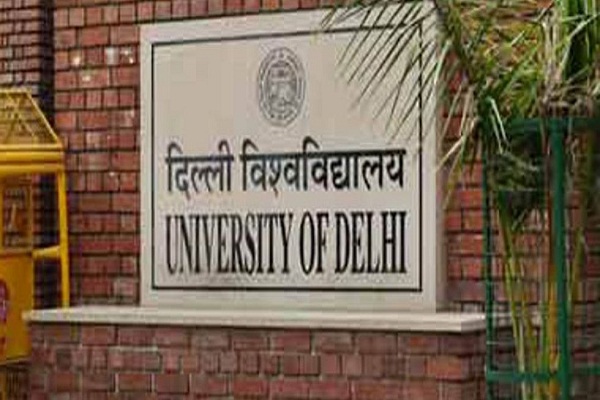
Amid COVID-19 outbreak, National Testing Agency (NTA) has delayed the entrance test for Delhi University Entrance Test (DUET) 2020. Prime Minister announced a 21-day lockdown which started on March 25. Application process for DUET has been also delayed.

NTA has also extended application date for several examinations, has postponed exams like JEE Main and NEET UG.

Earlier, April 2 was the date to commence application process for DUET 2020. However, the operations have been suspended and the new dates would be announced very soon.

DUET is held for admission to several undergraduate and postgraduate courses offered by the University.

In 2019, DUET was held for admission to the following undergraduate courses:

B.A. (Honours) Business Economics

Bachelor of Management Studies

Bachelor of Business Administration (Financial Investment Analysis)

B.Tech. (Information Technology and Mathematical Innovations)

B.A. (Hons.) Humanities and Social Sciences

Bachelor of Elementary Education

Bachelor of Science in Physical Education, Health Education & Sports

B.A. (Honours) Multimedia and Mass Communication

Five Year Integrated Programme in Journalism

Jammu and Kashmir Board postpones class 10, 11, 12 exams

Jammu and Kashmir Board

Amid coronavirus epidemic, the Jammu and Kashmir Board of School Education (JKBOSE) has postponed class 10, 11 and 12 board exams till further notice. Earlier, the exams were scheduled to be held in February- March.

The board notification said, “All the ongoing examination of JKBOSE for classes 10, 11 and 12 being held across Jammu and Kashmir were postponed up to March 31 are being now postponed till further orders”.

“Rescheduled dates will be communicated separately,” the notice also reads.

Notice also said “In compliance to the mandatory lockdown period announced and various advisories issued by the govt. of the UT of J&K, the already announced suspension of the ongoing evaluation projects of SSE & HSP-II Annual Regular Summer Zone 2020 at JKBOSE Jammu Division is hereby extended till further orders.”

Following the orders of HRD Ministry CBSE has postponed board exams in the entire country and will conduct it for 29 main subjects only.

West Bengal govt to promote students from class I to VIII

West Bengal

Amid coronavirus pandemic, the West Bengal government has announced that students in from Classes 1 to 8 will be automatically promoted to higher classes.

State education minister, Partha Chatterjee said that the School Education Department has decided that no student from Classes 1 to 8 will be detained in the WBBSE affiliated schools.

He also said the policy is applicable for all students upto eighth standard.

Earlier, the School Education department had ordered the closure of all educational institutions from 16th March 2020 onwards. A country-wide lockdown was implemented on the night on 24th March 2020 until 14th April 2020 to curb the spread of COVID-19. The closure resulted in suspension of classes along with suspension or inordinate delay in holding class exams in different schools.

The Minister also said the department is working on a mechanism to ensure that classes from 9 to 12 can be held via usage of technology such as mail or video conferencing.

Several other states such as Tamil Nadu, Rajasthan , Puducherry, etc. also announced promotion of students from Classes 1 to 9 without annual exams.

Union HRD ministry has also asked CBSE to promote all students from class 1 to 8.

Prof. (Dr.) Tabrez Ahmad, Pro Vice Chancellor and Dean at Galgotias University: Scenario of Covid-19 in India

Dr Tabrez Ahmad

In the current lockdowns, if the proper physical distancing or compliance is not properly followed, the total number of cases (asymptomatic, hospitalized and symptomatic) can even touch a massive figure.

In the most likely (Medium) scenario with moderate to full compliance but no change in virulence or temperature/humidity sensitivity, the numbers of total cases can swell up to few lakhs.

The optimistic (low) scenario constitutes decreased virulence and temperature/humidity sensitivity.To reach these numbers, Johns Hopkins and CDDEP — a public health research organisation — used India SIM, a well-validated agent-based model of the Indian population, which has been published widely over many years and has been used for government decision-making. According to the report, hospitalised cases can reach up to 25 lakh people in the High scenario, 17-18 lakh people in Medium scenario and 13 lakh people in Low scenario.

In what could spell real trouble for the country in the next three months, a new report from prestigious Johns Hopkins University and the Centre for Disease Dynamics, Economics & Policy (CDDEP) has predicted that 21-day lockdown may be ineffective to stop the COVID-19 peak arriving in April-May-June — infecting few lakhs Indians in an optimistic (low) scenario.

Dr. Ramanan Laxminarayan, director of the US-based Centre for Disease Dynamics, Economics and Policy, and an advisor to the World Health Organisation (WHO) and World Bank, had previously warned India that In a worst-case scenario, India would experience a novel coronavirus high infection rate, which would see approximately majority of confirmed cases of COVID-19 across the country, leading public health expert estimates. India’s jam-packed cities and heavily crowded public transport also throws a unique challenge to social distancing, which is necessary to curb the spread of novel coronavirus.

Now, in view of the effective enforcement of lockdown measures and countrywide curfews that were recently enforced by the Indian government, that worst-case number will not be very high. Furthermore, an overwhelming majority of these infections are likely to be extremely mild.

In case if a high number of people becomes ill, with few lakhs requiring intensive medical treatment would put an immense strain on India’s healthcare system. In a worst-case scenario, estimation is based on how transmissible the novel coronavirus would be in India. If citizens fail to follow the social distancing, the virus would be as transmissible as it has been in Italy, USA, Spain and Iran, which will effectively take the worst-case numbers to higher side.

There are various agencies, who have been consistently updating the countrywide COVID-19 infection status and deceased, but in-fact due to less testing in the country the real number of confirmed cases is significantly higher.It is almost impossible that this [community transmission] could not have happened in a situation where about tens of thousands of people travelled from different places of the world could not properly tested during entry in the country and to imagine that none of them carried the coronavirus.

We are required to upgrade themedical facilities, expand testing, and spread awareness to promote careful prophylaxis than to politicise the issues and irrationally connecting the spread of the disease to a particular community. Now the role of media is very important to provide the real picture and solace to the community than to play dirty politics to improve their TRP. Rather than they should encourage the community in seriously preparing for the mitigation, which would require making several thousands of beds available in advance.

The Covid-19 is going to testify few things about India like our health system capacity; our system of governance on how much people listen to what the government is saying; and our social structure, whether people are going to support and cooperate each other.[1]

As per the reports and estimations, the Ventilator demand in India may go up to1 million while the current availability in India is estimated to be between 30,000 and 50,000 ventilators. People could need ICU treatment; India needs to urgently import ICU equipment, ventilators and a range of medicines.

The possibility of infection to doctors and nurses could further increase deaths in the general population. Healthcare workers need personal protective equipment like masks and gowns to protect themselves. In lack of the proper support they may get sick and challenging, the potential of the health support system.

As per the current WHO reports, the number of coronavirus, cases until2April 2020 have crossed two thousand in India and 10 lakhs globally while the death toll crossed 60 in India and 47,000 globally.[2]However, April is the month when peak may begin and delays in testing are seriously reducing the ability of the people to protect themselves. This is the most important way in which we can reduce the epidemic. A real number of detected cases in the short term could encourage the people to take social distancing more seriously and may reduce the panic compared to a big challenge later on.

Learnings from China provides that higher temperature and humidity may likely to lower the transmission rates but it is not very clear that how this will affect the Indian scenario. However, the best strategy is to be prepared for multiple peaks and should be ready for any emergency happening later. People who will show symptoms next week are already infected and incubating the virus. Some of these will transmit before they are symptomatic. A large percentage of cases are mild, but for older individuals, the mortality rate is strikingly higher. Children are less likely to be infected and less likely to be hospitalized than adults are. Illness is less likely to be severe in children than in adults, and the infection rate is less likely in females than males.[3]

it is essential to test those who have symptoms such as coughs, cold, fever or respiratory distress even though they have no travel history or have not come in contact with an infected person. Testing is important otherwise we will not know what percentage of people with such symptoms are coronavirus-related as opposed to sufferers of ordinary seasonal colds, coughs and flu. India govt. had acted promptly to check entry into the country and while sensible steps like shutting schools, colleges, theatres and cinemas and imposing lock-down in timebut woefully the testing is inadequate for a country with a 1.3 billion population.

There is no need to rush for immediate testing but if you have a cold or cough or fever or respiratory distress and it persist after about four days then you should get yourself tested.If someone is quarantined at your house, then rest of the family members should take commonsensical precautions but this does not mean that they cannot enter the premises to serve eatables. They can actually hand the tray over rather than leave it two feet away. You can wash the utensils used by such a person or their clothes and there is no need to wear gloves but you must wash your hand. There is absolutely no scientific basis for believing drinking gaumutra and taking gobar baths could prevent the Coronavirus infection. There is also no scientific basis for any of the homeopathic remedies that are being suggested for the cure of Covid-19.[4]

[1] https://weather.com/en-IN/india/news/news/2020-03-23-covid-19-worst-case-scenario-30-crore-indian-infected-coronavirus. Visited on 2nd April, 2020

[2] https://www.worldometers.info/coronavirus/. Visited on 2nd April, 2020.

[3] https://www.ndtv.com/health/coronavirus-india-may-see-25-crore-covid-19-cases-in-next-3-months-report-2201489.

[4] https://thewire.in/health/india-coronavirus-ramanan-laxminarayan . Visited on 2nd April, 2020.


LATEST NEWS