Home Blog Page 517

CAT 2019: Results coming out next week, check here

CAT 2019 Results

The results of computer-based Common Admission Test (CAT) 2019 are going to be released in the second week of January 2020, as per the Indian Institute of Management (IIM) CAT’s official website.

Candidates who appeared for the examination can check their scorecards on the official website of IIM CAT – https://iimcat.ac.in. The candidates may also be intimated by SMS.

According to the website, the CAT 2019 score will be valid only till December 31, 2020, after which no queries will be entertained related to the issuance of scorecards. The IIMs conducted CAT 2019 on Sunday, November 24, 2019.

Here are some steps that can be followed to download the CAT 2019 scorecard –

Step-1: Go to the official website of CAT – https://iimcat.ac.in.

Step-2:  Enter your username and password to login.

Step-3:  Click on download result/scorecard link after login.

Step-4: Download the scorecard and take a print out for future reference

The candidates are advised to frequently check CAT’s official website to get the latest updates on results and more oncoming details.

Computer Science and Information Technology – Differences and Career Paths

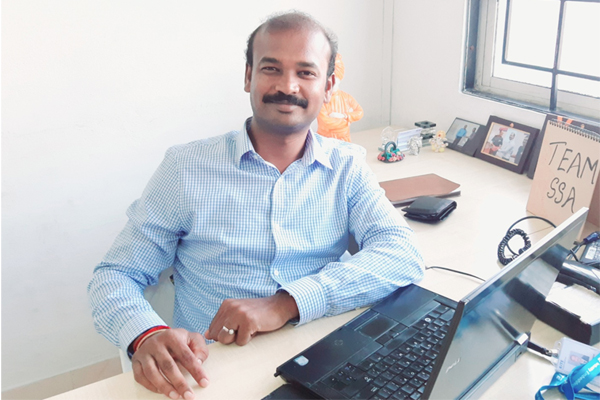
Aravind Kumar Rajendran

India has become the digital capabilities hub of the world, with around 75 percent of global digital talent present in the country.

We’re continually working towards creating new technologies. It’s an indisputable fact that currently our world runs and will keep running on computers and workstations. With the current technological upgradations taking place around the world, there are two major branches of technology that are growing at a fast pace – Information Technology and Computer Science.

Aravind Kumar Rajendran
Aravind Kumar Rajendran, CEO, KGiSL Institute of Technology

However, from an academic front, it’s difficult for aspirants to choose between these two booming fields. A layman tends to consider Computer Science and Information Technology as the same. In reality, there exists a substantial distinction between them. Each specialty focuses on specific aspects of the domain, and similarly, the career paths within these three areas also vary considerably.

To help you choose a career path that’s apt for you and your aspirations, here are the major differences between these fields along with the career paths that each has to offer:

Computer Science (CS)

Definition: Designing and developing processes for creating computer programs, applications, or theories and making them usable. Experts in this field are responsible for testing and writing logic-based codes.

The Computer Science domain consists of more tasks and functions related to software as compared to hardware. Computer Science students learn about various subjects related to software and software development. Professionals in this area deal with computing concepts, database systems, programming languages, and program creation. They usually tend to work alone, rather than with a team.

To develop solutions for computer-related queries, individuals usually need to understand a problem from a theoretical point of view and then work on solving the problem through programming. Computer Science comprises of three major categories:

  • Designing and building software
  • Developing efficient processes to resolve questions in computing
  • Creating more reliable ways to utilize computers.

The field pays particular focus on addressing the challenges in the areas of robotics, digital forensics, and computer vision. An important point to note is that Computer Science is mostly math-focused, and while moving from practical CS to theoretical CS, this dependence intensifies.

Careers in Computer Science (CS)

Computer Science (CS) is a quickly expanding field and is expected to see substantial increases in employment opportunities. Careers in the computer science field for candidates with a Bachelor’s degree include Software Engineer, Programmer Analyst, Software Developer, Cognitive Software Developer, etc.

Individuals with a Master’s degree can take up job roles such as Computer Scientist, Mobile Applications Developer, Software Developer Engineer (SDE), UNIX System Administrator and more.

After completing a Ph.D. in this field, candidates can pursue career opportunities like Associate/Assistant Professor in The Computer Science Department, Senior Software Engineer, Data Scientist, Software Manager, Principal Machine Learning/Artificial Intelligence Scientist, among others.

Information Technology (IT)

Definition: The applications of computer programs and networks that help solve business intricacies and processes. Most professionals in the IT industry interact with other individuals, whether in-person, via email, or over the phone. Their ultimate goal is assisting others in solving technological problems.

Information Technology (IT) is a moniker to information systems or systems administration. The IT field usually deals with programs that are created to assist in organizing and analyzing data. The area comprises of five major components: software, hardware, network, database, and people. IT professionals are usually proficient in using technologies pertaining to a particular field.

Essential skills required before proceeding into the field include coding, information technology security and safety, analytics, social media, online collaboration, basic picture editing, and managing information on online platforms.

Information Technology (IT) encompasses all the technologies a business uses and how they utilize them. This includes aspects of hardware, software, cloud computing, and computing. Those working in the IT domain find themselves working together with some or all of these components and often communicate directly with the people they’re aiding.

Careers in Information Technology (IT)

At each level, from local stores to multinational corporations, businesses are in dire need of Information Technology solutions and professionals. The IT sector in India expanded at a CAGR of 10.71% to US$ 167 billion in FY18 from US$ 74 billion in FY10. It is estimated that the size of the industry will grow to US$ 350 billion by 2025. In the coming years, job opportunities in the IT sector are expected to rise faster than the average growth of other industries. Depending on your level of education, a degree in IT can present a satisfying career arc.

If an individual holds a Bachelor’s degree, they become eligible for diverse job profiles such as a Software Developer, IT Technology Consultant, Computer Forensic Analyst, IT Business Analyst, Computer Network Architect. Those who have completed their Master’s degree, benefit with more varied job options such as IT Acquisition Specialist, Director Of IT, HIM Analyst/Systems Engineer, and IT Tech Support. If you’re armed with a Ph.D., then you can also choose to work as a Senior Systems Engineer, Senior Software Engineer, Meteorologist, Information Systems Engineer, Analytics Manager, and more.

To sum it up, with constantly growing digital capabilities in India, there will always be room for individuals having a knack for learning more about computers and their varied fields. When it comes to choosing between Computer Science and IT, you really can’t go wrong because both fields lead to a thriving career profile in advancing industries.

NEET PG Admit Card 2020 released, here’s how to download

NEET PG Admit Card 2020

NEET PG Admit Card for entrance examination 2020 has been released by National Board of Examination (NBC). Candidates can check for details on its official website nbe.edu.in.

Candidates who have registered successfully for the NEET PG examination can download the admit card on its official website nbe.edu.in.

According to an official statement, “Candidates are required to paste their latest photograph in the prescribed space in the Admit Card and report to the examination centre within prescribed time along with documents as mentioned in the Admit Card and Information Bulletin.”

Steps to download NEET PG 2020 Admit Card:

  • Visit the official website at nbe.edu.in
  • Click on the NEET PG 2020 tab
  • A new page will appear
  • Click on applicant login link
  • A login page will appear
  • Fill in your registration number and password and submit
  • Your admit card will be displayed on the screen

NEET PG 2020 computer-based examination is scheduled to be conducted on January 5, 2020. The result for which will be declared on January 31, 2020.

Future brings an employee-centric world

special

There is a popular notion that employees need up-skilling because of the coming of disruptive technologies like AI and ML in the market. But in reality, most employers are looking for soft skills as a priority, writes Debajyoti Mohanty of Elets News Network (ENN).

T he future of work demands that organizations invest in creating a culture where creativity thrives, collaboration is facilitated, communication is encouraged, and the employee is made to feel content with his work. The current trend requires this cultural shift to be driven top-down with the effective involvement of employees.

The HR can perform this role by leveraging its learning and development (L&D) capabilities. L&D is a crucial component of HR, but the dynamic nature of this component makes it prone to redundancy, if not upgraded well. In recent times, employees have emphasised more on L&D than their employers. With this development, it has become imperative to find new ways to fulfil this demand. And by doing so, HR has a good opportunity to improve their existing L&D infrastructure.

As per a report, 67% of the surveyed employees wanted re- training and 29% wanted up-skilling or re-training only if they were struggling with a skills gap. Though there has been remarkable increase in the demand for skills concerning AI and automation, soft skills still hold a vital position when it comes to requirements.

There is a popular notion that employees need up-skilling because of the coming of disruptive technologies like AI and ML in the market. But in reality, most employers are looking for soft skills as a priority. Soft skills like adaptability and the ability to work with teams have become necessary. Coming after soft skills on the chart, digital skills were ranked the second most important. Behavioural and creative skills are becoming important because it is impossible to steer through the fast-evolving job market without having critical thinking, a problem- solving attitude, and creativity. Therefore, both soft and digital skills have to be nurtured in order to maintain relevance.

According to a survey, 73% employees think that for a smooth job transition, the employer should provide assistance in building skills, and that it was a major factor deciding their stay at the company. From a 2020 employee’s viewpoint, it is problematic to direct all their education and career growth efforts towards only one organisation. Instead they are keener to gain knowledge and expertise that will help them steer across the industry seamlessly. Therefore, the demand for up-skilling and re-training is for both for better functioning in the present organisation and for adding more value to the employee’s resume.

Unfortunately, there is not much enthusiasm among employers regarding the employee demands for re-training and up-skilling, and also in identifying the skills gap.

The latest challenge for organisations is to make new strategies for their workforce management. It is not just about re-training; it is also about motivating the talent and formulating new approaches to recruiting. To make these strategic changes, the organisations need to consider re-training as a way to level up their organisation’s expertise, instead of looking at it as a way to fill the skills gap. L&D efforts must be directed towards adding value to the organisation, instead of targeting reduction of employee turnover overheads.

A meeting room filled with bored-to-tears employees, is not how re-training works anymore. Many organisations are considering leveraging technology as much as possible for re-training. From the old method of providing self-study modules to connecting with overseas employees for training and exposure, L&D has come a long way forward. It is no longer supposed to be a one-time thing; the frequency has to be matched with the increasing complexity of the organisation and the market. Frequent scheduling of re-training and up-skilling programmes is becoming popular these days.

2020 is expected to be a year for employers to deal with the demands of re-training and up-skilling. The situation also presents an opportunity for the employers to sharpen their competitive advantage. It is hoped that the year will bring on a state of affairs where learning and training will no longer have any time gaps in-between.

NEET UG Exam 2020: Application process extended to January 6, check details

NEET UG 2020

NEET UG Exam 2020 application submission has been extended by the National Testing Agency (NTA) to January 6. The registration facility will be open till 11.50 and candidates who have not applied for the exam can do fill and submit their applications now.

NEET Undergraduate exam 2020 will be held on May 3, 2020 in 11 languages including English and Hindi.

Apart from the extension in submission, no further changes in the exam schedule have been made by NTA. Candidates will be allowed to edit their application forms from January 15 to January 31.

During this period, students who will be appearing for the 12th examination in 2020 are eligible to apply. The lower age limit to appear for the examination is 17 years and upper age limit is 25 years.

A relaxation of 5 years has been extended to the candidates belonging to SC/ST/OBC-NCL category and PwD candidates appearing for NEET undergraduate exam 2020.

Admission to MBBS courses in AIIMS and JIPMER will also be held through NEET score, from this year. Until 2019, AIIMS and JIPMER had their own entrance exams for MBBS admission.

NEET 2020: Application deadline extended

NEET 2020 Registration

The application process for the National Eligibility Cum Entrance Test (NEET) 2020 has been extended by the National Testing Agency (NTA). The registration facility will now remain open till 11:50 pm on January 6. Candidates can visit NTA NEET’s official website https://ntaneet.nic.in for registration.

NEET 2020 will be conducted by NTA on May 3 in a pen and paper-based mode. The admit card will be available from March 27 while the results will come out on June 4. Furthermore, the examination will be held in 11 languages including Hindi and English.

NTA does not appear to have made any changes to the exam schedule, according to which, the candidates would be able to edit their application forms between January 15 and 31.

Students aged between 17 and 15 years (+5 years for SC/ST/OBC-NCL/PwD candidates), and having English, Physics, Chemistry and Biology/Biotechnology as main subjects in Class 12 are eligible to apply.

A valid NEET score is required for admission to MBBS courses countrywide, including AIIMS and JIPMER.

HR: 5 Vogues to look out for in 2020

HR

In an era of globalisation and digitalisation, employee interests and preferences are evolving quite rapidly and to accommodate these changes, HR needs to keep up with the latest advancements in the market, writes Debajyoti Mohanty of Elets News Network (ENN).

In today’s corporate world, working in a great environment and maintaining positivity in the workplace has become very important. Considering the enormity of the task at hand, trying out the latest vogues in the industry has its merits. Here are five HR vogues that are expected to remain stoic in the year 2020:

ARTIFICIAL INTELLIGENCE (AI) IN HR

The use of automation and AI in HR can change the way companies hire new employees and manage their daily affairs. AI can play a transformative role in improving an employer’s key areas of concern including recruitment, human capital management (HCM), employee engagement, employee benefits, and learning and development (L&D), among others.

Use of AI-based applications in recruitment can make candidate sourcing, screening and matching easier for organizations. Along with improving efficiency, AI is also helping HR professionals overcome human-bias in their decision making.

AI can make HCM better by helping HR build stronger teams, enhance employee experience, and reduce employee turnover. It can also help HR improve performance management and workforce planning. Automation and Artificial Intelligence can also ease the processing and dispensation of employee benefits by personalization, communication and compliance. Furthermore, AI can be a catalyst in transforming the way businesses interact with their employees. This can be achieved by conducting intelligent surveys, introducing real-time feedback platforms, automatically dispensing rewards and recognition, and by personalized messaging and communications.

AI is now powering learning platforms that can replicate the qualities of successful content providers like YouTube and Netflix. It may well be used to improve the learning outcomes of employees in training.

In the present talent scenario, where skills have a lower shelf life than ever before, AI could turn out to be a game-changer.

SUB-CONTRACTING HR FUNCTIONS

Entry-level HR jobs are set to disappear as more and more administrative transactional tasks will be outsourced to external HR agencies and shared service providers.

According to some studies, sub-contracting some or all non-core activities to specialist service providers has shown to have many benefits. This has led many organisations to pursue outsourcing with vigour.

The potential benefits of HR outsourcing include – reduced cost, increased efficiency, increased flexibility and speed of response, access to improved HR IT systems and improved human capital metrics, among others. It also frees HR to operate more strategically.

Despite its numerous benefits, outsourcing HR or some of its functioning to an external service provider is a big decision. Because while it can be cost-effective, outsourcing can introduce new elements of risk including – failure to deliver cost benefits, loss of flexibility, loss of control, impact on the employer/employee relationship, and legal or regulatory requirements, among others. In such a scenario, caution is required before proceeding with a deal.

GIG WORKFORCES

Relying on short-term contractors involves risk but in the majority of cases, gig work forces offer due advantages to firms that can accommodate a continuous influx and outflux of people. It has now become common in the tech industry for contractors to sign on for a project for a certain amount of time and then leave for the next gig. These contractors move from company to company as their specialised skills are often high in demand.

The gig economy needs a much faster recruiting process than what the conventional one is used to. The idea behind gig economy is that people can come and go, so the firms targeting this kind of recruitment have to move from sourcing to selection to on-boarding in a matter of weeks or even days.

Overall, the gig economy has made its grand entrance and is here to stay. And as the famous saying goes, “People dig it if you gig it”.

THE REMOTE WORKING MODEL

The remote working model (flexible ways of working) is a concept many HR professionals consider when they are looking for ways to improve employee engagement and productivity.

Effective use of the remote working model takes care of employees’ needs by providing them alternate scheduling options without adversely affecting the firm’s ability to meet business needs.

Factors to consider when running a policy of ‘flexible working’ include employee accountability, planning and logistics, and performance and technology solutions. In the majority of cases, substitute work schedules have to be monitored diligently by management to ensure continuity of the employer’s relevant policies. Business needs should define how many different flexible working options are provided to employees.

Having a fixed place and time to work is already considered an idea of the past. The remote working model is a great way to reduce costs, drive employee engagement and remain competitive in the market.

EMPLOYEE ENGAGEMENT

Employee engagement was in-vogue in 2019 and will continue to reign in 2020 as well. Also, it is well known that engaged employees will work harder, make a positive impact on other employees, and will be less eager to leave the organisation.

According to the grapevine, key things to keep in mind for a great employee experience are – diversity and inclusion, personal development, health and well being programs, recognition and awards. Employee engagement is important because the Generation Z cohort wants to be fulfilled by making a meaningful impact.

Finding the Right Talent: Collaboration of Corporate with Academia

Finding the Right Talent: Collaboration of Corporate with Academia

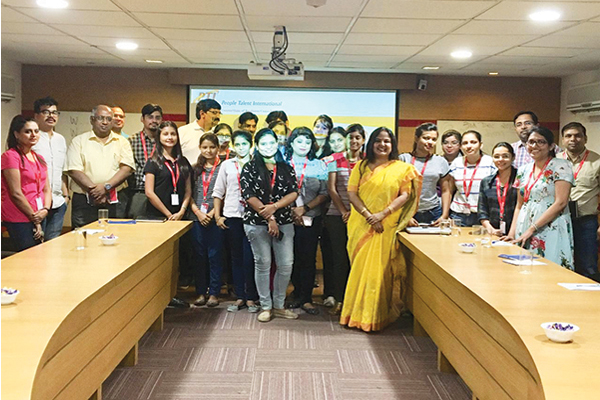
In an exclusive conversation with Reetika Bose of Elets News Network (ENN), Runa Maitra, Founder & Director, People Talent International shares her endeavour and compassion that went into finding the desired talent in the corporate world. With things changing and getting obsolete, Runa is striving hard to understand what the youth wants and how motivated can they be to work.

What worked for Runa Maitra was largely the faith of her management that her team would work towards meeting the crucial deadlines, not worrying about the issues. Having spent most of her career in the ‘New Age Industry’, the journey of Runa Maitra, has been full of excitement and challenges.

“When you take up an assignment where you have no past history or reference to reflect or ability to learn from someone’s experience then it is indeed a different world”, Runa said.

When asked about her initial challenges, Runa said that sourcing the right set of people was the key issue being aware they won’t bring the industry knowledge. It was imperative that potential management of the talent pool by understanding if they had the aptitude to learn and deliver to build business was the need of the hour. We could gauge from the talent we on-boarded that they had the right approach to handle their role and hunger for contribution to business growth.

About 2 decades ago, Runa joined the NBFC industry which had its mark in 30 different locations and also a small footprint in neighboring country with a tiny team in HR department.

Talking about the technological disruptions in the HR space, Runa said,” We saw the transition from DOS to Windows with advent of CCMail implantation to create a seamless communication platform for our employees. We hired largely from premier institutions in India and many talents from Ivy leagues colleges to build an efficient team which created the back-bone to respond to such quick changes in the work environment since during that period pagers and mobile were introduced. In fact, we introduced Smart-card which probably was ahead of time for which we struggled to hire the topmost talented people who could help us to launch such sophisticated products.”

The challenge for Runa was not limited till here. The biggest test was not just hiring the right resource but to train them to handle customer post sales.

With absolute no clue about the talent pool in the country, Runa took up one assignment in a BPO, which was perhaps one of the best call centre of the globe. With the experimental mind, courage and rigor, she ensured that the quality was not compromised and kept the entire team going.

Talking of the advantages, Runa further continued by saying, “Our ability to handle multiple projects at a time without looking at the clock brought the advantage. Most importantly, we kept moving city to city to explore and find the right talent was the driving force.”

These wonderful organisations gave Runa the right push to take up an assignment where she could be part of a M&A team to work in their global offices based on-site with people of different countries. Interestingly, the challenges discussed in regards to bringing onboard the employees as right fit were mostly common.

Runa believes in the process of weaving a talent builder’s mindset into the fabric of the business while managing similar challenges we face in our home country.

THE WIN WIN SITUATION

The corporate-academia partnership is the uppermost requirement prevalent in the past, present and future and it always helped seamlessly to bridge the gap if they collaborated right. The talent partnership model between them is in fact apparent during placement season.

In Runa’s words, this spike is slowly reducing since stakeholders of both segments are recognising the importance of hand holding instead of old game of demand-supply. Earlier, the model revolved around academicians collaborating with business through guest-lectures, workshops and conclaves some of which still continues with different flavor.

Having said that, she further continued, “The trajectory has now moved more towards learning the business fit by developing the faculty who are now open to understand real business through experience not just depending on reading secondary data for same reason.”

It is interesting to see that some institutions may not depute their faculties to catch up with industry knowledge in the offices. However, the interaction between them and industry partners has definitely improved through various innovative processes. The stress of internship besides summer and in some cases winter is stronger with much better quality avoiding printing certification to tick-box as factory. The focus on live project coupled with replacing final semester with industry experience has moved the needle big way.

EMPLOYABILITY – WHEN WILL THE STRUGGLE END?

Employability is a challenge and every now and then thousands of graduates being churned out by companies.

When we caught up with Runa to understand the dilemma of the industry and the high hopes of making things change, she said, “We always follow law of average, which blocks are ability to observe the changes happen around us. Employability had been challenge in the past and continues due to inability to cope with the changes while moving from industry 3.0 to 4.0. The repertoire of action taken by both academy and industry had never been enough – even now.

A CAREFULLY DEVELOPED CURRICULUM – TIME FOR A CHANGE

When asked about her thoughts behind enhancing the curriculum, Runa suggested that the design of course-curriculum management needs to undergo rapid change to respond to future need. “In order to meet the industry demand and empower the skills, the students should go through industry specific topics along with techniques and managerial skills”, she further added.

When interacting with students during seminars, workshop or mentoring program, the top question in Runa’s mind is whether there will be enough job opportunity for them as ‘Freshers’.

For Runa Maitra, this query inadvertently is an outcome of lack of faith in the chain of knowledge creators, knowledge bearers, and knowledge facilitators since students have the access to knowledge through Internet, which they constantly compare with their education system.

MAKING THE GRADUATES CORPORATE READY: THE RIGHT WAY AHEAD

To build the appropriate trajectory for students, the industry experts need to come forward with conviction protecting their self-interest to engage the adequate talent pool. The professional skill is an outcome of such hand holding of talent seekers who apparently are fighting their own battle of managing operation neglecting talent building.

Talking of making graduates corporate ready, Runa shared the right way to shape the professional skills. She said, “The ability of managers who are yet to cross the border of internal HR and operations must wake-up to own the resources waiting to be hired by them from campuses. They need to first partner with human resource team to work on the job descriptions to marry the same with the courses designed for students. In today’s world application of knowledge brings improved professional acumen instead of simple academic knowledge. Now, thrust is given to more exposure through practical experience with help of internship, mentor-mentee program, live projects, online courses, virtual learning etc.

THE CORPORATE-ACADEMIA PARTNERSHIP: THE BIGGER PICTURE

Coming to the bigger picture, it is indeed a matter of concern that whether the corporate academia partnership is helpful in matching the capabilities of what the companies are looking for.

what the companies are looking for. Runa opines that the corporate-academia partnership, to some extent is of help to match the capability of employees. However the distance covered had been minimal. It is indeed a long journey; the good news is that in most cases, the path had been beaten by some who had recognised the need, yet to be followed by rest who might be waiting to review success stories.

HAS THE FUTURE OF HR ARRIVED?

The industry is busy responding to the technology advancement, which it was already battling since computerisation. While it moved from analog to digital crossing a long distance diffusing inefficient infrastructures taking the industry through immense transformation.

“The change is inevitable to elevate deploying technology for better connect with the marketplace understand competition being agile”, said Runa, when asked about the future of HR is heading towards.

The velocity of change happening globally is impacting all sectors both in business and finding the right people to run it. The dearth of talent who are tech-savvy not as coders only, but largely as the users are most important who are the consumers, customers and employees of an organization.

The skills required for the business needs to be available at the right time hence embracing re-skilling of the existing employees, understanding of new skill to hire and train to sustain in business.

The bigger challenge, Runa shares, is the ability to respond to global demand since the challenge of finding the right skilled workforce is not issue of our home country alone. Our employee’s travel across borders to collaborate with their global team to deliver as the nature of jobs is changing. The challenges the industry across the globe are facing shortage of skill and not talent. There are enough people who are ready to join industry however they are either not ready for the job or for the aspirational organization which leads to offer dropouts in large quantity.

Runa further questions the ability to prepare the future workforce to diffuse the skills gap from the demand and supply perspective. She said,” In order to hone the right talent for right fit both industry and academia need collaborate to do continuous diagnostics, keep identifying the industry-relevant skills by interfacing with the universities by redesigning the curriculum ensuring more job-ready future employees.

The driving mantra, she concluded by saying that, in the field of Human Resource, that concerns for both industry and academia is to continue to upskill, reskill and adopt new-skill else perish!


CBSE Board Exam 2020: 75% attendance mandatory for appearing in 10th, 12th exams

CBSE Board Exam 2020

The Central Board of Secondary Education (CBSE) has mandated a new rule for students appearing for the 10th and 12th examinations to have a minimum 75 per cent attendance this year.

CBSE has also directed schools to calculate attendance of students who have to appear for class 10 and class 12 board exams this year as on January 1, 2020.

Students with less than 75 per cent will not be allowed to appear for the board examinations.

Admit cards will be released only for students who are eligible by all means including that of mandatory attendance, as per the new rule issued by CBSE. The list of candidates with short attendance will reach regional offices and the final decision will be taken on or before January 7.

As per the circular, candidates with a genuine reason behind the shortage of attendance will have to submit the supporting documents by January 7. No exceptions will be considered post the deadline and all the standard operating procedures for calculation of attendance will have to be followed.

The CBSE 2020 question paper will be 33% option based with questions on higher-order thinking skills in comparison to questions based on rote memorisation.

The theory exam will amount to 80 marks and internal assessment will be of 20 marks in total in subjects where there is no practical assessment.

The CBSE board exams 2020 will commence from February 15.

7 Reasons for Choosing a Career in Infrastructure Development Management

Dr Pratima Sheorey

A strong, modern, sustainable and well-functioning infrastructure is the pillar of any country’s socio-economic growth. Currently, India is witnessing a boom in the infrastructure sector, and it is poised for exponential growth for several decades to come. There is no doubt that it will also create several job opportunities.

A career in infrastructure development is highly recommended if you find it interesting and challenging. These days, there are even niche courses such as MBA in infrastructure development management that can enable you to acquire necessary knowledge and skills required for this sector. The following reasons should help you to make an informed decision regarding pursuing a career in infrastructure industry.

Rewarding Career Prospects

Both Indian and global infrastructure sector are on a fast-track growth. It is projected that India will secure the position of the third-largest construction industry on the global map by 2022 and its real estate sector will become USD 1 trillion by 2030. As far as the global estimates are concerned, infrastructure investment needs to reach $94 trillion by 2040 to meet the demands of rapid urban migration and population growth. This means that you can pursue a rewarding career in this sector not only in India but also seek offshore employment opportunities through cross-country projects. You can showcase international experience on your resume and strengthen your market value in the job landscape.

Competitive Compensation

There is a high demand for infrastructure development management professionals, but there is a shortage of supply of qualified and skilled talent. Infrastructure companies are reaching out to existing professionals by offering them handsome salaries and perks to get them on board. As you begin to gain experience and expertise or upgrade your skills, you can negotiate higher compensation packages.

Job Satisfaction

Most people face job dissatisfaction at some point in time in their career. However, the infrastructure sector is a career-driven by a meaningful purpose and sense of achievement. There is an emotional connect in what you do because you are making people’s lives better and contributing to the progress of nation.

Varied Scope of Career Choices

There is no dearth of career options in the infrastructure sector. You can pursue a career in hardcore project management, finance management, commercial marketing, project consultancy, business development, technology, law and regulation or policy making, Moreover, infrastructure sector is broadly subdivided into various categories such as transportation, renewable energy, power generation, water, telecommunications, waste management, smart cities and many more – you can choose the domain that suits your academic background, specialization or liking.

Job Security

In today’s VUCA (volatile, uncertain, complex and ambiguous) world, infrastructure is one of the rare sectors which are least likely to be affected by pink slips or economic downturn. There is a dire need for reliable infrastructure to accommodate the needs of the growing population and connect supply chains to overcome geographical barriers for businesses. Infrastructure is going to be an ongoing activity. Governments make necessary support interventions when there is the slightest possibility of recession. So, you can rest assured about job security.

Professional Growth

Infrastructure sector is a huge sector with projects of varying size, nature and complexity. As long as you do your job with responsibility and continuously stay updated with upcoming trends, there is hardly any chance of stagnation in career. There are always new and exciting challenges to work on. You can easily make vertical or lateral career advancement moves, as your job permits.

Entrepreneurship as a Career

While the governments, public sector and private sector undertakings are doing their best to address the infrastructure gap in the economy, there is lack of innovation and smart ideas. Hence, there is a good opportunity for entrepreneurs and startups to bridge this gap. If you have a business idea/model that can solve any problem in this sector, you can think about taking a plunge in entrepreneurship. These days, several entrepreneurs are making news for providing green infrastructure – a sustainable business approach that maintains the ecological balance of the nature and effective utilization of resources using modern technologies.

Infrastructure development management professionals are touted to become the indispensable workforce of the future. There is no time than now to begin your career in this sector.

The article is authored by By Dr. Pratima Sheorey, Director, Symbiosis Centre for Management and Human Resource Development (SCMHRD), Pune

LATEST NEWS