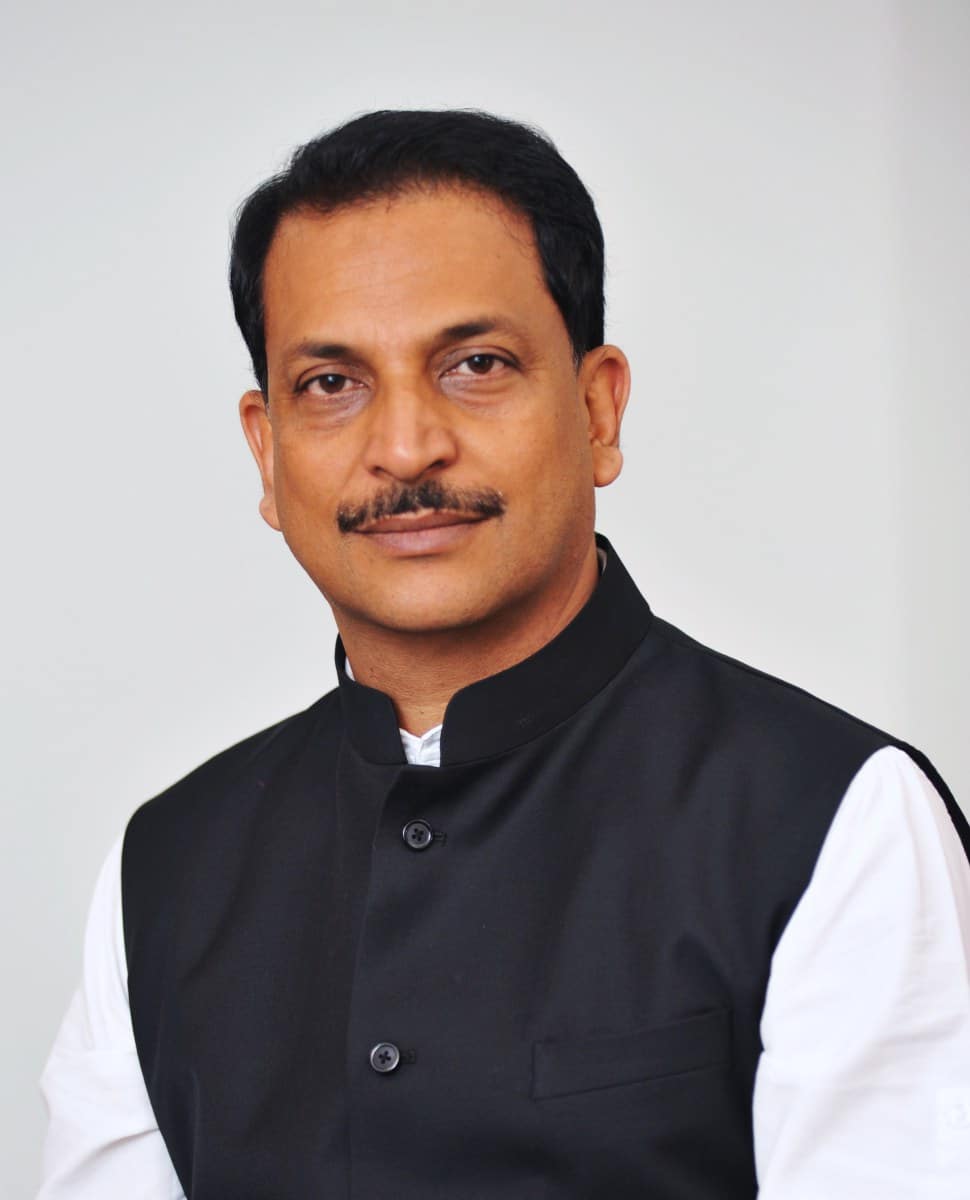
Rajiv Pratap Rudy, Union Minister for Skill Development and Entrepreneurship visited the National Vocational Training Institute for Women, Noida, to have a hands-on experience of the functioning and discuss measures for quantitative and qualitative improvements of the premier training institute of the country, involved in skilling women.
THe Minister discussed the administrative and academic issues of the institute and contemplated on leveraging the enormous infrastructural resources available in a more efficient manner. He expressed his concern over the underutilisation of resources and suggested that the institute should make efforts towards increasing students’ intake in Craftsmen Training Scheme (CTS) and Craftsmen Instructor Training Scheme (CITS) courses being run by the Directorate of Training through its Central and Regional Institutes across the country.
He further advised the institute to explore partnerships and synergies with other institutes involved in skilling and to exploit available skilling ecosystem to its best output. He also stressed on facilitating the entrepreneurship-enabled environment to students who are interested in self employment post training.
He also directed his officers in the Ministry to undertake a study to assess the requirements and issues existing with the Central Training Institutes and create a framework to upscale the skill development initiatives in these organisations.
Smriti Irani, Union HRD Minister, said that use of Information and Communication Technology (ICT) would strengthen school education system in India.
Speaking at ‘edNEXT – National Conference on ICT in School Education’ held in New Delhi on November 7, she said, “Education ministers of some of the states are working to reduce burden of exams on students.”
The minister also felicitated education ministers of all states for their efforts in fulfilling the PM Narendra Modi’s vision of having toilets in each government school under the Swachh Bharat campaign.
Focussing on the need to recognise ICT initiatives to be taken in the education sector, she asked every citizen to come forward and contribute towards technology innovation for the benefit of education.
The Minister said that the concerted efforts of people across the country could find solutions to varied problems, and stressed upon the need of digitalisation in school education.
E-Pathshala, a web portal, which hosts educational resources for students, teachers, educators, researchers, and parents, is available through especially-developed mobile app interface compatible for Android, iOS and Windows platforms for wider access and contains textbooks and other e-books as E-Pub 3.0 and Flipbooks in English, Hindi and Urdu.
Even as the world grapples upon the plight of empowering girl child, a ray of hope amongst all odds emerges through Sakeena Yacoobi, popularly known as Afghanistan’s mother of education. This courageous women has been accoladed with the fifth annual WISE prize for taking education to marginalised communities.
Yacoobi supported underground schools at a time when the Taliban banned education for girls. She founded the Afghan Institute of Learning (AIL) in 1995, in which schooling and healthcare was provided in Afghan refugee camps in Pakistan.
As per the World Innovation Summit for Education (WISE), the charity has expanded its work, helping 12 million people, many of them girls, in rural and marginalised parts of Afghanistan. AIL’s teacher training programmes focus on quality, in-depth education for Afghan teachers in Pakistan and Afghanistan.
Ranjana Kumari, Executive Director, Centre for Social Research said: “I admire such courageous women as they reaffirm my conviction that women like her are the real leaders for the future. We need education for everything, it is fundamental, else you will not be aware about the pros and cons and will be not exposed to the real empowerment.”
“India needs someone like Sakken Yacobi to help achieve the vision of educating every girl child during the era of virtual world, where the teacher imparts personalised learning,” added Kumari.
Yacoobi got a prize money of 5,00,000 USD by WISE, which recognises individuals or teams who successfully address global educational challenges that can bring real change to communities.
The award was presented by Shaikha Moza Bint Nasser, Chairperson of Qatar Foundation for Education, Science and Community Development (QF), at the Opening Plenary session of the seventh World Innovation Summit for Education (WISE) in Doha, Qatar.
Come Christmas, and the Santa will bring in goodies for aspiring graduate students this year, as per the Union Minister of Human Resource Development, Smriti Irani.
A technological tool called as e-UGshala initiative, which will help enable access to the digitised contents to the higher education institutions will be launcehd during the merrier time of the year, December 25th. “We have 29 undergraduate texts, visuals self-assessment sheets and books in social science, science and languages. I will dedicate e-UGshala to the nation on December 25,” informed Union Human Resource Development Minister Smriti Irani.
After digitisation of the undergraduate level content, the next step is a e-PGshala for post graduate education, she said.
The minister also talked about making the e-pathshala available on mobile phones to enable access to children in remote areas.
Talking about ‘Swayam’, India’s maiden indigenous massive online open courseware (MOOCs) for students, Irani said that after students attain certificates in the chosen virtual course, they will be eligible to enroll in physical universities and institutes.
With technology changing every sphere of life, the education and learning space is no longer away from it. The examinations, way to judge a person’s education and learning capability, are now being replaced by the automated and online internet-based examination system with earlier paper-based examination system. Aamir H Kaki of Elets News Network (ENN) shares an insight on the examination management system and how it is changing the education landscape
Education and learning of any kind is necessary to develop socially and intellectually. Education mainly involves three aspects, teaching, learning and testing, which are indispensable and linked to each other. Everyday people learn something new. Everyone has a social and learning personality different from others. The learning personality is the combination of natural talent, personal interest, social environment, character, motivation and how the brain processes content and information.
The schools, colleges, universities and other educational institutes are being set up to impart the education a vital part of life. Earlier, the education and learning was limited to the classrooms but now the technology is changing the way we teach and learn.
As Aakash Chaudhry, Director, Aakash Education Service Pvt Ltd (AESPL), puts in, “Technology plays a key role in increasing the reach of the content which is earlier limited to learning centers and classrooms only. Nowadays, with the help of technology you can take the conent to the students anywhere in the country.”
AAKASH CHAUDHRY Director, Aakash Education Service Pvt Ltd
However, the technology is still needed to make deep impact in the education sector in India. Students still believe that classrooms are the only place for 57 digital LEARNING / November 2015 digitallearning.eletsonline.com learning. “Online education is still at the nascent stage, we have to change this. Students think that for learning they have to go to classrooms, they don’t think to go online,” says Chaudhry.
He adds, “Future looks very promising. We have seen e-learning and online learning since our inception and now mobile apps are coming. So, technology will totally change the learning experience in future.”
India is a country of learners and people here seek learning. If someone is a good teacher, students come to him by themselves and there is no need of publicity. However, high quality of content is required to create a good demand of technology driven learning. Aditi Avasthi, Founder and CEO, Embibe.com says, “When you come to the learning space you have to look from learner’s perspective. Unlike e-commerce, which is trans – action driven, education is about consumption. Until and unless, we focus on quality in delivering distance learning, it might not be impactful, students will come and fathom for an hour and leave.”
To make the education technology impactful, there is a need of personalised approach to every student. “We, at Embibe, focus on using data science and right level of content to actually help every student in learning process in a personalised manner. Our goal is, whatever be the academic level or background of students, to ensure that they are able to consume content and get feedback, which is tailored to help them improve and make them become a better learner,” adds Avasthi.
Future looks very promising. We have seen e-learning and online learning since our inception and now mobile apps are coming. So, technology will totally change the learning experience in future.
EMS: Need of the Hour
ADITI AVASTHI Founder and CEO Embibe.com
In today’s world, education and learning capability is judged by means of examinations. Examinations are vital in judging one’s personality. Thus, the need of exams in universities, schools, colleges and even companies is required for recruitment purposes. The general paper-based tests/exams are now slowly being replaced by the automated and online internet-based examination system.
Recently, there was news all over the media about leakage of examination paper before the actual examination due to which entire examination was cancelled at one of the universities. This has led the other examination conducting bodies and universities to look for ways to ensure a secure and error free system to conduct exams. With increasing number of students appearing for various exams – be it competitive or regular curriculum based – in universities, educational institutes and coaching institutes, there is need of a scalable approach in terms of managing examination system in an efficient way. In this digital era, technology comes as a solution to change the way examinations are conducted with the traditional paper-based examinations.
However, as an examination conducting body you are: worried that the question papers can be leaked before exams. It is a tiresome job for you to prepare a 2-3 sets of questionnaires to avoid any leakage of question papers. You have concerns about verification of answers and result processing as these are huge and prone to errors. It is complicated for you to manage examination including classroom infrastructure, question paper, answer sheets, etc. and, you have to take a decision on the supervisors for every set of papers.
If you are facing the given challenges, this means you are following the traditional form of paper-based examination process. In new-age educa – tion delivery systems, conducting and managing the examination process in a secure environment is an onerous task. There is a need for absolute accuracy in conducting exams and the pressure of highly compressed deadlines. To deal with this, a robust and effective information technology solution Examination Management System (EMS) comes into existence. EMS provides a comprehensive, integrated and secure examination solution that supports conventional as well as online processes. It can effectively manage the full range of examinations and qualifications processes from Pre-Examination, Examination phase to the Post- Examination phase.
The EMS, developed to cater to the examination administrative and conduct needs of educational institutes and universities, allows an easily managed interface to be used by the institution to ensure smooth transfer of existing hardcopies and files on to the electronic database. The system allows integration of all activities involved in conducting an exam such as roll number allocation, exam paper uploads, syllabus management, registration, admin card generation, answer for mat design, automatic result generation and report card generation.
Designed to suit the needs of educational institutions, the EMS provides a simple and easy-to-use webbased centralised user interface and a well- defined database centric model for storing, managing, retrieving and aggregating examination objects. The system also of fers a powerful but easy to use question bank authoring system with different question types, which can be managed online and contain multime – dia contents. These question papers are deli vered in a highly secured manner with encryption technology. These systems are robust enough to handle large amount of data.
Why EMS?
By means of an automated EMS, most of the universities, polytechnics and other professional educational institutions with a growing number of students, can effectively manage the whole examination process and simultaneously save time and money spent on designing, scoring and printing of tests. The EMS enables the institutions to conduct examination online, semi- online and offline with utmost security and sophistication. The system offers a variety of benefits:
Accuracy: The EMS is a smart system that ensures high levels of accuracy in conducting exams. The provisions to transfer sensitive data holding examination question papers, results, fees structure, student/teacher personnel information and other important information managed through the system ensure compliance.
Remote Access: The system works on a unified network where in the students can log in to access the portal to check the course details, exam information, syllabus and results. The core feature of the system is to facilitate automated examinations to replace the standard paper based exams which ensure easy management, immediate corrections facilities, removal of illegible answer sheets.
High Level Security: The online exam system is secure and ensures that all information is retained as confidential. Also, the online examination conducted ensures there is avoidance in possibility of exam cheating practices and plagiarism. The software has been designed with multilevel security to ensure a practical choice over traditional methodology.
Archiving:One of the key benefits of using an online system is to replace the bulky filing cabinets and paper archives of school exam administration process. All information can be stored on electronic for mat to ensure long lasting backup and easy access to the data. This leads to effective cost saving opportunities for re – cord management.
Simplification and Accuracy in Result Processing:With usage of assessment engines overall examination process becomes smooth and result publishing becomes simple task and errors associated with result processing gets reduced.
The Way Forward
For schools, colleges and universities, managing the examination have never been easy. Now, with Examination Management System, school teachers and college/university professors can manage the whole exam process from question papers to final results, very easily.
In addition, the system can also be a powerful tool for e-learning and online education. It can be helpful in creating quiz, question bank, certification examination questions in any language, etc. Besides schools, colleges and universities, recruiting agencies and companies can use it for candidates skills evaluation by conducting online test. It can also be very useful for parents in the academic development of kids to improve their educational skills.
In a world that impinges upon the architecture of technological advancement, you see students now arrive at the canteen counter and swipe a smart card to get his meal, swipe a card and get access to library, a universal debit card for students that ensures no worries of carrying wallet, welcome to the world of cashless campus. Jessy Iype of Elets News Network (ENN) writes about the budding concept with industry experts while throwing light at some key findings
The wave of digitisation has taken the world into a zone where imbibing the fruits from it will only give more access to something that can be virtually superior. The education sector in India is still gaining momentum in terms of providing genuine accountability for quality education to the students.
When we talk about chalking quality, it has to serve the purpose through maximum output in the form of exemplary results in the examinations, optimum infrastructure and facilities like easy access to library, canteen, bank, shop among others.
It is a common sight abroad to have students cater to facilities provided at the campus at ease, like a biometric smart card that allows any student equal access to get food from the canteen, maintain record of books taken from the library, maintain record of the child’s activity through the track chips which are detected whenever student swipes it while entering a classroom or goes out of the campus. These facilities help parents/guardians get a picture of the child’s activity during learning hours.
In India, we are roping in this concept of a cashless campus to garner education and retain a standard for capturing the global market here.
The Nuclear Power Corporation of India Limited (NPCIL) has roped in ITZ Cash, the pre-paid cards venture of Subhash Chandra’s Essel Group, and created a small tag a sticker-like instrument. Around 2,000 IIT students now use it to store cash. It is a small microchip with minute near field communication (NFC) aerials that can talk to other NFC devices. Around 30 of the 40 retailers within IIT have installed machines that can accept payments through the tags.
The motive to have a cashless concept in the campus is to try payment technology and increase awareness, which are cost-effective and time-efficient
Initiating a Change
In an effort to turn Indian Institute of Management-Calcutta (IIM-C) into a cashless campus, the management is installing a facility at different points of sale dining halls, stores, canteens, library, cooperative stores and other kiosks — where students will use a card to make transactions.
“It will be convenient for students to carry the card. Even the vendors will benefit out of it as they will get the money immediately as per the service rendered. Their long outstanding dues from student will be a thing of the past,” remarked Indian Institute of Management-Calcutta (IIM-C) Dean (new initiatives and external relations) professor Ashok Banerjee.
The institute has entered into a tie-up with a private bank who will issue the cards and install the swiping machines inside the campus. The students will be required to refill their cards at identified top-up stations. Card holders will have to pay 200 Rs for each card, which will be valid for three years. It is a one-time charge payable to the bank.
ASHOK BANERJEE Dean, Indian Institute of Management-Calcutta (IIM-C)
Mudit Bhatnagar Head of Marketing and Corporate Communications, ITZ Cash, said, “The initiative ‘Cashless Campus’ is India’s first Contactless Semi Closed Prepaid Payment. The power to pay tags have been developed exclusively for the student body and faculty of IIT Bombay and can be used at majority of the outlets in our campus to make day-to-day purchases in book shops, stationery stores, groceries, restaurants and canteens. The whole purpose is to offer extremely convenient way of transacting on campus, saving the hassle of carrying cash around and struggling with loose change to make payments. The initiative will allow you to pay across most of the merchants on the campus just by a tap of your mobile phones. These tags can be put on anything, even on mobile phones.” The initiative is launched in partnership with ITZ Cash, Canara Bank and RuPay (domestic card scheme conceived and launched by the National Payments Corporation of India) and it is also possible to link y our bank account or mess bill account to make the payment. Online and coupon recharge options are also available. One needs to just recharge one’s tag and flash it across outlets on campus.
“This concept is more popular with the educational institutions and universities abroad. They have a generic system of biometric chips, which are installed in the smart cards that can provide access to easy money for students but the concept is just cracking the lid and has a long way to go,” says Aditya Babbar, CEO, India Payments.
It will be convenient for students to carry the card. Even the vendors will benefit out of it as they will get the money immediately as per the service rendered. Their long outstanding dues from student will be a thing of the past.
Why Cashless?
The concept is new and exciting, but it should also reap some benefits:
Comprehensive Audit:
Cashless Schools provides you with a comprehensive audit trail of all online, cash, and check transactions, allowing you, and auditors, to see where your money came from, and where it is now.
Anytime Payment:
Offer parents anytime online payments, from registration fees to field trips to cafeteria purchases.
Saves Time of Knowledge Givers:
Teachers spend less time handling cash or managing payment lists and more time teaching. Administrators and book keepers have immediate access to payment and deposit reports.
Organise Ease:
The system organises revenue quickly, having each settle automatically into the bank account of your choice and report using your own general ledgers with real- time reporting.
Easy Communication for Guardians:
Easily communicate updates and news to all your parents and staff using the Cashless Communication module.
Motivational Push Required
The motive to have a cashless concept in the campus is to trial payment technology and increase awareness, which are cost-effective and time-efficient.
Says Bhatnagar, “Students and employees will be spared of long queues and the chore of keeping loose change in person, whereas merchants can also save on cash handling and operational costs. The system is easy to use and payment and authentication is in real time.”
“The acceptability is not an issue with the students, it’s sorted with the parents as well. But the main challenge is in its execution at the administrative level, it has to have more network effect,” opines Babbar.
Embarking on Innovations
There is also an option of wristband seen as a great alternative to traditional smart cards.
“The Wristbands are a clone of any contactless bank card and can be used the same way any contactless payment card operates. These devices operate even if a user leaves his / her wallet home and are useful while making purchases during a leisure activity outdoors. These wrist bands come with the same safety features as any other contactless payment instrument vizpin based authorisation of any purchases made in quick succession and if any payments made above the limits as prescribed by the bank or the issuing entity. (eg purchases above 200Rs would need a PIN based authorisation),” Bhatnagar informs.
Future is Bright
“The payment process is in its nascent stage. Cashless is one aspect in overall scheme of things, whether we succeed or not is another matter. The universities have implemented it but it is still a new concept, particularly, a mainstream set up,” feels Babbar.
Whereas, Bhatanagar reveals, “The concept has taken off well with many campuses showing interest. Such an initiative requires collaborative efforts not just from the pa yment service provider or the bank but from the educational institution as well to ensure proper infrastructure is made a vailable. Only then will such programmes be successful both commercially and for customer con venience too.”