Home Blog Page 815

Quality education imperative for higher studies

Student-Life-Cycle

According to experts, the age-old syllabus and courses in the Higher Education sector must be revamped so to meet the standards of emerging trends. The Telangana State Council of Higher Education had organised a day-long event to discuss the challenges and solutions essential for an all-round development in higher education sector.

14 professors and academicians participated in the symposium to discuss in an open platform over Telangana’s development requirements in the field of Higher Education. M Kondandaram, Chairman of Telangana Joint Action Committee, stressed on the need to change the syllabus and examination patterns. He also laid emphasis on the need to have proper funding for universities and degree colleges, filling up of sanctioned posts in various institutions and internal reforms for transparent functioning.

Bharat Kumar, advocate in High Court has also urged to introduce legal studies at school level to improve the legal education system in the state. “In order to make students aware about their rights, legal studies must be introduced at school level. This will help in making them better citizens,” said Kumar.

Sudhir Reddy, President of Telangana Industrialists Association spoke on the need to more skill development programmes in the state. He emphasised on increasing the employability of engineering students in the state. He said, “The quality of technical education is deteriorating day by day. The micro, small and medium enterprises should work with institutes in order to make students employable in the industry. They should be given fellowships in order to pursue research and development in the field of technical education.”

JNVs to include in Australia’s Bridge Programme

Navodaya Vidyalaya Samiti

india-australia-flag

The Australia-India Education Council meeting held recently between Smriti Irani, Minister of Human Resource Development and Christopher Pyne MP, Minister for Education and Training, Government of Australia to make significant progress on mutual recognition of qualification. The bilateral talks held between the two ministers proved to be fruitful for Navodaya Vidyalayas.

Australia has agreed to include Jawahar Navodaya Vidyalayas (JNVs) in ‘The Australia India Building Regional Intercultural Dialogue and Growing Engagement’ (BRIDGE) programme run by Australian schools in collaboration with Indian Schools. During the delegation level talks, the Australian Minister announced that a few of the Navodaya Vidyalaya would be taken up on a pilot basis for the programme before expanding to other schools.

BRIDGE school partnership project, which is currently confined to private schools, will connect Australian and Indian schools and focus on building teacher capability across key learning areas, including science, technology, engineering and mathematics, information and communication technologies, intercultural understanding, values and inclusive education.

On the issues raised by Australian Minister about recognition of degrees, Irani informed that the Association of Indian Universities (AIU) under Ministry of Human Resource Development had recognised the qualifications earned by completing part of the course in Australia and part in India. Moreover, the degrees awarded by an Australian Institution in a third country have also been recognised provided that University is recognised under the Australian Education System.

On the issues of the Pathways programme, the HRD Minister offered to consider recognition for such programmes if the Australian University agreed to reflect it in the transcript of the main degree. Irani said that the Indian laws for recognition of degrees were based on duration of the programme and inclusion of the transcript of Pathways institution on the main degree awarded by the University will help solve the problems for a number of Indian students, who take up these programmes.

The two sides signed a Memorandum of Understanding (MoU) on cooperation in the fields of education, training and research. A Joint Communiqué was also issued at the end of the AIEC meeting. The Communiqué commended the significant progress made by the Working Groups across the key areas of skills, higher education and research, student mobility and welfare, quality assurance and qualifications recognition, and welcomes the extension of collaborative activity to include engagement in the schools sector. It highlights the development of the credit transfer database, hosted on the Australia India education links website (www.australiaindiaeducation.com ), as a practical way to encourage student mobility between Indian and Australian universities.

The Communiqué emphasizes that the Global Initiative for Academic Networks (GIAN), launched by the Government of India, would enable academic interaction to mutual benefit. It further says that GIAN would enable eminent Australian academicians to come to India, to academic institutions and Universities and enable an exchange of knowledge and teaching skills, which would help in developing a fruitful relationship between academic communities on both sides for augmenting research capabilities.

Both countries agreed for a total joint financial commitment of up to 1.0 million AUD for various activities under Educational Cooperation. Australian Minister also announced Adam Gilchrist as the Australia-India Education Ambassador, who will help project the quality of Australian education and strengthen the bilateral education, training and research relationships.

NASSCOM, TalentSprint launches Talent Acquisition Professional Forum

talentSprint

IT-ITeS Sector Skills Council (SSC NASSCOM) in partnership with TalentSprint has launched a nationwide programme for Talent Acquisition professionals in the IT-BPM industry called the Talent Acquisition Professionals Forum or TAP Forum.

There are over 30,000 Talent Acquisition Professionals in the IT-BPM industry who play a critical role in the success of organisations. A recent study revealed that recruiting is the most important human resources function when it comes to ROI and companies that excel in recruiting experience have 3.5 times more revenue growth than their less capable peers. The TAP forum is a real plus virtual community platform for Talent Acquisition Professionals to imbibe industry best practices, celebrate successes, and network with each other.

Dr BVR Mohan Reddy, Chairman, NASSCOM, welcomed the initiative and stressed the critical role of Talent Acquisition Professionals in the success of organisations. He also talked at length about the importance of IT/BPM professionals to become certified. He urged the industry to adopt the SSC recommendations for 10 per cent of their total recruitment this year.

Dr. Sandhya Chintala, Executive Director, SSC NASSCOM & Vice President, NASSCOM said, “With 10 million new college graduates entering the workforce every year, India has the potential to become the workforce of the world by 2020. However, the key to ensuring availability of high level skill is by standardizing and certifying them. The SSC NASSCOM Qualification Packs are a solution that talent acquisition professionals can use to raise the quality of the talent pool in their organization.”

Dr. Santanu Paul, MD & CEO, TalentSprint said, “We intend to create events and a virtual platform where Talent Acquisition Professionals can learn, celebrate and network with each other. The intent is to inspire the TAP fraternity to become more strategically aligned and contribute significantly to organizational productivity. We invite the community to join this movement to up-skill themselves in order to grow and stay relevant in their careers.”

The next leg of the event will be held in Bangalore, followed by Chennai, Pune and New Delhi.

Accelerating Digital Innovations

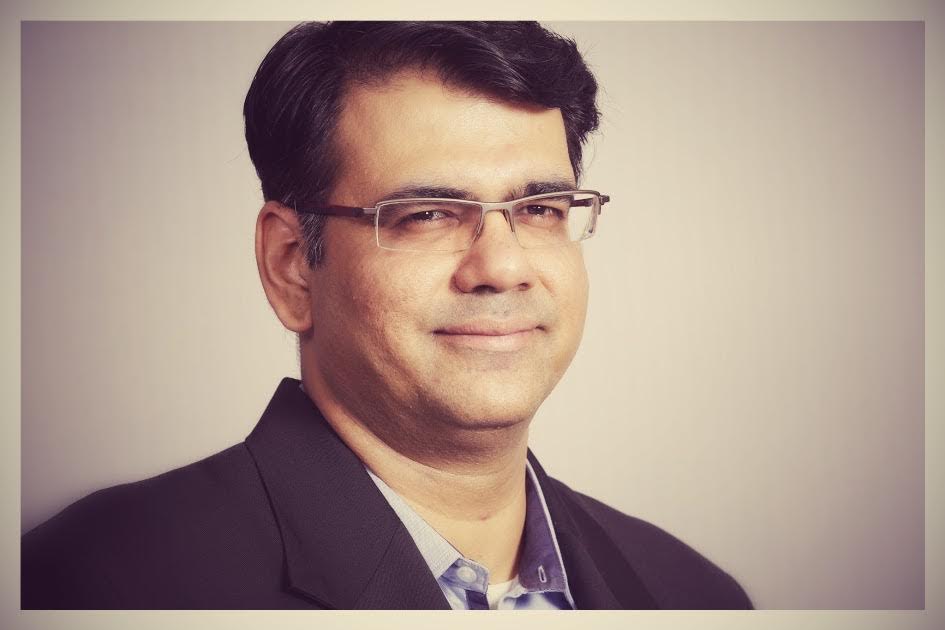
Arun Jagannathan, Founder, CrackVerbal

CrackVerbal provide support to the students while preparing for GMAT and GRE tests. Arun Jagannathan, Founder, CrackVerbal talks about establishing CrackVerbal as a destination for students aiming for top MBA programmes. 

What are the various reasons behind starting CrackVerbal?

In 2006, I started CrackVerbal to train Indian students by means of Indian techniques that made sense to them. I ended up designing the CrackVerbal curriculum from the ground and include every feature I saw as missing in traditional courses. This was where it all began.

CrackVerbal’s initial delivery mechanism was through a two-day workshop that was taken by me and a few other instructors who were hand-picked and trained by me. The news about this small company in Bangalore spread very fast over the Internet, and soon students started to arrive from other cities such as Chennai and Hyderabad.

Shreekala Kurup, who as a PMP-certified project manager had spent close to 8 years at Hewlett-Packard, joined CrackVerbal in 2010.  The first CrackVerbal office was set up at this time, at St. Marks Road in Bangalore, with an initial investment of a few lakhs of rupees. As CrackVerbal’s Co-founder and COO, Shreekala brought her expertise to operations and sales. As a growth-hacker, she worked in systemising the processes at CrackVerbal – from vendor management, to center administration. I continued to manage academics, new product development, and marketing at CrackVerbal.

What are the various difficulties encountered in doing business on ground level?

The biggest roadblocks faced in the initial stage were the ignorance of the nuances of the business sector. Though the corporate experience of many years was useful in setting up systems and processes, yet experimentation in sales and digital marketing was imperative in running the business.

The experimentation of starting remotely managed digital classrooms in Mumbai and Delhi did not take off at first.  So, we replaced the digital classrooms with virtual classroom offerings.

What is the market size of the services offered by you in India at present?

The reported number of students taking GMAT and GRE in India is around 30,000 and 85,000 respectively. However, each year, the number of students appearing for these exams is increasing. Most of these candidates also require help to apply to MBA and MS programmes the world over. We offer test prep and admissions services and so are a one-stop solution to students aspiring for a global degree. We estimate the market to be over Rs.100 Crore.

What are the major benefits for organisations and individuals adopting your solutions?

Besides classroom lessons from our trainers, we provide support to the students while preparing for the test. We have a dedicated student helpdesk number that is manned by our GMAT/ GRE faculty. From the perspective of our curriculum, we believe that students would benefit from our customised Indian test-taking techniques. The GMAT and GRE were designed for the American mind. However, the way Indians learn and apply their knowledge is quite different from them. At CrackVerbal, we teach strategies that work best for the Indian test-takers. CrackVerbal is one of the few Indian companies that believes in creating I.P and has invested heavily in creating copyright content and new products.

What is the vision of your company for next two years?

Our short-term goal is to establish our brand beyond Bangalore and Chennai by setting up classrooms in other metros such as Hyderabad, Pune, Mumbai and Delhi. We are not looking at just franchisee owners who will merely put in money but partners with an entrepreneurial mindset who are willing to take this in their regions. Alongside, we plan to invest in marketing our GMAT and GRE Online products to reach a wider audience. We are constantly evolving our product strategy to cater to students who were born in a digital era.

What are the various methods you are using to increase the visibility of your organisation?

The initial response to CrackVerbal was through word-of-mouth. Our early success probably helped us – we had a student who got into Wharton and another one who got into Harvard Business School. These initial successes not only validated the strength of the course offering but also helped establish us as a destination for students aiming for top MBA programmes.

The current marketing strategy at CrackVerbal revolves heavily around online media. We also have a very strong student referral and a robust following on other popular online test prep forums. Another strategy we’ve employed is to give away a lot of free material through videos, articles, online and offline events. We believe strongly in the goodwill. We also have a host of brand-ambassadors in the form of 1000s of CrackVerbal students who are studying at or have graduated from the top business schools.

How you can differentiate you services from your competitors?

The problem for a long time has been that most test prep companies, in an effort to scale up, have not paid attention to the faculty who teach. Our focus has been to get the best possible faculty. The trainers are either part-time faculty who are MBAs from top schools such as ISB or full-time faculty who have years of training experience. In both cases, Arun trains the faculty personally for a month before they start teaching. As a policy, all students attend a free class to experience the difference before they sign up for a course.

What are the ways of engaging the customers? Please share a special case study?

At CrackVerbal, we have a philosophy “Once a CrackVerbal student, always a CrackVerbal student.” We believe that it is our responsibility to handhold the student till the time he takes the GMAT/ GRE and applies to an MBA / MS programmes. We don’t believe in making our engagement transactional and so one of the core principles at CrackVerbal is to go beyond what is expected so our students are delighted by the experience.

I think the best stories are when students continue to stay in touch with us even after their MBA and MS. Many of them return to give talks and seminars to current students so they can share their experiences. We maintain a blog where we cover many such student stories so people can be inspired to achieve more.

Apart from having the right mindset, a large part of our success has been investing in the right processes and CRM systems right at the start so we can manage the entire student lifecycle.

What are the various initiatives taken by your organisation to emerge as a market leader?

CrackVerbal has emerged as the number one test prep company in Bangalore, ahead of larger and more established players. We have documented all our operational processes so we can easily replicate this model in other cities as well.  Apart from this, we have invested in creating new online products such as our GRE WordToonz App, and a taking platform.

Opening gateways of learning

Aneesh Bangia, Co-Founder, Open Door

Catering to the students from grade 4 to grade 10 of CBSE and ICSE boards, Open Door has designed a programme which helps student learn by understanding. Aneesh Bangia, Co-Founder, Open Door believes that the specially designed curriculum will aid in achieving the mastery of the concepts that students learn

What are the various reasons behind starting Open Door?

There are several problems with the school education that needs to be improved – firstly, most of the learning in schools is either superficial or rote-based. There is no concept of mastery. Teachers have to finish the syllabus and due to that they are unable to ensure that there is complete understanding of what she/he teaches. If we haven’t mastered a concept, we’d struggle to understand the other concepts based on it. Secondly, students do not question or dig deeper into the concepts taught to them. It is important that schools help students become self-learners and critical thinkers.

Open Door was started with the objective that students in schools learn by understanding. We have designed a programme called ‘Mastery Curriculum’ which achieves this objective. Teachers use our online portal actively to implement the mastery curriculum. The online portal helps teachers generate top quality question papers and assess them in almost no time.

We also think that the teachers should focus on asking questions in the classroom than explaining things in an interesting manner. Students learn better when they think themselves, than when they are spoon-fed. We have developed a teacher training course called ‘Teaching by questioning’ for this objective.

What are the various difficulties encountered in doing business on ground level?

The only difficulty is to be able to meet the school authorities. But, once we meet them it is not so difficult to convince them. They find it useful, easy to implement in their schools and cost-effective.

What is the market size of the services offered by you in India currently?

Our products and services cater to students from grade 4 to grade 10 studying in CBSE and ICSE schools.

What are the major benefits for organisations and individuals adopting your solutions?

Schools will find that their students will achieve mastery of the concepts that they learn. They will become more confident learners when they go to higher classes. Our solutions also empower teachers, saves their time and effort. The entire classroom learning experience will change for both students and teachers.

What is the Vision of your company for next two years?

We should be able to partner with every school in India that is interested in enhancing learning in their classrooms. We would also be adding many more new features to our online portal.

What are the various methods you are using to increase the visibility of your organisation?

Improving SEO, visiting exhibitions and having magazines publish articles about us.

How you can differentiate you services from your competitors?

Our curriculum is twice more effective and priced at less than one-third of the pricing of our competitors.

What are the ways of engaging the customers with you. Please share any special Case study?

We are trying everything – mailing school authorities, cold calling, setting up stalls at exhibitions, setting up a sales force, etc. to engage customers.

What are the major stakeholders and sectors you are focusing on?

CBSE and ICSE schools’ students of grade 4 to grade 10 are the focus. We are focused on reaching out and convincing the school authorities to implement our programme at their school.

What are the various initiatives taken by your organisation to emerge as a market leader?

The focus is to keep delivering good results and keep our customers satisfied by our product and services.

Matriculation mandatory to contest panchayat polls

panchayat

To contest the Panchayat Polls, the BJP Government had made it mandatory for the male candidates to have minimum education of class x for filing nomination papers and women and schedule candidates to have minimum qualification till class VIII.

On the mandate issued by the BJP Government, former Haryana Chief Minister Bhupinder Singh Hooda has claimed that 71 per cent of Haryanvis would not be able to contest panchayat polls if the state government’s decision to fix minimum qualification for filing nomination papers was implemented.

According to Hooda, the number will exceed in the schedule castes category. He believes as many as 62 per cent men and 83 per cent women from SCs will not be able to contest the election. He emphasised that people should be informed about the laws 5 years in advance.

The BJP Government had decided to amend the Haryana Panchayati Raj Act, 1994, making it mandatory for candidates for panchayat elections to have basic educational qualification of class X.

Now, students can take loan online

online loan

For students who are seeking education loan can now take go to vidyalakshmi.co.in, a website launched by the government recently for the benefit of the students. Five banks IDBI, Bank of India, SBI have integrated their system with the portal.

The portal has been developed and maintained by NSDL e-governance infrastructure limited (NSDL e-Gov) under the guidance of department of financial services, department of higher education, Ministry Of Human Resource Development and India Banks Association. Under the educational loan scheme of Pradhan Mantri Vidya Lakshmi Karyakram (PMVLK), no student will miss out higher education due to lack of funds. The launch of the portal is the first step to achieving the objective. “Vidya Lakshmi portal is the first of its kind portal providing single window for students to access information and make applications for educational loans provided by banks as also government scholarships,” the release issued by the finance ministry said.

The portal will have information on the loan schemes provided by different banks, common educational loan application form for students, facility to apply to multiple banks for educational loans, facility to check the loan processing status, and linkage to National Scholarship Portal for information and application for government scholarships.

Finance ministry has informed that 13 banks have registered 22 educational loan schemes on the portal and five banks have integrated their system with the portal for providing loan processing status to the students.

India-Australia signs MoU to strengthen education

india-australia-flagIndia and Australia has signed a Memorandum of Understanding (MoU) on cooperation in the fields of education, training and research. The MoU was signed by Smriti Irani, Union Minister of Human Resource Development and Christopher Pyne MP, Minister of Education and Training, Government of Australia after the third meeting of the Australia-India Education Council (AIEC) held in New Delhi.

The MoU will strengthen the partnership between Australia and India in higher education and research, including technical and professional educations, schools, vocational education and training and will open up new and innovative areas of cooperation.

A joint Communiqué was also issued at the end of the AIEC meeting. The Communiqué commended the significant progress made by the Working Groups across the key areas of skills, higher education and research, student mobility and welfare, quality assurance and qualifications recognition, and welcomes the extension of collaborative activity to include engagement in the schools sector. It highlights the development of the credit transfer database, hosted on the Australia India education links website (www.australiaindiaeducation.com ), as a practical way to encourage student mobility between Indian and Australian universities.

The Communiqué emphasises that the Global Initiative for Academic Networks (GIAN), launched by the Government of India, would enable academic interaction to mutual benefit. It further says that GIAN would enable eminent Australian academicians to come to India, to academic institutions and universities and enable an exchange of knowledge and teaching skills, which would help in developing a fruitful relationship between academic communities on both sides for augmenting research capabilities.

Both countries agreed for a total joint financial commitment of up to $1.0 million AUD for various activities under Educational Cooperation. Australian Minister also announced Adam Gilchrist as the Australia-India Education Ambassador, who will help project the quality of Australian education and strengthen the bilateral education, training and research relationships.

The AIEC is a bi-national body established in 2011 as a commitment by the Education Ministers of India and Australia to guide the strategic direction of the education, training and research partnership between the two countries. The AIEC consists of academia, industry and government and meets in conjunction with the annual Australia-India Ministerial Dialogue on Education Cooperation.

Advocating ICT-enabled learning

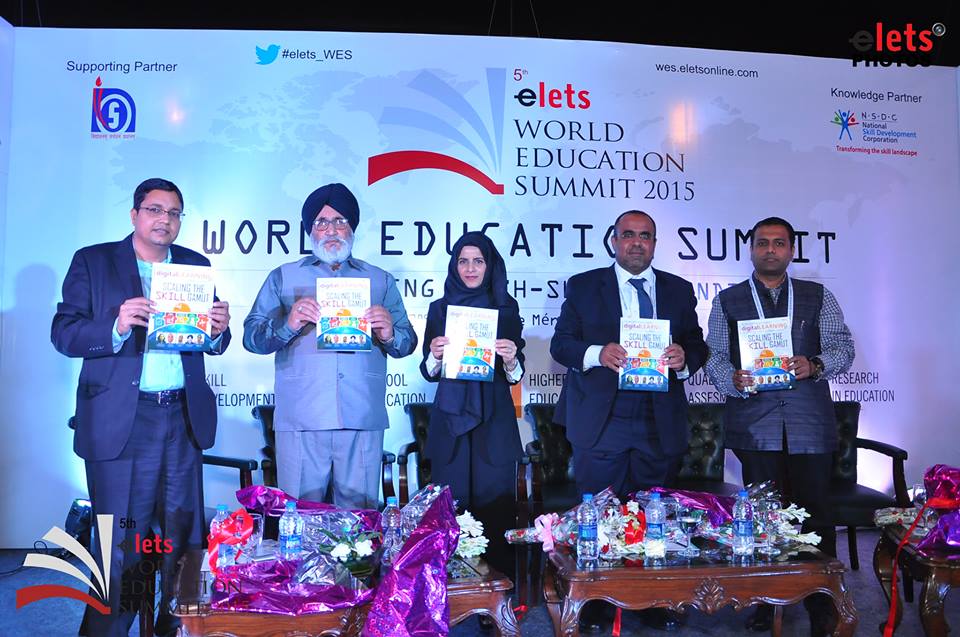
Dignitaries at World Education Summit
 Contributed By: Akanki Sharma


In a bid to showcase the importance of ICT in education, Elets Technomedia Pvt Ltd organised the ‘World Education Summit’ at Hotel Le Meridien, New Delhi, on Aug 22-23. The two-day conference saw participation from a number of dignitaries from universities, schools, education ministries of various states, and corporates. Highlighting the need of IT in education, an exhibition was also set up, wherein corporates dealing in innovative education solutions showcased their products.

Dr. Daljeet Singh Cheema, Education Minister, Punjab, inaugurated the programme. During his address, he emphasised on improving the quality of primary education to make the foundation years of the students strong. He also congratulated Elets Technomedia for organising the World Education Summit that will bring a change in the mindset of the educationists while interacting with the stakeholders under one platform.

The conference was divided into two segments, school education and higher education tracks. In the school education segment, there were principals and teachers from schools all over the country who indulged into debates at few moments while the key speakers on the dais were discussing topics like ‘new trends and technology in schools’, ‘new education policy and educational reforms,’ ‘role of open schooling in skilling India’. One of the speakers, Lt (Col) Retd, A Shekhar, Principal, Atul Vidyalaya, said- “Pre-school parents are like golden goose.” Arcot G Malathi, Founder and Director, Academics, Smartkidz Educare expressed that children should be given quality time for extra-curricular activities in schools.

In the higher education segment, participants like Allan Rock, President, University of Ottawa and Prof Mostafa Azad Kamal, Bangladesh Open University, threw light on the challenges and opportunities in the open distance learning programme and the initiatives taken to deal with it. People from the corporate world came up with their presentations to talk about the better classrooms, e-learning, etc. Varun Suri, Senior Manager, Automotive Aftermarket, Robert Bosch Engineering and Business Solutions Private Limited discussed how with the help of small technical tools, education can be more interesting.

On the second day of the Summit, Manish Sisodia, Deputy Chief Minister of Delhi, also marked his presence at the conclave. He appreciated the effort put in by Elets Technomedia and asked the organisers to come to the Delhi Government with more innovative ideas and suggestions so that it can also help improve the education sector for a better future of students.

Addressing the gathering, Sisodia said, “There should be freedom to education, but no freedom to loot.” He also talked about the comprehensive plan for the education sector of Delhi, further emphasising on the need to develop skill education. He added, “There is a need to streamline our education for which we should be more innovative and revolutionary. We have to open the road ahead.”

To felicitate the schools and higher education institutes for their IT initiatives taken to make learning and teaching easier, Elets Technomedia also organised the award ceremony on the concluding day of the summit. Sponsors and partners who supported this event led to its huge success. Elets Technomedia had also launched the brochure of Dubai World Education Summit along with Kalthoom Al Balooshi, Executive Director, Education Development Knowledge and Human Development Authority, Dubai and Dr. Abdullah Al-Shibli, The Director General of the College of Applied Sciences, Ministry of Higher Education, The Sultanate of Oman.

Centum Learning join hands with ACC

Join-Hands

Centum Foundation, the CSR arm of Centum Learning, an organisation in the global skills development and vocational training has partnered with ACC limited to provide training to the candidates who are living below the poverty line.

Through this partnership, Centum Learning is not only providing training to candidates in the areas of Retail, Hospitality and Plumbing but also assisting them in getting jobs to earn a better livelihood. This is an initiative taken to comply the CSR mandate for ACC Limited.

As of now, three batches with close to 100 candidates have already completed the training. Out of which more than 50 per cent students have already been placed with decent salaries in companies like Nava-kissan Biotech Plantec Ltd, T.V.S. Showroom, M-phasis, Vedanta Communication, Zee Maha sale, Dutta Enterprises, Vishal Mega-mart.

“I am overwhelmed with the response to our joint initiative with ACC Limited to skill the poor community, to eliminate poverty and vulnerability in a sustainable manner and improve their quality of life. With such partnerships we are sure to achieve our vision to bring a sustainable transformation in the employment landscape of the country,” said Sanjeev Duggal, CEO and Director, Centum Learning.

Sunil Gupta, Cluster Head, ACC Cement said, “We are committed to contribute towards social and economic development of the backward and underprivileged community residing nearby Plant and mines through effective implementation of various community development Interventions under its CSR wing DISHA Our objective is to develop Integrated Sustainable Livelihood approach for community members and make them self reliant through ensuring employability for youth and establishing backward and forward linkages for women enterprises for sustainability.”

LATEST NEWS