
Home Blog Page 816

Cheema to improve schools across Punjab

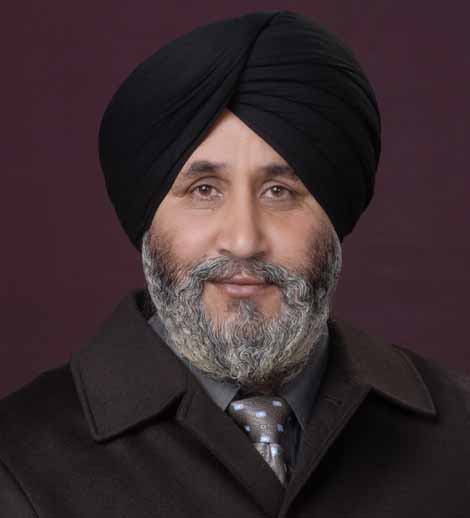
Dr. Daljit Singh Cheema, Education Minister, Punjab

Daljit Singh Cheema, Education Minister Punjab appointed chairman of committee to improve condition of government schools all over nation

The Union Ministry of Human Resource Development has appointed Dr. D.S. Cheema to head a sub- committee constituted to study the problems of government schools all over the country and work out the comprehensive plan to improve education standards in the schools. Dr. Cheema has been given this sterling role keeping in view his immense contribution in improving the condition of government schools during last one year. The committee has been asked to submit report within one year.

In a meeting of Central Advisory Board of Education (CABE) at Vigyan Bhawan, New Delhi Human Resource Development Minister, Smriti Irani commending the missionary role played by Dr. Cheema in improving education sector hoped that as a chairman of the committee he would be able to play a meaningful role in improving the condition of government schools especially those located in remote rural and tribal areas. She said that Prime Minister, Narendra Modi is very passionate about improving the conditions of government schools and she hoped that the committee headed by Dr. Cheema would live up to the expectation of Prime Minister.

Dr. Cheema at the meeting raised the issue of reintroducing exams for class V and VIII that was supported by Haryana and other states. He said that UPA government committed a blunder by abolishing these exams that has weakened the very foundation of our primary education system and NDA government should take corrective steps in this regards. He said that Chief Minister Parkash Singh Badal has already pleaded Prime Minister in this regard.

Raising concerns about declining interest of students in medical stream, Dr. Cheema said that HRD Ministry and Health Minister should join hands to reduce the cost of Medical Education besides reducing the length of Medical Stream.  JP Nadda Union Health Minister supported the contention of Dr. Cheema.

Union HRD Minister supported the plea of Dr. Cheema for making NCC compulsory for Physical Education course and said that Union Government would soon take decision in this regard.


Foreign education, legal services to start soon

Education and legal services for foreign players

To boost the country’s service sector, the Government is looking forward to open its education and legal services for foreigners. Commerce Secretary Rita Teaotia said that work is under progress for opening education and legal services for foreign players.

On explaining the country’s approach to open education sector, she said, in the beginning, opening online courses could be an option.  “IGNOU is doing something. Some professional bodies are also offering online courses. So, when we have such strong technical institutions with high reputation, can they do more of opening online courses and make those accessible to other countries. So, this could be one step,” she said.

The Department of Commerce will first permit the multi-professional firms to come in, and to allow them to increase size of the firms. The committee of Secretaries (CoS) is discussing the matter of opening up of these two sectors.

The government is in consultation with the Bar Council of India and Society for Indian Law Firms (SILF) to open up legal services sector to foreigners in a calibrated manner. The UK and the US have been pushing India to open up the sector to foreign firms.

India inks pact with Australia

narendra modi

Prime Minister Narendra Modi has approved Memorandum of Understanding (MoU) between India and Australia on cooperation in the fields of education, training and research. The costs of the cooperative activities under this MoU will be funded on mutually agreed terms and will be subject to availability of funds.

The MoU will help intensify existing partnerships between India and Australia in higher education and research, including technical and professional education, schools, vocational education and training and will open up new inovative areas of cooperation.

The main objective of this MoU are:

  • Consideration of expansion of the Australia India Education Council membership from time to time to ensure appropriate representation from academia, policy makers and industry as required and agreed.
  • Strengthening the policy dialogue and exchange in areas of mutual benefit, including qualification and quality frameworks and standards for education, research and training.
  • Supporting mobility of students and faculty members through formal exchange programmes, internships and other modalities.
  • Improving credit transfer arrangements and work towards qualifications recognition between Australia and India.
  • Supporting and organising professional development programme for subject experts, educational administrators, faculty members and teachers.
  • Encouraging twinning arrangements between institutions of higher learning and organisation of joint research programmes and publications
  • Encouraging research collaboration between institutions of higher learning to enlarge the scope for joint research, joint Ph. D. programmes and joint degrees
  • Sharing best practice education materials including research materials, publications, and educational literature
  • Supporting skills development through joint conferences, seminars, policy dialogue and technical cooperation in national standards development
  • Strengthening communication for exchange of information on new policy initiatives and opportunities for development of education, training and research activities of both countries
  • Further develop bilateral programmes between institutions of educational excellence in technical, vocational, schools and higher education, subject to availability of funds and
  • Any other activity as mutually determined by both parties.

World Bank signs US$250 mn agreement with Bihar

World Bank

World Bank has signed a US$250 million credit agreement with Government of India to improve the quality of teachers in Bihar by making them more qualified, accountable and responsive. The programme will be implemented for a period of five years and will support development of high quality education institutions, ensure certification for unqualified elementary school teachers and continuous professional development of teachers in service, help effective teachers management and performance, and improve teacher accountability at the school level.

Raj Kumar, Joint Secretary, Department of Economic Affairs, Ministry of Finance, Government of India, said, “Under the Sarva Shiksha Abhiyan (SSA) programme, Bihar has seen an increase in access rates, a significant increase in comprehensive classroom infrastructure, and reduced pupil-teacher-ratio. This programme will complement the on-going initiatives by helping the state government to improve quality of teaching in elementary schools, through enhanced infrastructure provisions in teacher training institutions, certification for unqualified elementary school teachers and continuous professional development of in service teachers.”

He added, “The programme has been designed as a performance based financing programme, under which funds will be released only on achievement of agreed results. The learnings from this programme will also deepen our understanding as to whether this is indeed a better model to achieve the agreed outcome and service delivery.”

The agreement for enhancing teacher effectiveness in Bihar operation was signed by Raj Kumar on behalf of the Government of India, R.K. Mahajan, Principal Secretary, Department of Education, Bihar on behalf of the Government of Bihar and Rajni Khanna, Programme Leader and acting Country Director in India on behalf of World Bank.

“In order to improve the learning outcomes of children in Bihar, it is critical that robust systems for developing high quality teachers are in place. This program will equip teachers with the skill and knowledge they need to be more effective in the classroom by focusing on teacher training, performance, and accountability.” said Khanna.

By 2020, the number of teachers is expected to exceed 600,000. However, the state’s training capacity is less than 5,000 newly trained teachers per year whereas it needs to train at least ten times more teachers annually. The challenge to train teachers in a conducive learning environment has become greater after the recent expansion in the number of teachers in Bihar. This has been compounded by years of underinvestment in teacher education in Bihar since the 1990s.

The programme will benefit 4,50,000 teachers in government elementary schools in Bihar, particularly 65000 new unqualified entrants who will receive certification through Open Distance Learning (ODL).

Institutions like the State Council of Educational Research and Training (SCERT), District Institutes of Education and Training (DIETs), Primary Teacher Education Centers (PTECs) at the district level and Block Resource Centers (BRCs) and Cluster Resource Centers (CRCs) at the sub-district level will be strengthened to function as local learning centers.

Shabnam Sinha, Senior Education Specialist and the Task Team Leader for the Programme said, “While Bihar has experienced a 10 per cent reduction in absenteeism rates between 2003 and 2010 because of improved inspection and monitoring, teacher absenteeism continues to be quite high. This programme will help the state improve the learning environment and the performance of teachers in schools, with strong monitoring, evaluation and governance mechanisms.”

Teacher Education Management Information System (TEMIS), developed through a technical assistance from the World Bank, will have records of all elementary teachers in the state covering all new entrants as they are recruited. Teacher Education Institutional Development Index (TEIDI), also developed through a technical assistance from the World Bank, will include indicators to measure institutional performance at the district and sub-district levels. These efforts will also be underpinned by significant investments in ICT for teacher education, dissemination of a digital pool of learning resources along with better targeting of such initiatives.

Smriti Irani chairs CABE meeting

smriti_irani

Union Home Resource Minister, Smriti Irani chaired the 63rd meeting of the Central Advisory Board of Education (CABE) and highlighted the achievements of the ministry in promoting quality education to all through new and impending initiatives such as the Pandit Madan Mohan Malviya National Mission on Teachers and Training, SWAYAM (Study Webs of Active Learning for Young Aspiring Minds), the Global Initiative of Academic Networks (GIAN and the Rashtriya Aavishkar Abhiyan (RAA).

She stresses their importance and catalytic role in transforming the education sector and sought the cooperation and active participation of the States and Union Territories in their implementation. She dwelt on the consultative and inclusive process of evolving, after 29 years, a New Education Policy, one that would be in step with the inevitably changed perspectives and aspirations, and with the needs of the country and economy. The multi-layered and wide ranging process involves the people right from the grassroots, with meetings from the village level moving upwards to the State through Blocks, Panchayats, Districts and Urban Local Bodies (ULBs). The Chairperson requested the States to initiate the grassroots consultation and keep the HRD informed of the progress.

The Chairperson informed the meeting that she would be visiting the States through the month of September to continue a process of two-way engagement and dialogue. It was decided to constitute three Sub-Committees of the CABE, to consider respectively, a) issues and impediments to mainstream out-of-school children, and measures to bring them into the fold of the educational system, b) measures and suggestions to improve the infrastructure, environment maintenance and learning outcomes of Government schools, c) measures to improve and enhance skilling and technical education in the school and higher education systems. These sub-Committees, each with representatives of States, academia and experts would give their report and recommendations within a year.

Members of the CABE considered ways to encourage school and college students to participate in the National Cadet Corps and the National Service Scheme, which inculcate discipline, foster national integration and promote community service. It was felt that these were extremely important, and beneficial for the growth and learning of the students, as well as valuable to society. These activities could form the core of a series of activities, appropriately structured which would form an integral part of the learning process for students – other activities, also co-curricular in nature could include the performing and creative arts, as well as community service. The CABE took up consideration of the issue of lightening the burden of school children. A range of views and suggestions were put forward.

Bihar gets Skill Centers for training youth

skill_training1

R.K Singh, M.P from Arrah has inaugurated one of the first Multi-Skill Development Centres at Arrah in Bihar along with Amrender Pratap, MLA from Arrah and Sanjay Singh Tiger, MLA from Sandesh. Prior to the inauguration, the center was graced by the presence of Rajiv Pratap Rudy, Minister of State, Skill Development & Entrepreneurship and Parliamentary Affairs.

Additionally, two other centres were launched at Ekma and Chhapra. The Ekma Center was inaugurated by Janardan Singh, MP from Maharajganj and Brijesh Kumar Raman, Vice-President, BJP.

Centum Learning has partnered with the Ministry of Skills and Entrepreneurship to launch these centres under the Pradhan Mantri Kaushal Vikas Yojana (PMKVY) scheme. The PMKVY, a flagship outcome-based skill training scheme, aims to impart employability-linked skilling to 24 lakh youth across India.

The skill centers will offer courses for sales associates, computer operators, beauticians, hair stylists, medical sales representatives, mobile repair engineers, helper-plumber, helper-electricians, sewing machine operators, helper-mason/barbender, painter-decorator.

Each centre has seven classrooms to conduct skilling courses in retail, construction, electrical, apparel and medical sales. Additionally, there are five labs. Nearly 18130 number of skilled workers are expected to be trained in a year’s time. All skilling programmes are being done on the lines of National Skill Qualification Framework (NSQF) and industry-led standards. Under the scheme, a monetary reward will be given to trainees with third party assessment bodies conducting post assessment and certification.

OUP launches Oxford Achiever

Launching 'Oxford Achiever'
Launching ‘Oxford Achiever’

Oxford University Press (OUP) has launched ‘Oxford Achiever, a comprehensive web-based English language learning and assessment solution for primary and secondary school students in Hyderabad. Oxford Achiever is the first paid digital offering by OUP India, which is fast building a full suite of digital and assessment products and services. There are more digital products and ‘app’ launches on the anvil in this financial year – including the OUP dictionary and atlas ‘app’.

Ranjan Kaul, Managing Director, Oxford University Press India said, “I am indeed proud that we are launching Oxford Achiever, which is testimony to OUP’s continuous commitment to working with schools for improved learning outcomes. Oxford Achiever meets the requirement of schools for continuous assessment of English language skills as also provides the necessary diagnostics for self-paced learning. It is one of OUP India’s key digital innovations to be launched this year, which will use technology and are far more learner-centric.”

“I am delighted to be a part of this event by Oxford University Press, which has been at the forefront of education publishing in India, especially in the context of ELT books. A structured level-based offering, such as Oxford Achiever, should help students make steady progress in language learning.” said Prof. Paul Gunashekar, Professor in the Department of Materials Development, Testing and Evaluation, and Dean, Publications at the English and Foreign Languages University (EFLU), Hyderabad.

Oxford Achiever has been successfully pilot-tested by OUP India in schools from different regions and the feedback from students and teachers has been positive. Oxford Achiever covers six core areas of English – Listening, Speaking, Reading, Writing, Vocabulary and Grammar.


NSDC signs MoU with CRISP

BJP spokesman Rajiv Pratap Rudy at press confrence in Bangalore on Saturday.Express photo by Nagaraja Gadekal

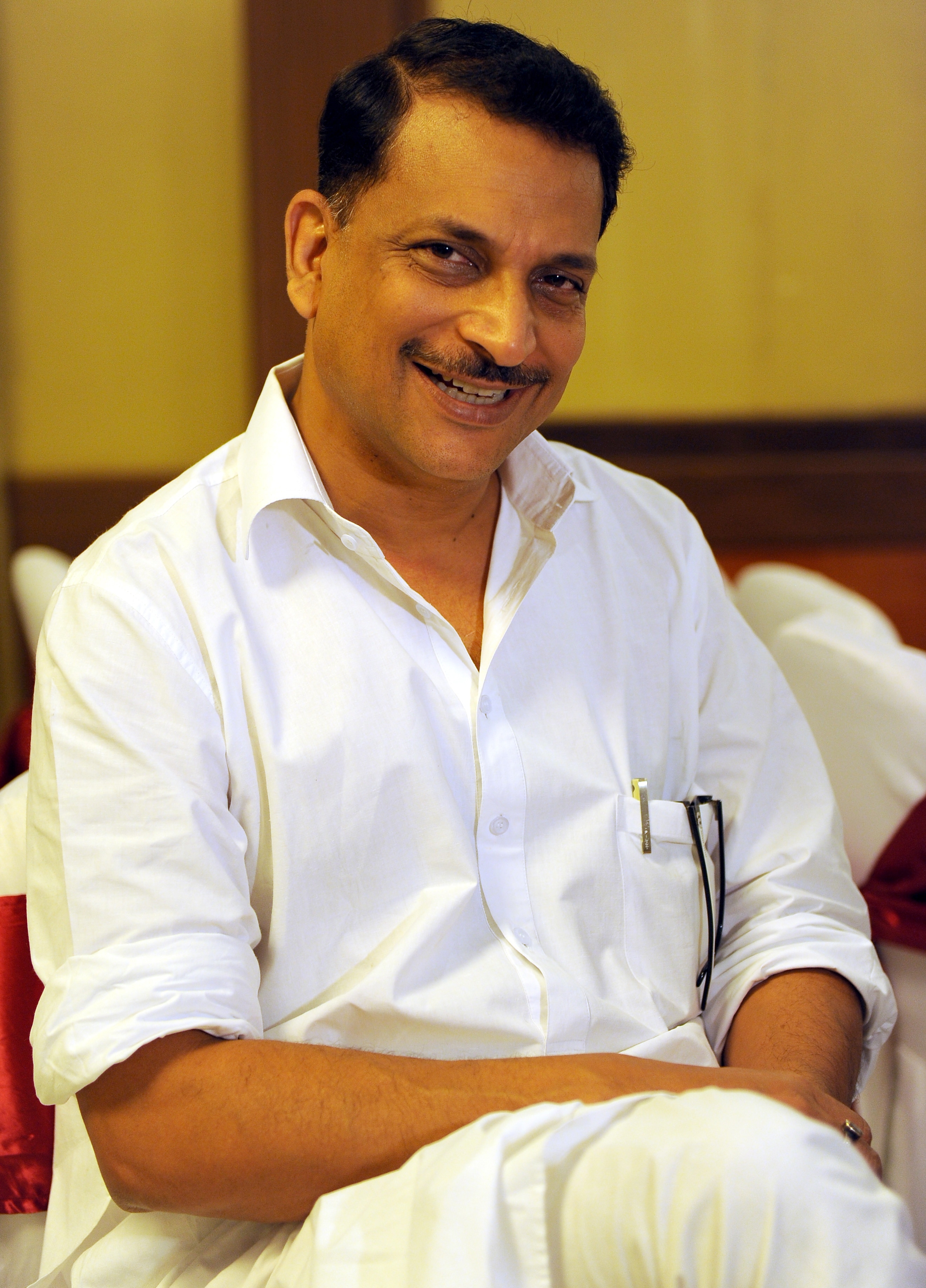
Minister of State (Independent Charge) for Skill Development & Entrepreneurship Rajiv Pratap Rudy has said that National Skill Development Corporation (NSDC) has entered into Memorandum of Understanding with Center for Research & Industrial Staff Performance (CRISP).

Following are the areas and scope of collaboration:

• To finalise assignments and programmes in the area of skills training, research and consultancy for upgrading skills development interventions of NSDC.

• To develop demand driven interventions of technical skills development for industries, partnering institutions and policy makers for systematising the skills development approach in India.

• To develop training interventions for capacity building of partnering institutions and state level bodies.
• Develop plan and activities for strengthening National Skills Qualification Framework (NSQF).

• Jointly plan and develop strategic interventions for capacity building of Sector Skills Councils (SSCs).

In a written reply in the Rajya Sabha Rudy said, Center for Research & Industrial Staff Performance (CRISP) is set up as an autonomous institution established under Indo-German Technical Co-operation bilateral agreement with the support of Department of Technical Education & Training Government of Madhya Pradesh and GTZ Germany. Under the MoU NSDC and CRISP have a functional understanding and can work towards accessing facilities of CRISP.

The Minister said, the MoU covers the way to jointly work and share facilities for developing national level support system for effective implementation of skills development initiatives and develop trainer’s training programme in skills development for bridging the identified competence gaps of trainers at NSDC partner institutions. CRISP offers Tool Room Services, which includes support for production & tooling job works for precision machining works as Prototype development, Product Design & analysis which can be leveraged to help those aspiring to upgrade their skills in tool room and shop floor practices.

Punjab decides to review its class-5 and 8 students

virtual-classroom1

Punjab Government has decided to conduct special review of class-5 and class-8 students to identify strengths and weaknesses of each student so as to guide him on future career path according to his strength.

Dr. Daljit Singh Cheema, Education Minister, Punjab, while chairing the meeting of the department felt that initial career review of each student was imperative and asked SCERT to work out a programme to review each student so that academically weaker students could be provided specialised attention and coaching. Focussing on scientific review, the Education Minister said that all famous educationists should be involved in this exercise in this review process so that a comprehensive learning outcome review of each student could be conducted in an objective manner.

Underlining the need for retraining the teachers who have been consistently showing poor results, Dr. Cheema asked Education Secretary to issue instructions to all teachers in the state to upload their results of last 5 years on the portal of education department within 1 month. He said that he would personally evaluate the result of each teacher and those teachers providing poor results consistently would be sent on specialised training course to improve their teaching skills. He said that ACR of each teacher would be as per his performance in the results.

Present in the meeting included C. Roul, Principal Secretary, Pardeep Aggarwal, DGSE,  Gurdeep Singh, Special Secretary.

ENTERPRISE RESOURCE PLANING :: August 2015

EDITORIAL

A Tribute to the Missile Man

ERP

Lessons Learned Through ERP

Enabled Efficient Learning

ERP makes Education Proactive

SYMANTEC

In the Secure Zone

HIGHER EDUCATION DEGREE

Reapingthe Benefits of Higher Degree

INDUSTRY SPEAK

VSAT or Virtual Classroom – Which Platform Should Educators Choose?

GUEST COLUMN

Inching Towards Digital Education

A New Narrative for the Indian Education System

AVAYA INDIA

Avaya Banks on Innovation

NIOS

NIOS Focuses on Vocational Education

CRM

CRM Augments Student Life Cycle

FLIPPED CLASSROOM

Fruits of Flip Side Classrooms

WES

Robokidz Enhances Creative thoughts for Kids

Delivering Education through Innovation & Technology

Nurturing Skills Among Children

Developing Creative Minds

Making our Youth Industry-Ready

Altering Lives through Video Communication

Tutorial Going Live

Ricoh Aids Learning through Innovation

Now, Re-Live your Classroom

Competent through Next Education

START-UPS

EduLanche offers academic Networking Platform

Effective Learning

Willswell Drives Innovation


LATEST NEWS