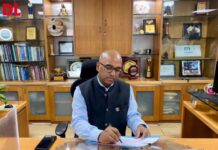
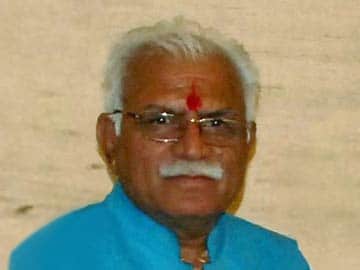
Attacking the congress regime for not opening up new schools and colleges in Haryana, Chief Minister Manohar Lal Khattar has informed that now mapping was being done to establish new colleges as per the need of the region.
He said, “Eleven new colleges were opened in a single assembly constituency while, in the other constituency, not even a single college was opened in last 15 years.” He announced to open a new National Cadet Corps (NCC) academy in Karnal district.
He also emphasised on the upgrading the Sainik School of the state to Sainik college so as to provide opportunities to the youth to get into defence services. Present on the occasion of 55th foundation day celebrations of Sainik School, CM said that preference will be given to backward, poor and downtrodden. He further added that the jobs will be given on merit basis to the eligible candidates. For this concrete efforts were to be made to improve the quality of education to make the youth employable.
To ensure quality education in government schools, the Central Government through Sarva Shiksha Abhiyan has supported State and Union Territories on early grade reading, writing and comprehension and early mathematics programmes through a sub-programme ‘Padhe Bharat Badhe Bharat’.
The SSA will also support states and UTs on sharing an exemplar on continuous comprehensive evaluation in elementary education developed by the NCERT, notifying learning outcomes by class and stage of education brought out by the NCERT, conducting the 3rd round of National Achievement Surveys for Class III, V and VIII to track student learning outcomes, provide funds and technical guidance to states for annual refresher training of teachers and lastly to provide academic support to teachers and schools through Block and Cluster Resource Centres.
The identification of Special Focus Districts (SFDs) is an important step in the direction of providing universal and quality education to SCs & STs student at elementary level. These districts are identified based on indicators like concentration of out of school children, high gender gap, low retention rate and infrastructure gap as well as concentration of SC, ST, Minority population. During 2012-13, 2013-14, 2014-15 & 2015-16, 48 per cent, 48 per cent, 42.8 per cent & 49 per cent respectively of the funds under SSA were targeted to SFDs. As a result, the annual average dropout rate of boys has reduced from 5.89 per cent in 2012-13 to 4.68 per cent in 2013-14 and of girls from 5.34 per cent to 4.66 per cent during the same period.
A survey was commissioned by the Ministry of Human Resource Development and was conducted by Indian Market Research Bureau (IMRB) on “National Survey of Estimation of out-of-school children in age 6-13 in India” and completed in 2014. It was pointed out in the study report that children within the rural areas drop out of school earlier than those in the urban areas. Most of the drop-outs in the said age group from the rural areas have completed education up to Class-II, while those from the urban areas have completed class V.
The Central Board of Secondary Education (CBSE) has informed that sporadic incidents of candidates using fake Mark-sheets and Certificates for obtaining job or admission in Higher Educational Institutions as well as incidents of schools sponsoring ineligible candidates in the examinations conducted by the Board have been reported.
UGC, AICTE and CBSE have taken several steps to check the menace of these Fake Universities, Institutions and Schools. UGC has written to all the Chief Secretaries, Home Secretaries and Education Secretaries of all states including Union Territories to check the menace of fake universities and initiate a drive against institutions offering degrees without approval of the Statutory Authorities viz. UGC, AICTE and Distance Education Council (DEC) in the States and Union Territories. UGC also issues ‘Public Notice’, ‘Press Release’ and paid advertisements for the awareness of the general public, students in the leading daily newspapers at the beginning of academic session, cautioning aspiring students not to seek admission in such institutions.
All India Council for Technical Education (AICTE) has informed that various fraud cases have been detected during the last two years in several states. AICTE has further informed that presently 343 technical institutes which do not have AICTE approval are running in the Country. The details of such Institutes are available on AICTE web portal at www.aicte-india.org/misapproved institutions.php.
In order to avoid irregularities, to ensure the availability of qualified faculty and basic infrastructure, AICTE has published an approval Process Handbook as per the AICTE (Grant of Approvals for Technical Institutions) Regulations, 2012. Institutions violating these norms and standards are liable for punitive action per the Approval Process Handbook. AICTE has introduced e-governance in all the processes to bring transparency, accountability, flexibility by integrating the entire system. Besides above, AICTE has also taken few steps viz. sending letters to Principal Secretary/ Director, Technical Education/ concerned State authorities for taking appropriate action. Public Notices have also been issued by AICTE in newspapers cautioning the students not to take admission in such unapproved institutions for the benefit of Stakeholders.
CBSE has also displayed the list of affiliated or disaffiliated schools as well as the results of Class X and Class XII and other entrance examinations conducted by the Board on its website for ensuring the genuineness of the mark sheets. Public notices are also issued as and when the Board withdraws affiliation of any school.
As per information made available by the University Grants Commission (UGC), 21 Fake Universities have been listed in the UGC list of Fake Universities. The details of such Fake Universities are available on the UGC website www.ugc.ac.in. In addition, the UGC has also informed that Bhartiya Shiksha Parishad, Lucknow, Uttar Pradesh and Indian Institute of Planning and Management (IIPM), Qutub Enclave, Phase-II, New Delhi are also unrecognized and functioning in violation of Section 2(f) and Section 3 of the UGC Act, 1956. The High Court of Delhi has given the final decision against the IIPM and advised that acts of the IIPM, Arindam Chaudhari and Malay Chaudhari, constitute a criminal offence of cheating punishable under Section 420 of the Indian Penal Code. To comply with the Court decision, the UGC has lodged FIR against IIPM in the Police Station.
The Ministry requested the Chief Secretaries of several State Governments where these Fake Universities and Institutions are situated, to investigate the matter and register complaints in the Police Station. The prosecution may also be initiated against those involved in defrauding and cheating students by misrepresenting themselves as “Universities” awarding degrees with their name.
A plethora of Japanese universities opened their stalls in education fair, in Taj Coromandel, Chennai to woo Indian students. Representatives of several schools and universities attended the anxious lot of students who formed a beeline at the booths.
Yoshino Hiroshi, Director of University of Tokyo India Office, unraveled the prospects of education in Japan, he asserted on the facts that Japan is a beautiful and safe city with rich culture and heritage. He also highlighted the issue of generation of smart manpower is the need of the hour. Japan is in urgent need of good manpower in the field of engineering. He also raised his concern over the decrease in the number of Indian students in Japanese universities.
The Tokyo University ranked amongst the 20 best universities of the world, but it failed to woo maximum number of Indian students even after fetching a good rank. Only 727 students enrolled in different Japanese Universities last year. Currently Japanese Universities offer a gamut of courses to students which include Engineering, Sustainable Development of Language, Economics, Commerce and Humanities.
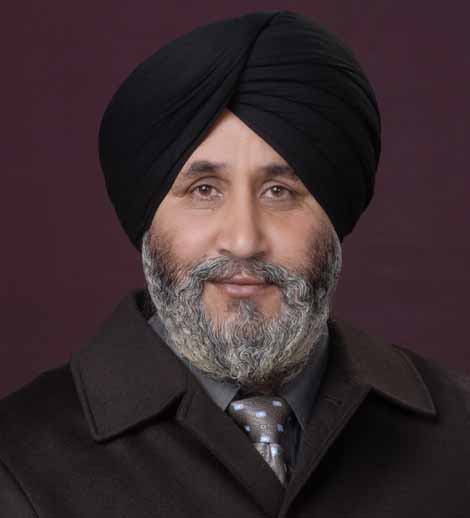
Dr. Daljit Singh Cheema, Education Minister, Punjab
The Punjab Education Department has decided to educate the students regarding Environment and Wild Life protection to inspire them to conserve natural habitat and environment.
The department would execute this plan in collaboration with the renowned NGO ‘Nature Conservation Society’ which has been working for the wild life protection. This was decided in a meeting by Dr. Daljit Singh Cheema, Education Minister, Punjab with officials of the Nature Conservation Society.
Dr. Cheema emphasised the need for environment awareness, besides formal education, that the students must be made aware about the surrounding they live in and also for the protection of wild life. He said that healthy environment is imperative for overall development of the society so in order to conserve the natural flora and fauna and wild life, a sense of responsibility toward nature must be inculcated among the students.
Special lecture and quiz competition would be organised in schools on the theme of Environment and Wild Life protection. During these lectures, apart from the teachers of the education department, resource persons of Nature Conservation Society would interact with the students and educate them about the role of healthy environment for the human development. These activities would also be replicated during Block and District level Science fairs.
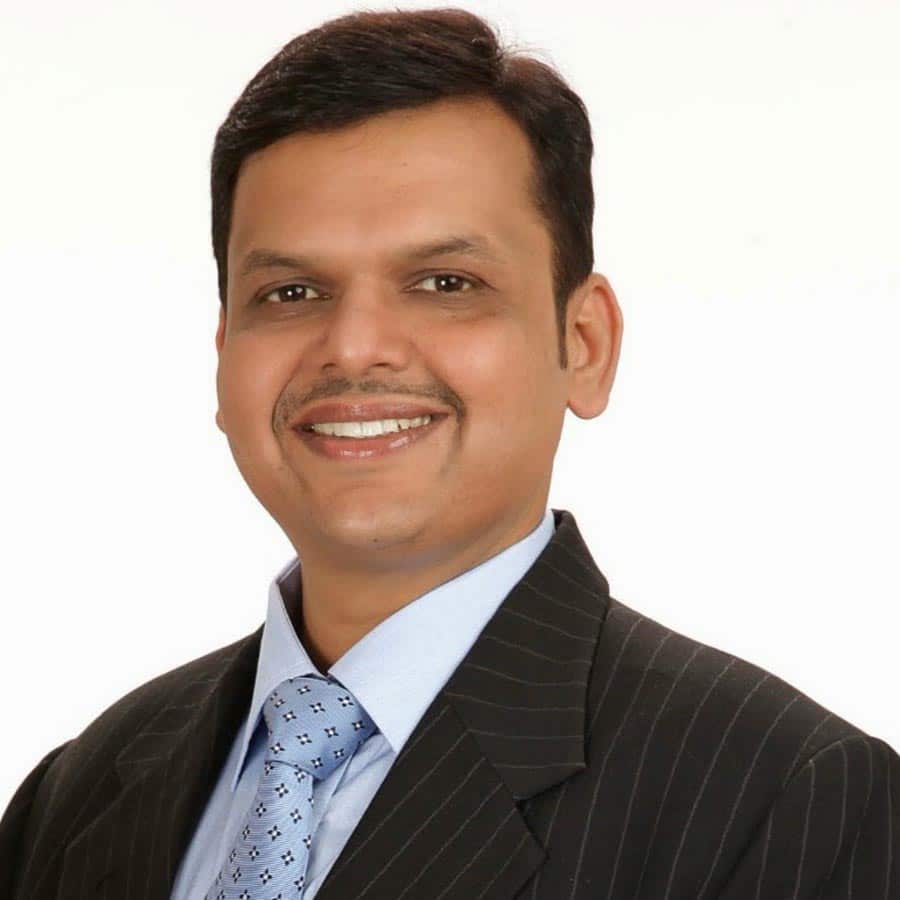
The Chief Minister of Maharashtra, Devendra Fadnavis, announced slew of plans, targeting the minorities of the state. He announced plethora of new projects which will completely rehash the entire minority education infrastructure.
The Maharashtra Government is mulling on the idea of starting a polytechnic college and a senior college in Urdu medium and putting Urdu as an optional language in schools. The State government will transform these plans into reality with an objective of corking the soaring dropout rates of the students in the state.
In a milieu of several eminent personalities, Fadnavis asked for new ideas which will develop the minority education scenario of the state and assured of financial backup to turn the idea into a reality. He also stressed on the fact of building good human resource, as India will be the major factory of human resource in the 21st century. English, Science will soon be a part of the madrasas curriculum, Fadnavis assured.
Other speakers also tabled the idea of skill development for minority students and have also asked for apt career counselling, to help the students to navigate their career in a proper way.
To help schools simplify their processes, Nidhi Mahule Kandpal, Co-founder, HOP!app developed a cross platform app that puts school, teachers and parents on a single platform. This new app helps to make interactions among the stakeholders simple and smart.
Give us the brief of the various reasons behind starting HOP!app.
We identified that young working parents, want to be involved in their child’s education. But the irony of modern times is that though parents want to know and participate more, they have limited time at their disposal. We also saw that schools need a simple and effective way to communicate with the parents and to keep them up to date with the latest developments in the class.
Something which is currently managed though multiple mediums such as SMS, social networks and PTMs. These needs led to the conception of HOP, a cross platform app that puts school, teachers and parents on a single platform. With HOP, we intend to make interaction, collaboration and school management simple and smart. Building a support system that works for students at school and back at home. What are the various difficulties encountered in doing business on ground level?
In any industry the people you work with make a lot of difference, especially if you are trying to do something new. Edtech has been making a huge buzz in the western teacher and student communities, but not much in India. Finding industry experts and getting their perspective on how technology can be integrated with the current teaching methods in India was tough.
Secondly, any new concept, especially related to technology takes sometime to gain acceptance. We found parents to be highly excited about the idea of being able to access school information, pictures and real time class updates in an app. But we did face some challenges in getting acceptance from technology averse schools that still trust the tried and tested methods.
What is the market size of the services offered by you in India at present?
The pre-school and K-12 market in India is pegged at USD 43bn. There are 1.5mn schools in India, of which 2,80,000 are private, unaided schools and pre-schools put together. That’s the addressable market size. We are currently testing the market, while the concept has shown great acceptance in the early childhood education segment across tier 1 and tier 2 cities, the ERP features of the app makes it quite useful for the K-12 segment.
What are the major benefits for organisations and individuals adopting your solutions?
HOP brings schools, teachers and parents on a common platform. It engages teachers, involves parents and simplifies the school processes. HOP is a cross-platform, making it accessible through smart phones and web.
The app helps teachers connect and collaborate with parents, at the same time, gives them smart tools to organise their day to day activities like lesson plans, assessments and attendance. It gives parents a one click access to all the important school information and keep pace with their kids.
The real time push notifications, dashboards and reminders ensure that parents will never miss out on anything important in their child’s schooling. HOP’s features like in-app fee payment, admissions and emergency alert simplify the jobs of the administrative staff. At the same time, its interactive features like instant chat messenger and bag pack keep parents informed on what needs their attention.
What is the vision of your company for next two years?
At HOP, we want to continue creating smart education enablers that make learning interactive, engaging and efficient within school and beyond. We want to establish HOP app as a trusted brand name for both teaching and parenting needs. We are currently targeting at a base of 10,000 potential schools for the HOP app. We also plan to launch a parent engagement initiatives in the coming year.
What are the various methods you are using to increase the visibility of your organisation?
As we are a B2B organisation, we believe in applying more on-the-field ways of promoting our organisation. Our visibility is mainly through participating in seminars, school events and regular interactions with school management. However, to increase our visibility amongst parents and education influencers we have now taken up the digital marketing route as well.
How you can differentiate your services from competitors?
There are very few similar products in the market and the concept is still very new. Also, we are not just providing a product, but a solution. HOP app integrates with the current teaching methods and the current technology being used in a school. It is customisable and can be integrated with the existing ERP of the schools, making it easy for teachers and administrative staff to adopt HOP and continue using it.
What are the ways of engaging the customers with you. Please share any special case study?
Schools are our direct customers. We are working towards enhancing the visibility of the schools through the use of HOP app. We are also running a series of videos to help teachers and administrators use technology to enhance teaching and bring efficiency in their day to day work. Teachers and administrators are the ambassadors for any edtech company, the more they adopt technology the smarter will be the education system.
To engage parents, we have taken the social media route. We have also started working on parent engagement initiatives, which will focus on parenting and nurturing. The idea is to give parents a platform to share experiences form focus groups and get expert advice.
What are the major stakeholders and sectors you are focusing on?
HOP has been made with an objective to serve the education sector. We are focusing on school administrators, principals and educational consultants. We would like to primarily focus on private players. When we are ready for a very large scale operation, we shall move towards government sector and international markets.
What are the various initiatives taken by your organisation to emerge as a market leader?
Firstly, to be a leader we believe that knowledge and speed of execution are most important, which can only come from a talented and driven team. Also, we are continuously working towards making HOP, a comprehensive tool for all the school needs. While at the core, HOP is a communication and engagement app, the ERP and social feature upgrades are ongoing. The other important thing that we are doing and determined to continue with is building strong relationships with the customers. It is from them that we learn something new every day and implement it in HOP.
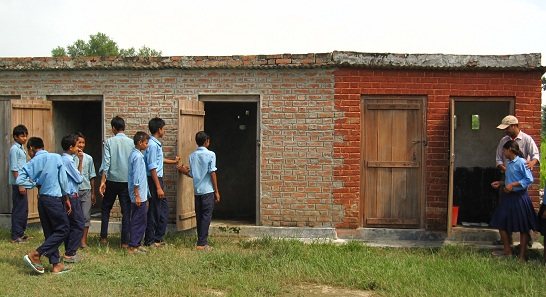
Government schools to have separate toilets for girls and boys
Prime Minister of India, Narendra Modi has launched Swachh Vidyalaya Programme with an objective to provide separate toilets for girls and boys in all government schools within a year. Department of School Education and Literacy under Ministry of HRD has took this initiative to help government schools to provide clean environment to children.
States and Union Territories have reported construction of 3.17 lakh toilets till 27th July, 2015. Around 300 central observers are deputed to review the progress of the Swachh Vidyalaya Initiative.
The NCERT (National Council of Education Research and Training) is revamping the education modules for students of class I to VIII. The entire rehash is done to give a new dimension to the present primary education infrastructure. The indicators will also try to level the parameters which are used to monitor the learning curve of the students.
The NCERT has already pin pointed a plethora of subjects, which includes, English, Hindi, Urdu, EVS (Environmental Science), Science, Social Science and Art Education. The learning indicators is a well known practice amongst the global education fraternity and now this is foraying into the Indian education system.
Several tailor made parameters are set to measure a child’s development. For example a student of standard one should have possessed the knowledge to write proper words and letters with proper spacing. A fellow student of class II should be comfortable in writing rhyming words and he or she must contribute in the school magazine. In a similar way a class VIII student should have the acumen to understand new concepts and should have an eye to explore unknown areas of the knowledge domain.
The regimen of a subject will also change under this plan. The EVM subject will not only deal with environmental issues but it will create a bridge between natural and social environment. It will also help the child to understand the diversity of the environment and it will also help them to increase their interest on the subject.
The entire system will not only help the students to bloom but it will also help the teachers to gauge the student’s growth level.
The Karnataka Education Ministry is all set to doll out several new policies targeting the kids living below poverty line (BPL). The Minister of Primary and Secondary Education of Karnataka, Kimmane Ratnakar stressed on expanding the ambit of the entire education system, to benefit these underprivileged kids.
The State government is ready with a gamut of people friendly plans which includes, the plan of starting LKG in government schools and providing immediate admission to children of the BPL card holders under RTE.