Home Blog Page 827

Education moulds careers

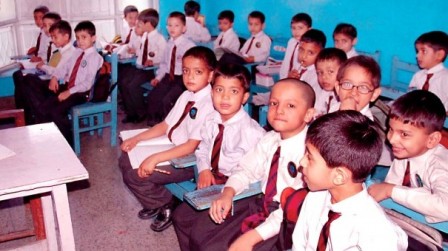
391429 06: A young student in Ms. McFaul''s second grade Early Intervention Bilingual class looks closely at a math exam during a summer school June 3, 2001 at Brentano Academy in Chicago. More than half of Chicago''s 430,000 public school students must attend summer school this year before they can go on to the next grade, Chicago Public School officials say. Former Chicago schools chief Paul Vallas said about 245,000 pupils failed to score high enough on the Iowa Tests of Basic Skills to be promoted. (Photo by Tim Boyle/Getty Images)To be a part of P&G Shiksha, an education event, which has impacted the lives of over 80,000 children through their endeavour and has supported over 450 schools across in India, actor Anil Kapoor was seen praising the work and said that education is a key to success. It plays a very important role in moulding children into successful individuals.

To celebrate the success, actor Kalki Koechlin also participated to extend her support to the initiative. Till date, Shiksha has educated 8 lakh children across India.

HC allows 12 engineering colleges to be part of common admission process

Bombay HC 12 engineering colleges in Maharashtra, which were previously barred from admitting students, have been allowed by the Bombay high court to continue being part of the common admission process. A division bench of Justice Anoop Mohta and Justice V L Achliya, however, asked the managements of the colleges to update about the steps that they have taken to remove the deficiencies pointed out by the AICTE in these institutions.

The court said that the deficiency aspect requires consideration, adding that they also need to consider whether the requisite facilities and infrastructure are available to the students. The judges also focussed on the shortfall in faculty which was mentioned in the case of some colleges. “The lack of the adequate teachers is a problem and continues for years. If the managements want to run the college they have to ensure standards are maintained”, the bench said.

The judges also pointed to the conditions that managements have to provide specific area of land for the college campuses.

According to media reports, the colleges had approached the high court, which had earlier in an interim order, allowed their names to be mentioned in the list of institutions in the common admission process. The college managements claimed they had not been given a proper opportunity to present their side and many of the deficiencies had been removed. They also said that the faculty problems were due to lack of timely approvals by the state and university authorities.

The HC has scheduled further hearing of the case on July 9. The CAP round commences from Friday, when students will have to confirm their choice of colleges. The first round of college allotments will be held on June 30, 2015.

According to Citizen Forum for Sanctity in Education System, these 12 engineering colleges in Mumbai had failed to follow AICTE norms—having good infrastructure, land and enough of teaching staff—because of which they were issued show cause notice. AICTE will now give them a hearing before taking a decision.

There are about 25 engineering colleges in Maharashtra awaiting AICTE approval. Of these, 12 are in Mumbai.

West Bengal stresses on deadlines for better academic environment

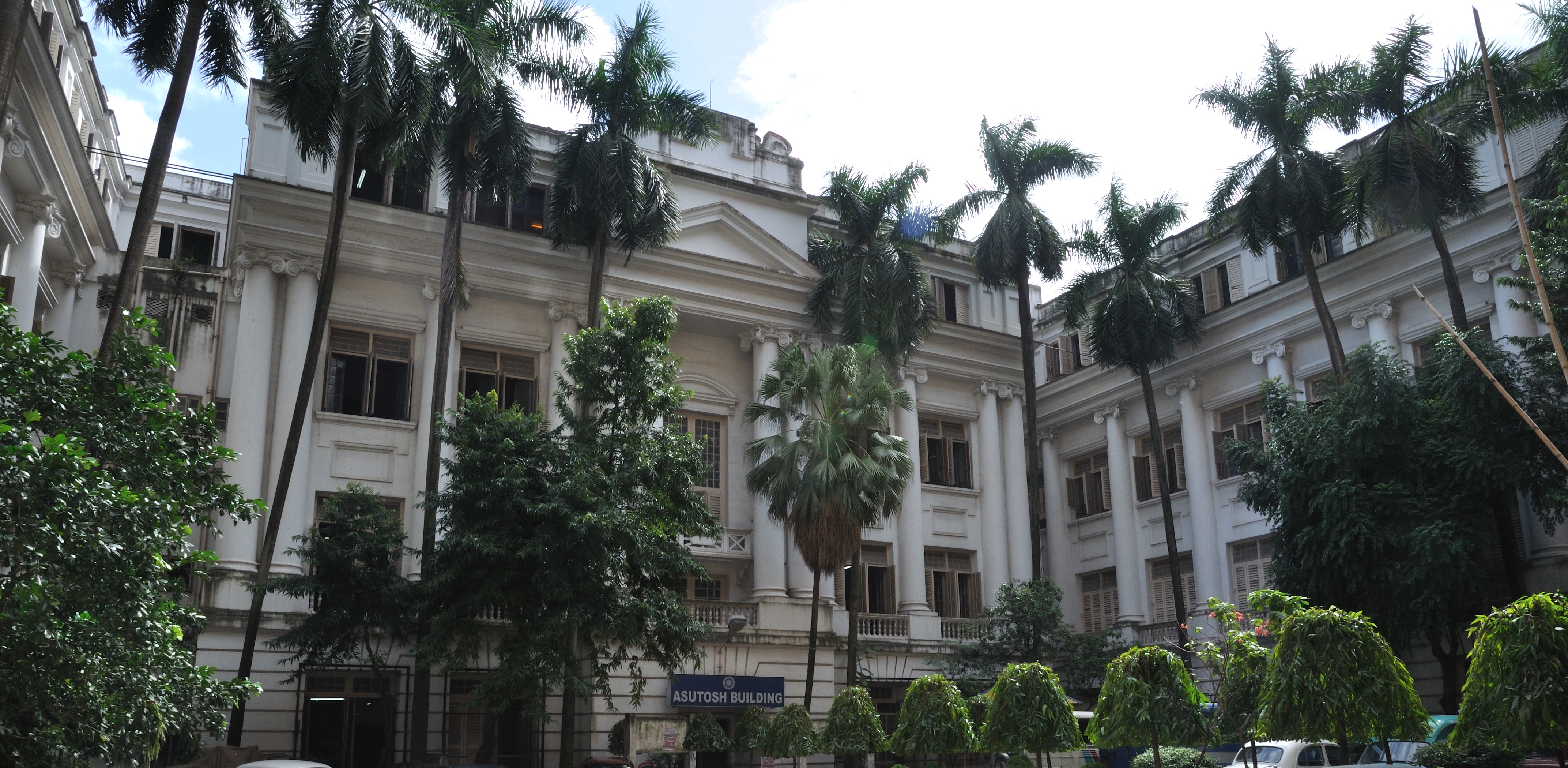
University_of_Calcutta In West Bengal, the higher education department has started with the initiation of a system that will require universities to complete all student-related services within a stipulated timeframe. As a first step in this direction, the department officials recently held a meeting with university registrars and asked them to set time limits for services like publication of results and issuing duplicate certificates. In case of a breach, the university officials will be held responsible and will be liable to pay a penalty.

Reports claim that few powerful institutes are uncomfortable with this new development as it will come as a dent on their established authority. Furthermore, with this new development, a teacher will not be able to get away by flaunting his or her position if they loses answer scripts. Incidentally, West Bengal University of Technology had introduced a central checking system to prevent loss of answer scripts. The system also helps the administration to keep tabs on teachers. But WBUT discontinued it last year.

In the meeting held at Bikash Bhavan on Thursday, university registrars have agreed to propose a time frame after it is routed through the highest executive bodies in universities: the Syndicate or the Executive Council.

Educationist says that the government wants universities to focus on student-related services to enforce accountability under the West Bengal Right To Public Service Act.

70 per cent students in popular DU colleges are from outstation

DU-Outstation While mapping admission seekers’ trend at the reputed Delhi University (DU), it has been found that 70 per cent of students in ‘popular’ colleges are not from Delhi, but outstation students. To name them, St. Stephens, Shri Ram College of Commerce, Lady Shri Ram, Hindu, Miranda House, Ramjas or Hansraj, are the popular colleges of DU, and most sought after destinations among outstation aspirants.

Interestingly, 50 per cent of the aspirants who applied for sociology at Sri Venkateswara College were from Assam alone.

A media report mentions a top Delhi College principal informing that at times as much as 75 per cent of students in the college are not from Delhi, which goes to show the aspirations of the youth to get the best education in the country.

It may be mentioned that even when the admission rigmarole is over, the outstation students have to hunt for a suitable accommodation where they will have to spend the next three years of their student life. This is because there are limited seats available in the college hostels. Several independent and political students’ groups have been raising the issue of lack of infrastructure and hostel facilities for students from outside Delhi.

TryMyTutor provides tuition options for kids

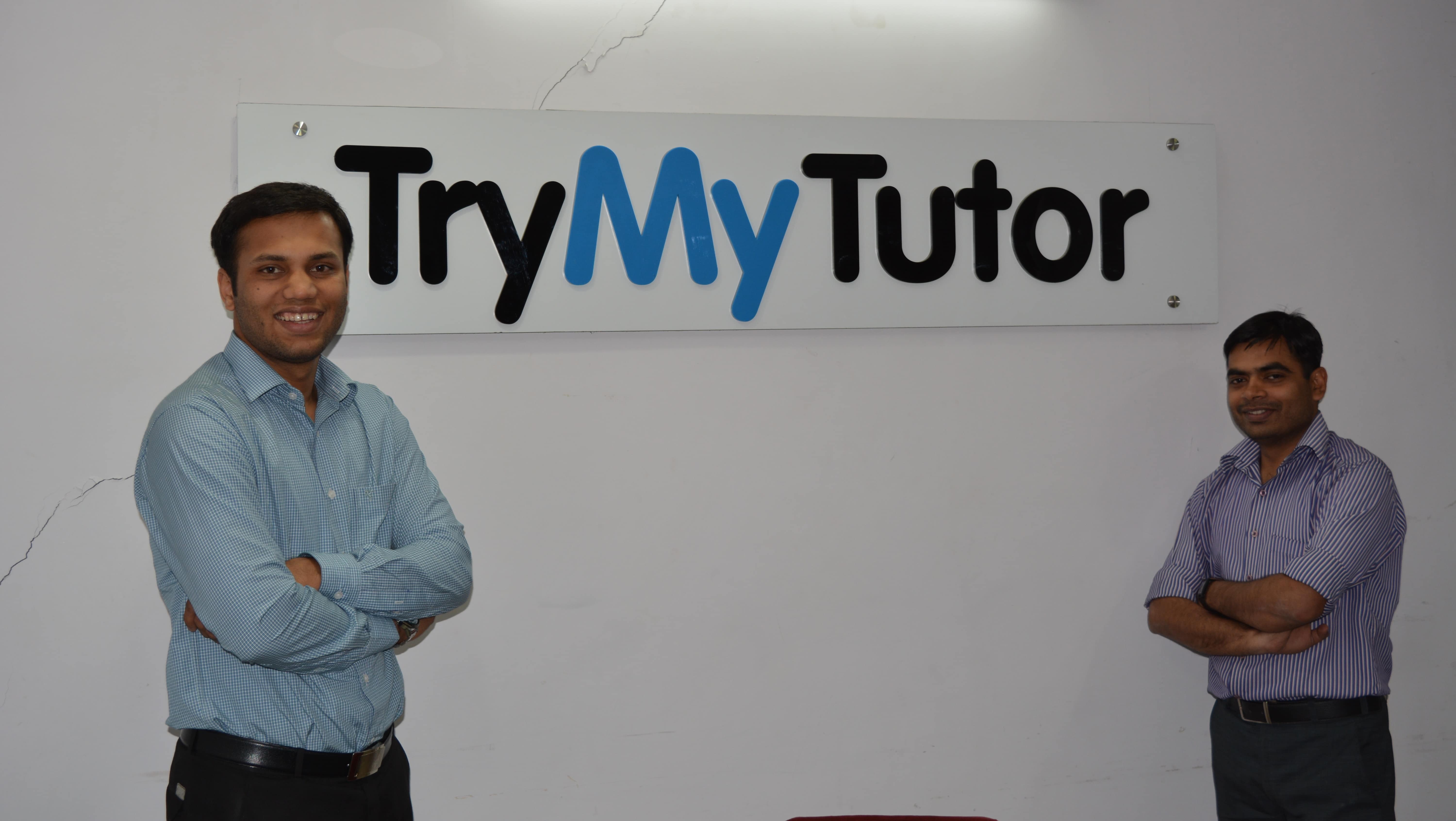
Intro: TryMyTutor is committed to providing tuition at the doorstep of every individual. Sandip Singh, CEO, TryMyTutor is creating a comprehensive tutoring assistance which would include, group tutoring, one-on-one home tutoring, one-on-one online tutoring and one-to-many online tutoring

What are the various reasons behind starting TryMyTutor?

Nowadays education pattern is changing dynamically and there is huge competition among students. Teacher in school couldn’t give full attention to each and every student in class within the stipulated time and at home parents couldn’t give much time to their child to complete their home assignment and cope with their school education hence I realised that education is a growing sector in India.

There is too much work left which could be done in this sector. The culprit for this is the lack of proliferation of information. A huge market size also lured me to this start-up. A personal experience, which motivated me to think of building this business; every student who come out from their home for college studies, needs some pocket money. This is the best way to earn some money and enhance their skill in the subject. When I came to Delhi for my graduation, I inquired about some local tuition centres to get some part time tuition but failed to get any good agency which provides good service.

I did some market research and found that there is no market leader in this field who could provide genuine service. There are so many small tuition bureaus working in all cities of India, but none of them has come up as a market leader. And then while brain storming with friends, this idea sprouted in my mind. Therefore, Trymytutor.com aims to bridge this gap between teachers and students.

What are the various difficulties encountered in doing business on the ground level? 

We have started our venture way back in 2011. We have completed 3 years but still we have a long way to go. We tried to organise this sector and got a great success but still there is a lot of work to do and in this we are facing few problems.

Funds are the main issue. We have started this venture with our pocket money as starting capital and we did very well and now earning a very handsome income from it and also we have generated lot of new employment opportunities to youth but still we are having shortage of fund to expand our business and currently we are working on it to get new investors in our venture for its expansion and its growth in other parts of India.

We are planning to raise funds which would be used mainly for hiring talent and scaling infrastructure and marketing activities.

Shortage of Lady Tutors is another issue. We are getting 60 per cent of enquiries for female tutors.  Number of parents are looking for female tutors for their girl child and also for the kids as ladies are soft and skilled to handle small kids. These numbers are increasing daily and we are falling short of ladies who are ready to go home for personal tutoring.

Leakage of Commission is the major problem in our business. Out of 10 there are nearly four cases when we don’t receive the commission from the tutor.

What is the market size of the services offered by you in India at present? How Big is the market? How do you calculate the market size?

Tutoring is a US$5bn market across India. According to New Report by Global Industry Analysts, Global Private Tutoring Market to surpass $152 Billion by 2015. Of the $24 billion private coaching market in India, home tuition is now estimated at about $10 billion, as per Assocham.
A study commissioned by an industry body has revealed that private tuitions have become a multi-million rupee industry which recorded a growth of 40-45 per cent in the last five years in India. The study based on response from 5,000 students and parents in March-April across eleven cities further revealed that a majority of middle-class parents have been spending one-third of their monthly income on private tuitions for their wards with the hope it would help them do better in their final examinations and prepare them for competitive entrance exams for professional courses.

Over three million cosmopolitan children use private tutors whose average income comes to five figures, particularly those giving coaching in mathematics, chemistry and physics, said the study commissioned by Assocham social development foundation.

Mathematics dominates the private tuition market, followed by chemistry and physics, the random survey done in Delhi, Mumbai, Bangalore, Chennai, Kolkata, Pune, Dehradun, Jaipur, Udaipur and Ajmer reveals, said Assocham secretary general D S Rawat. Private tutors charge Rs 300 to Rs 1200 per hour per student on the one-to-one basis.
As per MHRD(Ministry of Human Resource and Development) student’s data
we have calculated the market size according to our business model;
Market Size across Delhi:

Average income on per student: Rs.2000
No. of student in Delhi: 4,000,000
The total revenue which could be generated is Rs.8,000,000,000(US $160mn)

what are the major benefits for organisations or individuals adopting your solutions?

We are in education services and we provide qualified and experienced tutors. We place teachers in schools. More numbers of schooling are budding up which require good teachers. We have the data base of teachers. Schools and Institutions hire tutors through us. We have placed tutors in schools and intuitions like Shri Ram School, Moulsari, Aravali, Bansal Classes, Palm Chrest School Gurgaon and many more. We provide our service to all age group of people. Old age people are learning the internet for daily usage.

What is the vision of your company for next two years?

It has made a firm beginning and has emerged as fast growing and quality service provider in the education domain and would like to see its revenue and customer orientation increasing at a formidable rate. As per the website traffic: We can have the 50K visitor with 20K active users per month.

We are already working in six cities and now we are planning to move towards south India to expand our business in Pune, Mumbai and Bangalore in next couple of years.

What are the various methods you are using to increase the visibility of your organisation?

To increase our visibility we have been associated with Just dial, sponsored many College fest, advertising ourselves on Google and Facebook.

How can you differentiate your services from competitors?

We provide free service to tuition seeker and don’t charge any consultancy fee from them. We also provide experienced tutors with their full background verification.

We deal into compressive tutoring services in form of home tutoring, group classes, online tutoring which makes us different from competitors.

What are the ways of engaging the customers with you. Can you share any special case study?

We are in tutoring business and its success depends on the way of teaching by tutor. Regular customer feedback is the most efficient tool to keep engaging the existing customers. We make sure that our tutors give their best to students and for it we take regular feedback from students and once we win the student’s loyalty they recommend us to their friends and relatives.

What are the major sectors you are focusing on?

We are working on to create comprehensive tutoring assistance which would include, group tutoring, one on one home tutoring, one on one online tutoring and one to many online tutoring. We have been working on home tutoring since three years. We started our first group class this month for commerce students and very soon we will start our group class for humanity subjects. We are also planning to enter into online tutoring business in coming months.

What are the various initiatives taken by your organisation to emerge as a market leader?

Tuition business is a very competitive market. To emerge on the top and for becoming a market leader we did lot of work which includes market research, aggressive campaigning, once the tutor register themselves over our website we send free information about students looking for tuitions in their vicinity.  We had also sponsored college fests.

This venture will generate full time and part time jobs for millions of tutors worldwide. We have registered 10,000 tutors till now. We have placed more than 1500 tutors already. We have served more than 5000 students.


AAP emphasise on education in maiden budget

Manish_SisodiaThe Aam Aadmi Party government in Delhi in its maiden budget emphasised on education and seeks to make Delhi a fully literate state and imparting value education along with skills.

Finance Minister Manish Sisodia has double the allocation of budget from Rs.2,219 crore to Rs. 4,570 crore. It is to be noted that during the election time the party had promised to open 500 new schools within five years and in the first of year only, the party has worked upon 236 schools which are in pipeline.

The party is paying attention to the improving quality of education by the creation of 50 model schools, recruitment of 20,000 regular teachers to improve student-teacher ratio, skills development and value education. Not only this there will be CCTV cameras installed in all classrooms of government schools.

DU Admissions: Slight dip in cutoffs for few

DU This year has seen a slight dip in a few subjects but massive jump in cut offs for humanities at Delhi University (DU). The main reason behind this is that colleges have been forced to issue a single cut off for every stream this year.  Therefore, they have set their cut offs close to the upper limits of their last year’s ranges.

It is important to analyse the cut offs for various courses at different colleges. Last year, the percentage for English cut off at Ramjas College was 91.5 per cent and 97.5 per cent with the lower limit meant for humanities’ students. This year it is 96 per cent for all. This means a jump of 5.5 percentage points for humanities’ students and a drop of 1.5 percentage points for commerce students. Daulat Ram College English cut off was 91 per cent and 97 per cent for science students in 2014. This year it has set it at 95 per cent.

At Hindu, English (Hons) applicants from humanities and science will see an increase of 0.75 and 0.25 percentage points while commerce students will see a decrease by 0.75 percentage points. Considering the vast majority of the applicants are from English-medium backgrounds and would’ve studied English-core as a subject, the 2.5 percentage point penalty has no impact here. Only those students with elective English will benefit form a 2 per cent advantage. The cut offs for English have gone up dramatically in off-campus colleges like Ramanujan (93 per cent from 85 per cent) and Dayal Singh (96 per cent from last year’s 85 per cent).

Similarly, this year’s cut offs are closest to last year’s upper limits at Hans Raj, Hindu, Kirori Mal and Ramjas. But the docking of 2.5 percentage points from the best-of-four subjects’ aggregates will work with subjects not common to science courses, humanities and commerce streams.

Among the science courses, BSc (H) computer science has seen some of the highest cutoffs—100 per cent for one stream at Indraprastha College and College of Vocational Studies and 99 per cent for a stream at Atma Ram Sanatan Dharma, Bhaskaracharya College of Applied Sciences, PGDAV, Ram Lal Anand and Shaheed Rajguru College of Applied Sciences. Hansraj has retained its last year’s physics cut off— 97.33 per cent but raised for chemistry marginally from 97 per cent to 97.33 per cent.

It may be mentioned that as streams cannot be changed in science, the computation of BO4s is easier for science courses (essentially, BSc (H) physics and chemistry) as the required subjects are physics, chemistry and mathematics.

Furthermore, 21 colleges are giving relaxation to girl candidates ranging from 1 per cent point to 3 per cent point in cut off. 15 colleges have given relaxation on all courses to girl candidates in cut off.

Late results put off Joint IIT, tech admissions

centrally funded technical institutes A day before the admission process was to start for all centrally funded technical institutes, it had to be postponed till further notice due to non-availability of JEE (Main) ranks for paper I and paper II.

CBSE was not able to announce the JEE (Main) ranks on June 24. The registration for the joint seat allocation process was scheduled to start from 25th June 2015. This is the first year that the premier engineering institutes will have a joint admission process along with NITs, IITs and other centrally funded technical institutes.

Over 11 lakh students were supposed to be part of the process for nearly 34,000 seats in 85 government-funded technical institutes.

The joint seat allocation authority (JoSAA) will be meeting in Delhi to decide on the further course of action. The first round of allocation, which was to begin on July 1, will now be delayed. Till last year, IITs and NITs conducted the seat allocation process separately.

It may be mentioned that in 2013, amid the prevailing confusion over admissions in Centrally-funded technical institutes (CFTIs), IITs had refused to fall in line with the HRD Ministry’s order for a joint Central seat allocation board (CSAB), 2013.

Aiming for a bright future

internkafeAiming to cater to the internship and placement requirements of colleges and universities nationwide, Internkafe.com provides window of opportunity for students who come from small states. Amit Sohal, Founder, Internkafe.com shares with Elets News Network (ENN), how his company is connecting with colleges and universities situated in remote areas to help the students get the right job

Give us the brief of the various reasons behind starting Internkafe?

While doing MBA from Central University of Himachal Pradesh, we realised that for students like us, who come from a humble background and do not move out of their home towns for higher education, getting industry exposure is very difficult. The main reason behind starting InternKafe was to provide a window of opportunity for students who come from such parts of the nation where industrial exposure is comparatively low, but have the caliber if not more, equal to those who study in metro cities. The bottom line is to bring the industry closer to those who have the employability skills.

What are the various difficulties and hurdles encountered in doing business on ground level?

We try to connect with the colleges and universities situated in remote areas of the nation, therefore, we face a huge challenge of connectivity and how to spread awareness. Although we try to overcome these challenges through offline promotions and awareness workshops, still such difficulties remain and our team works hard to overcome these. There are times when students do not join the internship after being selected. I think that in the service sector, the biggest challenge is to predict human behaviour.

What is the market size of the services offered by you in India at present?

We aim at catering the internship and placement requirements of colleges and universities nationwide. In a short period of time we have managed to make our presence felt in many states and cities like, Himachal Pradesh, Ranchi, Jaipur, Bhubaneswar, Hyderabad, Punjab and Chennai. Our main focus will always be students in Tier I and Tier II cities who are comparatively less privileged in terms of exposure than their counterparts in metro cities.

What are the major benefits for organisations and individuals adopting your solutions?

As our tagline reads – “your perfect internship assistant”, for students adopting our solutions we aim at brining to them internship and placement offers from the best of organisations in their respective field. On the other hand, for the companies as our client, we focus on bringing to them the best of employable talent from different corners of the nation.

What is the vision of your company for next two years?

Well, it can be said that our team is pretty ambitious for a rookie, but it’s the enthusiasm of our team that keeps us going. In the next two years, we intend to connect with at least 60 per cent of students of the country covering Tier I, Tier II and Tier III cities. Our special focus will always be the students belonging to remote and interior areas so that they are sensitised to the corporate industry during their study period itself.

What are the various methods you are using to increase the visibility of your organisation?

Ours is a young company formed just a year ago, with a vision “to be the best information junction for aspirants and one stop total marketing solution for educational Institutes and connecting the students to corporate world.” Our team members consist of young dedicated people from varied background who work remotely and are connected virtually. In order to spread awareness about our services, we are consistently active on social media. We also resort to offline advertisement through print media and education fairs.

How you can differentiate your services from competitors?

We customise our services according to the needs of the specific college and work closely with the colleges by way of appointing a campus ambassador, whom we select through telephonic interview.The campus ambassador keeps us informed about the activities and requirements of training and placement cell of his respective college and we purvey the best of internship and placement opportunities according to their needs. Moreover, we are the first movers in our field of profession who dispense plethora of services in the education sector under a single umbrella, ranging from internship, placements, to education fair, career counseling, expert lecture and educational tours and industrial visits.

What are the ways of engaging the customers with you? Can you share any special case study?

In a short span, we have managed to sort the attention of our customers, both colleges and the corporate. We have started a chain of education fair by the name ‘ShiskhaTripaal.’ The first ShikshaTripaal was held in Orissa in 2014, and we aim at organise it in different regions of the nation in the coming years. We have also partnered with IIT Indore, which is our training partner. We have engaged more than 40 campus ambassadors by way of our Campus Ambassador Programme from Hyderabad, Chennai, Bangalore, Jaipur, Ranchi, Bhubaneswar, Chandigarh, Himachal Pradesh and many more.These Campus Ambassadors work as our employees in their own colleges and also spread awareness about InternKafe through word of mouth which works as reasonable source of advertisement for us.

What are the major stakeholders and sectors you are focusing on?

We cater to the internship and placement needs of students pursuing their bachelors as well as masters in any stream; be it, management, engineering, media, hospitality, medicine etc. Besides college and university students, school students of class X, XI, XII, are also benefited from our education fair and career counselling services and educational tours. Colleges, universities and other educational institutes and companies and perspective employers for diverse fields of profession also come under the frame of our stakeholders.

What are the various initiatives taken by your organisation to emerge as a market leader?

I believe that big companies are made by humble dedicated people, and these are right adjectives for our team at InternKafe, ‘humble and dedicated’. InternKafe team comprises of people who are located at different parts of the nation working as InternKafe’s eyes, ears and mouth. Different initiatives like Campus Ambassador Programme, ShikshaTripaal, and Virtual T.P.O have only been possible and successful by the sheer efforts of the people working with us. Our customers can differentiate us from other players in the market by the quality of our services and the customised focus that we provide to each of our client. We bring to them an array of services in educational field on a single platform. In simple words, any problem in education sector has one answer, ‘InternKafe: Career Solution Pvt. Ltd.’


Punjab education minister unhappy with English teachers

School-children- punjabIt is said teachers are our leaders who make students’ career but what when they themselves fail to skill upon their language. This is the example of Punjab teachers whose students flunked the English exam, reason poor language skills of teachers. Out of 3,78,628 around 80,278, 10th standard government school students in Punjab failed the English examination this year which became a big issue of discussion in the education department.

Agitated with the teachers, Punjab Education Minister Daljeet Singh Cheema has summoned the teachers for the worst performance of the students. The minister was shocked to see the decaying level of English. Addressing the teachers at a gathering, Cheema highlighted that the teachers did not even know correct spellings of several words. He further added that the teachers have failed in his exam and empathised with the students.

The minister asked his staff to display the teachers’ errors on a projector and asked them to explain the reasons for errors.

LATEST NEWS