



Home Blog Page 853

“Mathematics is fun”

IMGA crisis is an opportunity with a different name. When Imran Rashid, Founder & Managing Director, Learnix Edutech found during an interaction with some students at a school how they struggle with the mathematical concepts, he took upon himself to develop Logic Booster. A digitized application for classroom teaching, Logic Booster makes mathematics easier to understand in the schools. Imran takes Elets News Network down the memory lane.

  1. Give us a brief of the various reasons behind starting the venture.

When we started working in 2011, our aim was to prepare the school students for competitions like NTSE, JEE, etc. It was later that we realized that most of the students struggle with the basic mathematics taught to them in the school. Although they skipped the fundamentals to score better, it affected their performance in the long run.

This got us to work on something that helps the students understand the mathematical concepts better. Our passion led us to development of Logic Booster, which was launched last year. A digitized application for classroom teaching, Logic Booster adds another dimension to learning of mathematics in the schools. The desktop application consists of a clearly defined concept with several questions which trigger thinking. The application is basically a function of various classroom and group activities that boost interactive learning. Critical questions have been explained with the use of 2D/3D learning tools.

  1. What are the various difficulties/hurdles in doing business on the ground level?

Getting customers is not as easy as it looks in a business plan. It was a bit difficult to reach out to the customers at first but along the way I have learnt that if you have a product which is useful for people, you will get traction. Same holds true for the operations; planning is always the easy part, the problems lie in implementation. Every new day brings a new set of challenges and opportunities.

  1. What is the market size of the services offered by you in India at present?

With our current products, we are focusing on the top 20,000 schools across India with a market size of around $300 million.

  1. What is the major benefit for organizations / individuals adopting your solutions?

  Our students have shown considerable improvement not only in the academics but also in the competitive examinations. We encourage students to trust their abilities and actually learn while preparing for competitive examinations. Once they build on their fundamentals, they can beat any competition.

What is the vision of your company for next two years?Mathematics 

With our commitment towards making teaching and learning more effective through the introduction of technology, we look forward to implementing Logic Booster in 50 schools within the next two years. We are also coming up with a personalized solution to cater to the individual needs ofstudents. Technology is disrupting the way the students learn and are glad to be a part of. With 15 lakh schools and more than 24 crore students, the potential is exponential. We are going to improve the learning ecosystem for the better.

  1. What are the various methods you are using to increase the visibility of your organization?

We are conducting a series of free workshops to illustrate the importance of reasoning and the role that Logic Booster can play in improving mathematics. We are also providing demo content for a month to the premier schools. Soon, we will launch a social media campaign to engage the students, the teachers, the educators and the school management.

In order to promote our product, we conduct various competitions for the school students and award them with gifts and cash prizes. This year, we are inviting the school students over to IIT-BHU in association with Technex-2015.

  1. How do you differentiate your services from your competitors?

Some major players in the education industry have been successfully converting the traditional classes to smart classes equipped with Digital Teaching System. But some schools are unsure about what to do with the technology and consequently, the equipments go unused.

Logic Booster adds value to the learning process. By providing innovative digital content, we make use of the technology already available in schools to improve the cognitive abilities of students. There is a demand for providing personalised learning solutions and we are growing by leaps and bounds in that direction. Our product is the first of its kind which not only improves the logical skills of the students but also helps them in their academics, especially maths.

  1. How do you engage the customers? Can you cite any special case study?

One of the ways we engage with our customers is by providing them with exclusive content and solving problems together. To discuss one particular case, we had a situation where our client, The Aryan International School, needed our support in motivating and preparing its students for higher scores in JEE. Although we didn’t have immediate plans offering JEE preparations again, we found some brilliant guys from IIT-BHU who could assist the students at school. The fact that the students got to interact and learn from people studying at IIT inspired them to achieve more.

  1. What are the major stakeholders and sectors you are focusing on?

As of now, we are focusing on middle and high school students. We are also coming up with solutions for the primary school students. Currently we are targeting private schools in Tier I and Tier II cities. We are looking forward to working with the government in order to make our product accessible to all.

10. What are the various initiatives taken by your organization to emerge as a market leader?

As far as reasoning solutions are concerned, we hope to cash in on the early bird advantage. Currently we do not have any direct competitor and consequently, we are fast establishing a stronghold in UP and Bihar. Aware of need to grow vertically as well as horizontally, we are taking the necessary steps for our expansion.

Smarter learning with Smartur

Neeraj Jewalkar
Neeraj Jewalkar
Founder and CEO at Smartur.com
Neeraj Jewalkar
Neeraj Jewalkar
Founder and CEO at Smartur.com

Smartur.com was developed with a vision to provide affordable digital content at K12 level as part of e-learning initiative. Having launched his company in 2012, Neeraj Jewalkar, Founder and CEO at Smartur.com, sees today brighter prospects for his endeavour not only among private institutions but also government schools at large.

How was the idea of Smartur.com conceptualised?

India has one of the largest school going populations in the world. The digital content needs of these students are being met by a set of companies that Smartur.com believed are affordable only to an elite few. To meet this gap, the idea took birth in August 2012 as an elearning initiative. Smartur.com is into the K-12 space (Kindergarten to 12th Standard) and was launched to provide affordable digital content solutions to schools.

Smartur Maths Proficiency Test (SMPT) was conceived as a product targeted towards students of class 6th to 10th to improve their proficiency in Math. To motivate children to spend more time practicing and learning Math, SMPT has been structured as a game that rewards children for solving Math problems. To appeal to the psychology of students a reward based system is put in place under which ‘Coins’ are awarded to children for solving questions correctly which can be accumulated to buy a gift of their choice ranging from toys, games to books and electronics from the Smartur Gift store.

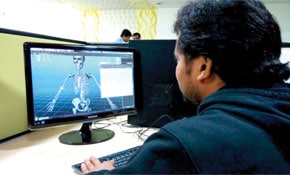
Further, Smartur3D (for science subject for classes 6 to 10) is the full fledged digital classroom solution built on Augmented Reality and Stereoscopic 3D platforms to bring experiential learning into Indian classrooms at affordable costs. Smartur3D addresses the growing gap that exists between schools that have the financial resources to afford existing digital classroom solutions compared to those that are not able to afford such solutions.

Smartur3D took around 2 years for development and was launched in July 2014. Smartur3D is the only product in its segment which offers Interactive 3D, Augmented Reality and Stereoscopic 3D. Presently, around 750 schools across the world including India are using Smartur3D product (US, UK, Canada, South Africa and Philippines)

How did funding happen?

Nearly Rs. 3 Crore has been spent so far in R&D and product development of Smartur 3D. The funding needs of Smartur. com have so far been met internally by Trendyworks (The parent company). We will be looking at funding for R&D and product development next year.

smartur3D

What are the broader perspectives that Smartur is eyeing for? What is the idea behind inception of Smartur3D?

The Idea behind Smartur3D is to provide experiential learning to schools based on augmented reality and stereoscopic 3D platforms that will address the growing gap that exists between schools. High costs have been the greatest deterrent for adoption of e-learning modules.

Most of the solutions available in the market are priced per student per month basis at a higher rate. Whereas high quality course content with cutting edge technology from www.Smartur3D. in is available for a very nominal fixed annual fee per school, irrespective of the number of students or classrooms a school has. It is available for all schools to experience the power of augmented reality. As of now our focus is on increasing the reach and acceptability of Smartur3D and not on profitability.

Currently, we are in touch with various state governments to provide the product free of cost to all government schools which have basic computer facilities.

space-segment

How does the Indian market scenario look like in the 3D space segment?

The Indian Market scenario for 3D Space segment (education) is still at a nascent stage. This is because of the huge perceived cost of installation and low level of awareness. In fact even in United States which has around 125,000 schools, not more than 100 schools have 3D in their schools. The adaptation in terms of technology is poor. Also the cost of content development is a problem and production of hardware is a prominent factor which is hindering the growth.

What are the features of Smarturb 3D?

It is the World’s most advanced 3D classroom solution in the world to have the following Visualization features in a single application.

Augmented Reality
Stereoscopic 3D
Interactive 3D

Smartur.com has found a strong usage for this technology that will radically improve the adoption of digital solutions in the schools and become a game changer for the e-learning industry in India. Smartur3D content is built for use on computers, laptops and projectors. Smartur.com will provide the software while schools can use their existing hardware or buy new hardware of their choice based on their budgets. To use AR mode of Smartur 3D, schools will just need a web camera which is available for as less as Rs 600 onwards in the market.

Pilot deployment of Smartur3D solution has already happened across 20 countries including India, UK, Canada, South Africa, Uganda, Kenya, Philippines. In US, more than 500 schools have already started using Smartur3D in classroom learning. It has plans to bring out tablet and mobile versions of Smartur3D and also cover other subjects in the near future.

What are the core areas that Smartur is targeting? What is the strategy you have developed?

The company’s core area is K12 and we are looking forward to be more like a first on mobile company in this segment. Out of all possible platforms available, mobile will give us the maximum reach as mobile has the least entry barrier at this point of time amongst all platforms. Even from our sales point of view we need to reach out to more target users and make them use the content we create. For instance, Last year 80 million Smartphones were sold in India compared to 12 million computers which is almost a 1:6 ratio. Even out of this 12 million, close to half were enterprise based. In future mobile is going to be the platform to widen our reach.

What is the scope you see for Smartur? How do you plan to make Smartur 3D bigger and reach your target audience?

Way forward looks positive for us because the adaptation of mobile phones is growing rapidly and even the usage of Smartphones is picking up. Currently, the Smartphones market constitutes nearly 30% of the overall mobile market. Out of 320 million mobile phones sold in India last year only 80 million happened to be Smartphones. So there’s still a limited number of audiences who are consuming the digital content on their mobile phones. This year’s estimates say that 110 million Smartphones will be sold which means more people will consume the digital content. So as the number of people consuming the digital content goes up, our target base goes up proportionately.

Currently we have only class 10th, by adding other classes, subjects and other boards, we have huge scope for growth

Get Closer to Science with Experifun

gadget-founder

The next generation science gadget company, Experifun brings about a paradigm shift in the learning experience especially focusing on science education. Rakesh Kumar, Founder, Experifun talks to Elets News Network on how its products help teachers deliver more in less time.


What is the genesis of the Group?

Our thinking led us to work on something that not only makes learning easy and fun but also brings about the paradigm shift in classroom teaching and learning happens. This has been our genesis and we have successfully brought a new way of teaching and learning science in classrooms.

What research has gone into designing the products?

Our product design involves extensive research using multiple sources – books, subject research papers, understanding of products related to similar products, working with teachers and students to name a few. Once the R&D is done, the product concept is developed followed by extensive prototyping, testing and finalization of design. The finalized design is used for manufacturing of the product.

school1

Which classes and schools does the group focus on?

  • We have 2 product streams
  • Innovative science program, in Class – for grades 6 to10
  • Innovative computer curriculum, Computer Express – for grade 5 Our focus is low income, affordable learning schools including private as well as government schools.

How has funding from PALF helped the group?

The funding has allowed us to establish our team, expand our product-line and business geographies.

What changes have Experifun Kits brought in science learning?

Experifun is bringing the science concept exploration with real objects around in regular classroom sessions at a fraction of cost as compared to other solutions. Experifun helps teachers deliver more in less time. The real-interaction of concepts with real objects around not only allows children unprecedented exploration in classrooms but also helps nurture the scientists in them.

Learnings Rain from ‘The Cloud’

Dr Ravi Gupta
Dr Ravi Gupta, Editor-in-Chief, digitalLEARNING magazine and Founder Publisher and CEO, Elets Technomedia Pvt Ltd

ravi-guptaThe education system has undergone various changes and spells of evolution in tune with the changing times, to live up to the demands of the day. And, when technology has made its way to almost all spheres of life, it is no surprise that the education sector is also drawing heavily on the wonders of IT and other related technologies.

Technology is capable of playing a crucial role in connecting discontinuities and loose ends, changing business models, improving the learning ecosystem, and for that matter, changing the world order itself for larger good of the human race.

One of the numerous technologies seeing rapid adoption in India is cloud computing, suitably tweaked to meet the growing demands of the Indian education sector. New technology-aided smart classes are fast pushing the traditional methods of imparting education, like the chalk-and-talk one, to the brink.

The emergence of cloud computing has provided the education sector a major push; it has brought innovative outcomes in K-12 as well as higher education. For example, barring a few, most of the schools are low on budget for setting up full-scale IT infrastructure. But cloud is one technology that can fill the void, as it addresses most of the data storage and security-related issues.

However, the most significant contribution of technology lies in minimising the studentteacher ratio. As the number of students is rising much faster than that of teachers, the widening gap can be filled only through smart classes, where a teacher can address the pupils even from a remote location.

In view of the apparent advantages of IT that can be cashed in on for escalation of education as well as to improve the overall quality of teaching across the country, DigitalLEARNING spoke to the policymakers and the stakeholders of the sector to know their views on technology implementation.

With a view to understand the pros and cons of increasing IT adoption by various educational institutions, this issue of the magazine dwells at length on the subject. One interesting fact that emerged from the interactions is that technology implementation is not limited to just big cities, IT in education is also gaining wide acceptance in Tier II and III cities.

It is this cross-territory penetration of technology in the sector that is likely to push the market size of the Indian education sector in FY2015 to a whopping INR 602,410 crore in India. Hope you discover more during the read.

“Educate girls to eradicate social evils”

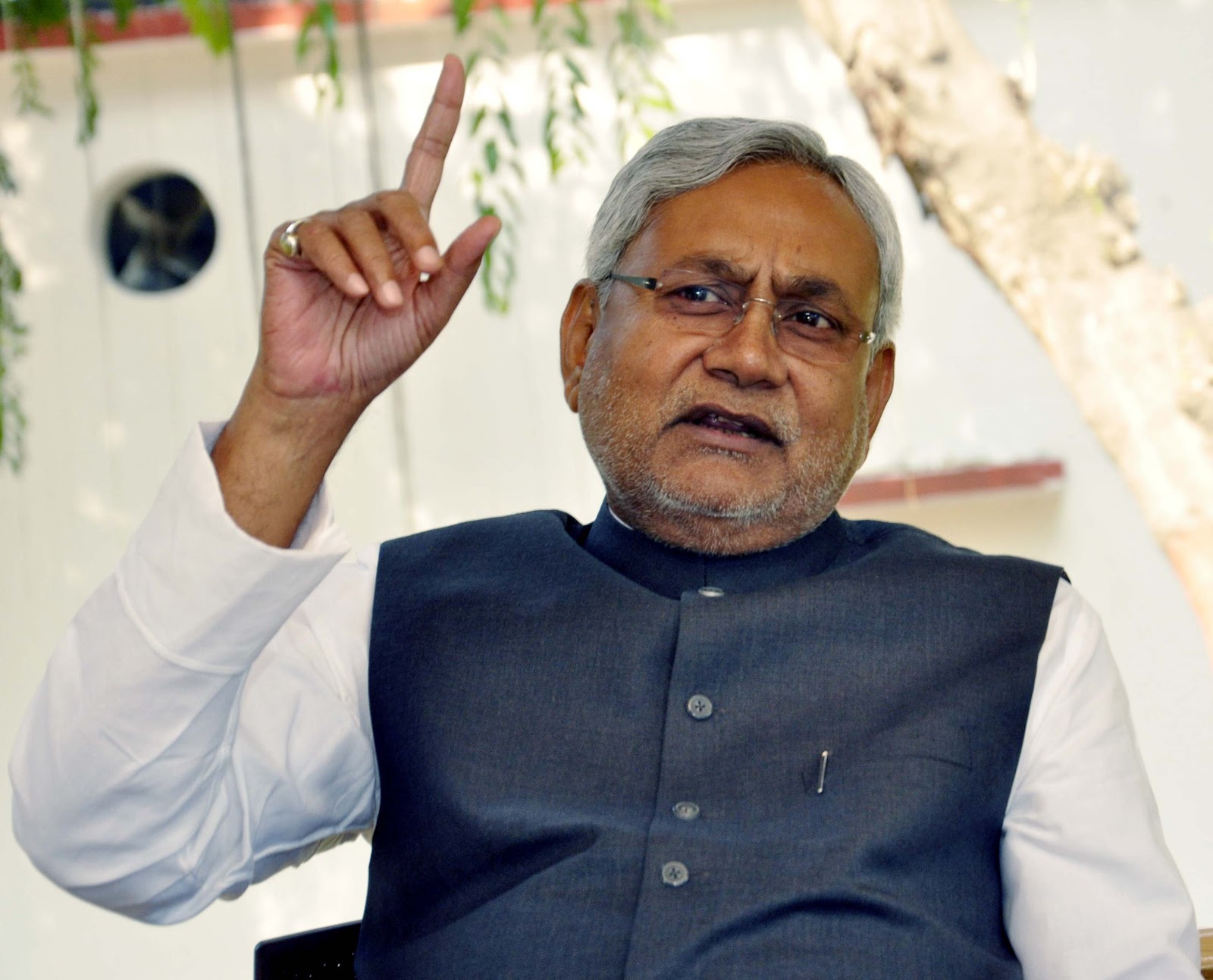
Nitish Kumar (1)“The state government has started the initiative to give free sanitary napkins to school girls, which will cost the state exchequer Rs 35-40 crore annually”, said Bihar Chief Minister Nitish Kumar at a recent media workshop on ‘Health, Women and Development’.

He informed that several self-help groups are now engaged in making quality sanity napkins to cater to school girls’ needs and said the government intends to set up about 10 lakh self-help groups of which about three lakh groups have already come up.

The Bihar CM termed self-help groups “a silent revolution” towards women empowerment. He said the government has adopted women empowerment policy after having started a host of women-centric schemes and giving 50 per cent reservation to women. Stressing on education for girls, Kumar said a survey said if a girl was educated till Class XII, it would automatically address social problems such as child marriage, foeticide, high fertility rate and gender disparity.

“The government had started a school uniform scheme and followed it up with bicycle scheme for girls. Now we plan to open at least one Class XII school in every village in the next three years,” he said.

“It is good that people’s expectations from the government have gone high and we are ready to face criticism and know our shortcomings,” the Chief Minister added.

Kumar further said, “If one would ask him to choose a picture of Bihar’s progress, he would go for a girl cycling her way to school. Reflect on it and you will realise its stand. It’s not only increased school attendance and enrolment but most importantly changed mentality towards girls.”

Jamia Millia Islamia offers four new courses

Jamia-Millia-Islamia

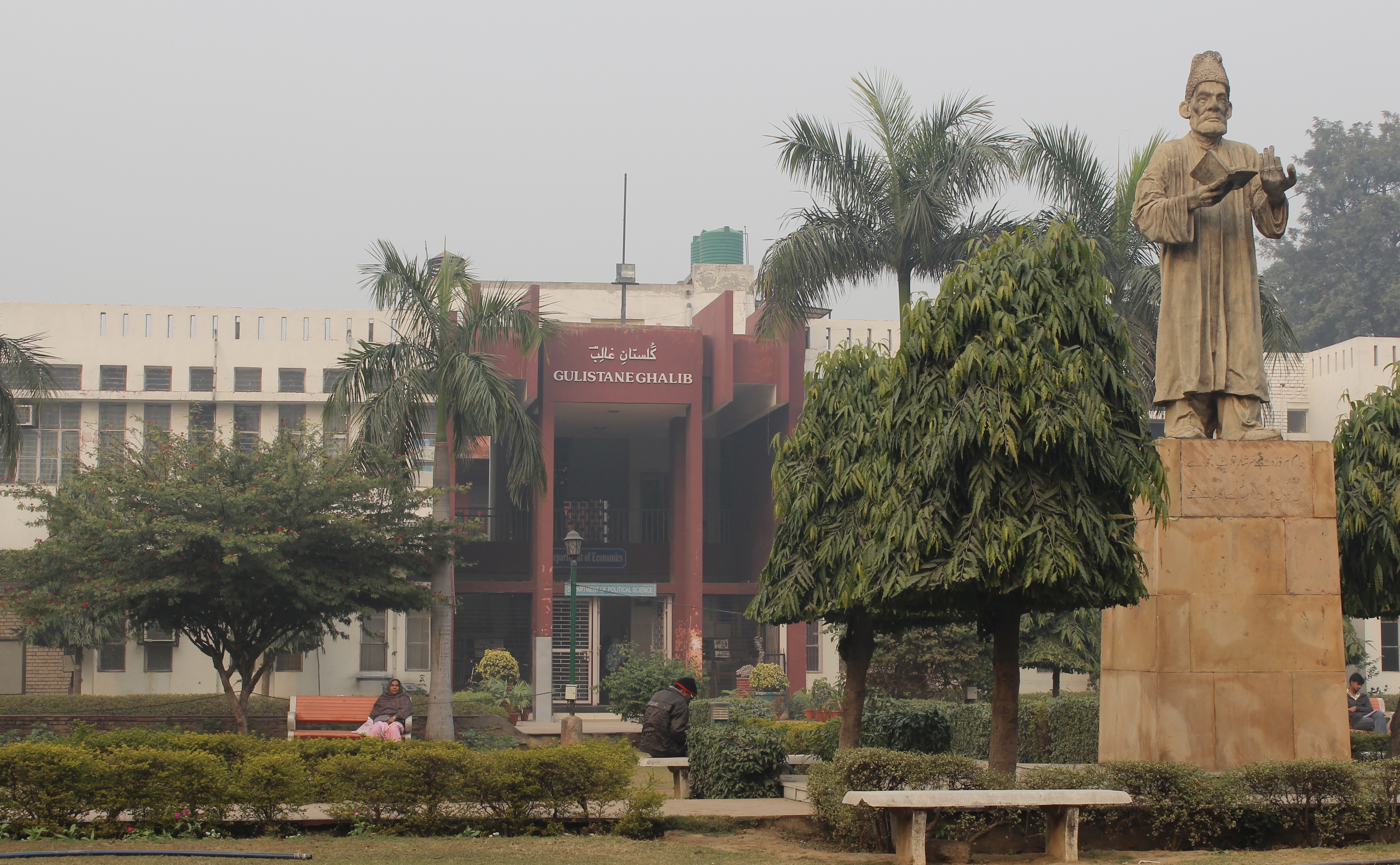
Admissions process for four new courses in gender studies, public health, biophysics and disaster management introduced by Jamia Millia Islamia have started.

“Four new courses – MA in Gender Studies to be offered by Sarojini Naidu Centre for Women’s Studies, MSc in Biophysics (Centre for Interdisciplinary Research in Basic Sciences), PG Diploma in Public Health (Department of Social Work) and Diploma in Disaster Management (Department of Geography) — will be introduced from the academic year 2015-16,” Jamia spokesperson Mukesh Ranjan said.

“In addition to these academic courses, new specialties have been introduced in Master in Physiotherapy (MPT) programme such as ‘Neurology’ and ‘Cardiopulmonary’. These two specialties are in addition to the existing ones such as ‘Sports’ and ‘Orthopedics’,” he added.

The online application process for the admissions to various undergraduate, postgraduate and diploma courses being offered by the varsity have now started and the last date for application is May 1.

Lord Swaraj Paul in India: Focus on education

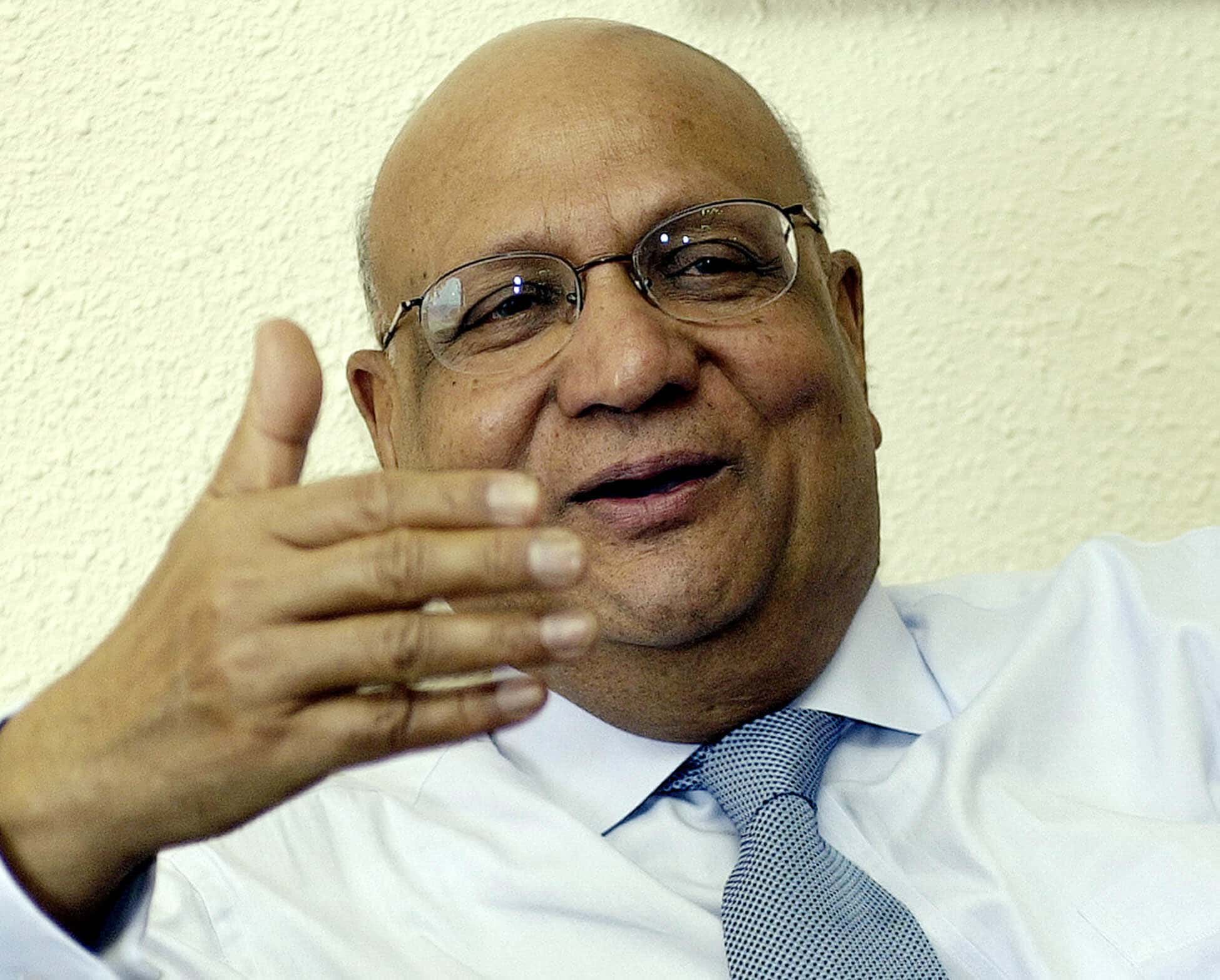
SRI LANKA-BRITAIN-PAULWith the aim of strengthening education ties between India and the UK, NRI industrialist Lord Swaraj Paul will be visiting India this week. The chairman of the Caparo Group will be leading a delegation from University of Wolver hampton, in his capacity as Chancellor, and also hold a series of meetings with senior ministers, including Human Resource Development Minister Smriti Irani and officials to launch a new worldwide drive on the right to education for all.

“I am really looking forward to my visit this time as I feel inspired by the determination shown by Prime Minister Modi to put education at the forefront of his development agenda,” Paul said.

The University of Wolver hampton delegation includes Vice-Chancellor Professor Geoff Layer. It will travel to Delhi and Rajasthan to meet business leaders, education providers and government officials. In addition, there will be events with India-based alumni and presentations of bursaries and scholarships to local school children.

Furthermore, the Delhi visit will conclude with a scholarship event and the signing of a letter of intent forging a new partnership with the International School of Tourism and Hotel Management (IST) Nepal.

“The University of Wolver hampton has a long established special relationship with India which has been built over many years. The University is proud to have a global outlook and warmly welcomes many students from the sub-continent each year,” Paul said.

“This visit will allow us to nurture our links with education and business in India and forge new partnerships, as well as supporting school children through scholarships and bursaries,” he explained.

“As India enters an exciting new phase in its development, we hope to contribute to economic growth and the training and skills agenda,” Prof Layer added.

LinkedIn eyes Lynda.com takeover

linkedInIn a recent development, LinkedIn, the social networking platform for working professionals is set to acquire Lynda.com, an online tutorial and training program. The acquisition will be completed in the second quarter of 2015 and the payments will be made 52 percent in cash and 48 percent stock. The acquisition is done for $1.5 billion.

After the acquisition, the members of Lynda will be joining LinkedIn to help users and professional to accelerate their careers. Users can make use of the Lynda’s library of premium video content across professional topics and languages, job seekers at LinkedIn would be able to sign up for or be prompted to get accredited on needed skills at jobs through Lynda.

Smriti Irani launches 2015 EFA GMR report

smriti irani

Smriti IraniMinistry of Human Resource and Development Minister Smriti Zubin Irani has launched 2015 Education for All (EFA) Global Monitoring Report (GMR) at an event organized by the Ministry of Human Resource and Development in association with the UNESCO GMR at New Delhi recently.

This is the first international launch of the GMR report outside Paris and New York. Holding the international launch in New Delhi is a tribute to India’s progress in school education. The 2015 Global Monitoring Report is the 12th and concluding in the series and is aptly based on the theme ‘Education for all 2000-2015, achievement and challenges.’

There was a brief video address by UN Secretary General Ban ki Moon who called upon the nations to harness the power of education to build a better future for all. The presentation by Aaron Benevot, Director GMR on the key finding of the report highlighted the unfinished EFA agenda also indicated at the progressive gains made in reducing the out of school children, increased enrolment at the primary level and encouraging trends in participation of the girl child.

Addressing the gathering present, Smriti Irani highlighted the strides made by India in reducing the out of school children and achieving gender parity at elementary level thereby contributing to the global progress in the ETA goals. She also elaborated on the recent measures taken by the government in harnessing technology for extending quality education and using education as a means pillar for nation’s character building.

Nobel laureate 2014 Kailash Satyarthi focused on the issue of the challenge of reaching out to the most marginalized children. The presentation by Chernor Bah, member of the high level Steering Committee for the UN Secretary General’s Global Education First Initiative shed light on the rising aspirations of youth viz-a-viz education and the need of national governments to keep pace with the same.

Prof. R. Govinda, Vice Chancellor, National University for Educational Planning and Administration elaborated on the India’s progress towards the EFA and steps to meet newer challenges in India. Gatchew Enigada in his closing remarks dwelled upon the need to sustain the progress to cover the unfinished EFA agenda during the post 2015 SDG regime and the importance of international collaboration in building capacities for harnessing technology for education.

The launch event also included an exhibition put together by the National Council of Education Research and Training (NCERT) entitled’ Shaping the Future Education Agenda’ with participation from the following :

1.      National council of Educational Research and Training (NCERT)

2.      United Nations Educational Scientific and Cultural Organisation (UNESCO)

3.      National Skill Development Corporation (NSDC)

4.      National Institute of Public Cooperation and Child Development (NIPCCD)

5.      National Literacy Mission Authority, Directorate of Adult Education

6.      Department of State Educational Research and Training (DSERT) Karnataka

The exhibition propagated the idea of convergence of services to achieve education for all.

Rajiv Pratap Rudy launches Human and Skill Requirement reports

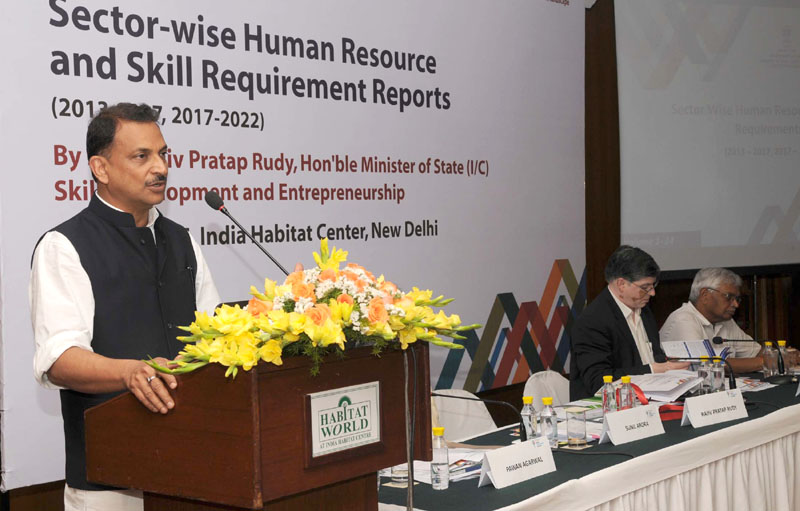
Rajiv Pratap RudyMinister of State for Skill Development and Entrepreneurship Rajiv Pratap Rudy launched the Human Resource and Skill Requirement reports across 24 sectors in India which will serve as the baseline for all skill development initiatives being planned across the country.

According to the reports, the incremental human resource requirement across these 24 sectors is nearly 109.73 million whereby the top 10 sectors account for about 80 percent of requirements. Rudy said that in line with Prime Minister Narendra Modi’s vision of making India the skill capital of the world, this is yet another endeavour from his ministry. He said, as the old adage goes, what cannot be measured, cannot be corrected. The idea behind the skill gap studies is to understand which sectors are likely to face the biggest gaps. He said, it is imperative for us to plan the skilling of future workforce of India on the basis of these reports.

The Minister said that these reports will be used for the implementation of the recently announced Pradhan Mantri Kaushal Vikas Yojna (PMKVY), for State Skill Missions, and for various other skill initiatives being planned across the country.

Rudy further added, “According to the implementation schedule for the National Skills Qualification Framework (NSQF) (a competency based framework that organises all qualifications according to a series of levels of knowledge, skills and aptitude), after 27th December, 2016 government funding would not be available for any training, educational programme, course which is not NSQF-compliant.” He said, all government funded training and educational institutions shall define eligibility criteria for admission to various course in terms of NSQF levels. The recruitment rules of the Government of India and PSUs of the Central Government shall be amended to define eligibility criteria for all positions in terms of NSQF levels. The State Government and their PSUs shall also be encouraged to amend their recruitment rules. After 27th December, 2018, it shall be mandatory for all training/ educational programmes/ courses to be NSQF compliant. All training and educational institutions shall define eligibility criteria for admission to various courses in terms of NSQF levels.

Sunil Arora, Secretary, Ministry of Skill Development and Entrepreneurship said, “There is a changing paradigm in skill training towards demand-driven training to ensure employability and placement of the youth. While the reports give an insight on the quantitative side of Human resource requirement in each of the sectors, the research has also led to useful qualitative findings in terms of highlighting key job roles in the sector, existing skill gaps in the sectors, key interventions required to map supply and demand etc. These will help the Ministry to create a strategy to bind together the islands of excellence that we already have in the country.”

Dilip Chinoy, MD and CEO of NSDC said, “More than 1000 industry experts, 19 sector skill councils, 110 training institutions and 1500 plus trainees have been engaged for the studies.”

The reports were commissioned by National Skill Development Corporation (NSDC) and authored by consulting firm KPMG. The objective of these skill gap reports was to understand the sectorial and geographical spread of skill requirements that exist. The figures have been estimated on the basis of extensive stakeholder engagement including small, medium and large enterprises in every sector as well as Sector Skill Councils (SSCs), training providers in the skills space and academia. The skill gap studies provide a granular data on the skill gaps for two time periods- 2013-17 and 2017-22. Details are as follows:

S.No Sector Employment Base in 2013(million) Projected Employment by 2022(million) Incremental Human Resource Requirement (2013-2022)
1 Auto & Auto Components 10.98 14.88 3.9
2 Beauty and Wellness 4.21 14.27 10.06
3 Food Processing 6.98 11.38 4.4
4 Retail 38.6 55.73 17.13
5 Media & Entertainment 0.4 1.3 0.9
6 Handlooms & Handicrafts 11.65 17.79 6.14
7 Leather and Leather Goods 3.09 6.81 3.72
8 Domestic Help 6.00 10.88 4.88
9 Gems & Jewellery 4.64 8.23 3.59
10 Telecommunication 2.08 4.16 2.08
11 Tourism, Hospitality & Travel 6.96 13.44 6.48
12 Furniture & Furnishing 4.11 11.29 7.18
13 Building, Construction & Real Estate 45.42 76.55 31.13
14 IT & ITES 2.77 5.12 2.35
15 Construction Material & Building Hardware 8.3 11 2.7
16 Textile & Clothing 15.23 21.54 6.31
17 Healthcare 3.59 7.39 3.8
18 Security 7.00 11.83 4.83
19 Agriculture 240.4 215.6 -24.8
20 Education/ skill development 13.02 17.31 4.29
21 Transportation & Logistics 16.74 28.4 11.66
22 Electronic & IT Hardware 4.33 8.94 4.61
23 Chemical & Pharmaceuticals 1.86 3.58 1.72
24 BFSI 2.55 4.25 1.7
Grand Total 459.46 578.62 119.16

LATEST NEWS