Home Blog Page 855

Harvard’s international office soon in Mumbai

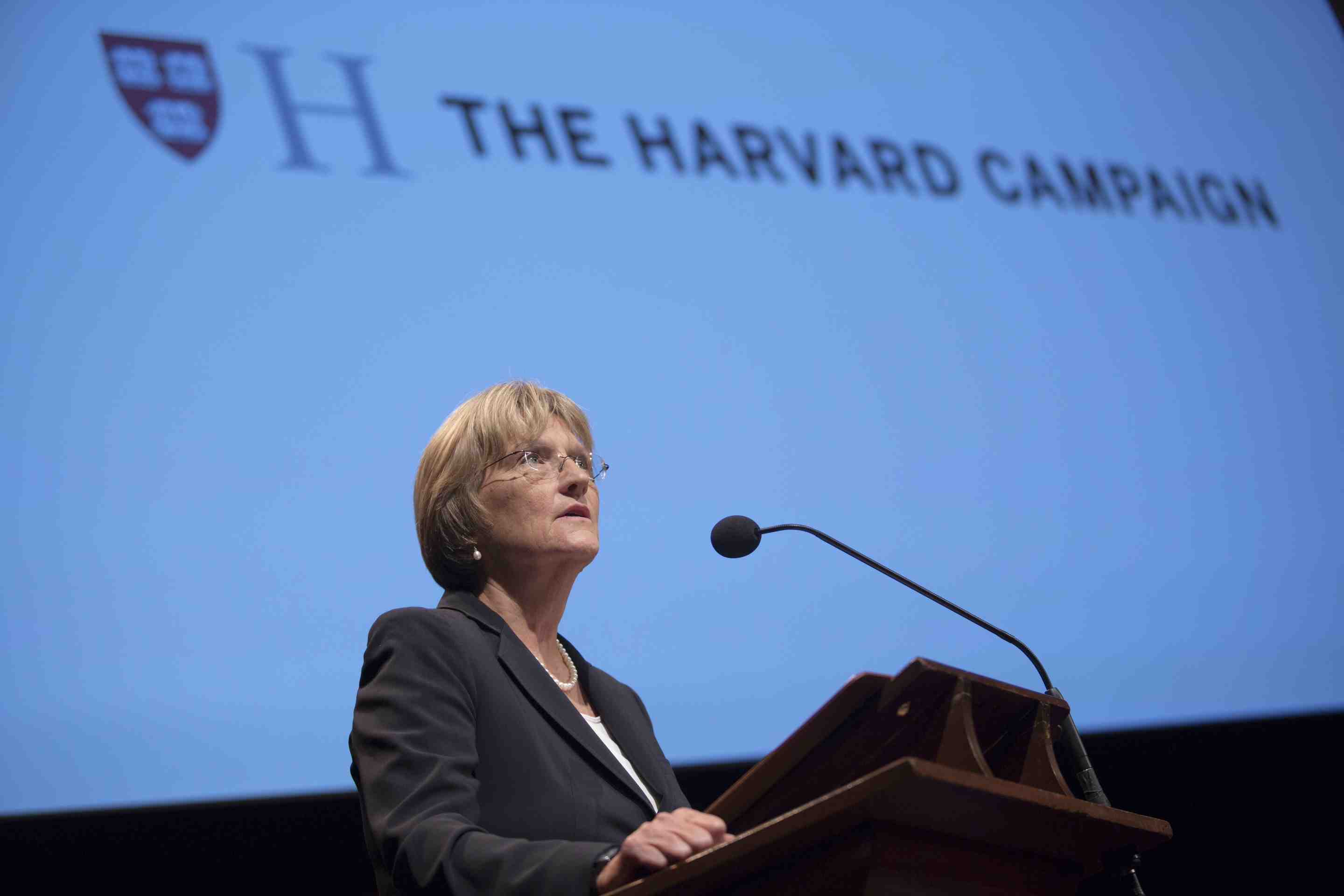
092013_Camapaign_KS_348.JPGThe prestigious Harvard University is going to open international offices in India, China and South Africa.The University, which wants to further aggravate research and academic work with its affiliates, is presently awaiting consent from the Indian government to set up their School of Public Health Office in Mumbai.

Apart from setting office in Mumbai, the university has taken authorized consent to set up international offices in Cape Town and Beijing. Each of these offices are in different stages of development and would soon begin functioning. The Indian office’s proposal is in its nascent stage of development compared to that of in China or South Africa. The university is hoping that the Indian government’s approval over the office would come by this summer and they could start working on the same in the country.

It may be mentioned that previously, Harvard University President Drew Faust had visited India and China to expand the reach of Harvard and its possibilities to the rest of the world and its associate nations.

Maharashtra seeks info on single-student colleges

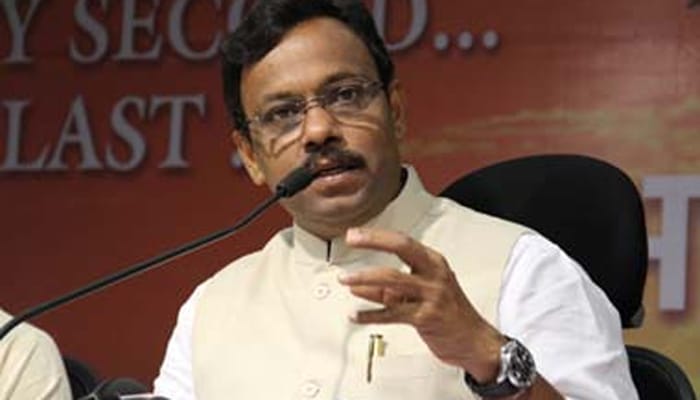
Education minister Vinod TawdeThe Maharashtra government recently admitted in the state assembly that five colleges were operating with just one student while 151 others were having two to ten students in the State. Members raised concern over deteriorating quality of higher education while demanding to close such colleges. During the question hour, Ganpat Gaikwad and others raised the issue that 423 colleges were having just a single student while 1,794 were having two to ten. They pointed out all these colleges were falsely claiming scholarships and were duping the exchequer.

Senior member Ganpat Rao Deshmukh raised fears regarding the deterioration in the quality of higher education due to such false colleges and demanded that they be shut down, irrespective of they were aided or unaided. Education minister Vinod Tawde has assured the government would seek information from the respective universities and table it before the house for further action.

Tawde also informed that the government had fixed minimum strength for the colleges at 60% of intake capacity for urban areas, 50% for rural and 40% for tribal areas. He said universities deputed Local Enquiry Committees (LECs) for verification of infrastructure and strength of teachers and students. It was only after LECs’ green signal that the colleges were granted affiliation. “The Maharashtra Universities Act, 1994, has entrusted universities to take action against such colleges,” Tawde told the House.

DU’s UG admissions may go fully online

DU AdmissionsThe application process for undergraduate admissions for the academic session 2015-16 of Delhi University could go completely online. The university has formed a 23-member committee to work on the admission policies and according to sources many are of the view that after the postgraduate admissions, the registration for undergraduate admissions should also be completely online.

Although the university introduced online centralized registration forms for the first time in 2012-2013, it also continued with the offline centralized OMR registration forms.

The recommendations of the committee on admission is very important since the university is likely to introduce certain changes because of the proposed Choice Based Credit System. Discussions on the Common eligibility criteria are also likely. The admission committee comprised deans from faculties of science, commerce and arts, nine college principals and members from the executive and academic councils. The dean of students’ welfare is the convener of the committee.

The admissions will start from May. DU admits 54,000 undergraduate students in various courses across colleges. Centralized online application process for PG courses has already started.

Consultative Committee Meeting held to discuss ‘National Education Policy’

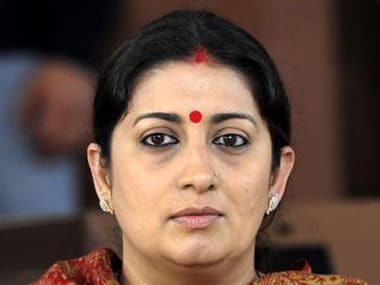
smritiConsultative Committee of Parliament for the Ministry of Human Resource Development was held recently to discuss the “National Education Policy”. The Union HRD Minister Smriti Irani welcomed the members attending the Parliamentary Consultative Committee Meeting. Upendra Kushwaha, Minister of State for HRD also attended the meeting.

JS, Ministry of HRD highlighted the need for formulating the New Education Policy. The presentation brought out the fact that since technology has evolved and MOOCs, Distance Learning and on line courses are the emerging areas today in the educational scenario, there is a greater need to work out a New Educational Policy. The New Education Policy aims at meeting the twenty- first century challenges – globalization and liberalization.

Thirty-three themes- thirteen under school Education and twenty under Higher Education have been identified for the consultation process of the New Education Policy. The rationale and objectives for the consultative process is a time-bound, grass-root consultative process; and an on-line consultation and complete transparency of consultation process through MyGov.in; Under Grassroot Consultative process, around 2.5 lakh meetings will be held at village level; approximately 6600 meetings at the Block level, 676 at the District level and 3700 meetings will be held at the Urban Municipal Bodies level.

States/UTs could hold more than one meeting at the State level involving various stakeholders. Thematic Consultations through experts’ workshops will also take place from April-September 2015. The entire consultations will continue till December, 2015.

During the meeting the emphasis was laid on the fact that lower primary level education and primary level education needs to be strengthened; learning outcomes need to be improved; moral education needs to be emphasized; and the problem of scarcity of teachers at all levels needs to be tackled. Some members raised the issues like need to review the no retention policy up to eighth standard in schools, skill development and life skills; and measures to check absenteeism of teachers in schools, especially in rural areas.

XSEED Education takes over Pleolabs

XSEEDSingapore based K-12 education startup, XSEED Education has acquired Pleolabs, an online education and learning management business of an Indian Education technology startup.

XSEED Education, innovative K-12 startup is focused on enhancing learning with proprietary curriculum, training and assessment capability. The learning program will help the students to develop their minds. The program will be integrated with the well researched curriculum with ongoing teacher development, application oriented student resources and skill based assessment.

To give a better learning experience for students, teachers and parents with the help of new age technology solutions, Pleolabs empowers management with Gopleo, easy to use and manage social learning platform that digitizes a school’s entire learning cycle from planning to student engagement, assessment, outcomes analysis and individual improvement.

Anustup Nayak, Vice President, XSEED Education said, “The acquisition of Pleolabs signals an important step in the development of the XSEED cloud school and personalised learning for children that is focused on thinking skills. Gopleo brings on board great user and process management architecture that integrates well with our curriculum, teaching and assessment capabilities. Their team will bring solid technological expertise and entrepreneurial energy to XSEED.”

XSEED plans to enhance the school learning program by building a digital learning eco-system that enables learning for every child through interactive engagement, differentiated curriculum, and real time assessment.

Need Concerted efforts to improve education system: Wipro Chairman

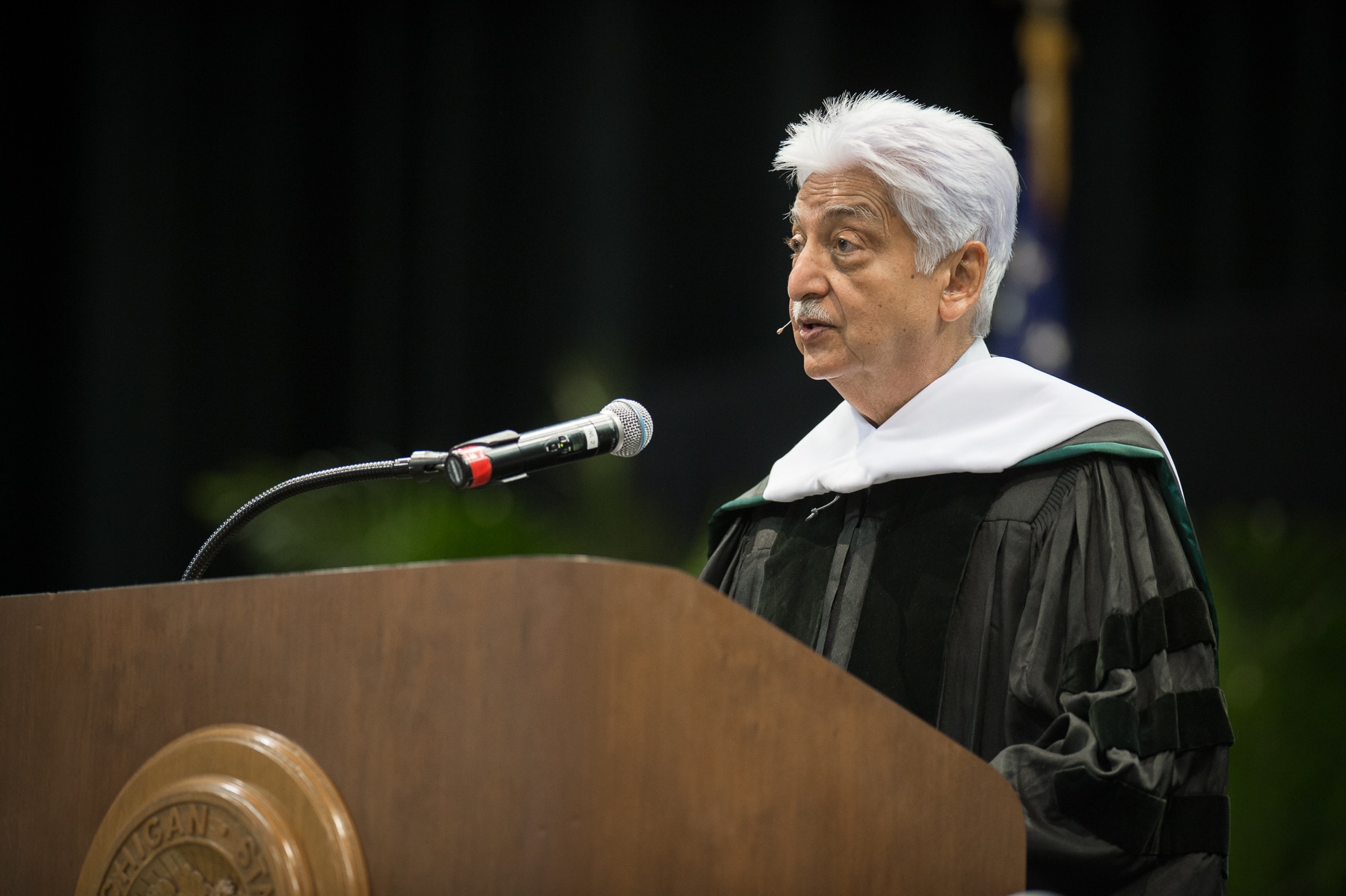
Azim PremjiWipro Chairman Azim Premji called for a concerted effort to improve India’s education system in an address to organisations affiliated to the Rashtriya Swayamsevak Sangh.

He further said, “I believe that merely speaking at a particular forum does not in any way mean that one endorses all, or any, of the views that might be expressed at the forum, or which may be held by the organisers. So I see no issue in speaking at an occasion where people have gathered to discuss how to contribute to the country.”

“Some people expressed apprehension about my participating in this function,” Premji said.

He further added, “They felt that by addressing a forum like this I would be seen as endorsing the ideology of the Sangh. I did not follow their advice because I am not a political person. I am, however, deeply interested in and concerned about my country.”

‘India’s education system does not foster Spirit of Inquiry’

indian's education system

As a result of India’s education system hardly fostering Spirit of Inquiry, the country suffers from a dearth of innovators or scientists. This is despite the fact that India has a huge population of 1.2 billion.

An article by Ravindra P Nettimi from Indian Institute of Science Education and Research (IISER), Pune, Madhur Mangalam from University of Georgia, and Mewa Singh from the University of Mysore, recently published in the journal Current Science talks of the lack of a culture of research in the country’s under-graduate courses.

“This is what prevents us from discovering great things,” said Professor Uma Shaanker, scientist and teacher at the Department of Crop Physiology, University of Agricultural Sciences, Bengaluru. They say a culture of asking questions and undertaking research would help in the making of innovators. In the article, Mewa Singh said, “Teachers play an important role in stimulating students to raise questions. ”

Uma Shaanker said, “Most students in BSc and post-graduate courses have never participated in a journey of discovery. While our students have a lot of knowledge through books, their minds are not trained to ask questions. They then become second-rate scientists.”

“If undergraduates are given research projects, it would help them take up a journey of discovery,” he added.

Only 0.56 percent disable students in top colleges

200309873-001There are only 8,449 disabled students, or 0.56 percent, studying in the country’s 150 top universities and colleges that have a total strength of 15,21,438, said a recent survey conducted by National Centre for Promotion of Employment for Disabled People (NCPEDP). The national survey ‘Status of Disability in Higher Education’ was released as part of the 3rd National Convention for Youth with Disabilities.

The nationwide survey of status of disabled students in top Indian colleges, institutes and universities, revealed that of these differently-abled students, 74.08 percent were male and 22.07 percent were female students. Of the over 200 institutions that were written to,150 responded — which included all the 16 Indian Institutes of Technology (IITs) and 13 Indian Institutes of Management (IIMs).The colleges were identified on the basis of streams and courses on which the survey was to be conducted.

It may be mentioned that last year, the total number of students with disabilities was 0.63 percent.

Javed Abidi, Director, NCPEDP, said, “It is a big reason to worry that years after the law, only 0.56 percent students are disabled”. He also pointed out a significant number of institutes that did not respond was that of private institutions, which he said were the ‘biggest culprits’. He said that the first step which needs to be taken is that of ‘accessibility. “It is about removing both — architectural and technological barriers.Only 0.56 percent disable students in top colleges

TERI University signs MoU with Centre for Air Power

Pic 1The TERI University which offers Masters and Doctoral Programmes related to sTERI University signs MoU with Centre for Air Powerustainable development, and the centre for Air Power Studies (CAPS) which focuses on research and analysis in areas related to national security, defence and aerospace, have entered into a collaborative arrangement.

Through this MoU, serving officers of the Indian Air Force (IAF) would be admitted to the doctoral programme at the TERI University in research areas related to politics and governance, energy security, resource management, economics, statistics and social science analysis. They would be jointly supervised by faculty members of the TERI University and of the centre of Air Power Studies.

Dr Rajiv Seth, Acting Vice Chancellor, TERI University, said: “Through this arrangement, we will be able to build capacity in the country in the nexus between issues of national security and sustainable development. Serving Air Force officers will do doctoral level research under the guidance of experts in both these strategic areas”.

Air Marshal Vinod Patney (Retd), Director General, CAPS, said: “Towards widening its areas of research, CAPS has taken the initiative and entered into a joint MoU with TERI University as a collaborative research partner. Through this arrangement, nominated scholars would now be able to carry out research (while pursuing a PhD degree) in areas related to Sustainable Development and National Security Studies.

Interactive learning

Trushal B. Alshi, Founder & Managing Director, Willswell Technologies Private Limited, Thane, talks to Elets News Network about how interactive projectors are taking over interactive whiteboard as they are flexible and portable to carry. Interactive projectors are easy on pockets giving more advantages later.

Interactive ProjectorsWhat is the difference between Interactive Whiteboard and Interactive Projectors?

Interactive projectors have more flexibility like portability and interactive display size whereas Interactive boards have fixed size with bulky frames, not portable. Interactive boards cannot be moved from one class to other.  Moreover, if there is space crunch, the existing conventional white board or plain wall or 65 inches or more, TV can be converted into interactive one. White board occupies additional space.

What are the weaknesses of Interactive Whiteboard?

Interactive Whiteboard has small display size, occupies more space (additional space other than normal white board for teaching with normal chalks) and is less portable.

What is the cost of deployment of Interactive Whiteboard and Interactive Projectors?

Interactive projectors almost are half the cost of interactive whiteboards even giving more advantages later. Willswell provides interactive kits which convert existing projector into interactive one.

How much is the acceptability of interactive whiteboard and interactive projectors at K-12 and higher education level?

The acceptability of the technology is minimal at both the level because of the lacj of awareness about the usage and benefits of the technology. Also there is very less digital content available for K-12 and higher level.

What is the interest of the institutions? Do they prefer interactive whiteboard or interactive projectors? Why?

In the current trend, they are accepting interactive projectors to conventional interactive white boards. But there are less interactive kits available in the market. Once the product’s awareness increases, preference will be more for interactive kits and interactive projectors.

What are the utility factors contributing to interactive whiteboard and interactive projectors market?

Interactive projectors are not only suitable for schools but also suitable for home study and computer learning. Same kit can be used in school, conference rooms and home.

In which cities do you see the penetration of the two products?

We see the adoption in Mumbai, Pune and Delhi.

What are the new technological trends in education sector?

The other trends are Robotics and 3D viewing of digital contents

LATEST NEWS