Home Blog Page 857

The ailing Higher education system in J&K

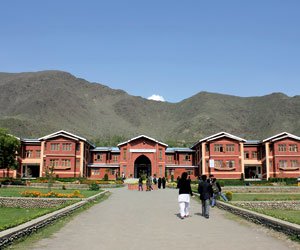
Top Engineering Colleges in Jammu & Kashmir 2013Emphasizing to promote good quality of education, there is desperate need to provide quality higher education in Kashmir. Higher education has always been ignored in the State but with the formation of the new government, having efficient brains as their ministers, there is a hope to giving due consideration to higher education in Kashmir.

The colleges offering undergraduate courses are not the attraction for students, owning to falling quality of education in these institutions. Not only this, the contractual system of teachers has further deteriorated the ailing system of academics in the State. Due to lack of quality research experience, the faculty is not able to do justice to the job and failed to make impact on students mind.

‘Improving quality of education is must’

Emphasising on affordability and improving the quality of education so to be accessible to all strata of society Vice President Hamid Ansari said failure to properly educate and provide productive employment to Indians and especially youths will have serious economic implications for the country.

Addressing the convocation at Jamia Hamdard University recently he said, “India has a majority of working population and by 2022, 63 percent of population will be in working age group.” He also pointed out that the country’s economic condition can improve only if ‘Higher levels of education and skill development’ and creation of an atmosphere for rapid growth of economy and quality employment were fulfilled to meet the needs and aspirations of youth and the deprived sections of the society.

The Vice President stressed on educating, skilling and providing productive employment to millions of youths which is need of the hour in order to reap the benefits of the demographic dividend. He also showed his concern about the SCs, STs, Muslims, women and other backward region of the country which lag behind in education.

He highlighted the need to develop effective higher education system so that the youths can get employment passing out of their higher education institutes. “The education system will have to gear itself to support nation’s economic agenda by creating job-ready and employable workforce. This would be critical for achieving faster economic growth and providing decent employment opportunities to growing young population and needy sections of the society,” said the Vice President.

DoNER Ministry announces ‘Brahmaputra Study Center’ for Guwahati University

undergraduateThe Union Minister of State (independent Charge) of the Ministry of Development of Northeastern Region (DoNER), MoS, PMO, Personnel, Public Grievances, Pensions, Atomic Energy and Space, Dr. Jitendra Singh, while addressing the 25th Convocation of Guwahati University  has announced the setting up of “Center for Brahmaputra Studies” in the University and said, he dreams of the day when students and scholars form far and wide would come all the way to Guwahati in pursuit of specialized learning and research.
Complimenting the brilliance and diligence of the scholars from a country where inaccessibility and distance is a constraint, Dr. Jitendra Singh on citing Prime Minister Narendra Modi’s vision for Northeast said, the years to come may witness the region developing as an organic capital of India and when that state is achieved, we will find scholars from far and wide coming to Northeast for research in organic science, organic flora and organic growth. In this context, he also referred to the work undertaken by DoNER Ministry as a follow up to Prime Minister’s announcement for setting up six Agricultural colleges in the region and Rs. 100 crore allocated exclusively for organic farming in the year 2014-15.

Referring to some of the recent initiatives of DoNER Ministry, he spoke of ‘Ishaan Uday’- special scholarship scheme for students of the region and ‘Ishan Vikas’- a scheme to provide apprenticeship facility to students of the region in IITs, NIITs and NIFTs of other parts of the country. He assured that DoNER Ministry will make every possible effort for comfortable and safe hostel accommodation for such students in other cities of India.

Dr. Jitendra Singh called upon the Vice Chancellor and the senior faculty members to prepare a list of potential students capable of pursuing specialist course or Higher Studies and the DoNER Ministry will try to facilitate their entry into such universities. However, he appealed to the students that after pursuing their higher studies in leading universities in other parts of the country, they should come back to their respective States.

Expressing concern over the exodus of students and youth in search of jobs and higher studies outside Northeast, Dr Jitendra Singh proposes to work in close tandem with the HRD Ministry and requested to depute renowned faculty for universities in the Northeast by providing them extra incentives and perks. He has also informed that he has plans to arrange Job fairs and campus interviews by renowned Multi National Companies in the capital cities of eight States because this experiment he had even tried in his own constituency and the result were amazingly encouraging as more and more youth found employment at their doorstep and also placement in their respective native zones.

As a DoNER Minister, Dr. Jitendra Singh said, he would try to work out the feasibility of student exchange programmes with some of the leading foreign universities and referred to his meeting with the Vice Chancellor of Cambridge University who also happens to be a medical professional. The Governor Assam, P.B. Acharya and the Chief Minister of Assam, Tarun Gogoi were also present on the occasion.

Special act to control private schools by Assam govt

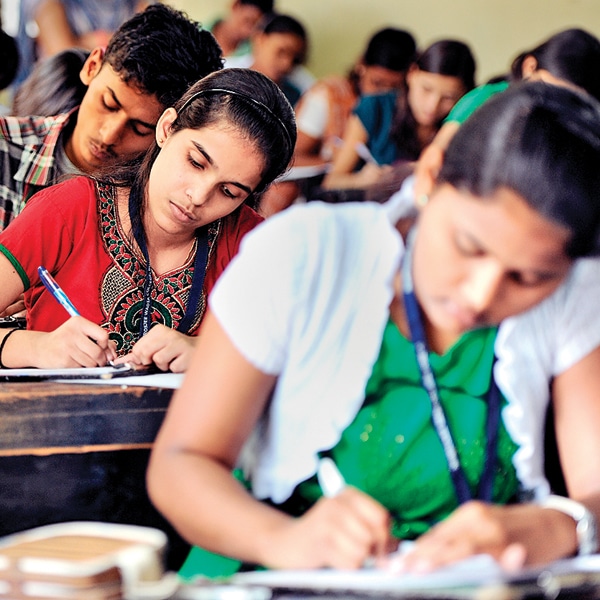
321624-board2It is time for private schools in Assam to pull up their socks. The state government is soon going to bring in a special act to control the operations of private schools, which not only are allegedly charging exorbitant fees, but also not giving salaries to teachers as per norms.

In response to a query by Asom Gana Parishad (AGP) MLA Keshab Mahanta during the question hour, education minister Sarat Borkotoky said private English medium schools are not following the norms regulated to building, land, safety, fees structure and salaries of teachers among others. Borkotoky said, “I will talk to the chief minister and see how to handle this. We will try to control them by enacting a special Act. They charge very high fees from students but still do not give salaries to teachers as per norms. Most of the schools are also not following set rules in appointment of teachers like BEd qualified faculty members.”

The minister further alleged that private schools do not even respond to any communication by the ministers.

Presently, there are 1,167 private schools, excluding play schools, and 420 private junior colleges are in the state.

High Court supports ‘writer’ facility for special kids

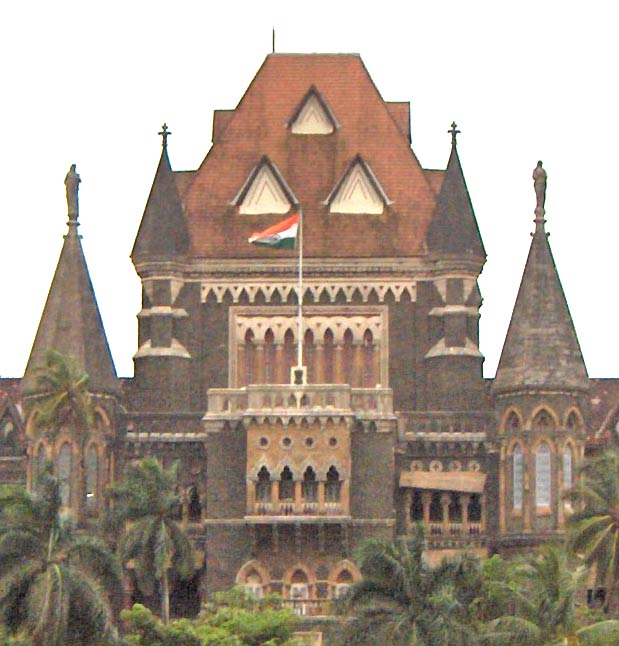
Bombay-High-Court-Mumbai-1The Bombay High Court Chief Justice Mohit Shah suo motu turned a letter into public interest litigation and issued notice to Central HRD Ministry, the NIOS director in Pune and others for not allowing children with disabilities to use a ‘writer’.

The letter written to the Chief Justice by mental health professionals Dr Harish Shetty and Dr. Sanghnaik Meshram stressed that the “rights of those appearing for NIOS exams 2015 have been violated by the Director NIOS Board, Pune.”

Children are certified by competent Medical authorities and only then were they granted the facility of a writer by the NIOS board for April 2014 and Oct 2014 NIOS Secondary and Senior Secondary examinations. But ten days prior to the next NIOS exam due to commence on April 10, parents received a letter from the regional Director NIOS, Pune granting an hour extra to such students instead of a writer as requested by them.

The letter sought urgent intervention for justice to these students by restoring immediately the ‘writer’ facility and taking action against the NIOS director of the mental agony caused to students. It said, “The NIOS bye law 12.2 clearly provides for writer facility to the classified students. The Disability Act also specifies and prescribes for writer facilities, besides, a February 2013 letter from Ministry of Social Justice and Empowerment Department of Disability Affairs also grants the same concessions”.High Court supports ‘writer’ facility for special kids

“Technical education to promote Make in India”

Colossal-WorldImparting technical education will provide a thrust to ‘Make in India’ concept, Union Minister of Micro, Small and Medium Enterprises Kalraj Mishra said.
The minister said that field of technical education is expanding leaps and bounds and qualified engineers with state of the art skills are the need of the hour. He further urged the students to contribute towards betterment of the country.

Imparting technical education will provide a thrust to ‘Make in India’ concept, Union Minister of Micro, Small and Medium Enterprises Kalraj Mishra said.

HRD panel terms UGC a failure

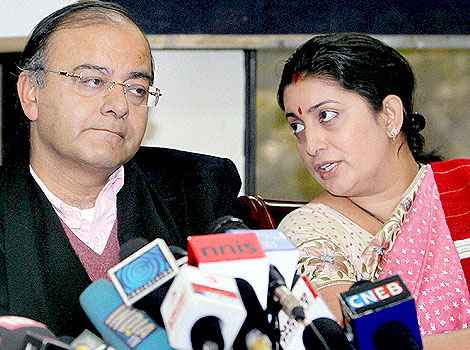
Jaitley and SmritiA panel set up by HRD minister Smriti Z Irani to review the working of the University Grants Commission has said that the regulator not only has “failed to fulfill its mandate but has also not been able to deal with emerging diverse complexities and therefore must be scrapped.”

Headed by former UGC chairperson Hari Gautam, it is one of the first committee set up by the HRD Minister.  Any “reshaping or restructuring” of UGC “will be a futile” exercise and so will be amending the UGC Act, the panel said.

The panel now plans to amend the UGC Act and recommends setting up of National Higher Education Authority through an act of Parliament, for which the panel has also prepared a bill draft; but said that till the time such a body is set up, HRD Ministry can bring about many changes through executive order. The suggestions include opting for a national research aptitude test for admission to Ph.D. It also plans to do away with 10 years as professor criteria to become vice-chancellors.

As hailed by Prime Mnister Narendra Modi, panel also suggests adoption of Yoga and transcendental meditation as part of teachers exercise. The two-volume report submitted to the ministry says UGC is “plagued in the main by reductionism in its functioning.” The report also states, “It (UGC) has side-stepped its function of being a sentinel of excellence in education and embraced the relatively easier function of funding education.” It has specifically pointed out that the UGC staff is unhappy as only “few find favour and are delegated with powers to perform in important areas while many of them are left out with hardly much to contribute.” “It is said that they are pushed around through an element of fear and threat. The overall impression is that there is a man-made crisis which seems to be cause of unhealthy ambience and poor performance of UGC,” the report said, adding there should be pay parity with central government employees.

New IITs, IIMs will look different

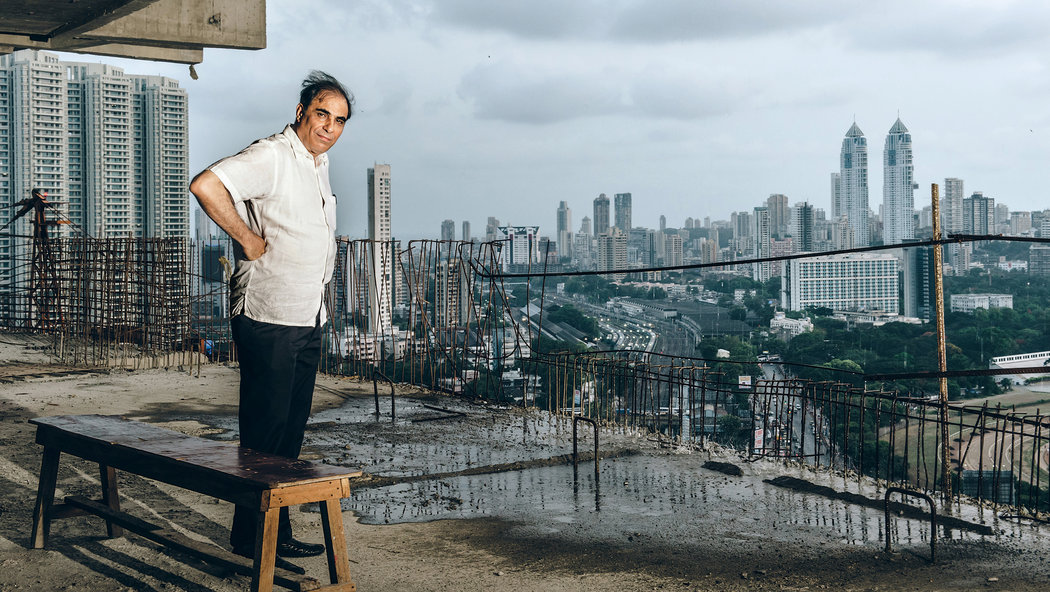
HafeezMany more Indian Institutes of Technology and Indian Institutes of Management may come up in the country before long. A Human Resources Development ministry committee, headed by education secretary and consisting of KV Kamath, chairperson, ICICI among others, has accepted the recommendations submitted by noted architect Hafeez Contractor.

The concept was basically prepared for the central educational institutions after undertaking a case study of national and international educational institutions. The case study also included a detailed analysis of the location, land parcel, students enrolled, faculty available, courses offered and the facilities provided at the select institutions.

According to Hafeez Contractor’s recommendations, the NITs with 6,000 students should be built on 150 acre campus. Besides, the IITs with 10,000 students should have a 260 acre campus while the Central Universities with 10,000 students should be built on 250 acre campus. In case of Indian Institutes of Management, Contractor said that those with 1,000 students should have a campus of 5 to 10 acres.

The concept was broad enough in its sweep to take care of the regulatory bodies and calculations based on floor plans, administrative, academic blocks, faculty and staff accommodation and hostels in IIMs, IITs and NITs. His recommendation also included a model architectural map indicating the horizontal and vertical spread of the building blocks with scope of future expansion.

Gujarat University may close down external courses

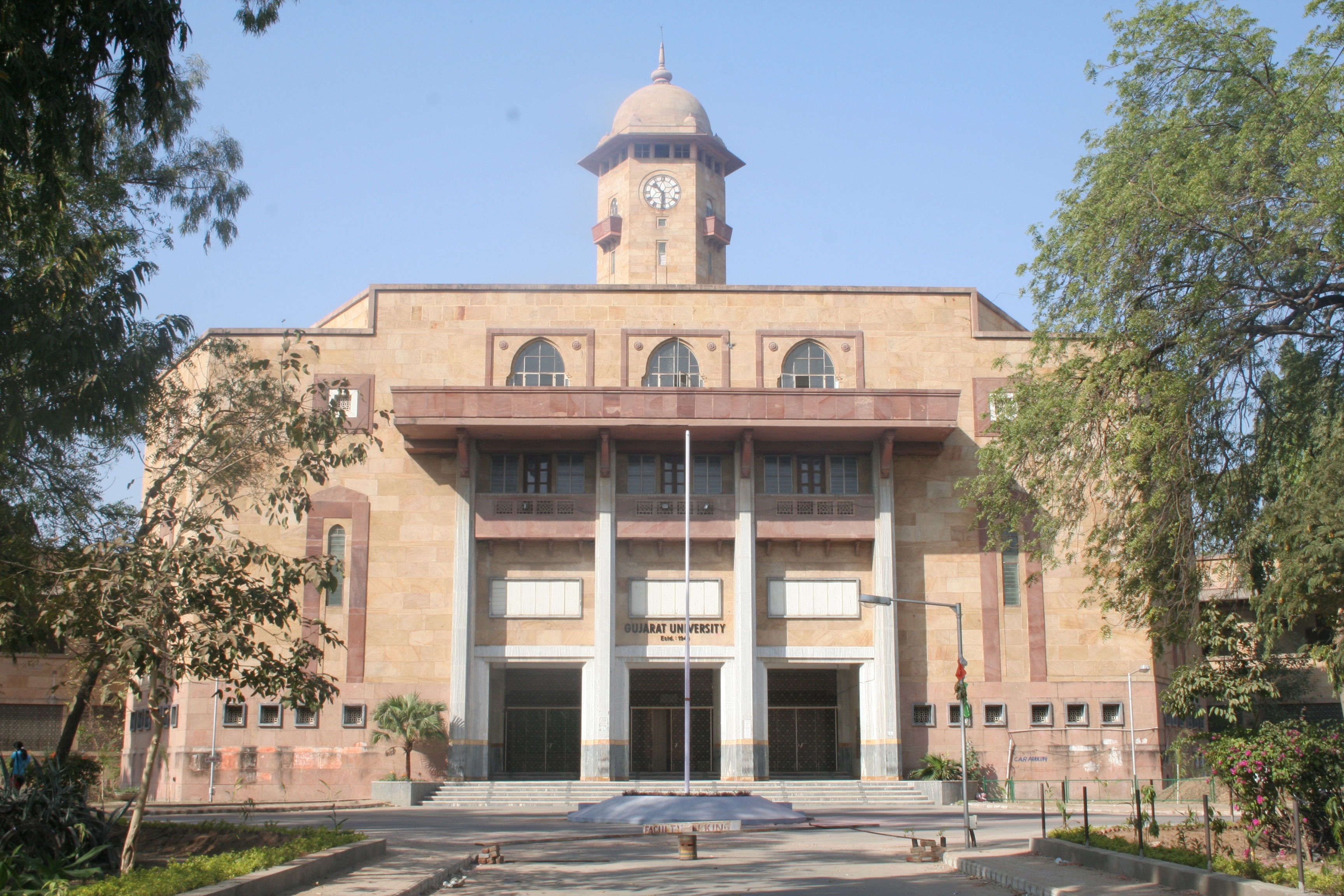
Gujarat UniversityGujarat University (GU) Vice-Chancellor MN Patel recently dropped hints that the external courses or distance education for its various faculties may soon be closed down. The VC said that if the university officials had objections to the external courses, he would consider closing them down. He further added that after the university had invited applications for the external courses, the university officials opined that Dr Babasaheb Ambedkar University catered to distance education.

The senate members had asked the GU for the manuscripts of syllabus to the external students. Around 15,000 external UG and PG students are believed to be registered with the Gujarat University.

The VC categorically stated that the grant-in-aid science colleges, running the self-financed colleges, will not be permitted to admit students in the first year from the academic year beginning June. He said that the college managements made money. He said that the science colleges needing the SFI colleges must have separate faculty and buildings.

TN, Kerala account for 40 % of education loans

Loan

Tamil Nadu and Kerala, two south Indian states, account for nearly 40 per cent of education loans disbursed in the country. The Department of Financial Services (Ministry of Finance) has release data showing that the banks have disbursed Rs 16,380 crore and 10,487 crore in Tamil Nadu and Kerala respectively.

As many as 9.56 lakh students from Tamil Nadu and 4.03 lakh students from Kerala have availed themselves of education loans.

According to the state wise data, over 54 per cent of education loans have gone to the applicants in south India. The total outstanding educational loan for the country was about Rs 70,475 crore. The banks could disburse only Rs 6,697 crore and Rs 3,053 crore for UP and Bihar respectively. The students in Maharashtra — another big state — have been granted loans worth Rs 4,906 crore only. Madhya Pradesh has got Rs 1,945 crore. The entire Northeast has got only Rs 736 crore. Prime Minister Narendra Modi’s home state Gujarat accounts for little more than Rs 1,508 crore, with barely 50,000 students opting for loans.

At a review meeting recently called by the Finance Ministry for the public sector banks, the skew in disbursals to Kerala and Tamil Nadu was discussed. “The Ministry of HRD has given a list of 1,100 A-rated institutions and universities to the banks and they do not have any problem in lending to the students in these institutions. They should not consider the mortgage but focus on employability,” said a top official who was present at a Ministry review meeting called for a correction in the trend.

The question is as to what makes the education loans so popular in Tamil Nadu and Kerala? “The high literacy level in these states is a major reason. Another reason is that the huge number of educational institutions, especially professional colleges. Most students in southern states go for higher education and are keen on taking up jobs,” said V R Iyer, chairperson and managing director of Bank of India.

M Narendra, who recently retired as chairman and MD of Indian Overseas Bank, said, “awareness level of people about the banking system is very high in South India. A lot of information about the education loans is available in the public domain. A large number of students from the middle-class families apply for such loans in the southern states.”

LATEST NEWS