

Home Blog Page 860

Educational inequalities

Education inequality.pix

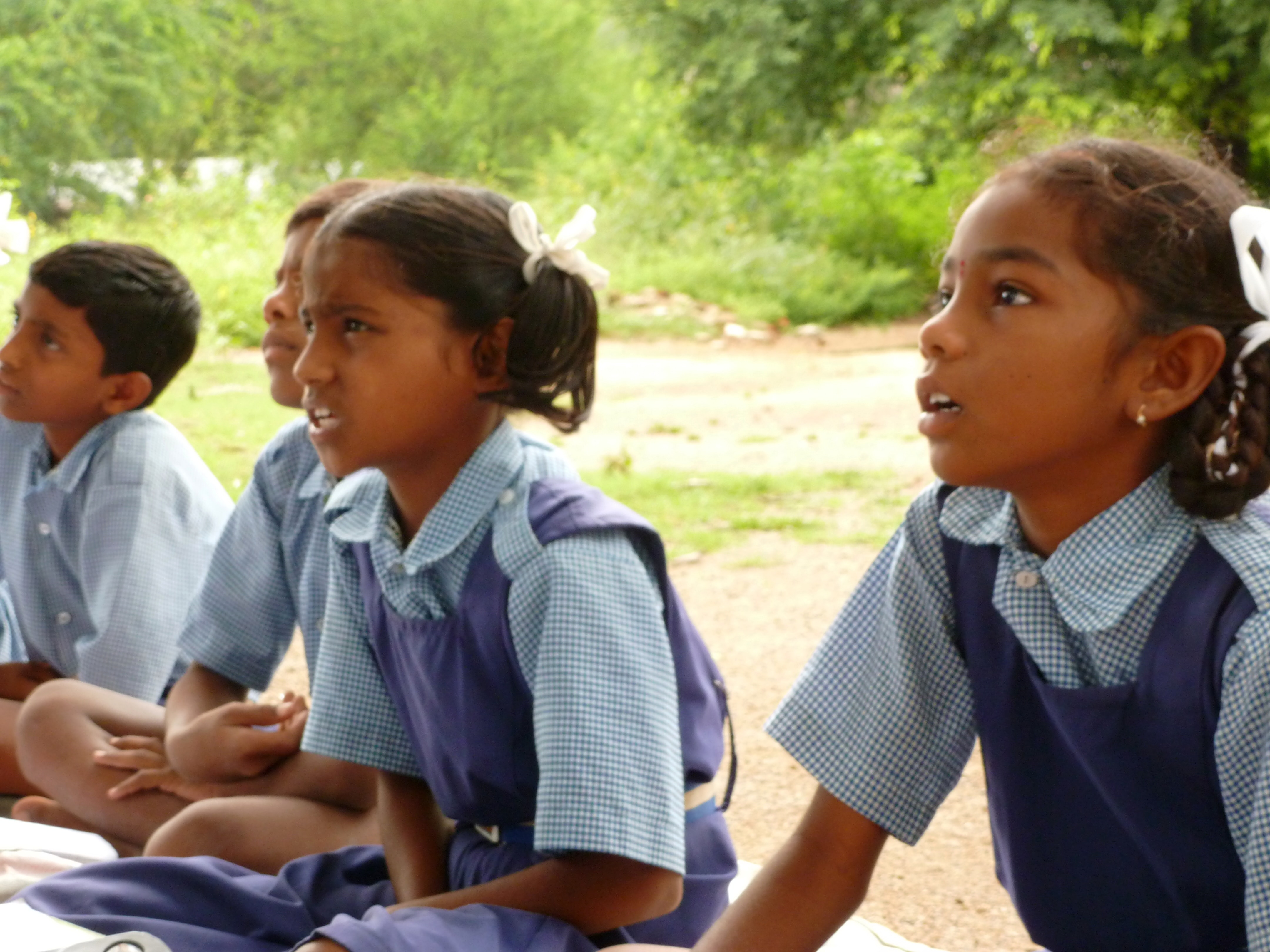
India is regarded as a humongous laboratory for sociological experiments by many researchers. This is fundamentally because of the large social stratification, contrasting societies and complicated blends within a society itself, which are enough to provide new insights to social enigmas frequently. The disparities in India are so high that it would be hard to believe that the country that hosts 100 billionaires in Forbes lists, also houses the largest fragment of poor and hungry in the global tally. This is the economic scenario, but it is one of the most influential factors affecting other disparities such as education. On the other hand, such complexities are often interrelated augmenting one other. Educational inequality is the situation or the system in which there exist large disparities in the society on the opportunity and access to education. This is a result of a complicated social structure, which is shaped up by long standing social norms, believe and most importantly, by contrasting economic divisions.

Educational inequality forms up gradually as an ongoing process. Education is affected by social, political and economic status of people. Individuals who are from wealthy section of the society always have the privilege to reach out for better schools and institutions. While those from the deprived section are prone to lower quality, in the process, the system contributes to a deepening chasm. On the other hand, the educationally enlightened group gains more access to political and economic system turning them to be favorable to suit their interest of their own kinds. Such a structure has an adverse effect in the deprived section affecting them from multifarious direction. It is evident from the observation that if educational inequalities can be decimated, a huge change will follow in the social structure. However, to obtain the very change educational disparity, impetus from political and economic sector is inevitable.

India has transformed in a short span to be one of the most progressive nations. Series of economic reforms, industrialization, privatization and other steps by government has wiped out the impasses of Indian society to large extents. This has substantial onus on the unorganized education system of the nation integrating it to be more effective as well as holistic. However, the gap is still serious and it seems there is still much to be done. The gradual change in the economy of the country has influenced education in diverse way. Government has taken extensive initiatives to develop the system to be holistic and equally delivering. The gap is being created by the private players that have turned education to a lucrative business. The equation of investment to create profit has rendered private education a competitive edge. This competition to provide quality in education has taken some of the institutions to heights with global standard. In the same time, this also has an adverse effect creating more spaces dividing privileged and under privileged education. While government budget for education has become increasingly incompetent to compete with private funding, educational inequality has become more conspicuous among the less privileged section of society comprising of lower middle class and the deprived, especially in primary schooling.

Free, open source edu portal

Education related tag cloud illustration

The Gujarat Chapter of Code For India, a US-based non-profit organisation of techies from India launched ‘Skill Up India’ – India’s open source, free, online education portal.

“This is non-profit open education. This is an initiative in democratisation of knowledge and learning. Anyone can come and click on any course they want. The log in procedure is easy and frictionless,” Code For India founder and venture capitalist Karl Mehta told a press conference.

He said that the big universities, offering their entire courses on open domains, was a “massive trend” and India must take advantage of this. “It is like a virtual university. Sitting in India, you can learn exactly what is being taught in the classroom at the University of Michigan, for instance. This is the power of content combined with technology. It is about empowering those who have knowledge to give and those who want to learn,” he said.

There are no criteria for subscribing to the courses offered on SUI. Currently in its initial stages, the portal is working on collaborating with institutes such as the Indian Institute of Management, Ahmedabad, and the Indian Institute of Technology Gandhi Nagar to put up courses. In addition, individuals willing to offer any kind of knowledge can “publish a course.”

The portal is planning to set up a review committee to assess the credibility of instructors and the courses they offer, Mehta said.

In India, where internet connectivity is still poor, the possibility of SUI reaching open education to the last person seems distant. “However,” said Mehta, “with the availability of high quality content we hope will put pressure on the government to enhance the internet accessibility in the country,” he said.

So far, all the courses on SUI are in English, but Mehta said his team had volunteer engineers who could translate them in Indian languages. The SUI initiative is in response to Prime Minister Narendra Modi’s call to “Skill India.”

“The possibilities with this open-source, open-content portal are endless. Institutions can donate courses, individuals can offer courses in any skill, even corporates can put their best practices,” Mehta said. ‘Skill Up India’ is the first project of the Code for India’s Gujarat Chapter, in partnership with International Centre for Entrepreneurship and Technology (iCREATE) and US-India Business Council, Education Foundation.

Barred from books

BarredThe women inmates languishing in prisons across Bhubaneswar have little access to educational facilities even as Naveen Patnaik claims to have initiated a number of reforms and correctional measures for them.
A latest study conducted by the State Commission for Women (SCW) said, “96% of the women inmates do not have any educational opportunities or facilities inside prison. The 4% who have received some educational facility are in the age group of 25 to 35 years.”
As on December 31, 2013, a total of 14,473 prisoners have been lodged in 91 jails across Bhubaneswar out of which 13,832 are men and 641 women (121 under-trials and 520 convicts), the study said.
“We carried out the study in 11 jails, which had the maximum number of women inmates,” said SCW chairperson Lopamudra Buxipatra.
“We found that several women prisoners have a penchant for education. But there is little scope. Not many have access to newspapers and books,” Buxipatra told adding further, “As far as training in vocational skills is concerned, only 10% of the women prisoners have got some skill development training in tailoring and weaving,” she said.
The study revealed that altogether 21 out 62 women convicts are doing some paid work. The vocational training facility is not available inside the female wards, the study findings revealed.
“Women under-trials have ample time for technical skills or soft skills development courses. But they need to get the opportunity. The jail authorities suggested that computers and women computer instructors should be provided so that the young women can be taught computer skills,” the study report said.
The report also highlighted the ‘violence’ faced by the women prisoners. “Verbal abuse has been cited by women inmates. The abuse is reportedly being done by other prisoners and jail staff. Many women could not reveal instances of violence easily or openly,” the report said.
“We have recommended to the Odisha police and prisons directorate to provide training to their jail staff to improve their behaviour,” Buxipatra said.
The study recommends areas of improvement and new initiatives required on social, economic, legal and other aspects for women in prisons and for life after leaving prison.
The study also highlighted poor implementation of the state-sponsored Mamata scheme in the jails. Though pregnant women are supposed to get Rs 5,000 under the scheme, only four pregnant inmates availed the benefit.
“During the study, which started in July last year, our research team found 11 pregnant women in prisons. However, linkage with the flagship scheme Mamata was reported by only four women,” Buxipatra said.

Recommendations from women’s panel:
Livelihood awareness programmes should be organized
Computers should be provided in women’s wards
Provision of lady teacher to impart adult education to women prisoners
Creche for children of women inmates inside the female ward in every jail
Creation of garden for children inside the female ward
Jail officials to be sensitized to stop verbal and physical abuse of women inmates

Total jails: 91
Women inmates: 641
121 under-trials and 520 convicts
62% of women inmates face murder charges
15 women booked under Arms Act
35 women booked for illegal business
33% of women inmates have access to newspapers


Workshop on inclusive education

InclusiveThe Rehabilitation Council of India (RCI) has a programme called ‘Teachers Education for Persons with Special Education Needs’ (TEPSE) in universities across the country. Forty universities have courses directly being run by departments other than departments of special education or departments of education, said RCI, New Delhi chairperson Sudesh Mukhopadhyay.

She was delivering the keynote address on ‘Inclusive education of persons with disabilities — journey and miles ahead’ at a two-day international conference on Inclusive education-perspective and challenges’ organized by the Karnataka State Open University (KSOU).
Mukhopadhyay said TEPSE is meant for assisting departments of education to launch a special teacher preparation programme for B Ed and M Ed courses. The scheme encourages universities to start M Ed courses in addition to a salary grant a maximum of Rs 2 lakh onwards towards procurement of books and appliances and Rs 4 lakh if both B Ed and M Ed courses are held.

However, these grants can be sanctioned only if staff has been appointed by the universities. She appealed to participants to lobby with respective states to access these funds for special students.
At present, the scheme is in very few universities in the country. RCI-recognized institutes need this financial support to deliver quality education and also it is high time the University Grant Commission (UGC) plays a proactive role. It needs to work on committees constituted for the purpose, she added.
Delivering the inaugural address, the University of Mysore vice-chancellor KS Rangappa said according to the 2011 census, over 26.8 million people in the country are afflicted by some disability or the other.

Many children in rural areas may not get identified as disabilities are not visible and need skilled personnel to identify the special needs.
In order to achieve the goal of education for all, inclusive education needs inclusive policies, culture and practice. There is still a gap in achieving goal as there is a shortage of teachers in inclusive education, he added. In the two-day conference, experts from India and abroad share experiences in inclusive education from the philosophical, technical, pedagogical and sociological perspective.

Digital connect to education system

smart classesThe Modi-led government has set the ball rolling on a New Education Policy. That this is being revisited after nearly 30 years does not take away from the fact that it has come at a critical juncture- when India is staring at a surging youth population, set to be the world’s largest in 2020.

While most of the pressing concerns like re-assessing the government’s spend on education, access to quality education, innovation, research, regulation, poor ranking of our higher institutes globally and education financing etc. have been factored into the vision document, much will depend on how calibrated the government’s approach to solutions will be.

The education sector is in dire need of new thinking and complementing radical steps. Traditionally, in the education sector, the challenge has not been so much about knowing what to do, rather the challenge has been to have the nerve and the action orientation to do what is required. The current government has to plan for a whole generation of young people thirsting for access to quality education.

Time for incrementally relevant decisions is over, because we have simply run out of time. The time now is for radically big leaps. It is imperative, therefore, that the HRD minister acts with boldness, speed and vision and our new education policy reflect this. Only then can we hope to see visible impact in the short term, since we do not have the luxury of simply planning for the long term for our large, impatient young population with their pent up hopes and aspirations.

So, what should the government do? Some key things are the answer:

Mahamantra

The Indian education system has got a great opportunity to go digital, thereby leapfrogging the progress in education that other countries have done. Over the past 8-9 years, Indian schools and students have demonstrated that their ability to adapt to digital technology is no less than anybody else in the world.

It is a fact that today many private schools in India which use products like Smartclass are way ahead of the technology adoption curve than many other schools in the US, Singapore and even Japan. There is a great opportunity in front of us to take e-education and spread it across the country.

The advantages are quite obvious. With one stroke, we will be able to deal with the critical teacher shortage problem and also the teacher quality problem. We will also be able to make education contextualized, localized, relevant and consistent across the country. It has been proven through multiple studies that when kids are exposed to multi sensory and multimedia education, they absorb better and they are able to retain the learning content. One of the perennial problems in the Indian education has been the huge drop out ratio because students in school do not find education relevant or contextual to their surroundings.

Using high quality digital materials will immediately ensure that every learner in the country will find it a joy to go school and immediately cut down the dropout rate. In the past, many proposals have been made to the government regarding e-education and this could be an opportune time to take up digital class room and digital education across the country.

Unlocking

Then you consider it has taken about 60 years to create 1,200 odd Kendriya Vidyalaya, you know that your strategy is not working. Clearly, what is needed is to supplement new schools, institutions on a war footing. For decades we have limited the supply of schools due to self imposed illogical constraints on volumes by keeping private investment out of education.

And yet, there seems to be no rationale to limit the participation of private capital in education. Various estimates suggest that in case private capital is freely allowed to participate in education, it can unleash an investment of over 10,000 crores over the next 12 months. That’s a huge sum of money and is the equivalent of building 1,000 new schools. When you consider it has taken about 60 years to create 1,200 odd Kendriya Vidyalaya schools, the logic argument for private investment in education makes sense.

But what prohibits private capital now to enter education? Current regulations only permit non proprietary and non-profit bodies from getting recognition or affiliation from state education authorities or national education board such as CBSE and ICSE. What is interesting is that this is not the law, this is merely the fine print of regulation that has created a whole bunch of anomalies in the education sector. With a stoke of a pen allowing all kinds of bodies, whether for-profit or not-for-profit, to set up educational institutions, will overnight create an investment environment which will attract capital, not just from India but all over the world.

“Depoliticize education”

Irani and booksPleading for depoliticizing the education sector, Private Schools United Front of Jammu and Kashmir rapped the previous government for fiddling with the educational careers of thousands of students for its ulterior political motives.

“The recent government decision to grant mass promotion to the students of Class I-IX and XI is a welcome step, but it was too late and too little. It is also a classic example of how our governments first torture and then give relief,” Private Schools United Front (PSUF) office-bearers said in a press conference.

They said the announcement about mass promotion “came after an agonizing period of six months for our students in which some of them even developed psychological problems due to uncertainty over session, examination and so on.”

“Now, when the government has set few things right, we demand answers as to who should be held accountable for the loss of the precious time,” they asked, adding “We demand an impartial inquiry into the entire affair. “Who sabotaged mass promotion in October? On what basis did then government shift annual exams to March 2015 only to be taken back now? Who were experts, educationists (if any) involved in drafting this policy?”

Besides PSUF, the press conference was also addressed by Coordination Committee of Private Schools Association (CCPSA), and Kashmir Economic Alliance (KEA). They lambasted the previous government for politicizing the education sector in Kashmir and appealed the new government to depoliticize education in Kashmir and adopt a professional approach in this regard.

“Previous government fiddled with the academic session because of personal gains to their families, which were the only party that benefitted by the decision” presidents of PSUF G N Var said. He said it was due to the terrible decision making by previous government that some of the flood-affected children were forced to purchase new books after floods and they will now have to purchase once again another set for new classes.

“After proper consultations with experts we had announced mass promotion on 26 October 2014, but the government at that time rejected it without even discussing the matter. They even raided our schools and harassed the staff. Now as the government has announced mass promotion, our stand is vindicated,” Var said.

He also said the government has extended winter vacations only due to the inclement weather while it “hardly cares” about the H1N1 (Swine Flu) scare, which can take the shape of pandemic if on emergency basis the vaccines are not procured by the state government to vaccinate the children. He also accused the state’s bureaucracy of “misusing the already procured flu vaccines” saying, “The already procured vaccines have been consumed by the ‘babus’ and their family members while the people in need of these vaccines have been left high and dry.”

President CCPSA Mushtaq Ahmad castigated the government for directing the educational institutes to waive off fee for two months saying, the floods destroyed not only houses but private schools as well and these schools too suffered heavy losses and had to pay rentals besides salaries to the employees.

“We propose that government sponsors five months fee of these students if it is really sincere for their education,” he said while alleging that the government lacks policy for rehabilitation of flood-affected students as no scholarship or monetary assistance has been given to them.

Catch ‘em young: Kalam

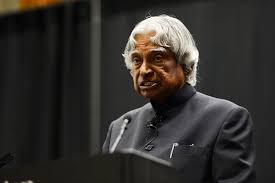
KalamFormer President of India A P J Abdul Kalam exhorted the schools to teach children to become leaders at a young age as that would help in nation building. And while applauding CSR spend on worthy projects across the country, he also exhorted the corporate world to establish guidelines for fair business practice to safeguard consumer interest.
He was speaking as chief guest at the 27th Council for Fair Business Practices awards for high ethics with ONGC, New Delhi. Former Supreme Court judge justice B N Srikrishna was the jury chief.
Kalam said that Rs 12000 crore had been generated through the 2 percent corporate social responsibility contributions in the country from the corporates and he recalled a project in Orissa on education and eye centre for the underprivileged. He said global vision 2030 puts the focus on a plethora of problems plaguing the society. He said that primary among them was poverty. The others are education, safe drinking water, equitable distribution of resources, and affordable basic health care.
The council should come out with suggestions on doing its bit to ensure that development comes with equal opportunities for all segments of society.
Kalam also spoke about rural empowerment in the sense that education at the grassroots is the key for all round development of the nation. He said, “A leader thinks of “giving” hence schools ought to teach children to become leaders right from childhood by telling them not to “ask” but to “give”.
Shyamni was Somani president of the Council told later that the awards were given to deserving business houses after a stringent check on their accomplishments in several categories including social responsibility and business ethics. Advocate Swapnil Kothari who was the executive planning member of the event said it was a success.

“Foreign universities cost Indians $ 7 bn”

Foreign universities

In the absence of quality higher education and none of the IITs making to world’s top research institutions, Indian students spend $ 6 – 7 billion (approximately Rs 45,000 crore) annually to seek greener pastures in foreign universities, revealed an Assocham – Tata Institute of Social Sciences (TISS) joint study on ‘Realigning Skilling towards Make in India’.
“Indians spend about $ 6 – 7 billion every year in sending their children abroad for higher education. Only a miniscule number of them choose to return home. It is not just the elite who spend generously on a good education and credentials, middle-class families also spend their life time savings to educate their children abroad,” the study noted with concern.

While the much touted IITs have an annual enrollment of 10,000-15,000, and focus only on the brightest of the bright, not a single great worldwide patent has emerged, nor have they produced a single Nobel Laureate. The study also said India fares poorly as far as its rankings in the field of patents and new start-ups in technology and innovation. “We still do not have a single equivalent of a Google, Facebook, Microsoft or Walmart or a Nike”. This is despite the government pouring crores into their establishment and upkeep.
Another reason for low commitment and resources for the research in the institutions of higher learning is that 90 % of the state and central funding goes into payment of salaries and overhead costs and building of new physical infrastructure. This leaves almost no money for research and innovation, the Assocham study stated.

‘Unfair’ education

Fair educationDelhi, Kerala and Tamil Nadu have been ranked as India’s best states in terms of gender-related education indicators, according to new data from the Ministry of Human Resource Development and UNICEF.

Utilizing the district-level indicators of girls’ education and health disadvantages, the government also aims to gauge the most backward pockets of the country that require the most attention. The two southern States, along with Delhi and Himachal Pradesh, are the best performers here, with Gujarat, Rajasthan and the central and northern states among the worst.

While the atlas uses data assimilated by other government agencies, it also creates a new composite index bringing into use 21 specific indicators to do with girls’ education, along with four axes – infrastructure, teachers, access, and outcomes. Tamil Nadu, Kerala, Delhi and Punjab are in the top 25 per cent of the index range for elementary education, the two southern states and Delhi make the top quarter of the index for secondary education as well. Central and northern States, including Rajasthan, Madhya Pradesh and Bihar, are among the worst performers.

Although the data shows that the pockets of backwardness exist in better-off states too, Bangalore’s urban and rural districts do as well as Mumbai or Pune, the neighbouring district of Tumkur is among India’s worst off districts.

Ramanathapuram, Krishnagiri and Dharmapuri districts in Tamil Nadu do as badly on the composite girls’ education indicator as Barabanki, Bahraich and Shrawasti in Uttar Pradesh. The atlas also creates a vulnerability index of factors related with the girls’ education, including the likelihood of joining the workforce early and getting married off early.

The Human Resource Development ministry has launched a web-based digital gender atlas, a tool designed to map the progress on girl education throughout the country. School education secretary Vrinda Sarup released the gender atlas on March 9, saying, “it is a tool used for education planning and administration and helps us target a plan of action for effective implementation of programmes.”

Gender Atlas visualizes the vulnerability status of an area based on composite index of parameters such as rural female literacy and percentage of boys and girls with disabilities, particularly girls. Performance status of the individual indicators can be visualized at the state and district level, differentiated by colour coding.

The Human Resource Development ministry mentioned in a statement, “the atlas provides comparative analysis of individual gender-related indicators over three years and that enables a visual assessment of the change and an understanding of whether some intervention introduced in a geography at a particular point of time has worked or not and can be used by states, districts, block education administrators or any other interested group including NGOs.”

While India has achieved high enrollment for girls at primary and upper primary levels, the enrollment levels, however, remain low at the secondary level. Representation of girls in total enrollment is 48.66% at the upper primary level and 47.29% at the secondary level. The map has been formulated with data collected from the unified district information system for education data, census 2011 and the district-level health survey.

The Human Resource Development ministry has also launched a web-based digital gender atlas, a tool with which to map the progress on girl education throughout the country.
Releasing the gender atlas, school education secretary Vrinda Sarup said, “It is a tool used for education planning and administration and helps us target a plan of action for effective implementation of programmes.”
“The atlas provides a comparative analysis of individual gender-related indicators over three years and that enables a visual assessment of the change and an understanding of whether some intervention introduced in a geography at a particular point of time has worked or not,” HRD ministry said.
Gender Atlas visualizes the vulnerability status of an area based on composite index of three parameters such as rural female literacy and percentage of boys and girls with disabilities, particularly girls. Performance status of the individual indicators can be visualized at the state and district level, differentiated by colour coding. For instance, the level of vulnerability of districts and blocks in Bihar or remote areas of Gujarat or Telangana can be measured with the digital atlas.
The atlas can be used by the states, the districts, the block education administrators or any other interested group including NGOs, ministry officials said. “It has been developed as a hands-on management tool to enable critical decisions and actions in pockets where gaps are to be met,” Sarup said.
The map has been prepared with data collated from the Unified District Information System for Education Data, Census 2011 and District-level Health Survey. While India has achieved high enrollment for girls at primary and upper primary levels, enrollment, however, remains low at the secondary level. At the upper primary level, the representation of girls in total enrollment is 48.66 % and at the secondary level at 47.29 %.

Budget 2015: Education sector gets 2 percent less

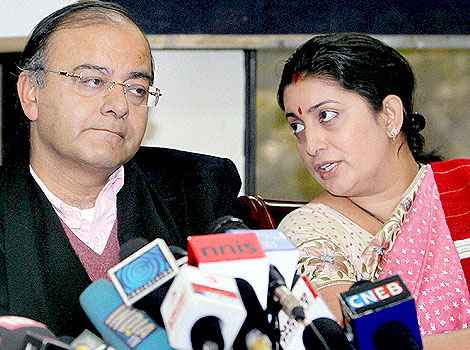
Jaitley and SmritiThe education sector saw over a two per cent cut in the outlay announced in the Union Budget, even as the government proposed to set up new IITs and IIMs in some states. The slash in the education sector as compared to the revised allocation in 2014-15 is 2.02 per cent.

School education and higher education sectors have got Rs 69,074 crore. The revised estimate for 2014-15 was Rs 70,505 crore. The cut is, however, about 16.54 per cent if compared with the actual outlay the 2014-15 fiscal.

Notwithstanding the cut, HRD Minister Smriti Irani described the Budget as “pragmatic” and said she was “extremely grateful to the allocation of funds for higher learning and also about the thrust on innovation through funding”.

While the school education sector has got an outlay of Rs 42,219.50 crore for 2015-16, the higher education sector has got Rs 26,855 crore. The thrust has been on the higher education sector with the announcement of an IIT in Karnataka and upgradation of Indian School of Mines, Dhanbad into a full-fledged IIT, a long standing demand for the people in Jharkhand.

“I propose to set up an IIT in Karnataka, and upgrade Indian School of Mines, Dhanbad into a full-fledged IIT,” Finance Minister Arun Jaitley had said in his Budget speech. “IIMs will be setup in Jammu and Kashmir and Andhra Pradesh,” he added.

The Minister also announced setting up of Institutes of Science and Education Research in Nagaland and Odisha. A Centre for Film Production, Animation and Gaming in Arunachal Pradesh and Apprenticeship Training Institute for Women in Haryana and Uttarakhand has also been proposed. Jaitley also announced the setting up All India Institutes of Medical Sciences (AIIMS) in Jammu and Kashmir, Punjab, Tamil Nadu, Himachal Pradesh and Assam.

“Keeping in view the need to augment medical sciences in Bihar, I propose to set up another AIIMS like institution in these States,” the Finance Minister said. A Post Graduate Institute of Horticulture Research and Education has also been proposed in Amritsar and upgradation of the existing National Institute of Speech and Hearing in Kerala into a University of Disability Studies and Rehabilitation.

“I also propose three new National Institutes of Pharmaceutical Education and Research in Maharashtra, Rajasthan, and Chattisgarh,” he announced. Bringing his focus to the education sector, he said that a student financial aid authority will be established to administer and monitor scholarships as well educational loan schemes through the ‘Pradhan Mantri Vidya Lakshmi Karyakram’.

“We will ensure that no student misses out on higher education for lack of funds enable all poor and middle class students to pursue higher education of their choice without any constraint of funds,” he said. An integrated education and livelihood scheme called ‘NaiManzil’ will be launched this year to enable minority youth who do not have a formal school-leaving certificate to obtain one and find better employment, he said.

The Finance Minister also announced his government’s intention of upgrading over 80,000 secondary schools and add or upgrade 75,000 junior/middle to the senior secondary level to ensure that there is a senior secondary school within 5 km reach of each child. The Budget proposal also laid down new financing pattern for some flagship programmes in the education sector.

Sarva Shiksha Abhiyaan and Mid Day Meal Scheme would now be fully finaced by the Centre. However, the ambitious programme of setting up of 6,000 Model Schools has been delinked from the central assistance and has been put to the state basket.

Schemes like Rashtriya Madhyamik Shiksha Abhiyaan (RMSA) and Rashtriya Uchcha Shiksha Abhiyan (RUSA) will now be run under a new funding pattern.


LATEST NEWS