Home Blog Page 915

International Partnership to Revive Global Agriculture Education

International Partnership to Revive Global Agriculture Education

India, Africa and the USA have joined hands to revitalise global agriculture education, capacity building and technology transfer through ‘One Agriculture-One Science: A Global Education Consortium’. The move has been made possible through the collaboration of International Crop Research Institute for the Semi-Arid Tropics (ICRISAT) and top universities of these continents.

Under ‘One Agriculture-One Science’, different agricultural education institutes, research organisations and other related agencies have formed a group to focus on addressing changes and adaptations required for agricultural education. Also, to attain food and nutritional security and sustainability productions in developing countries.

It also plans to bring various disciplines of farm education like crop, livestock, fisheries, natural resource management etc under one roof by providing a platform to overcome the challenges of accessibility and affordability. The institutions in this partnership shall also offer short courses, scholarship programmes and collaborative research opportunities for the students.

UGC asks colleges to re-engage adhoc teachers

reengage adhoc teachers

The University Grants Commission (UGC) has instructed the colleges affiliated to Delhi University to re-engage the ad-hoc teachers who served the college till the last working day of the previous academic session and fulfill the criteria put down by the UGC.

The instruction dated July 21, 2014, follows a realisation that the colleges of Delhi University were faced with a serious crisis with re-engaging the adhoc teachers due to the shift of FYUP to the earlier three-year undergraduate programme.

The Delhi University Teachers Association (DUTA), who welcomed the move, believe that it will be helpful for teachers to recover their dues and  also help in the smooth running of the new session

Three premier media institutes to get national tag

media education

In a significant thrust to film and media education in the country, three premier institutes – Indian Institute of Mass Communication (IIMC), Satyajit Ray Film and Television Institute (SRFTI) and the Film and Television Institute of India (FTII) are likely to be awarded the status of institutes of national importance along with the power to award degrees.

Proposals to this effect were mooted by the Ministry of Information and Broadcasting (I&B) with the aim to grant greater autonomy to these institutes along with boosting international partnerships and funding. The move was announced by Finance minister Arun Jaitley during his maiden budget speech on July 10. The proposal is likely to be put before the Cabinet soon.

While Cabinet formalities for SRFTI and FTII have already been cleared by the Law ministry, formalities for presenting the proposal for IIMC are in final stages. Once the proposals are approved, they will have to go through parliamentary sanction. Ministry sources further inform that plans to introduce advance academic programmes in IIMC like MA, MPhill and PhD are also in the pipeline.

Faculty Crunch Haunts IITs and NITs

faculty crunch
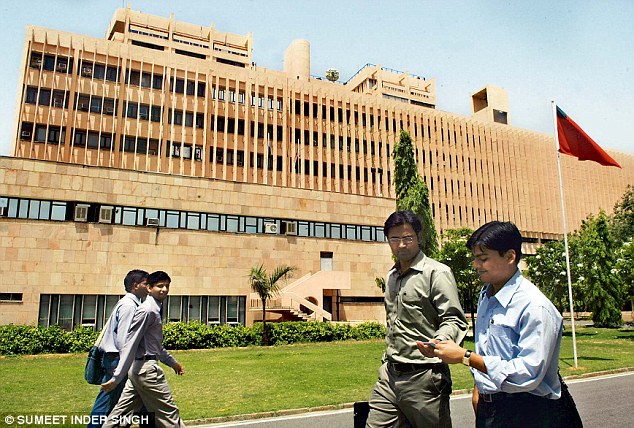
The country’s top technical institutes are marred by an acute shortage of staff, official figures suggest. While the shortage of faculty in the sixteen IITs stands at 36.5 per cent, the NITs have a whopping 40.8 per cent vacancy in teaching positions, as per data provided by the central Human Resource Development ministry.
The reasons behind this faculty crunch include retirement, resignation, increase in students’ intake and non-availability of qualified candidates for taking up teaching assignments, Smriti Irani, Union HRD minister stated in a written reply to the Rajya Sabha.
Efforts are being made through various initiatives to attract candidates for the teaching position, the minister informed the parliament. To overcome this problem, NITs have started engaging contract and additional staff along with the use of online mode of teaching. The salary for the teaching staff at the NITs, on the other hand, have been brought at par with the IITs in a bid to attract quality teachers to the institute.
The Ministry of Home Affairs has further reduced the salary limit for employment Visa to foreign faculty from US$ 25,000 to US$ 14,000 with a view to make it possible for foreign faculty to join IITs and NITs, the minister further informed.

Imbalanced growth of medical colleges affecting healthcare: Harsh Vardhan

harsh

An imbalance in the growth of medical colleges and institutions in India is adversely affecting the delivery of healthcare to people, Union Health minister Harsh Vardhan recently informed the parliament. In a written reply to a question in the Lok Sabha, the minister stated that the Health ministry has already made certain amendments to the regulations of the Medical Council of India (MCI) for setting up medical colleges. These amendments, he said, were made to address the geographic and rural-urban imbalance of medical institutions.

In the hilly and notified tribal areas, the north-eastern states, Union territories of Andaman and Nicobar islands, Daman and Diu, Dadra and Nagar Haveli and Lakshadweep, medical colleges can be set up in two separate pieces of land at a distance of not more than 10 km, the minister further informed. There is also a centrally sponsored scheme which looks after the establishment of new medical colleges attached with existing district hospitals, the minister’s statement read.

Rs 55 million scholarship launched for X-XII students

images

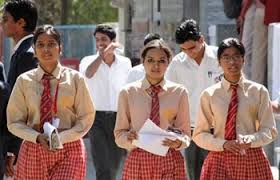
A scholarship of Rs 55 million was launched for students of classes X to XII. This is India’s outside of government biggest scholarship scheme initiative.

It was announced by Lore India Foundation Scholarship Trust which is promoted by top academicians of the country, which includes IIT-Delhi professor Seyed E Hasnain, former UGC chairman Hari Gautam, and vice-chancellor of National Law University Ranbir Singh, among others.

The scholarship also has a unique feature ‘monetary awards’ to top schools to improve infrastructure and acquire new technology or fund meritorious students from disadvantaged background.

There will be 103 scholarships from Rs 3 lakh to Rs 50 Lakh which will be given based on a learning aptitude test (LAT). The undergraduate scholarship endowments can be used by scholars to pursue higher education in any discipline. It can also be used to prepare for coaching required for entrance exams. to get admission to a programme of the scholar’s choice. The programme also includes rewards and recognition programmes for schools, which will be ranked based on the performance of their students in LAT. The top three schools in the country will receive monetary awards of Rs 25 lakh, %Rs 15 lakh and Rs 10 lakh respectively.

The scholarship aims to identify, assess, reward and mentor the brightest young minds of the country.

Tech Mahindra signs MoU with Wichita State University

Tech mahindra

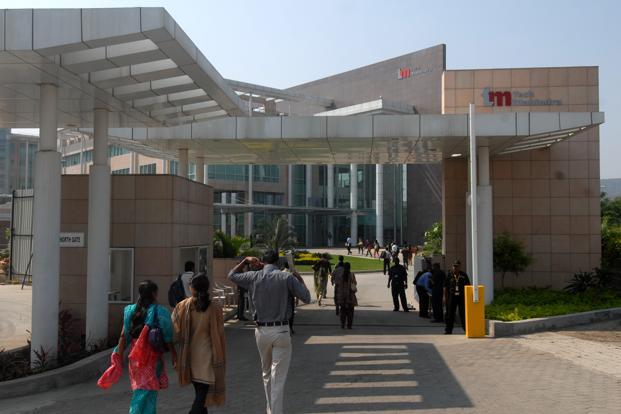
Tech Mahindra a specialist provider of connected solutions, signs Memorandum of Understanding (MoU) with Wichita State University (WSU), a state educational institution of Kansas in the area of aerospace engineering, certification, information technology and automotive testing. Tech Mahindra will collaborate with WSU and its National Institute for Aviation Research (NIAR) on multiple areas of engineering including composites, advanced materials and structural testing. Tech Mahindra plans to invest in equipping the engineering talent available in the region to enhance their employability in the Wichita aerospace community. This investment will enable Tech Mahindra to provide end-to-end solutions from design, to testing and certification for global aerospace & automotive customers and prospects in the region.

Krishna Balasubramaniam, Head of Americas, Aerospace & Defense, Tech Mahindra stated that they are eager to leverage local talent pool by working with WSU’s National Institute for Aviation Research as it takes a leadership role in supporting the global aviation industry with its research, development, testing, and certification and training services. He believe that this synergy can help reach the next level of solution offerings to their customers addressing their custom needs and industry specific requirements in the areas of certification and testing.

Kerala School Teachers’ Association moots special package for ailing schools

kerala teachers association

The Kerala School Teachers Association staged a one day hunger strike at the Martyr’s Square in Trivandrum protesting against the education policies drafted by the United Democratic Front government. The association demanded the government to bring down the teacher-student ratio so as to ensure the job security of thousand of teachers working in government and aided schools in the state.

The association also demanded the government to appoint specialist teachers in every school and change the number of schooling days for vocational higher secondary schools as well.

ICT solutions for teacher’s training in offing

ralhan

Digital education is fast picking up in India as it helps teachers to look beyond preparing for their regular classes, says Beas Dev Ralhan, CEO, Next Education India Pvt Ltd. In an interaction with Elets News Network, he talks about the transformation that Smart class has brought in Indian classrooms


Q. What is the concept of Smart class? What are its salient features?

Smart Class, also known as Digital Class, is a digital learning system that makes the end-to-end process of teaching and learning more engaging and easy by using rich multimedia based pedagogically appropriate content mapped to school curriculum. It also includes features that augment the teaching process, right from planning a class to assessing students. A Digital class uses various technology-based equipment to teach the students such as smart boards, projectors, speakers, remote and so on.

Q.How flexible are education institutions across the country in adopting this kind of learning solutions?

Pioneer schools in India today are fast implementing ‘investigative learning’ where students discover concepts by themselves across disciplines through problem-solving exercises, projects and team-building activities. Although India has hopped on to the contemporary bandwagon, it remains to be seen if it is sustainable in a country where the education system still demands high marks and where “A” grades are on the priority list.

Q.Class Transformation System is an interactive digital technology solution that includes animations, graphics, simulations, mind maps, worksheets, Web links, diagram makers and assessment tools. Has there been any quality assessment on the outcomes?

We have 10,000 learning modules that account for more than 1,000 hours of classroom teaching at school and junior college levels to our credit. Each of our modules created by our in-house content development team has been designed using contemporary learning design principles and has undergone rigorous testing on and off the field. We also have products that are particularly learner-centric and those that make teaching easier and more effective.

Q. How does each of the verticals – school, higher learning institutions and professional institutes see smart classes boosting their business and pedagogy?

Digital education adoption is happening at schools as well as individual learner level. We have observed that schools have adopted some sort of digital solutions over time, but are now looking for integrated solutions across the spectrum – labs, classroom and assessments.

Q. What is the size of business of smart classes in India and how do you see its growth? Can you give us some estimates?

We have estimated the K12 market to be around $20 billion. Digital education is fast picking up in India as it helps teachers to look beyond preparing for their regular classes – they get capsuled information from the curriculum that is easy to use while in the classroom, and students can grasp it easily. Before 2011, we had some 300-odd partner schools. In 2011, we added around 1,000 schools. In 2012 and 2013, we added 2,500 and 1,700 schools respectively. Almost 60 per cent of our 6,000 partner schools are in Tier II and Tier III cities.

Q. What are your expansion plans over the next three to five years?

Currently, Next Education is an ICT provider. We are working towards becoming a complete K12 solutions provider, providing solutions from teacher training to teaching aids.

Boarding School a Myriad of Opportunities

assam valley school


Sonya Ghandy Mehta, Head of The Assam Valley School, Sonitpur, Assam, shares with Elets News Network the intricacies of studying at a boarding school


Q. Could you explain to us who needs a residential school the most?

All students should experience residential school life for at least 3-4 years of their life. This experience teaches students a lot about themselves. In today’s world where parents try and give their children every luxury they can afford, it helps give the younger generation a reality check of the outside world.

Q. How does a boarding school enhance the performance of an average or below-average student? Is academic excellence a matter of concern to the teachers and management? How do you cope up with this challenge?

The beauty of a boarding school is the myriad of opportunities that are provided to each child. A student who under-achieves in one area may be an over-achiever in another. It is this experience that helps build the confidence of students which spills over into the area where they are weak; they get the confidence to tackle their weaknesses.

As in all schools, academic excellence is a concern. However, as in a residential school, teachers are the students ‘in Loco Parentis’. We have to motivate, encourage and monitor them to ensure that they achieve their potential. Apart from regular academic classes, there are scheduled remedial classes for students under-performing. A dedicated Special Education Needs (SEN) department allow us to address specific Learning Disabilities that some students may have. As most teachers also live on campus, they also extend themselves to any student who needs help, over and above the scheduled sessions.

Q. On what parameters does one judge a residential school? Please list them and elaborate for our understanding.

The parameters that a residential school should be judged are:

(a)  Co-curricular programme: The reason most parents send their children to a residential school is to expose them to different opportunities that is beyond their reach or means. A good residential school should be able to provide many learning opportunities inside and outside the class as well as on the sports field.

(b)  Competence of Faculty: This is a parameter that all schools should be judged on. In a residential set-up, the competence of faculty is not only dependent on how many degrees they hold but on how committed they are to their students.

(c)  Infrastructure provision: The more facilities that you offer students, the more the opportunities you will give the students. We offer over 15 sporting disciplines as well as 30 different types of activities that our students can experiment with.

(d) Life-Skill Education: A residential set-up teaches students to be independent, both in looking after themselves as well as in problem solving. Teaching students how to resolve conflicts, how to manage their emotions is very important in a residential school paradigm.

(e) Pastoral Care: This is a very important parameter for a residential school as parents have entrusted the school to look after their child. The dedication & commitment of the staff play a vital role in this area.

(f) Social Service: As part of life-skills, it is important to sensitize students to those who are not as fortunate as themselves. Just donating money or clothes is not enough. It is important that they interact & share their learning with them.

Q. Does accreditation to the International Education Board ensure higher admission intakes to some residential school?

Accreditation to an international education board may help in admissions, however, if the fees charged exceeds what people of the region can afford to pay, it will not help.

Q. With your years of experience in managing operations in residential schools, what do you think are the advantages and disadvantages for kids being sent to such schools?

The advantages far outweigh the disadvantages. The advantages are:

(a)  Opportunity for whole education and not only focussed on academics.

(b)  Learning Independence.

(c)  Learning to live in a community.

(d) Learning to live with differences and manage conflict in your life successfully.

(e)  Forge lasting friendships with friends that last much longer, than in a day school.

The disadvantages are:

(a)  If you want only to focus on academics, it will be difficult.

(b)   You live away from your parents for most of the year.

Q. How crucial a role does psychological counselling play in integrating the children with boarding schools?

When children first join a residential school, the image that they hold is always very different from the reality. They do not imagine how much they will miss their parents and the comforts of home initially. Open communication, constant mentoring and in some cases psychological counselling is very important.

Q. What is the unique selling point that attracts parents to your institution?

The unique selling points of The Assam Valley School are:

(a) An infrastructure that few schools can offer.

(b) A well-rounded education with a balance between academics, activities and sports. We offer over 30 activities and over 15 sporting disciplines.

Q. Are learning methods here different as compared to public schools?

Our learning methods are the same as in other schools, except that we add a higher order of thinking skills in our strategies. Also, as we have the students with us all the time, the teacher has the flexibility of using outside classroom hours to further teaching if required, e.g. a Physics teacher may choose to take his students out to observe the sky at night if he thinks that it will further help in understanding a concept.

Q. With children, parents too need counselling in order to achieve overall development. Have you organised any such workshops for parents that help them understand the early developmental phases in a child? 

We do not have much access to parents as many live in very remote areas of the North-East. However, on days of Parent-Teacher Meetings, we hold Career Counselling workshops for parents. Most parents are counselled on an individual level.

 

LATEST NEWS