

Home Blog Page 976

Need to improve quality of technical education: Pallam Raju

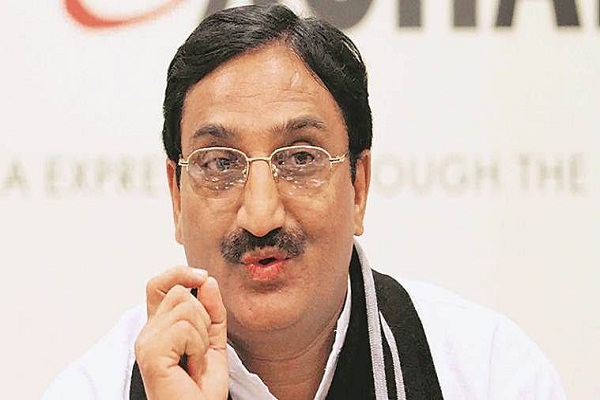
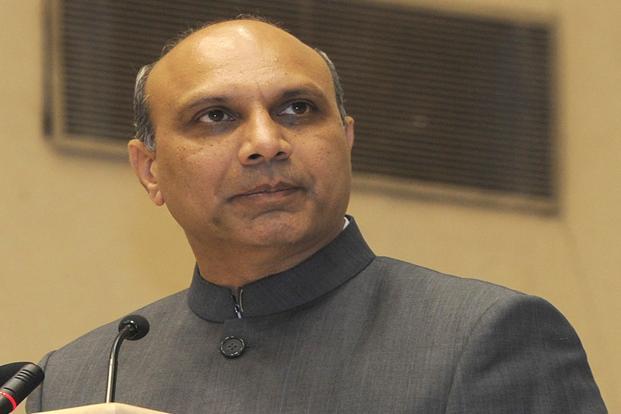
Quality of technical education in the country should be improved and graduates should be given skill training to equip them to meet industry requirements said Union HRD Minister, Pallam Raju at the inauguration of  the new regional office of All India Council For Technical Education (AICTE) in Thiruvananthapuram. He further added that ours is one of the largest technical education sectors in the world and a large number of engineering graduates pass out every year but the quality of the graduates passing out of colleges is not at par with international counterparts.
Pointing out the gap between industry and academia, the minister said the majority of the engineering graduates are not industry-ready and are unable to meet the expectations of the employers. In an attempt to bridge the gap, AICTE is looking forward to tie-ups with the industry and equip students with requisite skills. AICTE has recently had a tie-up with BSNL with the same aim. Palam Raju also emphasized that institutions in rural, backward and underprivileged areas should be given more focus as they may not be able to adhere to all stringent requirements of AICTE.

IIM B Professor in list of leading researchers in psychology

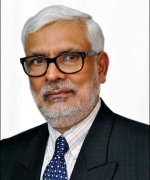
Prof Ramadhar Singh, a distinguished professor at the Indian Institute of Management, Bangalore (IIM B), is the only Indian to be on the list of the United States-based Association for Psychological Science (APS) and The Faces and Minds of Psychological Science, a list of leading researchers in psychology.
Prof Singh wrote on ‘Inferring Missing Information’ in the ‘I’m a Psychological Scientist’ series contest. Through his study, Prof Singh has demonstrated how people take decisions by inferring the missing information. As per APS, Prof Singh’s work will help social and cultural-psychologists understand and investigate how people judge morality and achievements of others even without the needed information.
Prof Singh is proud that psychological research from India has been recognised. After his PhD from Purdue University in 1973, Prof Singh returned to India. He worked on ‘Inferring missing information’ from 1975 to 1991when it was first published as a chapter. Talking about the state of psychology education in the country, Prof Singh lamented by saying it needs a revamp. Also PhD Selection Committees need improvement in the quality of selection of PhD scholars. Prof Singh has taught at Indian Institute of Technology, Kanpur, IIM Ahmedabad and National University of Singapore before becoming a professor at IIM B.

IIT M students kick off social initiatives in tech fest 2014

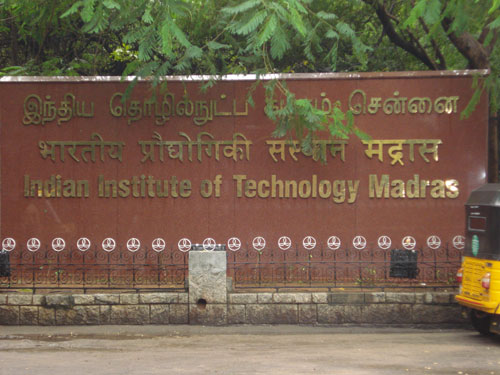
With the objective of giving back to the society, students from the Indian Institute of Technology, Madras (IIT M) have started a social initiative ‘computer literacy for all’ where students will donate old computers given by residents of the institute to the government schools. This initiative is a part of Shaastra, the annual tech festival of IIT M which receives a footfall of over 20,000 people every year.

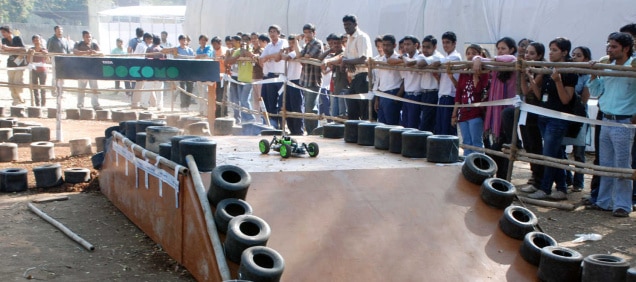
The theme for the four-day tech fest beginning on January 4 is ‘Breaking Boundaries’. Apart from the major attractions every year like airshow, robowars, symposium, hackfest and lecture series, this year Shaastra will have a pan IIT research expo, a platform to showcase research undertaken by students across all IITs and research confluence which will have panel discussions and lectures by eminent speakers from the industry and academia. A total of 17 eminent speakers from India and abroad are expected to deliver lectures during the four day showcase event of IIT Madras. This year the fest will also have a techno-cultural show called Envisage and a couple of social initiatives by students of IIT M.

Need to strengthen university-industry interface: PM

Expressing concern about the quality of higher education in the country, Prime Minister Manmohan Singh said that even Indian premier institutions do not figure among the best in the world.
Addressing the Diamond Jubilee function of the University Grants Commission (UGC), he pointed out the shortage of faculty in universities and colleges. He emphasized on the need for more research and enhancing the number and quality of doctoral programmes in universities. He further added that inter-disciplinary perspective is a must for research and should become a part of the culture of Indian universities. He also stressed upon the need for strengthening the university-industry interface to give a boost to research and development. He asked academics to make a detailed study of how this interface works in other countries so that the best international practices can be replicated in India.
On the same occasion, Union Minister for Human Resource Development M.M. Pallam Raju stated that a special drive would be undertaken to make teaching and research an attractive career option and announced the setting up of chairs in various universities in the name of Indian Nobel laureates.

IIT Bombay’s Techfest to begin from Jan 3

Techfest, IIT Bombay’s annual science and technology festival that gives a platform to showcase talent, skill sets, display cutting edge technology and research will be held from January 3-5. The fest attracts more than 1 lakh people every year and has a reach of over 2,300 colleges across India and witness participation of over 500 colleges from overseas.
This year, the exhibits on display are coming from US, Japan, Berlin, Switzerland among many other countries. These exhibits include the most advanced social robot, BINA-48. The event will also see exhibits from Nuclear Power Corporation of India Ltd (NPCIL) and Defence Research & Development Organisation (DRDO). One of the biggest attractions this year is the  supercars exhibition where cars like Ferrari F430, Potsche 911 and Mercedes E Cabriolet will be present. The Lecture series will observe participation of 15 world renowned leaders like recent Bharat Ratna awardee, Prof. CNR Rao, world famous computer engineer from India, Pranav Mistry, Kiran Bedi and Rajendra Pachauri among others.

IIM A’s Agri-Business programme ranked best in the world

The Post Graduate Programme in Agri-Business Management (PGP-ABM) of Indian Institute of Management, Ahmedabad (IIMA) has been ranked at the top position for the third consecutive year in the Best Master’s Ranking in Agribusiness/ Food Industry Management. IIMA’s PGP-ABM finds a prominent place among other globally renowned programmes.

Since 1974, IIMA has been offering a special programme focused on Agriculture. The programme was re-engineered as two-year Post-Graduate Programme in Agri-Business Management from 2003. The objective of the programem is to develop aspiring mangers into competent professional managers for the agriculture, food, agri-business, rural and allied sectors. The programme caters to the needs of enterprises serving these sectors. It attempts to build sensitivity to domestic and international market needs and span the entire agricultural value chain.

Post Graduate diploma in Rural Management by Xavier Institute of Management, ranked 27 and Post Graduate diploma in Agribusiness Management of Indian Institute of Management, Lucknow, ranked 31, are the only other two programmes from India to find a place in top 50 programmes in the Best Master’s Ranking in Agribusiness/ Food Industry Management.

47% of graduates of 2013 unemployable for any job: Study by Aspiring Minds

Putting the education in India under scanner, a study concluded that nearly half of the graduates of this year are not employable for any job.
Identifying the key employability trends of 2013, the study by Aspiring Minds, a leading employability solutions company, discovered that a significant 47 percent of graduates of 2013 are unemployable in any sector given their English language and cognitive skills.
Of all the respondents in the survey, only 2.59 per cent of them were found employable in functional roles such as accounting, while 15.88 per cent were suitable for employment in sales related roles and 21.37 per cent for roles in the business process outsourcing sector. The study also revealed that there are 100 females to every 109 males pursuing three year degree programmes and are at par with male counterparts when it comes to employability.
Major deterrents to employability found in the study are lack of knowledge of English language, poor computer skills and concepts learning.

UGC to set up interim regulator for distance education

University Grants Commission (UGC) has been instructed by a committee formed by Ministry of Human Resource Development (MHRD) to set up an interim regulator and monitor the country’s distance education sector. As the Parliament is not likely to pass a Bill on putting in a regulatory authority anytime soon, the committee has also proposed the establishment of a Distance Education Council of India (DECI) which will monitor and regulate the content, examination and the institutes offering distance education. But the bill is not expected to be cleared anytime soon as there are already a number key MHRD bills awaiting clearance. DECI is to be set up on the lines of AICTE, UGC and NCTE.
The government is looking to pass the National Council for Higher Education and Research bill, which will merge the existing UGC, AICTE, and other regulatory bodies into a single regulator. But there are many bills including an amendment to the existing AICTE Bill which are waiting to be cleared by Parliament.
The MHRD is also planning to set up 200 community colleges and rolling out a programme to extend technical education in the secondary and higher secondary education segment to curb dropout rates at school levels.

Job offers pour in at IIT B in the first phase of placements

The economic slowdown seems to be having the least effect on the placements at IITs this year.  Over 100 students at IIT Bombay (IIT B) have already been placed by multinational companies in the first phase of the placement season at the campus. Last year, the corresponding number was around 80. The first phase of placements saw 55 percent of the students i.e. 889 students on the campus bagging the job offers.
Companies from Europe, Japan, Korea, Middle East, Singapore, Taiwan and USA have offered jobs to students at IIT B. Although due to visa issues, a few US companies did not turn up for placements this year but companies from other countries made up for their absence. Firms from technical and software sectors made the maximum offers on an average. A couple of NGOs have also picked up students from the campus. Only one public sector company that came in the first phase hired two students, more are expected to  visit the campus in the second phase, which begins from January first week. Companies like Google, Microsoft, Goldman Sachs, IBM, Sony (Japan), Samsumg (Korea), LinkedIn, Oracle among others offered the jobs in the first phase of the placement at IIT B.

President asks private sector to contribute to higher education

Even as India had grown in leaps and bounds in terms of infrastructure in the higher education sector, there was a still a gap that needed to be bridged, both in material and non-material terms, said the President Pranab Mukherjee as part of his inaugural address at the School of Commerce and Economics at the Loyola College in Nungambakkam.
The president made a fervent appeal to the academic community to strive towards creating a culture of excellence and promote innovation in the universities. He also called on the private sector and individuals to come forward and help in building institutions of excellence and innovation in all fields. Encouraging the academicians the president said, “We have the best of students and teachers. All that is needed is coordination and focused efforts. We must develop our colleges and universities into world class academic institutions. A culture of excellence should be promoted with determination and consistency”.
Underlining that the true development entails composite development of the nation with progress touching all sectors and regions, he further added that greater emphasis should be given to developing suitable grassroots technologies for empowering rural population.

LATEST NEWS