Home Blog Page 978

Private schools slam nursery entry norms

Criticizing the new guidelines for nursery admissions, the private schools of Delhi have decided to draft a letter to the Delhi Lieutenant Governor Najeeb Jung demanding modifications in the guidelines.
Delhi’s private schools are left with bitter taste in mouth due to the new guidelines for nursery admissions whereby all the private schools would follow a common criterion for admissions. With the doing away of management quota which carried 20% weightage, the schools are now left with no significant say on admissions.
Private schools associations across Delhi complain of drastic changes been made to the admission process without any former discussion with them. The new guidelines further ignore a 2002 Supreme Court judgment that says private institutions which do not receive any financial grant from the government must be allowed a certain amount of freedom in the matter of admission and fees.
The new guidelines include selection will be based on criteria including the neighbourhood where a child lives, and whether they have a sibling studying in the school. Especially the ‘neighbourhood’ criterion which allots 70 points to kids living within the radius of 6kms from the school has not gone down too well with the parents, as many believe that a more dissected system of grading could have been better in a city like Delhi, than allotting a fixed 70%.
Parents with a single boy child find the 5% quota for girls adding to the woes.

Protest for free education to girls

Demanding immediate implementation of government’s decision on free education for girl students in junior college, workers of Chhatrabharti Maharashtra protested outside the district collectorate’s office in Nashik.
The vice-president of Chhatrabharti Maharashtra presented a memorandum to the district collector with the grievance that in spite of the promise of free education to girls, colleges are charging hefty fees. The memorandum also stated that an amount of Rs 1,500 is being collected as development fee despite the government order that no fees should be collected except the tuition and examination fees. Chhatrabharti Maharashtra has also warned that the demonstrations will continue to take place if their demands are not met.

Free education till elementary level for J&K students

According to the new law drafted in Jammu and Kashmir, every child in the age group of four to fourteen years will have the right to free and compulsory education till the competition of elementary education.
The state education department is ready with the draft of the law which would soon be presented before the cabinet for approval. The law drafted by the state goes beyond the provisions given by the centre. It has made special provisions for children from the weaker sections of the society. Steps have also been taken to upgrade the education infrastructure in the area for rural students. Setting up a college is also on the anvil.

Odisha government forms sexual harassment cell in education department

The Odisha government has constituted a state level sexual harassment cell in the higher education department. The cell would investigate allegations of sexual harassment in government, government-aided and self financed colleges of the state. The Director of Text Book Bureau, Nibedita Jena has been appointed as the Chairman of the cell. The cell would look into allegations related to sexual harassment and would recommend the principal secretary to take stringent action against the culprit if found guilty. This move by the government comes in the wake of the recent complaint of sexual harassment by a student against the management of Saikrupa residential college in Dhenkanal. The government has served show-cause notice on the college management and has also asked Regional Director of Education, Bhubaneswar, to submit a report after conducting a spot inquiry.

One year mandatory rural posting for MBBS doctors from 2015-16

MBBS students applying for admissions to post-graduate medical courses for the academic year 2015-2016 have to undergo one year compulsory rural posting at Public Health Centres (PHC). This was stated by Ghulam Nabi Azad, minister of health and family welfare, in a written reply to a question in Rajya Sabha on 18 December. The decision aims to tackle the problem of scarcity of doctors in the country and the decline in number of Primary Health Centres. As of March 2012, there is a shortfall of 3,459 surgeons, 3,005 obstetricians and gynecologists, 3,667 physicians, 3,270 pediatricians and a total of 13,477 specialists in the community health centers across the country. The regulation comes into effect after the proposal of Medical Council of India (MCI) to amend the Post Graduate Medical Education Regulations, 2000.

850 IIT B students placed in the first phase

The first phase of placement at Indian Institute of Bombay (IIT B) will complete on December 20. Around 55% of students have already been placed. 245 companies visited the campus in the first phase of placements. The second phase will begin in the second week of January 2014. Till now, 873 students have been placed with unique offers and this number is only expected rise in the second phase of placements at the campus. Most of the computer science students have secured placements in the first phase.
Last year, around 850 candidates were placed at the end of the second phase of placements.  The batch strength then was 1,350 with 230 companies visiting campus for placements then. This year Oracle made the highest offer in the first phase followed by Samsung US/Korea , which picked around 14 students from IIT B. It is possible that same companies might visit the campus again in the second phase to pick more students. Some public sector units are also expected to visit the campus in the second phase.

New policy for technical education in West Bengal

With the aim to create more job opportunities, the Bengal state cabinet has decided to introduce a new policy for the technical education department to have an integrated skill development programme. Under the policy, medium scale industry will come under the department of micro and small scale industry and textiles to provide more opportunities to the industries which have machinery cost upto Rs10 lakhs. The technical education department will also be renamed as technical education training and skill development department. An integrated skill development programme will be introduced to create skilled labourers in the field. The decision has also been taken to upgrade the existing technical education and training with time to create more job opportunities and also benefit the industrialists.

Chinese University to sign MoU with Panjab University

The Henan province of China has showed interest to sign a Memorandum of Understanding (MoU) with Panjab University (PU), Chandigarh. A Chinese delegation led by Mr Hao Lijun, Deputy Director-General, the Foreign and Overseas Chinese Affairs Office of Henan Provincial People’s Government visited Panjab University.

Zhao Jiayu, Director of the Foreign and Overseas Chinese Affairs Office of Hebi City People’s Government, Henan,  Huang Xia, Director of  the Foreign and Overseas Chinese Affairs of Shangqiu Municipal People’s Government, and General Secretary of Henan People’s Association for Friendship with Foreign Countries, Zhao Qing Shan were also part of the delegation.

The purpose of the delegate’s visit to Panjab University is to look out the best suitable universities in India, with which Henan Province could have collaboration and mutual academic co-operation which will include teachers, students exchange programme. The Chinese Delegations had a formal meeting with the Panjab University officials. The MoU has not been signed yet.

5 IITs among top 20 list of BRICS universities

In the world’s first dedicated ranking of universities in the BRICS (Brazil, Russia, India, China and South Africa) group of countries, five Indian Institutes of Technology (IITs) made it to the top 20 universities in QS World University Rankings.

IIT Delhi takes the top ranking (13) among Indian universities followed by IIT Mumbai (15), IIT Madras (16), IIT Kanpur (17) and IIT Kharagpur (18). The next rank for an Indian University is IIT Roorkee (34) and IIT Guwahati (51).

China dominated the university ranking with 40 universities featuring in the top 100, 22 in the top 50 and 4 in the top 5. Tsinghua University was ranked the best university. In ‘QS University Rankings:BRICS’, Russia has 19 of its universities in the top 100, Brazil 17, India 16 and South Africa 8 in the list. The University of Calcutta is ranked 52nd best in BRICS followed by University of Delhi at 53.

University of Mumbai at 62, University of Hyderabad 64, University of Madras 70, Benaras Hindu University 85, IIT Allahabad 92, University of Pune 94 with Manipal University taking the 100th spot. BRICS ranking is a first of its kind to apply dedicated methodology designed to place the featured nations on an equal platform.

Top Schools in Madhya Pradesh & Chhattisgarh

1. The Daly college, Indore
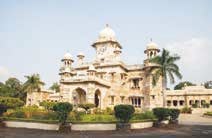
Year of Establishment: 1882
Principal: Dr Sumer Singh
Curriculum Followed: CBSE & IGCSE
Admission Period: Round the Year
Website: www.dalycollege.org

The Daly College offers the most modern of education – in a heritage setting. In 2005 it became a member of the Round Square.


2. Scindia School, Gwalior, MP
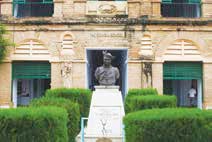
Established in: 1987
Principal: Samik Ghosh
Curriculum Followed: CBSE
Admission Period: November
Website: www.scindia.edu

The Scindia School is about the spirit, morals and ethics of India. A school where tradition and modernity blend seamlessly so that while the students value their culture, traditions and stay away from the fallacies of society.


3. Laurels School International, Indore
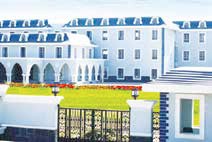
Year of Establishment: 2005
Director: Jaya Chacko
Curriculum Followed: ICSE
Admission Period: December
Website: www.laurelsschool.com

The school lays a strong foundation for the languages and technical subjects through applied linguistic skills, hands on practical and project work throughout the curriculum.


4. Gwalior Glory, Gwalior
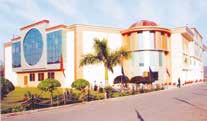
Year of Establishment: 1991
Director: Anita Wadhwani
Curriculum Followed: CBSE
Admission Period: December
Website: www.gwaliorgloryschool.org

The motto of the school is to nurture its students into caring, capable individuals with an immense capacity to adapt to their environment both natural and socio-cultural through the development of their abilities.


5. Prestige School, Indore
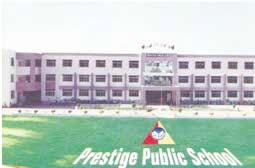
Year of Establishment: 2004
Principal: Prakash Choudhary
Curriculum Followed: CBSE
Admission Period: January
Website: www.prestigeschool.org

Prestige Public School is dedicated to focus its energy, thinking and planning towards realizing this objective for every child.


6. Gyan Ganga International School,Jabalpur
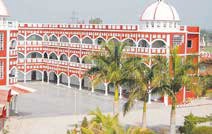
Established in: 2000
Principal: Dr Rajesh Kumar Chandel
Curriculum Followed: CBSE
Admission Period: March
Website: www.gyanganga.ac.in

The school aims to lead students to realize their capabilities and build them into real skills and find the best possible educational frame.


7. Indus World School, Indore
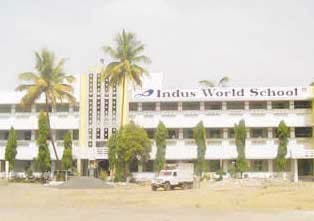
Year of Establishment: 2006
Principal: Archna Sharma
Curriculum Followed: CBSE
Admission Period: April
Website: www.indusworldschool.com

Indus World School has two full fledged campuses. The Chhawani campus is in the heart of the city and a brand new lush green 5.5 acre campus.


8. Vidyasagar School, Indore
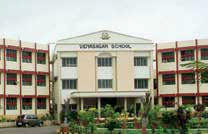
Year of Establishment: 1991
Principal: SK Joshi
Curriculum Followed: CBSE
Admission Period: February
Website: www.vidyasagarschool.org

Vidyasagar School provides and strives for the ceaseless and constant advancement of individual and their intellect.


9. Shishukunj International School,Indore
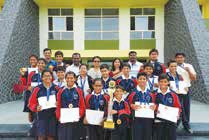
Year of Establishment: 1942
Principal: Asha Chaturvedi
Curriculum Followed: CBSE
Website: www.shishukunj.in

Shishukunj is an affiliate of the Shishukunj International Society, London. The Society operates in many countries including the USA, UK, Sweden and Kenya.


10. Indus World school, Raipur
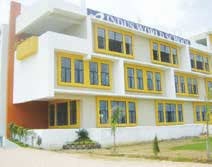
Year of Establishment: 2008
Principal: V Krishna
Curriculum followed: CBSE
Website: www.indusworldschool.com

The school offers education up to K-12. The school is spread in an area of 5.2 acres with ample space for sports.


11.DPS Gwalior
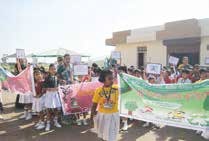
Year of Establishment: 2006
Principal: Sunil Bhalla
Curriculum Followed: CBSE
Website: www.dpsgwalior.com

The school’s mission is to educate a child not by telling him what he knows not but by making him what he was not, no stone is left unturned and nothing is left to chance.


12. Macro Vision Academy, Burahanpur
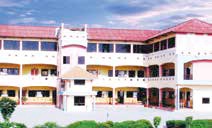
Year of Establishment: 2002
Principal: Sudhir Mahajan
Curriculum Followed: CBSE
Admission Period: January Onwards
Website: www.mvaburhanpur.com

The school started with the aim of imparting quality education, to develop educational awareness, to train the students for various competitive exams, skill oriented courses and to shape the future citizens of India.


LATEST NEWS