


In a time when artificial intelligence and technology dominate discussions about the future of education, it’s easy to get swept up in the search for new solutions, expecting them to serve as the silver bullet for transforming how we teach and learn. However, a contrarian view suggests that rather than constantly seeking cutting-edge innovations, we should revisit the roots of education and bring fundamental learning principles back into the spotlight.
The conversation around education often includes a call for innovative techniques and technology to revolutionize the teaching experience; however, it’s crucial to realize the potential of time-tested methods to address educational challenges. Drawing from the teachings of past scholars and practitioners, we can identify three enduring pillars that have significantly impacted education: experiential learning, learning from practitioners, and community-based learning. These elements, if effectively integrated into modern education systems, could yield more substantial outcomes than incorporating technology alone.

Experiential learning has been a cornerstone of effective education for centuries. John Dewey, in 1905, emphasized the significance of reflecting upon personal experiences to truly learn. This age-old method, evident in ancient Indian and Greek traditions, promotes learning through hands-on experiences rather than passive absorption through lectures or textbooks. Experiential learning ensures students obtain practical skills applicable to real-world scenarios, moving beyond traditional academic exercises.
Another crucial pillar is the role of the practitioner in education. The ancient gurukuls and Greek schools were led by educators who were not just teachers but practitioners of their art. They actively engaged in the fields they taught, offering students firsthand knowledge and insights rather than theoretical frameworks alone. In contrast, modern education often relies on subject matter experts who lack practical experience. Bridging this gap by integrating industry professionals into the educational framework can provide richer, more applicable learning experiences.
Community-based learning represents the third key pillar. Ancient learning environments thrived on communal learning, where students learned together, fostering their skills collectively rather than individually. This setup encourages diverse interaction, collaboration, and empathy, developing social skills vital for real-world success.
At Tetr, we have embraced these three pillars to redefine learning for the modern era. Our initiative brings students from around the globe together, creating a dynamic, enriched community of learners. In our approach, students from diverse cultures engage in real-world business challenges rather than only academic exercises. Through these challenges, they experience building businesses in various countries, understanding different markets, and navigating unique cultural landscapes.
Our students’ journey encompasses setting up businesses from the ground up, aiming for actual profit generation rather than theoretical successes. This practical involvement reinforces the importance of experiential learning, echoing Dewey’s principles that learning leads to reflection and transformation.
Engaging with practitioners is another core component of our model. Educators at Tetr are industry leaders and innovators who provide firsthand knowledge and mentorship, enabling students to grasp their subjects beyond textbooks. From the Chief Technology Officer teaching tech integration in business to seasoned entrepreneurs offering insights into establishing startups, Teta’s model aligns with practices from historical education systems where learning from practitioners was paramount.
Community-based learning thrives as students from diverse regions collaborate on projects, confronting and overcoming differences to achieve shared goals. This collaboration broadens perspectives, fostering innovation and creativity through collective enrichment.
Also Read: The Age of AI: A Historical Perspective and Future Challenges
While technology can certainly complement these educational pillars, viewing it as the ultimate solution could mislead us. Instead, technology should be regarded as a tool for enhancing the implementation of experiential learning, making practitioners accessible across distances, and connecting far-flung communities.
In conclusion, revitalizing these fundamental aspects of education offers significant promise for creating a robust learning environment. By looking back at proven methods, we can find viable solutions to modern education challenges. Let’s encourage a return to the roots, weaving these invaluable learning techniques with technology to provide an enriching, balanced, and future-ready educational experience. Rediscovering what truly works can be the key to equipping students to build their future, rather than solely focusing on the mechanics of learning.
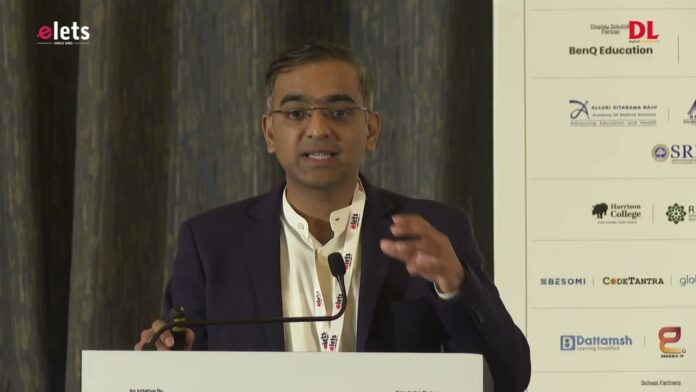
Views expressed by Tarun Gangwar, Co Founder & COO, Tetr College of Business