


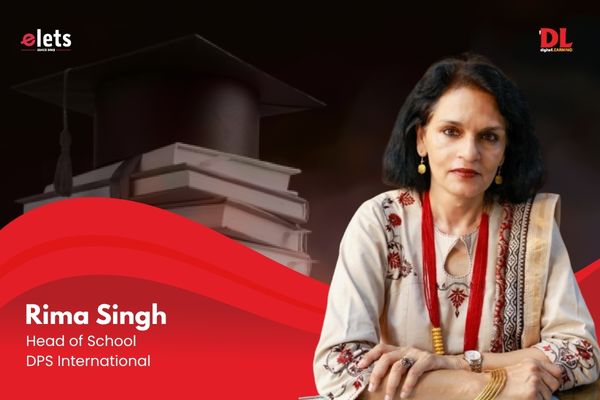
In an engaging conversation with Rima Singh, Head of School at DPS International, Kaanchi Chawla of Elets News Network (ENN) explores how the institution is navigating a transformative phase in education. From embracing inquiry-led learning and digital innovation to aligning with the vision of National Education Policy 2020, she shares insights into DPS International’s evolving academic landscape. She also reflects on the critical balance between AI-driven tools and human-centric teaching, while outlining the school’s forward-looking priorities for building globally competent, socially responsible learners. Edited excerpts:
How would you describe the academic year 2025 so far DPS International? What were the standout achievements or defining moments for the school community?
The 2025 academic year at DPS International showed resilience and strong growth. Key achievements included important accreditation milestones, a wider rollout of inquiry-based learning, and richer global student engagement through a variety of cultural experiences. Notable developments were the integration of digital learning tools and a focus on holistic development, reinforcing DPSI’s commitment to raising lifelong learners with solid values in a connected world.
What is your perspective on the balance between AI-powered learning and human-centric teaching?
Balancing AI-driven learning with human-centered teaching is key to keeping the heart of education, empathy, creativity, and critical thinking. AI can tailor lessons and offer data-driven insights, but it can’t replace the nuanced guidance, mentorship, and moral framework teachers provide. Schools should combine technology with a human touch to raise well-rounded people who can adapt in a constantly changing world.
How is DPS International progressing in implementing the National Education Policy (NEP) 2020 guidelines?
To align with NEP 2020, DPS International has been proactive in aligning its curriculum and pedagogy so that learning experiences, develop critical thinking and promote experiential teaching and learning. The integration of holistic development is accomplished through the IB framework with consideration of India’s cultural and linguistic diversity. The way that DPS International has thoughtfully approached NEP’s vision of supporting creativity, inquisitiveness, and values-based education in a globally relevant framework.
What is your school’s top strategic priority for 2026?
In 2026, DPS International’s focus will be to further develop inclusive education and bring about global citizenship by enhancing the capacity of their teachers to deliver differentiated instructions, expanding sustainability initiatives and collaborating with various community partners to provide students with opportunities to develop empathy, resiliency and intercultural competence. These goals will enable all students to become responsible members of society and be ready for the future.
What is your long-term vision for shaping globally competent, socially responsible students as we move toward 2026 and beyond?
The long-term vision is to build learners who practice international-mindedness anchored in social responsibility, critical inquiry, and ethical leadership. DPS International seeks to engender agile thinkers who embrace diversity, drive innovation responsibly, and add value to society. Such transformational efforts at the school help create an environment where knowledge merges with empathy to prepare students for meaningful global impact.
Also Read: Driving Skill Development for a Future-Ready Uttar Pradesh
If you had to describe 2025 in one word and 2026 in another, what would they be, and why?
2025 can be defined as “Resilience”—a year of adapting and thriving amid change. 2026 will be “Empowerment,” reflecting a focused drive to equip students with skills, values, and confidence to lead in a complex, interconnected world.
What is your hope for the Indian school education landscape in 2026 with respect to equity, innovation, and global outlook?
The hope for 2026 is a more equitable Indian education landscape that champions inclusive access, fosters innovation in pedagogy and assessment, and nurtures a global mindset. By blending tradition with modernity and technology with human values, schools can produce capable, compassionate learners ready to actively participate in and shape a rapidly transforming world.