



 To strengthen and develop vocational courses in healthcare sector the Federation of Indian Chambers of Commerce and Industry (FICCI) and All India Council for Technical Education (AICTE) has joined hands with a view to meeting the workforce shortage in the segment.
The chamber said that an analysis of availability of healthcare human resources from the present bed capacity in the country and underlying demand for building additional capacity shows that the scenario is indeed “alarming”.
The body said that the rapid technological advancement in the medical, diagnostic and management systems are creating the need for new skills.
“But there are limited formal training and education programmes in the country. Large corporate and private hospitals run their own training programmes for such requirements which are not standardised and do not have national recognition,” it said.
To address these issues, FICCI has also set up a task force to improve the existing skill sets available in the country by identifying skill gaps and suggesting academic and training programs, related curriculum and appropriate training requirements.
“For convergence and standardisation of such training programmes, FICCI is collaborating with AICTE to develop vocational courses in the healthcare domain,” it said adding the practical training in hospitals is one of the fundamental elements of these programmes, which is aligned with industry requirement.
FICCI has submitted 12 healthcare and paramedic course curricula to AICTE that include Bachelor in Paramedical Technician in laboratory, blood transfusion, radiography, operation theatre and critical care.
“All the courses are competency-based modules and are open to revisions to ensure that the curriculum is guided by needs of the industry,” it said.
It added that the courses would soon be notified on AICTE’s website and will be open to be taken up by the industry and educational institutes.
Educational institutes such as schools, colleges and polytechnics will work in partnership with the skill knowledge providers like hospitals and laboratories to scale up the number of trained technicians in the country, it added.


 The National Stock Exchange (NSE) and the Bharati Vidyapeeth Deemed University (BVDU), Pune, have signed an agreement to launch a two-year MBA programme in financial markets and a three-year BBA course (Bachelors in Business Administration) in financial markets, starting from August this year. This is the first time that these specialized programmes are being launched in Maharashtra. The partnership is also unique, because these courses are being initiated for the first time in a deemed university.
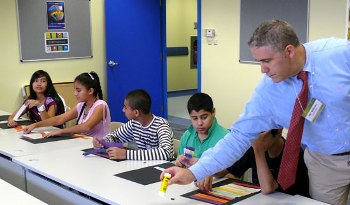






 Boxlight has unveiled its new ProjectoWrite2 series that will meet the diverse requirements of its customers, be it a business executive, an academician, today’s style conscious youth or the diligent learner.