




A problem identified is often a problem solved. However is CCE the right tool for enabling educationists to identify myriad issues in education?
Continous and Comprensive Evaluation (CCE) helps in improving student’s performance by identifying his/her learning difficulties at regular time intervals. It also employs suitable remedial measures for enhancing their learning performance. The CCE system was formulated by Kapil Sibal, Minister of Human Resource Development Government of India. CCE is introduced to decrease the accumulated stress of board exams on the students and to introduce a more uniform and comprehensive pattern in education. The scheme of CCE has inbuilt flexibility for schools to plan their own academic schedules as per specified guidelines on CCE. In CCE system the student’s marks is replaced by grades, which get evaluated through a series of curricular and extra-curricular systems. The aim is to reduce the workload on students and to improve the overall skill and ability of the students by means of evaluation of other activities. Grades are awarded to students based on work experience skills, dexterity, innovation, steadiness, teamwork, public peaking, behaviour, etc. to evaluate and present an overall measure of the student’s ability. This helps the students, who are not good in academics to show their talent in other fields such as arts, humanities, sports, music, athletics, etc. This is a new term to assess all round development of a child, irrespective of individual differences.
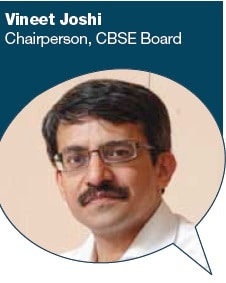 Vineet Joshi Chairperson,
The CBSE has introduced a number of reforms in the school ducation sector. Our focus for the coming decade is on effective implementation of Continuous Comprehensive Evaluation
Marks and Grades
It also has its own demerits. A child with 92 marks will get the same grade, as the child with 100 marks and their talents cannot be recognised by anyone else other than their close ones. Also, with this system, students find it difficult to study many chapters, because of its so called semester system, which lead to the students being engaged mostly in projects rather than in actual studying. Although this system might have some drawbacks, it instils this value that students need to compete with themselves to get a better grade and not with others.
Experts Speak
The assessment has been made easy by splitting up the whole year into two semesters. After completing a semester, a test called ‘Summative Assessment’ is held by CBSE directly (90 marks for class IX and 90 marks for class X).According to the notified scheme, every aspect of extra-curricular activities like sports, club activities, are given prior importance. Kartikay Saini, Chairperson, The Scottish High International School, says, “According to me it is a fine and effective assessment system which helps the mentors/ instructors to track the performance through regular evaluations. It enables educationists to take immediate corrective measures for the students. We follow continuous assessment such as formative, summative, parent assessment, peer assessment, self assessment at regular intervals to study the performance of the students, to help them self evaluate their performance and work an action plans for the same. So according to me every evaluation method helps in knowing the areas of improvement leading to effective results”.
Vandana Lulla, Principal, Podar International School (IB and CIE), says, “Change is inevitable. As a school, we need to constantly upgrade and update ourselves. If improving the continuous and comprehensive evaluation systems in school benefits students, so be it”.
Mamta Gupta, Principal of Shiksha Bharti School, says, “I welcome CCE and through CCE, I came to know that every child is special. Through CCE I realised that if any student is not good in studies it does not mean that he/she is good for nothing”.
 Rajat Gupta, Director, Ramit Technologies Pvt Ltd, (CCE software solution Provider Company), says, CBSE has to understand the reality & revisit implementation of CCE so as to strike a judicious balance between scholastic and co-scholastic outcomes
“Till now, our education system was academics oriented, but with the introduction of CCE, students are now evaluated both on scholastic (intellect and brain) and co-scholastic (heart and hand) attributes. Such kind of system leads to the change in the attitude, life skills (emotional and social) and confidence level of our children and helps in their overall personality development. This is very important for them to survive in today’s competitive world. Some critics say, it is not apt for the country like India, but if implemented properly, its advantages completely outweigh its disadvantages”. 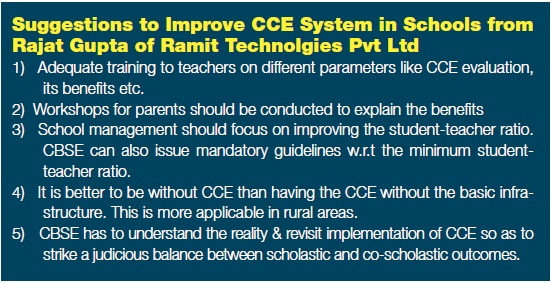
Norina Fernandes, Principal of Smt. Lilavatibai Podar High School, says, “Introduction of CCE has bought about a sea-change in the classroom. The main aspect of this change is the fact that assessment has become an integral part of the teaching-learning process.”
CBSE Chairman Speaks on CCE System
Vineet Joshi, Chairperson, CBSE, says, “The CBSE has introduced a number of reforms in the school education sector. Our focus for the coming decade is on effective implementation of CCE for which the board aims to provide continuous training and engage in discussion with our teachers to build effective monitoring processes within the system.”
On the Flipside
Teachers are going to play a very important role in the implementation of CCE, which is why a comprehensive plan to upgrade teachers teaching skill through different training is required. Secondly, the introduction of CCE does not advocate less emphasis on academic achievements. Students will still be required to do well in studies. CCE in no way dilutes the emphasis on academics. In fact, while the assignments and projects assigned by teachers have to be interesting, they also have to be challenging for students. Fernandes says, “The one off area of challenge in this system is dealing with student absenteeism, especially with long sick leaves where the student has missed out on a whole concept”.
Investment required
Rajat Gupta of Ramit Technolgies Pvt Ltd says, “To achieve fair assessment, proper student to teacher ratio is required, Proper training to teachers is a pre-requisite to achieve proper results. In rural areas, CCE can be a burden where even the desired primary objective of basic academic teaching is not properly achieved.” Rajat Gupta goes on to say that the investment required to have the CCE assistive software in education infrastructure can vary from ` 15, 000 to ` 50, 000. To sum up we all know that every new policy is bound to have its own pros and cons – the CCE is too seems to be plagued with as many cons, as it is blessed with pros. In the final reckoning, it is up to the education masters to bring out the best of it and use it wisely!





 What initiatives have been taken by your company to make optimal usage of technology? Please share the idea behind launching Pearson Schools in India?
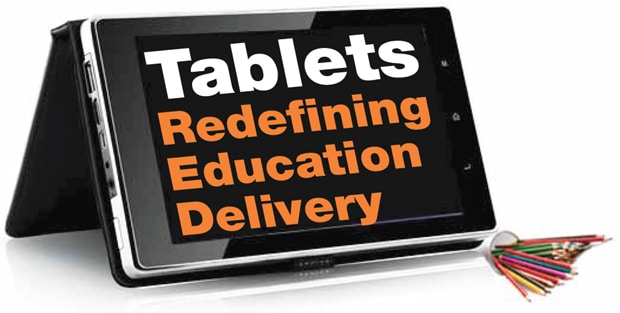
 Tablets are a very effective tool for education, as they reduce the number of books a student has to carry in his bag. Tablets also lead to better opportunities for search, writing, quick noting, as a feature to the child. Tablets are compact and can be easily carried in the classroom unlike laptops and desktops. The multimedia option they offer are conducive for better learning. Currently digital education has turned into projector based system, which does not allow a child to take learning to home. Tablets offer them a platform to practice everything they learn in schools.


 Education is a paradigm that helps in acquiring knowledge. Research is the heart and innovation the soul. Together the growth vehicle would speed and in the absence of any of these, would sputter and backfire.
 An interesting analogy that comes to mind is that of Abhimanyu: the warrior prince in mahabharata who was entrusted with the task of penetrating a Chkaravyuh (certain formidable formation) of the enemy. His advantage was that he had learnt this very critical aspect of warfare when still in his mother’s womb through his warrior father who had narrated it to his mother. However, the paradox of his prowess was to be his ignorance of how to exit the same having successfully vanquished the enemy.


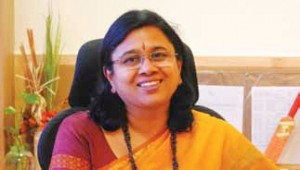 As Head of one of the first schools in Andhra Pradesh to introduce Technology in Teaching and bring in the concept of a Smart school, I believe that tablets have helped to bring a paradigm shift in the Teaching and Learning process. The 21st century learners need to be a critical and creative thinker who can work collaboratively towards designing and solving problems. Easy access to content and information has reduced the relevance of memorising facts and figures. Students today need to connect their learning to real world situations and apply what they learn.
 At DPS Surat, we have tried all options over the last nine years: Projectors, Interactive boards with Projectors and a whole host of variants of the interactive board. However, on the ground our research shows that teachers are quite comfortable with operating the television. So we have given all our teachers iPads. In our classrooms, we have 50 inch televisions, in which the teachers can plug in their input devices. The iPad makes up for the interactivity in an excellent way. This can be projected onto the TV with sound and without loss of resolution to a large extent.”
  Low cost tablet computers can have many uses in school and college education. For a start, all textbooks could be made available on tablets reducing the costs of printing and distribution and also reducing the weight of school bags. Tablets would enable interactive lessons for self-learning as well as for viewing recorded lectures. They could be used to access educational content on the internet. The small size of the tablets and their low cost enables them to be carried to the classroom by each student and they could be used for conducting mini in-class quizzes. Finally, they could be used as a computer for small scientific and engineering calculations.