



Home Blog Page 1122

“We Aim to Reach Out to 300 Schools by End of this Year”

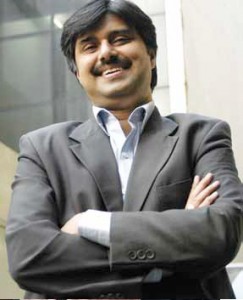
Amitava Banerjee, Head of Marketing, Rumi Education, talks about the advanced solutions that his company is offering to schools, inconversation with Pragya Gupta, ENN

Please share the genesis of Rumi Education in India.

Rumi is an education solutions company that is dedicated to transforming the quality of education provided in schools. We offer a host of education solutions that are world-class, comprehensive, cost-effective and enable partner institutions
to greatly enhance learning outcomes.

Rumi was established in 2008 by the Richard Chandler Corporation, a Singapore-based investment organisation. We strongly believe that making quality education cost-effective for all is the first step towards building a strong and prosperous society.

Tell us about Rumi’s classroom solutions.

Rumi Ready School is our introductory programme that enhances the school’s present curriculum. It can be implemented at any time during the academic year. The programme focuses on language development, communication skills and phonics training, conceptual tools for Math and enables students to acquire the skills that are essential for social interaction and knowledge absorption. The product is available for pre-primary, primary and high schools.

Rumi Smart School is a comprehensive programme that introduces core curriculum and runs throughout the academic year. The core curriculum includes specially conceptualised enhancement tools to boost inquiry-based learning that aims to satisfy students’ curiosity and offers an exploratory approach to build problem-solving and thinking skills. The tools are designed to develop confidence, critical thinking, and articulation skills that allow real-life application and lay the foundation for higher learning.

Rumi Digital Skills is an add-on programme. This award-winning digital education product has an IT-based curriculum and seeks to develop students for future employability.

Rumi English for Teachers present a rigorous curriculum that aims to improve the English speaking skills of teachers, thereby enabling them to communicate better with their students.

What is your opinion on the issue of having curriculum that is more employability specific?

‘Employability’ refers to a candidate’s potential to obtain a ‘job’, and should not be confused with the actual acquisition of the job. Whereas the world of employment has, by and large, been satisfied with the disciplinary understanding and skills developed as a consequence of participation in education, it has been less happy with the development of what has been termed ‘generic skills’, such as communication, team-work and critical thinking. Employability derives from complex learning, and is a concept of wider range than those of ‘core’ and ‘key’ skills. And our programmes like Rumi Digital Skills and Rumi English for Teachers addresses just those gaps.

Please highlight your plans for the Indian market?

Successful implementation of our school education solutions leads to improved academic performance, better student attendance, reduced dropout rates and increased motivation, retention and engagement of teachers. Our mission is to be the market leader in providing education solutions by offering comprehensive and sustainable education solutions that enable schools, teachers and students reach their full potential through effective and innovative teachinglearning methods. We aim to reach out to 300 schools by the end of this year. “We Aim to Reach Out to 300 Schools by End of this Year” Amitava Banerjee, Head of Marketing, Rumi Education, talks about the advanced solutions that his company is offering to schools, inconversation with Pragya Gupta, ENN Corporate Diary

“WiFi – The Solution for Connectivity in the Campus”

Dr Uday Salunkhe, Director, Welingkar Institute of Management Development & Research, Mumbai and Bangalore, spoke to Rachita Jha on the importance of WiFi and other tools of connectivity play in the process of teaching

Tell us the reasons for which you have invested in WiFi technology for the campus?
WiFi serves a very important purpose of linking faculty with students as well as with one another. It leads to the creation of the necessary infrastructure for faculty engagement. It supports both: formal and informal learning and communications among all on the campus. For most students, the WiFi networks are the primary way of connecting while on the campus. Seamless access to email, and other avenues of learning, can dramatically change the way our students go about their academic pursuits. WiFi can lead to a convergance between voice and video, while liberating the students from the constraints of location. WiFi is also easy for the administration to manage as they have to manage only one central Access Point (AP).

How did you decide on the company to install WiFi technology on campus?
We looked at a company that had the capabilities to accommodate a wide range of devices as technology keeps evolving. Technology is not only fast paced, it also springs surprises. Also, for a company that could offer a good backend support.

Tell us more about the wireless network at Welingkar campus.
Our institutions is one of the first WiFi enabled campuses (2001) with a proper data centre, a Giga Ethernet backbone and enterprise backend solutions. WiFi comes with the speed of 54 mbps. One AP and can cater around 90 students at a time. There are around 35 APs. The Institute has a 10 mbps Internet bandwidth with backup arrangements to ensure minimum downtime. Students using their own laptops and other devices such as tablet PCs can avail of the Internet through the WiFi from any place on the campus.

In what ways is the technology helping the students?

  1. Students can roam around the campus and still be in touch with their class. They can be reached through Internet whenever required.
  2. The WiFi systems are also enabling video conferencing and audio video lectures. In our distance learning programmes with the virtual classroom facility, technology has almost nullified the distance. We are accessible to our students worldwide at a click.
  3. Global events like Global Jam Session which saw a concurrent participation of entrepreneurs and innovators from around 40 nations went on swimmingly; now talent sharing is not constrained by geography. Web has given a virtual global platform to talent in all domains.
  4. Welingkar’s IT has the wherewithal to conduct online synchronised training sessions and online exams. Each class room is also equipped with a PC, Projector and audio devices. Some of the classrooms are also enabled with Video Conference.
  5.  Admissions, placements internship all these require students to be well-connected. We have some very reputed companies that have been recruiting via video conferencing on campus.

What are the key challenges in the use and adoption of Wi-Fi on campus?
Setting up a campus-wide WiFi system has its share of challenges. Security is a big area of concern. We are trying our best to prevent any unauthorised access to the network.

There should be streamlined inbuilt channels for each individual user within the network. Welingkar does have this facility but it has to be further updated. Other concerns include coverage, capacity and density.//

“Connectivity that makes us SMILE”

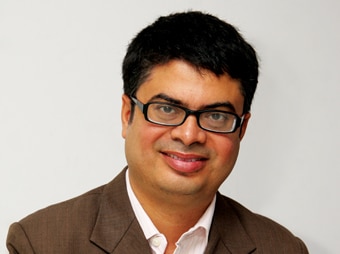
Santanu Mishra, Co founder and Executive Trustee of Smile Foundation spoke to Pragya Gupta, about wireless campus

http://smilefoundationindia.org

Tell us about your Wireless campus.

We are making our Smile Twin e-Learning Programme (STeP) centres across 60 locations in India completely Wi-Fi enabled. It’s very important to have Wi-Fi campus because as it reduces the cost of wires along with the complexities of connectivity. The maintenance cost comes down. It also helps in seamless teaching and learning.

How critical is wireless campus in creating better teaching learning outcomes?

The role of wireless campus for the enhancement of teaching learning process is vast. Wireless campus supports everyday activities unobtrusively and seamlessly in classroom contexts. Project-based learning is facilitated as teachers and students can engage in teaching and learning via Wi-Fi. Also, it gives the class freedom and spontaneity in learning as the teaching is in progress.

Tell us about the ways by which the institute is making use of digital and connectivity related technologies?

We aim towards connecting all our institutes with WiFi for availing the maximum mobility. Also we are looking forward to convert our institutes into virtual classrooms for maintaining the quality of education through the country. We are looking forward in conducting virtual recruitments for increasing job opportunities of our students. In near future, we may facilitate free teaching of our students by connecting our classrooms with the best of the institutes and colleges.

What new digital teaching tools do you plan to deploy in future?

Our centres are already being upgraded with WiFi networks, which will reduce the cost and complication of wires. Also cloud computing is being made availed to all the centres. The main idea is to provide virtual classes across the country to all our students. In future we will like to introduce virtual recruitment process.//

“We are Going to Acquire More APs”

Akhlesh Agarwal
VP – Learning Technologies, NIIT University (NU)

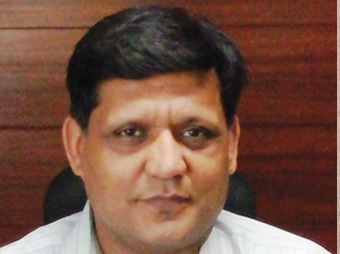
Akhlesh Agarwal, VP – Learning Technologies, NIIT University(NU), talks about Wireless Campus and digital technology tools in education

Tell us about your views on the use of digital teaching technologies in Education.
Technology is complimentary to teaching. Digital resources have the potential to enhance science, technology, engineering and mathematics education by providing access to innovative curricula, stimulating applets and other hands-on resources. Use of the digital learning technologies engage students in the everyday application of technology and engineering to improve their understanding of fundamental and often complex concepts, in a way, that makes sense to them through exploration of the established norms.

What are the digital technologies that have already been deployed in the university?
Our focus is to use the best of technologies to increase effectiveness of teaching learning process. We use Open source LMS Moodle, where all the faculty members upload class content and also use it for online quizzes and assignment. The LMS is integrated with mail and SMS gateway to communicate effectively with students.

We also use a Synchronous Learning technology (SLT) to deliver lectures to students who are not on campus. SLT technology allows us to provide the best possible combination of Work integrated learning.

We use electronic, digital whiteboard technology in some of the courses to use the interactive digital content efficiently. Recently, we have also deployed an online hostel management and gate-pass management system to streamline the student in and outflow to reduce the paper usage.

Tell us about the new digital teaching tools the university plans to deploy in future.
We are in the process of implementing a digital library, where all the faculty members will be able to make any digital content available to all the students in the university. This will be an addition to the content in the LMS, which is accessible to only students of the specific batch/ course. We are also starting a pilot of the Mobile based attendance system that will facilitate accuracy in the attendance system and will save time for the faculty member. Moreover, a student information management system will also be implemented from the forth-coming academic year, which will include academic records, fee records, and hostel and library management.

What kind of features do you generally seek in WiFi solutions for education?

A WiFi campus network offers teachers and students, a diverse and secure access to the information they need.

We decided to give only wireless LAN in hostel, so we were looking for solution that should fulfill the need of student of Internet. We have explored various companies based on the following criteria: latest standards with higher bandwidth support, video streaming, coverage of maximum area. In addition, it should offer single Access Point (AP) to support the maximum users with friendly diagnostic tools. The controlled performance monitoring capabilities is also one of the important criteria.

Wi-Fi Access Point(AP) in NU campus is of latest ‘n’ standard and dual band. We have installed 54 APs to cover the academic block, hostels and open area. The speed varies from 100 Mbps to 300 Mbps. All (400+) students on campus can access the Wi-Fi simultaneously. All APs are centrally controlled. we are going to acquire some more APs.

Tell us about the key challenges that you faced in implementation of WiFi solutions.

The key challenges in the use and adoption of WiFi on campus includes the placement of Access Points. It should be done in such a way that minimum number of APs should cover the maximum area, with redundancy. Also, efforts should be taken to eradicate issues like- WiFi is slower than any other Internet connection and it does not support the bandwidth-oriented applications like Streaming Video, Live Lecture Feed, etc.//

Enabling Value Added Education

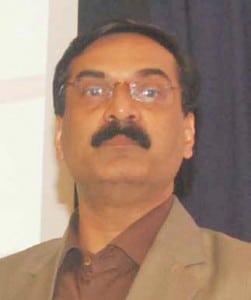
Dr Picheswar Gadde, CEO, Lingaya’s University, speaks to Sheena Joseph Cherian, about the mission and vision of his institution

http://lingayasuniversity.edu.in

Tell us about the Lingaya’s University. What was the main inspiration that brought the university into being?

Lingaya’s University came into being in1998 with the simple objective of offering professional and technical education in North India. Most of the students were going from North India to South India as there was scarcity of good colleges in the North. We wanted to start an institution in Delhi, but those were the days when Delhi University was not giving affiliations. Indraprashtha (IP) came into being only in 1999. Faridabad was the nearest location to Delhi. So we decided to start there. Being a South Indian group, apart from the academics, we wanted to give more importance to the moral values and ethics. To an extent, we have been successful in the first year; we were amongst the top three colleges. In 2009, we completed ten years. As per the Ministry of Human Resource Development (MHRD) regulations, we needed ten years to become a deemed university, so we applied for I then. For that we needed to undergo very vigorous inspection. However, we got permission in January 2009.

Tell us about your views on providing job related skills to the students.

In the MNCs, where majority of students want find jobs, there is lot of competition; the MNCs give 60 percent emphasis on the academic part and 40 percent on the factors like: what is the attitude of the student, is he going to be a good team worker, how good is his body language, communication skills etc. So these are the very important things that we must also emphasise upon.

At Lingaya’s we follow a simple strategy, which says that if you manufacture a good product it will be definitely be sold in
the market, if you don’t manufacture properly it won’t be sold. We produce engineers and if they are good, they will be sold in the market otherwise they will not be sold. If we are just giving the degree for the sake of it, it means we are not doing justice.

How does Lingaya’s University distinguish itself from other technical universities?

There are certain systems that we have maintained at the Lingaya’s University. We are emphasising more on the Research and Development. We don’t emphasise on increasing the number of students or increasing the number of courses. The emphasis of the University is industry oriented. We do not emphasise on the academics; we see what the industry wants us to teach the students. Overall development of a child is also very important and this is what the Lingaya’s University emphasises on.

Tell us about your plans for building new institutes in Faridabad.

We want to build an international school in Faridabad. Haryana government has already given us the no objection certificate. The idea and concept behind this is that we want to shape the child from nursery to the Phd. level. And hopefully we will be able to complete it in the coming years.

What are your future plans?

We have our colleges in Vijayawada, we have colleges in Delhi also and we want to expand further. We wish to expand outside India also. The concept is very clear. We want to expand our wings to California. We wish to have a system that allows a student to study for three years in India and then go to USA for doing his final year. One advantage is that the student has to pay lower fees, and the other advantage is that if he does his finishing course from there, he gets visa for two years as per the policy. Same is for the Masters Program also; the student does one year here and one year there.

Excellent Experience with WiFi

Dr Upinder Dhar, Vice Chancellor of J K Lakshmipat University (JKLU), Jaipur speaks about digital technologies and wireless campus in the university to Pragya Gupta, Elets News Network (ENN)

Dr Upinder Dhar
Vice Chancellor, JKLU

Digital teaching technologies in education
Digital technologies are transforming the education sector. The purpose of using such technologies is to improve the effectiveness and efficiency of delivery mechanism and at the same time involve the learners in the process. With the use of such technologies, teaching/learning has become more informal and geographical limitations have disappeared. Students can now learn at their own convenience and professional education is literally coming out of the four walls of classrooms.

Digital technologies deployed at JKLU
We have taken a conscious decision from day one that this is going to be a high-tech university in terms of technology usage and deployment. To meet this end, all classrooms are equipped with LCD projection systems with remote operated motorized screens. Classrooms also have high-fidelity acoustics and all necessary audio-video facilities. The University has deployed video-conferencing facility from the very first day and the students are immensely benefitted in the form of expert lectures from academia located in different parts of the world. Not to mention, all classrooms are connected with the rest of the world in real time through high speed WiFi Internet access. All academic and administrative processes are automated with the help of ERP software.

Wireless Campus
The campus is fully wireless with high-speed wired connectivity available in the labs and IT centre. The University has invested in WiFi technology to enable seamless access to Internet/Intranet technology without any hassles. At the same time, students can also access learning resources on the go, without being tied to any specific location. Wireless campus improves the process of learning. The major advantage is in the form of mobility of the students as well as facilitators. The students can access the online resources in the most unassuming places with ease and great convenience.

Wireless campus indeed improves the teaching learning process. The major advantage is in the form of mobility of the students as well as facilitators. The can access the online resources in the most unassuming places with ease and great convenience.
IT infrastructure is continuously evolving at JKLU, which has a most scalable and flexible IT policy. More access points are planned to be installed.

WiFi systems Experience
Excellent browsing and downloading experience with a strong encryption and secure infrastructure is a primary requirement. With hundreds of simultaneous users, controller based solutions with load balancing features and seamless roaming are being sought after. This is being done to ensure highest up-time as well as sound traffic management. The final vendor has been chosen after live demonstration, scalability of the solution and commercials.

The WiFi network installed at JKLU campus is totally controller based. All access points are of advanced N-series type with 300 Mbps throughput. All the access points are centrally managed with the help of controller. The campus has around 30 access points covering the entire campus with each access point capable of supporting 90 simultaneous users with load balancing features. All hardware facilities are scalable and capable of smart wireless meshing which can meet the growing needs of the University in the years to come.

Key challenges in making the campus wireless
Key challenge is in terms of speedy obsolescence and security concerns. Companies should develop more secure and robust technologies keeping in mind the specific needs of educational institutes.//

State Colleges Extends Deadline for Online Admission

With the higher education department’s decision to extend last date of online admission in colleges from June 10 to July 10, the student community can now breathe a sigh of relief. The online admission began on a dull note on May 21 as students were waiting for their Class XII results.

Several students then raised questions over the wisdom of starting online admission before the announcement of results. According to department press release, higher education minister Laxmikant Sharma has given an approval to extend the last date for the convenience of students in online admission process for colleges implemented for the first time in the country in the state. Earlier, only those students could take part in the admission process, who had registered and had documents verified till June 11.

The department admitted that extending the last date of registration was necessary in the interest of students as results of higher secondary exams had been delayed. The department also mentioned that the last date extension was necessary to ensure that students living in remote areas of the state do not face any difficulty on account of introduction of online admission process throughout the state. The seat allotment in the first round of online admission process will be as per schedule from June 18 to 21. Seat allotment of the second round will be from June 25 to 27. Seat allotment for vacant seats will be made on the merit basis in the third round for registered students who get their documents verified till June 30. Admission allotment in the fourth round will be made on July 8 and 9.

News

AICTE Devices Mechanism to Register Complaints against Colleges

All India Council for Technical Education (AICTE) has invited stakeholders and outsiders to write to them in case of any malpractice on the part of any institution. The initiative intends to bring more accountability and transparency into technical education. This will give an option of receiving feedback and complaint through emails after it came to light that many institutions had been furnishing exaggerated information whenever the governing body sought it.

Directorate of Correspondence Courses and Distance Education, BU to Hold Contact Classes

The Directorate of Correspondence Courses and Distance Education, Bangalore University, will be conducting contact classes at Government Arts College, K L E’s S Nijalingappa College, Government R C College of Commerce and Management for candidates who have registered for various undergraduate courses under the Open University Scheme at Directorate of Correspondence Courses and Distance Education for the academic year 2011- 12.

Visvesvaraya Technological University, Belgaum Signs MoU with EdCIL (India)

The Visvesvaraya Technological University, Belgaum has signed MoU with Educational Consultants India Limited (Ed-CIL). EdCIL was established as a Public Sector enterprise by the Government of India in 1981, under the Ministry of Education and Culture. EdCIL is a nodal agency for arranging admission and placement opportunities for foreign students to pursue their higher studies and training in Indian educational institutions.

Indian Schools Adopt Cloud

In a move to provide superior education to students with collaborative learning tools, reputed schools like Delhi Public School, American School of Bombay, KR Mangalam have adopted Microsoft Live@edu, a cloud based service. Microsoft Live@edu enables institutions in brand building, social and professional collaboration, knowledge repository that leads to career opportunities.

CABE to Form Panel on Teachers’ Training

The Central Advisory Board of Education (CABE) has decided to look into developing a framework for the new central programme for teachers’ training.

CABE, which is the highest advisory body in education, at its meeting on Wednesday decided to form a committee to develop the “framework and processes” for the National Mission on Teachers and Teaching being launched by the central government.

Minister of state for education D. Purandeswari will head the committee.

Human resource development minister Kapil Sibal, meanwhile, said it was “ironic” that best minds were not being attracted to teaching.

“It is ironic that you always talk about education of children. Here we are talking about teacher education. In other words, we have accepted the fact that our teaching communities are not as educated as they should be,” Sibal said at the meeting.

“If we want to educate our children, we must get the best minds into the teaching profession,” he said.

The board also decided to form a committee to look into the policy of not detaining and allowing students to move on up to Class 8, as per the right to education.

The committee will be chaired by Haryana’s education minister Geeta Bhukkal and include education ministers from other states and representatives from academia and civil society.

“Our target is to provide sporting facilities to 3 lakhs kids in next three years”

Shrikant Hazare, Chief Marketing Officer, KOOH Pvt Ltd talks about dynamics of Indian education market

How important is sports education in the overall development of a student?

From an Indian context, sports education is still not a priority and why I say that is because there exist large number of issues in sports education. I would break it into three aspects; one is getting quality sports coaches. One could find good sportsmen, but sports coaches are difficult to find because teaching is a different skill set and playing is a different skill set. So coaching skills and playing skills need to be matched for someone to be a sports coach. Second aspect is that most of schools in India and in metros do not have infrastructure like fields for outdoor games, whereas few schools in Pune, Chandigarh have fields. Third challenge is that India doesn’t have any sports curriculum in place. From kinder garden to 12th standard we need to have proper curriculum for sports like we have for maths, biology, physics etc.

What is your opinion of the private sector initiatives in the school sports space?

There are very few companies which are into this business. We have got a start for sure and this is a positive sign. Corporates have started getting into sports education; they have also made forays into formal education space. One of the companies’ active in education space is ours.

Do you think that private sector initiatives in sporting field will create a positive difference?

It will definitely create a difference. I see lot of plusses happening and also before entering into sports education space we did some research with IMRB across 394 schools and 120 colleges in 8 cities, including include Mumbai, Pune, Delhi, Bangalore, Chandigarh and Chennai. We found that 70 percent of those schools and 75 percent of colleges show interest in outsourcing sports, which is a real boost where outsourcing and business of sports education is concerned.

How many schools are you working with right now?

I will not get into the rigmarole of  identifying the number of schools, as the number of students vary from school to school. The number of students being trained is more important. Some schools have 500 students, some have 2000 and some have 1000. Currently, we are addressing about 14000 students across 8-9 cities in India.

What is the dynamics of sports education solutions market in India? Tell us about the aspects of things like growth rate, opportunities, etc.?

See the base is so small that high growth is assured. In any case, it makes no point to anticipate growth rates of as much as 40 percent, because we are not operating in a mature market. There is a huge potential and growth prospect.

So there are lot of opportunities?

Opportunity is huge. We have more than lakh of schools in India and we have barely started scratching the tip of the iceberg. There is lot that can be done.

Tell us about your expansion and investment plans in this segment?

Our founders are Sushil Kumar and Prabhu Srinivasan. We stared with an initial seed capital of one million. Our target is to provide sporting facilities to 3 lakhs kids in next three years. We are geared to make that kind of investment to address 3 lakhs kids.//

LATEST NEWS