
Home Blog Page 1454

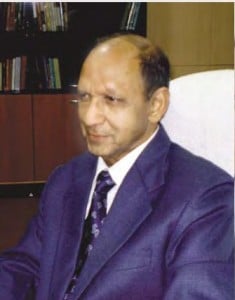
Creating Opportunities for Those Left Behind : Prof R S Nirjar, Vice Chancellor, Gautam Buddha University

Gautam Buddha University was established in 2008 to impart quality post graduate education and research in emerging disciplines of management, IT, biotechnology, etc, to the disadvantaged sections left out from the purview of higher education.

Vice Chancellor Prof R S Nirjar shares his views on issues close to the university and higher education at large.

What is the underlying vision of the Gautam Buddha University?

Gautam Buddha University seeks to provide world class education and research in emerging as well as conventional branches of disciplines. Our mission is to reach the weaker sections of the society to offer them opportunities to acquire high level competence, which in turn will ensure their vertical mobility.

We also endeavour to create a body of scholars, who will contribute to the needs of society and industry.

“Our mission is to reach the weaker sections of the society to offer them opportunities to acquire high level competence, which in turn will ensure their vertical mobility”

How do you ensure equal access to the socially disadvantaged groups?

Ensuring equal access to the disadvantaged sections is not that difficult for us as we already have systems in place for it. For example, in the entrance exams itself, the question papers are prepared considering various backgrounds of the student and their intelligence level. After all, we have to keep in mind that a student coming from rural area might not have the same standard of English as a student from the city. So the question papers are framed in a generic way and have a wider choice of questions. We believe that if a student is weak in some subject, it can be worked upon during the course of his studies in the University.

Additionally, we also provide financial assistance to students from weaker sections of society to pursue education.

In your opinion, what are the main challenges confronting India`s higher education system today?

There are three main challenges confronting our higher education system: (1) quality of education, (2) post graduate education and research, and (3) weak vocational education. Quality in education is important to curb heavy drain of India`s productive labour to the Western countries. We need to develop and improve our own industrial base, in manufacturing and other streams, so that our engineers and other technical professionals are absorbed in our country.

Secondly, we are absolutely lacking in post-graduate education and research. As such the number of research scholars have declined over the years. And our professionals, especially those working in IT sectors and MNCs, are not involved in high-end research but are on the lower end of the system. We can move up the ladder only, if we develop our educational base by boosting post-graduate education and research. And Gautam Buddha University is dedicated to providing world-class education and research.

Another main issue is our weak vocational education system. In India, we have a differential system. People, who acquire vocational education,especially at ITI levels, are not at an advantageous position as far as their vertical mobility is concerned. So we need to ensure that a person from vocational stream has a chance to enhance his or her qualification further. For example, in Canada, 80% of engineering graduates are from vocational streams. However, in a country as huge as India, you would not even find 84 students. So we need to strengthen our vocational system. Gautam Buddha University also plans to start vocational studies next academic year and will be the first institution to offer Ph.D. in vocational streams.

“The industries are nowadays creating lot of noise about the skill sets of our graduates as they do not want to own up their responsibility of providing human resource training”

What role do you think ICT can play in the higher education?

ICT is at the core of our very existence in GBU, and not just a branch. We have a wi-fi enabled campus, networked labs, etc. We also are starting a post-graduate course in ICT this session.

ICT is an undeniable part of our existence today. We cannot escape from it. All types of original research, be it decimal, differential calculus, medical research, etc, have originated in India, except for the industrial revolution which we missed out. But we cannot now afford to miss out on the ICT revolution, which is a revolution of micro against macro. Since India has a very good intellectual capital, we should be the torchbearers of this great technological revolution.

Recently there has been lot of talk on the industry readiness of our graduates. What are your views on it?

I have full faith in our graduates. The industries are nowadays creating lot of noise about the skill sets of our graduates as they do not want to own up their responsibility of providing human resource training. They want ready made workers who suit their needs. While universities bring out graduates who have the general conception and knowledge to fit into any industry.

How would you rate our higher education on the global scale?

One cannot say what is best and what is not. There are certain good things about our system, whereas there are some inadequacies as well. For example, having a system of affiliated colleges, needs to be pondered over. However, sudden changes are not good as there are historical reasons behind having a particular system.

On the whole, our education system is not bad as our graduates who work in US or UK are producing wonderful results. An Indian student often takes less time completing Ph.D. in a foreign university when compared to students of that country.

Moreover, our spending on higher education is minute, not even up to 6% of the GDP, when compared to other countries in Asia who spend around 15-20%. We also need to focus on research and vocational education if we want to improve our overall standing in the global arena.

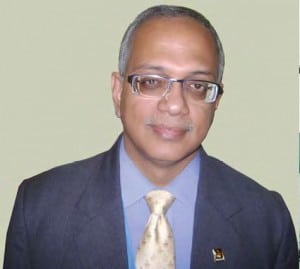
Training Young Minds To Hone Their Skills : Anand Sudarshan, MD and CEO, Manipal Education

From a single medical institution in 1953, Manipal Education has emerged as a leading private education provider with global presence in 20 countries, over 195 courses and 96,000 students. It is a chosen destination not only for students from India, but from 51 countries across the world!


Anand Sudarshan, MD and CEO of Manipal Education, talks about various aspects that make Manipal a world-class institution.

What is the USP of Manipal University?

We don`t have a USP…we have a UEP, that is Unique Education Proposition. We are probably the only educational group that is addressing all rungs of the education pyramid, right from high end education like medical education to distance education, continuing education to vocational education at the lowest end of the spectrum.

“Manipal has few active research collaborations with the industry. For example, with Phillips we have worked on several projects, one of them being on `solving problems at the bottom of the pyramid level`. We worked on developing a product to help detect oral cancer in early stages in people living  below or slightly above the poverty line”

In what ways does the distance education courses of Manipal University strive to enhance the skills and employment opportunities of students? What has been its success ratio?

Degree courses in the distance mode generally are not in tune with specific requirements of skills and seldom do they focus on employability as a core concern. But Manipal`s distance education courses try to address this concern by focusing on not just attaining a degree but also on making a sustainable career. We adopt a multi-pronged startegy for this. Firstly, we contruct the programme and curriculum with inputs from the industry so that it becomes industry relevant. It also helps us create specialised programme components for specific industry verticals.

We make available to our students studying in 600-plus institutions in the country, additional programmes to hone their existing skills in tune with industry requirements. We also coordinate closely with various industries and sectors in the country so that our students get opportunities to work in them.

We have a lateral entry scheme for these professionals where we recognise some of the prior skills that these professionals have. This scheme is for those already employed in the industry, but want to enhance their skills through a credit-based structure

How extensively is ICT used in Manipal to facilitate an enriching teaching-learning experience.

In India, distance education predominantly is about `education through correspondence`. However, our distance learners are as near the campus as traditional learners, albeit minus the physical presence. We have evolved a hybrid model of education delivery, which is the cornerstone of Manipal education. Apart from self learning material and face-to-face classes at flexible hours, we also deliver lectures through VSAT. Werecord lectures not just of the faculty but also industry experts, which is then delivered to our students at the learning centres through satellites. Currently the technology enables us to have live lectures through the useof one way video and two way audio.

The other aspect is Technology enabled Learning (TeL) through Internet. This was a piolt project, which has been developed now on the e-Learning model. There is lot of virtual interactivity like a dialogue box, student -to-student interaction, discussion room for students and faculty. We are also in the process of delivering assignements through the Internet. The section on multiple choice questions is one of the most popular sections in the website.

Please tell us about your tie-up with ICICI for Manipal Academy of Banking and Insurance?

The ICICI tie-up is unique as it focuses on inclusiveness. Through this programme we have managed to penetrate the Tier 2 and Tier 3 towns to reach out to the weaker sectionsof the society. The students are enrolled following an aptitude test by ICICI. The programme has been highly successful and we have about 1000 students studying with us.

It has been a fascinating joint journey and ICICI`s vision and commitment for doing this has been extraordinary. There is no parallel to this kind of activity in the banking and insurance sector.

What are your views on the current status of industry-academia collaboration. Where does Manipal stand?

Connection between the industry and academia is important for developing the right skills of our graduates and enhancing their employability factor. Without getting into any kind of blame game on who is supposed to do what, I will say that both the sides have to work at catalysing a mutually beneficial engagement. The three pillars of higher education are Teaching, Research and Industrial Engagement and all three are important.

Manipal has few active research collaborations with the industry. For example, with Phillips we have worked on several projects, one of them being on `solving problems at the bottom of the pyramid level`. We worked on developing a product to help detect oral cancer in early stages in people living  below or slightly above the poverty line.

The HRD Ministry has reently been working at bringing a policy on ICT`s in education. Do you think such a step is required?

Coming to policy level, there are a lot of things that needs to be kept in mind. I would ask, do we require an ICT policy for roads or airports? It is for the airports to decide how to use ICT`s to their benefit. Similarly, I feel it is for the educational institutes to figure out how to use ICT`s for their good. However, if the government can enable it through a policy then I think it would be good. As educational institutions, our aim is to facilitate the growth of our students. Some might say ICT is a core way of doing so, other might not agree and they may be very right in thinking so. The  ultimate objective is to improve learning and thereby employability, throough whatever means.

What message would you like to give to the young people?

We believe that technology has an enormous role to play in education and technology not only means e-Learning as is understood today. I would like to tell the students to keep their minds open… for technology is going to play an incredible role in education. As the  phrase `You have to learn to learn` goes,  technology is one catalyst or impetus that would help us learn to learn.

Aptech and New Life Group enters a Joint Venture in Phillipines

Aptech enters into a Joint Venture (JV) with New Life Group Inc, a Philippines-based company, to expand its retail presence in the country. The JV in favor of New life Group Inc and Aptech will be shared in the ratio of 60:40. The CEO and MD of Aptech Ninad Karpe said that with the joint venture Aptech will be able to carry its brand and expertise to Phillipines and address the retail market with ACCP and other related ICT courses. IT education in Philippines is evolving rapidly and value-added services such as technical support and product troubleshooting along with basic IT and hardware consulting are on the rise.

Aptech programmes will aim to deliver the best benefit to students in terms of enhanced employability options upon their completion. The Phillipine IT market is expected to show good performance in years to come wiyh projected increase in spending from $2.4 billion to $ 3.6 billion. The JV will also serve to expand the scope of the retail and training brands of Aptech, namely Aptech Computer Education, Arena Multimedia, Avalon Academy, English Express and N-Power across Cambodia, Philippines and Laos.


HRD Ministry helpline for ragging victims

The Human Resource Department (HRD) Ministry recently announced the setting up of an anti-ragging helpline and website for ragging victims to lodge their complaints. A special unit will be deployed for investigating and handling the complaints. The website would become functional before June 15, 2009. The helpline is being initiated by the Education Consultants of India in association with NGOs working against the menace of ragging.

An independent unit would assist in investigating all the complaints against ragging. The government is planning to adopt an independent investigative mechanism to ensure that educational institutes do not harass ragging victims for lodging their complaints. 'It has been noticed that action was taken against several students for lodging complaints against ragging,' said a University Grants Commission (UGC) official. The UGC is expected to finalize its guidelines for anti-ragging in a meeting to be held on May 18.

IInd Web challenge by Telco

Smart Communications Inc. public school partners can look upto to another round of online sharing about what's unique in their respective communities with the launch of the 2nd Doon Po Sa Amin Learning Challenge. Currently, Smart is accepting entries from student-faculty teams of partner schools under the Smart Schools Program. Registration of school teams and student groups to the competition will be until Aug. 12. Participants have until the end of November 2009 to finish their entries, publish them online and promote their web projects. The Doon Po Sa Amin Learning Challenge is a search for the richest local content or most unique information uploaded on the worldwide web by student groups and school teams. Besting 34 other entries that made it to the short list, the NCSHS team received the grand prize of P50,000, a trophy and school equipment. Each member also received a Smart Bro prepaid plug-it kit. Their entry also won the Best in Social Science topic category award and got an additional P30,000 in cash and trophy.

The competition is part of Doon Po Sa Amin, a four-year content generation project which Smart launched last year to encourage teachers and students of partner schools to use Information and Communications Technology (ICT) to generate and share web-based information and educational materials about their respective communities. The official website can be accessed at www.doonposaamin.ph. Under the Challenge, partner schools form a school team composed of student groups mentored by teachers. School teams are tasked to use desktop and Internet technologies to generate information for their websites, as well as local content using community mapping techniques such as participatory research, interview skills, writing, documentation and resource mobilization. Guided by their teacher coaches, student groups from the school teams select a particular area of study as their entry, write stories and publish them online. Each entry must fall under any of seven curriculum-based topic categories, thus allowing participants to analyze and present content using classroom subjects. The categories include mathematics, science and environment, health and wellness, technology and livelihood, language and literature, arts and culture, and social science.

1000 schools with lacuna to be empowered by Nenasa

'Nenasa'- a state-of-the-art Digital Satellite Television based Distance Education Bridge, managed and operated by the Ministry of Education and the National Institute of Education (NIE), was launched by President Mahinda Rajapaksa. 'Nenasa' will connect 1,000 rural schools in Sri Lanka to high-quality rendition of the national curriculum, developed by the NIE over a digital satellite television broadcast medium. The President together with Minister of Education, Susil Premjayantha, launched the broadcast from a classroom in a rural school in the Moneragala District

CTT partners with Microsoft for ‘ICT Generation’ program

CTT, an integrated business education and certification services company, announced the formal launch of the 'ICT Generation' program, which empowers disadvantaged youth through technology training and certification, and guarantees them employment. The program is an innovative response to Peru's dual needs for technical talent to support its rapidly growing information technology industry and for helping young Peruvians who lack financial resources to gain the necessary education and training for technology-related employment. ICT Generation will train 740 youth within the next six months. The first phase of the program launched this month with young people from Lima, Arequipa, and Trujillo. CTT, Microsoft Peru, the Peruvian Ministry of Labor's PROJOVEN program, and the Inter-American Development Bank teamed to design and launch the program. 'We appreciate the opportunity to work with Microsoft, the Ministry, PROJOVEN, and the Inter-American Development Bank in this pioneering program,' said Hermann Gomez, president of CTT S.A.C. Peru. 'By empowering the youth of Peru to gain valuable technical skills and knowledge, we also empower them to transform their country.'

Microsoft is helping to fund, support, and promote ICT Generation. The company's software, technical course materials, examinations, and program design are used to prepare students for earning Microsoft Certified Professional certification. 'Peru's technology sector is growing, which represents an outstanding opportunity for young people to gain employment,' said Enrique Angulo, general manager of Microsoft Peru. CTT has designed and will conduct the System and Support Specialist Program, which includes technical, best practices, and humanistic skills courses. Students will also take courses from CTT that address the Microsoft operating system, network installation, network configuration, customer advocacy, broadband access technologies, installation and support, and personal communications. After completing courses and passing an examination, students earn the CTT Specialization in Service and Technical Support certification, which includes the Microsoft Certified Professional credential as a component.

India ranked above US, UK in IP laws, enforcement practices

India has been ranked as the country with the world's most consumer friendly intellectual property (IP) laws since its copyright regulations allow citizens great freedom to access and utilise information for educational and development purposes. This emerged in a study of 16 countries, including economically advanced ones, undertaken by the Malaysia-based Consumers International, which calls itself the 'world's only global consumer advocacy body.' Consumers International said its first IP Watch List focused on copyright – which has 'the most immediate impact on consumers' access to knowledge and thereby on their educational, cultural and developmental opportunities.' In the listing which saw India come out on top, the other countries with good ratings were South Korea, China, the US and Indonesia. At the bottom of the list were Britain, Thailand, Argentina, Brazil and Chile. India was rated high (with a B average on a scale of A to F) in terms of its scope and duration of copyright as well as the freedom of access and use it gave to home users, content creators, the press and those in public affairs. However, despite topping the list, India didn't do so well and got a C scale in terms of the leeway it allows for disabled users to access copyrighted work. Likewise, it got only a D when it came to freedom to access and use copyrighted work by libraries. Consumers International called for a 'balanced copyright regime in which the importance of copyright flexibilities and of the maintenance of a vibrant public domain are upheld.' India's strengths and weaknesses of its copyright laws – from a consumer's perspective -were closely studied.

MoU between DST Group, Ericsson and 4 government schools

Students of four schools will be going tech savvy by utilising the latest laptops and high speed Internet broadband following the signing of a Memorandum of Understanding (MoU) between DST Group and Ericsson with the principals of the selected schools on Thursday. The joint community ICT project which brings about high-speed mobile Internet connectivity to schools, was brought together by DST Group and Ericsson. The selected schools were Tanjung Kindana Primary School, Berakas Secondary School, Pengiran Jaya Negara Secondary School and Sayyidina Othman Secondary School. The laptops and Internet broadband will be stationed in each school's computer labs.

The project recognises that education is an area that is important for the society and with high-speed connectivity and easy access to the Internet, learning can be more efficient. The project includes the provision of DST Go! Broadband high-speed Internet access service and fixed wireless routers and laptops. DST Group Go! Broadband service supports Internet Access of up to 7.2 Mbps. Witnessing the signing of MoU was the Acting Director of Information & Communication Technology Department, Ministry of Education, Awang Haji Mohd Yussof Haji Metassim. Signing on behalf of DST Group was the General Manager, Corporate Services, Awang Haji Matnaruddin bin Ibrahim whilst signing on behalf of Ericsson was the Key Account Manager, Tan Poey Poh. Launch of the project will be held later in the month.

Kalinga Institute inks MoU with Intel Technology

The Kalinga Institute of Social Sciences (KISS) and Intel Technology India Private Limited have signed a MoU for promotion of literacy among tribal youth and out-of-school children, sustainable development practices among teachers and innovation among students.

The MoU intends to promote literacy among tribal youth and out-of-school children through the Intel Learn Programme with a hands-on approach to ICT learning for under-served children in the age group 8-16.

LATEST NEWS