Home Blog Page 193

IISc Bangalore launches new BTech course, admissions to be done through JEE Advanced

IISc Bangalore

Bengaluru

The Indian Institute of Science (IISc), Bangalore, has launched a new bachelor’s programme BTech in Mathematics in Computing. Admissions to the programme will be done through the scores of JEE Advanced. The complete course structure and eligibility details are available on the official website at iisc.ac.in.

The institute has so far not released any timeline for admission to the programme and the deadlines will soon be posted on the IISc website. There would be a total of 52 seats, including 8 supernumerary seats for female candidates and 4 for foreign nations/NRI/OCI. Students can also obtain an MTech degree by taking an additional year of the course and project credits.

To be eligible to apply, the student must have cleared class 12 or equivalent from a recognised board with the following subjects: Physics, Chemistry, Mathematics, a language, and any subject other than the above four. The details of the counselling process for admission to the BTech programme have not been finalised yet.

“We have approached the Joint Seat Allocation Authority (JoSAA) of the IITs to join with them. If successful, the application and counselling will be conducted by the JoSAA as per JoSAA business rules. Else it will take place via the IISc admissions portal,” the official website read.

The core of the program spread over four semesters includes six courses each in mathematics and computing areas apart from courses in the sciences, humanities, and other engineering disciplines.

New KVs are not just options to improve education sector, says Dharmendra Pradhan

Dharmendra Pradhan

The Union Education Minister Dharmendra Pradhan has stated on Monday that the Kendriya Vidyalayas (KVs) are not a solution to the problems in the education sector and state governments must take initiatives for improving schools in all states.

“Central schools are not the only solution. The state governments have to find out ways,” he said in response to demands from many MPs to open KVs in their respective constituencies.

The minister also appealed to MPs to take initiative for proper utilisation of Rs 3,500 crore given by the central government in the last budget for upgradation of schools run by state governments across the country.

Pradhan added that opening of new KVs is a continuous process and they are opened primarily to cater to the educational needs of wards of transferable central government employees. “Proposals for opening of new KVs are considered only if sponsored by ministries or departments of the government of India, state governments, union territories (UTs) administrations and committing resources for setting up a new KV,” he said.


Madhya Pradesh government to start AI course in schools, announces CM

Shivraj Singh Chouhan

The Madhya Pradesh government would be starting a course in Artificial Intelligence (AI) for students from class 8. This would be a first of its kind initiative in India. This was stated by Chief Minister Shivraj Singh Chouhan on Sunday.

The CM shared these details at a press conference at Pachmarhi. The two-day brainstorming session of the Madhya Pradesh cabinet held at Pachmarhi ended on Sunday.

A 240-hour course is being introduced for school students, he said. He added that this course will make students ready to be employed and keep up the pace with the students of private schools.

Union Defence ministry approves 21 new Sainik schools across India

new Sainik schools

New Delhi

Aiming to establish 100 new Sainik schools across the country in a partnership model, the Ministry of Defence (MoD) on Saturday approved setting up of 21 Sainik schools, in partnership with NGOs, private schools or state governments.

The academic session for these new schools is scheduled to begin in the first week of May.

An official press release from the MoD stated, “The objectives behind Prime Minister Narendra Modi’s vision of setting up 100 new Sainik schools is to provide quality education to students in tune with the National Education Policy and give them better career opportunities, including in the Armed Forces. It also gives an opportunity to the private sector to work hand-in-hand with the government towards nation building.”

Unlike the existing Sainik schools that are completely residential, seven will be day school and the rest will have residential arrangements. Besides their affiliation to the respective education boards, these schools would function under the aegis of Sainik Schools Society and will follow the rules and regulations in partnership mode prescribed by the society.

“In addition to their regular affiliated board curriculum, they will impart education of Academic Plus curriculum to students,” the release said.

As far as the admission is concerned, at least 40 per cent of the intake in Class VI will be from candidates who have qualified the All-India Sainik Schools Entrance Examination (AISSEE) conducted by the National Testing Agency through e-counselling and 60 per cent will be from students enrolled in the same school and desirous of taking admission under this vertical of new Sainik schools through a qualifying test. A notification about the detailed process for this will be released soon.

SPJIMR launches AICTE-approved, weekend Executive Management Programme in Mumbai

SPJIMR

Mumbai

Bharartiya Vidya Bhavan’s S P Jain Institute of Management and Research (SPJIMR ), which is consistently rated as Mumbai’s top-ranked management school and as one of India’s top-ten schools, is launching a Post Graduate Programme in General Management (PGP-GM) for working professionals at its Mumbai campus. This weekend programme, which awards an AICTE approved Post Graduate Diploma in Management – PGDM (Executive Management Programme) upon completion, is designed for working professionals in the greater Mumbai region with 5+ years of work experience. This is the first-ever weekend programme offered by SPJIMR in Mumbai and fills a significant quality gap in the market for executive education.

The objective of the PGP-GM programme is to create versatile professionals with a strong functional foundation and a general management perspective. The curriculum and pedagogy are experiential in nature, building upon participants’ workplace experiences and facilitating an impactful contribution to their organisations, leading to rapid career advancement. The alternate weekend structure, built around application-centric assignments, allows participants to immediately apply classroom learnings to their own contexts.

The PGP-GM programme is the latest addition to SPJIMR’s highly-regarded executive management education portfolio and is also being offered to professionals in the Delhi-NCR region who can attend classes at the SPJIMR Delhi campus.  Additionally, over the last 20 years, approximately 3000 sponsored executives from leading companies such as L&T, BPCL, Cummins, Shapoorji Pallonji, and Mahindra & Mahindra have successfully completed the modular Post Graduate Executive Management Programme (PG-EMP). SPJIMR also offers a range of customised Management Development Programmes (MDPs) to more than 20 reputed companies and provides a range of open MDPs to professionals and executives seeking shorter-term career-enhancing education.

Commenting on the significance of the programme, Associate Dean, Executive Education, Dr Preeta George said, “Executives wishing to upskill and continue their learning journey do not constitute a single segment. Many executives desire to pursue a traditional post-graduate programme but are unable to travel and commit the large amounts of contiguous time required for modular programmes like the PGEMP. SPJIMR’s AICTE-approved weekend PGP-GM programme addresses this segment.”

Emphasising the need for professionals to take responsibility for their own career growth, Dean, SPJIMR, Dr Varun Nagaraj said, “There are many talented functional specialists in Mumbai working in the financial services, the IT sector and other service industries who find their career advancement stymied because of a lack of formal management education. We hope to turbocharge the growth of Mumbai’s professionals by offering SPJIMR’s world-class education for the first time in a format that works for them.”

OMOTEC student wins Google Code to Learn 2021

OMOTEC

Mumbai

A student of OMOTEC, India’s largest edtech company specialising in coding, robotics, innovation and research, has won the Google India Code to Learn 2021 competition.

Moksh Nihalani, using MIT’s open-source software for Android App development for his project titled ‘PRISM- Smart Communication’, has won the top spot at the annual National event geared to promote computer science among students in grades 5-12.

nilesh

OMOTEC had 24 participants compete at the national level, of whom five had qualified as finalists.

OMOTEC’s robotics-, ML- and AI-led mentoring programmes encourage  students to learn, analyse and solve real-life problems with new-age and meaningful solutions and products. The goal is to equip students with the wherewithal to work in fields poised for growth in the future.

OMOTEC Co-founder, Shekhar Jain says, “Omotec aspires to be the MIT of India with our insightful techniques, rooted in robotics and coding, of experiential learning in mathematics, science and technology.”

The Google Code to Learn aims to strengthen the foundation for computer science among pre-university students by providing a space to code and apply computer programming for their entries. The participating students in classes 5-10 get to create projects using either Scratch (to create stories, games and animations), which is a stepping stone to the world of computer programming or MIT’s open source tool for creating Android Apps. These are block-based coding tools which don’t require prior knowledge of programming languages.

Students in classes 9-12 may use Google Cloud AutoML, which familiarises them with the concepts of Machine Learning (uses data to teach computers to mimic human behaviour) and Artificial Intelligence, in an engaging manner.

ConnectEd Technologies to provide free online access to quality educational content in local language to Govt. School students across Maharashtra & Goa

ConnectEd Technologies to provide free access to online education to goverment school(1)

Mumbai

ConnectEd Technologies, India’s leading EdTech social enterprise, today jointly announced an initiative with Forever Living Products India (FLPI) to provide free online access to curriculum-linked educational content across government schools of Maharashtra and Goa. The program, CSR-funded by FLPI, and executed by ConnectEd Technologies with support from Seva Sahayog Foundation aims to provide quality vernacular educational content to government school students, in a bid to improve learning outcomes, especially during the on-going Covid-19 pandemic.

Providing quality education to government school students has been a goal for ConnectEd Technologies, and as part of this program, more than 10,000+ government school students from Grade 5 to 10 across Maharashtra and Goa will be provided with free online access to a web and mobile app platform. The platform contains quality educational content in local languages, that is in-sync with the respective State Board curriculums, and can be viewed online or downloaded onto a device for viewing later. Initially, the initiative aims to benefit students from government schools located in Raigad district of Maharashtra, and North Goa district of Goa. Subsequently, the initiative will scale to students from other regions as well.

ConnectEd Technologies to provide free access to online education to goverment school

On the occasion of this announcement, Dr. Kiran Patil (I.A.S.), CEO – Raigad Zilla Parishad, said, “The Covid-19 pandemic and resultant school closures emphasised the need for a parallel, digital framework through which quality education could be served to govt. school students. It gives me immense pleasure to announce this initiative for Zilla Parishad schools in Raigad. We hope more organisations will come forward to support this initiative & ensure it benefits every student in Raigad as well as Maharashtra.”

Lehar Tawde, Co-founder, ConnectEd Technologies, further added, “The Covid-19 pandemic made India realise the need for a digital approach that makes quality education accessible to government school students in regional languages. We have been working in this direction since 2020, and are pleased with our association with Forever Living Products India (FLPI) and Forever Giving Foundation, which enables us to benefit nearly 10,000 more students in Maharashtra and Goa. We hope to scale our presence with support from authorities, FLPI and other organisations”

Mr. Harish Singla, Country Sales Manager, Forever Living Products India (FLPI), “As a responsible and caring brand, FLP India has been leading on the CSR front since the beginning, and today we’re happy to participate in this noble cause for the betterment of society and the future of Govt.School students.”

During the course of this initiative, ConnectEd Technologies will coordinate with government schools to sensitise parents and students about the platform, where they can access curriculum-linked educational content for free, using any device and connectivity at their disposal. Furthermore, the EdTech company will provide school teachers with valuable statistics pertaining to content consumption by each student, thereby enabling them push parents and students to meet learning targets that have been set by the school. Currently, ConnectEd Technologies has deployed such programs across 8 states in India.


Common entrance test for UG admissions in central universities in July, Class 12 marks won’t count

M Jagadesh Kumar

New Delhi

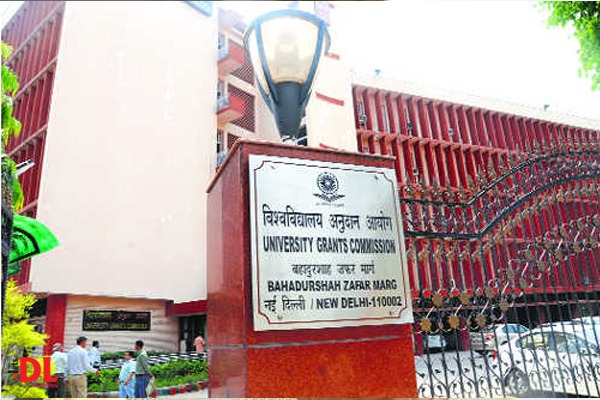
The UGC chairman M Jagadesh Kumar announced on Monday that the first ever mandatory common entrance test for admission to undergraduate programmes in all the 45 Central universities will be held in the first week of July.

The Common University Entrance Test (CUET) is a computerised exam and will be conducted by the National Testing Agency (NTA), which will announce the test pattern on Tuesday, Kumar said. The application window for the examination will open in the first week of April.

Admission to undergraduate courses in these universities will be solely based on the CUET score, and Class 12 Board marks will not carry any weightage, Kumar said. The universities can use the Board exam marks as an eligibility criterion for the test, he said.

This effectively means that performance in the Class 12 Board examination will no longer be a factor in admissions across Central universities.

Following the CUET, each university will admit students based on a merit list prepared by NTA, and there will be no common counselling.

Delhi University, Jawaharlal Nehru University, Jamia Millia Islamia and Indira Gandhi National Open University in the national capital, and Aligarh Muslim University and Banaras Hindu University in UP, are among the well-known Central universities that will now be covered by CUET.

“The only difference is that these students will also have to come through CUET, like students to be admitted on general seats. The reservation policies and ordinances of the universities will remain unchanged,” the UGC chairperson said.

AMU and Jamia have not clarified their stand yet on joining the entrance test.

CUET will carry multiple choice questions based on NCERT textbooks and students will be marked negatively for incorrect answers. The entrance test will have three sections (see box). The CUET 2022 will be offered in 13 languages, namely Hindi, Marathi, Gujarati, Tamil, Telugu, Kannada, Malayalam, Urdu, Assamese, Bengali, Punjabi, Odia and English.


Private school body writes to CBSE to reduce weightage of Term 1 exams

CBSE to reduce weightage

New Delhi

In a letter to CBSE Chairperson Vineet Joshi, the National Progressive Schools’ Conference (NPSC) has suggested that the weightage of the Term I examinations should be reduced in the range of 20 percent to 30 percent while the weightage of the Term II Examination should be increased in the range of 70 per cent to 80 per cent. This letter comes a few days after CBSE shared the Term-1 results of classes 10 and 12.

“It was observed that during the Term I examinations, which were conducted at the home centres, many schools adopted unfair means and malpractices. Consequently, many students of these schools scored full marks in most of the subjects. We are sure that CBSE must also have received a similar feedback on this issue,” the letter read.

The NPSC is an association of senior secondary schools across the country and has 195 private schools under its umbrella. It has argued that the performance of students of the schools where the “exams were conducted with complete honesty and integrity has not been at par with the afore mentioned” which has adversely affected the morale of all the stakeholders.

The board has already released the date-sheet for the Term-2 exams. The exams will commence from April 26.

LATEST NEWS