Home Blog Page 495

NEET 2020 application form re-opens till February 9; register now at ntaneet.nic.in

NEET Application Form 2020

The National Testing Agency (NTA) has reopened the NEET 2020 application process from 3 to 3 to 9 February, 2020. Candidate who wishes to appear for entrance exam on May 3, 2020, can fill the application form at ntaneet.nic.in. Only those candidates who have successfully completed step one of registration are now allowed to complete step II, III & IV, till the mentioned date. The registered candidates can only fill the remaining details, upload scanned images and pay the application fees.

On February 1, 2020, NTA, with an official notice declared that after receiving several requests from the registered candidates due to the incompleteness of the NEET 2020 application form, the authority has decided to re-open the application process window once again.

Steps to complete the application form

Candidates who had completed step 1 of the application process but were unable to go further can complete their application process by following the step mentioned below.

Step II: Fill the remaining application form

Candidates are required to fill all the necessary details required in the application form such as:

  • Personal details
  • Place of birth
  • Choice of language of question paper
  • Choice of examination centre
  • Academic details of Class 10, 11 and 12

Step III: Upload all the scanned images/documents

The third step is to upload all the required documents/photographs that are mentioned below.

  • Passport photograph
  • Scanned signature.
  • Class 10 certificate.
  • Left-hand thumb impression.
  • Postcard size photo.

Step IV: Payment of NEET 2020 Application Fee

Candidates can pay the fee online through Debit/Credit/ Net Banking and Unified Payment Interface (UPI) using State Bank of India/Syndicate Bank/ICICI Bank/HDFC Bank/Paytm service provider. It is advisable to keep the proof of payment in the form of transaction ID/ receipt in case of online payment safe till admission is complete.

NEET 2020 Application Fee

The application fee for General/OBC Candidates is Rs 1,500; for General-EWS/ OBC-NCL* Rs 1400; and for SC/ST/PH Candidates Rs 800

Budget 2020: Boon or Bane for India’s Education Sector?

Budget 2020 Education Sector

The Union Budget 2020 brings a new education policy, and along with it Rs 99,300 crore worth of funding for the Education sector in 2020-21, and about Rs 3,000 crore for skill development.  In comparison, the previous Union Budget saw an allocation of Rs 94,800 crore in the Education sector.

“The present Budget is aimed at both providing higher education and increasing employability. Several progressive moves suggested by the Finance Minister (FM) in her budget speech are fully online degrees, apprenticeship for engineering students, PPP model for medical education and FDI though limited to top 100 institutes. These are visionary moves bringing Indian higher education at par with global trends of fully online accredited degree courses. Hopefully this will be extended to top 500 Institutes in next phase to bring benefits to large number of poor students to enable them to work while studying”, said Dr Vaneeta Agarwal, CEO, L’strategique LLP.

According to the FM, about 150 higher education institutions would have to start apprenticeship embedded degree/diploma courses by March 2021. Furthermore, urban local bodies across the country would have to provide up-to one-year long internship opportunities to fresh engineers.

Also read: Budget 2020: Govt allocates 99,300 cr for education sector

“We have been witnessing a steady increase in the budgetary allocation on Education in the last 3 years. From Rs. 85,000 crores in FY’19 to Rs. 95,000 crores in FY’20, this year (i.e. FY’21), Rs 99,300 crore was allocated for the education sector and another Rs. 3,000 crore for skill development. Initiatives around apprenticeship, internships, Ind-SAT, online education programs, attracting FDI, EQUIP, Bridge programs to make teachers, nurses, paramedical staff, caregivers “Outside Ready”, need to be lauded. However in a young country like ours, with an all-time high unemployment rate, Rs. 3,000 crore for skilling is insufficient”, said Aurobindo Saxena, Education Policy Specialist.

The FM also declared that steps would have to be taken to enable sourcing of External Commercial Borrowings (ECB) and Foreign Direct Investment (FDI) to create infrastructure in the education sector, and deliver higher quality education. Institutions that are ranked within top 100 in the National Institutional Ranking Framework (NIRF) will start degree level full-fledged online education programmes for students from deprived sections of the society.

“For India to have a $5 trillion economy, the youth have a key role to play in enabling this goal. The advantage of the youth dividend needs to be channelled and enabled to put the country on the map. There is a huge demand for individuals in various industries and in foreign countries. However, the skills do not match in accordance to demand by employers. So, by government proposing Rs 3,000 crore, it allows the government to create quality skill development which will be available at affordable cost, focusing on five key components that are Visual, Reading, Listening Speaking and Thinking among others are very important, especially via the use of emerging technologies such as Artificial Intelligence (AI), Augmented Reality (AR) / Virtual Reality (VR) and more. There have been many Ed-Tech companies in India like BYJUs, ELSA Speak and more who are at the forefront of this by engaging with both youth and adults in Tier 1 cities and beyond to empower and uplift them to have jobs and move away from ones which may soon become obsolete”, said Manit P., Country Manager, ELSA Corp.

The budget also suggested under the ‘Study in India’ programme, Ind-SAT, to be held in Asian and African countries to benchmark foreign candidates who receive scholarships for studying in Indian higher education centres. A National Police University and a National Forensic Science University is another proposal in the budget.

“The Finance Minister has proposed conducting IND-SAT exam and a national forensic science university but these policies remains a data only on paper because of its bad implementation. A few measures to curb this blemish are – Use of modern tools that are available to aid conceptual learning in students; updating the course and the curriculum to reflect current market requirements; improving facilities in institutions across all levels; and counselling, as a key requirement for guiding the students in pursuit of higher education or vocational education as per their abilities. All policies drafted are Magnus opus as it takes promulgation of around 2 months, but they go in vain due to our disdain system”, said Maqsood Ahmed, Founder, Nizamia Education Group.

“Education in India is one of the critical sectors, which demands to be revamped and taken care of in terms of its quality and structure. With an aim to ensure and make education accessible to everyone, irrespective of financial and social background, geographical boundaries, the government is planning degree-level full-fledged online education programs to be offered by institutes in top 100 in National Institutional Ranking Framework for both the rural and urban sectors. We welcome the intent in this budget of a New India that attempts to make the country as one of the leading destinations for higher studies in the world as well as the place for cutting edge innovation. Under the 20-2021 budget, the government is planning to initiate IND-SAT exam for Asian and African students for scholarships, to promote ‘Study in India’. Being an educationist, we are welcoming the thoughts and the novel educational policy implemented by the government of India”, said Rupal Dalal, Executive Director, JD Institute of Fashion Technology.

“The Union budget 2020 on Education and Skills under Aspirational India is a welcome move at this period of time where Unemployability of fresh graduates is of big concern for the country. Unemployability is on the rise since students just graduate but are not efficient as far as the required skillsets for employability in industries are concerned. The allocation of an abounding 99,300 crores for the education sector and 3000 crores for skill development is sure to pave the way for quality education in India. Emphasising on Special bridge courses, apprenticeship embedded degree/diploma courses, Internship after graduation at Urban local bodies all provide a great opportunity for the students to develop their most needed new age technology skills. The budget is also very promising for students from rural areas through the Online education programs that have been proposed. It’s a budget that would inspire the youth to aspire”, said Dr.B.Sendilkumar, Dean & Director – Allied Health Sciences, Vinayaka Missions Research Foundation, Salem.

“As higher education evolves in line with technology, formal education is increasingly replaced by specialised online programs. Allowing top 100 NIRF ranked institutes to award online degree is a step in the right direction to bestow students with skills and formal degree without the need to be on campus physically. Our institutions are woefully poor in infrastructure and the government’s ability to invest for modern infrastructure has been crippled mainly due to heavily subsidised centrally run institutions. Therefore, it is a logical and welcome move that this budget proposes FDI and ECB would help accelerate investments and aid research and better academic delivery. Budgetary allocations at Rs 99,300 cr is marginally higher by 4.6% over 2019 as compared 10% rise in last year’s budget. With overall fiscal crisis and economic downturn, one could not have expected better. This budget again talks about study in India initiatives and launching NEP which is almost a repetition of last year. Implementing NEP will require consensus building particularly with many states now ruled by the opposition. What is needed is a pragmatic approach and a need for dialogue with different stakeholders with a sense of urgency. To summarise, there is something to cheer in terms of allowing ECB/FDI and granting online degrees but reforms on education sector not adequately addressed in this budget.” – P. N. Hariharan CFO, ITM Group of Institutions

Importance of Spatial Analytics in Education

Maps have been a dream for treasure hunters, archaeologists, and geologists for centuries. We have all grown up listening to the stories of Indiana Jones on an adventure finding his path with the help of a map or Lara Croft searching for a hidden treasure whose location is marked in the invisible map that is visible only in sunlight, and maps have fascinated us ever since. In modern times, a physical map has been replaced with digital and more complex and advanced location systems. Spatial analysis is the study of a location or entity using modern location systems, data sciences and artificial intelligence based on the location’s topological, geometric and geographic properties.  Spatial Analysis is the key to solve complex location-oriented problems and give us an understanding of where and what is happening in our world. It goes beyond just mapping an area but also helps you study the characteristics of that area.

Spatial analysis is based on the principle that there is some spatial component – absolute, relative or both, in data. The study of spatial analysis within geography, by getting into the analytical framework of the natural, social and physical sciences of that geography and influencing the information that space reflects, has led to the conclusion that geographic space is important and plays a key role in how the natural, social and physical processes evolve. In a way, we can call spatial data special because of the numerous questions it answers about physical space. This information then can be used in solving climate conditions, infrastructural problems, agricultural conditions, human health conditions and also in understanding a geographic location on a real-time basis based on its behaviour.

Today, more than 2.5 billion gigabytes of data are generated daily. We are connecting numerous data-generating devices, products, and assets to the internet every day based on specific needs, in such a context, the “where” factor is very important for our problem solving and decision-making capabilities. The more we know a place, the better we can access what can make the place better. Spatial analytics brings this location-based data to us with the help of the datasets related to a location. These data sets provide unique information on a location, from vegetation, soil type, water quality to construction, population, transportation and even crime, which allows us to analyze and map patterns and relationships to understand the potential of that particular area even better. Location-based data has always been critical for any kind of business, infrastructure and community growth. It gives you a better understanding of the opportunities, productivity, solutions, and risks involved with space. Spatial analytics brings crucial factors into an observation with regards to customer buying habits, supply chain management, operational benefits and competition in the area which reveals patterns, relationships, benefits, challenges, and opportunities and hence influences our decision-making capabilities supported by accurate data. Every industry is thriving on this data today. Education, transportation, military services, disaster management, telecommunications, media, logistics, technology, environment, retail, manufacturing, insurance, intelligence, all of these industries depend on location-based data.

The market for spatial analytics is not only diverse but also huge. If you are detail-oriented, data-driven, technology savvy and love analytics, this is just the field for you. The spatial analysis involves spatial modelling, which includes models of location-allocation, spatial interaction, spatial choice and search, spatial optimization, and space-time. Knowledge and basic education in either geography, geosciences, cartography, surveying, geomatics, anthropology, archaeology and mathematics is a must when you are looking at spatial analysis as a further study and career option. Your job description will vary according to the industry and firm you are working with. Producing maps, data layers, reports or charts using Geographic Information Systems, studying aerial photographs, satellite data, soil sample, water sample, other environmental samples, reading cartographic records, develop experiences using various software like ArcGIS, PostGIS, Quantum GIS, etc, are some of the tasks a spatial analyst is expected to perform in the initial days of their career. The whole field of Geospatial analytics is highly evolving. There are discoveries made every day and there is a lot of scope in this field to experiment and upgrade your skills as an analyst based on the unlimited data you have to your disposal.

Spatial analysis is growing every day in its potential and answering questions that change how a person looks at a location or geography. This field is very technical and has unlimited scope for anyone pursuing it. Only by understanding our surrounding space appropriately can we develop solutions for a better future and now we have the means to do so.

The views above have been shared by Dr. T.P. Singh, Director, Symbiosis Institute of Geoinformatics, Pune.

NEET PG 2020: Results declared; Know the details here

NEET PG 2020 Results

NEET PG Result 2020 was declared today on the official website of the National Board of Examination (NBE). The result is available in a PDF format with details candidates can check their result with roll number.

The candidates can also check their NEET PG Result and NEET PG 2020 ranking through the direct result link.

How to check NEET PG Result 2020

The candidates can follow the steps to check and download NEET PG 2020 Result:

1) Open the official website of the NBE or click on the direct link provided above

2) Click on the direct result link available on the official website

3) It will redirect to a PDF page where details of candidates will be displayed

4) Search your roll number in the list to check your score

BSEB Board Examination 2020: Class 12th examination starts amid anti-cheating measures

Bihar Board 2020

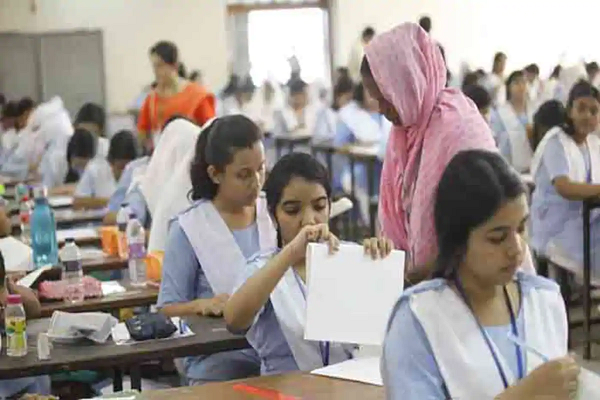
The Bihar School Education Board (BSEB) Class 12th annual board examination commenced from today. The total number of students registered for the examination is 12,05,290 out of which 5.38 lakh are female and 6.56 lakh are male.

As per the schedule, the examination will be held in two shifts. The first shift will be between 9.30 a.m to 12.45 p.m, and the second shift will be between 1.45 p.m to 5 p.m.

Students who will be appearing for the examination in the first shift will have to report to the examination hall by 9:15 AM while those in the afternoon shift are to report before 1:30 PM. No entry will be allowed after this.

This year, too, authorities have taken strict anti-cheating measures. All the exam centers have been put under CCTV surveillance and there will be a videographer for 500 students each. There will also be two separate layers of screening at the exam center; while the candidates will first be checked by a policeman before entering the exam center, the invigilator will then check students, in a batch of 25, before letting them enter the exam hall.

BSEB Board Examination 2020: Special examination for Class 10th, 12th; Know the details here

BSEB Board Examination 2020

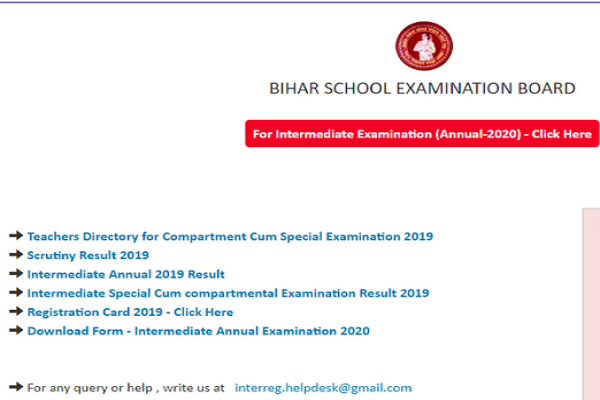
The Bihar School Examination Board (BSEB) has announced that it will conduct an Intermediate/ matriculation compartmental-cum-special examination for the student who had failed to appear in the board examination for class 10th and 12th.

BSEB chairman Anand Kishor while commenting on this said, “the students who appear in the sentup examination but were wrongly marked absent by the respective school principals, will get the chance to appear for the special examination. The examinees are also those who got their registration done in 2019, but their examination forms or fees were not submitted on time.”

The date of examination will be announced soon after the matriculation and intermediate exam results are declared.

The students need to make sure that they keep a tab on their respective schools or the official website of the BSEB Board to get the latest update about the same.

CA Result 2020: CA foundation result declared

CA Result 2020

The Institute of Chartered Accountants of India (ICAI) is set to declare Chartered Accountants (CA) Foundation Result (old and new courses) and CA Intermediate result today at any time.

The examination was held in November 2019. Candidates can check their ICAI CA result in 2019 on the following websites: icaiexam.icai.org, caresults.icai.org, icai.nic.in.

As per the official notification, the Institute of Chartered Accountants of India (ICAI), the CA result will be published today.

Those candidates who had registered through email id on the ICAI official website will get their results through mail.

How to Check ICAI CA Intermediate, CA Foundation result

  • Go to the official websites: icaiexam.icai.org, caresults.icai.org, icai.nic.in
  • Click on ‘CA Foundation result’ or ‘CA Intermediate result’ link
  • Enter your roll number, Date of Birth, and other details
  • Click on ‘submit’ tab
  • CA Foundation result, CA Intermediate result will be displayed on the screen. — Download it for future reference.
  • CA Foundation merit list and CA Intermediate merit list will also be available on the official website (up to the 50th rank).

How to check CA result via SMS

Foundation Examination (New Course): CAFND (Space) XXXXXX (where XXXXXX is the six-digit Foundation Examination roll number of the candidate), e.g. CAFND000543 and send the message to: 58888.

Budget 2020: Govt allocates 99,300 cr for education sector

Budget 2020

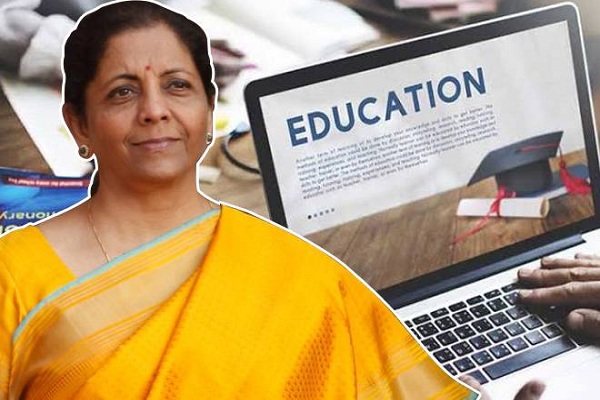
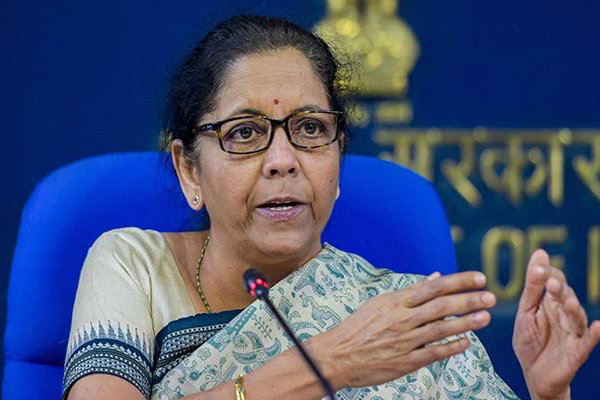
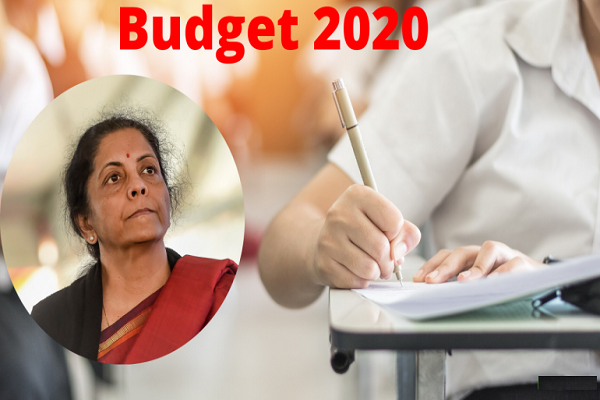
Finance Minister Nirmala Sitharaman announced an allocation of Rs 99,300 cr for the education sector and Rs 3000 cr for skill development in her Union Budget 2020-21.

Nirmala Sitharaman said the government would introduce FDI in the sector.

She said the Centre would announce a new education policy soon, and announced a degree-level full-fledged online education programme to be offered by institutes ranked in the top 100 by the National Institutional Ranking Framework.

Sitharaman’s budget speech contained important announcements on income tax, infrastructure, the welfare of SCs, OBCs and STs, education, agriculture and much more.

The budget was presented on Saturday amid an economic slowdown, high inflation, falling productivity in key labour industries and a 42-year-high unemployment rate.

The government has also proposed to attach medical colleges with district hospitals on PPP model to deal with shortage of doctors, Nirmala Sitharaman added.

The budget announcement follows a downgraded growth prediction from the IMF.

UGC in 2020’s Budget Seeking Higher Funds for Education

Budget 2020

The University Grants Commission’s (UGC) chairman D P Singh has been tirelessly making efforts to avail more funds for higher education relevant to the societal and national needs.

The UGC, whose mandate includes promoting and coordinating university education, is taking steps to improve the quality in higher education institutions (HEIs), he said.

Singh said the UGC has requested the Centre to allocate more funds for education in the upcoming Union budget for 2020-21.

“Indian higher education system has grown manifold since independence. It has now 993 universities, 3.7 crore students and 14 lakh teachers,” the UGC chairman said. “There have been reports about unemployability of graduates coming out of our higher educational institutions.

Some of the lacuna pointed out by industry experts are lack of soft skills. We, at the UGC, are conscious of these things,” Singh said.

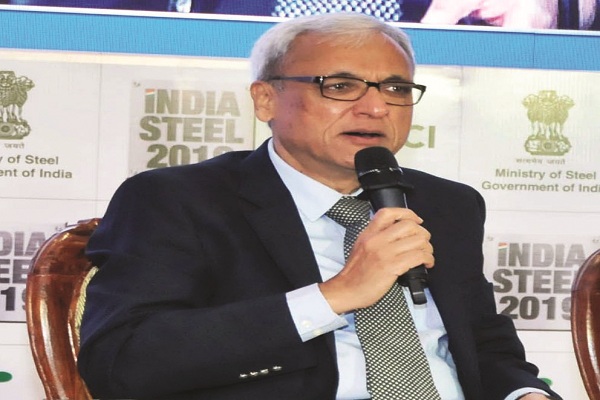
Building a smart education ecosystem in Gujarat: Anil Mukim

Anil Mukim

The Government of Gujarat has taken multiple initiatives to develop a smart and quality education ecosystem in the state, Anil Mukim, Chief Secretary, Gujarat, shares his thoughts on the current state of technical and higher education in the state, in an exclusive interview with the Elets News Network (ENN).

What is the vision of the Government of Gujarat when it comes to achieving excellence in the field of Education in the state?

When it comes to education, the Government of Gujarat is working diligently on its ‘Smart Goals’ with a future vision of ‘Education for All’. The government’s policies are geared to continuously promote state-wide literacy, reduce drop-out rates, improve infrastructure, provide financial assistance to poor students, training students for the development of employability skills, faculty training, improving industry- academia collaboration, and promoting student start-ups, among a series of other initiatives.

Overall, the government’s aim is to achieve Socio-Economic- Education (SEE) growth across the state in the categories of primary, secondary, higher and technical education.

Are there any schemes being implemented to improve the infrastructure of existing Higher Education institutions in the state?

To improve the infrastructure of existing Higher Education institutions in the state, a centrally-sponsored scheme called Rashtriya Uchchatar Shiksha Abhiyan (RUSA) was launched in 2013. The scheme aims at providing strategic funding to eligible Higher Education institutions in the state. Furthermore, the scheme enables the state to formulate a strategy to address issues of equity, access and excellence in higher education.

The centre’s share in the scheme is 60 percent and the state’s share is 40 percent. Till date, Rs 172.39 crore worth of funds have been disbursed to 227 beneficiary institutes in the state, about 60 percent of which has been utilised by the beneficiary institutes.

What initiatives have been taken to provide financial assistance to the poor but bright students studying in Higher Education institutes of Gujarat?

The Government of Gujarat has taken multiple initiatives to provide hassle-free financial assistance to the bright but poor and needy students of the state. The government has launched a scheme called ‘Mukhyamantri Yuva Swavlamban Yojna’ (MYSY) under which, more than Rs 563 crore worth of scholarships have been disbursed to above 1,45,000 financially poor students in the state.

Similarly, the state government has launched the ‘Mukhyamantri Kanya Kelvani Nidhi’ (MKKN) scheme for students pursuing their MBBS. Under this scheme, more than Rs 48 crore worth of scholarships have been disbursed till date and above 2,200 students have benefited from them.

Furthermore, the Gujarat government had launched the ‘Hon’ble Chief Minister Scholarship Scheme’ in 2014 to provide equal opportunities to meritorious and needy students of the state. In year 2018-19, a total of 959 students were benefited from this scheme after receiving assistance worth Rs 662 lakhs.

To get fully funded, students can avail 50 percent financial assistance from MYSY and remaining 50 percent financial assistance from the Hon’ble Chief Minister Scholarship Scheme.

Is the state government taking any steps for imparting soft skills to young students and graduates to make them industry-ready?

The Government of Gujarat initiated a Finishing School project in the year 2016. It is an employability enhancement initiative of the State Education Department to impart training for skill development in students of Higher and Technical Education of the state to make them Industry-ready. Till the year 2018, a total of 253 government colleges were enrolled in the project and more than 20,100 students had been trained.

Furthermore, a Memorandum of Understanding (MoU) has been signed between the Knowledge Consortium of Gujarat (KCG) and National Institute of Technology, Karnataka (NITK) Alumni Association. The areas of collaboration include English Language and Communication Training, Life Skill Training, and Employability Skills Training.

Have any initiatives been taken to improve collaboration between the academia and the industry?

The Gujarat State Education Department had established the Council of Industry Academia Collaboration (CIAC) in 2017 with an aim to fulfill the Industry’s requirement of skilled manpower, to establish linkage between educational institutions and industries, and to conduct collaboration with a focus to improve the overall quality of education as per industrial requirements.

The CIAC incorporates an Internship Development Programme and a Corporate Challenge Programme for start- up, innovation and research. Additionally, the Council works towards providing capacity development and exchange, mentorship, curriculum revision, and placement.

Furthermore, the CIAC has been started to provide the latest tools in learning and research to the teachers and students and to help them in their personal and professional development. Expectations are that it will help in achieving qualitative reforms in teaching and learning, which in turn would give a boost to academic activities.

Have any measures been taken for providing direct placement opportunities to the students of the state?

To provide employment opportunities to students studying in their final year at various Government and Grant in Aid Colleges of Gujarat, the State Education Department had organised a ‘Mega Placement Fair’. The Fair saw participation from 483 institutes and 1,290 companies. Moreover, above 48,000 interviews were conducted and 28,000 students were provided placement at the Fair.


LATEST NEWS