

Home Blog Page 517

Fortinet’s Latest Security Processor Accelerates the Industry’s Best-Selling Next-Generation Firewall

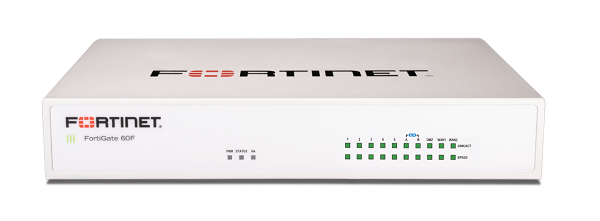
FortiGate 60F Next-Generation Firewall

In a recent development, Fortinet announced the FortiGate 60F Next-Generation Firewall, the fastest, most powerful desktop Secure SD-WAN appliance.

With over 1.5 million units sold worldwide, the FortiGate 60 series is the best-selling next-generation firewall and now includes Fortinet’s purpose-built system on a chip 4(SOC 4) security processor to achieve the highest Security Compute Ratings in the industry, supporting customers’ WAN edge transformation.

Digital innovation and rapid cloud adoption is changing the face of today’s business and has created significant challenges for organizations, such as poor user experience due to network bandwidth constraints and increased security risks with branches connected to the internet. Software-defined wide area networks (SD-WANs) have emerged as the favored solution to solve these issues while also reducing the costs associated with MPLS connections.

However, not all SD-WAN solutions have risen to the requirements of today’s WAN edge. Many SD-WAN solutions on the market are incomplete and do not adequately provide the right performance, visibility, or security to ensure a secure connection and high quality of user experience.

Rajesh Maurya, Regional Vice President, India & SAARC at Fortinet said, “We hear from an increasing number of customers who are struggling to achieve the required level of user experience, visibility and security at their WAN edge to support key business applications. With today’s introduction of the FortiGate 60F powered by our latest security processor, Fortinet continues its commitment to security innovation, setting industry records for performance to empower network leaders to truly transform their WAN edge. Our rapidly growing marketshare underscores the need for Fortinet’s Security-Driven Networking approach to SD-WAN, which consolidates SD-WAN, advanced routing, and advanced security capabilities into a single appliance.”

To continue its focus on supporting enterprises’ WAN edge transformation and delivering Secure SD-WAN, Fortinet is announcing the latest next-generation firewall to include its patented SOC4 security processor: the FortiGate 60F. Key features include:

  • FortiGate 60F consolidates SD-WAN, advanced routing, and advanced security capabilities into a single appliance that enables network leaders to deploy Secure SD-WAN quickly and easily, while also reducing complexity by consolidating point products into a single offering. This allows high performance and improved user experience at an optimal total cost of ownership (TCO).
  • To help customers maintain high quality user experience for their business critical traffic (be it SaaS, multi-cloud, or unified communications), FortiGate 60F delivers best-in-class application steering, giving visibility to all traffic (even if encrypted) without impacting performance and ensuring all critical applications are routed to their best path.
  • FortiGate 60F leverages Security-Driven Networking principals – powered by Fortinet’s patented SOC4 security processor – to deliver the fastest deep inspection of SSL/TLS encrypted traffic (including the industry’s first support for TLS 1.3) at 750Mbps, 11 times greater than the industry average. The FortiGate 60F offers comprehensive threat prevention with IPS, application control, and anti-malware at 700Mbps, four times greater than the industry average, to help customers protect their network without impacting performance.

Fortinet is a global leader in broad, integrated and automated cybersecurity solutions. Today’s announcement reinforces Fortinet’s commitment to Secure SD-WAN and aligns with Fortinet’s recent positioning among the top three vendors in worldwide market share for SD-WAN equipment by revenue in 2Q19, showing a 234% quarter-over-quarter growth rate. The solution is also backed by third party validation, receiving two consecutive “recommended” ratings in the NSS Labs SD-WAN Group Test Reports. This additional validation underscores Fortinet’s focus on delivering the best performance and advanced security to deliver true WAN edge transformation to its customers.

Redefining Preschool with True Smart Learning System

S. K. Rathor

Sanfort will be completing a decade in the preschool fraternity and is humbled to be recognised amongst the top 5 preschools chains in India, says S. K. Rathor, Chairman & Managing Director, Sanfort Group of Schools in an interview with Elets News Network (ENN).

Been a decade now since Sanfort was launched way back in 2009. How has been your entrepreneurial journey so far?

Sanfort with its distinct curriculum and a unique pedagogy based on U.K concept of learning has 250+ branches in India and neighbouring countries. It has nurtured more than 80,000 students and is adding 10,000 Sanfortees to its alumni network every year. We have earned 58 prestigious awards.

Celebrating 10th year, Sanfort took its next big step to enter into formal schooling by launching Sanfort World School a progression of Sanfort preschool which has already spread its branches in 3 cities.

Tell us about the teaching tools and methodologies in your classrooms.

At Sanfort, we have a True Smart Learning System where our uniquely designed curriculum is mapped to the digital content, which helps to initiate learning process at such an early age and enables the children to explore different concepts through  gamification, rhymes & stories.

Our Sanfort app allows staying in touch with the parents on regular basis and sharing the entire academic content and notices, which allow easy access for the parents. Moreover, our 3D technology and tab lab enables experiential learning for the children.

Also Read: Sanfort Preschool’s Odyssey of Innovation, Rise

Tell us your experience with your franchise partners in the franchise business? What are the parameters of choosing the right franchise partner for your brand?

The brand works on a franchise model, which played a key role in swift expansion and penetration in different parts of the country. Sanfort has a meticulous screening process for franchisees. We start our support system from the very stage of market survey, site selection, planning the interior and exteriors of the branch, planning of the pre-launch, launch & post-launch marketing activities, recruitment & extensive training of the franchisee and periodic skill up-gradation programs to elevate their skills and competencies, academic support, continuous advertising and marketing planning for local promotions.

What are the future initiatives that will be inculcated within the classrooms? Where do you see the future of preschool education heading?

Studying the need of the hour I believe infusing AI and Robotics with our traditional teaching techniques would be a game changer in our classrooms.

The Indian Preschool Industry has a huge scope for private players as market size of pre-school segment was valued Rs.13cr in FY 2017 and is expected to grow with a CAGR of over 31% over the next three years. Currently it is contributing 32 billion USD to country’s GDP.

Sanfort aims to reach a number of 500+ branches by 2021. The brand is adding 12-15 branches every month. Sanfort plans to open 5 more company-owned K12 schools in India as well as in neighboring countries and we also plan to venture into corporate day cares. In order to grow multifold, Sanfort is ready to introduce FPI. The brand is also working towards teaching girl child in rural areas and plans to open a school to educate underprivileged children.

One university will be awarded every year for its academic performance: Rajasthan Governor

One university will be awarded every year for its academic performance Rajasthan Governor

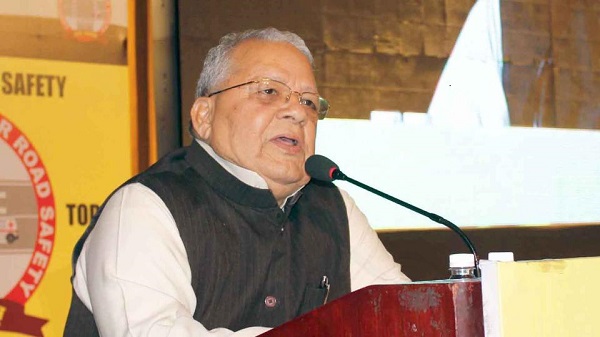
In an endeavour to enhance education in the state of Rajasthan, one university will be awarded every year for its outstanding performance in academics and other education initiatives, said Kalraj Mishra, Governor of Rajasthan.

Present at the vice chancellors’ coordination committee meet, the governor has asked the VCs of the universities to come up with new initiatives and conduct activities in the universities.

The chancellor directed them to make efforts to improve the results in examination and announced that a university would be felicitated every year for excellent performance.

He said desires for society were rising and it has brought the difficulties up in higher education, which would need to be tended to through new activities.

Commenting on this initiative, Mishra said, “Due to the rising expectations, there is a rise in the challenges in higher education, which would have to be addressed through new initiatives.”

At the meeting, the VCs of state universities and officials of the University Grants Commission and the state government were present.

India may discontinue M.Phil programme, students will be allowed to pursue PhD after graduation

India may discontinue M.Phil programme, students will be allowed to pursue PhD after graduation

In a recent development, the HRD Ministry prepared New Education Draft Policy underlines the policy to discontinue M.Phil degree and students will straightaway be allowed to appear for PhD after graduation.

The draft further explains that the undergraduate degree will be of either three or four-year duration. Higher Educational Institutions may offer multiple exit options within this period, with appropriate certifications. 

“The M.Phil programme shall be discontinued,” says the final draft of the new education policy prepared by the human resource development (HRD) ministry.

“Undertaking a Ph D. degree shall require either a Master’s degree or a 4-year bachelor’s degree with research,” the draft further said. 

“The 3-year programme will lead to a Bachelor’s degree. HEIs may choose to call their 3-year undergraduate degree a Bachelor of Arts, or Science, or Vocation, or the appropriate professional field,” the final draft mentions.

 While PhD after graduation isn’t permitted in colleges, IITs has an arrangement to enlist students in PhD after their B.Tech courses,” said an administration official who declined to be named.

“In the last few years,, M.Phil as a course is observing declining enrolment indicating that it may be losing popularity. The two states and one union territory effectively contribute to two thirds of the total enrolment”, as per official data.

In order to prepare the final draft, the HRD ministry has been working on the Kasturirangan Committee report since June 2019, which will be approved by the Union cabinet. 

According to official data, in 2016-17, while 43,267 students took admission in M.Phil courses, the number declined to 34,109 in 2017-18. 

Early Years Alliance: Championing the voices of the early years

Neil Leitch, CEO, Early Years Alliance

We always put the child first because what is best for the child is best for parents and providers, says Neil Leitch, Chief Executive Officer, Early Years Alliance, in an interview with Elets News Network (ENN).

Tell us about the journey of the Early Years Alliance.

Our journey started as ‘Preschool Playgroups Association’ in 1961, where a young London mother, Belle Tutaev had set up a preschool in the absence of a state nursery place for her young daughter. The response was overwhelming with many parents following the similar footsteps. Within a year, Belle and other parents had rallied 150 members together and organised the first Annual General Meeting of the Pre-school Playgroups Association, today known as the Early Years Alliance. In May 1963, the Alliance gained official charity status and has championed the voice of the early years sector ever since.

Today, we are a national education charity and the largest early years membership organisation in England, representing the interests of 14,000 Alliance members who deliver care and learning to over 800,000 families every year.

What is the driving force behind this ever-growing organisation?

Good early years policy should always put children first but sometimes they are forgotten. We campaign not only to change that but also make sure our members are supported, through books and training resources.

What takes up most of our energy as a campaigning organisation, is the concern that some children have no access to childcare, often because they’re from poorer families or living in disadvantaged areas. That particular policy is having a hugely damaging effect on providers too of course but we know that we win the argument by making the case for children, something which was clearly missing when the government first developed its policy.

How challenging is it to meet the interests of the sector?

This is a hugely challenging time for the early years sector in England. We’ve seen around 9,000 providers close in the last few years due to underfunding. There’s currently a £662 million shortfall in the funding providers receive for delivering the government’s funded hours. It clearly had an impact on the training and personal development opportunities available to the workforce, and our providers are struggling to recruit and retain staff.

Despite the challenges we face, we’re delivering some of the best childcare in the world. We’re supporting the sector in their professional development by providing free online education courses with Alliance membership.

Highlight the Teacher training programme that your brand holds onto?

The Alliance has a comprehensive training programme supporting Level 2 and 3 qualifications, as well as, specialist themed courses.

Our online training has been a huge success and it’s available free as part of membership and that every single employee of a member group can access over 20 courses. Courses range from safeguarding to early years nutrition and to date, we have delivered over 250,000 courses. In an ever changing sector, we are constantly expanding and updating our portfolio of training.

Are there any plans for establishing roots in India?

Last year, I was appointed to the Department for International Trade’s Education Advisory Board representing the early years sector in the UK. We do have a small number of members based in India but are always keen to talk to international providers about the work we do. Usually, this is by way of speaking at conferences or international events.

HRD Ministry to change assessment in school education by 2022, NCERT to prepare guidelines

school assessment

According to HRD Ministry, the National Council for Educational Research and Training (NCERT) will prepare guidelines for transformation in assessment by 2022, considering the current assessment scenario to be ‘harmful.’

The HRD Ministry, all set to come out with the new National Education Policy (NEP), has proposed in the final draft that to eliminate the “high stakes” aspect of board exams. All students will be allowed to appear for board examinations twice a year.

The NCERT, which is set to review the National Curriculum Framework (NCF) after over 14 years, will also develop assessment guidelines in sync with the new framework.

As per the proposed draft, “To reverse the harmful effects of the current assessment system, board exams will encourage holistic development, students will be able to choose many of the subjects in which they take board exams, depending on their individualised interests.”

Disputable for board tests twice a year, the HRD Ministry said, “In this regard, guidelines will be prepared by NCERT, for a transformation in the assessment system by 2022, to align with the NCF 2020.”

The new policy has also recommended formation of a new regulatory body for all recognised school boards of India, for regulating assessment and evaluation norms and standards and for ensuring that the assessment patterns of different boards meet the skill requirements of the 21st century and are in consonance with stated objectives of the policy.

Cambridge Montessori Preschool: Leading way for affordable franchise model in India & abroad

Pankaj Kumar Singh, Founder and MD, Cambridge Montessori Preschool

We have developed an affordable model of preschool franchise in India, requiring low investment for the establishment and functioning without compromising on high-quality learning for kids, says Pankaj Kumar Singh, Founder and MD, Cambridge Montessori Preschool, in an interview with Elets News Network (ENN).

In the last two years, Cambridge Montessori has expanded to a chain of 200 plus preschools, what is the driving force behind it?

We are planning to increase the numbers in the coming years and that calls for us to push every day. Cambridge Montessori Preschool and Daycare has developed an affordable model of the preschool franchise in India on an international level, requiring low investment for the establishment and functioning of the preschool franchise in India without compromising on the high-quality learning for kids.

You have integrated Robotics, Mind Lab and Montessori Lab in your preschools. How the kids have responded to technology-based learning?

Mind Lab instigates young mind to think beyond and expand the horizon of learning. It works on their grey matter and challenges their own limits in a scientific manner. Our mission is to prepare the next generation for complex challenges by strengthening a broad range of cognitive, emotional and social skills by teaching how to think reflectively and by encouraging the kids how to learn.

What special arrangements are made to make parents (working couples) feel comfortable in sending their little ones?

Here, kids have the comfort and freedom to choose their own activities. The environment is nurturing and helps children to become enthusiastic learners and develop self-discipline. The best part that gives parents a sigh of relief is the scope for kids to do self-construction. Here, they become expressive and also develop a self- esteem.

Also Read: Cambridge Montessori: Fostering love for learning among children

What measures have been undertaken to ensure that adequate safety, security and hygiene standards are maintained?

We have an exhaustive list of safety and security compliance measures that include CCTV surveillance, Live Streaming, RFID instruments, verification of staff, restricted entry into the school, teachers training on incident management, availability of fire extinguishers and first aid kits.

Tell us in detail about the Cambridge Montessori Teacher Training Institute?

Cambridge Montessori Teacher Training Institute is one of the unique places where Dr Maria Montessori’s concept of early childhood training is given with utmost sincerity. The curriculum and the entire program has been curated and shaped in a way that it leads to the overall development of kids. The duration of course here is 6 months that include 4 months of classroom training and 2 months of on-the-job-training. Those with no work experience can also join the course, all one needs is a passing certificate of 10+2 from any recognized board.

Punjab: PUSA requests government to open scholarship portal for SC students

Punjab: PUSA requests government to open scholarship portal for SC students

In a latest development, Punjab Unaided Colleges Association (PUCA) urged the Department of Welfare of Scheduled Castes and Backward Classes (Punjab Government) to open the Ambedkar’s Scholarship Portal for SC students of Punjab for the academic session 2019-20.

Speaking on the matter, Dr. Anshu Kataria, President, PUCA, informed that usually the portal gets unlocked in the month of August or September for the SC students to apply for the scholarship. However, this year the process has got delayed by 3 months, forcing PUSA to raise the request.

Highlighting the consequences of the delay, Amit Sharma, Senior Vice President, PUCA, said that Colleges have admitted SC students as per the guidelines issued by the government, however, since the scholarship portal is not open yet thus the unaided colleges will be forced to charge the fees from the SC students. Government must look into getting the portal open as soon as possible as various Govt Universities have already rolled out the schedule of the examination.

Notably, under the Post Matric Scholarship Scheme, more than 3 lakh students from all over the state of Punjab take admission in several courses and colleges.

Play Based Learning Encourages a Holistic Experience for the little ones

Neeta Singh, Principal, Little Wings School

The current preschool scenario in India will witness a tremendous growth in the coming years, despite the challenges, says Ms Neeta Singh, Principal, Little Wings School, Ranchi in conversation with Reetika Bose of Elets News Network (ENN).

Tell us the vision and mission of Little Wings School.

Little Wings School, Ranchi was established in 2011 with a vision to inculcate the values of education in a fully inclusive environment with equal opportunities for all. Every children should love their learning, achieve their potential and become independent lifelong learners. Our mission is to ensure a positive and productive, physical and cultural environment and advance excellence in teaching. We are committed to maintaining a systematic and continuous assessment program for every student.

What are the activities and play based learning that encourage the holistic development of the child?

Play based activities increase flexibility and improves potential for learning in later life. Keeping this in mind, we have focused our curriculum on holistic education by including yoga, value education, different dance forms, singing, instruments like keyboard and tabla, self defense activities, musical bands etc. It is a matter of pride that Little Wings have the youngest band troop of Jharkhand and has performed in the presence of Hon’ble Governor and Chief Minister of Jharkhand. Engaging in several activities help in building their leadership qualities during any school programmes.

Also Read: Learning Wings Committed To Developing International Standard

What are the initiatives taken at Little Wings that make you one of the best preschools in Ranchi?

It is very important for us to provide a healthy, happy and relaxed atmosphere for the children. Making the classrooms environment friendly for the students, providing training to teachers are some of our initiatives. Keeping the safety in mind, we implemented some features like CCTV cameras, well equipped GPS tracking for the vehicles, etc. Students take part in the activities like to fulfill social accountability too by visiting orphanage, distributing, fruits and sweets and spending time among them, distributing clothes to the poor, plantation drives, etc.

How is technology integrated in the classrooms and how different it is from other preschools?

Technology is the vehicle to engage students in a more active role in the learning process. Technological devices and applications make the classroom environment more exciting for the children. High tech classrooms and digital black boards are the special features in Little Wings. In order to keep our children connected with the outside world, we organise documentaries and tell them inspirational life stories of our real heroes. This keeps them engaged in everyday learning that makes our school different from other schools.

Where is the future of preschool segment in India vrooming towards?

Preschool education is an early childhood education trend that is catching up fast in India. As per the market research, in the next three to four years the preschool sector in India is likely to achieve a compound annual growth rate of approximately 32%. The growth factors include an improved standard of living and increasing demand for pre-primary education and increase in the number of working mothers. Despite one of the growing sectors in India, it has its own challenges. The current scenario suggests that the preschool sector in India will witness a tremendous growth in the coming years, despite the challenges.

NEET PG 2020: Application process begins, exam scheduled for January 5

NEET PG 2020

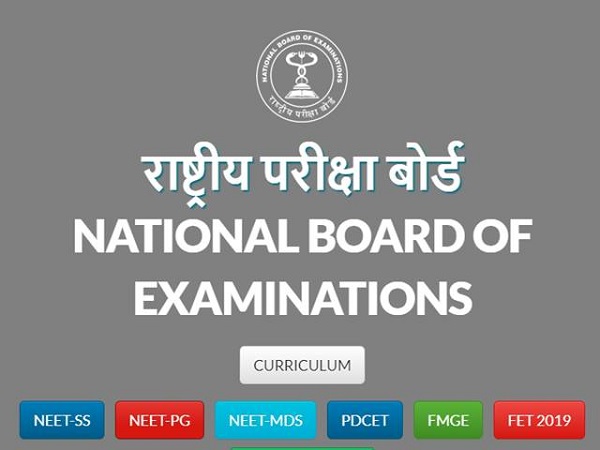
In the latest development, the National Board of Education (NBE) will be soon conducting the NEET PG 2020 which is scheduled for January 5, 2019. The process of online application and registration has begun from November 1, 2019.

Candidates willing to take up admission in various MD, MS courses are required to appear for the NEET PG 2020 examination which is organized by NBE. The process of application would end on November 21, 2019.

Also Read: NEET 2020: Students to upload live photos at the time of registration, read details

As per the latest update, the admit cards would be released in the month of December.

NEET PG 2020: How to apply

  • To apply, simply go to the official website nbe.edu.in and select NEET PG from the various tabs.
  • Click on the Registration Link to start the online application.
  • Fill the details and pay the fees to complete the NEET PG 2020 online application forms.

Students in their final year of MBBS examination are also eligible to appear for NEET PG. As many as 10,821 MS and 19,953 MD seats are available this would be filled by means of NEET PG 2020 examination. Admission to AIIMS and JIPMER colleges, however, would be done on the basis of their respective tests and admission process.

Every year, lakhs of students appear for the NEET PG Examination. In 2019, a total of 1,43,148 candidates had registered out of which 79,633 candidates qualified.

LATEST NEWS