


Home Blog Page 573

St. Soldier’s School: Nurturing Academic Excellence

education

The major area of focus at St. Soldier’s School has been to enhance the analytical thinking of students and make learning a journey of discovery where children can find encouragement, scope and nourishment for their inquisitive minds, says Neera M Singh, Manager, St. Soldier’s School, Panchkula, in an interview with Elets News Network (ENN).

Today, St. Soldier’s School is a renowned name in the education domain of the country. How has been the journey and what has been its guiding mission?

Neera M Singh
Neera M Singh, Manager, St. Soldier’s School, Panchkula

St. Soldier’s School started its journey in 1984. The school’s journey portrays the perfect blend of utmost intellect and innovation. Latest teaching techniques and well-qualified faculty have made St. Soldier’s the important contributor to innovative global and futuristic education. The ambition of our founder has always been the guiding force behind all our endeavours and is seeing fruition in developing good human beings having holistically developed personalities.

What practices are followed at St. Soldier’s School to groom students and nurture their inherent talent?

St. Soldier’s School earnestly endeavours to rely on individual attention, personal care, affection and encouragement, while imparting education to the students. Our school provides a high-quality academic environment with dedicated teaching staff. The perfect amalgam and balance of academics along with the co-curricular activities is given the utmost importance in the school.

As the activities like student learning and their assessment have undergone a sea change, how does St. Soldier’s School evaluate students?

Education is much beyond students’ examination scores. It’s about differentiating right from wrong in today’s society, keeping the moral values intact and adding value to what a student has already learnt. Therefore, St. Soldier’s School helps the children to develop an insight about the world around and push their thinking in various areas of interest. Small group instructions and activities as well as personalised attention for all the learners allow the teachers to thoroughly assess them during their work.

These days IT is playing an enabler’s role in many fields including education. What kind of IT-based solutions have been adapted by the school for student’s development?

In the age of IT, computers have truly become a necessity and practical knowledge has to be placed on an equal footing as theoretical knowledge. Keeping in view the same, there are two computer labs in our school wherein the computers are connected with broadband and Internet facility is provided to the students for reference work. There is a 3D lab in the school facilitating the children to expand their horizon by visualisation. The Robotics lab provides a platform to the students to learn and hone their technical and scientific skills.

What is the vision and mission of your school?

The major area of focus at St. Soldier’s has been to enhance the analytical thinking of a student and make learning a journey of discovery where children can find encouragement, scope and nourishment for their inquisitive minds.

Social Emotional Learning

School_Learning

Social and emotional learning (SEL) helps to acquire the skills necessary to understand and manage emotions, accomplish positive goals, become empathetic towards others, build strong positive relations and be responsible for their actions and decisions, writes Lata Singh Dasila, Life Coach and Certified EQ Assessor, Meravilia EQ Academy, for Elets News Network (ENN).

Lata Singh Dasila
Lata Singh Dasila, Life Coach and Certified EQ Assessor, Meravilia EQ Academy

SEL is a process for developing social and emotional skills – also called emotional intelligence, EI or EQ. Social Emotional Learning is the process of building emotional intelligence skills. Educators believe that it is the responsibility of the school to develop the child into a responsible human which includes their social and emotional development. Unfortunately, our education system in last few decades has shifted its focus on test scores and the development of technical skills excluding empathy, behavior, kindness and social engagement.

While schools prepare students for future to live their life in comfort, SEL help them develop social and emotional skills that can help them face any challenges and thrive during discomfort.

Follow simple tips to build SEL in School environment

SEL Community – Implementing SEL in school as a community can help build strong bonding between teachers, students and parents. Everyone will have to come together and practice emotional intelligence skills.

Vision – Develop a vision that prioritizes academic, social, and emotional learning in school. Let everyone work towards achieving same vision.

Monthly Workshops – Conduct monthly workshop for students so they can practice emotional intelligence regularly.

Parents Interaction – Lets parents be partners in building strong SEL community. Invite them on a regular basis to participate in workshops curated specially for them. Children learn more at home than in school. Soit’s important to have a healthy and safe environment at home.

Integrate SEL in Classroom – Providing Emotional Intelligence training to teachers can help take SEL to the classroom. Teachers must spend 1-2 minutes with every child on a daily basis to build a strong meaningful bond with their students.

Integration of technologies revamping India’s school education sector

Education

The digital revolution has touched every sphere and facets of life including the education sector. Unlike any other sector, the link between digital technology and education is unique and complimentary, writes Jaivik G Pathak, Founder & Owner, Webstar Infracon and Founder & Franchisor, P & V Institute, for Elets News Network (ENN).

Jaivik G Pathak
Jaivik G Pathak, Founder & Owner, Webstar Infracon and Founder & Franchisor, P & V Institute

On one hand, digital technology has become the enabler by redefining the very basics of the sector and altering the rules of the game. On the other hand, today’s young minds will decide the future direction of digital technology as they are going to be the innovators of tomorrow. So, equipping our students is a key to success in the field.

Currently, more than 40 crore Indians use the Internet and this number is likely to get doubled in the next four years. The Government has embarked on a mission to connect 2.5 lakh villages through optical fibre network. The Government is aiming to train crores of Indians in different skills by 2022. It means that digital technology is all set to embrace every moment of our lives. We are already a digital society and are moving towards the knowledge society. It’s time for learning, unlearning and relearning.

Over the years, technology has outdated our conventional theories and practices in education. Blackboards, chalks, textbooks and ink pens are fast turning into the things of the past. Traditional classrooms are giving way to smart classrooms. Students are smart enough to swim with the current trends and they are constantly on the learning curve. This learning will surely continue.

But, for teachers, it’s time for relearning, whether it is pedagogical tools, content or dissemination. They need to update themselves to catch up with students. For the management or school authorities, the task is first unlearning, before learning. The old management theories and best practices are getting outdated with every passing day, because even the traditional infrastructure is slowly becoming obsolete in this virtual world. Going forward, many foreseen and unforeseen technology innovations will disrupt the education sector.

One of the most powerful disruptions will be the rising inclination towards m-learning from e-learning practices. Mobile technology is making education affordable, convenient and more effective. Mobile apps are turning learning a pleasure ride, like negotiating through the twists and turns of an online game. We already see the market being flooded with multiple apps for different categories of studies. Technology is a great leveller, and more so in education. Another big trend to watch out is how fast this will redefine the educational landscape.

Digital technology is making place, people and time irrelevant for learning. As we are moving into a global classroom, rural and urban divide will fade away. With schools interconnected digitally, expertise will matter first. Through telemedicine facilities, tertiary care is now being made available at primary healthcare centres. Similarly, expertise by specialists in big towns now quickly reaches grass-roots levels. Talent, whether in small towns or metros, is able to get support at an equal scale. Even the time constraints in learning will be removed soon and synchronisation—boundless and timeless education—will happen. Another aspect is that parents will also be enrolled into this digital highway and their contribution will be integral for the success of the pupils.

But the two biggest trends to impact education in the near future will be artificial intelligence and Internet of Things—they are already charting the very course of information technology. Virtual reality and augmented reality videos and simulations will make education content more interactive and interesting. Cloud technology is going to make life easier both for students and teachers as documents and files will be stored and accessed easily. This will help managements in a big way, cutting down on infrastructure costs. Similarly, Big Data will make assignments, evaluations, tests and projects more results-driven. In the same way analytics is helping fintech companies, student performance can be improved through Big Data.

Teachers can make use of the data efficiently to monitor and guide students. Augmented reality and virtual reality can make learning exciting, with rich experiences and opening up endless possibilities. Highly engaging classrooms will lead to better results. These can transform the traditional methods of learning, breaking down the walls of classrooms and making students to think out-of-the box and pilot new innovations.

Maria’s Public School: Grooming Future Leaders

school_education

We believe in nurturing innate talent of students and giving a free hand to their expressions, in whichever form they might be, says Nellie Ahmed, Founder and Managing Trustee, Maria’s Public School, Guwahati, in conversation with Elets News Network (ENN).

What are the key strengths of Maria’s Public School (MPS)?

Nellie Ahmed
Nellie Ahmed, Founder and Managing Trustee, Maria’s Public School, Guwahati

The ‘Key Strengths’ of MPS are distributed and diverse in terms of planning and execution of ideas, action plans and activities. The student-teacher bond at MPS is by far the most prominent strength through which ideas and problem solving abilities are nurtured in a space, where expressions, in whichever form they might be, are given space and time to get recognised.

What are the industry best practices that MPS follows?

MPS studies and recognises many best practices of the education industry, and strives to customise them in sync with the vision and mission of the school – ‘Learning Beyond the Classroom’. It is this vision with which the best practices are woven with. Collaboration is by far the most prominent one, through which the school has been able to establish exchange of information, projects with rural schools of Assam and Meghalaya, and has been able to execute collaborative projects with the partner schools within not only Guwahati but also with more than 10 schools across India. Taking collaboration as a best practice, MPS also engages with partner schools in countries like Uruguay, the USA, Brazil, UK, Australia, Jordan, Nepal and Bangladesh. Sustainable partnership is also another best practice through which a local- to- global connect is established by the school. Today, IT is facilitating learning in many ways.

How is MPS using latest IT tools for holistic development of students?

We follow the regular CBSE curriculum for Information Technology and Computer Science which itself is an updated course giving exposure to the latest Computer Languages (BASIC, QBASIC, LOGO, C++, Python, Java, Html) and Technology – My SQL, Visual Basic, Netbeams, SCRETCH, TASK PAINT. MPS has well-equipped labs for the students, right from primary to the senior secondary with around 55 machines in the primary and senior secondary sections. The school also introduces the students to MINDSPARK, an educational tool involving online mathematics curriculum and tests. For this, we have dedicated laboratory which has 50 Laptops equipped with latest proprietary software.

What is the vision and mission of the school for the years ahead?

The primary vision and the mission of the school for the future is overall expansion of the school – which includes upgrade and evolution in the academic, co-curricular and infrastructural development areas. Also, balancing the learning outcomes, critical thinking and problem-solving techniques is the way in which MPS wants to move ahead of the time, along with keeping the student and the teaching community abreast in both competitive and noncompetitive environment.

What steps are being taken by MPS for nurturing life-skills of students?

The concept of imparting education through life-skills has transcended from schools’ earlier activities of engagement of the students to exposing them to a focus on the present-day world’s challenges, where they have to learn the 21st Century Paradigms of life skill training. The students are made to face real-life problems and encouraged to come up with solutions using their own innate talents. MPS is now a ‘Round Square School’, which means that the life skill training is now already upgraded through the ‘Six Ideals of Round Square’– Internationalism, Democracy, Environmental Stewardship, Adventure, Leadership and Service. The sole aim of the MPS Educational Structure is to keep its life skill curriculum adhered to these ideals.

Emerging Trends in Education sector in 2019

By 2030, Global Education and Training Expenditure is set to reach at least $ 10 trillion. Here is a glimpse of emerging trends that will transform/ improve education sector in 2019. Vijaya Pothula, Co-Founder & COO – EdSense, for Elets News Network (ENN).

Vijaya Pothula, Co-Founder & COO – EdSense

The education sector is set to see strong expansion globally due to  population growth, government support and incentives, inclusion of “Quality Education” as one of the key sustainable development goals of UN, growing importance of adult education and technological and pedagogical changes in teaching and learning.

Artificial Intelligence

The integration of Artificial Intelligence (AI) technologies in education shows no signs of slowing down. While the recent years we have seen AI being used for developing virtual teaching assistants and personalizing learning for a student, as the technology evolves and becomes more commercially viable, we will see AI penetrating other areas in education sector like:

  • AI Driven Assessment: Artificial intelligence-based assessment provides constant feedback to teachers, students and parents about how the student learns, the support they need and the progress they are making towards their learning goals.
  • Remote Exam Proctoring and classrooms: The remote exam proctoring system lets a student to appear for exams from any location. The system can track and monitor remote use using advanced video, image, audio streaming with the intelligence to do analyze if a student is cheating. Remote classrooms will enable students in far corners of the world to attend a class in a school or university in countries. Local players will collaborate with international universities to bring them at an economical price point to developing countries like India.

  • Augmented Analytics: As the world becomes more data driven, AI driven analytics will become a critical tool to improve education and make the institutions more competitive. Descriptive and Predictive analytics will assist in crucial areas like reducing drop-out rates, proactive tutoring , timely intervention for at risk students, understanding content quality issues and content consumption patterns. From a school administrator stand point, data collection and analysis will provide insights which will help them design better curriculum, allocate costs efficiently and make the right investment strategies for a school. We will see an increased investment being made in training educators to develop:
    • Research and analysis skills to let them interpret the AI data and ask relevant questions of the data
    • Collaborative and management skills to work more efficiently with AI assistants and managing the resources effectively

Immersive Experiential Learning

As private players involve in developing mixed reality tools like Microsoft’s HoloLens, Google Expedition and Windows 10’s mixed reality viewer, the lines between real and virtual worlds will blur and the way educators and students engage with content will significantly change. With 5G technologies on the horizon promising lower latency and more robust connectivity, the quality of these tools will continue to grow, expanding their potential to supplement school and higher education.

Also ReadIndian Education Sector Awaits New Dawn — Industrial Revolution 4.0

The upcoming years will see evolved Mixed and Augmented Reality hardware and their integration with mobile technologies to make them more accessible. We will see the rise of mobile educational AR apps for developing simulations, real-time translators, 3D models and AR printable worksheets that educators can provide students to continue their learning at home

STEAM

Over the last decade, STEM Education (learning of science, technology, engineering and mathematics in an interdisciplinary or integrated approach) has become an integral part of schools curriculum to develop future workforce who will lead in innovation and technology. But this led to downplaying of other disciplines like art and creativity. Over the past few years, the STEM to STEAM movement has been taking root and encourages including “Arts” into STEM to truly meet the needs of a 21st century economy.

Also ReadStem Education Catalysing Hands-on Learning

The business and industry now view Design Thinking and Creativity as critical skills to have to nurture innovators, educators, leaders and learners of the future. There will be a need for educators to explore newer curriculum methods and age appropriate design approaches. School administration will need to create an environment that supports successful infusion of STEAM by investing in Smart Spaces and teacher training. There will be an increased focus on producing STEAM starter kits to accelerate design thinking and logic. The demand for teacher training in STEAM will lead to increased development of professional online trainings for teachers. Coding and Robotics will continue to grow in popularity with private sector’s increased participation in developing innovative educational content, providing expert help and transfer knowledge.

Personalised Learning

Personalized Learning has been in the education sector trends for many years now and its popularity keeps growing. But in 2019, we will see increased integration across the globe of personalized learning. EdTech and AI technology has evolved more to cater to personalized learning styles and diverse individual needs. Just in time assessment will assist teachers to intervene at appropriate stages and tailor lesson plans accordingly. Assistive technologies will enable students with learning disabilities to have personal learning experiences and continue mainstream education.

Cost Management

With the increased adoption of EdTech in schools and universities across the world, the school administration will have to strategize and plan their investments accordingly. The next few years will see significant integration of below technologies:

  • Cloud Based Technologies: Education organisations will aim to leverage benefits of cloud based technologies to drive cost savings and operational efficiencies through shared services initiatives.
  • BlockChain Technology: Education sector will look towards utilizing blockchain technology to cut paper and printing costs by digitally storing student certificates and diplomas, cost and labor savings by transferring the control of storing personal data to the applicants, litigation cost savings due to loss of documents and damage.
  • Edge Computing: As schools integrate new tools like AR headsets or connected classroom devices, the demand for computing power and hence cost will go up and this will bring in another aspect called Edge computing. This takes information processing and brings it closer to the source by using edge devices instead of sending information to and from a centralized cloud.AI will assist in diversifying the kind of devices that will act as edge endpoints.

Online Education

According to KPMG and Google study, it is predicted that online education in India is likely to be 2 Billion USD industry by 2021. With MOOCs and e-learning platforms offering reasonably priced certified courses developing in profusion, governments getting involved in recognizing e-learning programs and the rise in validity of digital certificates offered by these organizations, online learning will continue to see an increased adoption in 2019. There will be more focus on developing micro learning, blitz testing, social media mentoring and content curation.

Wellness programs

Schools will invest more in developing and evolving wellness programs within premises to tackle issues like absenteeism, stress and anxiety related disorders and learning disabilities. There is more awareness of physical, emotional and spiritual health impacting learning outcomes and this had led to increased focus on conducting mindfulness and meditation programs for students and educators. There will be increased collaboration between schools and wellness experts to conduct life skills training and keeping the children calm and focused.

Continuous learning programs for teachers

In India, schools are investing up to 20% of their budget on teacher and administrator training. Proving continuing education is a great strategy for Teacher retention and career advancement. The infusion of AI and technology will require the teachers to be equipped with latest knowledge, tools and guidelines on ‘how to deal with the changes’ and educate effectively.

Though, we are terming the above as trends, it will be good if these are long-lasting and greatly assist in positively transforming the education sector over the next few years. As a parent and an educator, this is an exciting time to be a part of the educational landscape and crucial to remain engaged with the latest developments and how they shape the future of our children.

Challenges and opportunities in Indian higher education

higher_education

While there is much talk of Industrial Revolution 4.0, it is important to recognise that India first should endeavour to ensure a basic international standard expected in its Universities or Institutions operating at National, State and Regional level, writes Prof Y V Satya Kumar, Former Dean-Academic Planning & Quality Assurance, Rayat-Bahra University, for Elets News Network (ENN).

rof Y V Satya Kumar
rof Y V Satya Kumar, Former Dean-Academic Planning & Quality Assurance, Rayat-Bahra University

India is at the crossroads of making a leap into a higher orbit and enter premier league of the world based on its strong human resources from a large population and seven decades of sustained efforts to (re)establish itself in various sectors of economic and intellectual activity. Indian universities are finding it difficult to grab a position among top 100 or top 200 Universities of the World. Some of the generic challenges observed are at level of operation or control of these universities or institutions and may serve as an input in prioritising going ahead.

Rich Heritage

India’s Higher Education had its rich heritage starting millennia ago with many universities or centres of learning including:

  • Varanasi in Uttar Pradesh, Nalanda in Bihar (in Northern India);
  • Vikramshila in Bengal, Pushpagiri in Odisha (in Eastern India);
  • Nagarjunakonda in Andhra Pradesh, Kancheepuram in Tamil Nadu (in Southern India);
  • Taxila or Takshasila in Gandhara, Valabhi in Gurata (in Western India);

India had thus formal Centres of Learning with residential programmes much earlier than the opening of universities in the Western Hemisphere starting with Egypt, later in England and then the US.  India’s past glorious learning hubs attracted International Scholars centuries ago.

As it is well known under the British rule, a very deliberate, sustained and successful attempt has been done to do away with this rich heritage of teaching-and-learning in India, so that the Western mode of learning could take root in India and consequent indoctrination and subdual of indigenous knowledge. Thus also the regard for and influence of a teacher, who held utmost importance along with priests and judges in keeping social order and societal value systems, and ethics slowly got withered in favour of the power of money and holders of physical resources.

This does not mean India did not have its own significant contribution to the World body of knowledge by the way of Philosophy, Law, Governance, Mathematics, Astronomy, Physics, Chemistry, Architecture, Materials and Metallurgy with stellar scientific brilliance by Aryabhatta, Ramanujam, Raman among other Indians over last two millennia.  It is no secret that 20th Century’s most significant Scientists in areas of Quantum Mechanics, Atomic Energy and Astronomy like Einstein, Oppenheimer had gleaned insights from age-old Hindu Philosophies on Matter, Space and their Existence and Evolution.

Just as well it is known by now that India had preceded Europe and England with its own contribution in developing sub-fields of Trigonometry and Calculus in Mathematics.

Infrastructure after Independence

Now the overemphasis on modern instruments and experimental methodologies in scientific discovery meant it took time for India to reorient its resources after independence for establishment of Modern Institutions of Learning, Inquiry and Discovery in the form of National Academic Institutions and National Research Labs  (such as IISc, IITs, IISERs, IIMs, NITs, NIDs, NITTRS, AIIMS, NIPERs, NITIE, NIFTs, NIFFT, TIFR, TISS, BHU, AMU, BITS-P, ACSIR, IIST, HBNI, ICAR, CSIR Labs, DST Labs, DAE Labs, DoS Labs, DSIR Centres, DIPP Institutions, UGC-IUC).  Dozens of Central Universities have also been set up along with similar numbers of new IITs, NITs, IIMS and AIIMS in different States in last decade plus alone.

After Economic liberalization in 1991 under the stewardship of Prime Minister Narasimha Rao and Finance Minister Manmohan Singh occurred to overcome a crisis of impending default in balance of payments, India opened up various Strategic and Social Sectors to Private Enterprise in a big way.  This allowed Private Universities (under State Legislature Acts), Private Deemed Universities (under Central recognition), Private Colleges (with affiliation State Govt Universities) and Private Autonomous Colleges to thrive in the last two and half decades in comparatively big numbers (hundreds of Pvt Universities and Thousands of Private Professional Colleges) across all geographies of India.

In part, this happened due to the assessment by the Central Government to steer private investments in higher education, technical education, medical education and management education so as to rapidly increase GER (Gross Enrollment Ratio) to a decent level as India is seen to be lagging its peer countries around the World, much less the Western World.  However this rapid increase of Institutional growth also saw an unintended consequence in some-to-severe dilution of standards of preparation levels of entering Students, curricula, assessment and evaluation processes, Faculty quality and motivation levels, Administration and Governance rigor  and much worse presented a set of continuing Challenges of a new kind to the Central Government.

Categories of Challenges

National Institutions: They are marquee Institutions with most severe competition for admission into them.  They are very well provided for in terms of lab infrastructure, campus amenities, faculty quality, student competence, international reputation, good administrations, broad functional autonomy and requisite Government support.  However, they continue to lag international peers in various ranking systems due to a lack of quantity in Quality Research output, overburdening of their teachers in class load due to severely increased student numbers arising out of regulatory prescriptions for social equity in access, inability to attract sufficient Indian faculty due to massive and continuing brain drain of the best UG, PG and PhD graduates abroad for better economic and professional opportunities and negligible international student enrolments or international faculty on their roles. They are also yet to go for significant linkages and collaborations with local industry and national research institutions in solving problems and issues affecting local and rural populations and innovations for their better future and currently providing a major component human resources for the best of the industry and academia in Western Nations.

State Government Universities: Generally speaking, universities operated by State Governments (i.e. Provincial Governments) corruption in terms of Faculty and Staff Appointments, laggardness on the part of Faculty (in permanent positions until retirement at around 60 years) in being even marginally active in research and displaying strong teaching motivation and caste-based alignments in appointments, affiliations and in governance seem to be important challenges.  These challenges persist despite them providing state subsidized affordable education to meritorious students that clear various entrance exams or other assessment schemes. While Central Government is concerned about their operational efficiency, it is not too easy for them to intervene due to the federal structure of Indian Democracy, where Provincial Governments enjoy a certain degree of autonomy in all aspects. However below-par environments in some such universities along with structures, philosophies and practices have been undergoing serious reform last few years in States like Bihar, Jharkhand, Chhattisgarh with the realization of importance of quality mind-sets and practices with integrity in all aspects of Governance and Administration.

State Private Universities: As already mentioned although they are established in hundreds in last two decades by different State Governments, they suffer from moderate to very serious credibility issues in terms of their operational modalities and implementation effectiveness of processes in meeting expected outcomes. The relative autonomy they enjoy compared to private colleges affiliated to state universities is yet to be fully realised for their long term growth and utilisation of their potential.

Recently, a few of them like Manipal, BITS-Pilani have been given even a much greater degree of autonomy by recognizing them as Institutions of Eminence (along with the National Institutions or of National Importance IISc and IIT-Delhi and IIT-Bombay) based on their decades’ long history of standardized processes and yearning for greater outcomes.  The worst of them are guided only by financial motives for the entrepreneurs that entered education enterprise without any long term outlook or awareness of its complexity and they are also the ones that find it difficult to sustain operations due to poor graduate output that generates a negative feedback for them.

Private Colleges affiliated to Universities/Autonomous Private Colleges: Generally speaking they are yoked to State Govt Universities in all aspects of Curriculum, Admission Criteria and Processes, Assessment and Evaluation Patterns, Exam Conduct and with some oversight in appointment of Faculty.  Despite such stipulations some or many of these Colleges are underperforming and unable to attract sustainable enrolment and each year hundreds are being closed by Statutory Councils due to severe concerns of overall quality, staffing strength, graduate employability or knowledge levels.  Autonomous Colleges enjoy a better autonomy than affiliated Colleges and the best of them are given Autonomous Status upon meeting certain criteria. The problem of corruption in State Universities naturally flows into the affiliated Private Colleges

All the pieces of the puzzle in terms of diversity of institutions, diversity of knowledge domains, aspirational population, motivated teachers, researchers and students, general regard across World for Indian Education and Innovation Systems and Government eagerness to launch India into full-fledged modernity are in place.  Now it is high time for India to overcome all issues obstructing that destiny by way of avoidable compromises due to social, fiscal, operational, ethical and value-based considerations and achieve excellence and recognition that are overly due. For India to regain its Formal Glory, collective, concerted and synchronized efforts are required from all Stakeholders.

CBSE release 10th, 12th board exam date sheet, check schedule

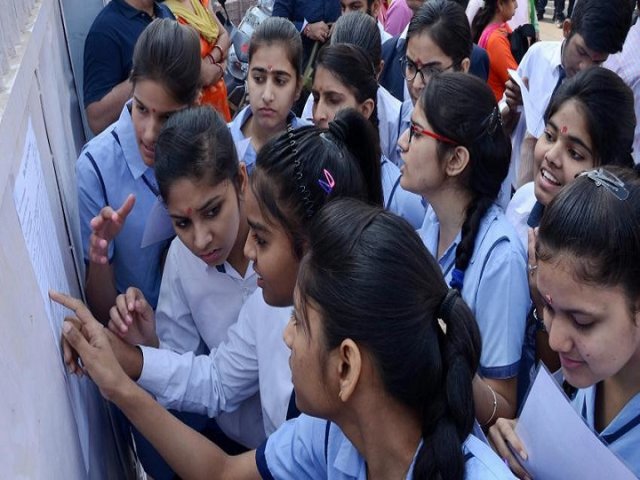
The Central Board of Secondary Education (CBSE) has released the date sheet for Class 10 and 12 board exams to be conducted in 2019. The CBSE board exams of class 10 will begin from February 21 whereas class 12 board exams will commence from February 15, 2019.

The board exams for the two classes will be conducted in the morning session: from 10.30 am to 1:30 pm.  Students must be at their respective exam centres an hour before as the answer books will be distributed at 10 am and question papers at 10:15 am.

The students can check the date sheet below. The entire schedule is also available at the official website: cbse.nic.in


CBSE Class 10 Date Sheet

Thursday, February 21: e- Publishing and e- Office

Friday, February 22: Painting

Saturday, February 23: Hind.Music Mel.ins

Monday, February 25, 2019: Hind.Music Vocal

Wednesday, February 27, 2019: Carnatic Music Voc, Carnatic Music (Melins), Hind Music Perins, National Cadet Cor Hind Music Perins, Elem. of Business, Elementary Book Keeping and Accountancy, Dynamics of Retailing, Security, Automobile Tech, Introduction to Finance Markets, intro to Tourism, Beauty and Wellness, Basic Agriculture, Food Production, Front of Office Opera, Banking and Insurance, Marketing and Sales, Health Care Services

Saturday, March 2: Info Technology

Tuesday, March 5: Urdu Course-A, Punjabi, Bengali, Tamil, Telugu, Sindhi, Marathi, Gujarati, Manipuri, Malayalam, Odia, Assamese, Tibetan, German, Russian, Persian, Nepali, Limboo, Lepcha, Telugu-Telangana, Bodo, Tangkhul, Japanese, Bhutia, Soanish, Kashmiri, Mizo, Bhasa Melayu, Rai, Tamang, Sherpa, Thai, Urdu Course-B

Thursday, March 7: Mathematics

Saturday, March 9: Kannada, Arabic, French, Gurung

Wednesday, March 13: Science-Theory, Science practical

Saturday, March 16: Sanskrit

Tuesday, March 19: Hindi Course-A, Hindi Course-B

Saturday, March 23: English Communicative, English Language and Literature

Monday, March 25: Home Science

Wednesday, March 27: Foundation of IT, Info and Comm. Tech

Friday, March 29: Social Science

CBSE Class 12 board exams Date Sheet

Friday, February 15: Hind Music Melins, Office Procedure and practices, Olericulture, Garment Construction, Textile Chemical Processing

Saturday, February 16: Carnatic Music Melins, Bharatnatyam dance, Odissi dance, Mohiniyattam dance, Agriculture, National Cadet Corps, Office Communication, Applied Physics, Food and beverage- Cost and control, Laboratory Medicines, Retail Operations, Information Storage and Retrieval, Advance Front Office Operations, Cost Accounting, Marketing, Derivative Marketing Operations, Basic Pattern Development, Shorthand English, Shorthand Hindi, Ac and Refrigeration II, Child Health Nursing

Monday, February 18: Carnatic Music Vocal, Knowledge Tradition and Practices, Engineering Science, Mechanical engineering, Basic concepts of Health Disease and Medical Terminology, Food Services, Geospatial Tech, Clinical Biochemistry and Microbiology, Retail services, Library Science and Res Management, Front office Operations, Travel, Basic Horticulture, Bus Operation and admin, Design nad Innovation, Financial Accounting, Salesmanship

Wednesday, February 20: Hindustani Music, Fashion Studies, Floriculture, Taxation,. Insurance, Auto Engineering, Printed Textile

Thursday, February 21: hindustani Music Vocal

Friday, February 22: Health Care Management, Capial Market operations, Electrical Machine

Saturday, February 23: Banking, Autosh Rpr, Holistic Health, electric Appliances

Monday, February 25: Mass meddia studies, Evaluation and forms of Mass media

Tuesday, February 26: Food Prod-III, typography CA- English, Typography CA Hindi

Wednesday, February 27: Food Productions-IV, Web Applications

Saturday, March 2: English Elective, English Core

Tuesday, March 5: Physics

Wednesday, March 6: Accountancy

Thursday, March 7: Geography, Biotechnology

Friday, March 8: Punjabi, Bengali, Tamil, Telugu, Sindhi, Marathi, Gujarati, Manipuri, Malayalam, Odia, Assamese, and other regional languages

Saturday, March 9: Hindi Elective, Hindi Core

Monday, March 11: Sociology

Tuesday, March 12: Chemistry

Thursday, March 14: Business Studies

Friday, March 15: Biology

Saturday, March 16: Painting, Graphics, Sculpture, Commercial Art

Monday, March 18: Mathematics

Tuesday, March 19: Political Science

Saturday, March 23: Sanskrit Elective, Legal Studies, Sanskrit core

Monday, March 25: History

Tuesday, March 26: Urdu Elective, Kathak Dance, Urdu Core

Wednesday, March 27: Economics

Thursday, March 28: Informatics, Computer Scienvce

Friday, March 29: Psychology

Saturday, March 30: Physical Education

Monday, April 1: Engineering Graphics, Home Science

Tuesday, April 2: Philosophy, Entrepreneurship, Human Rights and Gender Studies, Theatre Studies, Library and Info Science

Wednesday, April 3: Multimedia and Web, intro to Hospital Management.

Along with the above lists, the board has already released a list of vocational subjects, exams for which are scheduled to be conducted from in February and March 2019.

Apart from the 40 different vocational subjects, the board will conduct exams for Typography and Computer Applications (English), Web applications, Graphics, Office Communication, etc in February as these subjects have a larger practical component and shorter theory papers.

Computational Thinking for Young Learners

Computational_Thinking

Purposeful introduction of computational thinking during early education can be applied throughout our lives to incredible effect, Shalini Jaiswal, Director – Academic, Training & Teacher Education, Maple Bear South Asia, for Elets News Network (ENN).

Shalini_Jaiswal
Shalini Jaiswal, Director – Academic, Training & Teacher Education, Maple Bear South Asia

Jean Piaget is one of the most influential figures in cognitive psychology and best known for his descriptions of children’s cognitive development. His work led to a paradigm shift in education. He fostered the more enlightened view that children think differently than adults and that they need the opportunity to construct their own. They have creative minds that allow them to think outside of the box.

Why teach ‘Computational’ Thinking to young children?

Computational thinking is a way of thinking that lets us break down big, complex problems into smaller ones, thinking one step at a time. At the early childhood education level, it helps children to be articulate and think logically: when they start breaking down what’s happening, they can start predicting what’s going to happen. It helps them start thinking in a manner where they are able to find multiple approaches to problem-solving and then identify the approach that best fits the solution. Computational thinking enables children to think laterally when faced with a problem. Skills supported by computational thinking, include:

  • Confidence in dealing with complexity
  • Persistence in working with difficult problems
  • Tolerance for ambiguity (crafting viable solutions in the absence of a step-by-step guide)
  • The ability to deal with open ended problems
  • The ability to communicate and work with others to achieve a common goal or solution

It is for these reasons that computational thinking has forged a reputation as a powerful universal problem-solving technique: not just in prepping young learners for coding, but also in helping them navigate the world at large.

Maple Bear South Asia has become the first to introduce Computational Thinking at the preschool level across its schools in the region.

Looking ahead

Introducing children to the concept of computational thinking develops their problem-solving skills, encourages collaboration and nurtures children’s creativity. As an unbelievably valuable thinking tool – perhaps the thinking tool of the 21st century – and one that can be applied throughout our lives to incredible effect, it’s time we give it a thought!

New Educational Trends in 2019

New Educational trends should focus at learner driven curriculum. Innovative teaching pedagogies should be crafted to facilitate joyful learning to create a passion amongst the students for learning, observes Neeti Kaushik, Principal cum Director, Mount Olympus School, Malibu Town, Gurgaon, for Elets News Network (ENN).

Neeti Kaushik, Principal cum Director, Mount Olympus School, Malibu Town, Gurgaon

Education should be rooted, leading to new ways and exploring the unexplored. Clay P. Bedford, the US based industrialist has rightly said, “You can teach a student a lesson for a day; but if you can teach him to learn by creating curiosity, he will continue the learning process as long as he lives.” It is imperative to present learners with multifarious opportunities to holistically groom their personalities. We live in the most remarkable times for teaching and learning.

Technology revolutionized the way we approach education. It’s no longer about accumulating knowledge and solving tests. It’s about actual learning. Digital learning makes it possible to inculcate excellence in lessons that enable the students to get the best education and creates a lifelong passion for learning.

“Tell me and I forget, teach me and I may remember, involve me and I learn,” a leading author, politician, scientist, civic activist, and diplomat Benjamin Franklin once said.

Futuristic and divergent thinking should be the focus of the curriculum. It is a very gratifying experience to see children- the future leaders be taught to be pioneering and good decision makers right from the beginning.

Interdisciplinary teaching is another model of teaching that not only helps in engaging students constructively but also helps them to develop knowledge, problem solving skills, self-efficacy and a passion for learning.

Also ReadEmerging Trends in Indian Education Sector

The teachers should invest time and their expertise in adding a spark of creativity coupled with experimentation for combining various units across different subjects in this type of teaching learning method.

Reading program through digital libraries should be encouraged especially for reluctant readers.  Programmes should be fashioned to enhance all round reading habits. Rewards to read, positive reinforcement like reader of the month etc. are a few ways that help create voracious readers.

Real education happens when children are given freedom to explore, question, observe and infer from their surroundings along with classroom teaching. Including Field trips in the curriculum provides the learners with an opportunity of experiential learning. It helps them learn basic etiquettes, decorum and appropriate behaviour at public places.

Resource material used by the teachers should be more vibrant and useful. Novelty in the teaching learning process will go a long way in creating a passion in the mind of young learners to explore more and learn more.

This brings us to a conclusion that digital learning mingled with innovative classroom teaching is the need of the hour. Most schools are adopting technology with alacrity and integrated learning solutions facilitate learning process anywhere and anytime. (Views expressed by the author are a personal opinion.)

Need for smart schools in rural areas

education

Though the majority of the population is well aware and informed about the importance of education in a person’s life still there is not been much effort taken by the government to make education compulsory in all parts of the country especially the rural areas, Dr Ginu George, Assistant Professor, Department of Commerce, Kristu Jayanti College, Bengaluru, for Elets News Network (ENN).

Dr Ginu George, Assistant Professor, Department of Commerce, Kristu Jayanti College, Bengaluru

Education is the most important part of a person’s life where they get an opportunity to learn and experience many new things. This phase of a person’s life is a time when personality gets shaped; confidence is built and prepares for the future. Education also results to increase in social status, social health, economic growth and helps the nation as a whole.

When compared to 10 to 15 years ago, one cannot deny the fact that education system has improved to a great currently. However, if we look at education system as a whole with current developments, it still is far behind in villages or in rural areas of India. Condition of educational institution in rural areas of India is almost same, there are schools operating but quality of education, facilities, teaching methodology are below average and outdated.

Hence it is important to concentrate and efforts need to be taken in improving the quality of education. One such way which helps in improving the quality of education is by introducing smart schools in rural areas.

Smart school is a concept which uses technologies or some modern equipment in the classrooms which enables in giving better learning experience to the students. This also helps in attracting more students to school and also will help in reducing school dropouts. Introducing smart school systems will helps in making education more interesting as everything will be taught with images and videos which make the class more interactive and learning.

Though there are some practical difficulties in introducing smart schools in all schools in rural areas immediately, at least efforts need to be taken to introduce it in few schools. This will helps in creating more interest among children’s in rural areas and as mentioned it leads to experiential learning.

Every child in India has a right to quality education; hence government has to take initiative to provide education with best and latest teaching methodologies.

LATEST NEWS