Home Blog Page 825

Celebrating World Youth Skills Day 2015 – Rajiv Pratap Rudy

erhj

India, where half of its population is below 30 years of age, are poised with the potential to become the next generation leaders, workers, thinkers etc. To embark the beginning of new India, Prime Minister Narendra Modi who in June 2014 had pledged to make country a Skill India is now seems to take shape after one year of rigorous planning and hard work.

Recognising the country’s young demographic dividend, Prime Minister has stressed on producing skilled manpower and pushing ahead the Skill India mission, the government is launching number of initiatives aimed at developing skills and promoting youth in every field. The Prime Minister will unveil new National Policy for Skill Development Mission and Entrepreneurship 2015 on 15 July to mark the occasion of World Youth Skills Day.  He will also roll out all-India flagship scheme, Pradhan Mantri Kaushal Vikas Yojana (PMKVY).

The government has set the target to skill 40.2 crore people by 2022 under the National Policy for Skill Development. The other initiatives to be launched are the model skill loan scheme, skill card for persons certified under Pradhan Mantri Kaushal Vikas Yojana.

Below are the opinions of what the stakeholders feel about the Skill India Mission and the initiatives that they are taking to skill youth of India-

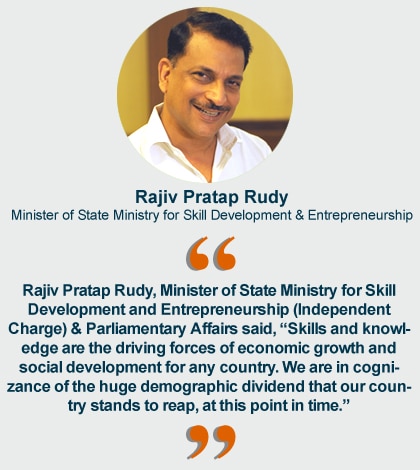
Rajiv Pratap Rudy, Minister of State Ministry for Skill Development and Entrepreneurship (Independent Charge) & Parliamentary Affairs said, “Skills and knowledge are the driving forces of economic growth and social development for any country. We are in cognizance of the huge demographic dividend that our country stands to reap, at this point in time.”

Captain Sandeep Malhotra, Director, Alliance Educare and Research Private Limited says, “At the outset, we all acknowledge that institutions follow very fine academic practices for imparting regular curriculum. However, the country’s employment data shows that 82 per cent students face employment crisis due to the gap between their acquired knowledge and the industry needs. As we know, India is a nation with 65 per cent population below 35 years. It poses a tough challenge of skill training of 500 million people by 2022. However, if achieved, it offers a great opportunity of being a large pool of skilled workforce available to us and, to the world.”

Dilip Chenoy, Managing Director and CEO of the National Skill Development Corporation (NSDC), “NSDC is partnering with the state governments to introduce training partners and set up labs and get people skill trained. Two very recent examples are in Haryana and Himachal Pradesh where school children who passed out of 12th and not wanting to continue higher education have got jobs upto Rs. 50,000 a month based on their skill certificate. In many cases where they have not even passed 12th but passed their skill certificate, they have got jobs in the market, say for example in the retail sector, where they are earning an average of `12,000- `13,000 per month.”

Madan Mohan Mittal, Technical Education Minister, Government of Punjab, “Education, creation and adaptation of information, knowledge, skills and values are a key lever of sustainable development. The vision of “Skill India”, “Skill youth” will give equitable opportunities to all to access effective and relevant learning throughout life delivered through multiple formal, non-formal and informal settings. Skill education is important to individuals’ development as it is to the development of the nation and to the world at large.

In India Skill Development is very significant as the Hon’ble Prime Minister of India, Narendra Modi is the brand Ambassador for carrying this Skill Development in the whole country and he is taking keen interest. More so, inspite of his busy schedule, the Prime Minister has kindly consented to launch National Skill Development Mission and for promotion of Pradhan Mantri Kaushal Vikas Yojana which is being celebrated as World Youth Skills Day on July 15 at New Delhi.”

Punjab tops the chart in education development

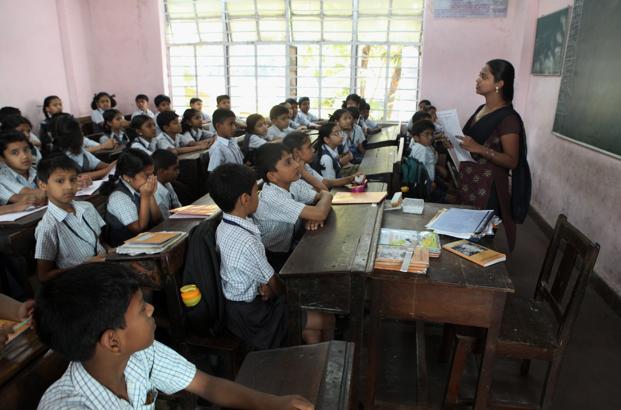
classroomAccordig to the reports of the ASSOCHAM, Punjab has emerged as the top city in terms of growth in number of schools followed by Kerala 5.4 per cent and Jammu and Kashmir 5.3 per cent, while the all India growth remained at 2.5 per cent.

Punjab has seen a growth of about 8 per cent in students enrolment between 2007-2008 and 2013-2014 followed by Haryana 5 pre cent and Gujarat 3 per cent.

The study States Emergence: A comparative analysis of growth and development highighted the student enrolment to grew only 1 per cent CAGR across the country. However, Punjab has recorded higher growth rate of 20 per cent CAGR during the period between 2007-2008 and 2013-2014 due to the increase in the number of teachers during the same time period.

Punjab also stands at fourth position in terms of promoting computer literacy in schools. 52 per cent of schools in the state had computer facility in 2013-14, while Kerala has 93 per cent, Gujarat 73 per cent and Tamil Nadu 54 per cent.

Skill India Campaign to launch on July 15

skill-development-training-255x224To embark the first ever World Youth Skills Day on 15 July 2015, the Ministry of Skill Development and Entrepreneurship (MSDE) will launch the skill India campaign. Prime Minister Narendra Modi will be the Chief Guest for the event to be held at Vigyan bhawan.

The Minister of State (Independent Charge) for Skill Development and Entrepreneurship Rajiv Pratap Rudy has said that during the function, the Prime Minister will formally launch the National Skill Development Mission, unveil the new National Policy for Skill Development and Entrepreneurship 2015, and roll-out all India basis the Ministry’s flagship scheme, Pradhan Mantri Kaushal Vikas Yojana (PMKVY)- the pilot phase of which has already begun.

He said, National Mission will converge, coordinate, implement and monitor skilling activities across India.It will also be a vehicle to achieve the objectives of the Natioal Policy for Skill Development and Entrepreneurship 2015, which will provide policy direction and guidance to all stakeholders in the skill development and entrepreneurship ecosystem.

Rudy said, the Pradhan Mantri Kaushal Vikas Yojana (PMKVY), the Ministry’s flagship, demand-driven, reward-based skill training scheme will incentivise skill training, by providing financial rewards to candidates who successfuly complete approved skill training programmes. PMKVY will skill 24 lakh youth, across India, over the next one year. For the first time, the skills of young people who lack formal certification, such as workers in India’s vast unorganised sector, will be recognised through an initiative known as ‘Recognition of Prior Learning’ (RPL), who will have a chance to be assessed and certified for the skills that they already possess. 10 lakh youth will be certified under PMKVY’s RPL category over the next one year.

He said, the launch of the Skill India Campaign is an important milestone towards achieving the objective of skilling with Speed, Scale and Standards accross the country. This event would bring together key stakeholders including Central Ministries,Departments, State Governments, leading Industry Bodies, and trainees. Partnerships with all these stakeholders is vital to ensure that Skill India, is a success.

These MoUs seek to:

  • Leverage existing government infrastructure to deliver skill training programmes
  • Mobilize CSR funds of Public Sector Undertakings (PSUs) to support skilling
  • Upgrade equipment of ITIs and NSDC/SSC affiliated training providers
  • Promote and scale up apprenticeship training in PSUs
  • Incentivize hiring of NSQF certified personnel
  • Promote adoption of ITIs by PSUs, including provision of technical and resource support
  • Introduce vocational courses in schools run by Ministries/PSUs
  • Establish ‘Centres of Excellence’ for high quality skill training
  • Align training programmes to NSQF and mobilize workforce for Recognition of Prior Learning (RPL)

Personalise teaching improves learning

OLYMPUS DIGITAL CAMERA


OLYMPUS DIGITAL CAMERA

Vedantu is focused on making learning more personalised and education democratised as Vamsi Krishna, CEO & Founder, Vedantu believes the education system has a direct impact in the way humans evolve and if we can make it better it can bring in evolutionary change


Give us the brief of the various reasons behind starting vedantu?

In 2006 we started our journey in education as teachers from a very small rural place in Punjab. Our first venture in education was born – Lakshya (www.lakshyainstitute.com)

Having started from a small place, we noticed that accessibility was a huge challenge in quality education. Especially, in a country like India there were severe last mile problems. We also felt from our experience that subject knowledge is secondary, what a child really wants is someone he can trust and look up to, he needs a mentor. Once this connection is formed, a teacher, apart from subject knowledge, can instil values, which should be the true purpose of education and primary role of a good teacher. So, there was a need to spread this message and create more mentors rather than subject teachers.

So, gradually we scaled our venture, found like-minded people who shared similar passion, but at the end we could only affect a small region, as there were scalability issues. This finally led us to rethink on our approach and we found our solution in Technology.

In 2012, after almost 7 years starting Lakshya and scaling it to over four location, with 60 teachers catering to over 3000 students annually, we exited our venture with a vision to start something which can touch more people and be instrumental in bringing forth a bigger change. In 2012, we sold Lakshya to a listed educational company (MT Educare, also known as Mahesh Tutorials) and set on our next educational venture. Vedantu was born then. As the name suggests Veda’ + ‘Tantu’. Veda means knowledge, Tantu means connections. Vedantu translates to Knowledge Connections.

With our previous vision intact we wanted to use technology in education to bring forth a disruptive positive impact, to create more ‘Teachers by Choice‘, to make Quality education more accessible. And this is precisely the motto with which we have started on our new endeavour.

What are the various difficulties encountered in doing business on ground level?

While doing business one faces a lot of difficulties as you are starting from the scratch- from developing the concept, finances to execute the concept and to having the right resources and people to transform the concept into reality.

In India, e-learning and tutoring is still at a very recent occurrence. Parents and students in most parts of the society still believe in classroom teaching – the one-to-many model. To break this mindset and to highlight the importance and effectiveness of a personalised teaching was one of the major hurdles.

Moreover, technology in India is still at its nascent stage and we wanted to make sure that Vedantu is accessible whenever the student is in need. So, creating Vedantu’s own technology that is easy and user-friendly was another hurdle as we wanted to make sure that students faced no technical glitches while using and it also worked in low bandwidth.

What is the market size of the services offered by you in India at present? 

At present India’s online education market is at $20 billion and is set to grow up to $40 billion by 2017. The rapid increase in internet connectivity has been an important catalyst for the growth of e-learning and tutoring platform in the past few years.

What are the major benefit for organisations and individuals adopting your solutions?

Education in today’s world is moving towards generality. Over the decades, classroom teaching has taken precedence that most of the teaching done in a ‘One Size Fits All’ manner, which we believe is ineffective and should change.

Vedantu as a one-to-one online tutoring platform has only personalisation for the student as its core mission. It aims at creating a platform where the student will be at the center of learning. Where a teacher will teach according to the need, pace and level of a student, where learning graduates from One-to-Many to 1-to-1, where accessibility will no longer be a challenge as the student can get the best, where a student is directly connected to a teacher and learning-teaching happens in a personalised way.

What is the Vision of your company for next two years? 

We at Vedantu are focused on achieving our vision of making learning more personalised and education democratised. We really believe the education system has a direct impact in the way humans evolve and if we can make it better it can bring in evolutionary change.

For the next two years, we plan to grow our Tech backbone and bring Vedantu`s experience to mobiles or tablets. And once we establish a strong foothold in the junior grade segment then we aim to work towards vertical expansion (more subjects etc), horizontal expansion (more categories) and geographical expansion.

What are the various methods you are using to increase the visibility of your organisation?

We strongly believe in word of mouth publicity to increase the visibility of Vedantu. Our students are very satisfied with our services and generally talk about us to their friends and classmates, which helps us to expand our students’ base. 

On the marketing front, we advertise with various student focused publications and are really strong in our radio and print media presence. 

How you can differentiate your services from competitors?

Vedantu`s key differentiator is our market place of teachers model. While accessing Vedantu, a student-parent can browse through a list of teachers based on ratings, reviews, communicate with them (chat/talk) and accordingly choose a teacher and learn LIVE online from him. No other platform in Indian gives this end to end integrated experience.

The company’s sole mission is to create a world of learning which is both Personalised and Democratised. Personalised, in terms of better experience than groups and classes, and democratised, in choice-in terms of teacher, time, schedule and most importantly level of education.

What are the ways of engaging the customers with you? Share any special Case study?

In Vedantu students can access the site from anywhere he wants, as it will work efficiently even in low bandwidth areas. Hence, the student is constantly connected to his teacher all the time. What more is that the student can also rate and review his teacher through Vedantu as this helps in enhancing the quality of teaching that is being given out.

A student gets a personal teacher on Vedantu, the teacher not only teaches but also mentors the child. There have been cases where students from remote parts of Sikkim have connected with an IIT teacher sitting in Chennai through Vedantu. Such cases give our team lot of confidence in the power of disruption this concept can unveil.

What are the major stakeholders and sectors you are focusing on?

Currently, we are targeting students in the tier 1 and 2 cities, families where both the parents are working and cannot give much time to the child. But, eventually we do aim to extend our reach to rural areas and impart quality education to such places where accessing quality education becomes highly difficult.

Current segment focuses on standard 6th to 10th and primary for Math and science. We look forward to add more grades and subjects in near future.

What are the various initiatives taken by your organisation to emerge as a market leader?

What differentiates Vedantu from the rest is our passion for imparting quality education to students, and making them the Centre of learning. Vedantu is conceptualised to bring Personalisation back into Education. We work towards creating a space where a teacher will teach according to the need, pace and level of a student and where learning graduates from One-to-Many to 1-to-1.

For personalisation to happen, technology will definitely help, but more importantly there has to be a system free of institutions. We provide a world free of such middle layers, where a student is directly connected to a teacher and teaching- learning happens in a personalized way. Imagine a world with Knowledge Democracy. Vedantu aims to create a world of learning which is both Personalized & Democratised.

Even our name ‘Vedantu’ bears a testimony to our purpose. Veda = ‘Knowledge’ and Tantu= ‘Network’. A knowledge network where any student can tap into a teacher directly and learning can happen in a personalized way, anytime-anywhere.

To sum it up, we are betting big on the following initiatives to help us attain leadership position:

  • Personalization & democratization
  • Make Students the Centre of Learning
  • Our unique market place model
  • In-house technology
  • Integrated end-to-end approach


Innovation, quality content drives Plancess

Vivek Gupta, Co-founder and Director, Plancess EduSolutions talks about the need of quality content that they provide for JEE preparation. We present students with comprehensive exam related details and preparation tips, exam trends, the inside scoop of placements, cultural events and life inside IIT campuses etc through Plancess Blog 

Give us the brief on various reasons behind starting Plancess EduSolutions.

As the famous saying goes “Necessity is the mother of all inventions”, even we encountered a similar situation where we wanted reference materials while preparing for our Joint Entrance Exam (JEE). But the seed-thought came in when we were in third year of engineering at IIT and badly needed notes, specifically formulas that could be referred anytime, anywhere; but couldn’t find them, or rather would say that they were not available freely. This is when we thought that there is a necessity and a pain-point that need to be addressed and Plancess (formerly known as Eduplan) was born.

What are the various difficulties encountered in doing business on ground level?

The challenge we had in hand was to create quality content that could be accessed by IIT aspirants at the pace they want. The pace factor could have been facilitated by choosing an appropriate delivery medium, but creating the quality content was our core focus and we were very clear that this has to be done by the best, hence we collaborated  with Top 100 JEE rankers and created one of the finest contents for JEE preparation.

What is the market size of the services offered by you in India at present?

For our current product, JEE self-study package, on an average we cater to about 3.9 million candidates who wish to make it to the Indian Institutes of Technology (IITs), National Institutes of Technology (NITs), Indian Institutes of Information Technology (IIITs) and Other Centrally Funded Technical Institutions (CFTIs) etc.

What are the major benefits for organisations and Individuals adopting your solutions?

We wanted to provide a round-the-clock teaching assistant to students, which would help them address their doubts or reinforce their concepts with repeated clarifications. We have achieved this to a large extent through our quality content and various modes via which it can be consumed. Additionally, our products are affordably priced, without compromising on the quality of the content. This would help students achieve their IIT dream without any limitations.

What is the Vision of your company for next two years?

Currently we have a strong presence in IIT JEE preparatory arena. But we will not limit ourselves to this domain. We have strong plans in place to cater to other competitive examinations in India as well. In the long run, we see ourselves to be a comprehensive educational conglomerate catering to a major chunk of student fraternity.

What are the various methods you are using to increase the visibility of your organisation?

Since its existence Plancess has come up with various initiatives to help candidates targeting JEE, one of the biggest is the city-wise seminars and one-on-one career counselling sessions.

The year 2014-15 has witnessed quite a number of new initiatives; some are novel to the degree that they have been prefaced first time ever by any company in the online coaching sphere. We have partnered with Samsung to provide on-the-move-learning to JEE aspirants. JOTM (JEE-ON-THE-MOVE), a tablet based educational product, comprises of Plancess JEE complete course package. This includes everything you need to crack the exam.

How you can differentiate your services from your competitors?

Plancess always puts quality before business motives. Because of this we have reached such heights in a span of just four years. Our key differentiator in this business range is our product and service quality.  We have always been very particular that all the content created and delivered should be by Top 100 JEE Rankers.

What are the ways of engaging the customers with you? Share any Case study?

We came into existence with a simple motive ‘assisting JEE aspirants’ in every possible way to have success delivered at their doorsteps. In this attempt, we have come up with JEE Mag – the Plancess Blog. Through this unique online magazine, we present students with comprehensive exam related details and preparation tips, exam trends, the inside scoop of placements, cultural events and life inside IIT campuses etc.

We exist to alter the way students prepare for competitive examinations. Curriculum tells you what to study, Plancess tells you HOW you have to.

What are the major stakeholders and sectors you are focusing on?

With the product being focused to students, as of now, the focus is on education sector. However, as mentioned above, we will not limit our scope to just JEE. We are eyeing other entrance tests in the country too.

What are the various initiatives taken by your organisation to emerge as a market leader?

Innovation and quality of content is what we strive for. By introducing various modes of content consumption we have ensured that the students have option to choose the best fitment for them. We understand the importance of being customer-centric and we are completely focused on creating and delivering products that match their needs and exceed their expectations.

400 students failed in Sociology examination

Delhi UnivThe mass failure in Sociology examination has created a spur in the Delhi University campus. Making the MHRD Minister Smriti Irani to intervene and giving assurance to students of enquiring the matter on priority basis. Delhi University has said that the answer scripts of the concerned students are being re-evaluated on a priority basis.

“The Sociology department has been directed to assist the students on a priority basis and to ensure that the concerned processes of examining have been followed before the first declaration of results and during re-evaluation.”

The DU has also sent a letter to the principals of colleges to give information about the timetables for the classes of this paper along with the attendance registers of these students and the records that indicate whether classes were held regularly.

Irani has assured the students that the officials will look into the matter.It is to be noted that at least 410 students of Delhi University colleges had failed in sociology examination triggering protests by students.

The students alleged discrepancies in result, error in evaluation. 250 out of 260 students of Shivaji College failed the examination, 102 out of 129 (political Hons) students from Laxmi Bai college, 38 out of 50 at Janki Devi Memorial college and 20 out of 25 at Keshav Mahavidyalaya have also failed in the examination.

MHRD participates in New Education Policy meeting in Mysuru

mhrd-logoThe Ministry of Human Resource and Development will be holding a one day meet to discuss the New Education Policy at the Regional Institute of Education (RIE) in Mysuru.

The MHRD has made NCERT responsible of undertaking consultations and deliberations on the New Education Policy at the district, State, regional and national levels with focus on 13 themes.

The meeting will be held in collaboration with the Department of State Educational Research and Training and other State-level institutions related to school education.

18 Central Universities introduced CBCS at undergraduate level

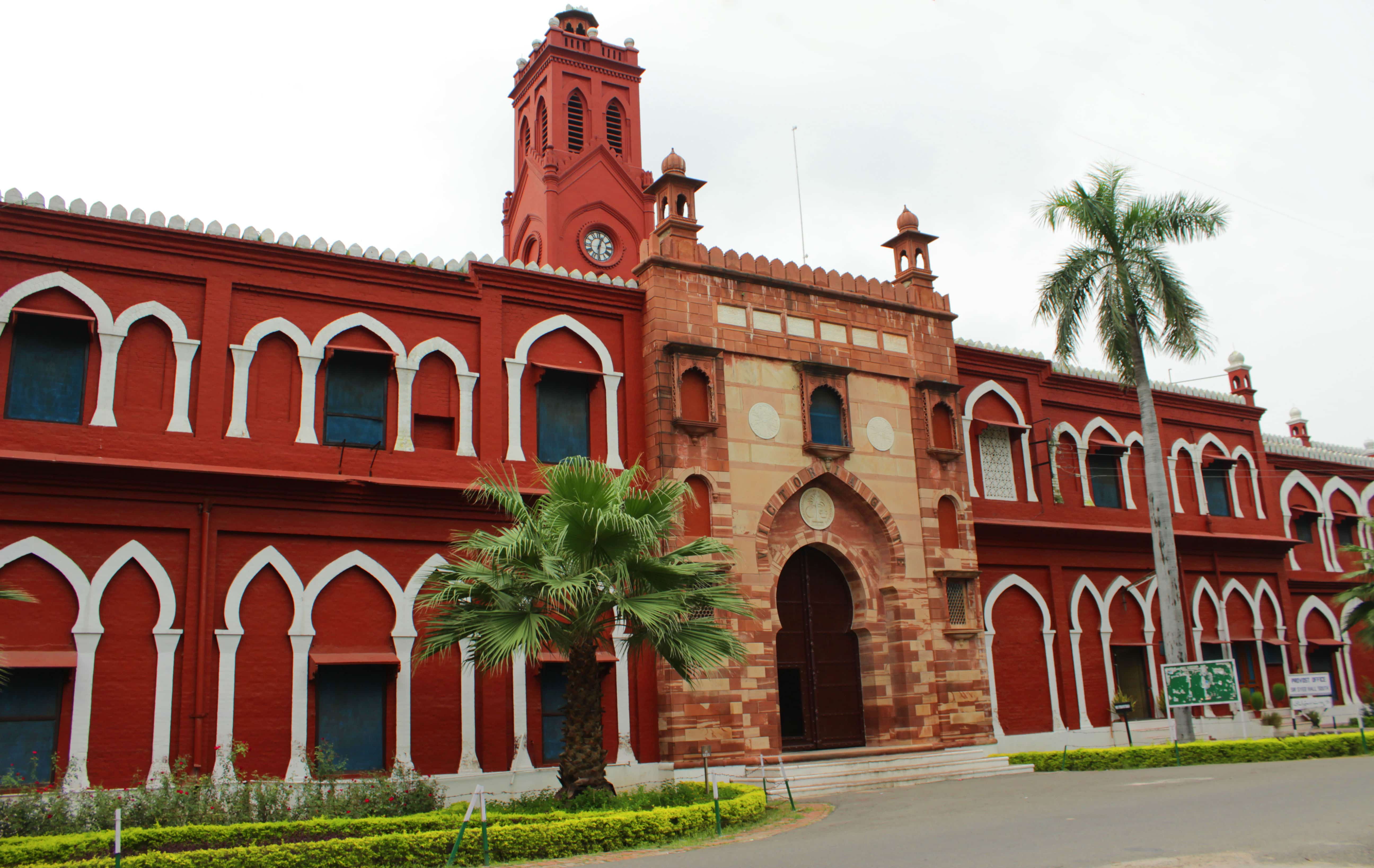
Aligarh University CampusTo review the progress of decisions taken in the VCs’Conference held in February, a one day Review Meeting with Vice Chancellors (VCs) of Central Universities was held recently.

In the meeting, three presentations were made on following topics:

  • Promoting research in Central Universities by Prof. Asis Datta, former Vice Chancellor, JNU
  • How to strengthen Women Study Centres by Dr. Meena Chandawarkar, Vice Chancellor, Karnataka State Women’s University and
  • Issues relating to persons with disabilities by Indumathi Rao.

After the presentation, a detailed discussion was held with the VCs on the agenda items of the meeting and the progress made on the action points of VCs’ conference held on 4-5th February, 2015 which are as under:

  • Most of the VCs informed that they have already started the process of filling up of vacancies of teachers and a good amount of vacancies will be filled up by October 2015.
  • 17 Central Universities (CUs) have got accredited with NAAC. Seven CUs have applied for NAAC re-accreditation and 9 CUs have applied for NAAC accreditation for the first time. Another 5 CUs have assured to apply for NAAC accreditation shortly.
  • OUt of 39 CUs, 37 CUs have introduced Choice Based Credit System (CBCS) at PG level. The 13 new CUs do not have UG programmes and 18 CUs had already introduced CBCS at UG level. All VCs assured that there preparations are complete and they will be starting CBCS this academic session.
  • UGC has developed model syllabi for 85 mainline and 18 specialised courses and universities are free to modify syllabi to the extent of 30 per cent in line with the present provisios of migration warranting 70 per cent commo content.
  • UGC organised eight regional workshops covering entire country, to fecilitate implementation of CBCS.
  • Voc programmes in 19 CUs has been started
  • Community Colleges have been approved for 19 CUs
  • 25 CUs have set up Community Development Cells (CDCs)
  • 19 CUs have adopted/identified villages for their development
  • Other issues like Campus Connect Scheme,creation of Centres of Excellence,Establishment of Innovation Clubs, Alumni involvement, Inspired teachers’ Network, Industry linkages etc. were also discussed, where most of the Universities have either made satisfactory progress or are in the process, giving them high priority.

NIELIT flagged off cycle rally in support of Digital India campaign

R.S.SharmaTaking forward the mission of the ongoing Digital India Week, the National Institute of Electronics and Information Technology (NIELIT), a body with the Department of Electronics and Information Technology (DeitY), Ministry of Communications & IT, Government of India has spread the message of digital literacy through a cycle rally from Electronics Niketan (CGO Complex) to Harijan Basti (Valmiki Colony), Mandir Marg, with a view to sensitise the local residents of Harijan Basti about ‘Digital India’, which is an enabling framework, irrespective of age, gender, caste or religion.

Over 50 officials of NIELIT, DeitY, Industry, etc participated in the rally followed by an interactive session with the local residents led by Dr. Ashwini Kr. Sharma, MD, NIELIT.

The NIELIT officials elaborated on the benefits of various e-Governance initiatives, including digital literacy, Swacch Bharat, Make-in-India etc. The initiative showcased the Government’s initiatives to make access to technology and governance an extremely easy process, besides highlighting the endeavor of the Government in ensuring that the information regarding various Schemes of the Government reaches to the citizens of the country.

RS Sharma, IAS, Secretary, DeitY flagged off the cyclists from Electronics Niketan.

He said “A strong base will enable us to take forward the Digital India Mission and build a knowledge economy. As such, it is imperative that we reach out to all corners and sections of society and educate them about digitisation.”

Dr. Ashwini Kumar Sharma, Managing Director, NIELIT said that it is our humble endeavour through the cycle rally to move beyond religion, caste, class to spread awareness about the various components of Digital India, especially to the underprivileged sections of society.

NIELIT has trained over 20 lakh students in the last two decades across 31 NIELIT centres besides a network of about 900 accredited training partners and nearly 6000 facilitation centres. More than 9 lakh candidates have been skilled by NIELIT in 2013-14 as against about 4 lakh in the previous year (2012-13).

UN report accolades Indian primary education system

adolescentsThe UN Educational, Scientific and Cultural Organisation (UNESCO) and the Education for All Global Monitoring Report (EFR GMR), study reveals that India has made a progress in providing primary education to its children but has failed to achieve the progress in lower secondary education and has the largest number of drop outs.

According to the report, 124 million children and adolescents are now out of school while international aid to education continues to remain below 2010 levels.

The report highlighted that more than 16 million adolescents of lower secondary schools were not enrolled in schools in 2011. Other countries namely Mexico, Bangladesh, Indonesia, Niger, Pakistan, and the Syrian Arab Republic had more than 1 million children out of school.

The report has also mentioned about the financial resources that India provides to help children with disabilities to attend the mainstream schools and adapt school infrastructure. Teachers are also given training on inclusive education, with resource centres established to support clusters of schools.

India has seen a reorientation of external support from basic to secondary education in 2012 and 2013 respectively. According to the latest UNESCO statistics there were more than 0.5 million out of school children in primary section of nearly 19 countries. The report also highlighted that at least one million children were denied the right to education in India, Indonesia, Kenya, Niger, Nigeria, Pakistan, the Phillipines, South Sudan, Sudan and Tanzania.

LATEST NEWS