


Home Blog Page 932

Smriti Irani approves National Academic Depository scheme

Smriti Irani has approved National Academic Depository (NAD) scheme. The scheme was brought forward during UPA-2 and it aims to create an online database of nationwide board and university certificates that is implemented by CBSE (Central Board of Secondary Education) on a pilot basis. After being explained about the NAD project, Smriti Irani wanted the scheme to be implemented as soon as possible.  She has directed ministry to come up with the documents that have already been digitized or are in process. With the approval of NAD scheme, students will be able to track their records as well as use them in case they want duplicate certificates or attested copies the same. It would also assist employers as the database can be used for the verification of certificates. Schools, colleges, boards and universities will play their role as agents of the NAD office by registering students admitted to their institutions and linking their certificates.

The ministry has already sent an advisory to central universities, institutes and school boards to join NAD.  Security has been built into the system so that certificates are not tampered with or downloaded. A student can only see the certificate without being able to edit it.At present; NAD Bill is in Parliament and is expected to be in action very soon.

HRD minister pushes hard for funds to set up 8 new IITs

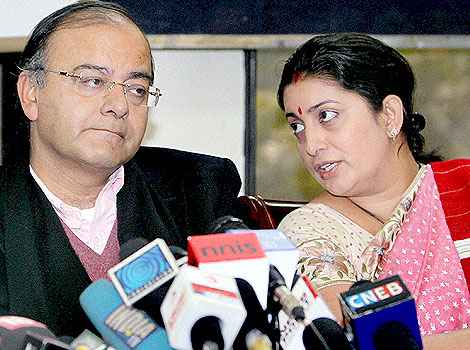
HRD minister, Smriti Irani is pushing hard for funds to set up at least eight new IITs as quickly as possible. She has also met the finance minister Arun Jaitley for fund.

Though the bureaucrats are of the view that it would be a huge challenge to find money, land and faculty. In order to implement the BJP’s poll promises, Irani wants speedy actions on it and is also seeking fund for other priority projects like Central University for Himalayan Technology and a national e-library.

States like Kerala, Karnataka, Jharkhand, Uttarakhand, Goa, Sikkim and Chhattisgarh would benefit from Irani’s proposals. Seemandhra has already been promised an IIT as part of the Andhra Pradesh bifurcation.

The number of IITs turned out to be 16 in 2009 but the new ones are facing challenges such as fund crunch. About Rs 12,500 crore were allotted for the IITs in the 12th Five year Plan (2012-2017). Of this only Rs 6,000 crore is set aside for the eight IITs set up in 2009.

The HRD officials argued that in the current state of the economy, investing on an expensive project of setting up eight new IITs is not possible. They also pointed out at the problems that the new IITs are already facing and some of them are operating out of make-shift campuses as land is not available. Whereas in some cases construction and infrastructure development has also been delayed.

Restructuring UGC among top 100 priorities of Smriti Irani

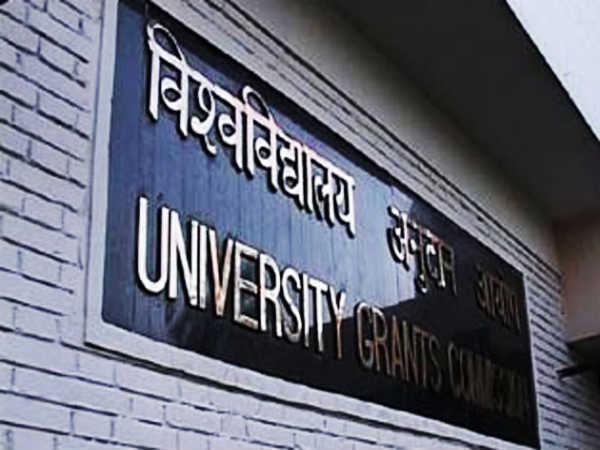
Transforming the University Grants Commission into higher education regulatory is HRD minister Smriti Irani’s top priority. She wants to restructure and refocus the UGC from a grant disbursing organization to one that maintains the standards and regulates the education sector. This is one among Irani’s top 100 day priorities.

Officials are of the view that with the growth in the sector with private players and entry of foreign education institutions has meant that the UGC would need to expand its regulatory functions. Since 1952, the function of allocating public funds to central universities and other universities was entrusted to UGC. Though there were changes in the higher education sector, the Commission’s emphasis has continued to be on its grant disbursal functions.

Irani’s focus is to keep the BJP’s poll promise of restructuring the UGC to transform it into a Higher Education Commission. The transformation will be effected by amending the UGC Act.

Ministry officials are already working on the amendments before it can be evaluated by the law minister and sent for inter-ministerial consultations, after which it will be taken up for the approval by the Cabinet and then introduced in Parliament.

Chinese students outnumber Indian candidates in Ivy League

Chinese students have outnumbered Indian candidates with the high enrollment in Ivy League campuses. Majority of Indian students planning to fly abroad for higher education dream of getting in one of the Ivy League colleges that includes Harvard University, Brown University, Yale University, Cornell University, Dartmouth College, Princeton University, University of Pennsylvania, and Columbia University. The rise in number of Chinese students getting into Ivy League colleges has increased steadily over the last decade. In 2013, 8,549 Chinese students succeeded in getting into Ivies, thus making 27 percent of the population at the Ivies.

As compared to these figures, the rise in number of Indian students getting into Ivy League colleges has been marginal. With 3,064 Indian students admitted in Ivies in 2013, they made up about 9.7 percent of all international students at the colleges. The competition to get into one of the Ivy League college is fierce as about 30,000 students had applied for undergraduate course in Harvard University for 2,131 seats in 2013 which witnessed an acceptance rate of 7.32 percent.

The data, though favoring Chinese students, does not conclusively indicate whether Chinese candidates are more attracted to the Ivy League than their Indian counterparts or if their rising numbers in League has to do with their increasing numbers in the US. However, it has been found that both Chinese and Indian students have shown interest in getting into wide range of colleges in the US, with majority of them going for doctoral/research institutions.

DU admission process commences, hike in form fees

Registration for admission in University of Delhi has begun with the revised lower cost of the centralized admission forms. Candidates from general and OBC category will now have to pay Rs. 100 and SC/ST candidates will pay Rs. 50 for online and offline registration.

Students seeking admission will have to buy the form that would be available in 18 colleges of DU: five each from north and south Delhi, two from central Delhi and three each from east and west Delhi. Candidates who want to apply in St. Stephen’s and Jesus and Mary will need to apply separately as these colleges do not come under centralized admission procedure.

With optical mark recognition (OMR) forms available in 18 colleges, students can apply in 61 colleges with 41 courses. Overall, there are 54,000 seats which include 12,150 and 14,580 seats for SC/ST and OBC applicants, respectively.

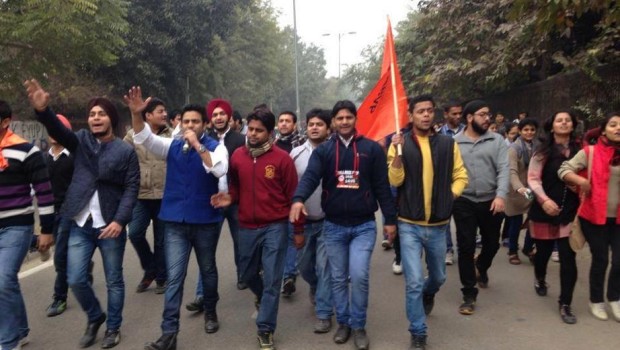
With the series of protests from different groups expected to take place, admission process is expected to experience some difficulties. ABVP activists are planning a demonstration against FYUP in all the 18 centres demanding rollback of the four-year UG programme.

ABVP to meet MHRD to seek removal of 4-year UG course in DU

Akhil Bharatiya Vidyarthi Parishad is moving to MHRD to seek abolition of the four year undergraduate programme in University of Delhi that was introduced last year. Saket Bahuguna, Delhi state secretary, ABVP, stated that University of Delhi is not following the rules of National Policy on Education which goes with the 10+2+3 pattern of education.

Bahuguna added that the other central universities, JNU and Jamia Millia Islamia, are following the conventional three-year UG course but DU is implementing four year UG course which is complex, experimental and impractical. He stated that four year UG course was introduced by the previous ruling government (Congress) which aimed to benefit foreign universities.

Adding an extra academic year is a wastage of time as well as resource that could be used for perking up educational infrastructure in DU. Raising these issues, ABVP will bring down this matter with MHRD and seek reversal of the four year UG course.

Robotics Labs to power the future of learning at Engineering Colleges

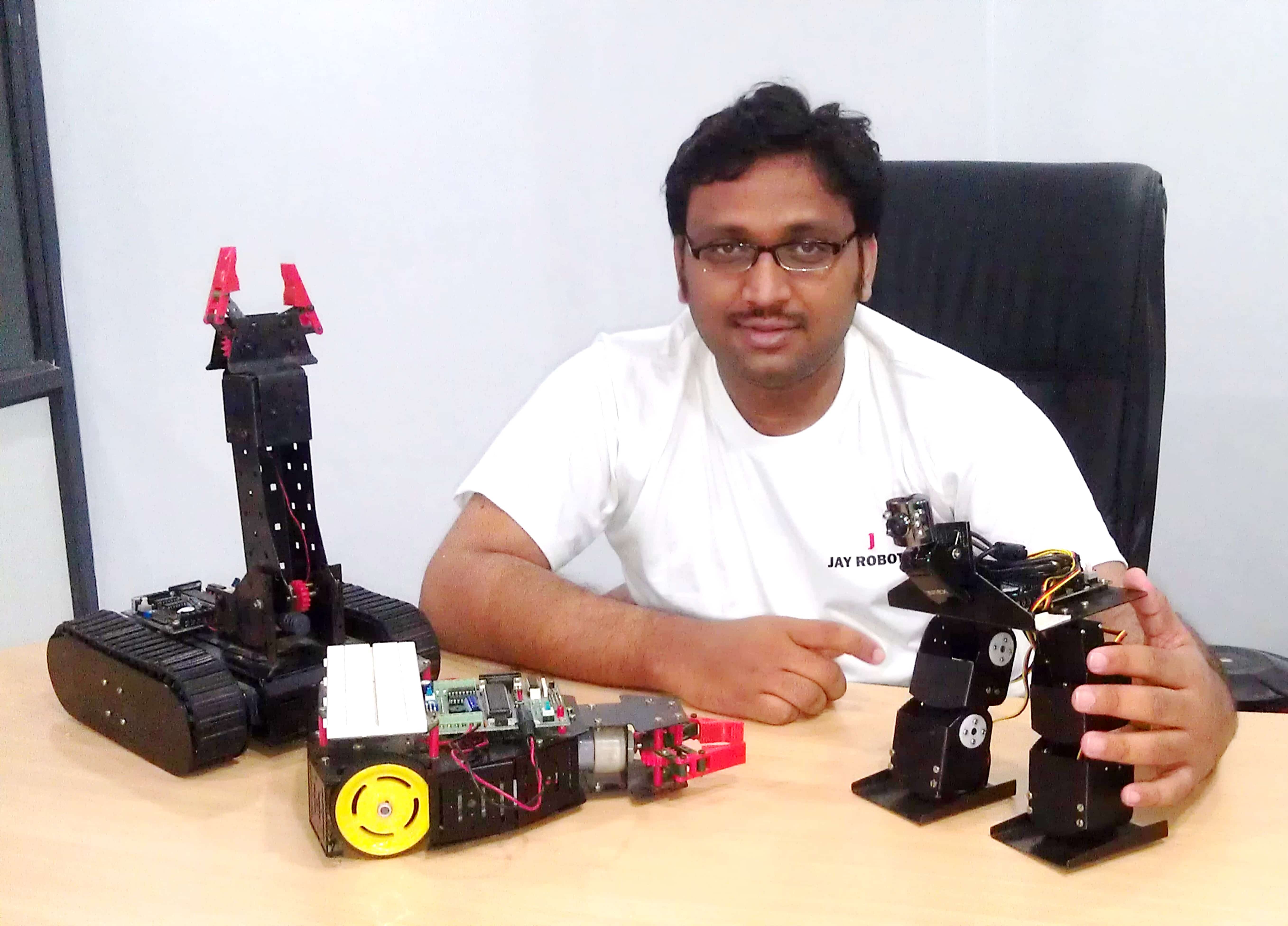
JAY ROBOTIX PVT LTD,pioneer in educational robotics, has developed a First-of-its-kind Centre of Excellence – CoE for engineering colleges across the country. The CoE is designed as a systematic and structured approach to holistic learning through robotics for engineering colleges. JAY ROBOTIX has set up their first CoE at Shri Venkateshwara Institute of Technology – SVIT Indore.

CoE will consist of a Robolab being set up at the institute. It will also have a designated and structured course curriculum. The course structure consists of practical and theoretical study of robotics concepts. The institutes equipped with robotics CoE will have access to various robots, software & hardware tools. Students will get access to a well defined curriculum where they learn and experience advanced technologies with a practical approach using the CoE equipment. This learning pedagogy will empower the students’ journey of idea, conceptualizing the idea, proto typing, validating and producing the idea through a guided approach and with emphasis on entrepreneur abilities of the students.

Speaking about the CoE, Mr. Sudhir Reddy, Managing Director, JAY ROBOTIX said, “It has been our vision to bring more and more practical learning approaches and techniques to the colleges and schools in India. This initiative will not only enable the students to learn advanced technical concepts with a practical approach, but will also develop an intuitive mindset required for innovative thinking. We will continue to enhance our offerings for the education sector and hope to establish the CoE in as many institutions as possible. This partnership with SVIT has enhanced the student’s opportunities and made a difference. “

Through this CoE students will get their technical concepts through refined courses along with working on robots such as RoboRuka, Assaulter, Docile X, Omni Wheel Robo, Wizmo etc. and other mechanical equipment & tools from the stable of JAY ROBOTIX. Also, for Industries the CoE will provide students who are technically strong and very enterprising. Students will also get opportunities to interact with industries on a project basis. This will increase the academia and Industry coordination. JAY ROBOTIX is in advanced level of talks with 10 more institutes across the country for setting up CoE and to get them international affiliations.

UGC asks Bihar universities to get NAAC accreditation

Universities in Bihar have been directed by the University Grants Commission (UGC) to get accreditation by National Assessment and Accreditation Council (NAAC). UGC has ordered universities and colleges in Bihar to apply for accreditation by June 1, 2014.

In case, any college in the area failed to get accreditation, UGC may stop grants to them from April 1, 2015. As per UGC Regulation of 2012, it is compulsory for every university to get NAAC gradation to avail UGC grants. Not a single university, out of 11, from Bihar have been accreditated by NAAC.

M R Kurup, consultant, World Bank, commented that till now about 100 colleges from the state have applied for NAAC gradation and 200 colleges have been offered Letter of Intent.

Kurup added that the World Bank is actively involved in assisting the colleges and universities in Bihar for developing their infrastructure as he feels that lack of proper facilities are affecting teaching. New concepts have been introduced like e-learning, e-library and other advanced methods that would help the colleges to remain updated with the new advancement and researches in the field of education.

Dalai Lama inaugurates The Somaiya School

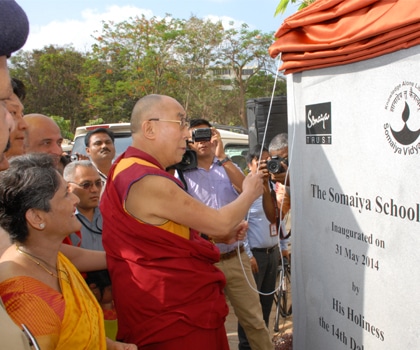
Surrounded by children playing the Lezim, His Holiness the 14th Dalai Lama inaugurated The Somaiya School.  Later, while addressing the students His Holiness talked about the richness of the ancient Indian knowledge. Further he advised on the need to work hard on building that knowledge and move forward for faster progress.

Commending the work done by Somaiya Trust on education in the rural and urban areas he commented “there is a great need for institutions to be developed who have the ethos of preserving and promoting Indian culture. India needs this kind of work. Institutions should coordinate, discuss and exchange their experiences with one another for growth and development”

The School is part of the larger Somaiya Vidyavihar campus. In order to provide students personalised attention, the teacher- student ratio has been maintained 1: 10.

Mrs Amrita Somaiya, Trustee of The Somaiya School says, the focus of the school is to build the self esteem of every child. It is done by giving an environment that encourages children wich leads to good academics. They use international methodology including Indian values. Education is imparted in multiple languages like English, Marathi, Sanskrit, Hindi and French from Grade 1.

CBSE warns schools not to accept sponsorships from tobacco firms

The Central Board of Secondary Education (CBSE) has warned schools not to take sponsorships from the companies which deal with tobacco business. This warning has been sent because many schools have allegedly involved tobacco companies or their subsidiaries, in school events for sponsorships.

Sadhana Parashar, Board director, wrote to the school saying “it has come to the notice of the Board that some tobacco promoting firms are finding some innovative ways to be involved with the school children. It is, therefore, strongly advised that no school affiliated to CBSE is permitted to allow its students to participate in the events sponsored by any firm or a subsidiary of a firm which promotes the use of tobacco in any form. Schools/students should not accept any prize or scholarship instituted by a tobacco promoting firm. It is recommended that schools should not allow any institution using brand name, emblem, trademark, logo or trade insignia or any other distinct feature directly/indirectly connected with tobacco products to be associated with students”.
According to sources, gutka or tobacco companies are involved with various NGOs that work with schools or have investment in ‘back-to-school’ products like bags, pens, books etc. Such companies sponsor school sports, debates etc, and though the logo of a tobacco product may never be featured on campus, but the group’s name is mentioned. CBSE is against this because even indirect promotion of brands linked with tobacco production or marketing is harmful for the kids.

LATEST NEWS