Home Blog Page 936

Delhi University signs MoU with University of Glasgow

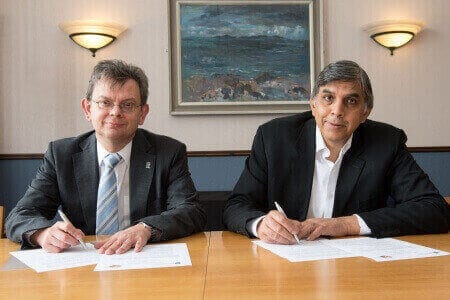
An agreement has been signed between the University of Delhi and Glasgow under which the students would receive lectures from Glasgow and vice versa through video link.

The memorandum was signed by Professor Dinesh Singh vice chancellor of Delhi University with Professor Anton Muscatelli, principal and vice chancellor of the University of Glasgow, to formalize their links. Both the universities are members of Universitas 21 (U21), the leading global network of world class, research intensive universities for the 21st century.

The programme will begin from this year when faculties in Glasgow will use video link technology to teach aspects of English literature to students in Delhi. On the other hand the Glasgow students will receive lectures in post colonial literature from Delhi. A fund of 10,000 pound has been given to this project by the British Council Knowledge Exchange Partnership as well as support from the University of Glasgow’s International Partnership Development Fund.

The first joint project will be in English Literature which will be taken by Professor Nigel Leask, Regius Chair of English Language and Literature in the University of Glasgow’s School of Critical Students and a Fellow of the British Academy.

Plans are on to provide video linked seminars for senior undergraduate students and Masters students at Delhi. It is an effort to help students of both the continents exchange ideas on literature.

Distance education courses attract more students

Nearly two lakh students in Bihar are drawn towards varied courses offered by distance education centers. Reasonable tuition fee, providing opportunities in higher education, promoting innovative mechanism, better learning and knowledge are some of the reasons that have made distance education popular among students over the years. Nalanda Open University (NOU), Indira Gandhi National Open University (IGNOU) and Directorate of Distance Education (DDE) of Patna University have been providing quality higher education to students who, for some reasons, are not in position to pursue regular courses.

In the current academic session, the total enrolment in Nalanda Open University is 1.25 lakh as compared to just 2000 in 2003. In Bihar, more than one lakh students have enrolled in 67 different courses offered by IGNOU. With its motto of ‘reaching the unreached’, IGNOU has been working hard to open its study centers in remote and educationally backward areas. Directorate of Distance Education (DDE), formerly known as the Institute of Correspondence Courses, offers degree, PG and diploma in varied courses. Apart from providing conventional courses at undergraduate and PG level, DDE has also been imparting job-oriented vocational courses. DDE admission process to different courses is likely to commence soon.

Shortage of principals in Tamil Nadu engineering colleges: RTI

According to an RTI application filed by the directorate of technical education revealed that professional colleges in Tamil Nadu are facing shortage of faculty. The data further revealed that mere four out of 10 government engineering universities have full time principals while 17 out of 41 government polytechnics don’t. Nearly 50 percent of the teachers’ posts are lying vacant in government engineering and polytechnics colleges. As against a sanctioned strength of 50 professors, there are just 33 professors in 10 engineering colleges with shortage of 130 assistant professors. In case of polytechnics, as against a sanctioned strength of 141, there are mere 7 heads of department with 993 posts of lecturers lying vacant.

As per the All India Council for Technical Education rules, it is mandatory to maintain a1:15 teacher-student ratio in engineering colleges and 1:20 for polytechnics. However, the scenario is completely different as government colleges in Tamil Nadu hardly follow the stated norms.  Dr. V Balusamy, member of Association of University Teachers stated that academic excellence is sure to falter with the hourly appointed faculties in colleges. Balusamy added that there has been a marginal decrease in the number of engineering students pursuing teaching as a profession.  Courses like mechanical and civil are the worst hit as students graduating from these branches are hired by industries.

51 BITS Pilani for Google Summer of Code programme

The Birla Institute of Technology and Science (BITS), Pilani announced that 51 BITS students have been selected for the Google Summer of Code (GSoC) this year. These students represent different BITS Pilani campuses with the largest cohort being selected from Goa campus (30), followed by Pilani (18) and Hydrabad (3) respectively. The achievement is a testimony to the quality of BITS Pilani students who have carved a niche in the industry with their performance over the years. GSoC statistics published by Google feature BITS Pilani at No. 10 on the list of top institutes worldwide (2005-2012).

The Google Summer of Code (GSoC) is an annual program where Google awards a stipend of USD 5500 each to all students who successfully complete a requested free and open-source software coding project during the summer. The ‘Google’ tag attracts tremendous participation from students across the globe.

High competition coupled with a rigorous selection process makes being part of GSoC very prestigious at the college level.

Nine Indian students win at Intel International Science and Engineering Fair 2014

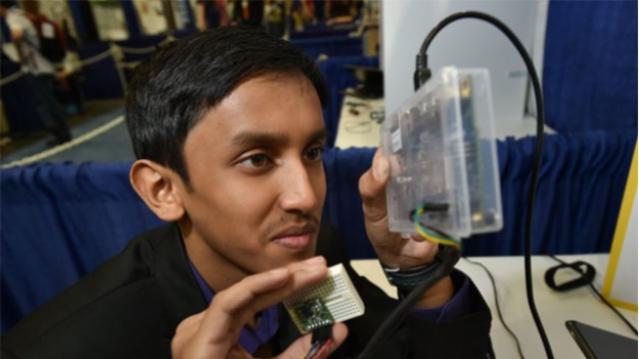
In the world’s largest high school science research competition, i.e. the Intel International Science and Engineering Fair, nine Indian students made their way out in the competition by winning awards. Abhishek Verma and Daksh Dua from Maharaja Agarsain Public School won the first award of $3.000 in the Animal Sciences category. The first position was awarded to Nathan Han of Boston with US$75,000 for developing a machine learning software tool to study mutations of a gene linked to breast cancer at this year’s Intel International Science and Engineering Fair, a program of Society for Science and the Public.

The other Indian students who won awards are Kopal Gupta and Shreya Nandy of Amity International School, Debapratim Jana of South Point High School, Deeksha Hebbar from Vivekananda English Medium School, Jaya Sagar from Government Senior Secondary School, Manali, Animesh Tripathi from Sanskriti School and Amit Sahu from DAV Public School

This year’s Intel International Science and Engineering Fair featured more than 1,700 young scientists selected from 435 affiliate fairs in more than 70 countries, regions and territories. In addition to the top winners, more than 500 finalists received awards and prizes for their innovative research, including 17 “Best of Category” winners, who each received a US$5,000 prize. The Intel Foundation also awarded a US$1,000 grant to each winner’s school and to the affiliated fair they represent. Additionally, the Intel Foundation presented a select number of students with experiential awards, including the new 11-day trip to China to attend the country’s largest national science competition, speak with researchers at Intel’s lab in Shanghai, and visit the Panda Research Base in Chengdu.

CBSE-CAER International Conference 2014

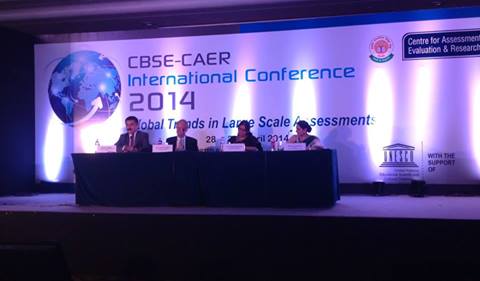
The Central Board of Secondary Education (CBSE) and Centre for Assessment and Evaluation Research (CAER) recently organized an event entitled “CBSE-CAER International Conference 2014”. The purpose of the conference was to disseminate information on education assessments and global practices across India and the globe. It was also to provide a platform for constant sharing of ideas than can strengthen global education and contribute to enhancement of student performances in classrooms. Various stake holders participated in the conference which included academicians, policy makers, school educators and noted experts in the field of assessments.

Dr Sarita Manuja, Director, CAER, stated that the two-day conference saw the academicians indentifying national and international resources that will help meet the assessment needs and develop fruitful partnerships that will promote international exchange on ideas.

This collaborative effort of CBSE & CAER aims at providing a platform for knowledge sharing and dissemination. The conference was divided into four sessions, namely, Transitioning from Norm-referenced to Standards-referenced Assessment: Perspectives and Strategies, From Examinations to School-based Assessment: Opportunities and Challenges, Technology-enhanced Assessments: The Way Forward, and Approaches for Evidence-based Decision Making.

On the occasion Vineet Joshi, Chairman, CBSE, said “Our interaction with Pearson and CAER made us realise that we are better off de-emphasising external exams. It is very important that as educators we are not only able to provide in-depth education but we are also able to judge the potential of the child aptly. With CCE, CAER has shown us the way to help children develop themselves better.”

The speakers, amongst others, included Shri Vineet Joshi(Chairman-CBSE), Dr. Sadhana Parashar, (Prof & Director -Academics, Research, Training and Innovations – CBSE), Prof. Jim Tognolini (Senior Vice President, Research and Assessment, Pearson plc. and Professorial Fellow, Wollongong University-Australia), Dr. Jon S. Twing (Executive Vice President, Pearson) and Prof Jo-Anne Baird (Director, Oxford University Centre for Educational Assessment) among others.

A Bumpy Ride For New IITs

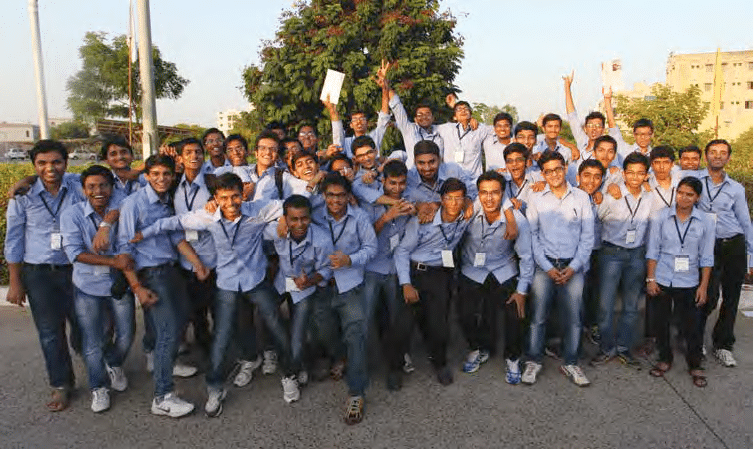
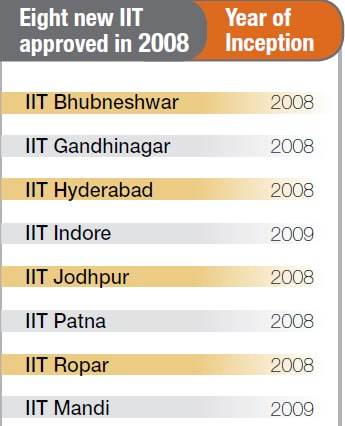
Eight new IITs came into existence in 2008, making quality education available to more students. Unfortunately, the new IITs have been receiving a lot of flak for not being on par with their older brethren in terms of faculty, infrastructure and students, and tarnishing the brand IIT. Anushi Agrawal of Elets News Network (ENN) finds out how fair is it to compare the six-year-old institutes with decade-old institutions and the advantages that new IITs have in experimenting and inducting new ideas to achieve excellence

Indian Institutes of Technology (IIT), the premier institutes for engineering in the country, figure prominently among Indian higher education institutions known outside the country. They are internationally respected for the quality of their teaching and for the quality of their graduates. They have one of the most expansive selective processes in the world, where more than 500,000 students take the entrance exams each year. The Indian education system rests its hopes on them to break into the world college rankings, which has been an elusive dream for India till now.
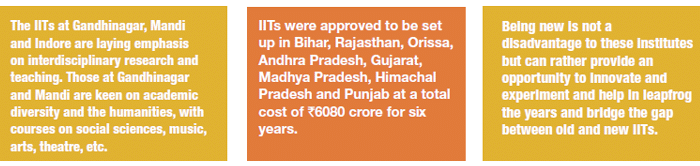
Established in 1950 in Kharagpur with more centers in Mumbai (1958), Chennai (1959), Kanpur (1959) and Delhi (1961), the government of India cleared the establishment of eight more IITs in 2008. The IITs were approved to be set up in Bihar (Patna), Rajasthan (Jodhpur), Odisha (Bhubaneswar), Andhra Pradesh (Hyderabad), Gujarat (Gandhinagar), Madhya Pradesh (Indore), Himachal Pradesh (Mandi) and Punjab (Ropar) at a total cost of `6080 crore for 6 years period with the aim of increasing the output of high quality Engineering and Science graduates, post graduates and PhDs, teachers for Engineering and Science subjects at College/University level and research and development and Intellectual Property generation in Engineering and Science,. Approval was also granted to form societies for creating legal entities for new IITs. It is to be noted that 90 faculty positions were sanctioned for each of the new IITs.
It has been a roller coaster ride for the eight new IITs since then. They have had their share of accomplishments and pitfalls over the years. While some of the new IITs have had a good placement and boast of high quality research publications, foreign tie-ups, quality students, there have been some disappointments as well. Even after six years, these institutes face the problems associated with establishing new institutes, like poor infrastructure, location disadvantage, shortage of experienced faculty, and difference in average packages offered. But the most daunting task for new IITs is to carry the baggage of Brand IIT. In six years, the new IITs are expected to be on par with the 50-year-old institutions. “The current buzzwords in higher and technical education are access, affordability, equity, excellence, expansion, inclusion, quality, etc., which are largely absent during the initial years. While it will take some more time for the new IITs to evolve into mature centres of excellence, they have several things going for them,” says Dr R Natarajan, former Director, IIT Madras and former Chairman, AICTE.  Undoubtedly, IITs have been producing highly skilled and competent professionals, researchers and academicians that have dazzled the world with their brilliance. This is the single most important reason which attracts a large number of students to these institutes. But when the students start having the same expectations from the new IITs, it is a cause for concern. The new institutes are on a bumpy ride to achieve the level of IITs’ excellence, as they were set up by an Act of Parliament, without any ground work.
iit-dl

eight-approved-iit
Where lies the problem?
When the government declared in 2008 that it would open eight new IITs, academicians criticized the move as well as the timing of the declaration. It was just before the general elections in 2009 when eight new IITs were announced. The government received flak from many quarters for its decision to open IITs without any planning. Prime Minister Manmohan Singh’s own scientific adviser CNR Rao called it a disaster. “Opening so may IITs in one year is a disaster. I had no idea that so many IITs have already come up in our country. This is not a play. To open IITs, you need proper planning. There are makeshift campuses and some are even attending classes in old IITs,” said the renowned scientist in 2008 while attending an event at the Federation of Indian Chambers of Commerce and Industry (FICCI). Union Minister Kapil Sibal, who was Minister for HRD, Science and Technology and Telecom in 2011 also pointed out that the eight new IITs that were permitted to set up in 2008 do not have the necessary infrastructure and are not up to the mark, making it difficult for the country’s prestigious institutions to retain faculty.

The Minister blamed the state governments for not allotting the required land for setting up permanent campuses for these institutions. Therefore, problems for new IITs started right from their inception. Since the establishment of new IITs was not backed by proper planning and ground work, they continue to suffer its implications even today. As the institutes were opened in a rush, no planning was done for providing quality intellectual and infrastructural resources. “Some of the new IITs suffer from problems like accommodation and working from multiple campuses. The policy has been implemented in a hurry. Now, it has become a double challenge for new IITs to manage the existing campus and overlook the progress of new campus. Some preparation should have been done before opening new IITs,” says a concerned Professor MK Surappa, Director, IIT Ropar. All the eight IITs are still functioning from temporary campuses and have not been able to get the permanent campus constructed because of several reasons like finalisation of land and delay in construction activity. This has hindered the growth plans of the institutes. Since they are working out of temporary campuses, it becomes difficult to provide accommodation to faculty members. “The new IITs, during the initial years, operated from temporary campuses, with many problems. Until the new campuses are fully developed, they will suffer from this disadvantage,” warns Dr R Natarajan.

All the IITs have begun the construction of their permanent campus and most will be completed within two years. Currently, most of the new IITs have infrastructural issues. Students complain of lack of proper space in classrooms, labs, library and sporting facilities. Some of them do not have sufficient accommodation facility for faculty which becomes an important concern as most of the new IITs are located in remote areas and the faculty is not comfortable travelling long hours every day to the campus. Setting up IITs in remote locations has proven difficult for the institutes. Commenting on the problem of being located in a remote area, Professor Surappa says, “Government should not start any institution of higher learning like IITs in remote locations. It is very disadvantageous. People should be able to fly in and fly out. At the same time, it would have been different if we would have been based in Chandigarh. The resources are very limited here. It slows down the process of growth of an institution.”
banner-iit


For the 12th Five-year Plan, government had allocated nearly 12,500 crore for the IITs, of  which the new tech schools were to receive a little over ` 6,000 crore. But construction delays and rising  cost of infrastructure developmentpushed the funding requirement of the new IITs alone to 14,000 crore
r-natarajanThere will be comparisons between the older ones and the newer ones; this is inevitable. In a few years, say 3-5 years, the newer ones and the older ones will be more similar and the comparisons will be fairer
Dr R Natarajan, Former Director,
IIT Madras and 
Former Chairman,
AICTE
mk-surappaThe policy has been implemented in a hurry. Now it has become a double challenge for new IITs, to manage the existing campus and overlook the progress of new campus. Some preparation should have been done before opening new IITs –
Prof MK Surappa,
Director,
IIT Ropar


 Opening IITs in remote areas also affects their ability to hire good educators. As Dr R Natarajan points out, “For the faculty members, some of the major sources of need and attraction are, in addition to job satisfaction, a job for the spouse, a school for the children and a hospital for the parents. Until these are developed, either within the campus or in the vicinity, they will have to put up with much inconvenience.” Most faculty members are not ready do that, making it difficult for the new IITs to attract and retain talent. At the same time, senior professors from the older IITs are not willing to move to newer ones. “We look for teachers who have done research work, mentoring work, teaching, and take administrative responsibility. Such faculty, which is there in old IITs doesn’t move to new IITs. Lack of mobility of IIT faculty has further reduced the pace of development of new IITs,” says Professor MK Surappa.

Dr Sudhir K Jain, Director, IIT Gandhinagar feels, “Higher education in India generally and all IITs, new and old, are facing challenges in faculty recruitment. In our case, we have addressed the issue with a vibrant visiting faculty programme that brings faculty from all over the world. The only challenge we have in faculty recruitment is self-imposed, in that we are striving to hire only the best scholars for our institute.” Also Professor MK Surappa observes that “old IITs have a system in place, faculty take administrative roles as well. Our new faculty is not sure how to solve a particular problem and they turn to the director for the same which make the process slow.”


The new IITs attracted a good number of companies for their campus placement. But still “there is slight hesitation from company’s side in hiring from new IITs. The number of companies coming to older IITs like IIT-Delhi and IITMumbai are certainly more than what comes to our campus. There is a mental block in this regard. Moreover, there aren’t good hotels in Ropar and we have a modest guest house. Hence, recruiters have to put up in Chandigarh and travel to Ropar every day for the recruitment exercise, which is not very convenient for them,” observes Professor MK Surappa.


The six-year-old IITs have a huge name to live up to. There are misconceptions about the quality of students and faculty at these institutes. In truth, these institutes too admit the creamy layer of the students taking the entrance exams. The new IITs are part of the group that selects 10,000 students out of 500,000 appearing for IIT-JEE, so they too get the best of the lot. Moreover, each of the new IITs is being mentored by an older IIT so that the traditions and practices at all the IITs remain the same. Pointing out that the students from new IIT are at equal pedestal with the students of old IITs, Dr Sudhir K Jain says, “Nearly 10 percent of our graduating students from the first two batches are pursuing studies at some of the world’s top institutions. Nearly a third of our graduated students have studied abroad. On the placement side, well over 90 percent of students who registered for placement through our student placement office were satisfactorily placed. Leading companies, such as Ricoh, Infosys, National Instruments, GSFC, DRDO, Cognizant, Dover Corporation, Goldman Sachs, Texas Instruments, Tata Power, L&T, Eclerx have recruited our students because they recognise that something distinctive and different is taking place at IIT Gandhinagar.” It is a fact that only the students at the top of the heap get the opportunity to study in these institutes. “Admissions to the new IITs and the older ones are through the same JEE; for the more preferred branches, such as Computer Science and Engineering or Mechanical Engineering, the new IITs are getting top ranked students. The quality and qualifications of the faculty members are similar, the curricula and the Teaching- Learning-Assessment processes are comparable and the research culture and performance are similar,” says Dr R Natarajan. He also warns that “there will be comparisons between the older ones and new ones; this is inevitable. In a few years, say 3-5 years, the new ones and the old ones will be similar and the comparisons will be fairer.”

expriments

Eight new IITs that were permitted to set up in 2008 do not have the necessary infrastructure and are not up to the mark making it difficult for IITs to retain faculty
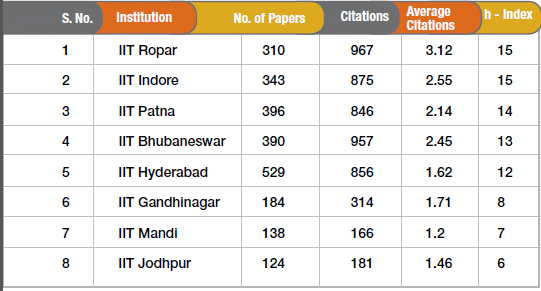
citiation

The way forward
For the 12th Five Year Plan (2012-17), the government has allocated nearly `12,500 crore for the IITs, of which the new schools are to receive a little over `6,000 crore. But construction delays and rising cost of infrastructure development has pushed the funding requirement of the new IITs to `14,000 crore. It is a long road ahead for new IITs before they can be on par with older siblings in terms of infrastructure and putting a basic system in place, but they have many things going for them. “The new IITs do not have any baggage or legacy issues. They have come into existence when technology is playing a significant role in technical education, such as the availability of several technology tools, learning resources and tech-savvy faculty members and students. Their (planned) campuses are more modern and are better planned. They have an ambition to be better than and different from the older ones,” says an optimistic Dr R Natarajan.
The new IITs need to leapfrog and achieve in few years what the older IITs have achieved in decades. Interestingly, the new IITs are better equipped to do it. Their new and permanent campuses have state-of-the-art facilities. They have the liberty and opportunity to innovate and experiment in establishing the new institute. “As a new institution, we are more nimble and flexible than older institutions. Naturally, we don’t have the same infrastructure and systems. But we have leveraged these to our advantage. For instance, onethird of our students who we send for studying abroad, or the nearly 15 to 20 per cent of the visiting faculty at the institute, add an exciting global dimension to the educational experiences of our students and faculty,” shares Dr Sudhir K Jain. He further adds proudly, “Three of our undergraduate students last year registered US patents. Nearly a third of them will get overseas experience. We offer exceptional compensation to our graduate students and upto `2 lakh to PhD students to present papers at international conferences. In addition, we offer $12,500 for a semester abroad for our PhD students. I believe very few institutes can match our educational experience and student support.”
The old IITs took almost five decades to prove their mettle. Now they have a system and hierarchy in place which makes it a little difficult for them to tackle fresh challenges or change their style of working. The new ones have the opportunity to deal with the problems, fresh ideas and initiatives. They should be aiming to break away and experiment with different strategies and not just copy the older IITs. Some innovation can indeed be seen in these institutes. The IITs at Gandhinagar, Mandi and Indore, for instance, are laying emphasis on interdisciplinary research and teaching. Those at Gandhinagar and Mandi are keen on academic diversity and the humanities, with courses on social sciences, music, arts, theatre, etc. The problem of faculty crunch can also be tackled if the faculty is given ample opportunities for research. They will also opt for a new IIT, irrespective of the remote location of the campus. The new IITs are also investing a lot of time and effort in developing their new campuses. They are enthusiastic about inducting new ideas into their campus buildings. IIT Gandhinagar takes extensive inputs from students in terms of designing the new campus and also orgainses picnics at the permanent campus’ construction site. Dr Sudhir K Jain at IIT Gandhinagar also emphasises on community outreach to help sensitize students on need to work towards betterment of underprivileged members of the society. IIT Jodhpur also desires to have a green and interactive campus and it’s quite possible for them to do so as their campuses are being built from scratch. Such changes are difficult to make for old institutes.
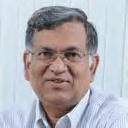
sudhir-k-jainWe have the advantage of the IIT brand and the IIT experience, as well as the nimbleness and the global context that allows us to dream big and bigger.-
Dr Sudhir K Jain, Director,
IIT Gandhinagar


Clearly being new is not a disadvantage to these institutes but can rather provide an opportunity to innovate and experiment and help in leapfrog the years and bridge the gap between old and new IITs. If implemented well and executed diligently, the advantage of being new can actually put the new IITs ahead of their veterans. An enthusiastic Dr Sudhir K Jain said, “Our achievements and aspiration of becoming the best educational institute in India and among the best in world is possible because we are new. We have the advantage of the IIT brand and the IIT experience, as well as the nimbleness and the global context that allows us to dream big and bigger.” Going by the current rate of progress and enthusiasm among the members of new IITs, it is no wonder that they will come on par with the old one in matter of years. “New IITs are good as old ones. Eventually the performance and outcome of an institution will answer all the doubts and misconceptions. People will recognise the new IITs and verifiable data will answer all the queries,” says Professor MK Surappa. But new IITs should realise that their real competition is not the old IITs but the Ivy League institutions.

They should aim at making a mark in the world rankings for India. “We are laying the foundations with the quality of our faculty, the strategic development of our infrastructure, and the evolution of our institutional culture to aspire to be among the best in the world,” says Dr Sudhir K Jain. The way forward for new IITs is to go global and not be restricted to being on par with old IITs or being best in the country. Dr R Natarajan sums up on a positive note, “They should benchmark themselves with world class universities, and aim to match them and be better than them. All world class universities are researchfocused, they should create researchled institutions. They should establish partnerships with our strategic sectors, such as Space, Defence, Nuclear Energy, and the several industry sectors, in order that their academic activities are in sync with their needs.”

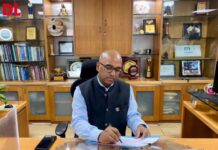
Crafting a World-class Knowledge Centre

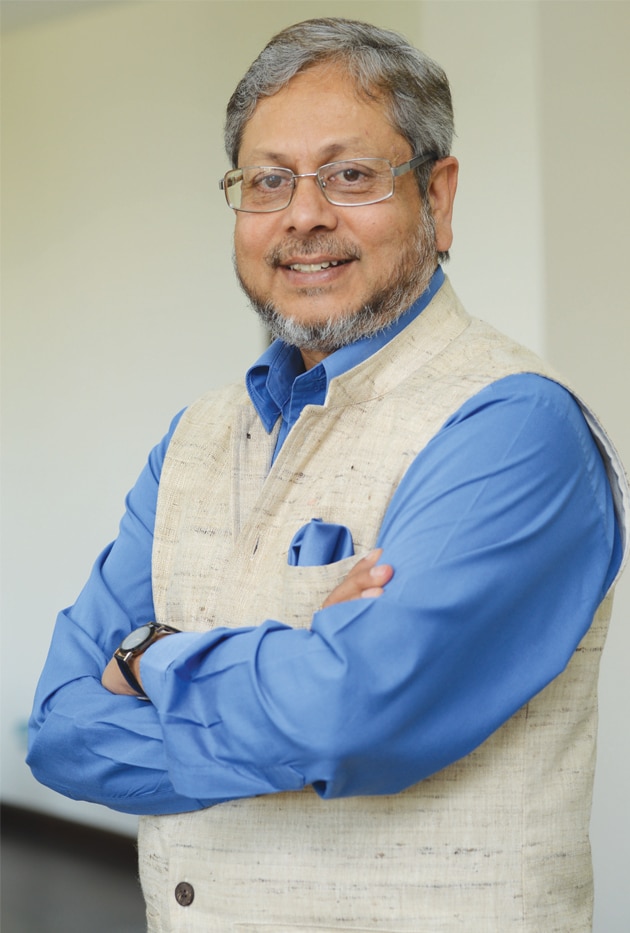
Dr Surajit Mitra, Director, Indian Institute of Foreign Trade (IIFT)
Dr Surajit Mitra,
Director, Indian Institute of Foreign Trade (IIFT)

Dr Surajit Mitra, Director, Indian Institute of Foreign Trade (IIFT) talks to digitalLEARNING’s Ankush Kumar about the role IIFT plays in disseminating knowledge to India and overseas

How has been your journey in the education sector? What made you move to the administrative field?
I started my career as a teacher and taught in Delhi University, Jawaharlal Nehru University and North Eastern University for a total of three years and then, I shifted to administration. Even when I was in administration, I used to take off for academics. I took three years off to do Ph D in Cambridge and went to Oxford for a year to teach. And for a year, I was visiting professor for Centre for Policy Research. I have been doing it off and on. My shift from academics to administration happened by default. I have put 36 years in administration, before I finally, came back to academics.

Does teaching political economy helps in getting into administration?
In the beginning of my career at JNU, I used to teach political economy as we had only one centre at that time, Centre for Political Studies. There wasn’t any economics department in JNU. So, I specialized in political economy but most of my teachers were economists.

Administration is not a raw structure of taking dare administrative decisions. Today, government, policy making, etc. are linked to economy and society. If you don’t have a good understanding of what is happening, it becomes very difficult on anybody’s part to do a good job. For example, if you are in finance ministry and don’t understand the basics of inflation or fiscal deficit, you are in  trouble. Now, administration is also becoming very specialized. If you are in petroleum ministry and don’t understand the economics of energy, then, you can’t be a successful bureaucrat. It is also becoming very demanding on the part of the administrators to move from one department to another and you are also given a very short span of time to acquire the skills of the department. In a way, it is very challenging.

IIFT was set up by the government to help professionalize the country’s foreign trade management? Still we are counted among import-centric nations. Is there a need to set up more such colleges? 
IIFT was actually established in 1963 by Ministry of Commerce with the vision of Pandit Jawaharlal Nehru, who thought of having an institution, which facilitates foreign trade. But it has gone through a great deal of metamorphosis over the last 50 years. We are celebrating our 50th year, which started from May 2013. Firstly, it became a management institute generating human resource for external trade. It did well in this role. Then, it became a research centre and also took up special things like SME development, WTO, Technology Trading, etc. Today, it is a full-fledged academic institution and a think tank. It is also a coronary institute to the various departments of the government. We give advice on the policies too. We have three-fold business unlike most of the academic institutions. It’s a very challenging and demanding job. We are innate importing country, which will continue till we find alternatives. We are innate importer due to energy imports. As an emerging economy, we will require more and more energy. Energy requirements and import requirements have to be balanced with the exports, which has been done successfully. Going up to 400 billion dollars of export is not a joke. In last 10 years, the exports have tripled. Now, the world is very much competitive. We have a number of institutions today who are looking  after particularly exports. But there are no standards. So, we need to upgrade these institutions to a level, which IIFT has achieved. Instead of making many institutions, we require robust and efficient institutions.

The craze for MBA and particularly International Business has gone down over the years? What exactly seems to be the reason behind it?
Your observation is slightly superfluous. It is absolutely need-based requirement. When exports are going up from 100 billion to 400 billion, we require manpower training, people who understand world economy, etc. And secondly, simultaneous processes are working like globalization. And then organizations like WTO are coming in who define rules of the game. People require training and need to understand market. If he doesn’t know what a supply chain is, how is he going to handle it? Nobody is going to teach him. We have to learn by ourselves and for that, we need to have a formal training. So, there is a great deal of requirement for what is called export-oriented training in our country. After about 10-15 years, each village will start exporting. Can you understand how much expertise will be required in the country to help the exports? Therefore, there will be a requirement whether there is a craze or not. The craze comes from the pay package and facilities available. For last three years, there is global recession. So, pay packages have shrunk and people are looking for alternatives.

How does recession impact the institutes providing international campus placements?
It is both, a challenge and an opportunity. Challenge to the extent that due to recession, companies’ intake is less. Institutions like us, who believe in 100 percent placements don’t get right kind of placement. It’s a challenge for us. The students also become very choosy because of the pay package. It is also an opportunity because in slowdown, people require expert handling and knowledge. So, we orient our students to see how they should face this challenging time when they take up jobs. When you look at our placement profile, lot of people from financial organizations has taken our graduates. Because they found them adequate to their job as they are undergoing massive problems. We train them accordingly.

“We need to upgrade the institutions to a level, which IIFT has achieved. Instead of making many institutions, we require robust and efficient institutions”

IIFT relies on research work. How do you think it helps in grooming the students?
We as an academic institution had a role to play in this country. We thought of providing people with indepth knowledge and research as they will be teachers of tomorrow. More than 75 people are currently working on various aspects like export, trade, etc. Faculty also learns in the process.

Tell us some of the key achievements of the institute under your leadership.
Under my leadership, the third EIITF Conference was organized in January 2013 where delegates from 11 countries participated and a total of 66 papers were presented by the scholars. The Centre is also planning to launch ‘Business Incubation Cell’ towards hand-holding entrepreneurs and MSMEs to reach out to International Markets. Recently, the Centre has signed an MOU with CII for closer cooperation to develop MSME sector.

Corporate Tie-ups Open Many Doors

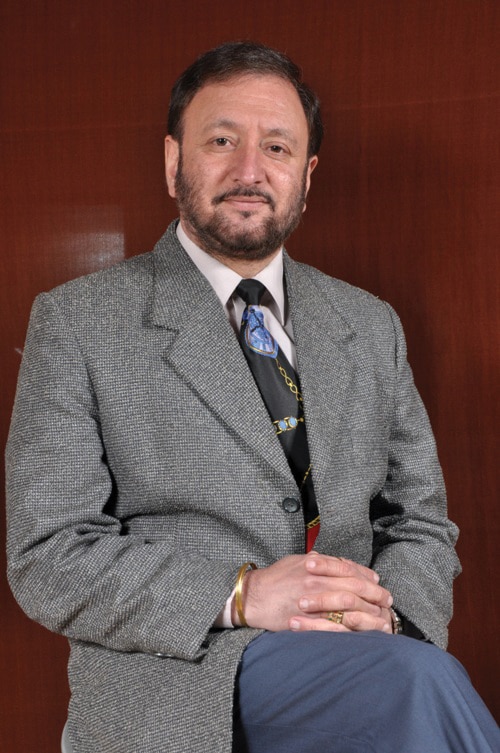
Dr Zora Singh, Chancellor, Desh Bhagat University
Dr Zora Singh,
Chancellor, Desh Bhagat University

Dr Zora Singh, Chancellor, Desh Bhagat University talks about the importance of corporate tie-ups for a private university

What is so unique about your University? Which is the most preferred course among students here?
Desh Bhagat University is known for cultural sharing, where students are exposed to meet different nationals from all over the world, and they learn from each other. Despite the fact that we are located in the semi-urban industrial town of Mandi Gobindgarh, we have been successful in creating international bridges through continuous student and faculty exchange programmes. We are a university that prepares a student as an entrepreneur, as we train students for employability. We believe in practical exposure than theoretical, so we plan our programmes in such a way that a student becomes job ready by the end of his course. Preferred courses are many, but to name a few, there is a great demand for management, computer science, science and engineering- related courses. Professional courses like airlines, tourism, hospitality, media and animation are in huge demand these days.

How are you planning to stay afloat in such a cut-throat competition among other universities/ institutes?
The present day educational scenario, especially that of the higher education, is very raw right now as these newly developed universities are still figuring out the right approach to meet the needs of the students seeking higher education. However, the fee structure is still a gray area with not much clarity. We are working on our strengths and our own catchment area. Being an 18-year-old educational group, we don’t believe in just enrolling candidates to churn amounts from them. All our policy decisions are based on providing quality education through our strengths and following key parameters of self assessment and internally-developed standard operating procedures. We have our own revenue models and best practices that help us stay afloat and maintain a brand of quality education.

How important are corporate tie-ups for private universities in improving students’ placements?
In today’s scenario, corporate tie-ups have become quite important for a private university for the placements of its students. Various factors that are explored through corporate tie-ups of a university with leading organizations that will ultimately act as catalysts towards final placements of students are below: • Corporate tie-ups open up the doors of designing a common platform between an industry and an academia to discuss the module of curriculum for integrating academic syllabus. Through this process, students will regularly update themselves with industry skill set & this will increase the employability level of students in placing them in various organizations by a university. • Corporate tie-ups also accelerate the process of mutual acknowledgement of sharing the experience, expertise and capabilities of private universities and organizations & give due importance to collaboration & working relationship in education.

What are some of the advantages that you have over Government Universities?
Private universities are each intensely unique. From differences in curriculum and academic standards to mission statements, each private university creates an atmosphere that is truly its own. The students – not politics, are the priority of the private universities. Instructors set the bar high at the beginning and keep encouraging the students to clear the bar over the four years of their stay. Most strive to cultivate the ideal atmosphere for academic success of their students. As a result, their students become profoundly capable contributors to the society.

Partnership, a Key to Capacity Building

Even as the country debates on Foreign Universities Bill, Professor Michael Thorne, Vice Chancellor, Anglia Ruskin University, in an interview with Mohd Ujaley, says “passing of Foreign Universities Bill will enhance the quality of education in India and be a game-changer”

What are the major trends you see in global education, especially after dismal performance of the major world economies?
I think, without any doubt, the future of the world depends on education for two reasons. One is to bring the world together for political stability. The more, we understand each other, the better we engage. Second reason is that the economies of all the countries are going in the same direction and the future will depend on how our educated work force acts. So, being involved in university education, the most important thing to me is to educate as many people as possible till university level.
I also see a lot of partnership happening for capacity building. India is a very vibrant democracy and we need to engage with each other at various levels to improve the quality, increase capacity of our universities and teachers.

Foreign Universities Bill is pending in Indian Parliament. It is believed that if it gets passed, the demand for international education will decline as Indian students will have an opportunity to get the same in India itself. How do you look at it?
We look at it the other way round. Countries, which have already allowed such partnerships, have been benefited in providing quality education. It has also added to the capacity of the country to get more people educated till university level.
We are hopeful that bill will be passed because this legislation has potential to bring foreign universities to India and thereby increase the capacity of India to educate more people. There is a shortage of quality staff worldwide so, partnership can bridge this gap. For example, UK is adding the capacity of university education of Malaysia for many years, although there are still quite a lot Malaysian students who come to UK, but there are also very large number of Malaysian students, who are being educated the same course in Malaysia in partnership with Malaysian universities that has really worked well for both the countries.

As you mentioned about collaboration, do you have any plan to partner with any of the Indian universities on capacity building of the teachers?
At this moment, we don’t have any plan, but we are waiting for the bill to be passed. The legislation will allow us to do the things, which we have been doing in other countries. For example, in China, we work in collaboration with a University in Beijing, where we share students. The students study some year of their course in China and while some time in UK with us. The faculty members also come along with them. We also send our staff to teach in China, this is a two-way partnership and it really works very well.
We have also been asked to assist in training the teachers of some universities as UK is good in this domain. So, for me, passing the bill will complement with what is going on here in India and across the world. It will add to capacity and change the way we impart education. May be the number of students going to other countries for studies will change, but the partnership and exchange will grow.

One of the challenges of international education is to deal with the issue of cultural shock. There have been cases in the past, especially in Australia, where Indian students were mistreated. How do you intend to check it?
Nobody seeks international education to put themselves through cultural shock, it is indeed a challenge. We care for students coming to UK. I take personal interest in students’ affairs and their adjustment to our university culture. I feel when you are 7,000 miles away from your home, family needs to be assured that their offspring is doing well. So, we take it very seriously. There is a lot of activity in place to help students cope with cultural shock.

LATEST NEWS