
Home Blog Page 949

IIT-Gandhinagar plans a new lab on carbon dating

IIT Gandhinagar plans to set a new lab for carbon dating. A centre for archeological science has already been set up in the institute and it will see a multi disciplinary approach to archeology, along with the establishment of a carbon dating lab.

Dr Sudhir Jain, director, IIT-Gn stated that in order to understand the heritage and roots of the country better, science and technology will be used. The centre will focus on application of archeological sciences through a number of disciplines, like civil, mechanical, electrical, chemical and material engineering and metallurgy. The Archeological Survey of India (ASI) is funding the laboratory, which will use modern chemical analysis and carbon dating tools to determine the age of artefacts from other parts of the country.

Carbon dating is a radiometric dating technique that uses the decay of carbon-14 to determine the age of organic materials like wood, leather etc as old as 58,000 to 62,000 years. The date of one such sample costs around Rs 58,000 – Rs 60,000 but Dr Jain said that they intend to do it free or at a nominal fee in order to make this science available to maximum number of people in the country.

Schools with overstaffed teachers to be transferred

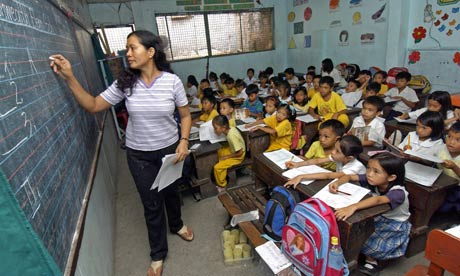
Teachers from overstaffed government schools in Uttarakhand will be transferred to the ones suffering from shortage of teachers, the state government said.

Chief Secretary Subhash Kumar has sought a district-wise list of government schools from the education department of the number of teaching staff in each school.

Addressing the executive committee meeting of Uttarakhand Education For All Board, Kumar stated that strict action will be taken against the teachers who are not regular to school and get their work done by other teachers. He also said that FIRs will be registered against the teachers found guilty in this case.

The Chief Secretary also approved a fund of Rs 786 crore for the 2014-15 Annual Plan, in the education sector.

Delhi High Court not to lift its stay on nursery admissions

nursery admissions

The Delhi High Court has refused to lift its stay on the nursery admission process. After hearing the various stakeholders, the division bench consisting of acting Chief Justice BD Ahmed and Justice S Mridul, extended its interim stay till April 2, 2014.

The court also directed the Directorate of Education to ensure the rights of children who could have secured admission in the inter-state transfer category but are facing uncertainty due to its dismissal. It also asked the DoE to update its website with details related to the earlier draw of admissions conducted.

Earlier, the HC had rejected the data provided by DoE related to nursery admissions in unaided recognised private schools. According to the guidelines, out of 100, 70 points are given to kids who reside within 8 km radius of a school. Twenty points are given to children whose sibling is studying in the same school and five points for children of alumni.

INA signs MoU with IIT Madras

The Indian Naval Academy (INA), Ezhimala has signed a Memorandum of Understanding (MoU) with the Indian Institute of Technology Madras (IIT Madras) with the aim of collaborating together for academics and research in the areas of mutual interest, exchange of academic information, scholarly information, materials and publications.

The MoU signed earlier this week in Chennai will also facilitate the cadets and students of both the institutions to participate in project competitions, faculty exchange programmes, sponsorship of cooperative seminars, workshops, etc and facilitate faculty development programmes.

Professor Bhaskar Ramamurthy, director of IIT Madras, said that the IIT Madras engages in interactions with society, organizations and industry through a variety of outreach programmes.

Vice admiral Ajit Kumar P, commandant, INA while thanking the director, said the Indian Naval Academy, which is already the largest Naval Academy in Asia, and aims to become the best Academy of its kind in the region, would benefit immensely from the IIT Madras which has a rich experience and legacy of more than five decades.

The INA had earlier signed a MoU with the Indian Institute of Science (IISc), Bangalore and also Govt Engineering College Kannur (GECK) at Mangattuparamba, to collaborate together at the academic level.

UGC confers college of excellence award on four colleges

The University Grants Commission has selected four Jesuit colleges — Loyola – Chennai, St Joseph’s-Bangalore, St Xavier’s-Kolkata and St Xavier’s-Mumbai — for the college of excellence award. The award comes with a grant of Rs two crore to be spent over five years for specific purposes.

The University Grants Commission began conferring on colleges the Potential for Excellence award about a decade ago. Two hundred of the 30,000 colleges in India were selected for this award, which included generous funding for infrastructure and educational upgradation.

St Xavier’s College – Mumbai was granted this award in 2006 and has received about Rs 2.5 crore in funding over 8 years. Some months ago, the UGC announced a sequel, “The College of Excellence (CE)” award.

School education department ensures implementation of RTE in Chhattisgarh

The school education department of Chhattisgarh has taken up the initiative to provide free and compulsory admission to poor children on the 25 per cent seats reserved for them. This step is an initiative to implement Right to Education (RTE) in Chhattisgarh, in which every school is instructed to keep seats vacant under the RTE Act till end of August and for the new session.

Having a population of 3,860 financially poor students, Raipur has recorded the highest number of admission in Chhattisgarh under RTE in 2012-2013. District education officer Ashok Banjara stated that the department has circulated instructions to all private schools to keep seats under the RTE Act vacant till August 24.

All the 170 nodal schools are asked to keep the details ready about reservation of seats for different categories of students like differently abled, poor, SC and ST children, etc in order to avoid confusion among people.

Few private schools tried violating the RTE norms by refusing admissions to poor students stating that the school’s ambience would be affected. But, few cases that reached high court were given admission in preferred schools.

Mixed reaction to DU proposals

Students have given a mixed response to the changes proposed by the Delhi University admission. While some say that students should have the right to apply to as many colleges/ courses they prefer, others say they welcome the changes.

Those who are questioning the cap on the number of colleges are also asking the university to reverse its earlier decision and allow students to opt for as many courses in as many colleges. In 2013-14 academic session, students were asked to opt for only courses and not colleges in the OMR sheets.

Students are questioning the proposed cap on the number of colleges and the courses one can apply to. Cut-offs, they claim, are unpredictable and it is difficult to make accurate choices. Cutoffs, based on aggregate of best of three, has however been welcomed by many while suggesting that language should not be in the best of three subjects for commerce and science stream. Students also agreed that this will further increase the cut-offs significantly.

Schools asked to make up for poor RTE intake

Tamil Nadu has not even met half its targeted number of admissions in matriculation schools for the 2013-14 academic year under the 25 percent reservation clause of the Right To Free and Compulsory Education Act.

Matriculation schools across the state admitted only 40 percent of the 58,619 students from poor and underprivileged backgrounds that the state wanted to admit at the entry level class in private unaided schools.

And, more than one-fourth of the matriculation schools did not admit even one underprivileged student under the clause.

This admission by the government has come in the form of a warning to private unaided schools this year, just before the expiry of third year deadline of the RTE Act on April 1. A directorate of matriculation schools circular to matriculation schools and chief educational officers in various districts took a strong view of self-financing educational institutions failing to admit students under the Act.

The circular said that this record is not acceptable at any level. After the central government enacted the Act and the state government notified it and issued appropriate government orders, we continue to get complaints about schools not admitting students. Schools will have to make up for this in the coming academic year by filling up all 25 percent seats allocated for underprivileged children in the locality.

Schools have been getting away with not meeting the 25 percent reservation target by claiming that nobody falling under the category had sought admission. The directorate has said it will not take no for an answer this time and has placed the onus on schools to publicise the availability of seats through local media.

Online evaluation of class X answer sheets begins

Online evaluation of CBSE class X answer sheets has begun at three centres in Lucknow. Close to 110 teachers are busy in online evaluation of mathematics answer sheets. While over 40 plus teachers are evaluating answer sheets at RLB Memorial Senior Secondary School and DPS, Indiranagar each, there are around 30 teachers at DPS, Eldeco.

CBSE coordinator, Lucknow, Jawaid Alam Khan said that once evaluation for mathematics ends, Hindi would begin.

CBSE has for the first time introduced digitized marking for class X board students. The on-screen marking, said officials will lead to an error-free evaluation. The biggest benefit of the online marking will be in terms of totaling. The online marking will rule out the possibility as the system will reject the answer sheet in case of wrong totaling. Only after one section would be marked, evaluators can start marking the other section.

CBSE handed the answer books in sealed packets to the service or the software provider after fixing bar-coded stickers by the chief secrecy officer of board examinations. The answer sheets were then scanned and put on screen for evaluation by examiners trained in using the software.

Computer-based evaluation and online marking of the board results will also ensure compliance of RTI provision which makes it mandatory that the answer sheets should be made available for scrutiny to the students, if they wish to see it.

IIT Kharagpur starts short-term courses

IIT Kharagpur is now offering students of other colleges a chance to study at the elite institute under the tutelage of an international faculty.

The International Summer and Winter Term (ISWT) will run each year during May-July and December, IIT Kharagpur officials said.

By bringing together participants and faculty from India and abroad, the programme will not only be academically stimulating, but also offer an opportunity to make new friends and interact with about 30 international experts, they said.

These subjects are designed around current and multi-disciplinary themes of science, engineering, management and law, the officials said, adding, the duration of each course is of two weeks or ten working days with a judicious blend of lectures and tutorials per day.

They said participants can be even from the industry and research organizations.

Students registered for these courses will have the opportunity to obtain additional academic credits based on evaluation and grading process, they added.

LATEST NEWS