




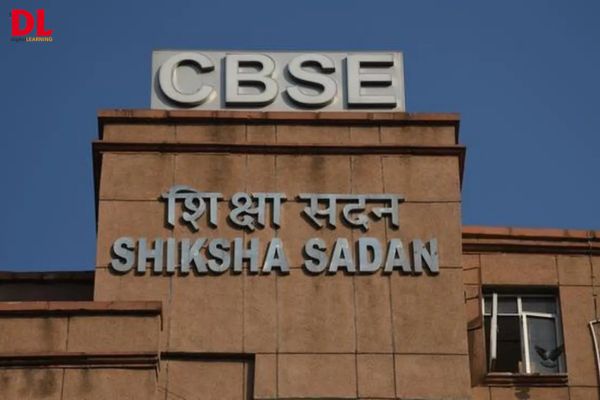
Central Board of Secondary Education (CBSE) has made the study of three languages compulsory for students in Classes 9 and 10 beginning with the 2026–27 academic session, in line with the National Education Policy (NEP) 2020.
Under the revised policy, students will be required to study three distinct languages—R1, R2, and R3—with at least two of them being Indian languages. However, CBSE has clarified that the third language (R3) will not be part of the Class 10 board examination. Instead, it will be assessed internally by schools, and the results will be reflected in the student’s final certificate.
The new rule will take effect from July 1, 2026, for students entering Class 9. CBSE has also stated that no student will be prevented from appearing for the Class 10 board exams due to the third language requirement.
Also Read: Coursera and Udemy Complete Merger to Build Global Skills Platform
The board has introduced flexibility for children with special needs, foreign students, and CBSE-affiliated schools abroad, allowing exemptions or adjustments on a case-by-case basis.
The move is aimed at promoting multilingual learning and strengthening the use of Indian languages in school education, in accordance with NEP 2020 and the National Curriculum Framework for School Education 2023.