





The dawn of the AI age is reminiscent of the historical gold rush, yet it paints a picture quite different from the frenzied mining of yesteryears. Just as in the 1850s gold rush where fortunes were forged by those who sold shovels and equipment rather than by those who dug for gold, the advent of AI has turned traditional narratives on their head, leading to the ‘reverse gold rush.’ But what exactly does this mean for businesses, entrepreneurs, and individuals alike? Let’s explore the intriguing facets of this phenomenon as presented in ‘The AI Reverse Gold Rush,’ a book that delves into these complexities.
The Reverse Gold Rush: An Untold Story
Historically, the gold rush saw people scrambling to mine wealth from beneath the earth, yet those who truly prospered were not the miners but the business-savvy sellers of mining tools and equipment. In the realm of AI, the infrastructure has already been laid—the virtual mines are built. But unlike the gold rush, where wealth was ready to be extracted, AI’s yield is yet to bloom spectacularly for big enterprises. This peculiarity defines the reverse gold rush, where the profiteers are not large corporates but nimble individuals utilizing AI tools with greater dexterity.
Challenging Economic Patterns in AI
The book highlights significant patterns within the AI landscape, drawing parallels to tech cycles of the past. There is always a chasm—a delay between investment and returns, much like the gap observed in the fiber-optic deployment of the late 1990s. Enormous investments have been funneled into AI, yet expected returns remain elusive. Tech giants, including McDonald’s, Amazon, and IBM, struggle to convert AI investments into profitable ventures. The analogy is clear: the virtual mines are in place, but the expected windfall of treasure has yet to materialize.
Individuals vs. Enterprises: A Widening Gap
Interestingly, while vast conglomerates face hurdles, individual entrepreneurs and small challengers thrive in this AI climate. With the agility that large organizations often lack, these entrepreneurs harness AI’s potential, showcasing a higher rate of success. Meanwhile, a significant portion of enterprise AI initiatives falter, a stark contrast to the flourishing DIY AI users who cultivate tangible outcomes from subscription-based models at a fraction of corporate investment costs.
The Solopreneur Revolution and AI
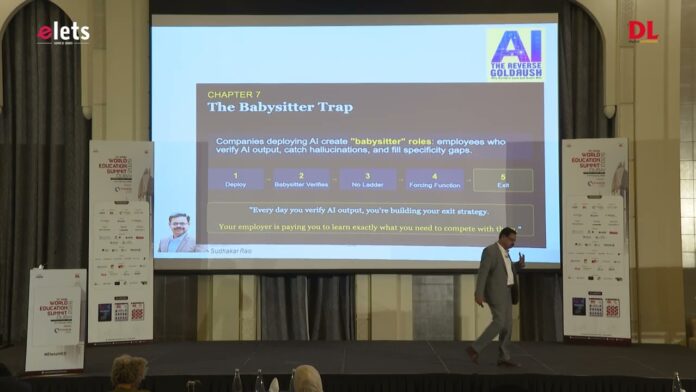
A fascinating trend emerges where seasoned professionals known as ‘babysitters’—those who oversee AI output—begin defecting from corporate roles, dissatisfied with stagnating career paths. Such individuals transition into solopreneurship, exploiting niche markets with personalized AI applications. Fueling this shift is AI’s ability to decentralize power from traditional corporate structures, yielding more streamlined business processes for small, agile players.
Bridging the Human and AI Divide
Despite AI’s prowess, humans offer an irreplaceable edge. As ‘The AI Reverse Gold Rush’ asserts, the human element—comprising judgment, ethics, and discernment—complements machine efficiency, generating a powerful synergy. Fostering this collaboration could bridge the exploitative gaps in the tech cycle, giving rise to innovations where both humans and machines thrive together, overcoming each other’s limitations.
Also Read: Globalization in Education: Bridging Borders and Enhancing Student Mobility
The Path Forward
In conclusion, the book paints a captivating narrative of a technological paradox where promising investments falter, yet unexpected beneficiaries thrive. The reverse gold rush poses the question of whether AI will evolve into the nirvana tech leaders envisioned. Ultimately, combining human insight with AI’s computational power could lead to productive partnerships rather than solitary tech conquests. To truly capitalize on AI’s capabilities, individuals and organizations alike must explore this uncharted terrain with open minds and a willingness to innovate beyond traditional paradigms.
View Expressed by: Sudhakar Rao, Director at ICFAI Group at World Education Summit Dubai 2026.