



In an era where the landscape of higher education is rapidly changing, institutions are facing a pivotal moment akin to what blockbuster stores experienced with the rise of digital streaming. The question no longer revolves around prestige and reputation, but rather around relevance and adaptability. As we venture towards 2030, how can universities remain pertinent to students and society alike? This shift, though challenging, is inevitable and vital.
The current climate calls for a drastic transformation in higher education, mirroring the UAE’s ambitious journey of refusing to accept the status quo. Just as the nation did not settle for being a desert-bound place and brought the future forward, educational institutions must now pull relevance into their present-day curricula and operations.
Higher education is experiencing a ‘blockbuster moment,’ where old models of reputation and ranking are no longer sufficient currencies. The students today, whether they are in the UAE, the USA, APAC, or elsewhere, are demanding more than historical prestige. They seek institutions that are in tune with their future aspirations and can adapt swiftly, like Spotify or Netflix. But how can universities catch up and respond to these needs? The answer lies in the concept of a sentient campus.
As we stand hypnotized by the myths surrounding AI, imagining dystopian futures where machines dominate humans, we must pivot our focus to more immediate and practical applications. It is not about fearing AI as a sentient overlord but about utilizing AI to enhance the sentience of our educational institutions. This means engineering a responsive, intuitive infrastructure that unifies all the disparate systems within a university, enabling them to function as a coherent whole.
Imagine a university where all its systems, from financial to academic advising, communicate seamlessly. This allows early interventions for students at risk, based on comprehensive data-driven insights rather than fragmented, disjointed information. This level of coherence is critical in addressing the rapidly evolving educational needs, especially in regions like the Middle East where youth populations are growing exponentially, and new skills are in constant demand.
The role of technology in this transformation cannot be overstated. As institutions aim to provide bespoke educational experiences, the ability to understand and cater to the individual needs of students becomes paramount. This requires not merely digitizing existing processes but fully embracing digital transformation to reinvent educational delivery.
Organizations such as Lucian are leading the charge towards this transformative future by fostering agility, interoperability, and student-centric approaches in educational technology. Their aim is to create a platform where various software and systems collaborate to enhance the student experience, ensuring every investment in technology reduces friction for learners. This drive towards creating intimacy at scale is what will define successful institutions by 2026.
Also Read: Empowering Education: How MongoDB is Revolutionizing Learning for Students and Educators
As you ponder the future of education and the changes required to remain relevant, consider a campus that treats each of its 50,000 students as unique individuals. In such a setting, technology enables not just efficiency, but true intimacy, nurturing lifelong learning paradigms and transforming graduation from a final exit to the commencement of perpetual educational engagement.
In conclusion, as the Middle East redefines its national landscape, educational institutions have the opportunity to do the same. By embracing technology that fosters connection and coherence, universities can become sentient, more responsive, intuitive, and meaningful in their interaction with students. This is not just a vision; it is an invitation to join in building a future where education meets the needs of every learner.
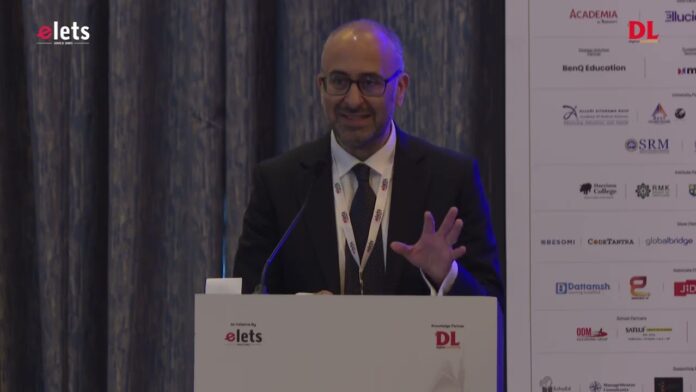
Insights shared by: Maged Fahmy, Vice President , Middle East & Africa at Ellucian, during the World Education Summit Dubai 2026.