



In today’s rapidly evolving world, education is the cornerstone of development and progress. As Nelson Mandela once said, “Education is the most powerful weapon which you can use to change the world.” This sentiment sets the stage for a critical discussion about democratizing knowledge and empowering individuals through education and technology. As we navigate the dynamics of the modern world, it is essential to redefine and reimagine education as a purpose-driven endeavor for it to serve as a foundation for sustainable growth and innovation.
The shift from traditional knowledge systems to digital accessibility has dramatically transformed the way we learn and share information. With the advent of the internet, knowledge has become democratized, providing unprecedented opportunities for individuals worldwide. This has further evolved with the rise of artificial intelligence, which has distributed expertise across borders, enabling people with the right resources and questions to reshape our global society.
In this context, institutions like Sam, located in the southern part of India, are at the forefront of this educational revolution. As India continues to progress as a young and technologically adept nation, the focus on incorporating core educational values becomes even more critical. By embracing technology and leveraging its young workforce, India stands poised to seize global opportunities and drive positive change.
Purposeful education is embedded in the broader goals of sustainable development set forth by the United Nations. The 2030 agenda urges a collective action towards achieving these goals, emphasizing the importance of knowledge combined with action. Education without action lacks impact; hence, institutions like Sam are bridging the gap between classrooms and communities by adopting rural villages in India. Through this community-focused approach, they empower problem solvers who deliver real-world solutions.
One of the critical challenges in education today is its relevance in a fast-paced digital environment. With technology evolving every minute, educators must transition from traditional teaching methods to becoming facilitators and collaborators. This shift necessitates an ongoing learning approach, where educators and students explore, learn, and innovate together. The ability to adapt and foster intercultural exchanges through initiatives like the Scouts movement exemplifies how education can transcend boundaries.
Also Read: AI Unraveling the Reverse Gold Rush and Its Surprising Implications
In addressing current educational challenges, institutions must be rooted in ethics and excellence, empowering students not just with skills but with the necessary sensitivity to become responsible global citizens. Ensuring employability and empowerment goes hand in hand as younger generations are prepared for future challenges and opportunities.
To conclude, education’s transformation is a collective effort requiring action, innovation, and inclusion. By keeping key principles such as proactivity, empathy, and collaboration at the forefront, educators and policymakers can equip future generations to tackle global challenges effectively. As leaders and responsible mentors, the call to action is clear: redefine education as a force for global change and work towards creating good human beings who will become great leaders.
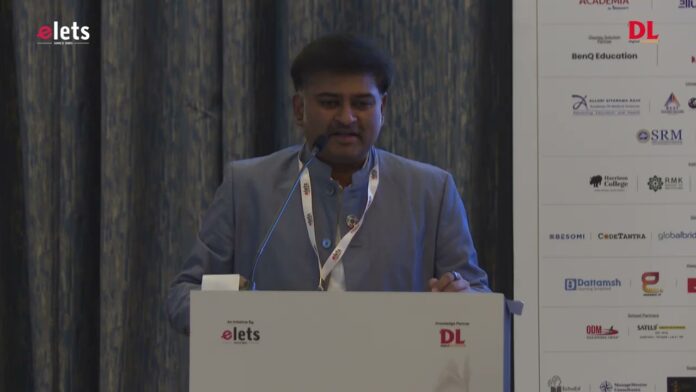
View Expressed by: Dr. Sai Prakash Leo Muthu, Chairman of Sairam Institutions, at the World Education Summit Dubai 2026.