



Home Blog Page 17

Chitkara University innovates microwave-based green technology to produce high-purity silica gel from rice straw

Chitkara University

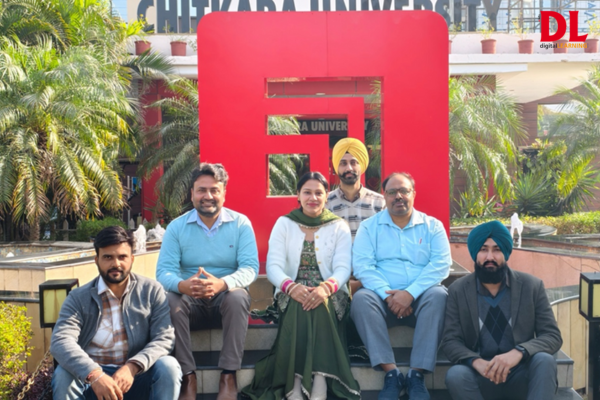
Researchers at the Chitkara University Research and Innovation Network (CURIN) have developed a breakthrough, eco-friendly technology that converts rice straw into high-purity silica gel using a microwave-assisted process. This indigenously designed, semi-automated system offers an energy-efficient and sustainable alternative to conventional silica extraction methods while aligning with zero-waste and circular economy principles.

Rice straw and other crop residues are generated in massive volumes across northern India and similar agricultural regions. Due to their high ash and silica content, low density, and strong lignin structure, these residues are difficult to repurpose. Their limited usability in animal feed and energy production often results in open-field burning, a practice that significantly contributes to air pollution, greenhouse gas emissions, soil deterioration, and serious health hazards. Existing silica recovery techniques from such biomass are typically slow, costly, and energy-intensive, making them unsuitable for widespread adoption.

To overcome these limitations, the CURIN research team introduced a microwave-assisted chemical synthesis approach that leverages both thermal and non-thermal microwave effects to accelerate chemical reactions. This innovative route drastically shortens processing time, improves mass transfer efficiency, and lowers overall energy consumption compared to traditional heating processes. The patented technology enables effective extraction of silica from rice straw ash and its transformation into high-purity silica gel, with the added advantage of being suitable for decentralized and semi-automated operations.

The resulting silica gel demonstrates high chemical purity and robust material properties, making it suitable for diverse industrial applications such as desiccants, catalyst supports, humidity regulation systems, and chromatographic media. The material has been extensively validated through advanced analytical techniques, including Fourier Transform Infrared Spectroscopy, biomass proximate analysis, spectroscopic and microscopic characterization, and thermogravimetric and physical performance testing. These evaluations confirm the consistency, stability, and functional reliability of the synthesized product.

Initial evaluations indicate strong prospects for commercial scalability and economic feasibility. Ongoing studies are focused on optimizing operational parameters, identifying the ideal production scale, and finalizing commercial deployment models. Additionally, planned life-cycle assessments will quantify environmental benefits and assess opportunities for carbon credit generation.

Also Read: Coursera and Udemy Merge in $2.5B Deal to Create Global Learning Powerhouse

This technology has the potential to redefine agricultural waste management by transforming crop residues into valuable industrial materials. It opens avenues for rural micro-enterprises, strengthens local value chains, reduces reliance on imported silica, and offers a practical solution to crop residue burning.

By integrating sustainable innovation with socioeconomic impact, this development supports multiple global sustainability goals, including clean and efficient resource utilization, rural employment generation, industrial innovation, reduced urban and rural pollution, responsible production practices, and climate change mitigation. With further scale-up and policy support, this microwave-assisted silica gel technology marks a significant step forward in sustainable materials science and agricultural waste valorization, reaffirming Chitkara University’s role as a leader in impactful and responsible research.

Coursera and Udemy Merge in $2.5B Deal to Create Global Learning Powerhouse

Coursera

Two leading online education platforms announced plans to merge in an all-stock transaction valued at approximately $2.5 billion, creating a unified company that will serve over 270 million learners worldwide.

Under the agreement, Udemy shareholders will receive 0.80 shares of Coursera stock for each share they own, representing a 26% premium over recent trading averages. Coursera shareholders will retain 59% ownership of the combined entity, while Udemy shareholders will hold 41%.

Greg Hart, Coursera’s CEO, said the merger addresses urgent workforce needs as nearly 40% of essential workplace skills are expected to change within five years. He emphasized that both individuals and companies need learning platforms capable of adapting quickly to AI-driven job transformations.

Hugo Sarrazin, Udemy’s CEO, explained that combining resources will accelerate AI-powered product development and deliver personalized learning experiences integrated directly into workplace environments.

Also Read: Kerala Resolves VC Appointment Deadlock; New Vice Chancellors Named for KTU and Digital University

The merger brings together complementary strengths. Coursera offers structured programs through partnerships with 375 universities and serves 191 million learners, while Udemy operates a marketplace with 85,000 instructors, 200,000 courses, and 82 million users.

The combined company projects annual revenues exceeding $1.5 billion and expects to achieve $115 million in cost savings within two years. Management plans to implement a stock buyback program after closing.

The deal, which has received unanimous board approval from both companies, is expected to close in the second half of 2026 pending regulatory clearances and shareholder votes. The merged entity will operate under the Coursera name with Hart continuing as CEO. 

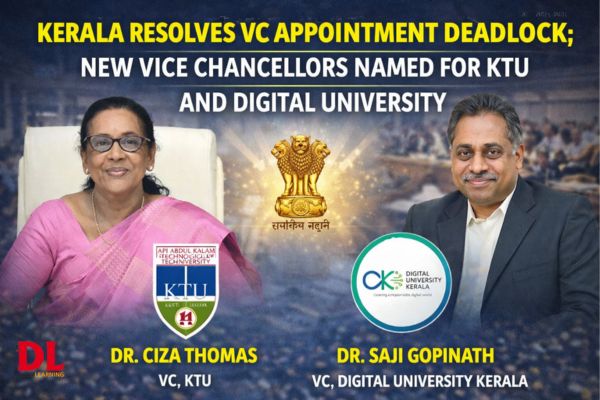
Kerala Resolves VC Appointment Deadlock; New Vice Chancellors Named for KTU and Digital University

Ciza Thomas, Saji Gopinath

The long-running deadlock between the Kerala Chief Minister and the Governor over vice chancellor appointments has been resolved, paving the way for key leadership changes in the state’s higher education institutions. On December 17, 2025, the state government finalised the appointment of Ciza Thomas as Vice Chancellor of Kerala Technological University (KTU) and Saji Gopinath as Vice Chancellor of Digital University Kerala.

The decision follows a truce between the Raj Bhavan and the state government after the dispute over university appointments had escalated to the Supreme Court, drawing national attention to the governance of higher education institutions in Kerala.

Both appointments have been made for a fixed tenure of four years, bringing clarity and stability to the administration of the two universities. Official sources indicated that the resolution was achieved through mutual consultations, aimed at ensuring continuity in academic governance and institutional functioning.

The appointments are expected to enable both universities to refocus on academic reforms, research priorities, and digital education initiatives, while also reinforcing governance mechanisms within Kerala’s higher education ecosystem.

Also Read | Dr. S. V. Kota Reddy takes charge as Vice Chancellor of Amity University Hyderabad

The resolution marks a significant step towards restoring institutional harmony and strengthening leadership across state-run universities, following months of administrative uncertainty.

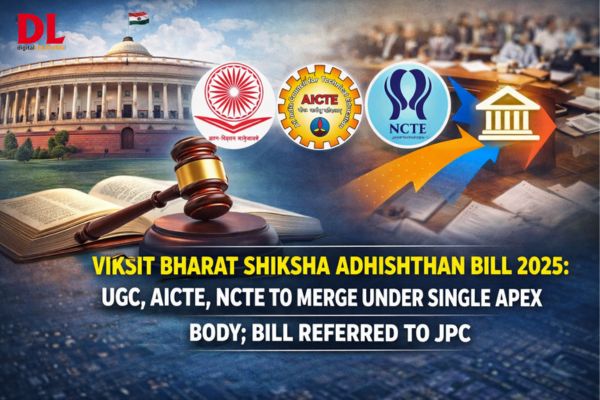
Viksit Bharat Shiksha Adhishthan Bill 2025: UGC, AICTE, NCTE to Merge Under Single Apex Body; Bill Referred to JPC Technology-driven, faceless regulatory framework proposed; 31-member Joint Parliamentary Committee to submit report by Budget Session 2026

Viksit Bharat Shiksha Adhishthan Bill 2025

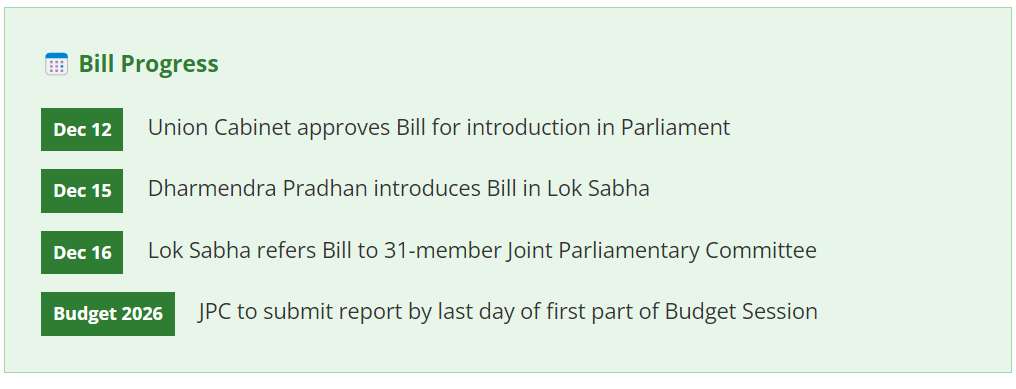
Union Education Minister Dharmendra Pradhan introduced the Viksit Bharat Shiksha Adhishthan Bill, 2025 in Lok Sabha on December 15, marking one of the most significant reforms in higher education governance in recent years. The Bill proposes to replace the University Grants Commission (UGC), All India Council for Technical Education (AICTE), and National Council for Teacher Education (NCTE) with a unified regulatory architecture aligned with the National Education Policy (NEP) 2020.

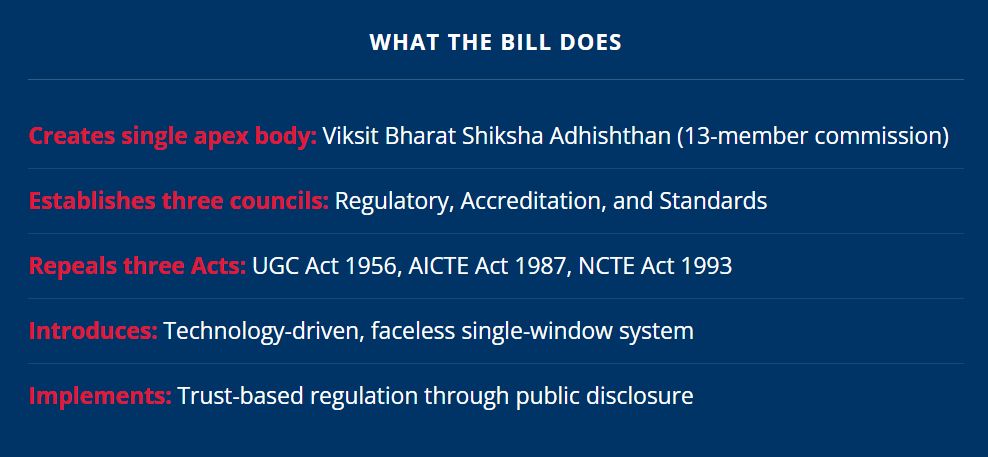
What the Bill Does

New Regulatory Architecture

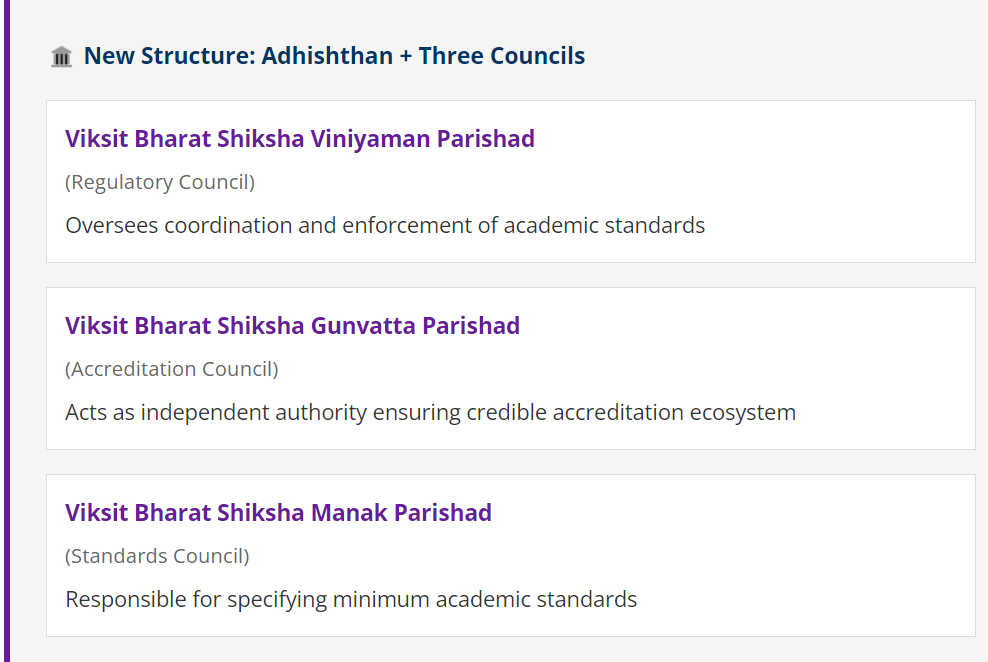
The Bill provides for the establishment of the Viksit Bharat Shiksha Adhishthan as an apex body, along with three independent councils. The apex umbrella body will consist of a chairperson and 12 other members, all appointed by the President of India.

Adhishthan

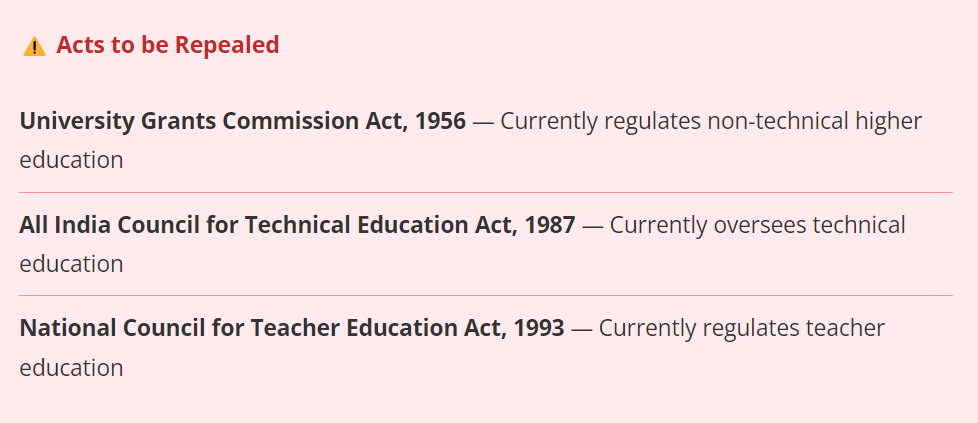
Acts Being Repealed

Acts Being Repealed

All higher educational institutions under the purview of the Ministry of Education, UGC, AICTE, and NCTE will be brought under the new Viksit Bharat Shiksha Adhishthan for determination of standards. The Council of Architecture (CoA) will function as a Professional Standard Setting Body (PSSB) as envisioned in NEP 2020.

Technology-Driven Regulation

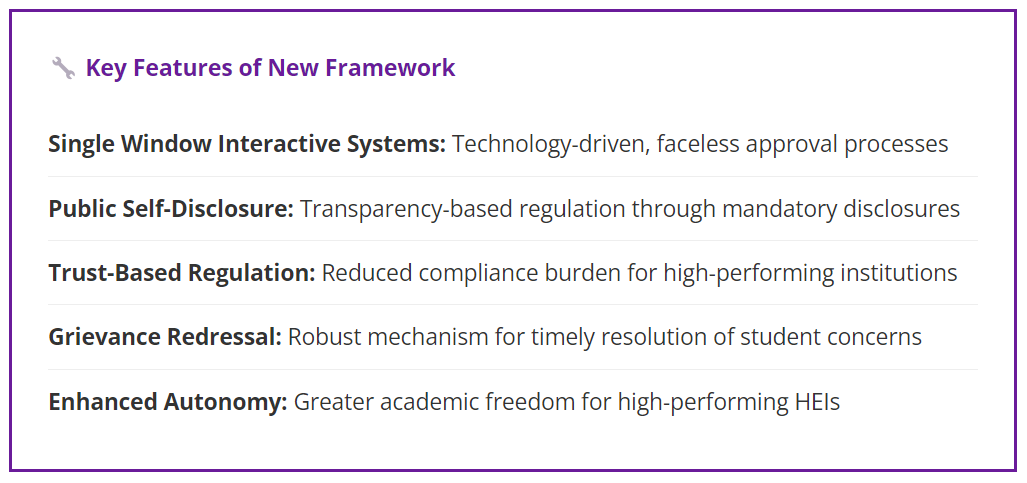
A key feature of the Bill is the introduction of a faceless, technology-driven single-window system for regulation. Higher Educational Institutions will be required to make public disclosures related to governance, finances, academic programmes, infrastructure, and outcomes on a comprehensive digital portal.

Key Features of New Framework

Legislative Timeline

Bill Progress

Addressing Opposition Concerns

While Opposition members raised objections at the introduction stage, accusing the government of overcentralising education, Minister Pradhan defended the Bill, stating that states would retain similar powers they presently have. “Sovereign authority is vested in the government in every law. This was the case with UGC as well,” Pradhan said at a press conference.

“This Bill aims to eliminate complexities by introducing a unified and streamlined regulatory architecture. The entire regulatory framework will operate through technology-driven, faceless, Single Window Interactive Systems.”

— Ministry of Education

The JPC will comprise 21 MPs from the Lok Sabha and 10 from Rajya Sabha. The proposed committee will deliberate on the Bill’s provisions and submit its recommendations before the Budget Session of 2026.

What Remains Unchanged

Institutions of National Importance (IIMs, IITs, NITs, etc.) will continue to enjoy their existing level of autonomy. Professional courses in medicine, law, and certain other fields are excluded from the Bill and will continue under their existing regulators. The Bill represents a transformation in how India’s higher education sector is governed—moving from fragmented oversight to unified, technology-enabled regulation.

Sona Valliappa Group Launches SCALE

Sona Valliappa

Marking another landmark in its 105-year legacy, the Sona Valliappa Group, one of South India’s most respected names in education and business, has announced the launch of the Sona Centre for Advanced Learning & Entrepreneurship (SCALE) with the launch of its official logo. Envisioned as a first-of-its-kind integrated campus, SCALE will bring together academic institutions and industry players under one roof to foster skilling, innovation, and entrepreneurship aligned with global industry needs.

The announcement was made by Thyagu Valliappa, Founder of SCALE and a fourth-generation entrepreneur, at Sona Towers—an iconic location that hosted India’s first Global Capability Centre (GCC) established by Texas Instruments in the 1980s. The event was attended by senior industry leaders and key policy stakeholders.

Speaking on the occasion Thyagu Valliappa said that SCALE has been designed to equip India’s talent with global competitiveness. With GCCs, advanced manufacturing organisations, and deep-tech companies increasingly viewing India as a hub for innovation-led growth, SCALE aims to bridge the gap between education and industry through immersive, hands-on learning. Students and professionals will gain real-world exposure via hot labs, direct leadership interactions, and a structured Periodic Assessment Test (PAT) framework, where strong performance can lead to enhanced pay opportunities.

SCALE will offer a diverse portfolio of programmes supported by over 50 industry MoUs and 15+ Centres of Excellence, developed in collaboration with leading global brands, industry partners, and government bodies. Through its partnership with the Karnataka Digital Economy Mission (KDEM), SCALE plans to work closely with the Government of Karnataka to upskill more than 3,000 young engineers across the state. Training will be delivered by seasoned academicians and industry professionals, with a sharp focus on high-demand skills that significantly boost employability.

Positioned at the confluence of education, technology, and business, SCALE will house advanced learning programmes, industry-oriented finishing schools, a Business School, a Techno School, and startup incubation facilities within a single ecosystem. Built on the philosophy of “for the industry, by the industry, and to the industry,” the initiative underscores the Group’s commitment to creating sustainable pathways from learning to employment and entrepreneurship.

Over the past 68 years, the Sona Valliappa Group has enabled the creation of more than 100,000 jobs across diverse sectors and has forged enduring partnerships with leading organisations such as Capgemini, JSW, Dassault Systèmes, TCS, among others. Its strong emphasis on Industry 4.0, particularly in design engineering and 3D modelling through collaboration with Dassault Systèmes, has played a pivotal role in creating over 150 millionaires.

The Group will invest ₹150 crore in developing the SCALE campus at Bidadi, near Bengaluru, strategically located about an hour from Mysuru, allowing both cities to benefit from the initiative. Situated within a well-established industrial corridor, the campus will feature cutting-edge hot labs, innovation and learning spaces, and a 2,500-bed residential facility, offering a fully immersive learning environment.

As part of its long-term vision, SCALE plans to build a robust partnership ecosystem by signing more than 50 MoUs across technology, manufacturing, GCCs, and allied sectors. These collaborations will enable experiential learning, live industry projects, applied research, and mentorship from senior industry leaders.

The first cohort of 120 students will commence training in January 2026, with the campus expected to be operational by May–June 2026. The inaugural batch will comprise students from Sona College of Management, who will undergo intensive industry immersion, engaging with 7–8 companies to gain exposure to organisational processes, manufacturing environments, and interactions with CEOs and top leadership teams.

The launch of SCALE represents a defining chapter in the Sona Valliappa Group’s journey from textiles to technology, reaffirming its legacy of pioneering industry-linked education and building future-ready learning ecosystems for India and the world.

How Can University Leaders Use AI to Make Smarter Decisions?

WES Dubai 2026

A few years ago, university leadership meetings looked very different. Decisions were shaped by experience, instinct, and long discussions around a table. Enrollment numbers came from past trends, student feedback arrived months late, and global partnerships were often built on reputation rather than real insight.

Today, that same meeting room feels heavier.

Applications are unpredictable. Student expectations are shifting faster than curriculums can adapt. Governments are asking tougher questions. Parents want outcomes. Employers want skills. And leaders are left asking themselves a quiet but important question:

Are we still making decisions the right way?

As the world prepares for the World Education Summit Dubai 2026, this question is becoming central to every serious conversation at global platforms. Because this isn’t about technology anymore. It’s about leadership.

Across universities worldwide, leaders are beginning to realise that relying only on past experience is no longer enough. Not because experience has lost value, but because the environment has changed. Student mobility, funding models, international collaboration, and classroom expectations are evolving faster than ever before.

This is where AI quietly enters the room, not as a decision-maker, but as a lens.

Imagine being able to see enrollment patterns before they decline. To understand which students might struggle long before they disengage. To know which academic programs will be relevant three years from now, not three years ago. For many institutions, these insights are no longer theoretical. They are already shaping strategy. 

For decades, universities responded only after problems surfaced, poor grades, dropouts, dissatisfaction. Today, leadership teams can understand patterns of engagement, attendance, and performance early enough to intervene meaningfully. Not to monitor students, but to support them. Not to replace faculty judgment, but to strengthen it.

The same shift is happening in international collaboration. Universities want partnerships that last, partnerships that create value for students and faculty alike. Yet too many agreements remain symbolic.

Also Read: Redefining Learning: How Virtual Reality and Artificial Intelligence are Transforming Education

The 35th Elets World Education Summit Dubai 2026 brings these conversations together under one roof. With voices such as Prof. Ammar Kaka, Pro Vice Chancellor & President, Curtin University Dubai; Dr. Hamad Odhabi, Vice Chancellor, Abu Dhabi University; Dr. Lolowa Al Marzooqi, Associate Vice Provost, New York University Abu Dhabi; Prof. Rafid Alkhaddar, Pro Vice Chancellor, Amity University Dubai; Jan Horn, Managing Director, SAE University College, and others; the summit reflects a shared reality: education leadership is becoming more complex, more global, and more accountable.

Yet one thing remains unchanged. Education is still human at its core.

AI does not replace leadership. It sharpens it. It doesn’t remove responsibility. It increases it. And as discussions around the Future of Education: 2026 Trends continue at global education conferences, the most important institutions will be those that use insight without losing empathy.

So here’s the question worth asking as we look ahead to World Education Summit 2026 and beyond:

When your next big decision arrives, will it be guided only by instinct, or supported by insight that truly helps you lead with clarity?

Cabinet clears single regulator for higher education, marking a new era of reform

Indian higher education

Indian higher education is set to undergo its most significant regulatory transformation in decades. The Union Cabinet has approved a landmark legislation to establish a unified higher education regulator, bringing an end to the long-standing system of multiple governing bodies.

The new legislation, earlier referred to as the Higher Education Commission of India (HECI) Bill, has now been renamed the Viksit Bharat Shiksha Adhikshan Bill. Once enacted, it will consolidate the regulation of all non-medical and non-law higher education institutions under one central authority.

This move directly advances the vision outlined in the National Education Policy (NEP) 2020, which had highlighted the inefficiencies caused by overlapping mandates of multiple regulators. The proposed Commission will be responsible for regulation, accreditation, and the setting of academic and professional standards across the higher education ecosystem.

Medical and legal education will continue to be governed by their respective councils and will remain outside the ambit of the new body. Notably, funding will also remain separate from regulation for the time being. Financial oversight will continue to rest with the Department of Higher Education under the Ministry of Education, unless a dedicated Higher Education Funding Authority is established in the future, as earlier envisaged in NEP discussions.

For years, India’s higher education landscape has been fragmented across different regulatory agencies — the University Grants Commission (UGC) for general higher education, the All India Council for Technical Education (AICTE) for technical institutions, and the National Council for Teacher Education (NCTE) for teacher training colleges. NEP 2020 had strongly argued for a comprehensive restructuring of this framework, advocating for clearer roles and stronger institutional capacity.

The idea of a single regulator first took shape with the draft HECI Bill in 2018, but gained renewed momentum after Education Minister Dharmendra Pradhan assumed office in 2021. With Cabinet approval now secured, the Viksit Bharat Shiksha Adhikshan Commission is poised to play a central role in redefining governance, quality assurance, and standards in Indian higher education.

OpenAI Launches First Certification Courses to Help Workers and Educators Build AI Skills

OpenAI

OpenAI has introduced its first certification courses aimed at helping workers and educators build practical AI skills. The initiative includes two programmes: AI Foundations and ChatGPT Foundations for Teachers. AI Foundations offers hands-on learning directly inside ChatGPT, allowing participants to complete tasks, receive real-time feedback, and develop applied AI skills. Upon completion, learners receive a badge validating that they are equipped with job-ready AI capabilities.

The second programme, ChatGPT Foundations for Teachers, is designed specifically for K–12 educators. It focuses on helping teachers understand how ChatGPT works, how it can be customised for classroom needs, and how to integrate AI into both teaching and administrative tasks. The course aims to strengthen digital learning environments and support educators in adapting to emerging technologies.

Also Read: UP aims 100% digital literacy for differently abled women by 2026

OpenAI has set a target of certifying 10 million people by 2030 as part of a broader goal to expand economic opportunity and advance AI literacy globally. The company noted that workers with AI skills tend to earn higher incomes, underscoring the growing demand for AI-related competencies across industries.

The rollout will begin with pilot programmes involving leading employers, academic institutions, and public-sector partners. Educators will also gain access through an established online learning platform. Several universities are already piloting the courses to help students and faculty build relevant skills for a rapidly changing job market.

According to OpenAI, the certifications will support organisations in adopting AI responsibly and effectively, while giving individuals a structured pathway to develop the competencies needed in AI-driven workplaces. The initiative aligns with the increasing integration of generative AI into business operations, education systems, and creative industries.

Are Universities in the UAE Prepared for Global Student Mobility Challenges?

35th Elets World Education Summit Dubai 2026

Have you noticed how the world has suddenly shrunk for students? Borders blur, classrooms go hybrid, professors teach across continents, and a student in Nairobi may soon choose a UAE university as easily as selecting a Netflix show. But here’s the uncomfortable question… Are universities in the UAE truly prepared for the tidal wave of global student mobility coming their way? And more importantly, Are they prepared for the kind of expectations the next generation of global learners will walk in with?

We’re not just talking student numbers anymore. We’re talking about talent migration. Skill acceleration. AI-driven learning. International partnerships. EdTech ecosystems. Visa flexibility. Transnational education.
A global competition where agility – not size – wins.

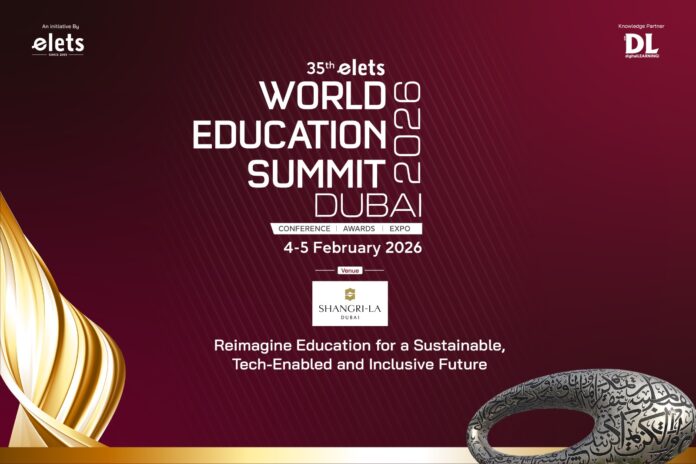
And this is exactly why the 35th Elets World Education Summit Dubai 2026, happening on 4–5 February at Shangri-La, arrives at a pivotal moment.

Why UAE Is Suddenly at the Center of Global Student Mobility

Let’s be honest. The UAE is not just “an education hub” anymore.
It is becoming the world’s academic testbed.

  • Students globally see the UAE as safe, aspirational, tech-forward.
  • Governments see it as a reliable innovation partner.
  • Institutions see it as a bridge between East and West.

But with opportunity comes pressure.

Global student mobility will test UAE universities on:

  • Digital readiness
  • Quality assurance
  • Cross-border credentials
  • Smart classrooms & hybrid models
  • Research depth & global collaborations
  • Industry linkages for employability

Are the universities ready? Some absolutely are. Some are almost there. Some are still recalibrating.

Where the Cracks Are Starting to Show

Here’s the truth no one says out loud:

  1. EdTech adoption is uneven — smart classrooms exist, but smart systems are still catching up.
  2. International partnerships are growing, but not all translate into employability or research impact.
  3. Student experience is modern, but AI-era personalization is still in early stages.
  4. Demand for microcredentials is rising, but supply is still traditional.
  5. K–12 to University transition needs tighter technology-driven pathways.

This is not criticism, this is momentum waiting for direction.

And that direction is exactly what upcoming global conversations in the UAE aim to shape. With World Education Summit Dubai as the flagship global stage where all these questions collide, and (hopefully) get answered.

Leading Thought Leaders Joining the Conversation

    • Prof. Ammar Kaka, Pro Vice Chancellor & President, Curtin University Dubai
    • Prof. Rafid Alkhaddar, Pro Vice Chancellor, Amity University Dubai
  • Dr. Imad Youssef Hoballah, Vice President for Institutional Advancement & External Relations, American University of Ras Al Khaimah (AURAK)
  • Dr. Hamad Odhabi​​​, Vice Chancellor, Abu Dhabi University
  • Prof. William Cornwell, Provost, American University in the Emirates, and more…

These leaders aren’t attending just to speak.They’re attending to challenge norms, confront realities, and co-create new pathways.

Also Read: Why Dubai is Becoming the Global Hub for Higher Education Leaders

What Makes World Education Summit Dubai 2026 Different?

If you’ve been to education events before, you know how they usually go—panel, keynote, coffee break, repeat. This one is different.

Because this one asks the bolder questions:

  • What does the future of education look like when AI is no longer “new,” but “normal”?
  • How will the UAE maintain its competitive global edge?
  • Can universities build ecosystems instead of campuses?
  • Will EdTech finally become infrastructure rather than an add-on?
  • How will leadership evolve for the next era of global learning?

This is not just another global education conference. Or another higher education summit.  Or another education technology event.This is World Education Summit 2026, where K-12, higher ed, EdTech, policy, and industry meet at the exact intersection where the future is being built.

The next chapter of global education will not be built in isolation. It will be built through summits, conversations, collaborations, and shared intelligence. And World Education Summit Dubai 2026 is where that chapter begins.

IIT Bombay establishes BharatGen

BharatGen

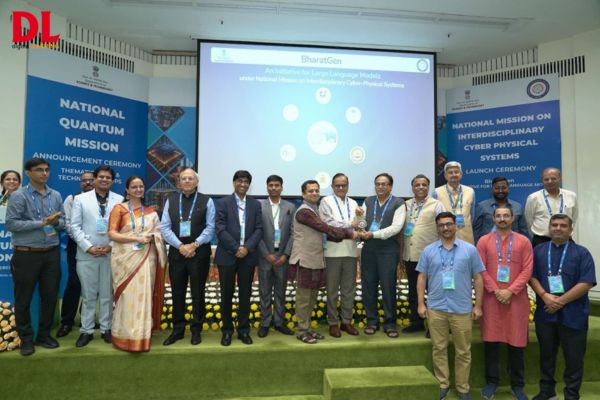
The Indian Institute of Technology Bombay, widely regarded as a cradle for India’s top technology ventures has reached a landmark moment. For the first time in its history, the institute has set up its own company. This isn’t a typical campus startup or a faculty-led initiative; it is a full-fledged organisation owned and steered by IIT Bombay itself.

On November 7, 2025, the BharatGen Technology Foundation was officially registered with the Registrar of Companies in Mumbai, using IIT Bombay’s Powai address. This strategic move signals how the premier institution aims to directly shape India’s next big wave in artificial intelligence.

BharatGen represents India’s first coordinated attempt to develop a Large Language Model (LLM) that reflects the country’s cultural nuances, linguistic richness, and social complexity. The idea began taking shape last year when the Department of Science and Technology (DST) allocated ₹235 crore as early funding, recognising the need to build public digital infrastructure for AI.

The initiative operates under the DST’s National Mission on Interdisciplinary Cyber-Physical Systems (NM-ICPS). Anchored by IIT Bombay, the BharatGen consortium includes other leading institutes such as IIT Madras, IIT Kanpur, IIIT Hyderabad, IIT Mandi, IIT Hyderabad, IIM Indore, IIT Kharagpur, and IIIT Delhi.

According to Prof. Ganesh Ramakrishnan, the founder-director of BharatGen Technology Foundation, creating a corporate entity was essential. “Taking AI models out of academic labs and into practical, market-ready solutions requires the autonomy and operational flexibility that only a company can provide,” he explained.

Also Read: NMDC partners with IIT Kanpur to boost cybersecurity and accelerate digital innovation

BharatGen aims to develop models capable of handling 22+ Indian languages and integrating text, speech, and document vision making AI more intuitive for Indian users. By training models on large-scale indigenous datasets, the foundation hopes to build systems that “sound Indian, think Indian, and work reliably in Indian environments.”

Prof. Ramakrishnan also shared that BharatGen will release scaled-down, developer-friendly versions of its models. This will help startups and enterprises adopt sovereign AI without bearing the cost and complexity of training massive models from scratch. “We will manage the heavy engineering so innovators can focus on building solutions,” he said.

With an additional ₹1,058 crore support from the Ministry of Electronics and IT (MeitY) under the IndiaAI Mission, BharatGen is now evolving into a national flagship effort toward creating India’s own sovereign AI ecosystem.

LATEST NEWS