Home Blog Page 195

YUGMA presents first-ever MBA mentorship career fest for students

Step Up logo

Mumbai, Maharashtra 

VMentor.ai, the “tech-enabled, human-intervened” mentorship platform that accelerates business growth will be hosting its first-ever mentorship fest, “Step Up”, starting from the 8th of April, under its vertical – YUGMA.

“Step Up” will bring together over 25 industry mentors, many of whom are campus recruiters. The attendees (aspiring and current MBA students) will get the opportunity to interact with and be mentored by trail-blazing CXOs from key industries such as BFSI, healthcare/pharma, IT, FMCG, FMCD, market research and consultancy, and retail. Students will gain insights into specialisations from industry veterans with decades of experience in these segments.

The career-mentoring event will be a one-stop shop for MBA aspirants and B-school students for taking the next leap. Students preparing for the CAT or CET entrance exams will get a better grasp on which colleges to apply to, what specialisations to choose and industry roles that await them when they graduate from a B-school.

B-school students looking for summer internships or preparing for their final placements will be able to deep-dive into career tracks, gain invaluable insights on roles to target and specific industry-tailored requirements.

Meenu Bhatia, Co-founder, VMentor.ai says, “At YUGMA, we have been bringing together corporates and academia through meaningful interventions to improve employability and build a pipeline of future leaders.  YUGMA does this by leveraging technology and its pool of 200+ industry mentors. “Step Up” will strengthen this process by bringing corporates and CXOs closer to the academia and equip students to build a foundation for a strong career.”

“Step Up” will also digitally showcase YUGMA’s skill enhancement courses that equip students with an edge in final placements.

Delhi Skill University launches residential course in software programming for women, trans women

dseu

New Delhi

The Delhi Skill and Entrepreneurship University (DSEU) launched its residential course in software programming on Tuesday. The course has been launched to make skilling aspirational, accessible and inclusive for women and trans women. The programme, with 84 students in its first batch, was inaugurated by Atishi, Chairperson of the Standing Committee on Education and MLA from Kalkaji constituency.

The fully-funded residential 20-month advanced diploma course in software programming will be run in collaboration with non-profit organisation NavGurukul, the university stated in a statement.

“We are in the 21st century surrounded by technology where Google answers all our questions in mere seconds and yet we are to spend 14 years in the formal education system. Those 14 years tell us what one can and cannot study. With this programme in coding and programming, the effort is to challenge these notions by encouraging students with strong logic to pursue a career in the tech world,” Atishi said.

The residential course will provide girls and trans women an opportunity to learn and grow in the technical world through a six-month-long training period, the statement said.


UP government constructs inter colleges, ITIs in Minority concentrated districts to boost education

yogi up

Lucknow, Uttar Pradesh 

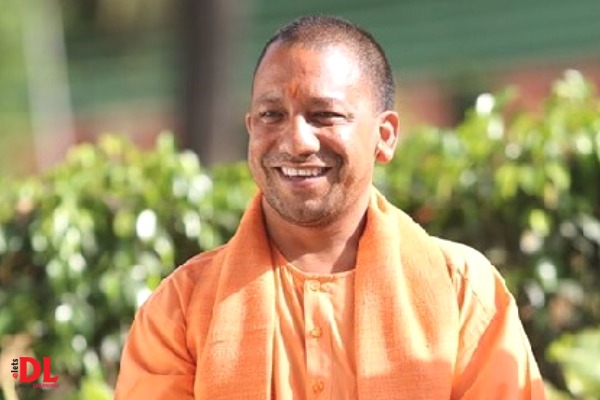
In a bid to provide the best facilities to all the citizens of Uttar Pradesh and support their holistic development, the Yogi Adityanath led state government has identified 47 districts with over 25 percent minority population that will be developed under the Pradhanmantri Jan Vikas Karyakram. Kick-starting the development in these districts, the state government has constructed Inter Colleges in these districts to ensure education for all. The funds for the arrangement of furniture and construction in all the Inter Colleges was issued by the Central government.

The Yogi government is not only aiming to complete the projects, but is also emphasizing on running them smoothly in the public interest. Methodical teaching work is going on in all the Inter Colleges, where the students of that area are getting educated.

Over 13 new Industrial Training Institutes have been constructed under the PMJVK for skill development and in addition to them, 12 ITIs have also become operational. The state government has broken all barriers of regional and social imbalance in terms of development and connected all the backward areas of the state with the mainstream development process.

A total of 3400 new units have been established/approved in the Minority concentrated areas including  3 Government Polytechnics, 52 Government Inter Colleges, 9 Junior High Schools, 20 Upper Primary Schools, 136 Primary Schools, 18 Government ITIs, 1 Government Nursing College, 9 Government Degree Colleges, 2433 Smart Classes, examination hall in 2 Inter Colleges, 9 hostels, 31 ‘Sadbhav Mandap’, 160 Anganwadi centres, 2 working women hostels, 1 marketing shed, 3 science labs, 187 piped drinking water scheme, 747 portable water supply, 1 sewer scheme, 47 toilet blocks, 27 common service centres and 1 Unani Medical College.

Last year, proposals for new projects worth Rs 1549 crore were made available to the Government of India. In the current year, proposals for new projects worth Rs 898 crore have been sent to the Government of India.

UGC to allow students to pursue two full-time academic programmes together

ugc delhi

New Delhi 

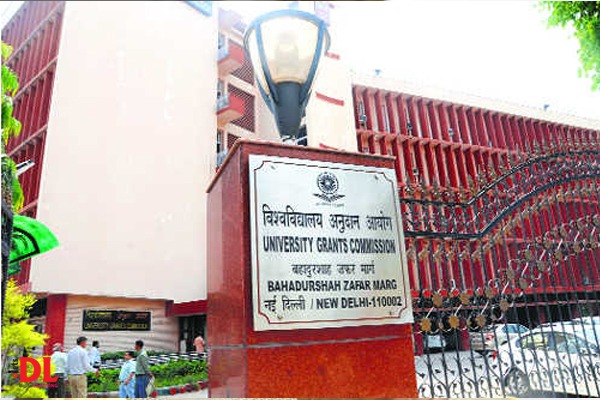
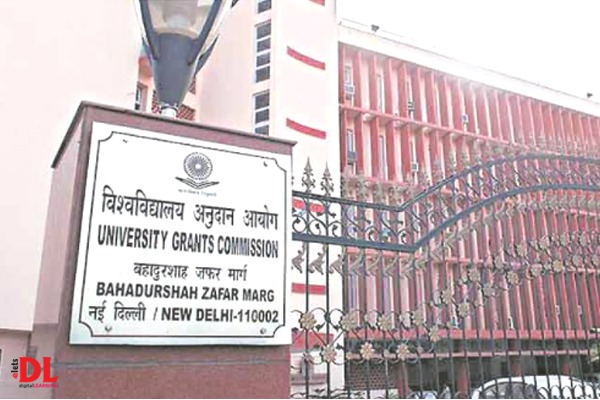
The University Grants Commission (UGC) announced on Tuesday that students will now be able to pursue two full-time academic programmes in physical mode. The commission has put together the guidelines for the same, which have been put up on the official website of UGC.

Earlier, the UGC regulations did not allow students to pursue two full-time programmes and they could only pursue one full-time degree along with online/short-term/diploma courses. The guidelines will apply to all the programmes available across the country. Students can either choose a combination of a diploma programme and an undergraduate (UG) degree, two master’s programmes, or two bachelor’s programmes. If a student is eligible to pursue a postgraduate (UG) degree and also wants to enrol in a bachelor’s degree in a different domain, he/she will be able to pursue a UG and PG degree simultaneously. The class timing for both the programmes must not clash.

“In the last commission meeting held on March 31, it was decided to issue guidelines which would enable students to pursue two academic programmes together because the NEP 2020 emphasises the need to facilitate multiple pathways to learning involving both formal and non-formal education forms, in the sense that a combination of the physical model, as well as the online form, should be used to provide more freedom to the students to acquire multiple skills,” the UGC chairman, Mamidala Jagadesh Kumar said.

Following the new guidelines, students will be able to pursue two degree programmes across domains such as sciences, social sciences, arts, humanities, and a wide variety of disciplines. Adopting these guidelines is optional for universities and can be implemented only after the approval of the universities’ statutory bodies. The eligibility criteria for each of the programmes will remain unchanged and admissions will be conducted based on the existing UGC, university norms.

“A student can pursue two full-time academic programmes in the physical mode provided that in such cases, class timings for one programme do not overlap with the class timings of the other programme. Universities will have the flexibility to decide if they want to offer such a scheme of programmes or not. The guidelines will only be applicable to lecture-based courses, including undergraduate, postgraduate, and diploma programmes. MPhil and PhD programmes will not fall under the same scheme,” Kumar added.


MOE to fix maximum and minimum fee for engg, tech institutes

aicte gate

New Delhi 

The All India Council for Technical Education (AICTE) has sent a revised fee structure, including a proposed minimum fee limit, for the engineering and tech institutions, to the Ministry of Education. The recommendations will be taken into consideration while deciding a cap for the free structures.

The revision comes seven years after an expert committee first recommended an upper limit that the institutes can charge as tuition fee, but there was no lower limit, or minimum fees, until now.

It is noteworthy that on March 10, the executive committee of the AICTE approved the report of the National Fee Committee chaired by Justice (retd) B N Srikrishna and forwarded it to the Ministry of Education, which is examining it. The committee has proposed that in case of undergraduate engineering disciplines, the annual minimum fee cannot be below Rs 79,000 while the maximum has been capped at Rs 1.89 lakh. In its previous report, submitted in April 2015, the committee had suggested that the maximum fee for UG four-year engineering courses be fixed at Rs 1.44 lakh to Rs 1.58 lakh per annum.

The revised fee slabs need the Ministry’s as well as the state governments’ nod for implementation. In the absence of a minimum fee, over the years, many private engineering colleges had been petitioning the AICTE to set a lower limit for tuition fee, accusing state authorities, including that of Tamil Nadu and Telangana, of fixing impractical minimum fee thresholds, causing difficulties in day-to-day functioning. Accordingly, the government had requested the Srikrishna committee to take a fresh look at the fee structure, along with coming up with a ceiling on minimum charges. The fresh recommendations also prescribe maximum (Rs 1.4 lakh per annum) and minimum (Rs 67,000) fee for engineering (diploma), and for applied arts and design (see box). In the case of post-graduate engineering programmes, the maximum and minimum fee have been proposed at Rs 3.03 lakh and Rs 1.41 lakh respectively.

UGC tells higher educational institutions to award degrees within 180 days of result declaration

New Delhi  

The University Grants Commission (UGC) has asked all higher education institutions to award degrees to all successful students within the prescribed period of 180 days of eligibility. Candidates can read the UGC regulation on awarding of degrees at the official website — ugc.ac.in.

In a letter to all vice-chancellors of universities and college principals, the UGC also stated that it will take punitive action against universities that fail to award degrees in accordance with UGC regulations.

“The degree award date/s shall be within 180 days of the date/s by which the students are expected to qualify and become eligible for them,” according to the official notice. The commission made the decision after receiving a large number of grievances regarding the delay in awarding degrees to students enrolled in various programmes of study offered by Higher Education Institutions.

“Needless to say, receiving a degree in a timely manner after successfully completing a programme is an inalienable right of a student,” said the UGC letter. UGC requested that all higher education institutions follow UGC regulations and award degrees to eligible students within the time frame specified, as well as provide students with provisional degrees and final year transcripts.

DU to set up two not-for-profit firms to raise money from alumni

New Delhi

The Delhi University (DU) is planning to set up two not-for-profit companies to seek funds from its alumni and to promote innovation. This has been stated by the DU Vice-Chancellor Yogesh Singh.

“In the centenary year, we should come towards policy reforms to make DU a better place. We are doing investments and have asked for a loan from HEFA,” he said in a statement.

The university’s Executive Council last month had approved a loan of over Rs 1,000 crore from the Higher Education Funding Agency (HEFA) for infrastructure development and the creation of capital assets.

Also read: Delhi University conducts COVID-19 vaccination drive for students, staff

The VC said that they are creating a Section 8 company for generating funds for the university. “The Section 8 company will ask for funds from alumni and from companies under their CSR activities. It will be an independent company of DU and will have a professional CEO. The funding will be used for developing the university,” he said.

“The second company will work on incubators and promote innovation. The forms for the companies are going to be submitted soon. We will advertise for the posts of CEOs for the two companies after the approval,” he said.

Singh also mooted the idea of organising a ‘funding mela’ on the lines of a ‘job mela’ to raise funds.

“We are working to improve the research culture in the university. The recruitment process is underway and interviews for various teaching posts are going on. For the rankings to improve, our target is to increase the quantum of research,” said Singh.

“Our target is to bring the university out of ‘adhocism’ in the next one to one-and-a-half years. We are conducting interviews and ad hoc teachers can participate,” he said.

Asked about the demand in the university for a one-time absorption of ad hoc and guest teachers, he said the matter isn’t easy and is something that “plagues not only DU but other places too”.

BHU launches scholarship scheme for international students

Varanasi, Uttar Pradesh 

The Banaras Hindu University has introduced a new scholarship scheme to “promote and motivate international students”. Through this programme, BHU aims at attracting overseas students. Under the programme, foreign students will receive Rs 6000 per month.

The decision to launch ‘Scholarship to International Students’ was taken in the meeting of Governing Body of Institution of Eminence, BHU, under the chairmanship of vice-chancellor Sudhir K Jain. Jain said that the university has constituted a three-member committee for smooth implementation and monitoring of the scheme. All the applications under the scheme shall be submitted to the Institution of Eminence Cell of BHU.

The university claims to attract hundreds of international students every year who are admitted in various disciplines of agricultural sciences, arts, social sciences, performing arts, visual arts, law, commerce and sciences in undergraduate, postgraduate, PhD and diploma courses.

The total intake of foreign students is up to 15 per cent of the total seats. These seats are of supernumerary nature. Currently, 431 students from nearly 40 countries are enrolled in Banaras Hindu University. These include 261 male and 170 female students from the United States, Brazil, France, Russia, Ireland, Australia, Yemen, Iran, Bangladesh, Afghanistan, Mauritius, Sri Lanka, South Korea, Thailand, Myanmar and Cambodia among others.

“The scheme is expected to draw more international students to BHU. Besides, it is also in the spirit of National Education Policy 2020 which puts a greater focus on internationalisation of the Indian Education System, by way of having more students from abroad on Indian campuses,” said the official statement released by BHU.


Fee Financing recognized by stakeholders as a key enabler since the pandemic

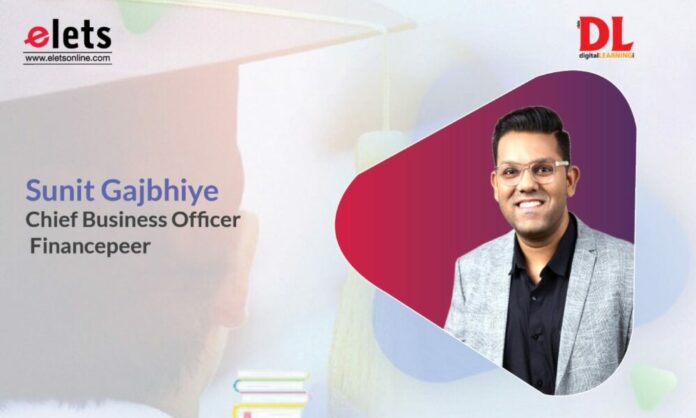
by Sunit Gajbhiye – Chief Business Officer, CBO at Financepeer

The world is emerging fast from the shadows of the pandemic. Among the many negatives brought by the pandemic, there were a few positives too. The adoption of online education and the growth of fintech were among those positives that have signalled the outlook of the future. When more than 1.5 million schools across the nation abruptly closed due to the lockdown, the synergy between online education and fintech was the primary reason behind the continuation of education during this period.

It is estimated that the household income of 97% of households declined during the pandemic. At a time when many parents were struggling to pay the fees of the wards to the educational institutions and the institutions needed to make fresh investments for online education besides meeting the overheads like salaries, maintenance, and other expenses; fee financing emerged as a viable solution to address the problems of both sides. Not only did it facilitate the students to continue their education but also helped the institutions by ensuring the flow of capital in the entire education sector.

Fee financing is an innovative alternate source of education funding where the financing company pays the total fee for the year (educational session) upfront to the education sector and the parents can pay back the money in easy interest-free installments to the company. This reduces the stress of parents about the continuity of their ward’s education and with capital in hand, education institutions can make investments in infrastructure and plan the sessions better. What makes this model unique is the sense of assurance it provides to both ends of the value chain through its seamless and hassle-free outlook. Neither the parents nor the institutions have to worry about complicated procedures and lengthy paperwork.

The fee financing model has been in existence for the past few years. However, the awareness and acknowledgement remained moderate which is reflected in the growth of the entire sector. There has been an air of confusion where Fee Financing is confounded with education loans which eventuate reluctance among people while opting for it due to fear of complicated procedures, the demand for collateral by banks, and high-interest rates.

However, during the pandemic, in absence of conventional modes for funding education, fee financing strongly emerged as the preferred alternative for many people. The success of the model encouraged more parents and institutions to consider it seriously which made it a go-to option for them. The fact that we have witnessed exponential growth during the two years of the pandemic and have served more than 2.2 million users, is a testament to the growing significance of fee financing in the education sector in the country.

The success of fee financing has caught the attention of both the start-ups and established players in the finance sector. More and more players are foraying in the sector. The sector which had only a handful of players a few years back now has plenty of active players now and the number is on the rise. This is widening the choices for the parents and the schools. Fee financing is no more a niche segment in the sector. It is now being recognized as the next big phenomenon in the education sector.

The observers from the industry speculated the success of fee financing to be deciduous which would peter out soon. However, contrary to their observations, fee financing has emerged even stronger after the pandemic. The model which was earlier being used primarily for school fee financing is now evolving into a choice for financing vocational and higher education as well. More importantly, the model is now spreading its roots to smaller towns and rural areas. Technology has helped people even in the smallest of remotest parts of the country to reach fee financing companies and avail their services.

In the current scenario, all the stakeholders, whether it’s parents, students, educational institutes, public policymakers, or administrators, recognize fee financing as a key factor for survival and safe navigation of the education sector through the troubled waters of the pandemic. It is the fee financing model that was largely responsible for arresting the school dropouts during Covid-19. As the pandemic receded, fee financing emerged as the key enabler for the growth of education in the country, especially in the smaller towns. Many aspirants who were reluctant in approaching traditional banks to seek funding for their education are now reaching out to fee financing companies without any hesitation. Fee financing has reduced the distance between their dreams and reality to only a few touches on their smartphone. This is a win-win situation for both the industry and the country’s education sector.

About the author –  

Sunit Gajbhiye is an alumnus of IIM Indore and VJTI. He is skilled in Business Strategy and Operations, Sales and Marketing, Product Management, Mobile, RPA, and Innovation esp in the Smartphones domain having worked with SamsungElectronics for flagship smartphones, Edgeverve in RPA using Computer Vision and AI. Sunit has a patent in the smartphone domain and aims to impact Global Education with a Mobile-first strategy.


 

Uttar Pradesh government signs MoU to set up medical colleges in Sambhal, Maharajganj

Lucknow

The Uttar Pradesh government signed an MoU for setting up medical colleges in the state’s Sambhal and Maharajganj districts under the public-private partnership mode, on Thursday.

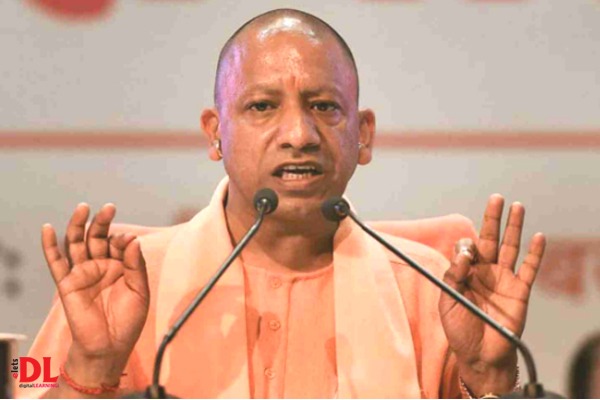
The MoU was signed in the presence of the Chief Minister Yogi Adityanath at his official residence here, according to an official statement. Adityanath said for the first time in the state, medical colleges are being set up through the PPP mode and asked the medical education department to proceed ahead in a time-bound manner.

The chief minister said the work of setting up the medical colleges is being taken forward by the reputed institutions like Shri Siddhi Vinayak Trust, Bareilly and Shanti Foundation Trust, Maharajganj. The construction of medical colleges with the partnership of the private sector will be taken forward on a war footing, he said.

The state government has set a target of establishing medical colleges in Maharajganj and Sambhal districts by 2024, he added.

LATEST NEWS