Home Blog Page 23

Kerala Education Minister Says NEP Grants States Full Control Over School Textbooks

Kerala Education Minister

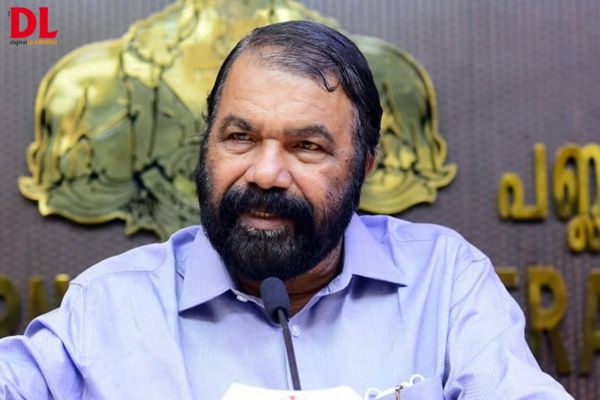
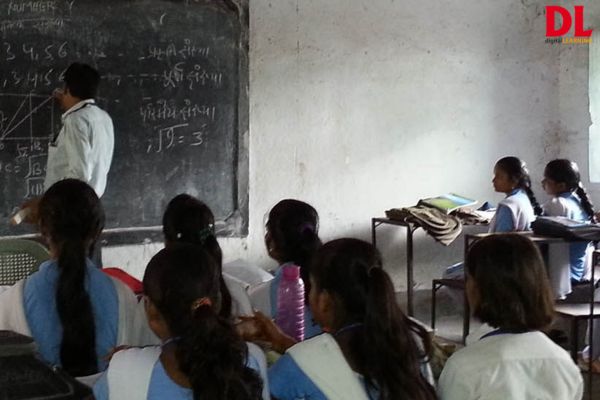
Kerala’s General Education Minister V. Sivankutty clarified on Sunday that under the National Education Policy 2020 (NEP), states retain full authority over the publication of school textbooks and thus there is “no reason for concern” about any loss of control.

Speaking amid controversy surrounding the state’s signing of the PM SHRI (Pradhan Mantri Schools for Rising India) scheme, the minister defended Kerala’s decision, emphasising that the NEP is not mandatory and that the state remains free to align its own education policy with its priorities. 

He reiterated that the state has the right to design and publish its own textbooks, and repeated assurances that:

  • The MoU signed with the Centre includes a clause allowing the state to withdraw from the agreement at any time, after discussions.
  • Kerala’s longstanding education policy under the Left Democratic Front will not be compromised.
  • The focus is on ensuring access to central funding for around 47 lakh students from marginalised backgrounds, rather than altering curriculum content to suit external agendas.

Also Read: ChatGPT Launches ‘Chats for Students in India’ to Help College Learners Study and Upskill

His statement reaffirmed that curriculum and textbook-related decisions remain under the purview of individual state governments.

ChatGPT Launches ‘Chats for Students in India’ to Help College Learners Study and Upskill

ChatGPT

ChatGPT has launched a new initiative titled “Chats for Students in India”. The campaign highlights how Indian learners are increasingly using AI to study smarter, simplify complex concepts, and build employability skills.

The initiative brings together over 50 real-life examples showcasing how students use ChatGPT to prepare for exams, draft study plans, generate practice questions, summarise notes, and even create flashcards. The goal is to demonstrate the diverse and practical ways in which AI can support everyday academic and career-related tasks.

According to the platform, Indian students are among the most active global users of ChatGPT for education and self-learning. The curated “student chats” cover a wide range of academic activities, from simplifying tough topics and creating analogies for better understanding to learning new technical skills such as coding and data analysis.

The article also highlights how students are using AI tools to enhance employability. One student from Bengaluru reportedly used ChatGPT to tailor resumés and prepare for job interviews, eventually securing multiple offers from leading companies.

Also Read: NCERT and IIT Madras Sign an MOU to Advance Educational Research and Innovation

By showcasing these experiences, ChatGPT aims to inspire students to leverage AI responsibly and creatively for personal growth and upskilling. The initiative also reflects the growing integration of generative AI tools into India’s higher education and EdTech ecosystem, where AI-driven learning support is becoming an essential complement to classroom instruction.

With Indian universities increasingly adopting technology-enabled learning, ChatGPT’s new student-focused resource serves as a timely reminder of how artificial intelligence is transforming the way young people study, work, and prepare for the future.

NCERT and IIT Madras Sign an MOU to Advance Educational Research and Innovation

NCERT

The NCERT and IIT Madras signed a Memorandum of Understanding (MoU) on Tuesday, aimed at strengthening educational research, technology integration, and teacher training, in alignment with the country’s National Education Policy (NEP). The agreement marks a pivotal collaboration between a premier education and research body and a leading technical institute.

Under the MoU, NCERT and IIT Madras will jointly develop and pilot advanced learning solutions, including AI-/ML-enabled digital tools, multilingual platforms and data analytics frameworks to enhance learning outcomes and scale successful interventions. As part of the partnership, teacher-capacity-building programmes will be expanded using state-of-the-art technological platforms, and large-scale measurement of intervention effectiveness through analytics will be enabled.

“This collaboration is rooted in our shared vision of leveraging technology, research and innovation to transform teaching and learning at scale,” said a representative of IIT Madras. “By integrating digital tools, multilingual capabilities and robust analytics under the NEP framework, we aim to create models that can be deployed broadly across states and schools.”

Raed More: Canva aims to make India its top market as the creator wave and AI boom fuel growth

Initial efforts will focus on pilot programmes across selected institutions, after which the best models will be scaled nationwide. Key focus areas of the MoU include:

  • Co-creation of research and development initiatives in educational pedagogy and technology integration.
  • Deployment of digital learning tools, multilingual platforms, and AI/ML frameworks to support teacher training and student learning.
  • Implementation of data analytics systems to measure learning outcomes, improve interventions and enable evidence-based scaling.

By pooling NCERT’s national reach and domain expertise with IIT Madras’ technology and research capabilities, the partnership is expected to accelerate innovation in school-level education, enhance teacher effectiveness, widen access to digital learning, and support the NEP’s objective of fostering skilled, inclusive, technology-infused education.

Canva aims to make India its top market as the creator wave and AI boom fuel growth

Canva

India is now the fourth-largest market globally for Canva, and the company is aggressively targeting it to become its number one market, said Chandrika Deb, Country Manager of Canva India.

With over 2.8 billion designs created globally and around 2.5 million new designs generated daily in India alone, Canva is leveraging India’s young, digital-first population and rising creator base to drive its next phase of growth.

Deb highlighted that India’s mobile-first ecosystem and strong uptake of AI-based features, such as ‘Magic Write’, ‘Translate’ and ‘Magic Design’, are helping deepen engagement among creators, educators, small businesses and everyday consumers.

The company has been taking a localised approach: launching hyper-local content for Indian festivals, weddings and cultural occasions; building strategic partnerships with government, small businesses and educational institutions; and enrolling 500+ Indian creators into its content-library development.

Also Read: CBSE moves to launch digital platform to overhaul school assessments under NEP 2020

One key partnership is with NCERT to roll out a teacher-certification programme aimed at integrating design thinking into classrooms.

India’s AI market, growing at a CAGR of 25-35% and projected to reach US$17 billion by 2027, presents fertile ground for platforms like Canva to expand their footprint.

As Canva sets its sights on India becoming its top market, it is also investing heavily in user growth, product localisation and partner ecosystems,  betting that strong momentum from creators, students and SMEs will translate into long-term dominance.

CBSE moves to launch digital platform to overhaul school assessments under NEP 2020

CBSE

The Central Board of Secondary Education (CBSE) is preparing to launch a digital platform designed to support competency-based assessments aligned with the National Education Policy 2020 (NEP 2020).

The platform will enable teachers across more than 27,000 CBSE-affiliated schools to design, share and evaluate high-quality assessments that stress critical thinking, problem-solving and analytical skills rather than rote memorisation.

Under the overhaul, the board has already begun reshaping board exam papers for Classes 10 and 12, with nearly half the questions now being competency-based. For younger learners in grades 3, 5 and 8, CBSE is using the SAFAL programme (Structured Assessment for Analysing Learning) to identify learning gaps early and recommend corrective strategies.

To institutionalise the reform, CBSE’s Centre of Excellence in Assessment (CEA) is working to build a national-level question bank and set new assessment standards focused on higher-order thinking.

The digital platform, currently in its RFP phase, is envisaged as an AI-powered centralised system. Features will include a drag-and-drop question-builder, metadata tagging of questions (grade, subject, learning outcome, Bloom’s taxonomy level), plagiarism detection, real-time dashboards for assessment quality and integration with teacher-training systems.

Also Read: About 8,000 schools with zero enrollment employ 20,000 teachers in India: Ministry data

The move is timely: in an era where education is rapidly shifting toward skills, diagnostics, and learning outcomes, the new platform could help bridge the gap between policy intent and classroom reality. As one CBSE official noted: “Assessments should not merely test memory but evaluate how students think, reason, and apply knowledge.”

With implementation ahead, schools and teachers will need to prepare for changes in assessment design, teacher training and use of data analytics to guide teaching and learning. The platform signals CBSE’s push to make assessment a tool for learning improvement and not just a certification exercise.

About 8,000 schools with zero enrollment employ 20,000 teachers in India: Ministry data

Ministry of Education

Almost 8,000 schools across India recorded zero student enrollment during the academic session 2024-25, and yet nearly 20,817 teachers remain employed in those institutions, according to official data released by the Ministry of Education.

The data show that 7,993 schools had no students enrolled, down from 12,954 in the previous year. Among states, West Bengal accounted for the largest share, with 3,812 schools having zero enrolment and 17,965 teachers employed in them. The next highest numbers were in Telangana with 2,245 such schools (and 1,016 teachers) and Madhya Pradesh with 463 schools (and 223 teachers).

Also Read: AI to become part of school curriculum from Class 3 by 2026

In contrast, several states and union territories had no schools with zero enrollment, including Haryana, Maharashtra, Goa, Assam, Himachal Pradesh, Nagaland, Sikkim and Tripura; likewise, the union territories of Puducherry, Lakshadweep, Dadra and Nagar Haveli and Daman and Diu, Andaman and Nicobar Islands and Chandigarh also reported none. The ministry noted that because school education falls under state jurisdiction, states have been advised to address “zero-enrolment” schools, and some states have already begun merging such schools to optimise infrastructure and staffing.

Marching Ahead in the World of Education

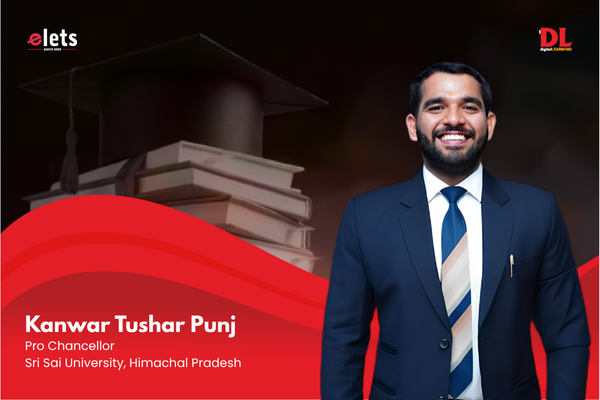
Kanwar Tushar Punj

With a multitude of institutes opening across the nation, choosing one that meets all the academic ambitions and also enhances career prospects can be a brainstorming problem. India today is on the brink of adopting Industry 4.0, where every second individual is a professional and there is automation in manufacturing everywhere. Education, at that point, becomes extremely important. One such institute that has been in the business of creating competent professionals is Sri Sai University in Palampur, established in 2010. The university provides access to high-quality education, cutting-edge research, and the development of new technologies in line with preparing successful professionals in various walks of life, Engineering & Technology, Basic & Applied Sciences, Management and Information Technology, Education, Law, Adventure Sports, and Pharmacy, with close interaction with industry. The University strives toward its aim of “Transforming Dreams into Reality” by developing professional competencies with flexibility, adaptability, and passion for learning.

Technology Giants at the University

SSU has joined hands with IBM to develop an advanced curriculum focusing on developing a critical understanding of Linear Algebra and Statistics, which are the foundations of AI and ML concepts. Harness the potential of AI-ML with new courses at Sri Sai University with IBM. B.Tech in Computer Science Engineering (CSE) with a specialisation in Artificial Intelligence and Machine Learning is a course featured by Sai School of Engineering, SSU, which helps students gain a practical understanding of various Artificial Intelligence (AI) and Machine Learning (ML) concepts. The major focus of the programme is to equip students with the ability to design intelligent solutions to real-time problems.
SSU has developed this course with the help of industry experts as its Advisory Board, comprising professionals working in Apple, Deloitte, and Google, keeping in mind the advancement and increased demand for AI and ML in today’s industries. This programme discusses artificial intelligence methods based on different fields like neural networks, signal processing, and data mining.

Beautiful – From Nature

Sri Sai University Palampur is a fascinating spot in the Kangra Valley, surrounded by tea gardens and pine forests. The University enjoys a healthy climate, and the pine-scented air is said to have curative properties. The scenery presents a sublime and beautiful contrast – the plain offers a picture of rural loveliness and repose, while the hills are majestic. Behind the University stand the high ranges of the Dhauladhar mountains, whose tops remain covered with snow for most of the year. The combination of all these makes SSU Palampur an escape from the hustle and bustle of city life and an ideal environment for study.

The Front Runner in Innovation

Sri Sai University has launched the first of its kind in India – the new Department of Mountaineering and Adventure Sports in Himachal Pradesh. The University is starting Certificate, Diploma, and Degree courses in Mountaineering and Adventure Sports embedded with regular courses, in sync with the National Education Policy (NEP) 2020. It is a pioneer project to promote Himachal Pradesh as the main Adventure Sports training area of international repute.

Philanthropic Workforce Behind SSU

With the blessings of Bhagwan Sri Sathya Sai Baba ji and under the dynamic leadership of Chancellor and Chairman Er. S.K. Punj and Managing Director Smt. Tripta Punj, the group of institutes was founded under the guidance of Late Shri Ram Iqbal Bhardwaj with a dream to provide world-class education in the areas where it was needed the most. The belief of the leaders is that education is the passport to the future, and at SSU, all efforts are made to achieve this goal in letter and spirit. The recently appointed Pro-Chancellor, Er. Kanwar Tushar Punj (Alumnus of the University of Leeds, UK) provides guidance to students and faculty members to follow the most innovative ways and means of imparting education, eventually bringing a sea change in the work culture of SSU, Palampur.

Also Read:- Purpose in Action, Innovation at Heart

Extra Mile

Addressing world problems with industry-ready courses and research-focused learning at SSU Palampur. The road to being featured in the world ranking starts with passionate, talented, and ambitious individuals who want to steer the education industry with their skills and hard work. SSU is making itself future-ready, entering the top rankings in global standards, creating centres of excellence, and forming global alliances and partnerships. In the next five years, Sri Sai University will be on the map.

NAAC (Another Feather to Our Cap)

It is a matter of great pride and honour that our University has been awarded the prestigious NAAC accreditation, which stands as a testament to our unwavering commitment towards maintaining the highest standards of quality in education, research, and overall institutional performance. This recognition not only adds another feather to our cap but also reinforces our dedication to fostering academic excellence, promoting innovation, and nurturing future-ready professionals who can contribute meaningfully to society.

Views expressed by Kanwar Tushar Punj, Pro Chancellor, Sri Sai University, Himachal Pradesh

Education in India with Redefining Early Hello Kids

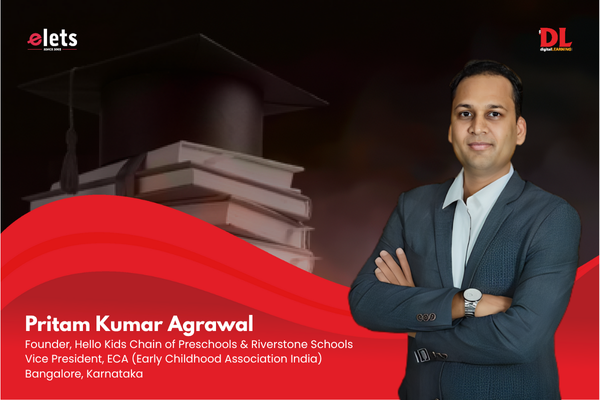
Pritam Kumar Agrawal

In a country where early childhood education was once considered a luxury and limited to metro cities, a quiet revolution began in 2005, one that would go on to redefine the way India looks at preschooling. At a time when the sector was largely unorganised, with very few branded players confined to urban pockets, quality education for young children was both scarce and inaccessible. It was in this very gap that Hello Kids found its purpose.

Starting from just one centre, Hello Kids quickly grew into a trusted name in early education. Within a few years, it had expanded to over 1,000+ centres across 28 states, proving that preschooling could be made affordable, scalable, and locally relevant. This early growth was more than just numbers; it was a movement toward educational equity. By understanding the unique needs of children and families in different regions, it created a model that blended global best practices with Indian values and cultural sensitivity.

Fast forward to today, Hello Kids operates with pride across 29 states and 1,050+ centres, a testament to the vision and persistence behind the brand. It has become one of India’s most recognised and loved preschool chains, impacting thousands of young minds each day. Its presence is not just limited to cities but extends to small towns and semi-urban pockets, where the need for foundational learning is greatest.

What sets Hello Kids apart is its unwavering focus on making high-quality education accessible to all, without burdening parents with high fees. The key to this has been its lean operational model, driven by strong Standard Operating Procedures (SOPs), streamlined curriculum delivery, and ongoing teacher training programs. These systems ensure that every centre, regardless of its size or location, delivers consistent quality and child-centric learning experiences.

One of the most innovative aspects of Hello Kids is its no-royalty franchise model, the first of its kind in India’s preschool space. This unique approach has empowered hundreds of local entrepreneurs to establish preschools in their communities without the financial burden of recurring royalty fees. More than just a business model, it is a collaborative ecosystem. Franchisees receive full support, from setting up infrastructure and staff training to marketing assistance, academic planning, and operational guidance. Regular audits and mentoring ensure that quality benchmarks are met and that the brand’s vision remains intact across all centres.

Scaling such a diverse and vast network was not without its challenges. In the early years, it faced resistance from communities unfamiliar with the concept of preschool. Convincing parents of the importance of early education required grassroots awareness campaigns, door-to-door visits, parenting workshops, and community outreach initiatives. There was also a severe shortage of trained preschool educators in remote regions. It responded by investing heavily in teacher training programs, helping local women gain skills and become empowered contributors to their communities while maintaining educational quality.

As India embraces a more structured and inclusive education policy through the NEP 2020, Hello Kids is already ahead of the curve. The new education policy places great emphasis on foundational literacy, numeracy, and play-based learning in early years, all of which have been part of its core philosophy since inception. This alignment further strengthens its position as a future-ready preschool brand.

Looking ahead, Hello Kids is preparing for its next phase of growth. With strong roots in 29 states, the brand is now focusing on deeper expansion in priority regions. The roadmap includes opening 100+ new centres in Hyderabad and Telangana, aiming to reach 2,000+ centres across India in the near future. The goal remains clear: to create joyful, nurturing, and academically enriching spaces for every child, regardless of geography or background.

Also Read: Empowering Excellence, Shaping Global Careers

As the brand puts it, “Every child deserves a joyful start to their learning journey. When we nurture curiosity, confidence, and creativity in the early years, we are not just preparing children for school, we are preparing them for life. Our mission is to build a nation of learners, one preschooler at a time.”

From humble beginnings to a nationwide movement, Hello Kids continues to shape India’s future, proving that real change always begins at the foundation.

Views expressed by Pritam Kumar Agrawal, Founder, Hello Kids Chain of Preschools & Riverstone Schools, and Vice President, ECA (Early Childhood Association India), Bangalore, Karnataka

Empowering Excellence, Shaping Global Careers

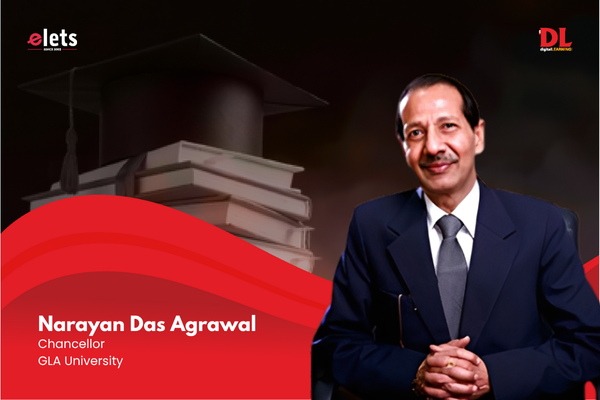
Narayan Das Agrawal

GLA University, located in Mathura, Uttar Pradesh, has firmly established itself as one of India’s leading institutions for higher education. Since its inception in 1998, the university has witnessed exponential growth—both in academic prowess and infrastructural development, emerging as a hub for innovation, research, and holistic student development.

Adding to its remarkable journey, GLA University recently launched a state-of-the-art industry-integrated campus in Greater Noida, strategically placed in NCR to bridge the gap between academia and industry. This new campus provides students with hands-on learning experiences, corporate mentorship, and industry-synced training, ensuring graduates are workforce-ready from day one.

Accredited with NAAC A+ and recognised under UGC’s 12B status, GLA University also holds approvals from PCI, NCTE, and BCI. Notably, the Institute of Pharmaceutical Research is ranked 53rd nationally in the NIRF Rankings 2024. GLAU’s global presence is further validated with an Asia Rank in the 351–400 Band, All India Rank 18, and the second position in Uttar Pradesh in the Times Higher Education Asia Rankings 2025.

GLA University offers a rich tapestry of multidisciplinary programs in Engineering, Management, Pharmacy, Education, Law, Biotechnology, Applied Sciences, Commerce, Agriculture, and more. With over 23,000 students, 700+ faculty members, and a thriving alumni base of 46,000+ professionals worldwide, GLAU continues to nurture talent with passion and purpose.

Academic Excellence & Faculty Pedigree

The university offers a wide array of diplomas, undergraduate, postgraduate, and doctoral programs, combining academic rigour with practical exposure. Its 700-strong faculty includes professors and researchers with experience from IITs, IIMs, NITs, Harvard, Oxford, and Wharton, bringing global perspectives into Indian classrooms.

Placement Powerhouse

GLA University is a name synonymous with strong placement outcomes. With over 3000 job offers made in the ongoing session from 500+ recruiters, including Amazon, Microsoft, Infosys, and Njuma (USA), students have landed packages as high as ₹55 LPA. This speaks volumes of the university’s unwavering focus on skill development, industry exposure, and outcome-driven education.

Research-Driven Innovation

Research is deeply embedded in GLA’s DNA. With 14 research centers, a Capgemini Code Xperience Centre, and over 10,000 publications in SCI/SCOPUS-indexed journals, the university continues to push the boundaries of knowledge. Since our inception as a university, more than 800 patents have been published and 75+ granted, with 24.5 crore in grants from various government departments and industry partners.

Also Read: Purpose in Action, Innovation at Heart

Campus Life & Student Development

The sprawling, eco-friendly campus is equipped with 157 labs, 224 smart classrooms, and a central library with over 1.9 lakh books. Alongside academics, the university promotes overall personality development through 80+ clubs and societies, sports, cultural events, and leadership activities.

Scholarships & Accessibility

GLA University ensures that quality education remains affordable. Scholarships of up to 90% are offered to JEE achievers, and merit-based and government scholarships are available to SC, ST, and economically weaker students.

Online Education: Reaching Learners Everywhere

Through its Centre for Distance and Online Education (CDOE), GLA University extends learning beyond classrooms with UGC-entitled online programs in BBA, MBA, BCA, MCA, and B.Com. Tailored for working professionals and remote learners, these programs maintain academic excellence while offering flexibility and accessibility.

Views expressed by Narayan Das Agrawal, Chancellor, GLA University

From Classrooms to Catalysts Redefining Higher Education for a Future-Ready India

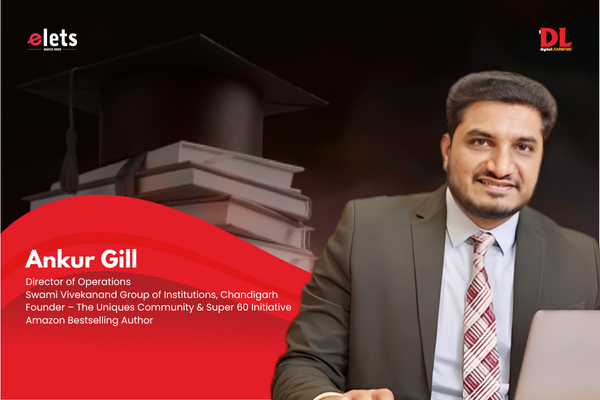
Ankur Gill

When I stepped away from the corporate boardroom into the corridors of academia, I carried with me not just professional experience but a conviction — education must not merely prepare students for the future, it must empower them to create it. In the corporate world, I saw firsthand that success was rarely about who knew the most theory; it was about who could implement ideas with precision, agility, and innovation.

This belief has shaped my work in higher education: to design campuses that do not operate in isolation from the industry but rather as extensions of it — where classrooms simulate boardrooms, labs mirror R&D floors, and projects replicate real-world challenges. For me, the transformation of a student is complete only when skills are not just developed but implemented to solve live problems, innovate processes, and deliver measurable impact.

The Uniques Community – Corporate in Campus, Ideas in Action

The Uniques Community is not just a student club; it is an ecosystem where talent meets execution. This initiative brings corporate culture directly into the campus, with deadlines, performance reviews, leadership roles, and cross-functional teamwork, giving students a taste of professional life long before their first job offer.

Here, students do not stop at learning how to code, market, or design; they apply these skills to launch startups, build prototypes, run live campaigns, and solve real industry problems. This implementation-first approach ensures they graduate not as job seekers, but as job creators, innovators, and leaders. The pride of watching a student turn a campus idea into a funded venture or a social initiative impacting hundreds of lives is unmatched, and it is proof that when students work in an environment that mirrors the corporate world, their learning curve accelerates beyond imagination.

From Industry Demands to Academic Design

The gap between academia and industry has been a long-acknowledged reality. While industry evolves at lightning speed, academia often moves in semesters. To bridge this, we must invert our approach; rather than preparing students for yesterday’s jobs, we must co-create learning with industry for tomorrow’s opportunities.

At SVGOI, the Super 60 initiative embodies this principle. Selected students undergo intensive, industry-aligned mentorship from the very first semester. They are guided by corporate leaders, trained on emerging technologies, and nurtured in an environment where ideas are implemented, not just imagined.

The result? Students who are not waiting for opportunities but are creating them, as entrepreneurs, innovators, and industry-ready professionals. This is not a privilege reserved for a few; our mission is to make such future-oriented learning the default, not the exception.

Scholarships as Social Equalisers

Education without access is an unfinished promise. Through Getscholify, a scholarship portal bringing together 100+ scholarships from corporates, trusts, and universities, we have enabled 1,000+ underprivileged students every year to access higher education without the crushing burden of financial limitations.

This is not just philanthropy; it is nation-building. Every scholar is a potential changemaker. By investing in them, we invest in a future where talent triumphs over circumstance.

The Mindset Shift: From Job Seekers to Job Creators

India’s demographic dividend is a double-edged sword. Millions of young people will enter the workforce in the coming decade. If we continue to prepare them only for existing jobs, we will fall short. The real economic acceleration will come when students are empowered to start ventures, disrupt markets, and solve pressing societal challenges.

This requires embedding entrepreneurship, problem-solving, and innovation into the core curriculum. Not as elective extras, but as non-negotiable pillars of learning. Our campuses must become startup ecosystems, places where failure is celebrated as a stepping stone, not feared as an endpoint.

Technology – The New Faculty Member

AI, robotics, blockchain, and AR/VR are not just buzzwords; they are new languages of opportunity. As educators, we must ensure our students are fluent in them. But technology in education is not about replacing teachers; it is about augmenting their impact.

The most transformative classrooms of tomorrow will be blended, merging the emotional intelligence of the teacher with the adaptive intelligence of technology. Data will guide learning paths, virtual simulations will make complex concepts tangible, and global collaborations will happen without passports.

Rural Education – The Real Frontier

Having worked closely with educators in rural India, I can say this with conviction, the next generation of world leaders can, and will, come from villages. But only if we give them the same access, mentorship, and exposure as their urban counterparts.

We must stop seeing rural education as a charitable cause and start seeing it as a strategic priority for national growth. Talent is universal; opportunity is not. That is where we, as education leaders, must intervene.

Also Read: Purpose in Action, Innovation at Heart

Leadership Beyond Campuses

The future of education will not be shaped solely by policy documents. It will be shaped by leaders who step beyond their campuses to influence policy, industry partnerships, and global collaborations. Leaders who see themselves not just as administrators but as nation-builders.

We must take our place at policy tables, in startup boards, and in global forums, wherever the future is being designed, and ensure the voice of education is not just heard, but heeded.

A Call to My Fellow Education Leaders

If excellence has long been the hallmark of a select few institutions, it is now our responsibility to democratise that excellence. Let us build institutions where:

  • Curriculum is co-created with industry.
  • Scholarships remove financial barriers.
  • Innovation hubs turn ideas into impact.
  • Faculty are mentors, not mere lecturers.
  • Rural and urban students learn as equals.

The student entering our gates today will graduate into a world very different from the one we know. Our duty is not to predict that world perfectly, but to prepare them to lead it fearlessly.

In the words of Swami Vivekananda: “Arise, awake, and stop not till the goal is reached.”

For us, the goal is clear, to transform every campus into a cradle of leadership, innovation, and societal impact. And for that, we must not just educate; we must inspire, empower, and ignite.

Views expressed by Ankur Gill, Director of Operations, Swami Vivekanand Group of Institutions (SVGOI), Chandigarh | Founder – The Uniques Community & Super 60 Initiative | Amazon Bestselling Author


LATEST NEWS